Neonatal
Resuscitation
By: Dr. Sumera Akram
F.C.P.S Pediatrics
AND WHOEVER SAVES A LIFE , IT IS AS
THOUGH HE HAD SAVED ALL MANKIND
(QURAN, 5:32 )
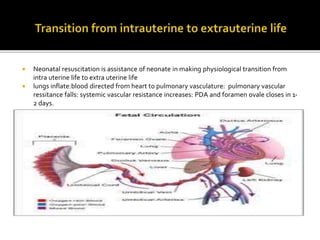
 Neonatal resuscitation is assistance of neonate in making physiological transition from
intra uterine life to extra uterine life
 lungs inflate:blood directed from heart to pulmonary vasculature: pulmonary vascular
ressitance falls: systemic vascular resistance increases: PDA and foramen ovale closes in 1-
2 days.
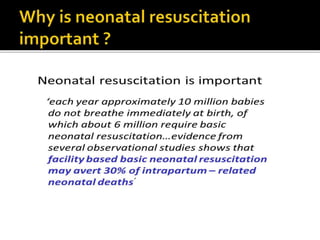
Neonatal mortality rate of Pakistan : 49/1000 live births
( 7% of Global Neonatal Deaths)
Major: No/minimal assistance
10%: assistance to begin breathing at birth
1%: extensive resuscitative measures
Neonatal resuscitation: simple, inexpensive, cost effective
Problem: NNR often not initiated, incorrect use of methods
The most important
seconds in a baby’s
life
An infants’s very first
minute outside of
womb is critical in
predicting newborn
outcome
Only 60% of
asphyxiated
newborns can be
predicted before
birth and the
remaining 40% are
identified during the
“The Golden Minute
“
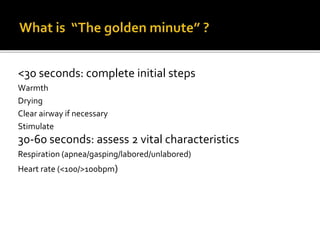
The golden minute
<30 seconds: complete initial steps
Warmth
Drying
Clear airway if necessary
Stimulate
30-60 seconds: assess 2 vital characteristics
Respiration (apnea/gasping/labored/unlabored)
Heart rate (<100/>100bpm)
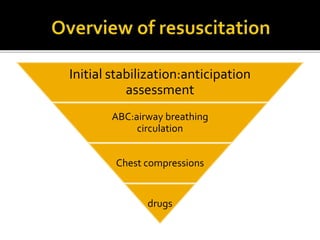
Initial stabilization:anticipation
assessment
ABC:airway breathing
circulation
Chest compressions
drugs
ANTIPARTUM RISK FACTORS
GestationalAge less than 36 weeks
GestationalAge greater than 41
wks
Pre-eclampsia/Eclampsia
Maternal HTN
Multiple gestations
Fetal Anemia
Polyhydramnios
Oligohydramnios
Fetal Hydrops
Fetal Macrosomia
IUGR
INTRAPARTUM RISK FACTORS
Emergency C section
Forceps/Vacuum delivery
Breech/Abnormal presentation
Category 2/3 fetal HR tracing
Maternal Magnesium therapy
Placental abruptio
Intrapartum bleeding
Chorioamnionitis,
meconium aspirate
Cord prolapse
 For all deliveries, at least 1 person should be present who is
skilled in neonatal resuscitation and is responsible only for
the infant.
 Additional personnel should be immediately available to
assist in tasks that may be required as part of resuscitation,
including intubation, medication administration, and
emergency procedures, if needed.
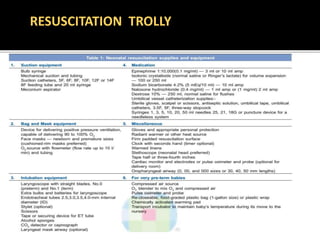
RESUSCITATION TROLLY
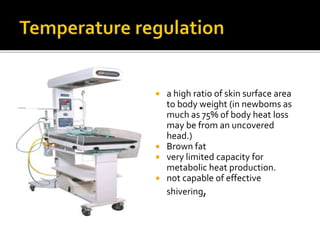
 a high ratio of skin surface area
to body weight (in newboms as
much as 75% of body heat loss
may be from an uncovered
head.)
 Brown fat
 very limited capacity for
metabolic heat production.
 not capable of effective
shivering,
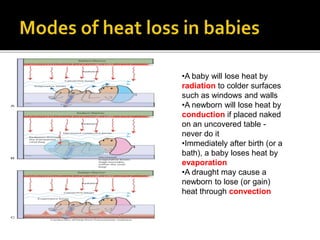
•A baby will lose heat by
radiation to colder surfaces
such as windows and walls
•A newborn will lose heat by
conduction if placed naked
on an uncovered table -
never do it
•Immediately after birth (or a
bath), a baby loses heat by
evaporation
•A draught may cause a
newborn to lose (or gain)
heat through convection
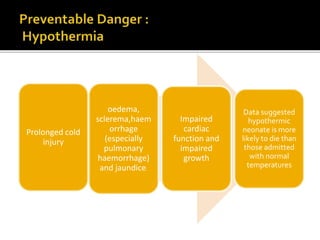
Prolonged cold
injury
oedema,
sclerema,haem
orrhage
(especially
pulmonary
haemorrhage)
and jaundice.
Impaired
cardiac
function and
impaired
growth
Data suggested
hypothermic
neonate is more
likely to die than
those admitted
with normal
temperatures
 Optimum room temperature shld be 23-25 C
 Windows and doors shld be closed to avoid
heat loss by cool draught of air
 Vernix, dry towel
 Heater, warmer, incubator
 Avoid immediate bath
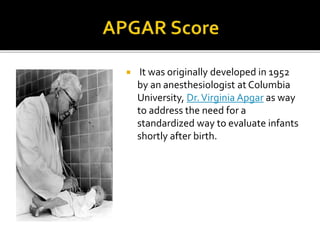
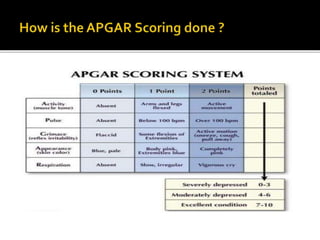
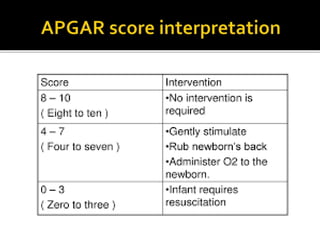
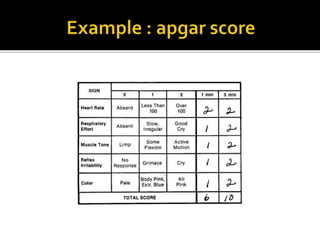
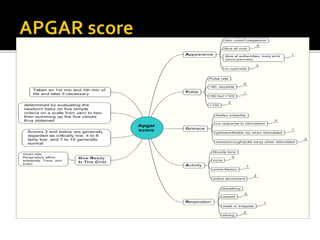
 It was originally developed in 1952
by an anesthesiologist at Columbia
University, Dr.Virginia Apgar as way
to address the need for a
standardized way to evaluate infants
shortly after birth.
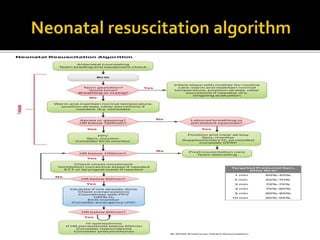
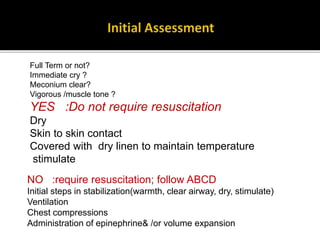
Full Term or not?
Immediate cry ?
Meconium clear?
Vigorous /muscle tone ?
YES :Do not require resuscitation
Dry
Skin to skin contact
Covered with dry linen to maintain temperature
stimulate
NO :require resuscitation; follow ABCD
Initial steps in stabilization(warmth, clear airway, dry, stimulate)
Ventilation
Chest compressions
Administration of epinephrine& /or volume expansion
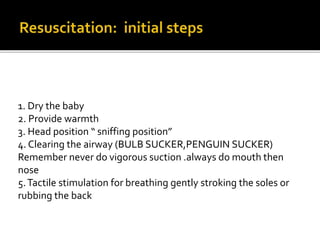
1. Dry the baby
2. Provide warmth
3. Head position “ sniffing position”
4. Clearing the airway (BULB SUCKER,PENGUIN SUCKER)
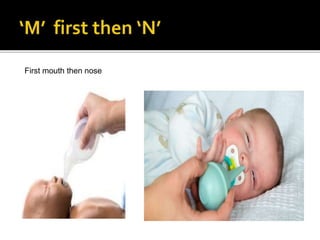
Remember never do vigorous suction .always do mouth then
nose
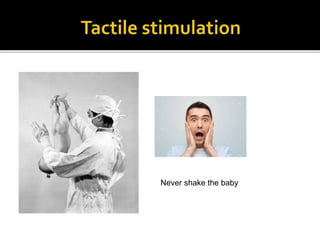
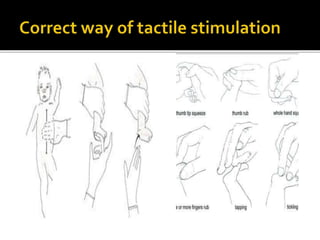
5.Tactile stimulation for breathing gently stroking the soles or
rubbing the back
Never shake the baby
First mouth then nose
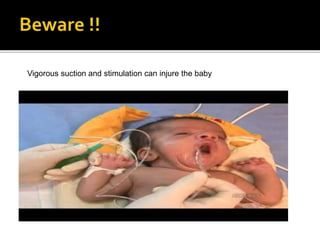
Vigorous suction and stimulation can injure the baby
 Positioning, clearing airway and drying baby provides
enough stimulation to initiate breathing
 Assess and reassess for not more than 10 seconds after
every 30 seconds by looking, listening and feeling the
chest movement and heart rate
 Increase in heart rate is the most sensitive indicator
of a successful response to each step practiced
 Palpation : at the umbilical, femoral, or brachial arteries
 auscultation : stethoscope
 The NRP recommends counting the heart beats heard over 6
s and multiplying by 10 to determine HR in bpm
 when a stethoscope is not available, palpation of the
umbilical cord provides greater accuracy.
 Pulse oxymetery
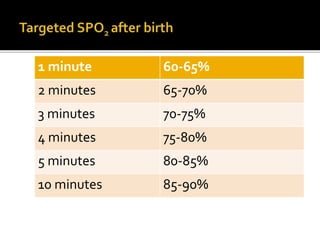
1 minute 60-65%
2 minutes 65-70%
3 minutes 70-75%
4 minutes 75-80%
5 minutes 80-85%
10 minutes 85-90%
Pulse oxymeter
 low peripheral perfusion,
 low volume state,
 vernix effect
 acrocyanosis,
 signal dropout,
 movement artefacts,
 arrhythmias
Heart rate:
Finding brachial and femoral
pulse
Dextrocardia,pneumothorax,
diaphragmatic hernia
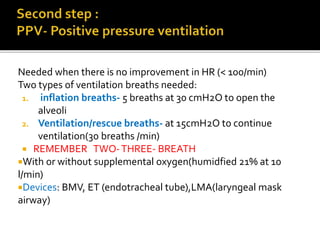
Needed when there is no improvement in HR (< 100/min)
Two types of ventilation breaths needed:
1. inflation breaths- 5 breaths at 30 cmH2O to open the
alveoli
2. Ventilation/rescue breaths- at 15cmH2O to continue
ventilation(30 breaths /min)
 REMEMBER TWO-THREE- BREATH
With or without supplemental oxygen(humidfied 21% at 10
l/min)
Devices: BMV, ET (endotracheal tube),LMA(laryngeal mask
airway)
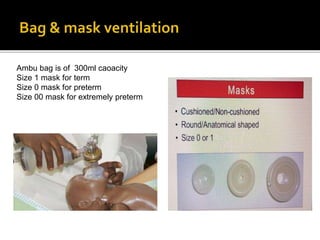
Ambu bag is of 300ml caoacity
Size 1 mask for term
Size 0 mask for preterm
Size 00 mask for extremely preterm
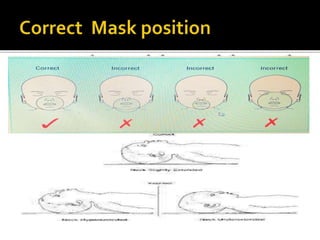
Always reasses after first 5 inflation breaths for chest
movement and consider readjusting mask, making seal and
suction airway b4 jumping to the next level
Mnemonic; MR-SOPA for reassessment
 M:mask adjustment
 R:reposition airway
 S:suction
 O:open mouth chin lift jaw thurst
 P:pressure increase
 A:alternate airway(ETT,LMV)
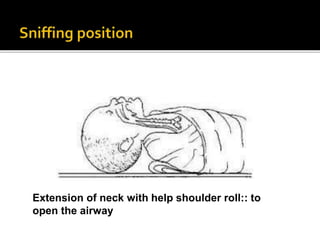
Extension of neck with help shoulder roll:: to
open the airway
Needed when:
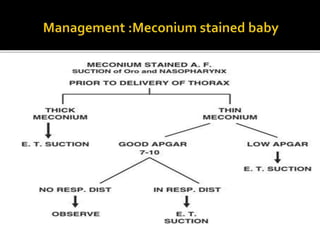
1. Initial endotracheal suctioning of non vigorous meconium
stained newborn
2. If BMV is ineffective/prolonged (HR less than 60)
3. Preterm for surfactant
4. Diaphragmatic hernia suspected
(When intubation is performed
Make sure to minimize hypoxia during each attempt of
intubation and limit each intubation attempt to 20 second)
Pass orogastric or nasogastric tube if prolong resuscitation
required.
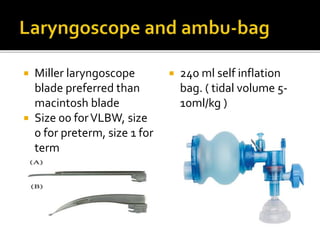
 Miller laryngoscope
blade preferred than
macintosh blade
 Size 00 forVLBW, size
0 for preterm, size 1 for
term
 240 ml self inflation
bag. ( tidal volume 5-
10ml/kg )
INDICATION:
Started when HR<60 per minute despite adequate ventilation with 100%
oxygen for 30 sec
SITE:
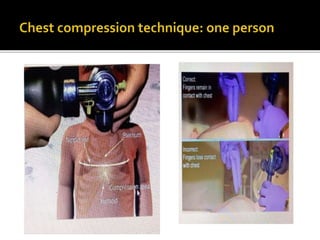
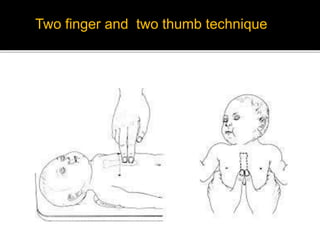
Delivered at lower third of sternum, to depth 1/3 of AP diameter of chest
TECHNIQUES:
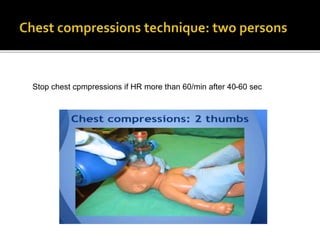
2 thumb-encircling hands technique (two personel )
Compression with 2 fingers (one person)
3:1 ratio::[ 90 comp:30 ventilations)
REMEMBER ONE ANDTWO ANDTHREE AND BREATH
Stop chest cpmpressions if HR more than 60/min after 40-60 sec
Two finger and two thumb technique
Rarely indicated
INDICATION
HR remains <60bpm,despite adequate ventilation(ET) with
100% Oxygen & chest compressions
ROUTE
Better and easy to pass umbilical vein cather meanwhile u are
resuscitating the baby
Thru ETT
IV
IO
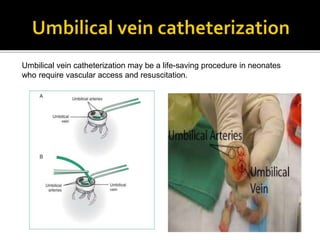
Umbilical vein catheterization may be a life-saving procedure in neonates
who require vascular access and resuscitation.
 After proper placement of the umbilical line, intravenous
(IV) fluids and medication may be administered to critically ill
neonates.[1]
 In an emergency, it is best to advance the catheter only 1-2
cm beyond the point at which good blood return is obtained
so as to avoid injecting hyperosmolar fluids into the portal
vessels and causing liver necrosis.
Route of administration: intravenous(thru uvc ideal) and thru
ETT
Recommended dose:
 0.1 ml/kg per dose in 1:10,000 dilution thru uvc (available in
pakistan as 1:1000 packing and need to be further diluted in 9 cc
of distill water to make 1:10000 dilution )
0.5-1.0ml/kg thru ETT
Can repeat after 3-5 mins upto 3 doses
Indication:
Shock,
Suspected or known blood loss
Type of fluid:
Isotonic crystalloid solution: normal saline, ringer lactate
Blood; o-ve crossed matched with mother blood
Dose : 10 ml/kg
10% Dextrose: 2.5 ml/kg through UVC or peripheral vein
 Use of Sodium bicarbonate controversial (
after prolong resuscitation and severely
depressed baby )
 ABG ‘s and 1:1 dilution according to base
deficit
 Dexamethasone (can cause Metabolic derangement.
Increased risk of neonatal sepsis, risk of bowel perforation,
neurodevelopmental delay and intraventricular
haemorrhage)
 Atropine
 Calcium
 Naloxone
 Intracardiac adrenaline
1. Epinephrine administration has been
shown to increase mean arterial pressure
and carotid blood flow in asphyxiated
bradycardic newborn s
2. Adrenaline is a non-selective adrenergic
agonist with potent β1 and moderate
α1 and β2-receptor activity.
3. Epinephrine is a sympathomimetic drug
. Increased myocardial force of
contraction (positive inotrope) and heart
rate (positive chronotrope) occur as a
result of β1 receptor stimulation.
1. ATROPINE is generally not
indicated in neonatal resuscitation,
because bradycardia in the newborn is
almost always related to hypoxia and
not vagal stimulation.
2. Atropine increases the heart
rate and improves the atrioventricular
conduction by blocking the
parasympathetic influences on the
heart.
3. Atropine binds to and inhibit
muscarinic acetylcholine receptors,
producing a wide range of
anticholinergic effects.
consider stopping NNR if the heart rate remains
undetectable for 20 minutes
Proper documentation
Parental counselling
Shifting of baby to NICU under thermoneutral
environment
Need monitoring ,evaluation of BSR andVitals
 23% Reduction in neonatal mortality when 7.1%
chlorhexidine digluconate was used on the first day of life,
as demonstrated by the clinical trials conducted in South
Asia.
 Recent research has shown that when hospitalization is not
possible a safe, effective and simpler antibiotic treatment
can be provided in lower-level facilities.
 To start with :
 inj cefotaxime (50 mg/kg BD) inj amikacin (15 mg/kg OD)
 inj ampicillin And inj gentacin for meconium stained
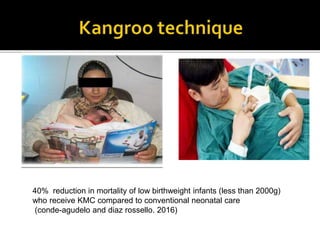
40% reduction in mortality of low birthweight infants (less than 2000g)
who receive KMC compared to conventional neonatal care
(conde-agudelo and diaz rossello. 2016)
Preterm
Meconium stained
Birth asphyxia
Pneumothorax
Pleural effusion
Diaphargmatic hernia
Choanal atresia
Airway malformation or obstruction
Maternal drugs
 Additional resources,additional personel
 Additional thermoregulation (portable warming pad,
polyethylene plastic wrap (29 wk) ,
 Prewarmed transport incubator.
 Use of oxymeter,blender to target spo2 85%-95%( avoid
high and prolonged oxygenation)
 Use lower pip 20-25cm of H2O during PPV/ High PEEP 5-8
cm of H2O
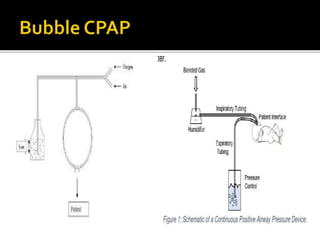
 Consider giving CPAP
 Consider surfactant
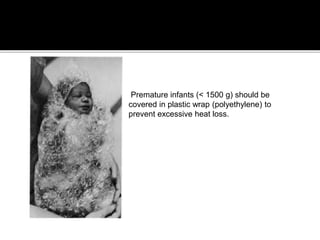
Premature infants (< 1500 g) should be
covered in plastic wrap (polyethylene) to
prevent excessive heat loss.
 More frequently in infants who are postmature and small for
gestational age.
 Risk factors :
Maternal HT
Maternal DM
Maternal heavy cigarette smoking
Maternal chronic respiratory or CV Dx
Post term pregnancy
Pre-eclampsia/eclampsia
Oligohydramnios
IUGR
Poor biophysical profile
Abnormal fetal HR pattern
1.MechanicalObstruction of the Airway
2. Pneumonitis
3.Pulmonary vasoconstriction /persistent pulmonary hypertension
4. Surfactant inactivation
CLINICALLY:
Evidence of postmaturity: peeling skin, long fingernails
The vernix, umbilical cord, and nails may be meconium-stained,
depending upon how long the infant has been exposed in
utero.
( nails will become stained after 6 hours and vernix after 12 to
14 hours of exposure)
The chest typically appears barrel-shaped, with an increased
anterior-posterior diameter caused by overinflation.
Auscultation : rales and rhonchi immediately after birth.
 Emphysema and hyperinflation
 Patchy asymmetric bilaterally homogeneous
areas of opacification due to atelectasis
similar to respiratory distress syndrome
(RDS).
 Coarse interstitial infiltrates +pneumothorax
 2D Echocardiogram for evaluation of PPH.
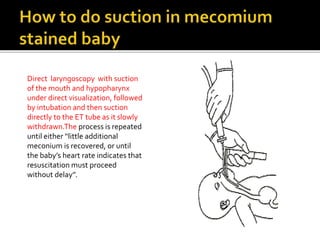
Direct laryngoscopy with suction
of the mouth and hypopharynx
under direct visualization, followed
by intubation and then suction
directly to the ET tube as it slowly
withdrawn.The process is repeated
until either ‘‘little additional
meconium is recovered, or until
the baby’s heart rate indicates that
resuscitation must proceed
without delay’’.
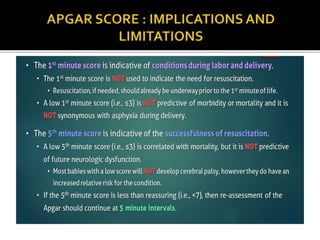
 WHO defines : “failure to initiate and sustain breathing at
birth” and based onAPGAR score as an APGAR score <7 at 1
minute.
 Criteria outlined by ACOG &AAP:
1. Prolonged merabolic or mixed acidemia(pH<7 in cord blood
sample)
2. Persistence of APGAR score of <3 at 5min or more
3. Clinical neurological manifestation as seizures, hypotonia,
coma or HIE in immediate neonatal period.
4. Evidence of multi organ dysfunction in immediate neonatal
period
 Choanal atresia-oral airway
 Pierre robin: place prone, ET thru nose with tip in posterior
pharynx
 Laryngeal web,cystic hygroma,cong goiter:
ET/tracheostomy
 Pneumothorax:percut needle aspiration
 Pleural effusion: per cut needle aspiration
 Cong diaphragmatic hernia: consider ETT
 Top 10Take-Home Messages for Neonatal Life Support
 Newborn resuscitation requires anticipation and preparation by providers who train
individually and as teams.
 Most newly born infants do not require immediate cord clamping or resuscitation and can
be evaluated and monitored during skin-to-skin contact with their mothers after birth.
 Inflation and ventilation of the lungs are the priority in newly born infants who need
support after birth.
 A rise in heart rate is the most important indicator of effective ventilation and response to
resuscitative interventions.
 Pulse oximetry is used to guide oxygen therapy and meet oxygen saturation goals.
 Chest compressions are provided if there is a poor heart rate response to ventilation after
appropriate ventilation corrective steps, which preferably include endotracheal intubation.
 The heart rate response to chest compressions and medications should be monitored
electrocardiographically.
 If the response to chest compressions is poor, it may be reasonable to provide epinephrine,
preferably via the intravenous route.
 Failure to respond to epinephrine in a newborn with history or examination consistent with
blood loss may require volume expansion.
 If all these steps of resuscitation are effectively completed and there is no heart rate
response by 20 minutes, redirection of care should be discussed with the team and family.
 THANKYOU

NEONATAL RESUSCITATION.pptx

  • 1.
    Neonatal Resuscitation By: Dr. SumeraAkram F.C.P.S Pediatrics
  • 2.
    AND WHOEVER SAVESA LIFE , IT IS AS THOUGH HE HAD SAVED ALL MANKIND (QURAN, 5:32 )
  • 3.
     Neonatal resuscitationis assistance of neonate in making physiological transition from intra uterine life to extra uterine life  lungs inflate:blood directed from heart to pulmonary vasculature: pulmonary vascular ressitance falls: systemic vascular resistance increases: PDA and foramen ovale closes in 1- 2 days.
  • 4.
    Neonatal mortality rateof Pakistan : 49/1000 live births ( 7% of Global Neonatal Deaths) Major: No/minimal assistance 10%: assistance to begin breathing at birth 1%: extensive resuscitative measures Neonatal resuscitation: simple, inexpensive, cost effective Problem: NNR often not initiated, incorrect use of methods
  • 7.
    The most important secondsin a baby’s life An infants’s very first minute outside of womb is critical in predicting newborn outcome Only 60% of asphyxiated newborns can be predicted before birth and the remaining 40% are identified during the “The Golden Minute “ The golden minute
  • 8.
    <30 seconds: completeinitial steps Warmth Drying Clear airway if necessary Stimulate 30-60 seconds: assess 2 vital characteristics Respiration (apnea/gasping/labored/unlabored) Heart rate (<100/>100bpm)
  • 10.
  • 11.
    ANTIPARTUM RISK FACTORS GestationalAgeless than 36 weeks GestationalAge greater than 41 wks Pre-eclampsia/Eclampsia Maternal HTN Multiple gestations Fetal Anemia Polyhydramnios Oligohydramnios Fetal Hydrops Fetal Macrosomia IUGR INTRAPARTUM RISK FACTORS Emergency C section Forceps/Vacuum delivery Breech/Abnormal presentation Category 2/3 fetal HR tracing Maternal Magnesium therapy Placental abruptio Intrapartum bleeding Chorioamnionitis, meconium aspirate Cord prolapse
  • 12.
     For alldeliveries, at least 1 person should be present who is skilled in neonatal resuscitation and is responsible only for the infant.  Additional personnel should be immediately available to assist in tasks that may be required as part of resuscitation, including intubation, medication administration, and emergency procedures, if needed.
  • 14.
  • 15.
     a highratio of skin surface area to body weight (in newboms as much as 75% of body heat loss may be from an uncovered head.)  Brown fat  very limited capacity for metabolic heat production.  not capable of effective shivering,
  • 16.
    •A baby willlose heat by radiation to colder surfaces such as windows and walls •A newborn will lose heat by conduction if placed naked on an uncovered table - never do it •Immediately after birth (or a bath), a baby loses heat by evaporation •A draught may cause a newborn to lose (or gain) heat through convection
  • 17.
    Prolonged cold injury oedema, sclerema,haem orrhage (especially pulmonary haemorrhage) and jaundice. Impaired cardiac functionand impaired growth Data suggested hypothermic neonate is more likely to die than those admitted with normal temperatures
  • 18.
     Optimum roomtemperature shld be 23-25 C  Windows and doors shld be closed to avoid heat loss by cool draught of air  Vernix, dry towel  Heater, warmer, incubator  Avoid immediate bath
  • 19.
     It wasoriginally developed in 1952 by an anesthesiologist at Columbia University, Dr.Virginia Apgar as way to address the need for a standardized way to evaluate infants shortly after birth.
  • 25.
    Full Term ornot? Immediate cry ? Meconium clear? Vigorous /muscle tone ? YES :Do not require resuscitation Dry Skin to skin contact Covered with dry linen to maintain temperature stimulate NO :require resuscitation; follow ABCD Initial steps in stabilization(warmth, clear airway, dry, stimulate) Ventilation Chest compressions Administration of epinephrine& /or volume expansion
  • 26.
    1. Dry thebaby 2. Provide warmth 3. Head position “ sniffing position” 4. Clearing the airway (BULB SUCKER,PENGUIN SUCKER) Remember never do vigorous suction .always do mouth then nose 5.Tactile stimulation for breathing gently stroking the soles or rubbing the back
  • 27.
  • 30.
  • 31.
    Vigorous suction andstimulation can injure the baby
  • 32.
     Positioning, clearingairway and drying baby provides enough stimulation to initiate breathing  Assess and reassess for not more than 10 seconds after every 30 seconds by looking, listening and feeling the chest movement and heart rate  Increase in heart rate is the most sensitive indicator of a successful response to each step practiced
  • 33.
     Palpation :at the umbilical, femoral, or brachial arteries  auscultation : stethoscope  The NRP recommends counting the heart beats heard over 6 s and multiplying by 10 to determine HR in bpm  when a stethoscope is not available, palpation of the umbilical cord provides greater accuracy.  Pulse oxymetery
  • 34.
    1 minute 60-65% 2minutes 65-70% 3 minutes 70-75% 4 minutes 75-80% 5 minutes 80-85% 10 minutes 85-90%
  • 35.
    Pulse oxymeter  lowperipheral perfusion,  low volume state,  vernix effect  acrocyanosis,  signal dropout,  movement artefacts,  arrhythmias Heart rate: Finding brachial and femoral pulse Dextrocardia,pneumothorax, diaphragmatic hernia
  • 36.
    Needed when thereis no improvement in HR (< 100/min) Two types of ventilation breaths needed: 1. inflation breaths- 5 breaths at 30 cmH2O to open the alveoli 2. Ventilation/rescue breaths- at 15cmH2O to continue ventilation(30 breaths /min)  REMEMBER TWO-THREE- BREATH With or without supplemental oxygen(humidfied 21% at 10 l/min) Devices: BMV, ET (endotracheal tube),LMA(laryngeal mask airway)
  • 37.
    Ambu bag isof 300ml caoacity Size 1 mask for term Size 0 mask for preterm Size 00 mask for extremely preterm
  • 39.
    Always reasses afterfirst 5 inflation breaths for chest movement and consider readjusting mask, making seal and suction airway b4 jumping to the next level Mnemonic; MR-SOPA for reassessment  M:mask adjustment  R:reposition airway  S:suction  O:open mouth chin lift jaw thurst  P:pressure increase  A:alternate airway(ETT,LMV)
  • 40.
    Extension of neckwith help shoulder roll:: to open the airway
  • 42.
    Needed when: 1. Initialendotracheal suctioning of non vigorous meconium stained newborn 2. If BMV is ineffective/prolonged (HR less than 60) 3. Preterm for surfactant 4. Diaphragmatic hernia suspected (When intubation is performed Make sure to minimize hypoxia during each attempt of intubation and limit each intubation attempt to 20 second) Pass orogastric or nasogastric tube if prolong resuscitation required.
  • 44.
     Miller laryngoscope bladepreferred than macintosh blade  Size 00 forVLBW, size 0 for preterm, size 1 for term  240 ml self inflation bag. ( tidal volume 5- 10ml/kg )
  • 45.
    INDICATION: Started when HR<60per minute despite adequate ventilation with 100% oxygen for 30 sec SITE: Delivered at lower third of sternum, to depth 1/3 of AP diameter of chest TECHNIQUES: 2 thumb-encircling hands technique (two personel ) Compression with 2 fingers (one person) 3:1 ratio::[ 90 comp:30 ventilations) REMEMBER ONE ANDTWO ANDTHREE AND BREATH
  • 46.
    Stop chest cpmpressionsif HR more than 60/min after 40-60 sec
  • 48.
    Two finger andtwo thumb technique
  • 49.
    Rarely indicated INDICATION HR remains<60bpm,despite adequate ventilation(ET) with 100% Oxygen & chest compressions ROUTE Better and easy to pass umbilical vein cather meanwhile u are resuscitating the baby Thru ETT IV IO
  • 50.
    Umbilical vein catheterizationmay be a life-saving procedure in neonates who require vascular access and resuscitation.
  • 51.
     After properplacement of the umbilical line, intravenous (IV) fluids and medication may be administered to critically ill neonates.[1]  In an emergency, it is best to advance the catheter only 1-2 cm beyond the point at which good blood return is obtained so as to avoid injecting hyperosmolar fluids into the portal vessels and causing liver necrosis.
  • 52.
    Route of administration:intravenous(thru uvc ideal) and thru ETT Recommended dose:  0.1 ml/kg per dose in 1:10,000 dilution thru uvc (available in pakistan as 1:1000 packing and need to be further diluted in 9 cc of distill water to make 1:10000 dilution ) 0.5-1.0ml/kg thru ETT Can repeat after 3-5 mins upto 3 doses
  • 53.
    Indication: Shock, Suspected or knownblood loss Type of fluid: Isotonic crystalloid solution: normal saline, ringer lactate Blood; o-ve crossed matched with mother blood Dose : 10 ml/kg 10% Dextrose: 2.5 ml/kg through UVC or peripheral vein
  • 54.
     Use ofSodium bicarbonate controversial ( after prolong resuscitation and severely depressed baby )  ABG ‘s and 1:1 dilution according to base deficit
  • 55.
     Dexamethasone (cancause Metabolic derangement. Increased risk of neonatal sepsis, risk of bowel perforation, neurodevelopmental delay and intraventricular haemorrhage)  Atropine  Calcium  Naloxone  Intracardiac adrenaline
  • 56.
    1. Epinephrine administrationhas been shown to increase mean arterial pressure and carotid blood flow in asphyxiated bradycardic newborn s 2. Adrenaline is a non-selective adrenergic agonist with potent β1 and moderate α1 and β2-receptor activity. 3. Epinephrine is a sympathomimetic drug . Increased myocardial force of contraction (positive inotrope) and heart rate (positive chronotrope) occur as a result of β1 receptor stimulation. 1. ATROPINE is generally not indicated in neonatal resuscitation, because bradycardia in the newborn is almost always related to hypoxia and not vagal stimulation. 2. Atropine increases the heart rate and improves the atrioventricular conduction by blocking the parasympathetic influences on the heart. 3. Atropine binds to and inhibit muscarinic acetylcholine receptors, producing a wide range of anticholinergic effects.
  • 57.
    consider stopping NNRif the heart rate remains undetectable for 20 minutes
  • 58.
    Proper documentation Parental counselling Shiftingof baby to NICU under thermoneutral environment Need monitoring ,evaluation of BSR andVitals
  • 59.
     23% Reductionin neonatal mortality when 7.1% chlorhexidine digluconate was used on the first day of life, as demonstrated by the clinical trials conducted in South Asia.  Recent research has shown that when hospitalization is not possible a safe, effective and simpler antibiotic treatment can be provided in lower-level facilities.  To start with :  inj cefotaxime (50 mg/kg BD) inj amikacin (15 mg/kg OD)  inj ampicillin And inj gentacin for meconium stained
  • 60.
    40% reduction inmortality of low birthweight infants (less than 2000g) who receive KMC compared to conventional neonatal care (conde-agudelo and diaz rossello. 2016)
  • 62.
    Preterm Meconium stained Birth asphyxia Pneumothorax Pleuraleffusion Diaphargmatic hernia Choanal atresia Airway malformation or obstruction Maternal drugs
  • 63.
     Additional resources,additionalpersonel  Additional thermoregulation (portable warming pad, polyethylene plastic wrap (29 wk) ,  Prewarmed transport incubator.  Use of oxymeter,blender to target spo2 85%-95%( avoid high and prolonged oxygenation)  Use lower pip 20-25cm of H2O during PPV/ High PEEP 5-8 cm of H2O  Consider giving CPAP  Consider surfactant
  • 64.
    Premature infants (<1500 g) should be covered in plastic wrap (polyethylene) to prevent excessive heat loss.
  • 65.
     More frequentlyin infants who are postmature and small for gestational age.  Risk factors : Maternal HT Maternal DM Maternal heavy cigarette smoking Maternal chronic respiratory or CV Dx Post term pregnancy Pre-eclampsia/eclampsia Oligohydramnios IUGR Poor biophysical profile Abnormal fetal HR pattern
  • 66.
    1.MechanicalObstruction of theAirway 2. Pneumonitis 3.Pulmonary vasoconstriction /persistent pulmonary hypertension 4. Surfactant inactivation
  • 67.
    CLINICALLY: Evidence of postmaturity:peeling skin, long fingernails The vernix, umbilical cord, and nails may be meconium-stained, depending upon how long the infant has been exposed in utero. ( nails will become stained after 6 hours and vernix after 12 to 14 hours of exposure) The chest typically appears barrel-shaped, with an increased anterior-posterior diameter caused by overinflation. Auscultation : rales and rhonchi immediately after birth.
  • 68.
     Emphysema andhyperinflation  Patchy asymmetric bilaterally homogeneous areas of opacification due to atelectasis similar to respiratory distress syndrome (RDS).  Coarse interstitial infiltrates +pneumothorax  2D Echocardiogram for evaluation of PPH.
  • 70.
    Direct laryngoscopy withsuction of the mouth and hypopharynx under direct visualization, followed by intubation and then suction directly to the ET tube as it slowly withdrawn.The process is repeated until either ‘‘little additional meconium is recovered, or until the baby’s heart rate indicates that resuscitation must proceed without delay’’.
  • 72.
     WHO defines: “failure to initiate and sustain breathing at birth” and based onAPGAR score as an APGAR score <7 at 1 minute.  Criteria outlined by ACOG &AAP: 1. Prolonged merabolic or mixed acidemia(pH<7 in cord blood sample) 2. Persistence of APGAR score of <3 at 5min or more 3. Clinical neurological manifestation as seizures, hypotonia, coma or HIE in immediate neonatal period. 4. Evidence of multi organ dysfunction in immediate neonatal period
  • 74.
     Choanal atresia-oralairway  Pierre robin: place prone, ET thru nose with tip in posterior pharynx  Laryngeal web,cystic hygroma,cong goiter: ET/tracheostomy  Pneumothorax:percut needle aspiration  Pleural effusion: per cut needle aspiration  Cong diaphragmatic hernia: consider ETT
  • 75.
     Top 10Take-HomeMessages for Neonatal Life Support  Newborn resuscitation requires anticipation and preparation by providers who train individually and as teams.  Most newly born infants do not require immediate cord clamping or resuscitation and can be evaluated and monitored during skin-to-skin contact with their mothers after birth.  Inflation and ventilation of the lungs are the priority in newly born infants who need support after birth.  A rise in heart rate is the most important indicator of effective ventilation and response to resuscitative interventions.  Pulse oximetry is used to guide oxygen therapy and meet oxygen saturation goals.  Chest compressions are provided if there is a poor heart rate response to ventilation after appropriate ventilation corrective steps, which preferably include endotracheal intubation.  The heart rate response to chest compressions and medications should be monitored electrocardiographically.  If the response to chest compressions is poor, it may be reasonable to provide epinephrine, preferably via the intravenous route.  Failure to respond to epinephrine in a newborn with history or examination consistent with blood loss may require volume expansion.  If all these steps of resuscitation are effectively completed and there is no heart rate response by 20 minutes, redirection of care should be discussed with the team and family.
  • 79.