NCD Update: Policies and Programs for the
Prevention and Control of NCDs
Jeffrey Meer
Special Advisor
for Global Health
CORE Group
April 23, 2013
Baltimore, MD
What are NCDs?
• Cardiovascular Disease
• Cancers
• Diabetes
• Chronic Obstructive Pulmonary Disease
• [Mental Health]
Context
• NCDs are responsible for 63 percent of all
deaths globally.
• NCD deaths are projected to increase by
15% globally between 2010 and 2020
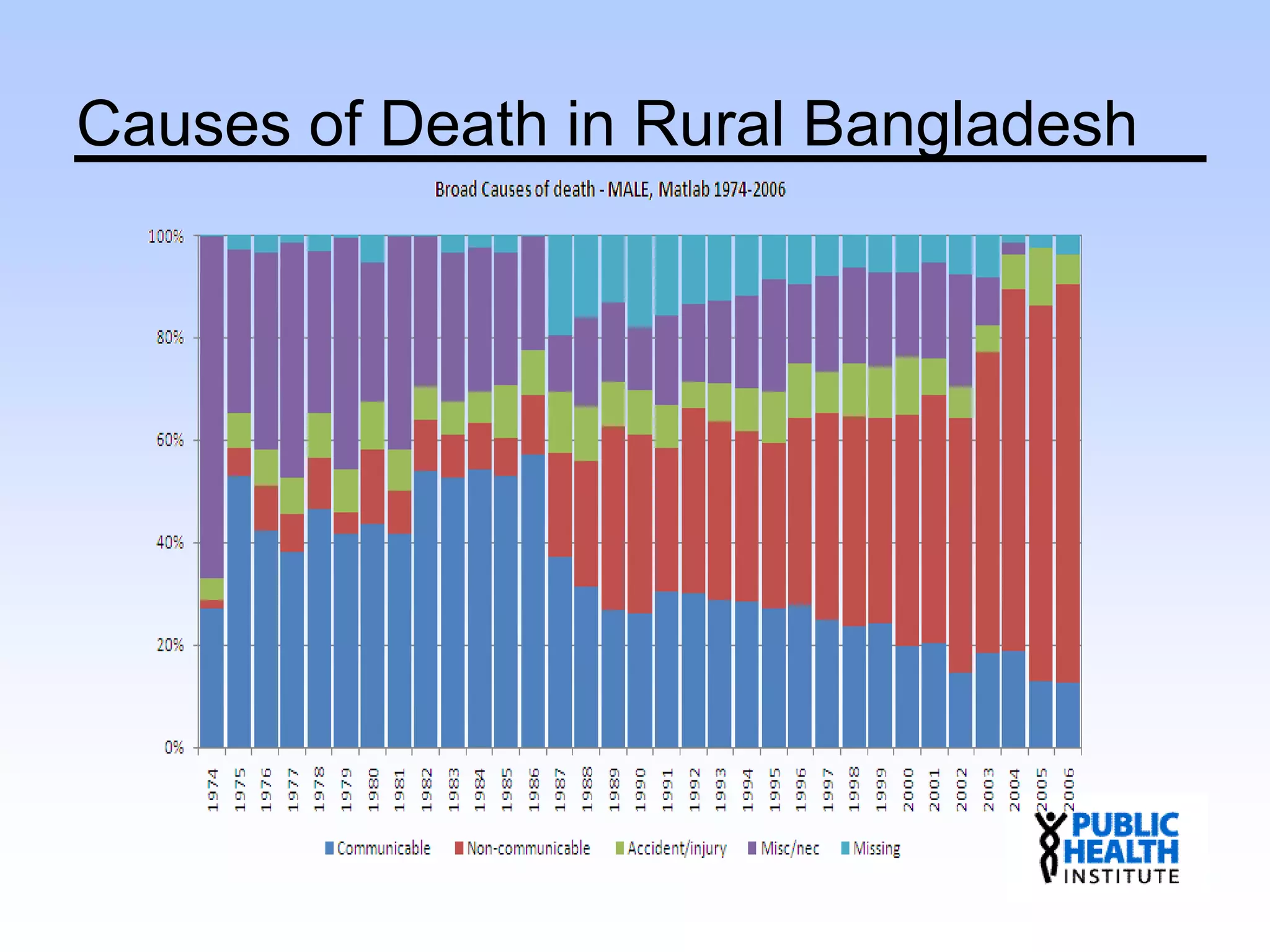
Causes of Death in Rural Bangladesh
Links Between NCDs and MCH
• Cervical cancer and HPV
• Breast cancer
• Gestational and Type-I diabetes
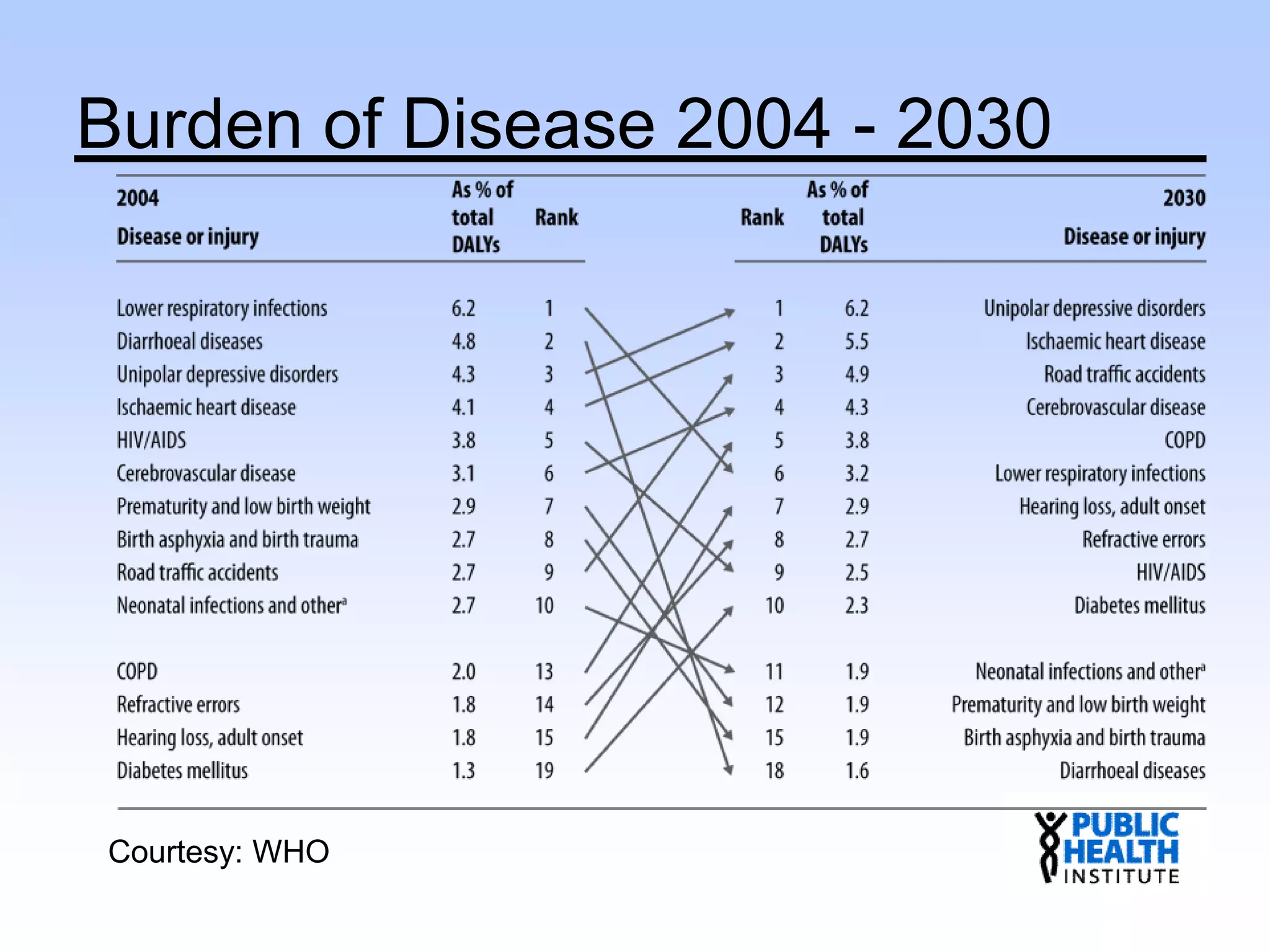
Burden of Disease 2004 - 2030
Courtesy: WHO
Common Risk Factors
• Smoking Tobacco
• Inappropriate use of alcohol
• Inadequate exercise
• Poor nutrition
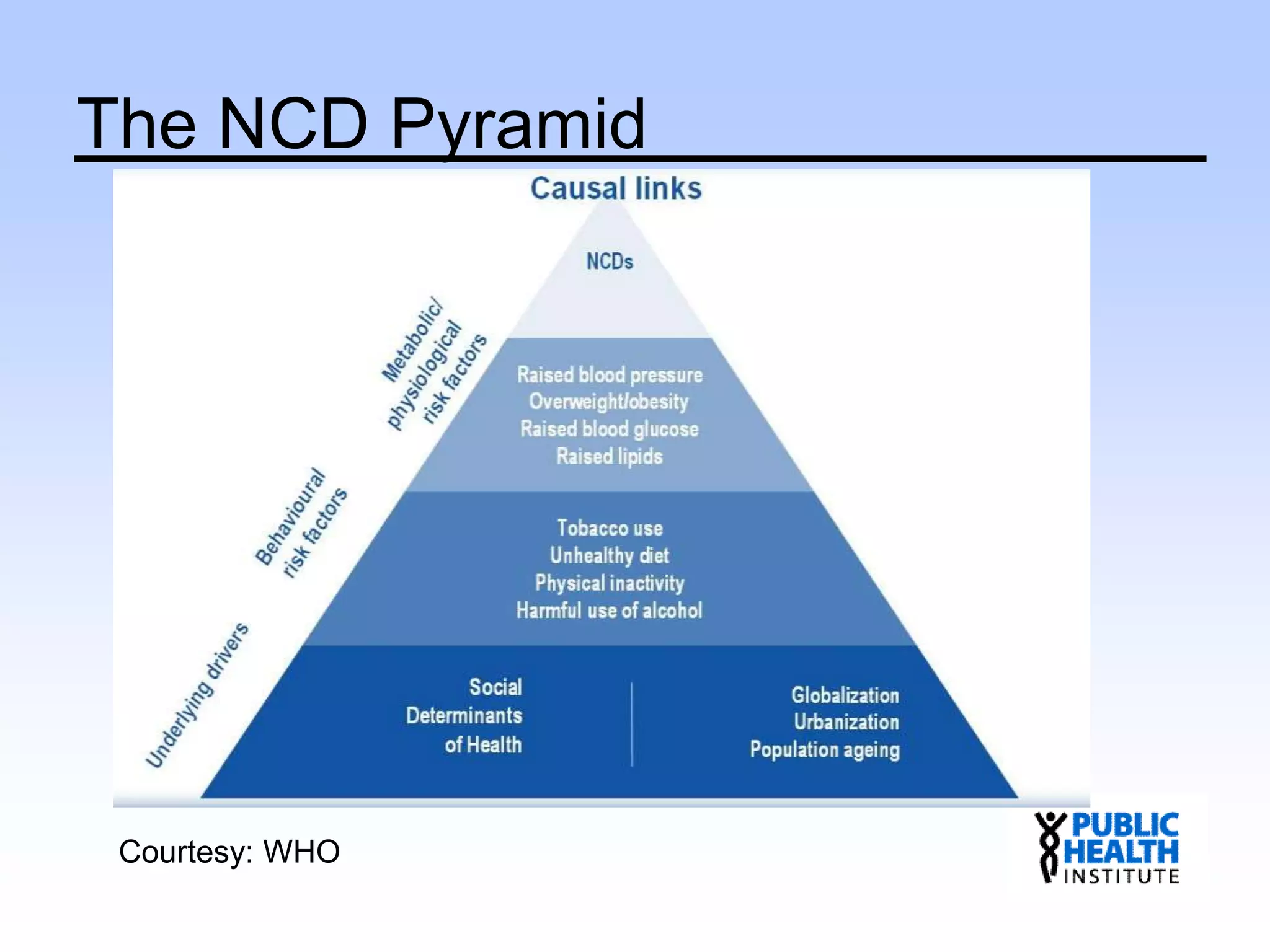
The NCD Pyramid
Courtesy: WHO
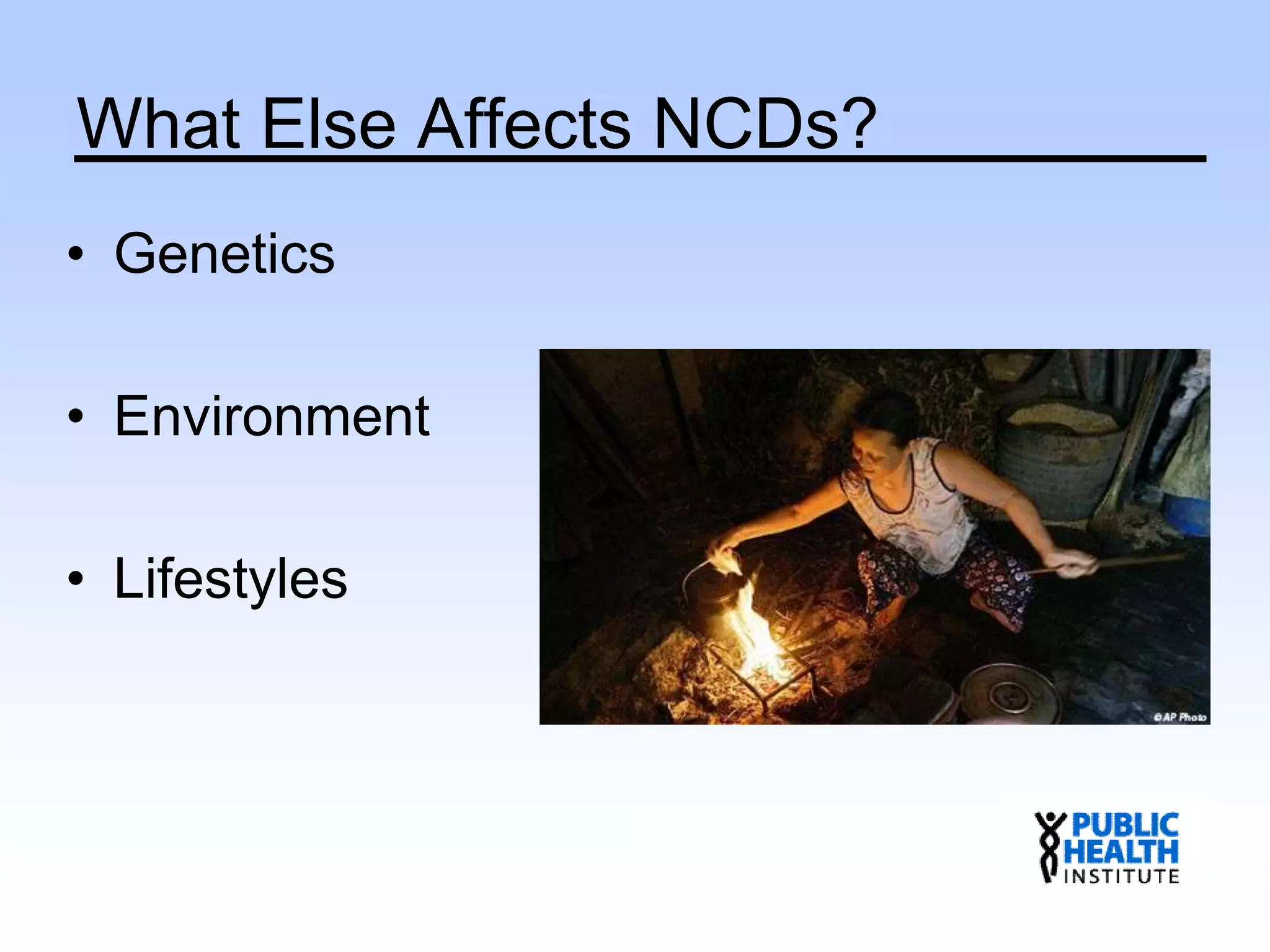
What Else Affects NCDs?
• Genetics
• Environment
• Lifestyles
Myths about NCDs
• Less common than
infectious diseases (HIV,
TB, malaria, diarrhea)
• Unrelated to infectious
diseases
• Only for the rich and aged
• Too expensive and
complex to treat
• Take $ and focus away
from infectious diseases
Development Implications
• Premature death
• Disability
• Loss of productivity
• Cost of treatment and care
• Less opportunity for education
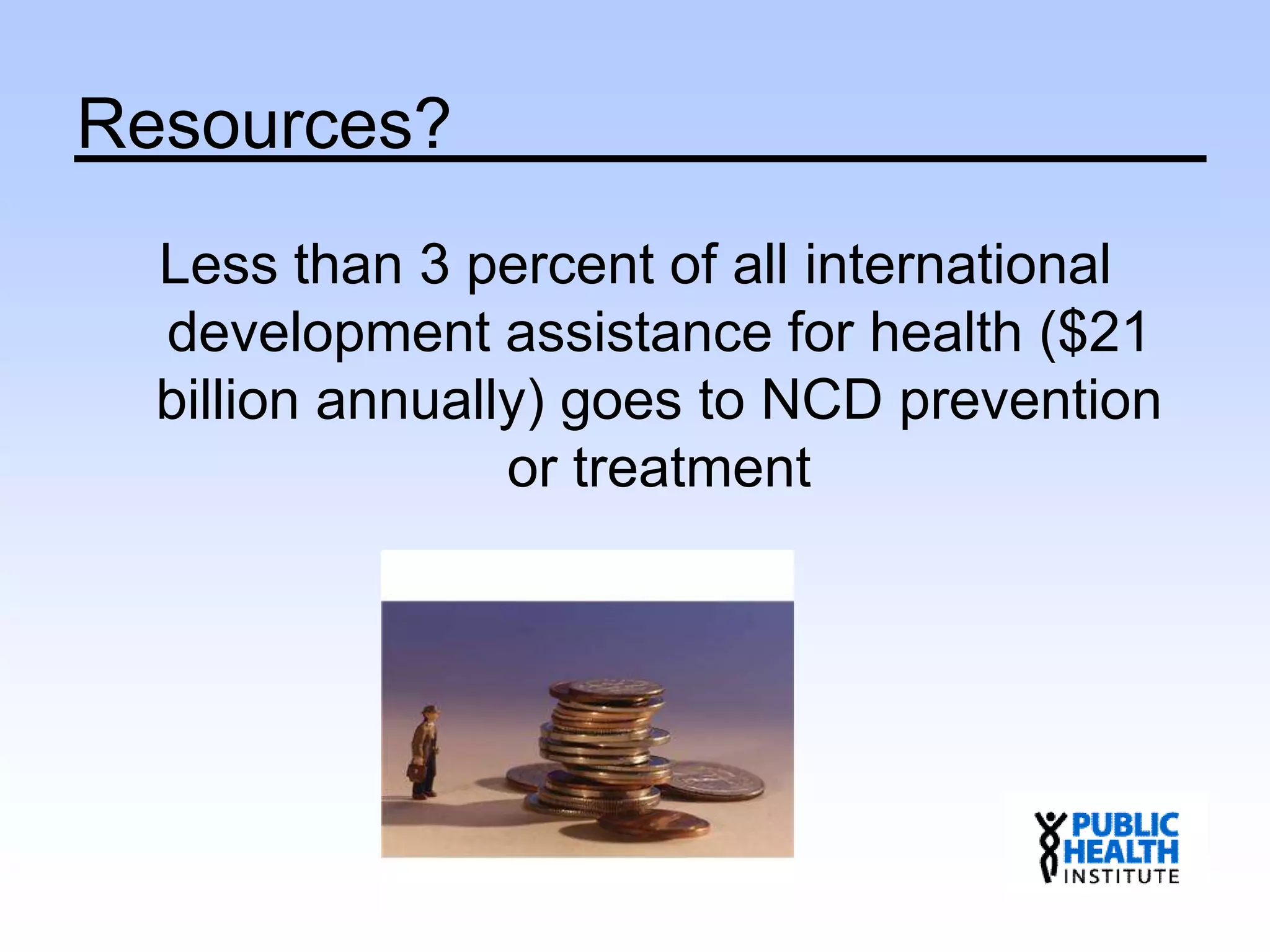
Resources?
Less than 3 percent of all international
development assistance for health ($21
billion annually) goes to NCD prevention
or treatment
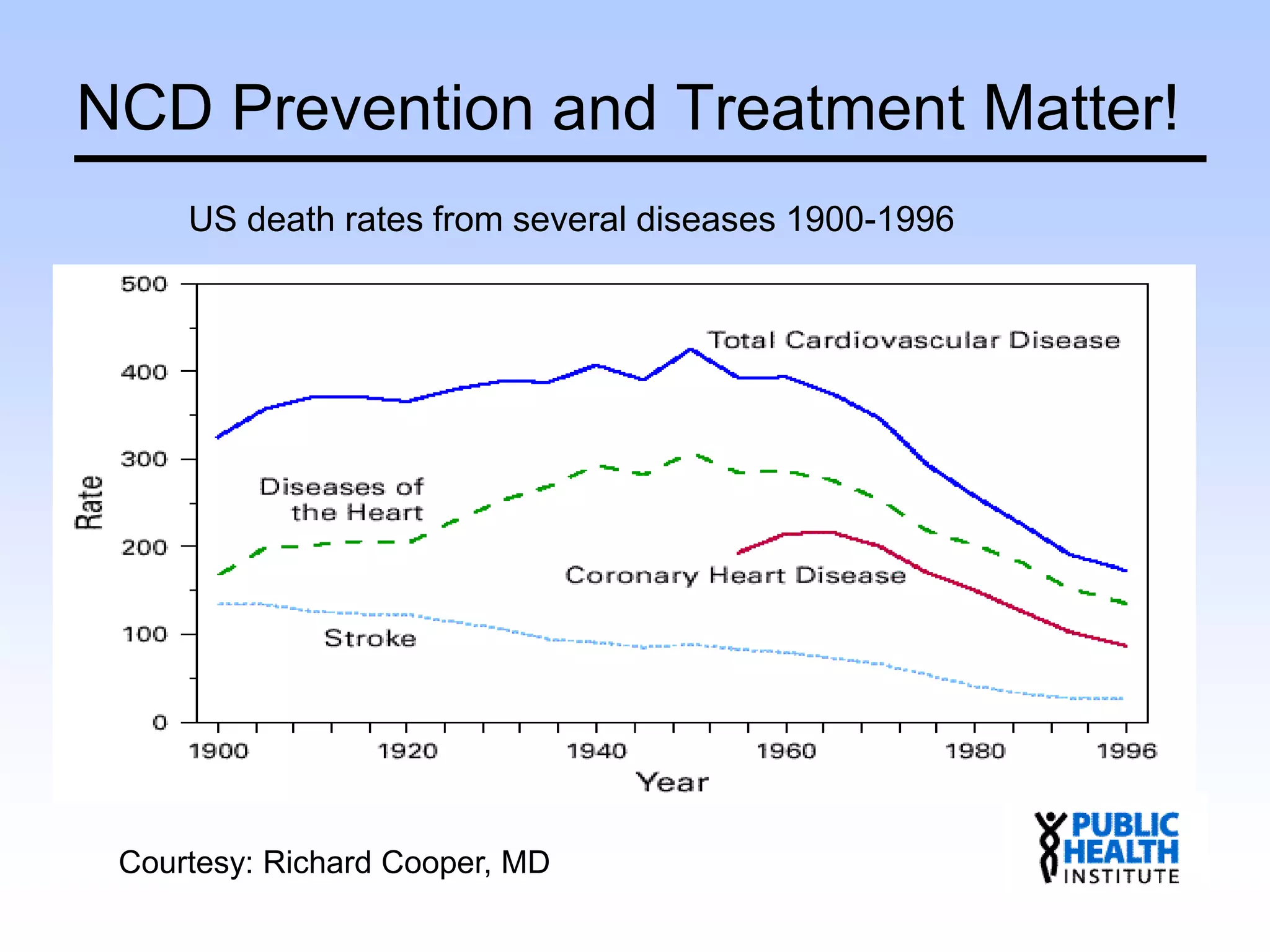
NCD Prevention and Treatment Matter!
US death rates from several diseases 1900-1996
Courtesy: Richard Cooper, MD
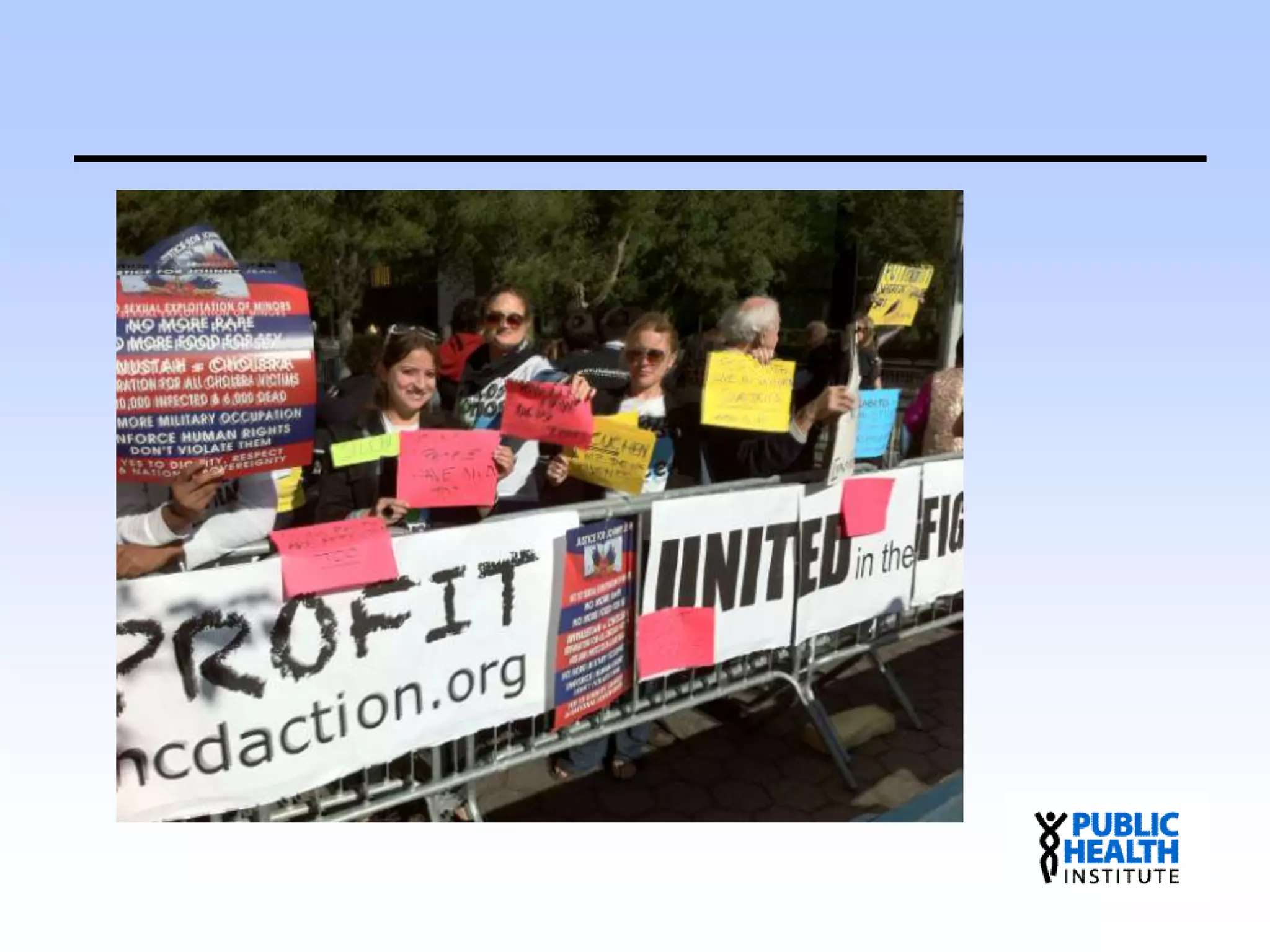
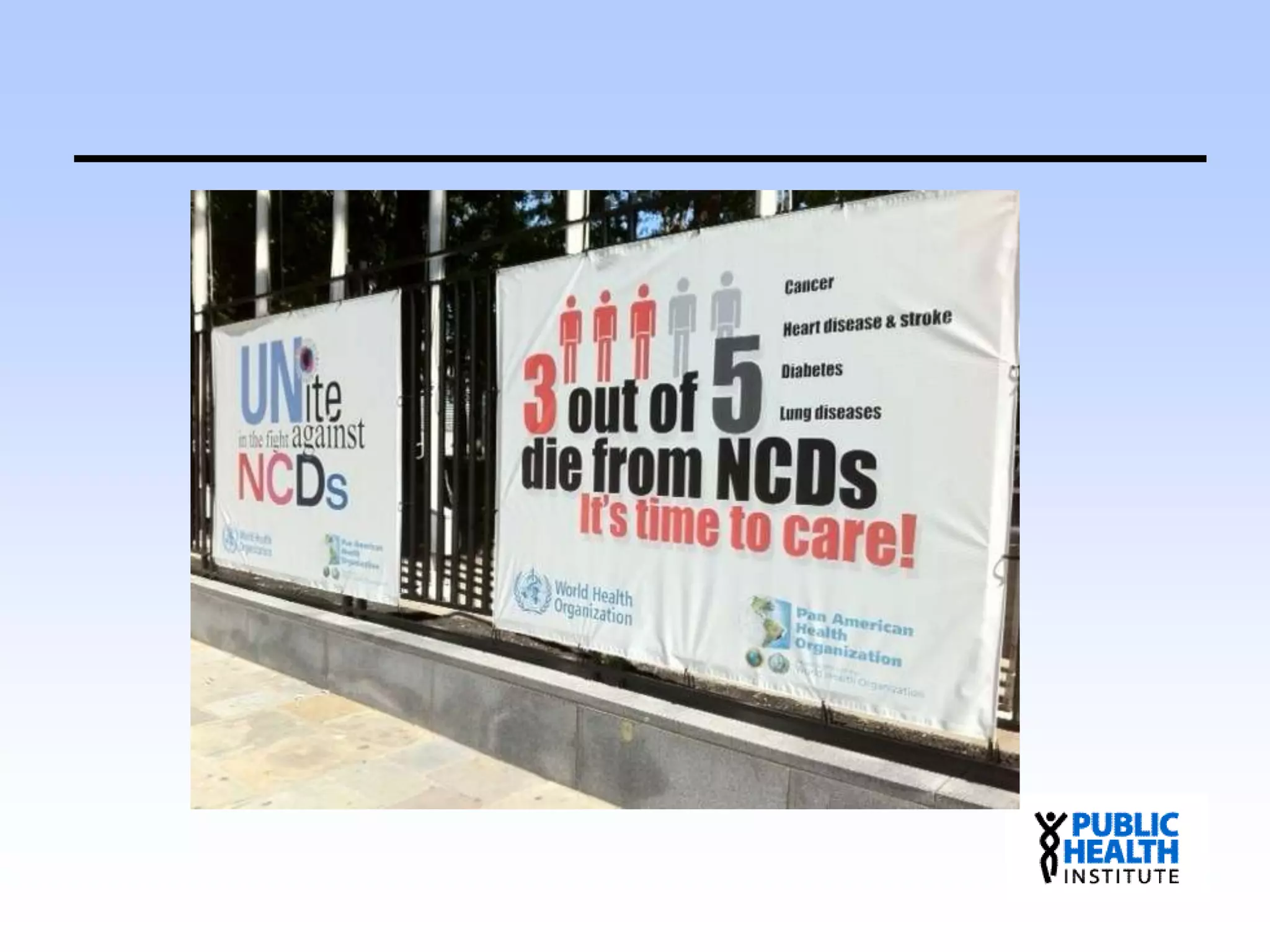
United Nations High Level Meeting on
NCDs
September 19-20, 2011 New York, NY
The UN Political Declaration on NCDs
• Description and scope of the issue
• Whole of government, whole of society
• Reducing risk factors
• Strengthening national policies and health
systems
• International cooperation and partnerships
• Research, M&E, follow up
Political Declaration (continued)
• Prevention is the key
• Social determinants and
poverty
• Doha/TRIPS
• Engaging the private
sector (except tobacco)
• Women
• Children and adolescents
• Reproductive health
• Climate Change
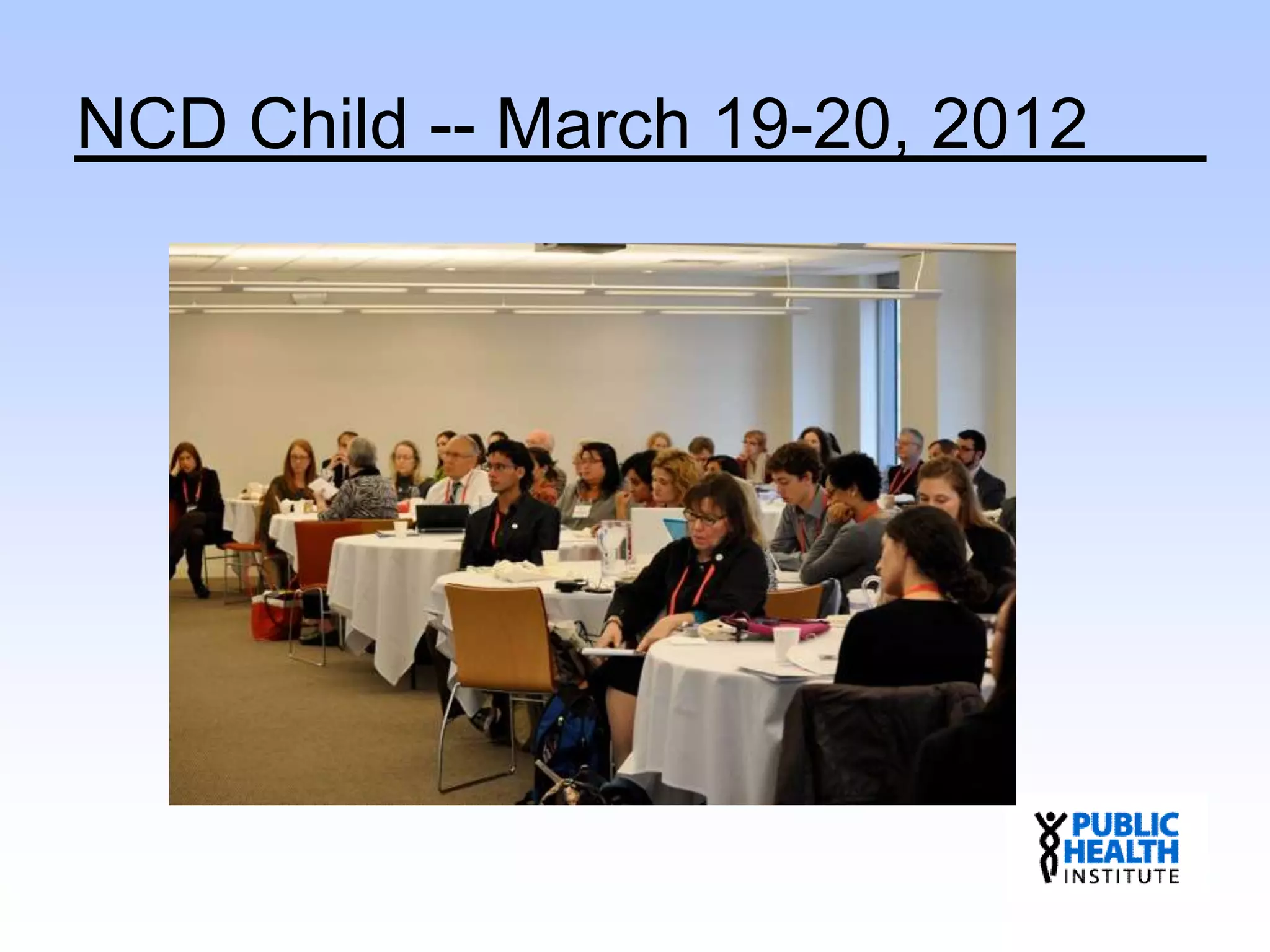
NCD Child -- March 19-20, 2012
World Health Assembly May 2012
• First global agreement on an
NCD target
• 25 percent reduction in
mortality from NCDs by 2025
• Continuing process for
additional targets
• Member states meeting prior
to “end of October 2012”
WHO Ad Hoc Meeting November 2012
• Reaffirmation of “25 x 25”
• Eight additional goals
• 25 new targets
Who’s in Charge for the USA?
• Health and Human Services
• USAID
• State Department
• US Mission to the United Nations
• Centers for Disease Control and
Prevention
Now Under Discussion by UN and WHO
• Draft Action Plan on NCDs
• Multisectoral engagement for NCDs
• NCDs in the “Sustainable Development
Goals” post-2015
Thank You!
• www.ncdroundtable.org
• www.ncdchild.org
• www.ncdalliance.org

NCD Update: Policies and Programs for the Prevention and Control of NCD's_Jeff Meer_4.23.13

  • 1.
    NCD Update: Policiesand Programs for the Prevention and Control of NCDs Jeffrey Meer Special Advisor for Global Health CORE Group April 23, 2013 Baltimore, MD
  • 2.
    What are NCDs? •Cardiovascular Disease • Cancers • Diabetes • Chronic Obstructive Pulmonary Disease • [Mental Health]
  • 3.
    Context • NCDs areresponsible for 63 percent of all deaths globally. • NCD deaths are projected to increase by 15% globally between 2010 and 2020
  • 4.
    Causes of Deathin Rural Bangladesh
  • 5.
    Links Between NCDsand MCH • Cervical cancer and HPV • Breast cancer • Gestational and Type-I diabetes
  • 6.
    Burden of Disease2004 - 2030 Courtesy: WHO
  • 7.
    Common Risk Factors •Smoking Tobacco • Inappropriate use of alcohol • Inadequate exercise • Poor nutrition
  • 8.
  • 9.
    What Else AffectsNCDs? • Genetics • Environment • Lifestyles
  • 10.
    Myths about NCDs •Less common than infectious diseases (HIV, TB, malaria, diarrhea) • Unrelated to infectious diseases • Only for the rich and aged • Too expensive and complex to treat • Take $ and focus away from infectious diseases
  • 11.
    Development Implications • Prematuredeath • Disability • Loss of productivity • Cost of treatment and care • Less opportunity for education
  • 12.
    Resources? Less than 3percent of all international development assistance for health ($21 billion annually) goes to NCD prevention or treatment
  • 13.
    NCD Prevention andTreatment Matter! US death rates from several diseases 1900-1996 Courtesy: Richard Cooper, MD
  • 14.
    United Nations HighLevel Meeting on NCDs September 19-20, 2011 New York, NY
  • 17.
    The UN PoliticalDeclaration on NCDs • Description and scope of the issue • Whole of government, whole of society • Reducing risk factors • Strengthening national policies and health systems • International cooperation and partnerships • Research, M&E, follow up
  • 18.
    Political Declaration (continued) •Prevention is the key • Social determinants and poverty • Doha/TRIPS • Engaging the private sector (except tobacco) • Women • Children and adolescents • Reproductive health • Climate Change
  • 19.
    NCD Child --March 19-20, 2012
  • 20.
    World Health AssemblyMay 2012 • First global agreement on an NCD target • 25 percent reduction in mortality from NCDs by 2025 • Continuing process for additional targets • Member states meeting prior to “end of October 2012”
  • 21.
    WHO Ad HocMeeting November 2012 • Reaffirmation of “25 x 25” • Eight additional goals • 25 new targets
  • 22.
    Who’s in Chargefor the USA? • Health and Human Services • USAID • State Department • US Mission to the United Nations • Centers for Disease Control and Prevention
  • 23.
    Now Under Discussionby UN and WHO • Draft Action Plan on NCDs • Multisectoral engagement for NCDs • NCDs in the “Sustainable Development Goals” post-2015
  • 24.
    Thank You! • www.ncdroundtable.org •www.ncdchild.org • www.ncdalliance.org