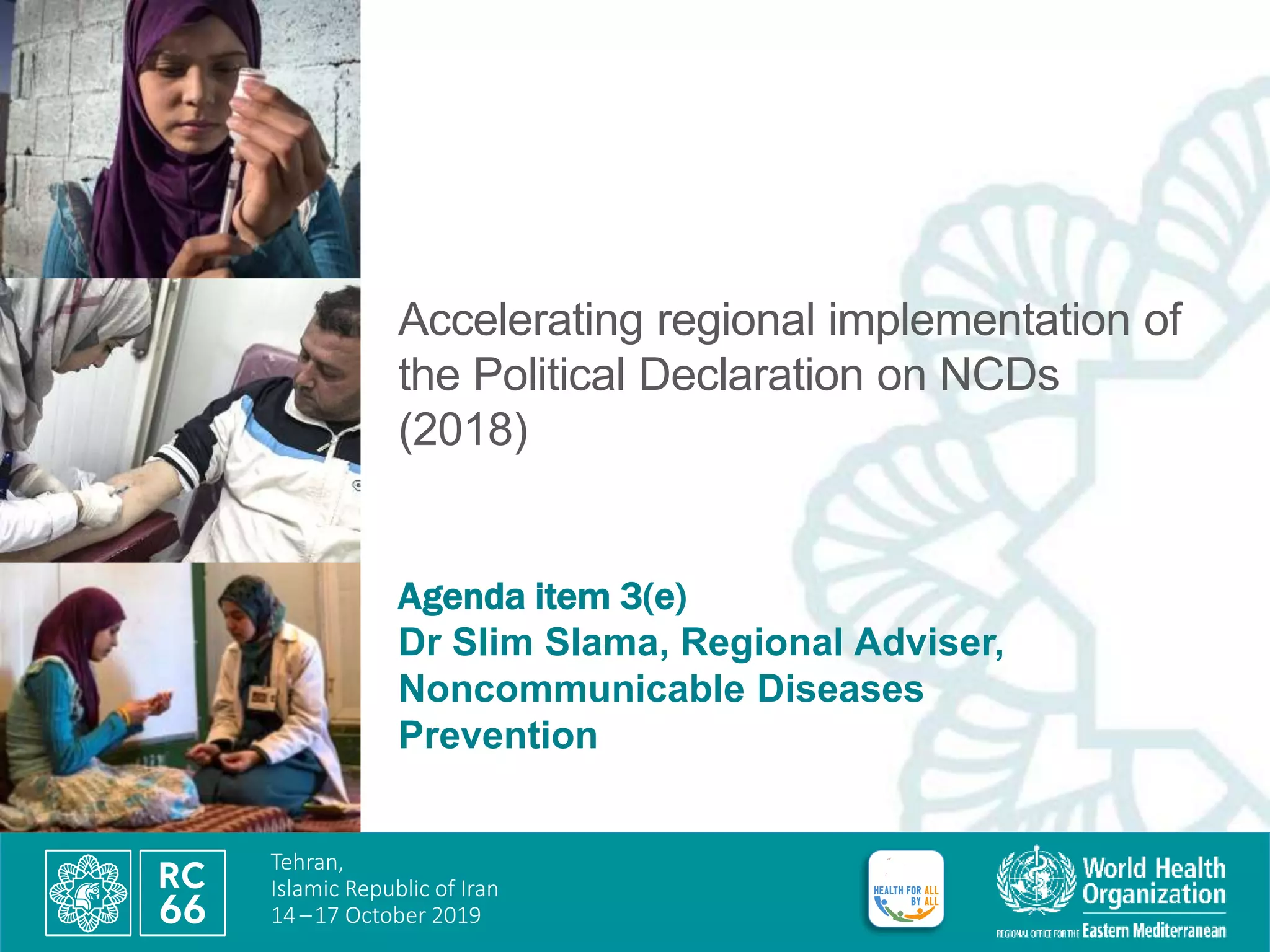
Tehran,
Islamic Republic of Iran
14 –17 October 2019
Agenda item 3(e)
Dr Slim Slama, Regional Adviser,
Noncommunicable Diseases
Prevention
Accelerating regional implementation of
the Political Declaration on NCDs
(2018)
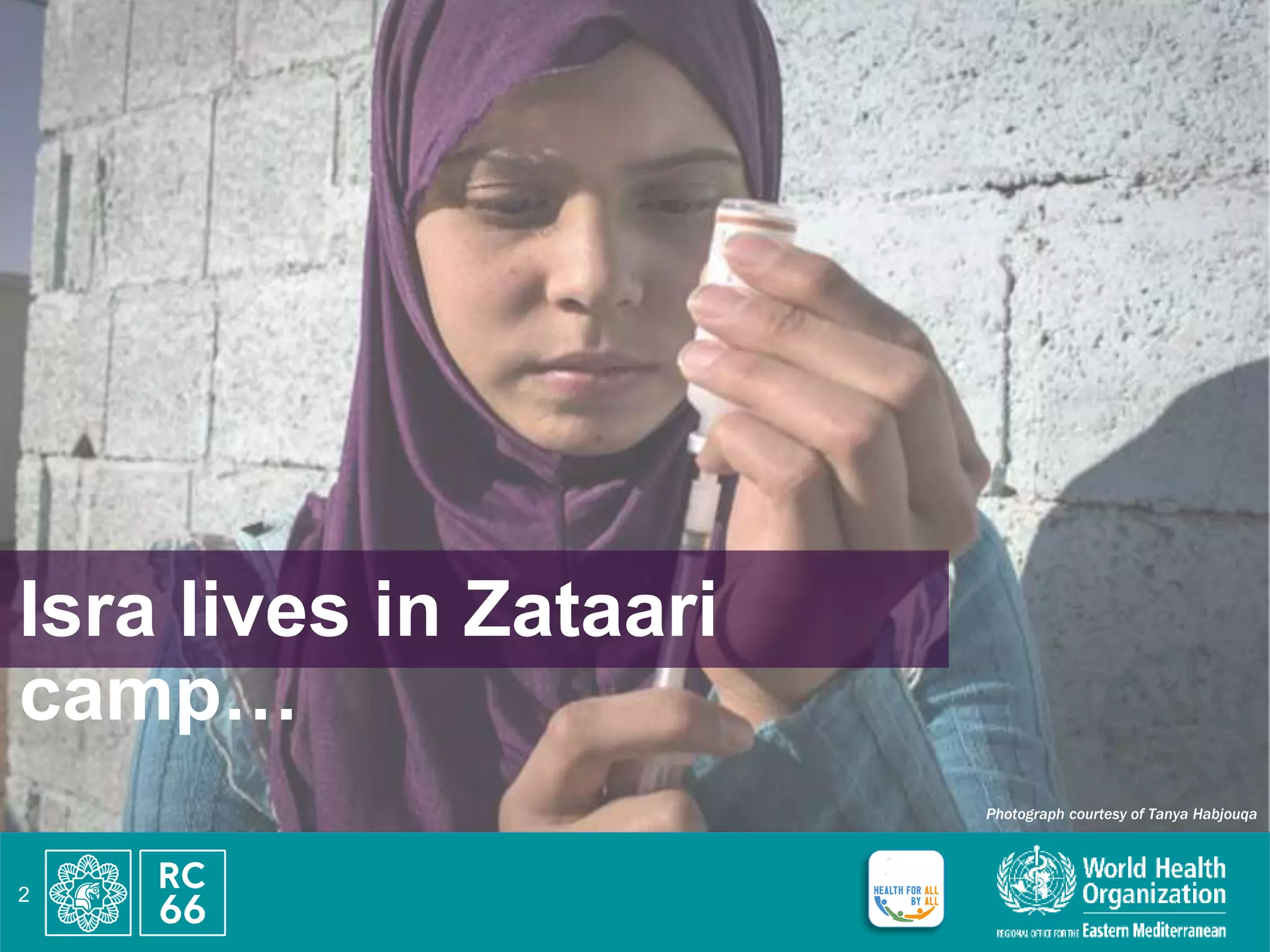
Isra lives in Zataari
camp…
2
Photograph courtesy of Tanya Habjouqa
ENOUGH
IS
ENOUGH
3
0
10
20
30
40
50
60
70
Regio
Global
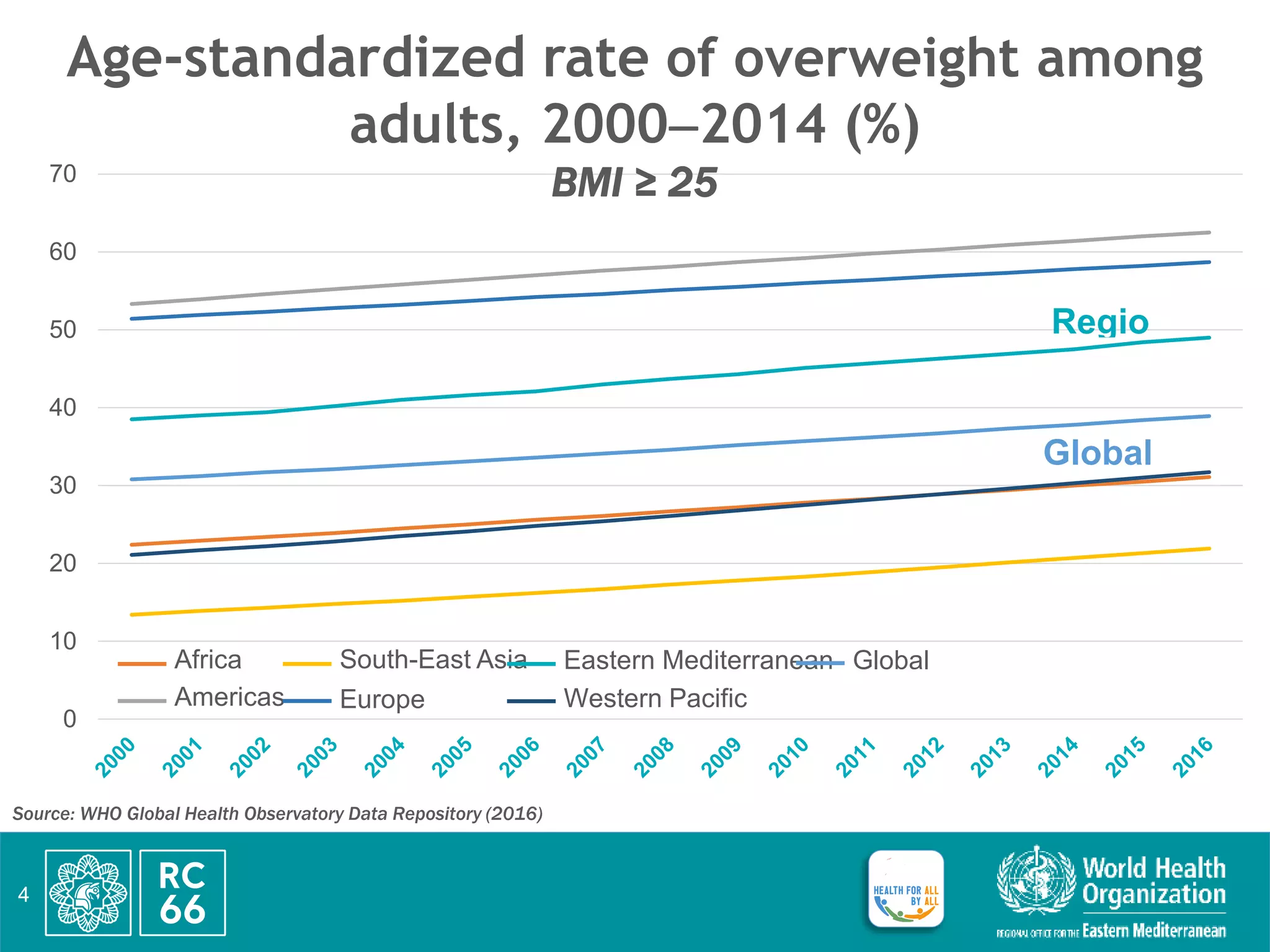
Age-standardized rate of overweight among
adults, 20002014 (%)
BMI ≥ 25
Source: WHO Global Health Observatory Data Repository (2016)
Africa
Americas
South-East Asia
Europe
Eastern Mediterranean
Western Pacific
Global
4
0
2
4
6
8
10
12
14
16
Regio
n
Global
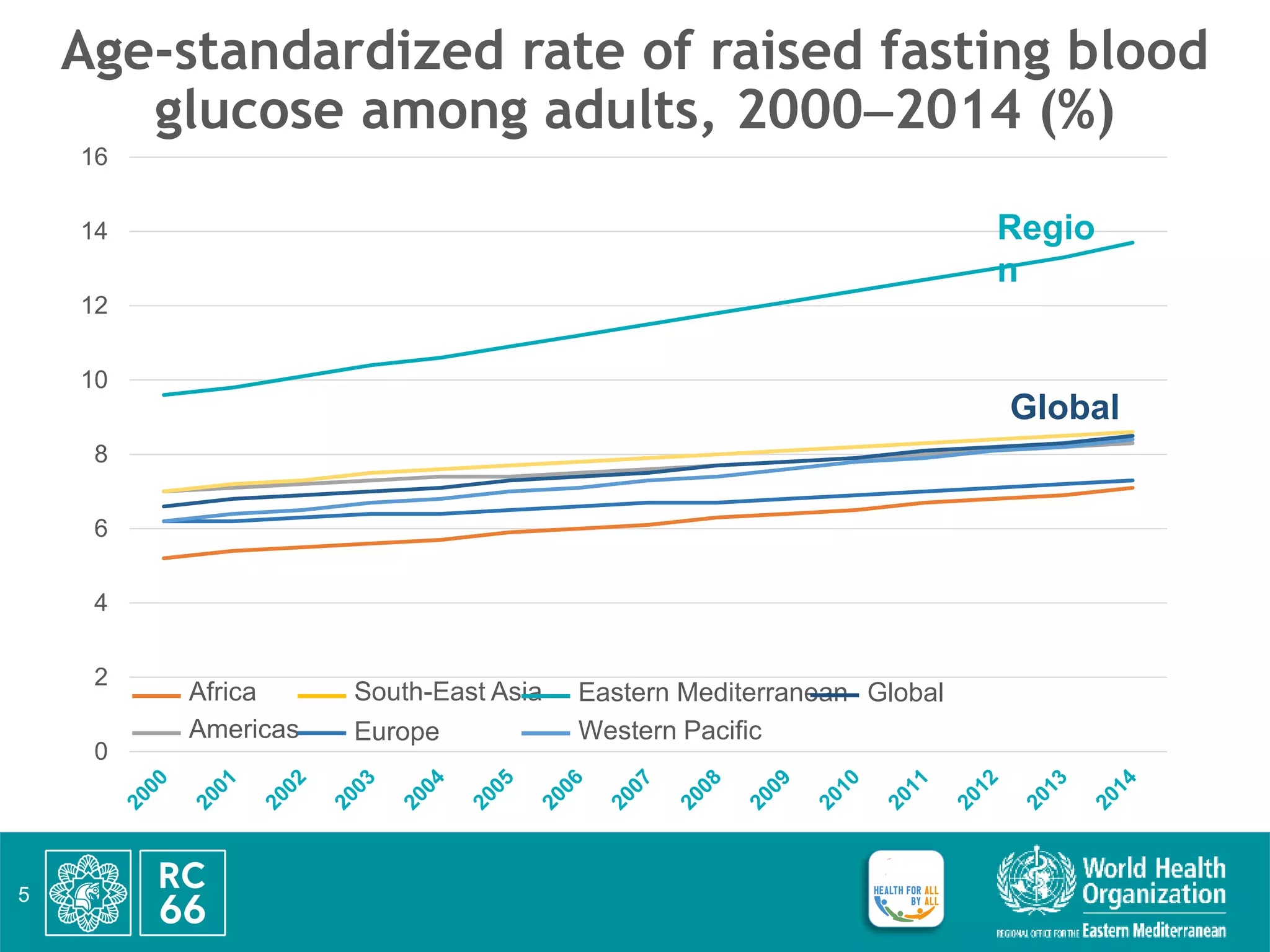
Age-standardized rate of raised fasting blood
glucose among adults, 20002014 (%)
Africa
Americas
South-East Asia
Europe
Eastern Mediterranean
Western Pacific
Global
5
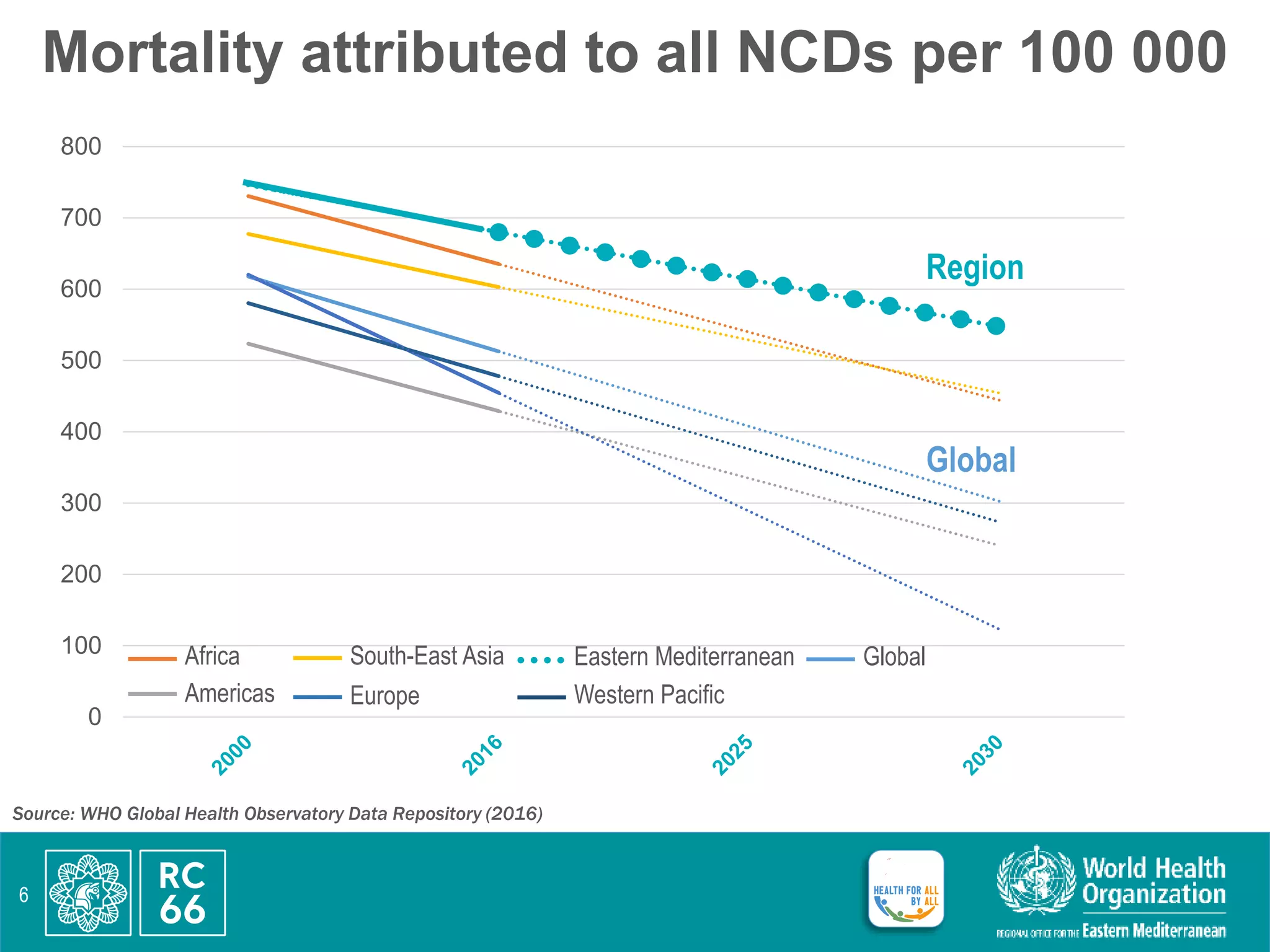
Mortality attributed to all NCDs per 100 000
0
100
200
300
400
500
600
700
800
Region
Global
Source: WHO Global Health Observatory Data Repository (2016)
Africa
Americas
South-East Asia
Europe
Eastern Mediterranean
Western Pacific
Global
6
Reduce
premature
deaths by
one third by
2030
7
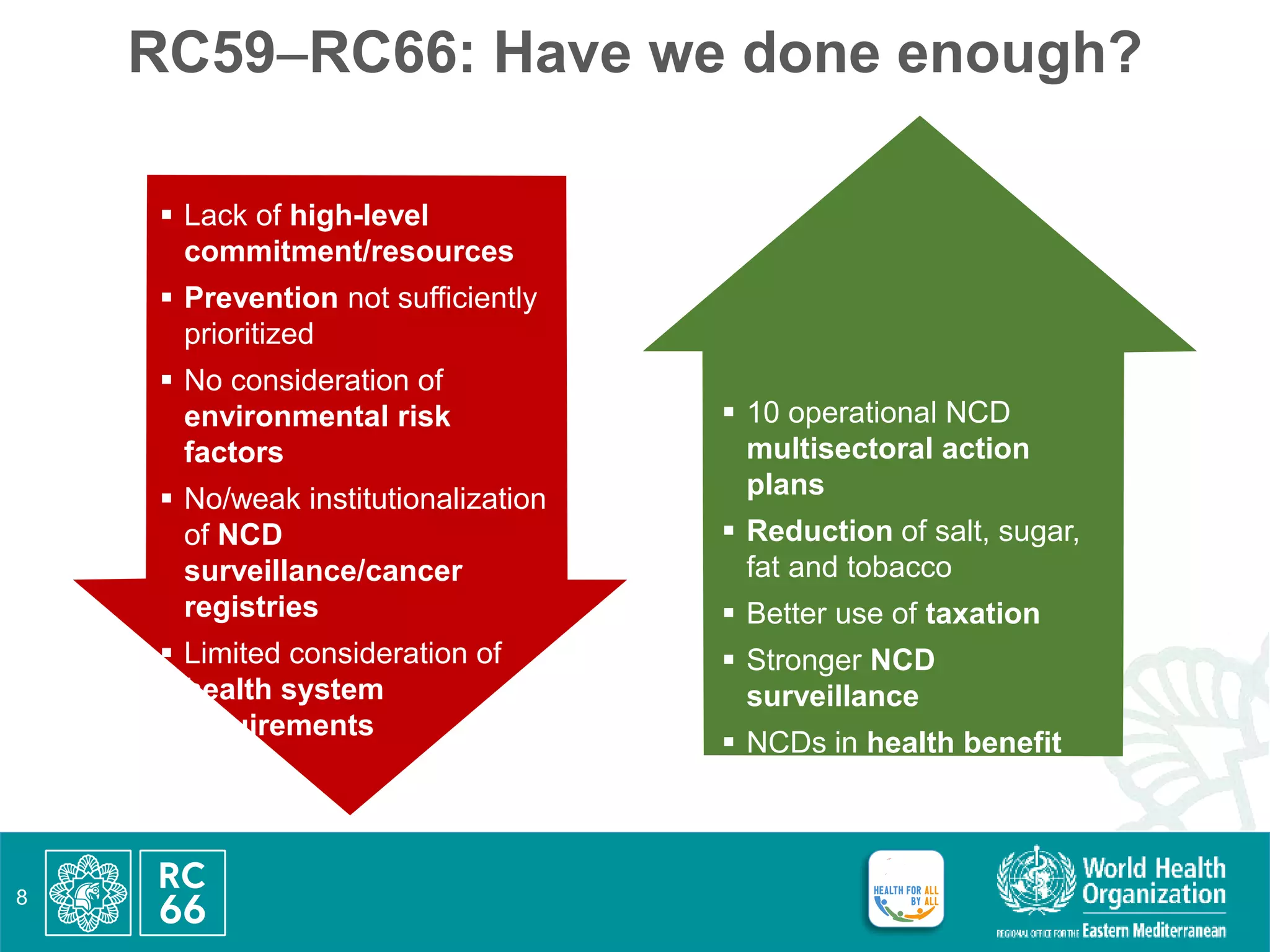
RC59RC66: Have we done enough?
8
 Lack of high-level
commitment/resources
 Prevention not sufficiently
prioritized
 No consideration of
environmental risk
factors
 No/weak institutionalization
of NCD
surveillance/cancer
registries
 Limited consideration of
health system
requirements
 10 operational NCD
multisectoral action
plans
 Reduction of salt, sugar,
fat and tobacco
 Better use of taxation
 Stronger NCD
surveillance
 NCDs in health benefit
packages and
emergencies
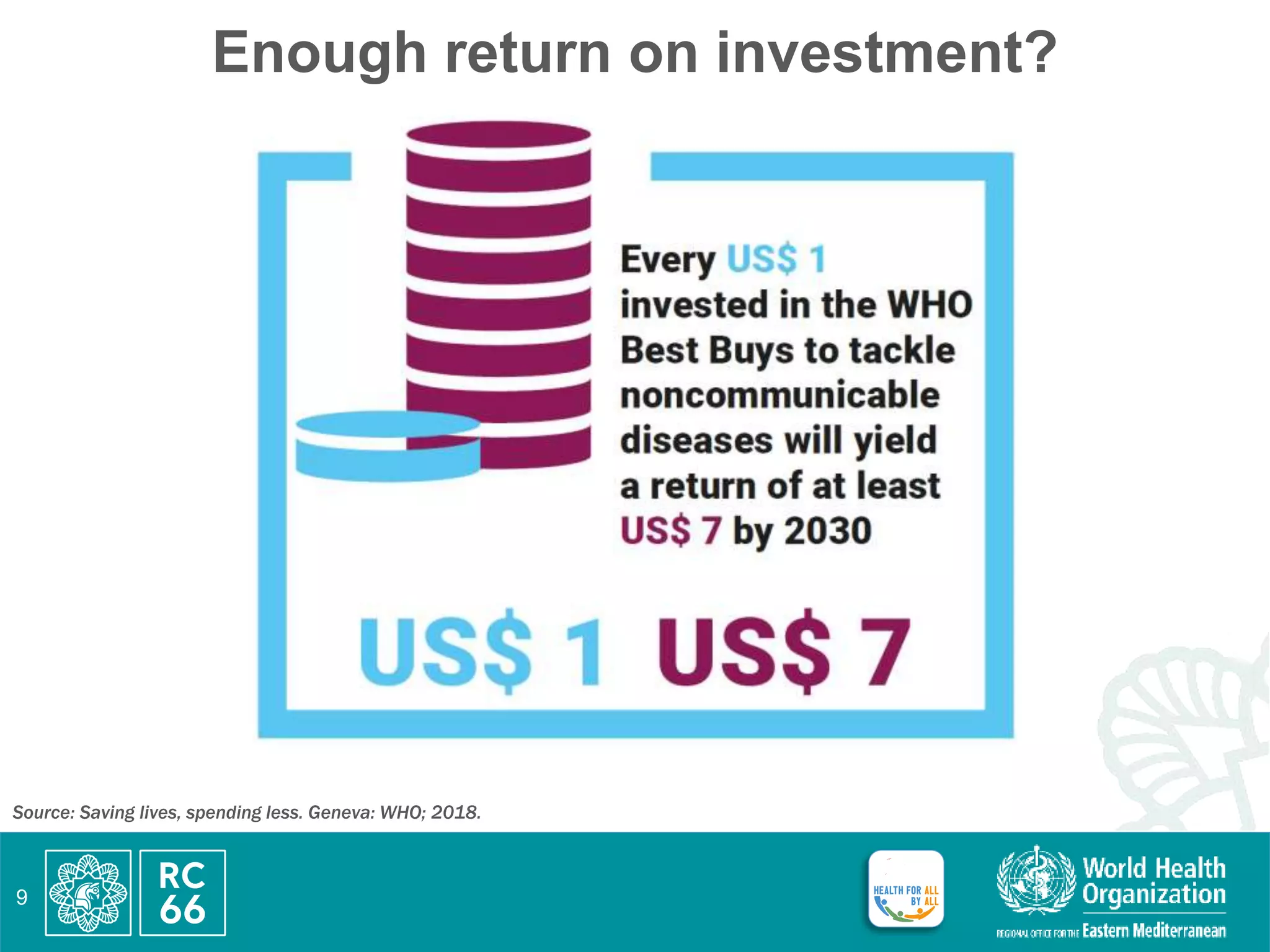
Enough return on investment?
9
Source: Saving lives, spending less. Geneva: WHO; 2018.
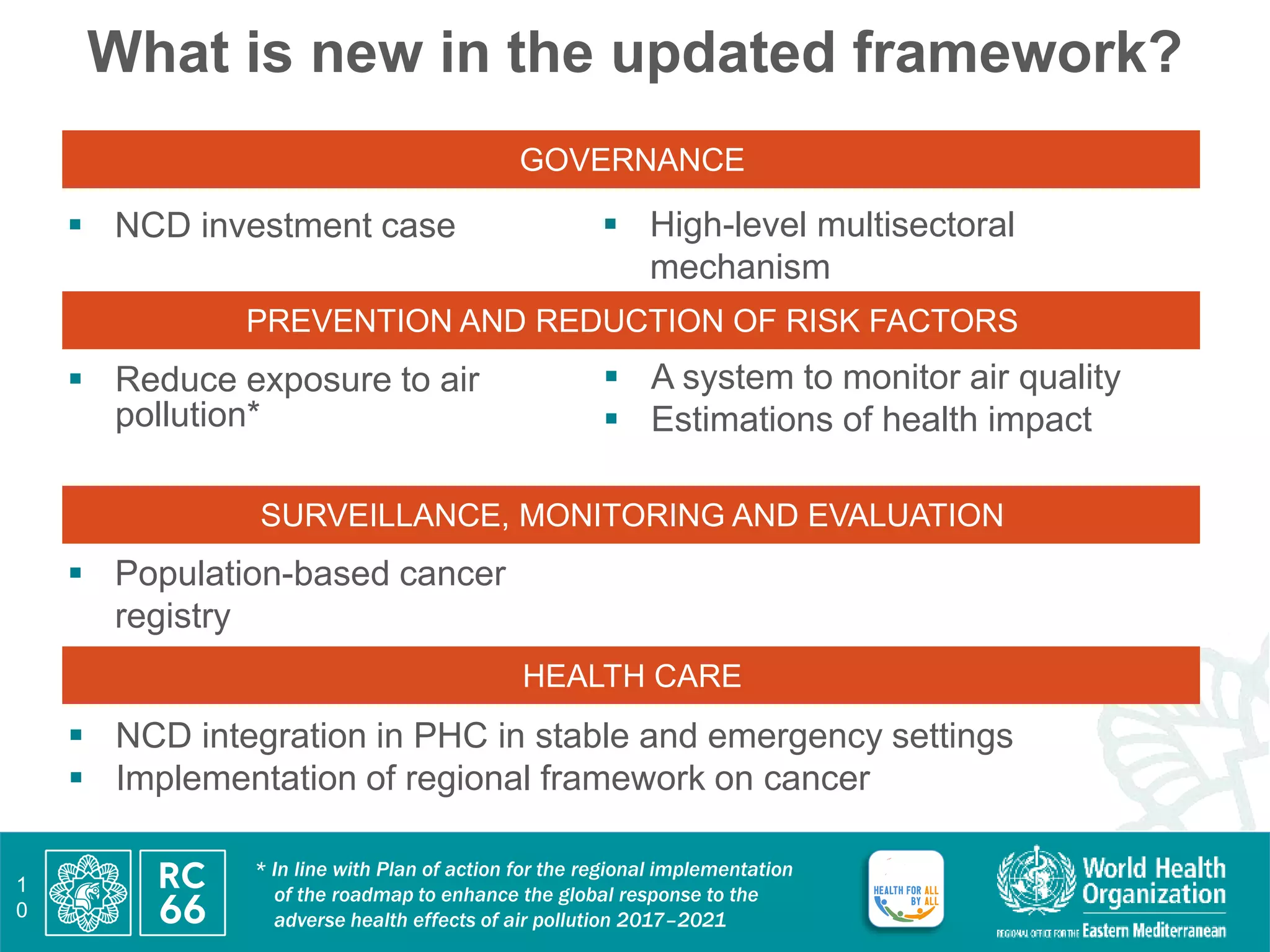
What is new in the updated framework?
1
0
* In line with Plan of action for the regional implementation
of the roadmap to enhance the global response to the
adverse health effects of air pollution 2017–2021
 NCD investment case  High-level multisectoral
mechanism
GOVERNANCE
 Reduce exposure to air
pollution*
 A system to monitor air quality
 Estimations of health impact
PREVENTION AND REDUCTION OF RISK FACTORS
 NCD integration in PHC in stable and emergency settings
 Implementation of regional framework on cancer
HEALTH CARE
 Population-based cancer
registry
SURVEILLANCE, MONITORING AND EVALUATION
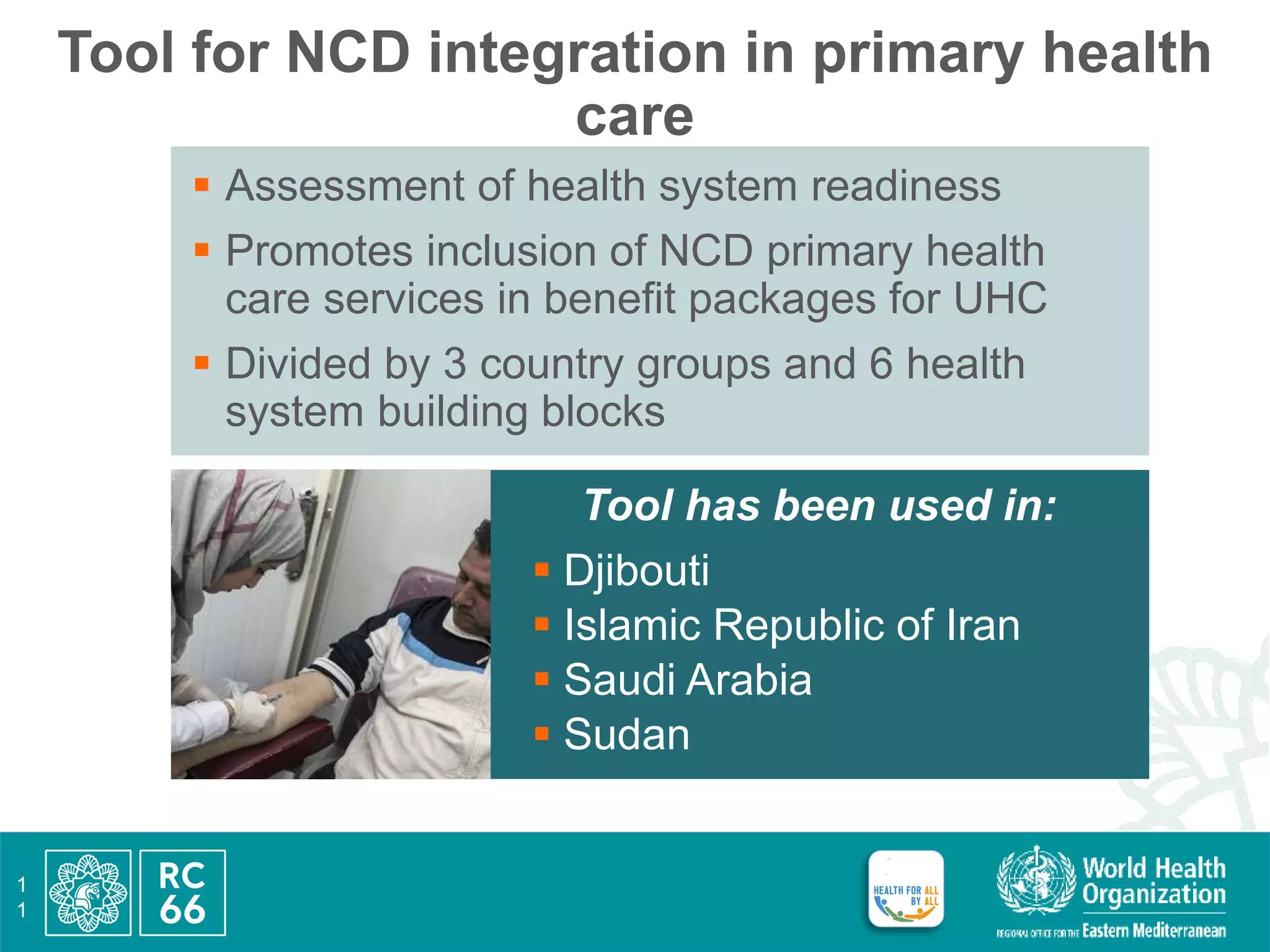
Tool for NCD integration in primary health
care
1
1
 Assessment of health system readiness
 Promotes inclusion of NCD primary health
care services in benefit packages for UHC
 Divided by 3 country groups and 6 health
system building blocks
Tool has been used in:
 Djibouti
 Islamic Republic of Iran
 Saudi Arabia
 Sudan
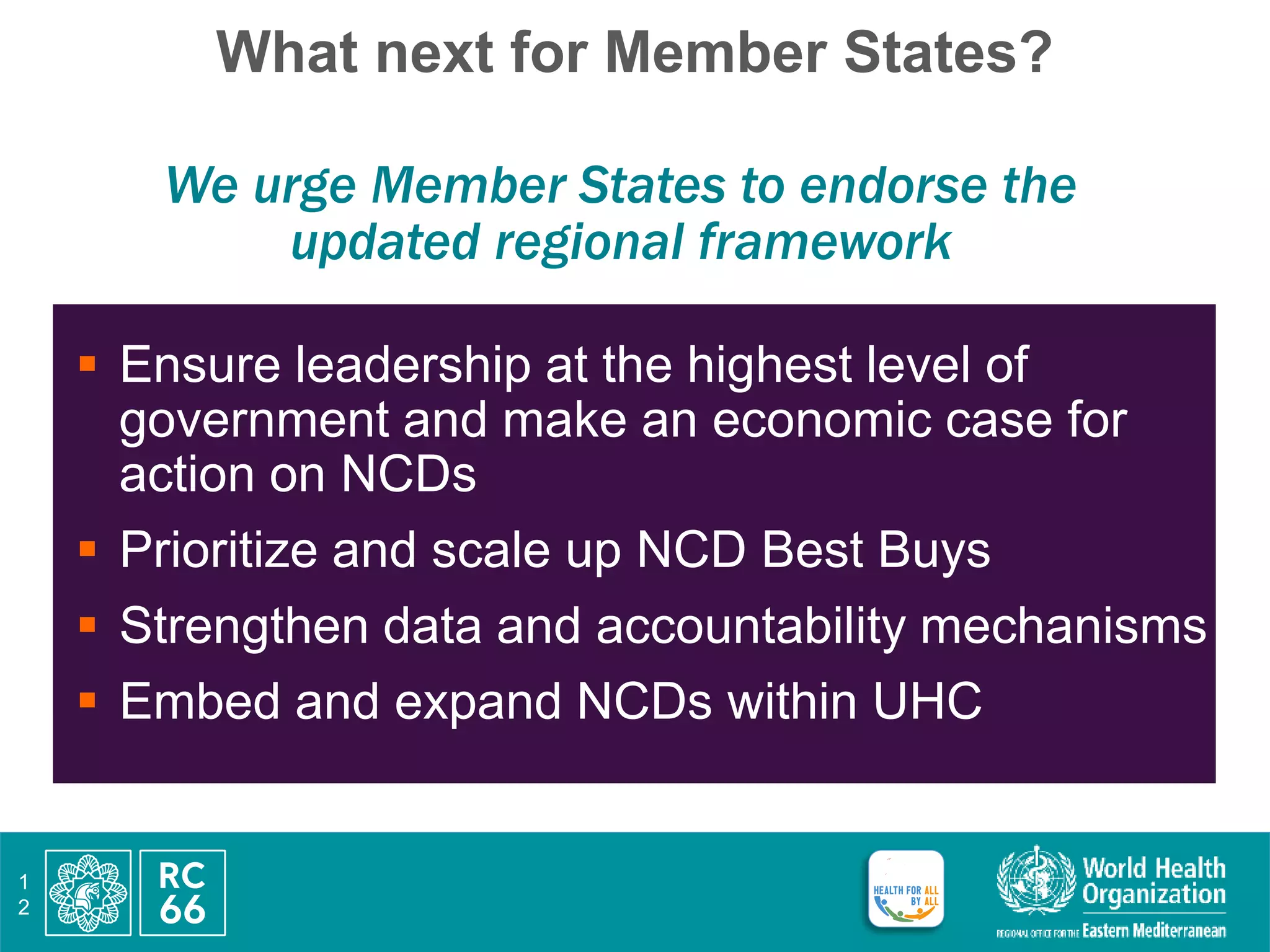
What next for Member States?
We urge Member States to endorse the
updated regional framework
 Ensure leadership at the highest level of
government and make an economic case for
action on NCDs
 Prioritize and scale up NCD Best Buys
 Strengthen data and accountability mechanisms
 Embed and expand NCDs within UHC
1
2
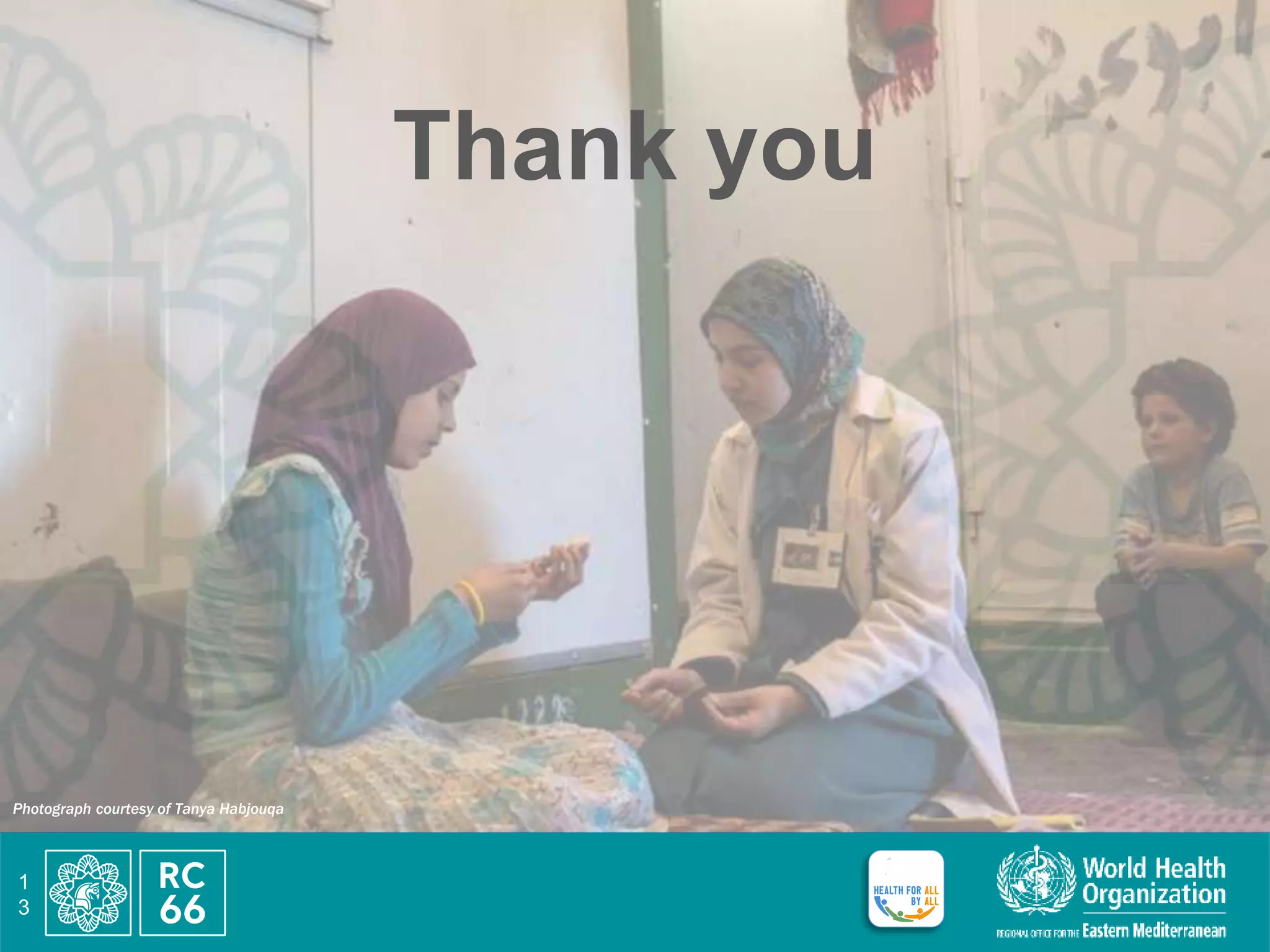
Thank you
Photograph courtesy of Tanya Habjouqa
1
3

Accelerating regional implementation of the Political Declaration on NCDs (2018)

  • 1.
    Tehran, Islamic Republic ofIran 14 –17 October 2019 Agenda item 3(e) Dr Slim Slama, Regional Adviser, Noncommunicable Diseases Prevention Accelerating regional implementation of the Political Declaration on NCDs (2018)
  • 2.
    Isra lives inZataari camp… 2 Photograph courtesy of Tanya Habjouqa
  • 3.
  • 4.
    0 10 20 30 40 50 60 70 Regio Global Age-standardized rate ofoverweight among adults, 20002014 (%) BMI ≥ 25 Source: WHO Global Health Observatory Data Repository (2016) Africa Americas South-East Asia Europe Eastern Mediterranean Western Pacific Global 4
  • 5.
    0 2 4 6 8 10 12 14 16 Regio n Global Age-standardized rate ofraised fasting blood glucose among adults, 20002014 (%) Africa Americas South-East Asia Europe Eastern Mediterranean Western Pacific Global 5
  • 6.
    Mortality attributed toall NCDs per 100 000 0 100 200 300 400 500 600 700 800 Region Global Source: WHO Global Health Observatory Data Repository (2016) Africa Americas South-East Asia Europe Eastern Mediterranean Western Pacific Global 6
  • 7.
  • 8.
    RC59RC66: Have wedone enough? 8  Lack of high-level commitment/resources  Prevention not sufficiently prioritized  No consideration of environmental risk factors  No/weak institutionalization of NCD surveillance/cancer registries  Limited consideration of health system requirements  10 operational NCD multisectoral action plans  Reduction of salt, sugar, fat and tobacco  Better use of taxation  Stronger NCD surveillance  NCDs in health benefit packages and emergencies
  • 9.
    Enough return oninvestment? 9 Source: Saving lives, spending less. Geneva: WHO; 2018.
  • 10.
    What is newin the updated framework? 1 0 * In line with Plan of action for the regional implementation of the roadmap to enhance the global response to the adverse health effects of air pollution 2017–2021  NCD investment case  High-level multisectoral mechanism GOVERNANCE  Reduce exposure to air pollution*  A system to monitor air quality  Estimations of health impact PREVENTION AND REDUCTION OF RISK FACTORS  NCD integration in PHC in stable and emergency settings  Implementation of regional framework on cancer HEALTH CARE  Population-based cancer registry SURVEILLANCE, MONITORING AND EVALUATION
  • 11.
    Tool for NCDintegration in primary health care 1 1  Assessment of health system readiness  Promotes inclusion of NCD primary health care services in benefit packages for UHC  Divided by 3 country groups and 6 health system building blocks Tool has been used in:  Djibouti  Islamic Republic of Iran  Saudi Arabia  Sudan
  • 12.
    What next forMember States? We urge Member States to endorse the updated regional framework  Ensure leadership at the highest level of government and make an economic case for action on NCDs  Prioritize and scale up NCD Best Buys  Strengthen data and accountability mechanisms  Embed and expand NCDs within UHC 1 2
  • 13.
    Thank you Photograph courtesyof Tanya Habjouqa 1 3

Editor's Notes

  • #3 Introducing Isra Maintaining life as normal as possible Independence – right to health
  • #5 Raised fasting blood glucose % from 2000-2014 (≥ 7.0 mmol/L or on medication)(age-standardized) 18+ years
  • #6 Raised fasting blood glucose % from 2000-2014 (≥ 7.0 mmol/L or on medication)(age-standardized) 18+ years
  • #9 NCD Coalition of HoSG, launch 25 September