WASHINGTON, DC
MAY 7 & 8, 2019
THE SUGAR AGRIBUSINESS IN MEXICO:
HISTORY AND STRUCTURE
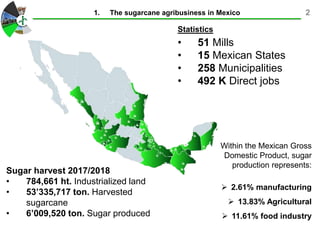
1. The sugarcane agribusiness in Mexico 2
Statistics
• 51 Mills
• 15 Mexican States
• 258 Municipalities
• 492 K Direct jobs
Sugar harvest 2017/2018
• 784,661 ht. Industrialized land
• 53’335,717 ton. Harvested
sugarcane
• 6’009,520 ton. Sugar produced
Within the Mexican Gross
Domestic Product, sugar
production represents:
 2.61% manufacturing
 13.83% Agricultural
 11.61% food industry
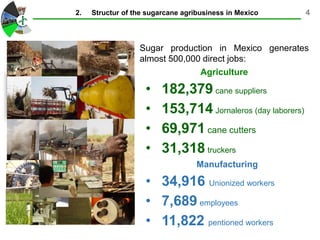
4
Sugar production in Mexico generates
almost 500,000 direct jobs:
Agriculture
• 182,379 cane suppliers
• 153,714 Jornaleros (day laborers)
• 69,971 cane cutters
• 31,318 truckers
Manufacturing
• 34,916 Unionized workers
• 7,689 employees
• 11,822 pentioned workers
2. Structur of the sugarcane agribusiness in Mexico
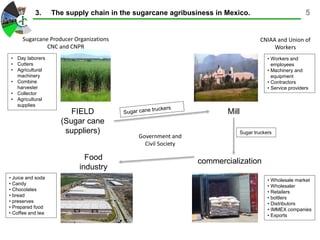
3. The supply chain in the sugarcane agribusiness in Mexico. 5
FIELD
(Sugar cane
suppliers)
Mill
commercializationFood
industry
• Day laborers
• Cutters
• Agricultural
machinery
• Combine
harvester
• Collector
• Agricultural
supplies
• Workers and
employees
• Machinery and
equipment
• Contractors
• Service providers
Sugar truckers
• Wholesale market
• Wholesaler
• Retailers
• bottlers
• Distributors
• IMMEX companies
• Exports
• Juice and soda
• Candy
• Chocolates
• bread
• preserves
• Prepared food
• Coffee and tea
Sugarcane Producer Organizations
CNC and CNPR
CNIAA and Union of
Workers
Government and
Civil Society
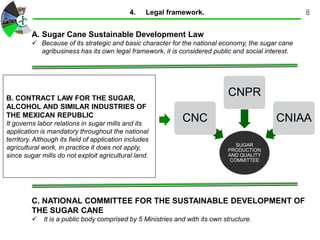
B. CONTRACT LAW FOR THE SUGAR,
ALCOHOL AND SIMILAR INDUSTRIES OF
THE MEXICAN REPUBLIC
It governs labor relations in sugar mills and its
application is mandatory throughout the national
territory. Although its field of application includes
agricultural work, in practice it does not apply,
since sugar mills do not exploit agricultural land.
8
SUGAR
PRODUCTION
AND QUALITY
COMMITTEE
CNC
CNPR
CNIAA
A. Sugar Cane Sustainable Development Law
 Because of its strategic and basic character for the national economy, the sugar cane
agribusiness has its own legal framework, it is considered public and social interest.
C. NATIONAL COMMITTEE FOR THE SUSTAINABLE DEVELOPMENT OF
THE SUGAR CANE
 It is a public body comprised by 5 Ministries and with its own structure.
4. Legal framework.
9
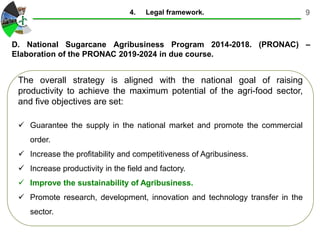
The overall strategy is aligned with the national goal of raising
productivity to achieve the maximum potential of the agri-food sector,
and five objectives are set:
 Guarantee the supply in the national market and promote the commercial
order.
 Increase the profitability and competitiveness of Agribusiness.
 Increase productivity in the field and factory.
 Improve the sustainability of Agribusiness.
 Promote research, development, innovation and technology transfer in the
sector.
D. National Sugarcane Agribusiness Program 2014-2018. (PRONAC) –
Elaboration of the PRONAC 2019-2024 in due course.
4. Legal framework.
10
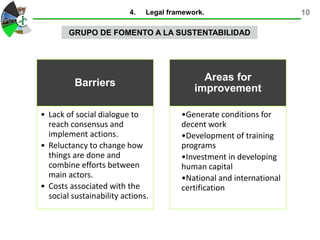
GRUPO DE FOMENTO A LA SUSTENTABILIDAD
Barriers
• Lack of social dialogue to
reach consensus and
implement actions.
• Reluctancy to change how
things are done and
combine efforts between
main actors.
• Costs associated with the
social sustainability actions.
Areas for
improvement
•Generate conditions for
decent work
•Development of training
programs
•Investment in developing
human capital
•National and international
certification
4. Legal framework.
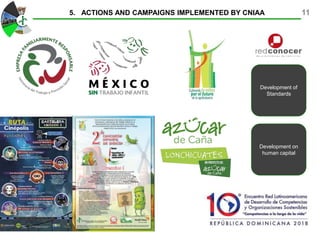
115. ACTIONS AND CAMPAIGNS IMPLEMENTED BY CNIAA
Development of
Standards
Development on
human capital

Presentation_Behar - Private Public Partnerships and CKDu

  • 1.
    WASHINGTON, DC MAY 7& 8, 2019 THE SUGAR AGRIBUSINESS IN MEXICO: HISTORY AND STRUCTURE
  • 2.
    1. The sugarcaneagribusiness in Mexico 2 Statistics • 51 Mills • 15 Mexican States • 258 Municipalities • 492 K Direct jobs Sugar harvest 2017/2018 • 784,661 ht. Industrialized land • 53’335,717 ton. Harvested sugarcane • 6’009,520 ton. Sugar produced Within the Mexican Gross Domestic Product, sugar production represents:  2.61% manufacturing  13.83% Agricultural  11.61% food industry
  • 3.
    4 Sugar production inMexico generates almost 500,000 direct jobs: Agriculture • 182,379 cane suppliers • 153,714 Jornaleros (day laborers) • 69,971 cane cutters • 31,318 truckers Manufacturing • 34,916 Unionized workers • 7,689 employees • 11,822 pentioned workers 2. Structur of the sugarcane agribusiness in Mexico
  • 4.
    3. The supplychain in the sugarcane agribusiness in Mexico. 5 FIELD (Sugar cane suppliers) Mill commercializationFood industry • Day laborers • Cutters • Agricultural machinery • Combine harvester • Collector • Agricultural supplies • Workers and employees • Machinery and equipment • Contractors • Service providers Sugar truckers • Wholesale market • Wholesaler • Retailers • bottlers • Distributors • IMMEX companies • Exports • Juice and soda • Candy • Chocolates • bread • preserves • Prepared food • Coffee and tea Sugarcane Producer Organizations CNC and CNPR CNIAA and Union of Workers Government and Civil Society
  • 5.
    B. CONTRACT LAWFOR THE SUGAR, ALCOHOL AND SIMILAR INDUSTRIES OF THE MEXICAN REPUBLIC It governs labor relations in sugar mills and its application is mandatory throughout the national territory. Although its field of application includes agricultural work, in practice it does not apply, since sugar mills do not exploit agricultural land. 8 SUGAR PRODUCTION AND QUALITY COMMITTEE CNC CNPR CNIAA A. Sugar Cane Sustainable Development Law  Because of its strategic and basic character for the national economy, the sugar cane agribusiness has its own legal framework, it is considered public and social interest. C. NATIONAL COMMITTEE FOR THE SUSTAINABLE DEVELOPMENT OF THE SUGAR CANE  It is a public body comprised by 5 Ministries and with its own structure. 4. Legal framework.
  • 6.
    9 The overall strategyis aligned with the national goal of raising productivity to achieve the maximum potential of the agri-food sector, and five objectives are set:  Guarantee the supply in the national market and promote the commercial order.  Increase the profitability and competitiveness of Agribusiness.  Increase productivity in the field and factory.  Improve the sustainability of Agribusiness.  Promote research, development, innovation and technology transfer in the sector. D. National Sugarcane Agribusiness Program 2014-2018. (PRONAC) – Elaboration of the PRONAC 2019-2024 in due course. 4. Legal framework.
  • 7.
    10 GRUPO DE FOMENTOA LA SUSTENTABILIDAD Barriers • Lack of social dialogue to reach consensus and implement actions. • Reluctancy to change how things are done and combine efforts between main actors. • Costs associated with the social sustainability actions. Areas for improvement •Generate conditions for decent work •Development of training programs •Investment in developing human capital •National and international certification 4. Legal framework.
  • 8.
    115. ACTIONS ANDCAMPAIGNS IMPLEMENTED BY CNIAA Development of Standards Development on human capital