NAWB Annual Forum
March 30, 2015
Share Information,
Change the World.
Big Data, Small Apps, Smart Dashboards & the
New Information Ecosystem
2
3
“Embrace openness, experiment.”
The Challenge…
“Big data is sending ripples through
all sectors of society. We track
everything…this trend is leading to a
critical need for [people] who can
mine and interpret…”
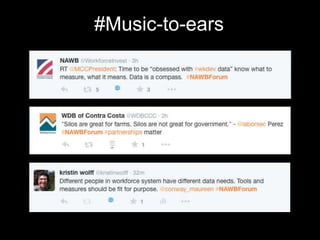
#Music-to-ears
6
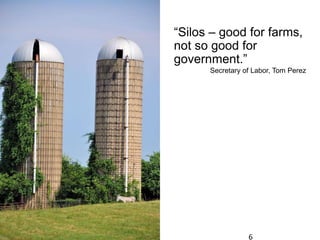
“Silos – good for farms,
not so good for
government.”
Secretary of Labor, Tom Perez
7
A New Kind of Ecosystem
8
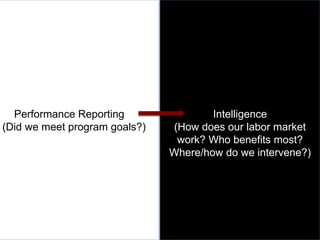
Performance Reporting
(Did we meet program goals?)
Intelligence
(How does our labor market
work? Who benefits most?
Where/how do we intervene?)
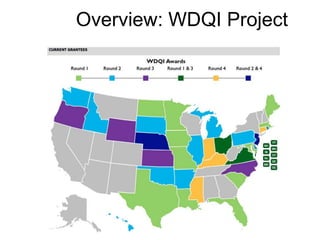
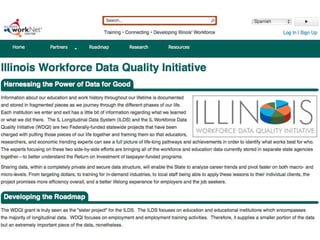
Overview: WDQI Project
11
Presenters
11
12
12
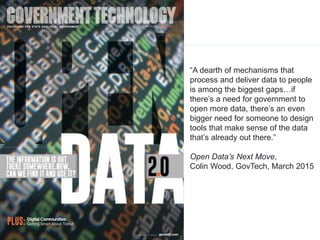
“A dearth of mechanisms that
process and deliver data to people
is among the biggest gaps…if
there’s a need for government to
open more data, there’s an even
bigger need for someone to design
tools that make sense of the data
that’s already out there.”
Open Data’s Next Move,
Colin Wood, GovTech, March 2015
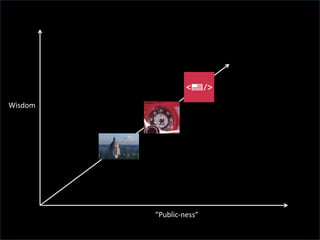
“Public-ness”
Wisdom
Presenters
Scott Wheeler
Labor Market & Performance Analysis
WA Employment Security Department
Kristin Wolff
Senior Analyst
Social Policy Research Associates
Presenters
15
Vinz Koller
Director, Technical Assistance & Training
Social Policy Research Associates
Chris Given
Code for America Brigade Education Lead
Social Policy Research Associates
16
Turning Workforce Data into Knowledge
By Scott Wheeler
March 30th, 2015
17
Presenter
Scott Wheeler
Washington State
Employment Security Department
Labor Market and Performance Analysis
18
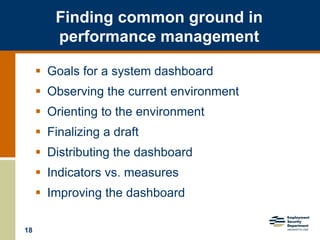
Finding common ground in
performance management
 Goals for a system dashboard
 Observing the current environment
 Orienting to the environment
 Finalizing a draft
 Distributing the dashboard
 Indicators vs. measures
 Improving the dashboard
19
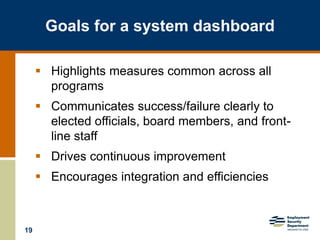
 Highlights measures common across all
programs
 Communicates success/failure clearly to
elected officials, board members, and front-
line staff
 Drives continuous improvement
 Encourages integration and efficiencies
Goals for a system dashboard
20
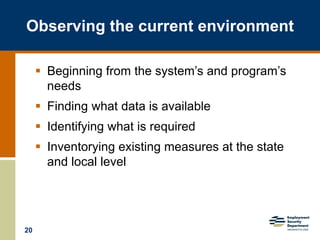
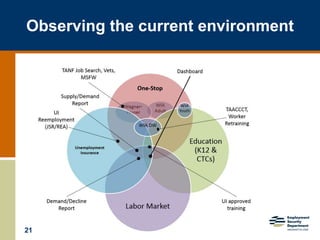
 Beginning from the system’s and program’s
needs
 Finding what data is available
 Identifying what is required
 Inventorying existing measures at the state
and local level
Observing the current environment
21
Observing the current environment
22
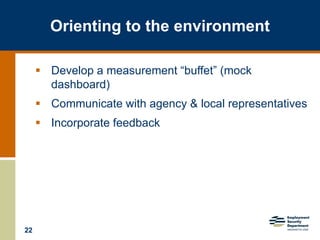
Orienting to the environment
 Develop a measurement “buffet” (mock
dashboard)
 Communicate with agency & local representatives
 Incorporate feedback
23
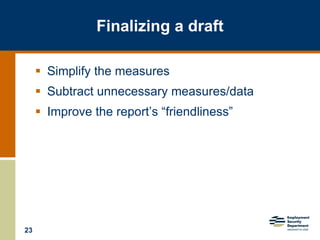
 Simplify the measures
 Subtract unnecessary measures/data
 Improve the report’s “friendliness”
Finalizing a draft
24
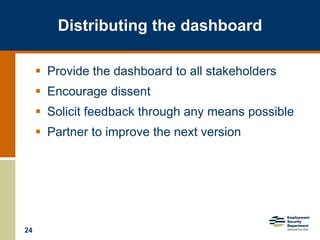
Distributing the dashboard
 Provide the dashboard to all stakeholders
 Encourage dissent
 Solicit feedback through any means possible
 Partner to improve the next version
25
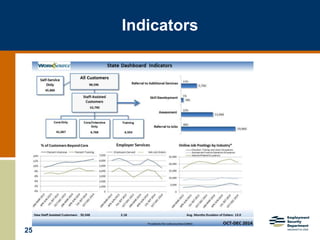
Indicators
26
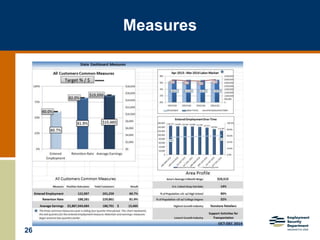
Measures
27
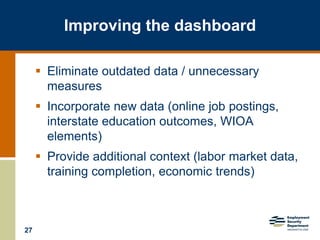
Improving the dashboard
 Eliminate outdated data / unnecessary
measures
 Incorporate new data (online job postings,
interstate education outcomes, WIOA
elements)
 Provide additional context (labor market data,
training completion, economic trends)
28
Thank You!
28
29
29
Dashboards
Gateways to
Understanding
30
3030
31
31
Insert Tesla Dashboard
32
32
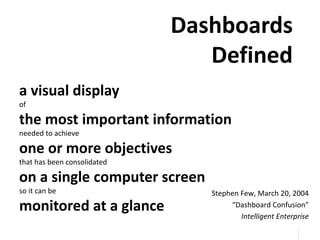
Dashboards
Defined
a visual display
of
the most important information
needed to achieve
one or more objectives
that has been consolidated
on a single computer screen
so it can be
monitored at a glance
Stephen Few, March 20, 2004
“Dashboard Confusion”
Intelligent Enterprise
33
33
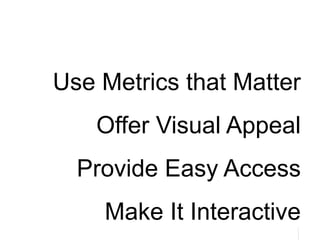
Principles
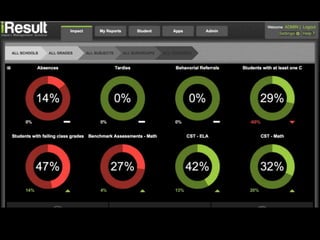
Use Metrics that Matter
Offer Visual Appeal
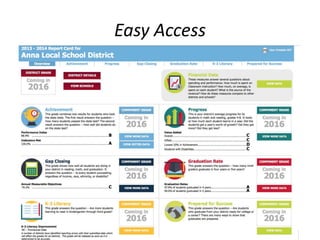
Provide Easy Access
Make It Interactive
34
34
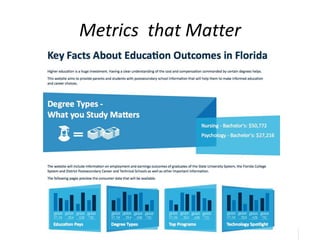
Metrics that Matter
35
35
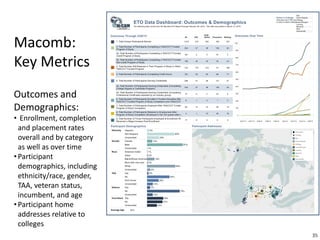
Outcomes and
Demographics:
• Enrollment, completion
and placement rates
overall and by category
as well as over time
•Participant
demographics, including
ethnicity/race, gender,
TAA, veteran status,
incumbent, and age
•Participant home
addresses relative to
colleges
Macomb:
Key Metrics
36
36
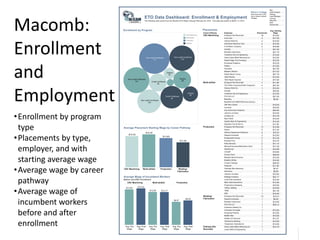
Macomb:
Enrollment
and
Employment
•Enrollment by program
type
•Placements by type,
employer, and with
starting average wage
•Average wage by career
pathway
•Average wage of
incumbent workers
before and after
enrollment
37
37
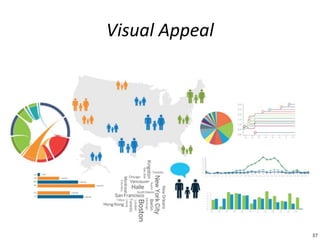
Visual Appeal
37
38
38
“Clutter and confusion are
failures of design, not
attributes of information.”
- Edward R. Tufte
39
39
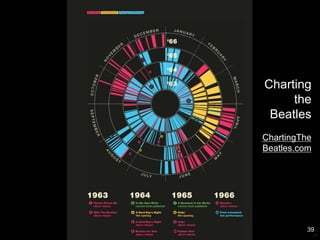
Charting
the
Beatles
ChartingThe
Beatles.com
40
40
41
41
Provide Easy Access
41
42
42
Easy Access
42
43
43
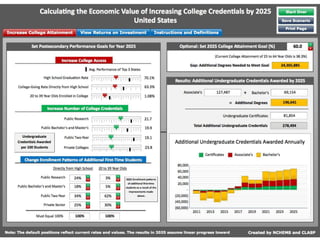
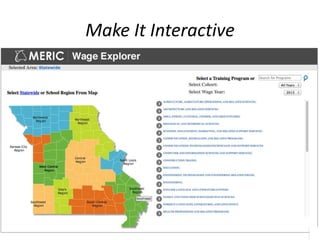
Make It Interactive
43
44
4444
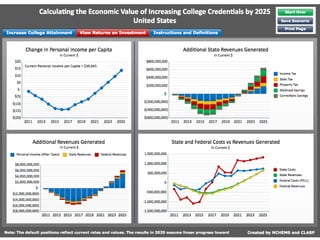
Make It Interactive
45
4545
Make It Interactive
46
46
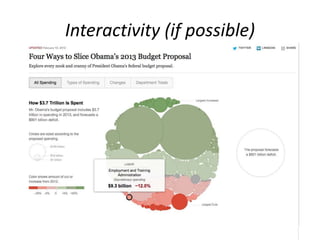
Interactivity (if possible)
47
47
Potential Pitfalls
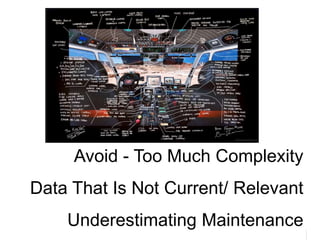
Avoid - Too Much Complexity
Data That Is Not Current/ Relevant
Underestimating Maintenance
48
48
Promise
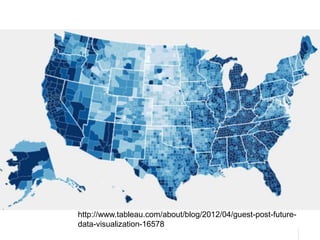
http://www.tableau.com/about/blog/2012/04/guest-post-future-
data-visualization-16578
49
49
Promise
Your Dashboard
Here
50
Promise
50
51
Promise
51
52
Promise
52
53
Promise
53
54
Promise
54
55
Promise
55
56
Promise
56
57
Promise
57
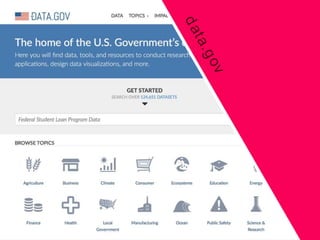
data.gov
58
Promise
58
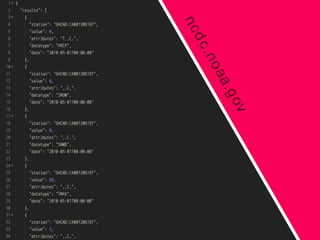
ncdc.noaa.gov
59
Promise
59
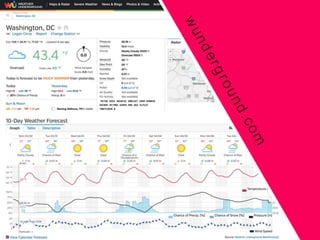
wunderground.com
60
Promise
60
THIS IS AW ESO M E.
61
Promise
61
62
Promise
62
63
Promise
63
64
Promise
64
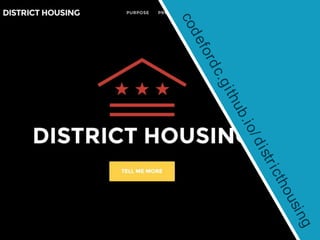
codefordc.github.io/districthousing
65
Promise
65
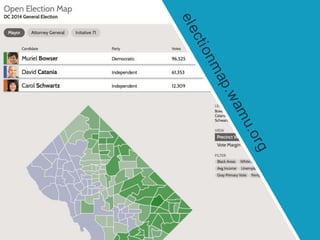
electionmap.wamu.org
66
Promise
66
67
Promise
67
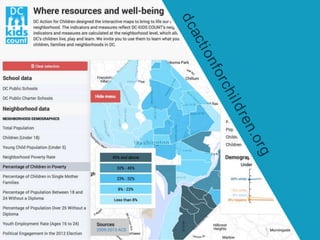
dcactionforchildren.org
68
Promise
68
69
Promise
69
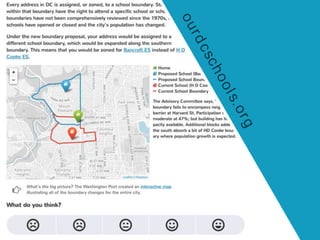
ourdcschools.org
70
Promise
70
71
Promise
71
72
Promise
72
73
Promise
73
74
Promise
74
75
Promise
75
76
Promise
76
77
Promise
Vinz Koller, vinz_koller@spra.com (@Social_Policy)
Kristin Wolff, kwolff@thinkers-and-doers.com (@kristinwolff)

Share Information, Change the World: Big Data, Small Apps, Smart Dashboards & the New Intelligence Ecosystem