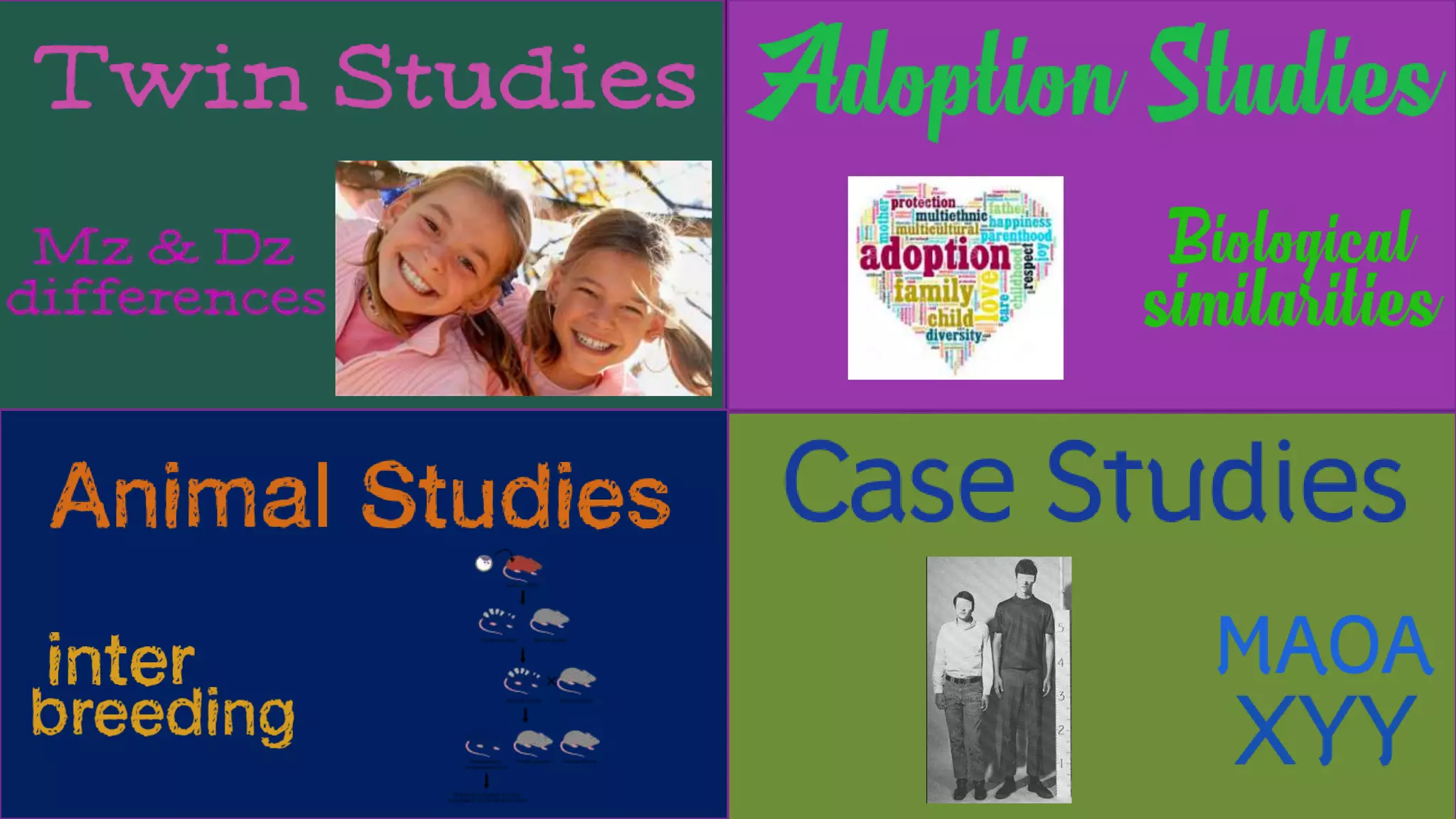
Genetic factors play a role in aggressive behavior:
Twin studies show approximately 50% concordance for aggression between twins, suggesting a genetic influence. Adoption studies also find correlations between adoptee and biological parent aggression. Specific genes like MAOA, which regulates serotonin, and the extra Y chromosome in XYY syndrome, have been linked to increased aggression, especially when combined with negative environments. However, genetics alone cannot explain all aggression, as environment also influences behavior.
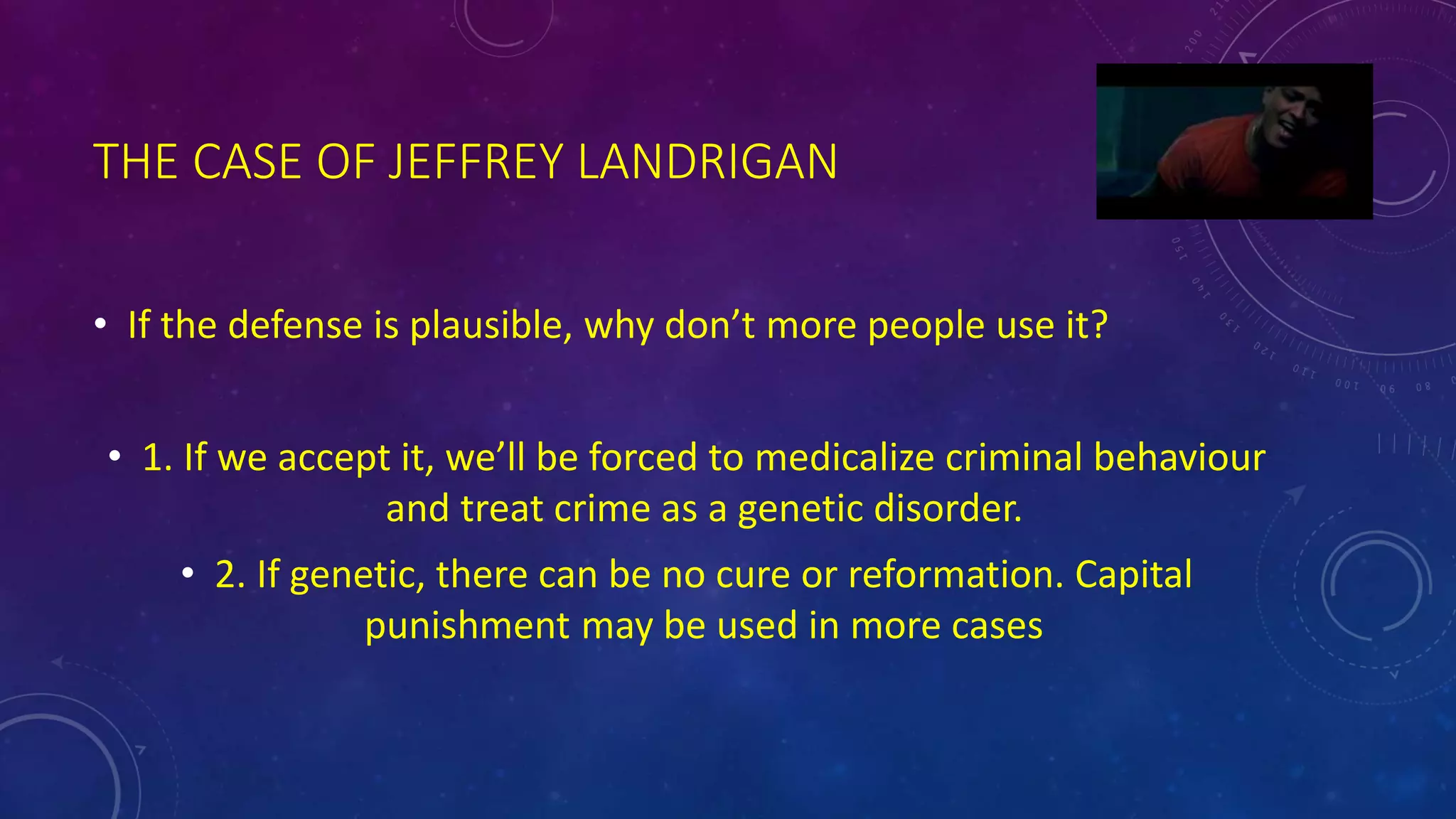
Discusses biological explanations focusing on genetics with the case of Jeffrey Landrigan highlighting genetic background and the implications for aggressive behavior.
Discusses biological explanations focusing on genetics with the case of Jeffrey Landrigan highlighting genetic background and the implications for aggressive behavior.
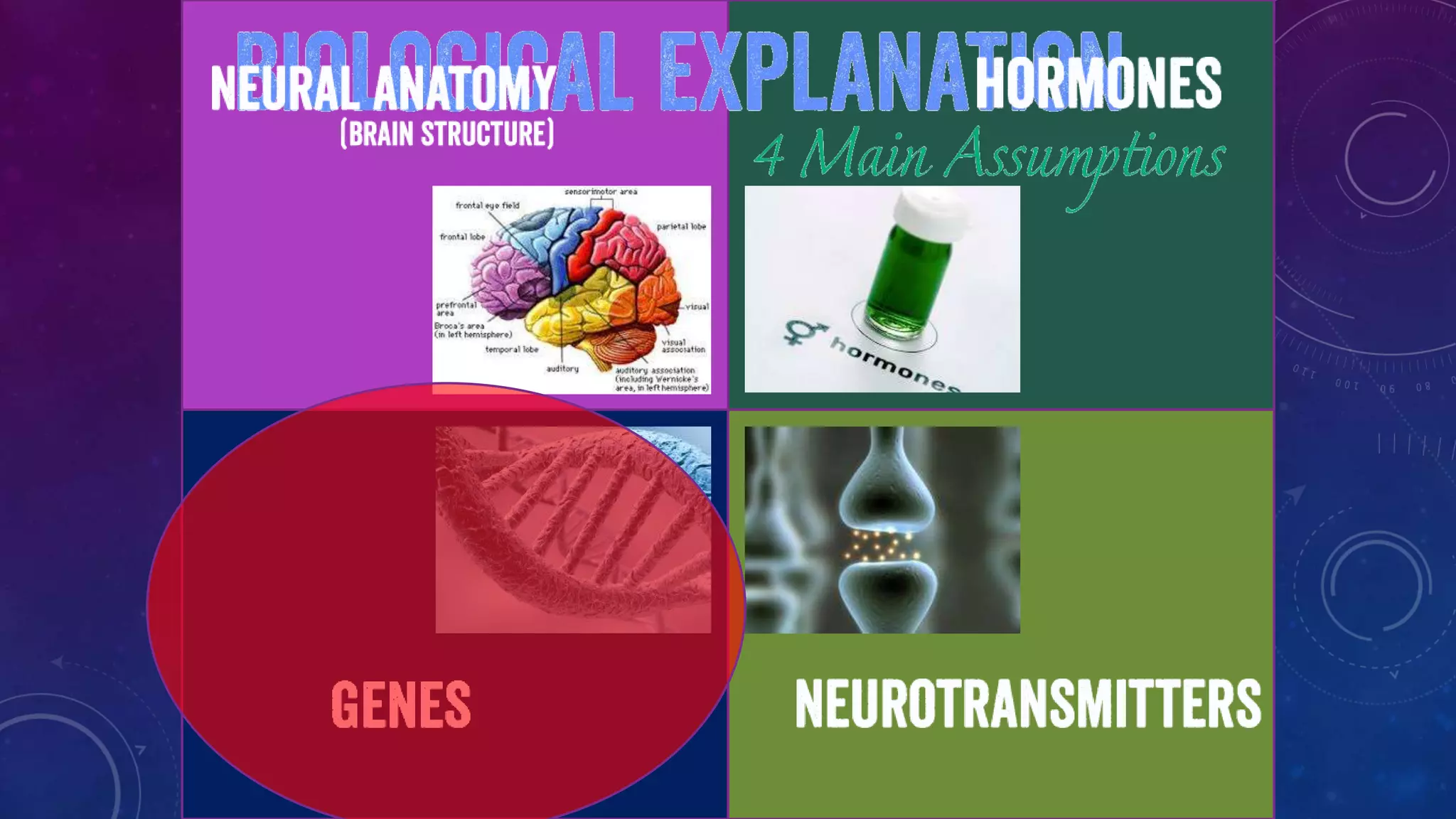
Explores the impact of genes on aggression, discussing testosterone levels and the search for an aggression gene.
Highlights the importance of twin studies, comparing MZ and DZ twins to examine genetic influences on aggression.
Highlights the importance of twin studies, comparing MZ and DZ twins to examine genetic influences on aggression.
Investigates correlations in aggressive behavior through adoption studies, emphasizing the nature vs. nurture debate.Discusses the XYY genotype, its prevalence, and mixed evidence regarding its link to aggressive behavior.
Examines the MAOA gene impacts on aggression, noting its influence on serotonin levels and the concept of the ‘warrior gene’.
Reports on Lagerspetz's study with mice demonstrating genetic contributions to aggressive behavior, acknowledging environmental factors.
Prepares for discussion on genetic factors in aggression, incorporating various genetic components linked to aggressive behavior.
THE CASE OFJEFFREY LANDRIGAN
• 29 years old
• On trial for murder of 42 year old
male (Chester Dyer)
• Previous convictions: Stabbing
childhood friend to death- 1982
• Date of trial: 9th Nov 1990
4.
• 09 –11 - 1990
• Arizona, USA
• Chester Dean Dryer was a 42 year old man who worked in a health club
and was known to pick up men and take them home. Dyer called friends
to tell them he was having sex with a man named Jeff.
• He was later found strangled by an electrical cord and stabbed to death
in his apartment. A deck of pornographic playing cards were strewn over
the bed.
• Landrigan's shoes matched a footprint left in sugar in Dyer's apartment.
He told police that he had beaten Dyer after Dyer made sexual
advances, but that another man had done the killing.
• Landrigan was uncooperative and disruptive during his trial, and at
sentencing told the Judge "If you want to give me the death penalty,
bring it on, I'm ready."
5.
THE CASE OFJEFFREY LANDRIGAN
• Landrigan was abandoned by his parents as an infant. He was adopted at 9months
of age into a loving and stable home. He never met his biological family.
• Jeff stated that he felt loved but never really belonged. He had a drinking problem
at age 10 and history of violence throughout his teens.
• During imprisonment, he was told by a guard that he looked similar to a man on
Death row in Arkansas, Darrell Hill.
• Darrell Hill was Jeffrey’s biological father. They had never met but led parallel lives
of drugs, alcoholism, violence and murder
• He found out that his Grandfather had been shot dead by police whilst robbing a
drug store.
• Jeffrey appealed his sentence with the claim that his destiny was bound by his DNA
and requested a re-trial
6.
THE CASE OFJEFFREY LANDRIGAN
• If the defense is plausible, why don’t more people use it?
• 1. If we accept it, we’ll be forced to medicalize criminal behaviour
and treat crime as a genetic disorder.
• 2. If genetic, there can be no cure or reformation. Capital
punishment may be used in more cases
7.
GENES AND AGGRESSION…
•Can affect levels of testosterone
• Can affect speed of testosterone circulating the body
• Can determine severity of the Stress Response through
neurotransmitter and hormone levels.
• Can affect sensitivity of receptors to hormones and NT
8.
GENETIC EXPLANATION…
• Isthere a specific Gene for Aggression?
• How could we test this theory to find out if there is an
‘Aggression’ gene?
10.
• Twin studiesare very useful in
determining genetic influences of
behaviour
• Mz twins share 100% of their genes
• Dz twins share 50% of their genes
• Concordance rate = “The probability
that a pair of individuals will both
have a certain trait given that one of
the pair has that trait”
11.
TWIN STUDIES
• Ifaggression is caused by a
particular gene…
• Mz’s should have 100%
concordance rate of aggression…
• i.e. if 1 Mz twin is aggressive, the
other Mz twin will be too.
• Dz’s should have a 50%
concordance rate of aggression…
• i.e. if 1 Dz twin is aggressive,
there is a 50% chance the other
will be too.
12.
AGGRESSION IN TWINSTUDIES…
• McGuffin & Gottesman (1985)
• Studied both Mz and Dz twins who had been brought up in the same
environment for levels of juvenile delinquency and crime.
• Concordance rate for delinquency in Mz twins was 87%
• Concordance rate for delinquency in Dz twins was 72%
13.
• Is thisconvincing evidence for the role of genetic factors in
aggressive behaviour? Why?
• What do the two findings show? And what does the 72%
concordance rate in Dz twins suggest?
• What basic problems are there with investigating aggression
amongst twins?
14.
AGGRESSION IN TWINSTUDIES…
• Mason & Frick (1994)
• Meta-Analysis involving 3795 twin pairs from 12 twin
studies and 3 adoption studies published since 1975.
• Measured concordance rate of anti-social personality;
aggression and criminality
15.
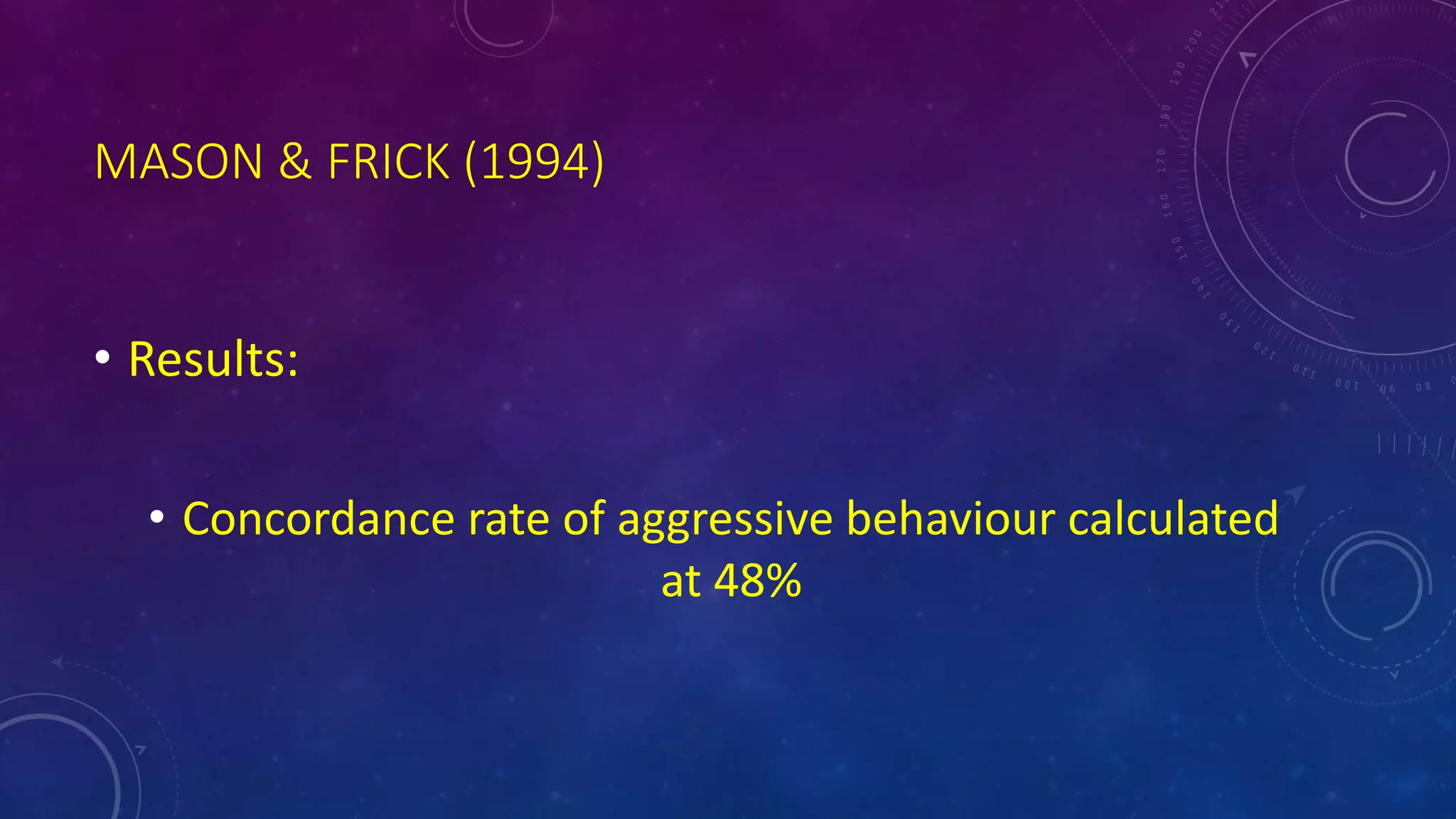
MASON & FRICK(1994)
• Results:
• Concordance rate of aggressive behaviour calculated
at 48%
16.
MASON & FRICK(1994)
• Results:
• This effect was larger for more violent behaviour…
17.
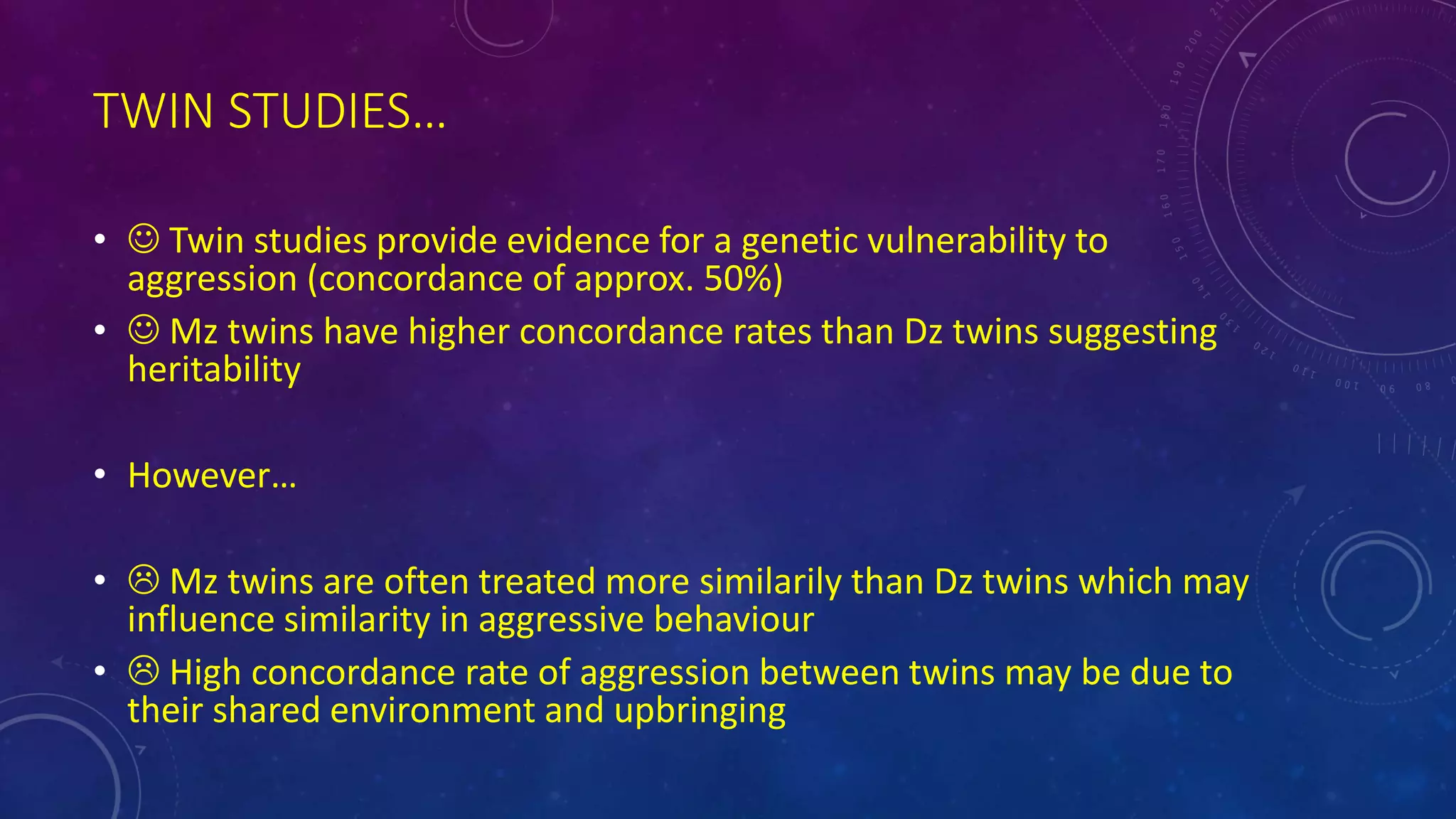
TWIN STUDIES…
• Twin studies provide evidence for a genetic vulnerability to
aggression (concordance of approx. 50%)
• Mz twins have higher concordance rates than Dz twins suggesting
heritability
• However…
• Mz twins are often treated more similarily than Dz twins which may
influence similarity in aggressive behaviour
• High concordance rate of aggression between twins may be due to
their shared environment and upbringing
18.
• Problem withtwin studies is that they usually share
the same environment too… so it’s difficult to
accurately estimate the contribution of genetic
factors on aggression.
19.
• Adoption studieslook for correlations in aggressive behaviour
between children raised by non-biological parents, and aggression
in the biological parents.
• Nature vs. Nurture…
21.
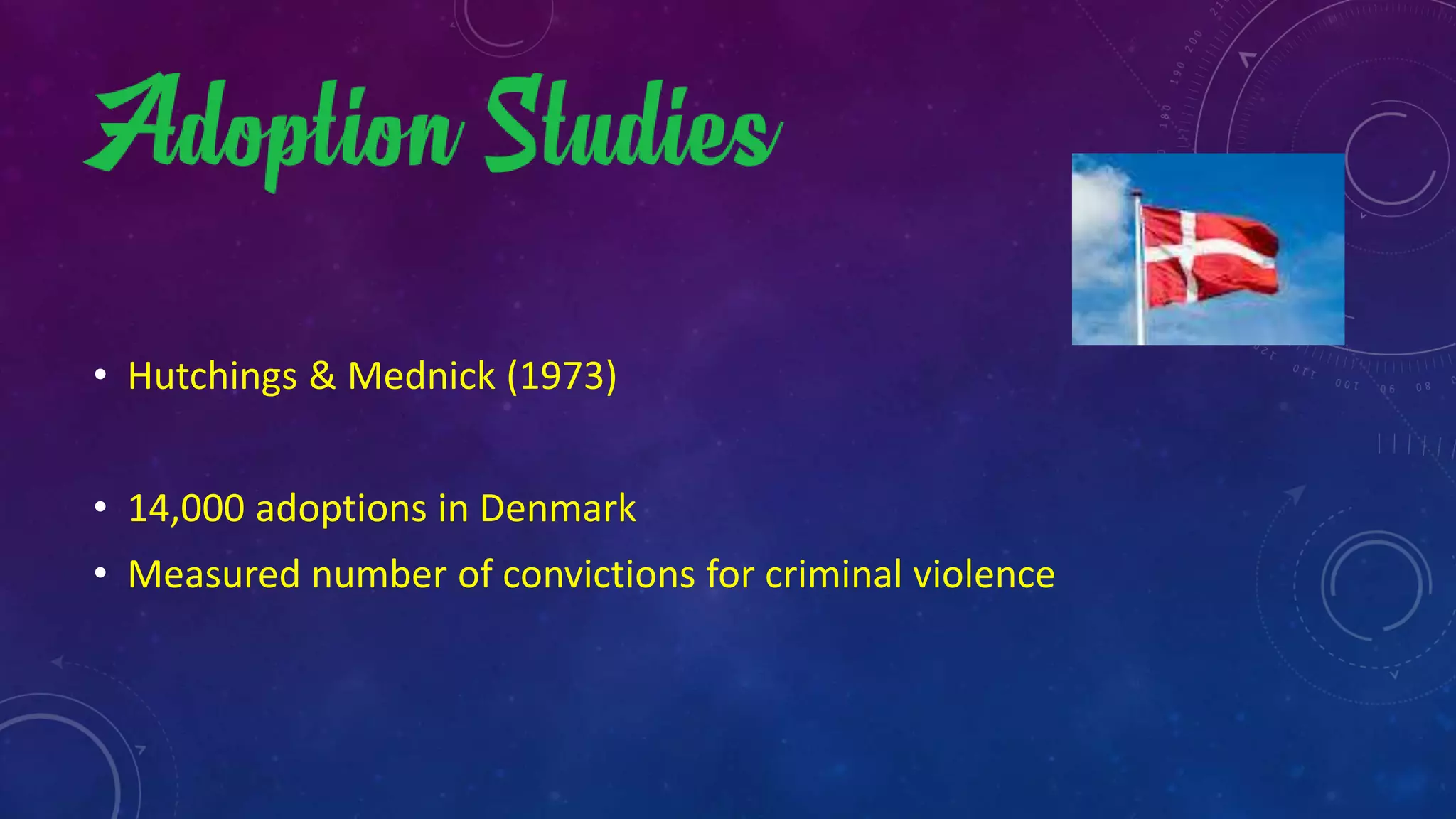
• Hutchings &Mednick (1973)
• 14,000 adoptions in Denmark
• Measured number of convictions for criminal violence
22.
• Hutchings &Mednick (1973)
• Results:
• Significant positive correlation found between adoptees and
biological parents for criminal convictions
• No significant correlation between adoptee and adoptive
parents.
23.
• Cadoret (1995)
•Best predictor for Aggressive behaviour in children is when the
biological family were aggressive AND the adoptive experience
marital dispute or drug abuse.
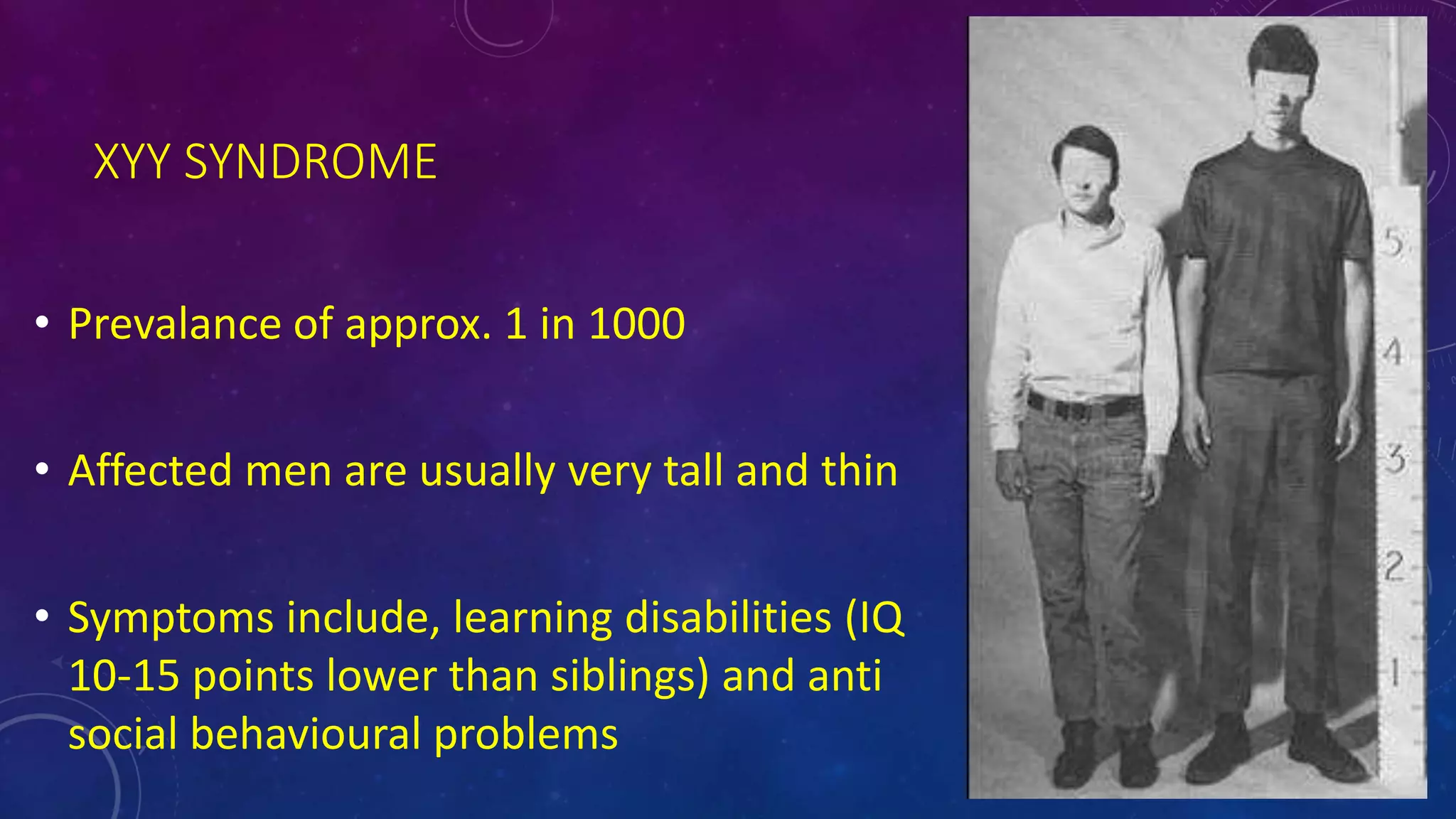
XYY SYNDROME
• Prevalanceof approx. 1 in 1000
• Affected men are usually very tall and thin
• Symptoms include, learning disabilities (IQ
10-15 points lower than siblings) and anti
social behavioural problems
26.
XYY SYNDROME
• Outof a sample of 314 patients in a high security
hospital, 9 were found to have XYY
• Sandberg concluded that those with XYY should be
hospitalised due to an increased likelihood of aggressive
behaviour
27.
HOWEVER…
• Theilgaard (1984)
•Compared a sample of XYY men with XY and found
fluctuating levels of aggression within the sample
• Conflicting evidence for aggression – XYY link
28.
• Media mayhave influenced
peoples perception of Xyy
causing aggressive
behaviour
29.
MAOA
• Gene –Monoamine Oxidase A (MAOA)
• The gene controls an enzyme which breaks down the
neurotransmitter Serotonin.
30.
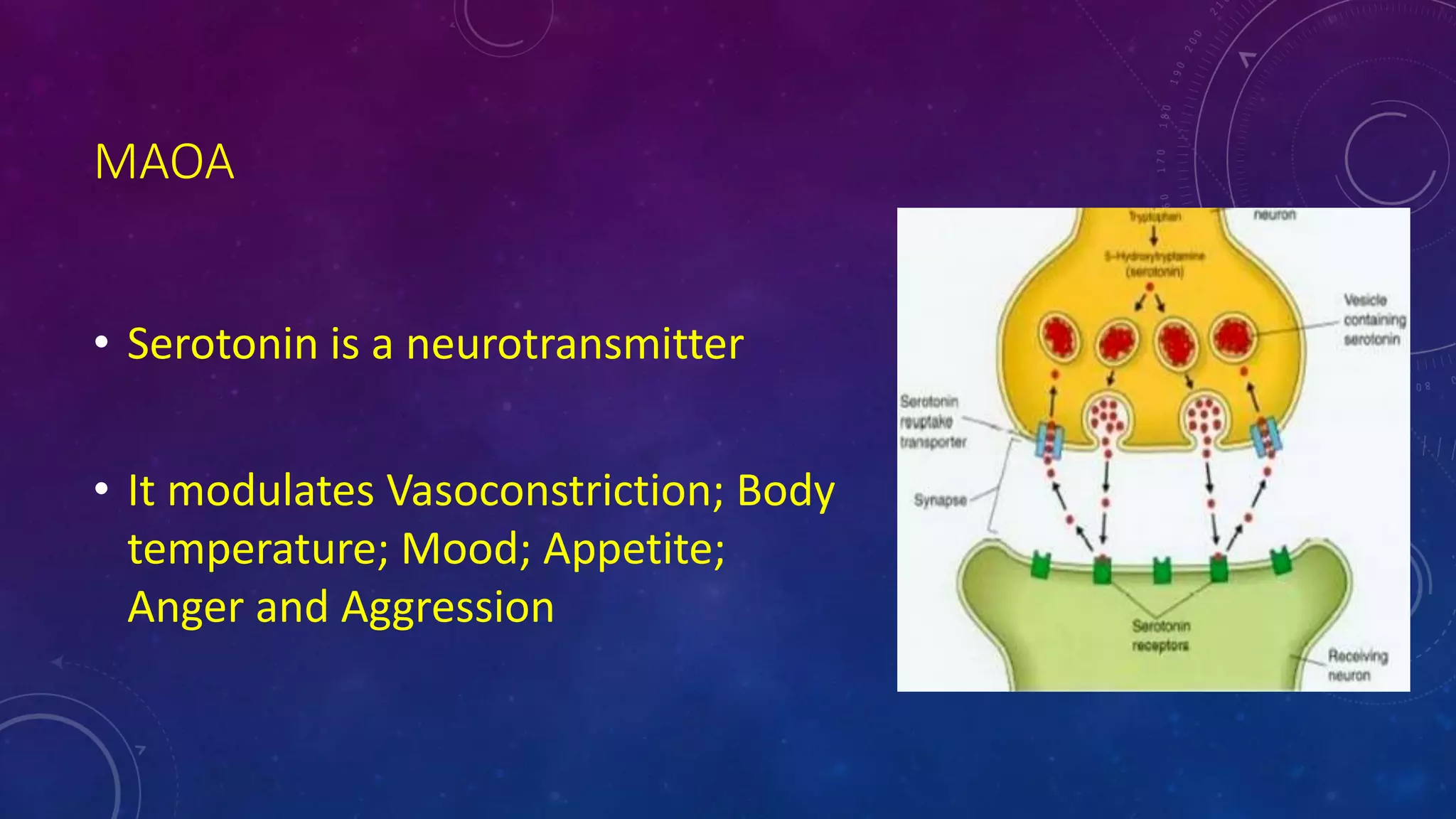
MAOA
• Serotonin isa neurotransmitter
• It modulates Vasoconstriction; Body
temperature; Mood; Appetite;
Anger and Aggression
31.
MAOA
• Brunner etal (1993)
• Examined a Dutch family which had males displaying high
levels of violence
• There were high levels of domestic violence
• One brother had tried to rape his sister
• The father had been convicted for violent crimes many times
32.
BRUNNER ET AL(1993)
• All the aggressive males in the family had defected MAOA
genes with very low activity from the gene
• This results in increased serotonin levels as a result of a
reduction of the enzyme.
33.
MAOA – WARRIORGENE
• Lower-level activation of MAOA is associated with
increased Aggression…
• Low Level MAOA (LL-MAOA) affects 1/3 of Western
societies
• LL-MAOA effects 2/3 in countries with a history of warfare
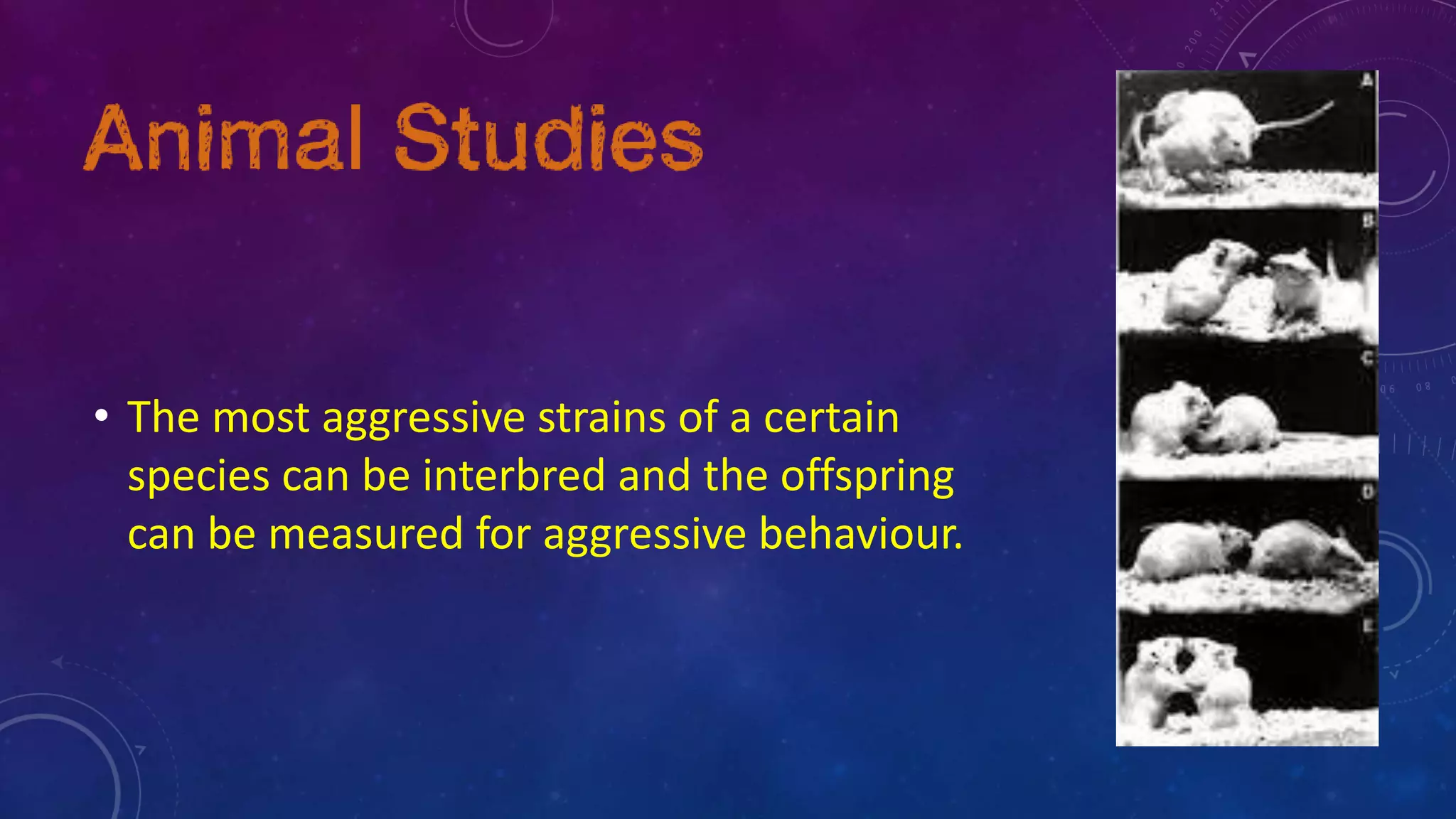
• The mostaggressive strains of a certain
species can be interbred and the offspring
can be measured for aggressive behaviour.
37.
• Lagerspetz (1979)
•Mice classified as either ‘aggressive’ or ‘docile’
• The 2 strains were then interbred and ‘fostered’
• By the 19th generation, 52% of the ‘aggressive’ mice’s offspring
showed biting behaviour compared to just 5% of the non-
aggressive
38.
• Lagerspetz (1979)
•Demonstrates a genetic basis for aggressive behaviour in mice
• Concordance rate was not 100%... Must be environmental
factors too…
40.
EXAM PREP
• DiscussGenetic factors involved in Aggressive
Behaviour
• 4+16 marks
42.
A01 – “DISCUSSGENETIC FACTORS INVOLVED IN
AGGRESSION” (4 MARKS)
• Aggression is the intent to verbally or physically harm others. Genetic explanations of
aggression suggest that aggressive behaviour is as a result of a biological, genetic
predisposition to aggression and ignores environmental explanations. The explanation
assumes heritability of aggression amongst family members who share genetic make-up.
Previous research into an inherited gene for aggression have found specific genetic
mutations that may lead to increased aggressive behaviour in the males who carry the
genotype XYY. The additional Y chromosome is associated with many symptoms including
heightened levels of aggression. Other genes associated with aggression is Monoamine
Oxidase A gene (MAOA) which is responsible for the breakdown of the neurotransmitter
Serotonin. Lower activation of this gene and subsequent higher levels of serotonin (due
to reduced enzyme activity from MAOA) have also been correlated with increased
aggression in those who carry it. One third of people in Western countries carry the
lowered activation variation of MAOA, compared with two thirds in countries with a
history of warfare, leading the gene to be named the ‘Warrior gene’.
Editor's Notes
#3 Can anyone explain what these are? (class discussion – hands up activity) Then go through and explain each. Then get them to link these to aggression, very basically e.g. Might be a gene that causes aggression, does anyone know any hormones that might explain it?
#20 If more similar to adopted parents …. Environment; if more similar to biological parents … genes