Globalization  and  Australia Alan Oxley Australian APEC Centre, Monash www.worldgrowth.org
Three aspects The impact of  globalization What is globalization Impact on Australia
What is  the impact  of  globalization?
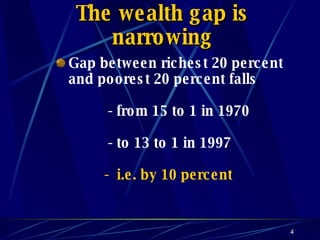
The wealth gap is narrowing Gap between richest 20 percent and poorest 20 percent falls   - from 15 to 1 in 1970   - to 13 to 1 in 1997   -  i.e. by 10 percent
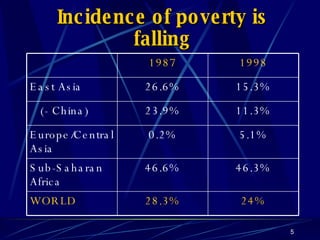
Incidence of poverty is falling 24% 28.3% WORLD 46.3% 46.6% Sub-Saharan Africa 5.1% 0.2% Europe/Central Asia 11.3% 23.9% (- China) 15.3% 26.6% East Asia 1998 1987
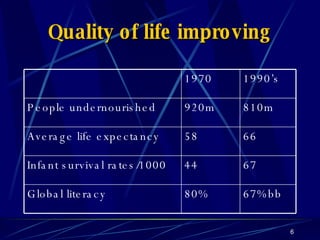
Quality of life improving 67%bb 80% Global literacy 67 44 Infant survival rates/1000 66 58 Average life expectancy 810m 920m People undernourished 1990’s 1970
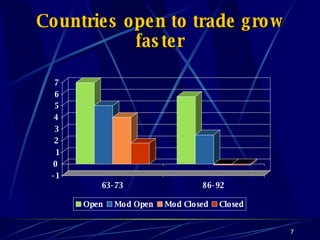
Countries open to trade grow faster
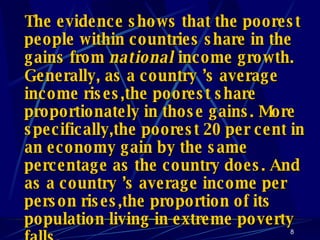
The evidence shows that the poorest people within countries share in the gains from  national  income growth. Generally, as a country ’s average income rises,the poorest share proportionately in those gains. More specifically,the poorest 20 per cent in an economy gain by the same percentage as the country does. And as a country ’s average income per person rises,the proportion of its population living in extreme poverty falls.
What is Globalization? Defining it The drivers The effects
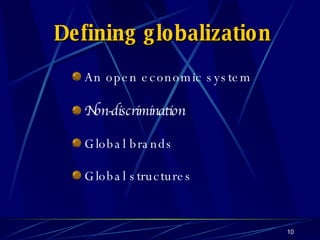
Defining globalization An open economic system Non-discrimination Global brands Global structures
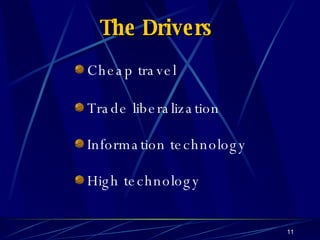
The Drivers  Cheap travel Trade liberalization Information technology High technology
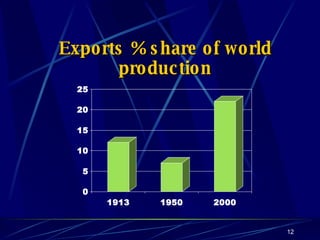
Exports % share of world production
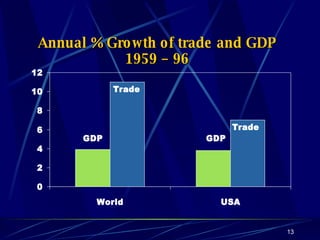
Annual % Growth of trade and GDP 1959 – 96
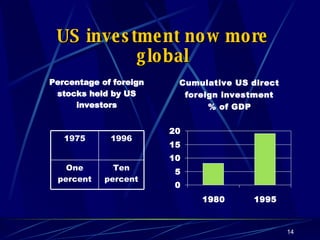
US investment now more global Percentage of foreign stocks held by US investors Ten percent One percent 1996 1975
Effects of globalization On business On work
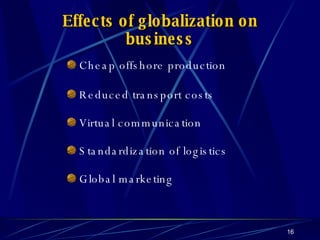
Effects of globalization on business Cheap offshore production Reduced transport costs Virtual communication Standardization of logistics Global marketing
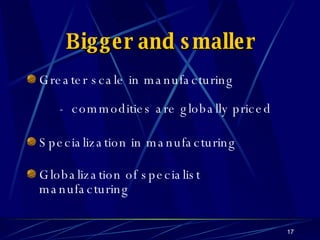
Bigger and smaller Greater scale in manufacturing -  commodities are globally priced Specialization in manufacturing Globalization of specialist manufacturing
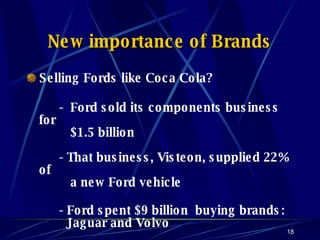
New importance of Brands Selling Fords like Coca Cola?  -  Ford sold its components business for   $1.5 billion - That business, Visteon, supplied 22% of   a new Ford vehicle - Ford spent $9 billion  buying brands:   Jaguar and Volvo
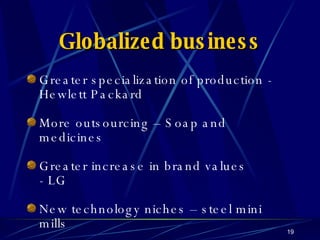
Globalized business Greater specialization of production - Hewlett Packard More outsourcing – Soap and medicines Greater increase in brand values - LG New technology niches – steel mini mills
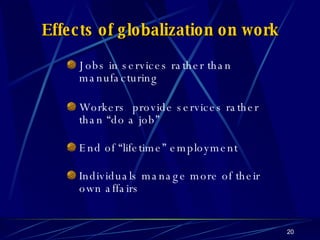
Effects of globalization on work Jobs in services rather than manufacturing Workers  provide services rather than “do a job” End of “lifetime” employment Individuals manage more of their own affairs
A globalized world Greater freedom of movement of goods, services, capital, people Global citizens The Information Age – has only just begun
Australia and Globalization How is Australia positioned? Examples of globalized industries The Future
Australia: globalization’s child Australia has grown on - trade - foreign investment - immigration - adaptation of technology Australia is the branch office model of development
Australia’s position Openness IT/E readiness Culture
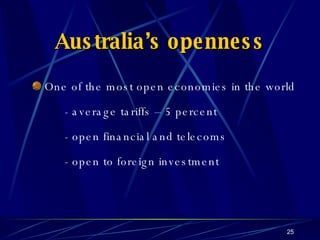
Australia’s openness One of the most open economies in the world - average tariffs – 5 percent - open financial and telecoms - open to foreign investment
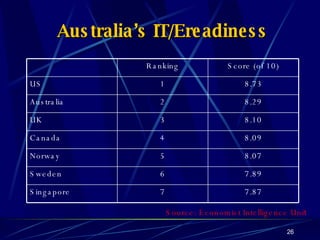
Australia’s IT/Ereadiness Source: Economist Intelligence Uni t 7.87 7 Singapore 7.89 6 Sweden 8.07 5 Norway 8.09 4 Canada 8.10 3 UK 8.29 2 Australia 8.73 1 US Score (of 10) Ranking
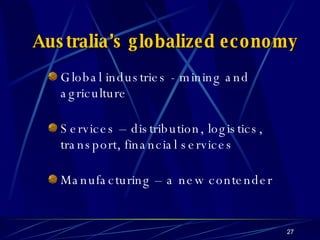
Australia’s globalized economy Global industries - mining and agriculture Services – distribution, logistics, transport, financial services Manufacturing – a new contender
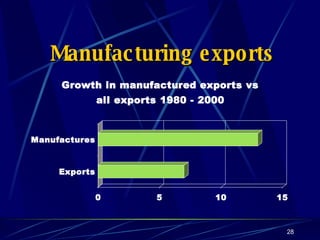
Manufacturing exports
Globalized industries Toyota - manufactures and exports a   global car Howe Leather – a tier one supplier to Ford Rosemount/Southcorp – exporter &   offshore producer Westfield – real estate management
The future The information Age - computing power continues to   expand exponentially - More global distribution of activity - Greater interconnectivity - Bigger organizations - Greater fragmentation - Greater personal freedom
Australia ready to thrive Globally oriented economy High adaptation of IT Workforce adjusting Open society
www.globalizationguide.org

Globalizationvic

  • 1.
    Globalization and Australia Alan Oxley Australian APEC Centre, Monash www.worldgrowth.org
  • 2.
    Three aspects Theimpact of globalization What is globalization Impact on Australia
  • 3.
    What is the impact of globalization?
  • 4.
    The wealth gapis narrowing Gap between richest 20 percent and poorest 20 percent falls - from 15 to 1 in 1970 - to 13 to 1 in 1997 - i.e. by 10 percent
  • 5.
    Incidence of povertyis falling 24% 28.3% WORLD 46.3% 46.6% Sub-Saharan Africa 5.1% 0.2% Europe/Central Asia 11.3% 23.9% (- China) 15.3% 26.6% East Asia 1998 1987
  • 6.
    Quality of lifeimproving 67%bb 80% Global literacy 67 44 Infant survival rates/1000 66 58 Average life expectancy 810m 920m People undernourished 1990’s 1970
  • 7.
    Countries open totrade grow faster
  • 8.
    The evidence showsthat the poorest people within countries share in the gains from national income growth. Generally, as a country ’s average income rises,the poorest share proportionately in those gains. More specifically,the poorest 20 per cent in an economy gain by the same percentage as the country does. And as a country ’s average income per person rises,the proportion of its population living in extreme poverty falls.
  • 9.
    What is Globalization?Defining it The drivers The effects
  • 10.
    Defining globalization Anopen economic system Non-discrimination Global brands Global structures
  • 11.
    The Drivers Cheap travel Trade liberalization Information technology High technology
  • 12.
    Exports % shareof world production
  • 13.
    Annual % Growthof trade and GDP 1959 – 96
  • 14.
    US investment nowmore global Percentage of foreign stocks held by US investors Ten percent One percent 1996 1975
  • 15.
    Effects of globalizationOn business On work
  • 16.
    Effects of globalizationon business Cheap offshore production Reduced transport costs Virtual communication Standardization of logistics Global marketing
  • 17.
    Bigger and smallerGreater scale in manufacturing - commodities are globally priced Specialization in manufacturing Globalization of specialist manufacturing
  • 18.
    New importance ofBrands Selling Fords like Coca Cola? - Ford sold its components business for $1.5 billion - That business, Visteon, supplied 22% of a new Ford vehicle - Ford spent $9 billion buying brands: Jaguar and Volvo
  • 19.
    Globalized business Greaterspecialization of production - Hewlett Packard More outsourcing – Soap and medicines Greater increase in brand values - LG New technology niches – steel mini mills
  • 20.
    Effects of globalizationon work Jobs in services rather than manufacturing Workers provide services rather than “do a job” End of “lifetime” employment Individuals manage more of their own affairs
  • 21.
    A globalized worldGreater freedom of movement of goods, services, capital, people Global citizens The Information Age – has only just begun
  • 22.
    Australia and GlobalizationHow is Australia positioned? Examples of globalized industries The Future
  • 23.
    Australia: globalization’s childAustralia has grown on - trade - foreign investment - immigration - adaptation of technology Australia is the branch office model of development
  • 24.
    Australia’s position OpennessIT/E readiness Culture
  • 25.
    Australia’s openness Oneof the most open economies in the world - average tariffs – 5 percent - open financial and telecoms - open to foreign investment
  • 26.
    Australia’s IT/Ereadiness Source:Economist Intelligence Uni t 7.87 7 Singapore 7.89 6 Sweden 8.07 5 Norway 8.09 4 Canada 8.10 3 UK 8.29 2 Australia 8.73 1 US Score (of 10) Ranking
  • 27.
    Australia’s globalized economyGlobal industries - mining and agriculture Services – distribution, logistics, transport, financial services Manufacturing – a new contender
  • 28.
  • 29.
    Globalized industries Toyota- manufactures and exports a global car Howe Leather – a tier one supplier to Ford Rosemount/Southcorp – exporter & offshore producer Westfield – real estate management
  • 30.
    The future Theinformation Age - computing power continues to expand exponentially - More global distribution of activity - Greater interconnectivity - Bigger organizations - Greater fragmentation - Greater personal freedom
  • 31.
    Australia ready tothrive Globally oriented economy High adaptation of IT Workforce adjusting Open society
  • 32.