National Programs
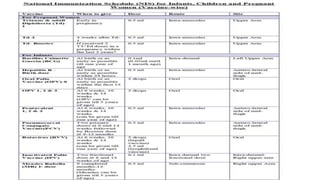
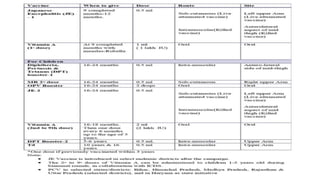
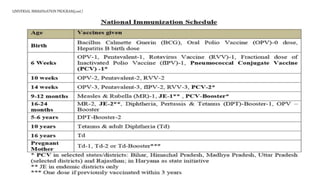
1. Universal Immunisation program(UIP)
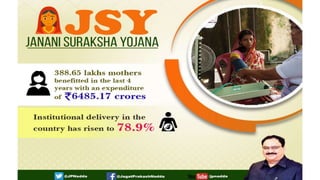
2. Janani Suraksha Yojana(JSY)
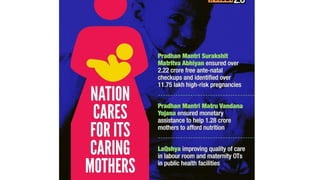
3.Pradhan Mantri Surakshit Matritya
Abhiyan(PMSMA)
4.National Program for Family planning
Presentor: Dr Jason Dsouza
Moderator: Dr Mario Bukelo
UNIVERSAL IMMUNIzATION
PROGRAM(UIP)
UNIVERSAL IMMUNIzATION PROGRAM(cont.)
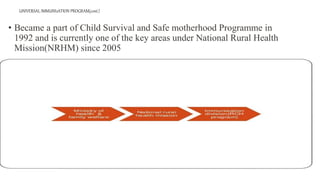
• Became a part of Child Survival and Safe motherhood Programme in
1992 and is currently one of the key areas under National Rural Health
Mission(NRHM) since 2005
UNIVERSAL IMMUNIzATION PROGRAM(cont.)
KEY ROLES:
• ROUTINE IMMUNISATION
• CAMPAIGNS(POLIO,MEASLES & JAPANESE ENCAPHALITIS)
• MONITORING ADVERSE EVENTS FOLLOWING IMMUNISATION
• VACCINE AND COLD STORAGE LOGISTICS
• IMMUNISATION TRAININGS
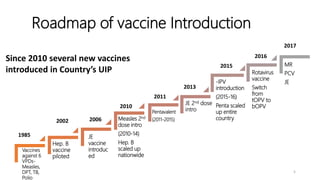
Roadmap of vaccine Introduction
Vaccines
against 6
VPDs-
Measles,
DPT, TB,
Polio
Hep. B
vaccine
piloted
Measles 2nd
dose intro
(2010-14)
Hep. B
scaled up
nationwide
Pentavalent
(2011-2015)
JE 2nd dose
intro
-IPV
introduction
(2015-16)
Penta scaled
up entire
country
Rotavirus
vaccine
Switch
from
tOPV to
bOPV
MR
PCV
JE
2010
2015
2011
2013
2017
2016
Since 2010 several new vaccines
introduced in Country’s UIP
5
2002
1985
2006
JE
vaccine
introduc
ed
UNIVERSAL IMMUNIzATION PROGRAM(cont.)
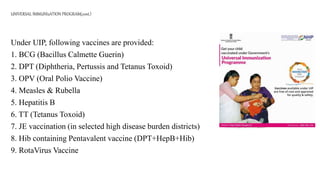
Under UIP, following vaccines are provided:
1. BCG (Bacillus Calmette Guerin)
2. DPT (Diphtheria, Pertussis and Tetanus Toxoid)
3. OPV (Oral Polio Vaccine)
4. Measles & Rubella
5. Hepatitis B
6. TT (Tetanus Toxoid)
7. JE vaccination (in selected high disease burden districts)
8. Hib containing Pentavalent vaccine (DPT+HepB+Hib)
9. RotaVirus Vaccine
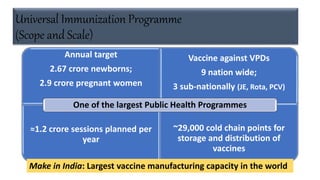
Universal Immunization Programme
(Scope and Scale)
Annual target
2.67 crore newborns;
2.9 crore pregnant women
Vaccine against VPDs
9 nation wide;
3 sub-nationally (JE, Rota, PCV)
≈1.2 crore sessions planned per
year
~29,000 cold chain points for
storage and distribution of
vaccines
One of the largest Public Health Programmes
Make in India: Largest vaccine manufacturing capacity in the world
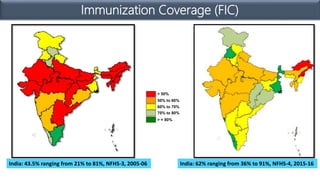
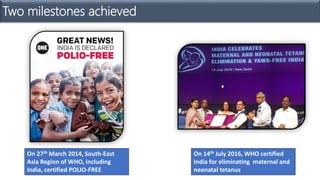
Immunization Coverage (FIC)
> = 80%
70% to 80%
60% to 70%
50% to 60%
< 50%
India: 43.5% ranging from 21% to 81%, NFHS-3, 2005-06 India: 62% ranging from 36% to 91%, NFHS-4, 2015-16
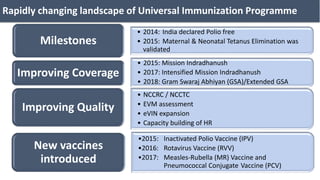
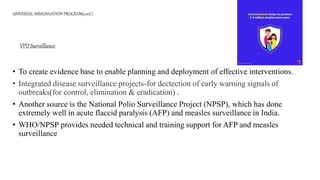
Two milestones achieved
On 27th March 2014, South-East
Asia Region of WHO, including
India, certified POLIO-FREE
On 14th July 2016, WHO certified
India for eliminating maternal and
neonatal tetanus
Rapidly changing landscape of Universal Immunization Programme
• 2014: India declared Polio free
• 2015: Maternal & Neonatal Tetanus Elimination was
validated
Milestones
•2015: Inactivated Polio Vaccine (IPV)
•2016: Rotavirus Vaccine (RVV)
•2017: Measles-Rubella (MR) Vaccine and
Pneumococcal Conjugate Vaccine (PCV)
New vaccines
introduced
• 2015: Mission Indradhanush
• 2017: Intensified Mission Indradhanush
• 2018: Gram Swaraj Abhiyan (GSA)/Extended GSA
Improving Coverage
• NCCRC / NCCTC
• EVM assessment
• eVIN expansion
• Capacity building of HR
Improving Quality
UNIVERSAL IMMUNIzATION PROGRAM(cont.)
• To create evidence base to enable planning and deployment of effective interventions.
• Integrated disease surveillance projects-for dectection of early warning signals of
outbreaks(for control, elimination & eradication) .
• Another source is the National Polio Surveillance Project (NPSP), which has done
extremely well in acute flaccid paralysis (AFP) and measles surveillance in India.
• WHO/NPSP provides needed technical and training support for AFP and measles
surveillance
VPD Surveillance
UNIVERSAL IMMUNIzATION PROGRAM(cont.)
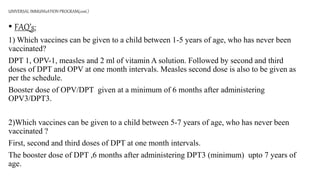
• FAQ’s:
1) Which vaccines can be given to a child between 1-5 years of age, who has never been
vaccinated?
DPT 1, OPV-1, measles and 2 ml of vitamin A solution. Followed by second and third
doses of DPT and OPV at one month intervals. Measles second dose is also to be given as
per the schedule.
Booster dose of OPV/DPT given at a minimum of 6 months after administering
OPV3/DPT3.
2)Which vaccines can be given to a child between 5-7 years of age, who has never been
vaccinated ?
First, second and third doses of DPT at one month intervals.
The booster dose of DPT ,6 months after administering DPT3 (minimum) upto 7 years of
age.
UNIVERSAL IMMUNIzATION PROGRAM(cont.)
3) Should one re-start with the first dose of a vaccine if a child is brought late for a dose ?
To pick up from where the schedule was left off.
4) Why is it not adviced to clean the injection site with spirit swab before vaccination?
Some of the live components of vaccines are killed when comes in contact with spirit
5)Why should there be a minimum gap of 4 weeks between two doses of DPT?
Decreasing the interval between two doses may not obtain optimal antibody production for
protection.
UNIVERSAL IMMUNIzATION PROGRAM(cont.)
6)Why give the DPT vaccine in the antero-lateral mid thigh and not the gluteal region ?
To prevent damage to the sciatic nerve and moreover vaccine deposited fat of gluteal
region does not invoke the appropriate immune response.
7)What should one do if the child is found allergic to DPT or develops encephalopathy
after DPT ?
Should be given the DTaP/DT vaccine instead of DPT for the remaining doses.
UNIVERSAL IMMUNIzATION PROGRAM(cont.)
8) If a child has received the measles vaccine before 9 months of age, is it necessary to repeat
the vaccine later?
Yes, i.e. after the completion of 9 months until 12 months of age and at 16-24 months. Can be
administered upto 5 years of age.
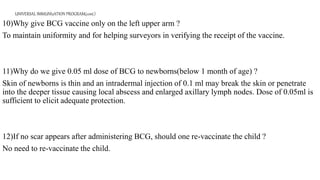
9) What is measles catch-up campaign ?
To vaccinate all children between 9m to 10 years of age with one dose of measles vaccine.
UNIVERSAL IMMUNIzATION PROGRAM(cont.)
10)Why give BCG vaccine only on the left upper arm ?
To maintain uniformity and for helping surveyors in verifying the receipt of the vaccine.
11)Why do we give 0.05 ml dose of BCG to newborns(below 1 month of age) ?
Skin of newborns is thin and an intradermal injection of 0.1 ml may break the skin or penetrate
into the deeper tissue causing local abscess and enlarged axillary lymph nodes. Dose of 0.05ml is
sufficient to elicit adequate protection.
12)If no scar appears after administering BCG, should one re-vaccinate the child ?
No need to re-vaccinate the child.
UNIVERSAL IMMUNIzATION PROGRAM(cont.)
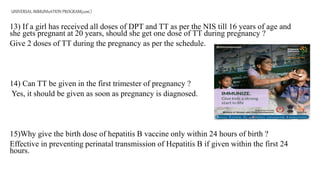
13) If a girl has received all doses of DPT and TT as per the NIS till 16 years of age and
she gets pregnant at 20 years, should she get one dose of TT during pregnancy ?
Give 2 doses of TT during the pregnancy as per the schedule.
14) Can TT be given in the first trimester of pregnancy ?
Yes, it should be given as soon as pregnancy is diagnosed.
15)Why give the birth dose of hepatitis B vaccine only within 24 hours of birth ?
Effective in preventing perinatal transmission of Hepatitis B if given within the first 24
hours.
UNIVERSAL IMMUNIzATION PROGRAM(cont.)
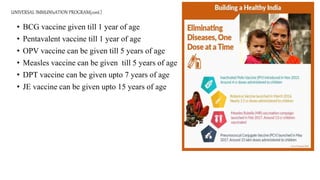
• BCG vaccine given till 1 year of age
• Pentavalent vaccine till 1 year of age
• OPV vaccine can be given till 5 years of age
• Measles vaccine can be given till 5 years of age
• DPT vaccine can be given upto 7 years of age
• JE vaccine can be given upto 15 years of age
UNIVERSAL Immunization PROGRAM(cont.)
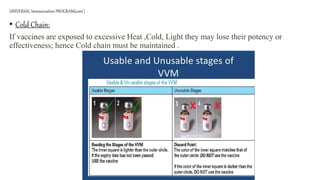
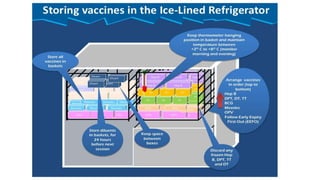
• Cold Chain:
If vaccines are exposed to excessive Heat ,Cold, Light they may lose their potency or
effectiveness; hence Cold chain must be maintained .
UNIVERSAL IMMUNIzATION PROGRAM(cont.)
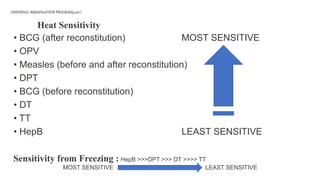
• BCG (after reconstitution) MOST SENSITIVE
• OPV
• Measles (before and after reconstitution)
• DPT
• BCG (before reconstitution)
• DT
• TT
• HepB LEAST SENSITIVE
Heat Sensitivity
Sensitivity from Freezing : HepB >>>DPT >>> DT >>>> TT
MOST SENSITIVE LEAST SENSITIVE
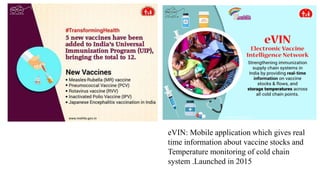
eVIN: Mobile application which gives real
time information about vaccine stocks and
Temperature monitoring of cold chain
system .Launched in 2015
Janani Suraksha Yojana(JSY)
Janani Suraksha Yojana
• National Maternity Benefit scheme; Launched on 12th April 2005
• Objective: Reducing maternal and neonatal mortality by promoting institutional
delivery among women in BPL families
• Salient Features :
-100 % centrally sponsored scheme
-Being implemented under NRHM (all states & UTs; it integrates cash assistance with
institutional care during antenatal delivery and immediate post partum care)
-Benefit will be extended upto the third child if mother chooses to undergo sterilization
immediately after delivery(HPS). In LPS all births are given cash assisatnce.
-Health activist involved: ASHA,AWW,TBA
Janani Suraksha Yojana(Cont.)
• Important Features of JSY:
- Low Performing States :Uttar Pradesh, Uttaranchal, Bihar, Jharkhand, Madhya Pradesh,
Chhattisgarh, Assam, Rajasthan, Orissa and Jammu and Kashmir(Main focus of JSY).
-Tracking Each Pregnancy: JSY card along with a MCH card. Health worker assigned
under supervision of ANM and MO, will prepare a micro-birth plan which will effectively
help in monitoring Antenatal Check-up, and post delivery care.
-Eligibility for Cash Assistance: BPL Certification – in all HPS states. If No BPL card,
depending on the family status gram panchayath would issue a certificate.
-Disbursement of Cash Assistance: To meet the cost of delivery; Done at the hospital level
cash given at one go to mother while ASHA would get her money once Child is immunized
with BCG or after her postnatal visit.
Janani Suraksha Yojana(Cont.)
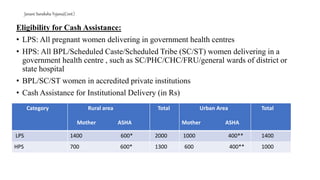
Eligibility for Cash Assistance:
• LPS: All pregnant women delivering in government health centres
• HPS: All BPL/Scheduled Caste/Scheduled Tribe (SC/ST) women delivering in a
government health centre , such as SC/PHC/CHC/FRU/general wards of district or
state hospital
• BPL/SC/ST women in accredited private institutions
• Cash Assistance for Institutional Delivery (in Rs)
Category Rural area
Mother ASHA
Total Urban Area
Mother ASHA
Total
LPS 1400 600* 2000 1000 400** 1400
HPS 700 600* 1300 600 400** 1000
Janani Suraksha Yojana(Cont.)
• Subsidized caesarean section, up to Rs. 1500/delivery
• All BPL pregnant women(LPS & HPS) preferring to deliver at home, are entitled to
cash assistance of Rs. 500 per delivery, regardless of age and birth order.
• Vandemataram scheme: Voluntary scheme for doctors and health institutions to
volunteer in providing safe motherhood services. Vandemataram Logo in Institution,
Iron,Folic Acid,oral pills, TT injections etc. will be provided by DHO for free
distribution to beneficiaries
Janani Suraksha Yojana(Cont.)
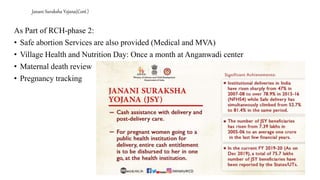
As Part of RCH-phase 2:
• Safe abortion Services are also provided (Medical and MVA)
• Village Health and Nutrition Day: Once a month at Anganwadi center
• Maternal death review
• Pregnancy tracking
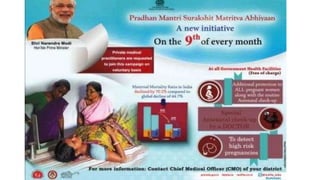
Pradhan Mantri Surakshit Matritva Abhiyan (PMSMA)
• Launched in the year 2016 under National Health Mission
• Aims: Providing assured, comprehensive and quality antenatal care, free of cost, universally
to all pregnant women on the 9th of every month. If its a Sunday/ a holiday, then the Clinic
organized on the next working day. This service is in addition to the routine ANC at the
health facility.
• Goal: To improve the quality and coverage of Antenatal Care (ANC) including diagnostics
and counselling services as part of the Reproductive Maternal Neonatal Child and Adolescent
Health (RMNCH+A) Strategy
• Target Beneficiaries: The program aims to reach out to all Pregnant Women who are in the
2nd & 3rd Trimesters of pregnancy.
• Package of services under PMSMA
1. Routine antenatal check up
2. Diagnostic services
3. Identification and management of high risk pregnancy
4. Counselling on Nutrition, Family Planning, Birth Preparedness, New born and
Post Natal care.
• Other components of PMSMA are:
1. Communication for behavioural change
2. Health system strengthening for providing quality services
3. Referral transport
Pradhan Mantri Surakshit Matritva Abhiyan (Cont)
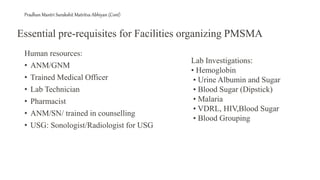
Essential pre-requisites for Facilities organizing PMSMA
Human resources:
• ANM/GNM
• Trained Medical Officer
• Lab Technician
• Pharmacist
• ANM/SN/ trained in counselling
• USG: Sonologist/Radiologist for USG
Lab Investigations:
• Hemoglobin
• Urine Albumin and Sugar
• Blood Sugar (Dipstick)
• Malaria
• VDRL, HIV,Blood Sugar
• Blood Grouping
Pradhan Mantri Surakshit Matritva Abhiyan (Cont)
All identified high risk pregnancies should be referred to higher facilities and JSSK help
desks that have been set up at these facilities.
• Before leaving the facility every pregnant women to be counselled, may be individually or
in groups, on nutrition ,rest, safe sex, safety, birth preparedness, identification of danger
signs, institutional delivery and Post- partum Family Planning (PPFP).
• Filling out the MCP cards at these clinics is mandatory and a sticker indicating the condition
and risk factor of the pregnant women should be added onto MCP card for each visit:
Green Sticker: For women with no risk factor detected
Red Sticker: For women with high risk pregnancy
Blue Sticker: For women with Pregnancy Induced Hypertension
Yellow Sticker: Pregnancy with co-morbid conditions such as diabetes, hypothyroidism, STIs
etc.
National Programme for Family Planning Matritya Abhiyan(PMSMA
• First country in the world to have launched a National Programme for Family Planning
in 1952
• Goal : -To reduce India's overall fertility rate to 2.1 by the year 2025
-In addition to population stabilization goals also promotes reproductive health
and reduce maternal, infant & child mortality and morbidity
• 52.5% of country’s fertility is contributed by age group 15-24 years
• 15-24 years women contribute 46% of the maternal mortality
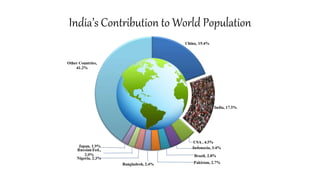
India’s Contribution to World Population
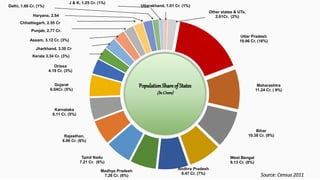
Uttar Pradesh
19.96 Cr. (16%)
Maharashtra
11.24 Cr. ( 9%)
Bihar
10.38 Cr. (9%)
West Bengal
9.13 Cr. (8%)
Andhra Pradesh
8.47 Cr. (7%)
Madhya Pradesh
7.26 Cr. (6%)
Tamil Nadu
7.21 Cr. (6%)
Rajasthan,
6.86 Cr. (6%)
Karnataka
6.11 Cr. (5%)
Gujarat
6.04Cr. (5%)
Orissa
4.19 Cr. (3%)
Kerala 3.34 Cr. (3%)
Jharkhand, 3.30 Cr
Assam, 3.12 Cr. (3%)
Punjab, 2.77 Cr.
Chhattisgarh, 2.55 Cr
Haryana, 2.54
Delhi, 1.68 Cr. (1%)
J & K, 1.25 Cr. (1%)
Uttarakhand, 1.01 Cr. (1%)
Other states & UTs,
2.61Cr. (2%)
PopulationShareof States
(InCrore)
Source: Census 2011
MoHFW launched “Mission Pariwar Vikas” in 2016 ,with an aim to improve
access to contraceptives and family planning services at all levels of health
system in high fertility districts(146) spreading over seven high focus states
Bihar, Uttar Pradesh, Assam, Chhattisgarh, Madhya Pradesh, Rajasthan &
Jharkhand.
Objective:
To accelerate access to high quality Family Planning choices based on
information, reliable services and supplies within the rights framework.
Hum DO : NFPP through Hum Do aims to provide eligible couples with
information and guidance on family planning methods and services available, to
ensure individuals and couples lead a healthy, happy and prosperous life
Mission Parivar Vikas
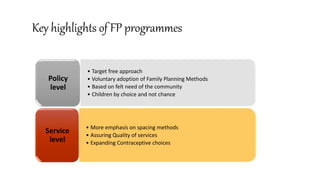
Key highlights of FP programmes
• Target free approach
• Voluntary adoption of Family Planning Methods
• Based on felt need of the community
• Children by choice and not chance
Policy
level
• More emphasis on spacing methods
• Assuring Quality of services
• Expanding Contraceptive choices
Service
level
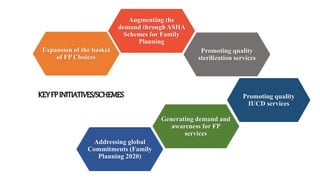
Expansion of the basket
of FP Choices
Augmenting the
demand through ASHA
Schemes for Family
Planning
Promoting quality
sterilization services
Promoting quality
IUCD services
Generating demand and
awareness for FP
services
Addressing global
Commitments (Family
Planning 2020)
KEYFPINITIATIVES/SCHEMES
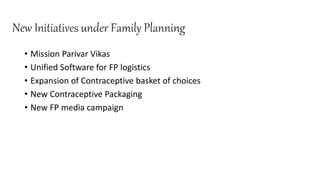
New Initiatives under Family Planning
• Mission Parivar Vikas
• Unified Software for FP logistics
• Expansion of Contraceptive basket of choices
• New Contraceptive Packaging
• New FP media campaign
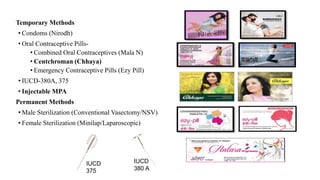
Temporary Methods
• Condoms (Nirodh)
• Oral Contraceptive Pills-
• Combined Oral Contraceptives (Mala N)
• Centchroman (Chhaya)
• Emergency Contraceptive Pills (Ezy Pill)
• IUCD-380A, 375
• Injectable MPA
Permanent Methods
• Male Sterilization (Conventional Vasectomy/NSV)
• Female Sterilization (Minilap/Laparoscopic)
IUCD
375
IUCD
380 A
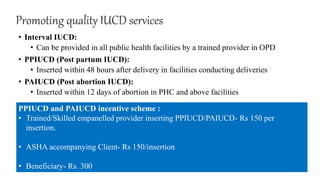
Promoting quality IUCD services
• Interval IUCD:
• Can be provided in all public health facilities by a trained provider in OPD
• PPIUCD (Post partum IUCD):
• Inserted within 48 hours after delivery in facilities conducting deliveries
• PAIUCD (Post abortion IUCD):
• Inserted within 12 days of abortion in PHC and above facilities
PPIUCD and PAIUCD incentive scheme :
• Trained/Skilled empanelled provider inserting PPIUCD/PAIUCD- Rs 150 per
insertion.
• ASHA accompanying Client- Rs 150/insertion
• Beneficiary- Rs. 300
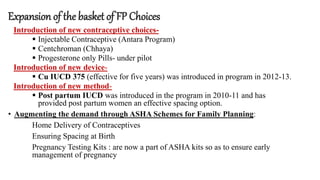
Expansion of the basket of FP Choices
Introduction of new contraceptive choices-
 Injectable Contraceptive (Antara Program)
 Centchroman (Chhaya)
 Progesterone only Pills- under pilot
Introduction of new device-
 Cu IUCD 375 (effective for five years) was introduced in program in 2012-13.
Introduction of new method-
 Post partum IUCD was introduced in the program in 2010-11 and has
provided post partum women an effective spacing option.
• Augmenting the demand through ASHA Schemes for Family Planning:
Home Delivery of Contraceptives
Ensuring Spacing at Birth
Pregnancy Testing Kits : are now a part of ASHA kits so as to ensure early
management of pregnancy
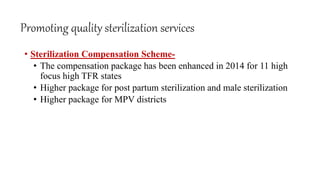
Promoting quality sterilization services
• Sterilization Compensation Scheme-
• The compensation package has been enhanced in 2014 for 11 high
focus high TFR states
• Higher package for post partum sterilization and male sterilization
• Higher package for MPV districts
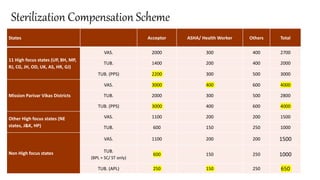
Sterilization Compensation Scheme
States Acceptor ASHA/ Health Worker Others Total
11 High focus states (UP, BH, MP,
RJ, CG, JH, OD, UK, AS, HR, GJ)
VAS. 2000 300 400 2700
TUB. 1400 200 400 2000
TUB. (PPS) 2200 300 500 3000
Mission Parivar Vikas Districts
VAS. 3000 400 600 4000
TUB. 2000 300 500 2800
TUB. (PPS) 3000 400 600 4000
Other High focus states (NE
states, J&K, HP)
VAS. 1100 200 200 1500
TUB. 600 150 250 1000
Non High focus states
VAS. 1100 200 200 1500
TUB.
(BPL + SC/ ST only)
600 150 250 1000
TUB. (APL) 250 150 250 650
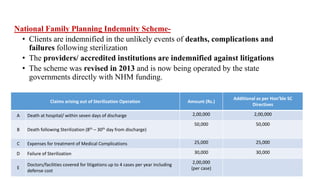
National Family Planning Indemnity Scheme-
• Clients are indemnified in the unlikely events of deaths, complications and
failures following sterilization
• The providers/ accredited institutions are indemnified against litigations
• The scheme was revised in 2013 and is now being operated by the state
governments directly with NHM funding.
Claims arising out of Sterilization Operation Amount (Rs.)
Additional as per Hon’ble SC
Directives
A Death at hospital/ within seven days of discharge 2,00,000 2,00,000
B Death following Sterilization (8th – 30th day from discharge)
50,000 50,000
C Expenses for treatment of Medical Complications 25,000 25,000
D Failure of Sterilization 30,000 30,000
E
Doctors/facilities covered for litigations up to 4 cases per year including
defense cost
2,00,000
(per case)
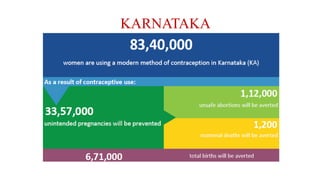
KARNATAKA
References
• K.Park Textbook of PSM,25th edition
• Ministry of Health and family welfare www.nhm.gov.in/immunisation
• www.nhp.gov.in
• NFHS-5 and DLHS -4 details
National programs dr jason [autosaved]

National programs dr jason [autosaved]

  • 1.
    National Programs 1. UniversalImmunisation program(UIP) 2. Janani Suraksha Yojana(JSY) 3.Pradhan Mantri Surakshit Matritya Abhiyan(PMSMA) 4.National Program for Family planning Presentor: Dr Jason Dsouza Moderator: Dr Mario Bukelo
  • 2.
  • 3.
    UNIVERSAL IMMUNIzATION PROGRAM(cont.) •Became a part of Child Survival and Safe motherhood Programme in 1992 and is currently one of the key areas under National Rural Health Mission(NRHM) since 2005
  • 4.
    UNIVERSAL IMMUNIzATION PROGRAM(cont.) KEYROLES: • ROUTINE IMMUNISATION • CAMPAIGNS(POLIO,MEASLES & JAPANESE ENCAPHALITIS) • MONITORING ADVERSE EVENTS FOLLOWING IMMUNISATION • VACCINE AND COLD STORAGE LOGISTICS • IMMUNISATION TRAININGS
  • 5.
    Roadmap of vaccineIntroduction Vaccines against 6 VPDs- Measles, DPT, TB, Polio Hep. B vaccine piloted Measles 2nd dose intro (2010-14) Hep. B scaled up nationwide Pentavalent (2011-2015) JE 2nd dose intro -IPV introduction (2015-16) Penta scaled up entire country Rotavirus vaccine Switch from tOPV to bOPV MR PCV JE 2010 2015 2011 2013 2017 2016 Since 2010 several new vaccines introduced in Country’s UIP 5 2002 1985 2006 JE vaccine introduc ed
  • 7.
    UNIVERSAL IMMUNIzATION PROGRAM(cont.) UnderUIP, following vaccines are provided: 1. BCG (Bacillus Calmette Guerin) 2. DPT (Diphtheria, Pertussis and Tetanus Toxoid) 3. OPV (Oral Polio Vaccine) 4. Measles & Rubella 5. Hepatitis B 6. TT (Tetanus Toxoid) 7. JE vaccination (in selected high disease burden districts) 8. Hib containing Pentavalent vaccine (DPT+HepB+Hib) 9. RotaVirus Vaccine
  • 8.
    Universal Immunization Programme (Scopeand Scale) Annual target 2.67 crore newborns; 2.9 crore pregnant women Vaccine against VPDs 9 nation wide; 3 sub-nationally (JE, Rota, PCV) ≈1.2 crore sessions planned per year ~29,000 cold chain points for storage and distribution of vaccines One of the largest Public Health Programmes Make in India: Largest vaccine manufacturing capacity in the world
  • 9.
    Immunization Coverage (FIC) >= 80% 70% to 80% 60% to 70% 50% to 60% < 50% India: 43.5% ranging from 21% to 81%, NFHS-3, 2005-06 India: 62% ranging from 36% to 91%, NFHS-4, 2015-16
  • 10.
    Two milestones achieved On27th March 2014, South-East Asia Region of WHO, including India, certified POLIO-FREE On 14th July 2016, WHO certified India for eliminating maternal and neonatal tetanus
  • 11.
    Rapidly changing landscapeof Universal Immunization Programme • 2014: India declared Polio free • 2015: Maternal & Neonatal Tetanus Elimination was validated Milestones •2015: Inactivated Polio Vaccine (IPV) •2016: Rotavirus Vaccine (RVV) •2017: Measles-Rubella (MR) Vaccine and Pneumococcal Conjugate Vaccine (PCV) New vaccines introduced • 2015: Mission Indradhanush • 2017: Intensified Mission Indradhanush • 2018: Gram Swaraj Abhiyan (GSA)/Extended GSA Improving Coverage • NCCRC / NCCTC • EVM assessment • eVIN expansion • Capacity building of HR Improving Quality
  • 12.
    UNIVERSAL IMMUNIzATION PROGRAM(cont.) •To create evidence base to enable planning and deployment of effective interventions. • Integrated disease surveillance projects-for dectection of early warning signals of outbreaks(for control, elimination & eradication) . • Another source is the National Polio Surveillance Project (NPSP), which has done extremely well in acute flaccid paralysis (AFP) and measles surveillance in India. • WHO/NPSP provides needed technical and training support for AFP and measles surveillance VPD Surveillance
  • 13.
  • 15.
  • 16.
    • FAQ’s: 1) Whichvaccines can be given to a child between 1-5 years of age, who has never been vaccinated? DPT 1, OPV-1, measles and 2 ml of vitamin A solution. Followed by second and third doses of DPT and OPV at one month intervals. Measles second dose is also to be given as per the schedule. Booster dose of OPV/DPT given at a minimum of 6 months after administering OPV3/DPT3. 2)Which vaccines can be given to a child between 5-7 years of age, who has never been vaccinated ? First, second and third doses of DPT at one month intervals. The booster dose of DPT ,6 months after administering DPT3 (minimum) upto 7 years of age. UNIVERSAL IMMUNIzATION PROGRAM(cont.)
  • 17.
    UNIVERSAL IMMUNIzATION PROGRAM(cont.) 3)Should one re-start with the first dose of a vaccine if a child is brought late for a dose ? To pick up from where the schedule was left off. 4) Why is it not adviced to clean the injection site with spirit swab before vaccination? Some of the live components of vaccines are killed when comes in contact with spirit 5)Why should there be a minimum gap of 4 weeks between two doses of DPT? Decreasing the interval between two doses may not obtain optimal antibody production for protection.
  • 18.
    UNIVERSAL IMMUNIzATION PROGRAM(cont.) 6)Whygive the DPT vaccine in the antero-lateral mid thigh and not the gluteal region ? To prevent damage to the sciatic nerve and moreover vaccine deposited fat of gluteal region does not invoke the appropriate immune response. 7)What should one do if the child is found allergic to DPT or develops encephalopathy after DPT ? Should be given the DTaP/DT vaccine instead of DPT for the remaining doses.
  • 19.
    UNIVERSAL IMMUNIzATION PROGRAM(cont.) 8)If a child has received the measles vaccine before 9 months of age, is it necessary to repeat the vaccine later? Yes, i.e. after the completion of 9 months until 12 months of age and at 16-24 months. Can be administered upto 5 years of age. 9) What is measles catch-up campaign ? To vaccinate all children between 9m to 10 years of age with one dose of measles vaccine.
  • 20.
    UNIVERSAL IMMUNIzATION PROGRAM(cont.) 10)Whygive BCG vaccine only on the left upper arm ? To maintain uniformity and for helping surveyors in verifying the receipt of the vaccine. 11)Why do we give 0.05 ml dose of BCG to newborns(below 1 month of age) ? Skin of newborns is thin and an intradermal injection of 0.1 ml may break the skin or penetrate into the deeper tissue causing local abscess and enlarged axillary lymph nodes. Dose of 0.05ml is sufficient to elicit adequate protection. 12)If no scar appears after administering BCG, should one re-vaccinate the child ? No need to re-vaccinate the child.
  • 21.
    UNIVERSAL IMMUNIzATION PROGRAM(cont.) 13)If a girl has received all doses of DPT and TT as per the NIS till 16 years of age and she gets pregnant at 20 years, should she get one dose of TT during pregnancy ? Give 2 doses of TT during the pregnancy as per the schedule. 14) Can TT be given in the first trimester of pregnancy ? Yes, it should be given as soon as pregnancy is diagnosed. 15)Why give the birth dose of hepatitis B vaccine only within 24 hours of birth ? Effective in preventing perinatal transmission of Hepatitis B if given within the first 24 hours.
  • 22.
    UNIVERSAL IMMUNIzATION PROGRAM(cont.) •BCG vaccine given till 1 year of age • Pentavalent vaccine till 1 year of age • OPV vaccine can be given till 5 years of age • Measles vaccine can be given till 5 years of age • DPT vaccine can be given upto 7 years of age • JE vaccine can be given upto 15 years of age
  • 23.
    UNIVERSAL Immunization PROGRAM(cont.) •Cold Chain: If vaccines are exposed to excessive Heat ,Cold, Light they may lose their potency or effectiveness; hence Cold chain must be maintained .
  • 24.
    UNIVERSAL IMMUNIzATION PROGRAM(cont.) •BCG (after reconstitution) MOST SENSITIVE • OPV • Measles (before and after reconstitution) • DPT • BCG (before reconstitution) • DT • TT • HepB LEAST SENSITIVE Heat Sensitivity Sensitivity from Freezing : HepB >>>DPT >>> DT >>>> TT MOST SENSITIVE LEAST SENSITIVE
  • 26.
    eVIN: Mobile applicationwhich gives real time information about vaccine stocks and Temperature monitoring of cold chain system .Launched in 2015
  • 27.
  • 28.
    Janani Suraksha Yojana •National Maternity Benefit scheme; Launched on 12th April 2005 • Objective: Reducing maternal and neonatal mortality by promoting institutional delivery among women in BPL families • Salient Features : -100 % centrally sponsored scheme -Being implemented under NRHM (all states & UTs; it integrates cash assistance with institutional care during antenatal delivery and immediate post partum care) -Benefit will be extended upto the third child if mother chooses to undergo sterilization immediately after delivery(HPS). In LPS all births are given cash assisatnce. -Health activist involved: ASHA,AWW,TBA
  • 29.
    Janani Suraksha Yojana(Cont.) •Important Features of JSY: - Low Performing States :Uttar Pradesh, Uttaranchal, Bihar, Jharkhand, Madhya Pradesh, Chhattisgarh, Assam, Rajasthan, Orissa and Jammu and Kashmir(Main focus of JSY). -Tracking Each Pregnancy: JSY card along with a MCH card. Health worker assigned under supervision of ANM and MO, will prepare a micro-birth plan which will effectively help in monitoring Antenatal Check-up, and post delivery care. -Eligibility for Cash Assistance: BPL Certification – in all HPS states. If No BPL card, depending on the family status gram panchayath would issue a certificate. -Disbursement of Cash Assistance: To meet the cost of delivery; Done at the hospital level cash given at one go to mother while ASHA would get her money once Child is immunized with BCG or after her postnatal visit.
  • 30.
    Janani Suraksha Yojana(Cont.) Eligibilityfor Cash Assistance: • LPS: All pregnant women delivering in government health centres • HPS: All BPL/Scheduled Caste/Scheduled Tribe (SC/ST) women delivering in a government health centre , such as SC/PHC/CHC/FRU/general wards of district or state hospital • BPL/SC/ST women in accredited private institutions • Cash Assistance for Institutional Delivery (in Rs) Category Rural area Mother ASHA Total Urban Area Mother ASHA Total LPS 1400 600* 2000 1000 400** 1400 HPS 700 600* 1300 600 400** 1000
  • 31.
    Janani Suraksha Yojana(Cont.) •Subsidized caesarean section, up to Rs. 1500/delivery • All BPL pregnant women(LPS & HPS) preferring to deliver at home, are entitled to cash assistance of Rs. 500 per delivery, regardless of age and birth order. • Vandemataram scheme: Voluntary scheme for doctors and health institutions to volunteer in providing safe motherhood services. Vandemataram Logo in Institution, Iron,Folic Acid,oral pills, TT injections etc. will be provided by DHO for free distribution to beneficiaries
  • 32.
    Janani Suraksha Yojana(Cont.) AsPart of RCH-phase 2: • Safe abortion Services are also provided (Medical and MVA) • Village Health and Nutrition Day: Once a month at Anganwadi center • Maternal death review • Pregnancy tracking
  • 35.
    Pradhan Mantri SurakshitMatritva Abhiyan (PMSMA) • Launched in the year 2016 under National Health Mission • Aims: Providing assured, comprehensive and quality antenatal care, free of cost, universally to all pregnant women on the 9th of every month. If its a Sunday/ a holiday, then the Clinic organized on the next working day. This service is in addition to the routine ANC at the health facility. • Goal: To improve the quality and coverage of Antenatal Care (ANC) including diagnostics and counselling services as part of the Reproductive Maternal Neonatal Child and Adolescent Health (RMNCH+A) Strategy • Target Beneficiaries: The program aims to reach out to all Pregnant Women who are in the 2nd & 3rd Trimesters of pregnancy.
  • 37.
    • Package ofservices under PMSMA 1. Routine antenatal check up 2. Diagnostic services 3. Identification and management of high risk pregnancy 4. Counselling on Nutrition, Family Planning, Birth Preparedness, New born and Post Natal care. • Other components of PMSMA are: 1. Communication for behavioural change 2. Health system strengthening for providing quality services 3. Referral transport Pradhan Mantri Surakshit Matritva Abhiyan (Cont)
  • 39.
    Essential pre-requisites forFacilities organizing PMSMA Human resources: • ANM/GNM • Trained Medical Officer • Lab Technician • Pharmacist • ANM/SN/ trained in counselling • USG: Sonologist/Radiologist for USG Lab Investigations: • Hemoglobin • Urine Albumin and Sugar • Blood Sugar (Dipstick) • Malaria • VDRL, HIV,Blood Sugar • Blood Grouping Pradhan Mantri Surakshit Matritva Abhiyan (Cont)
  • 40.
    Pradhan Mantri SurakshitMatritva Abhiyan (Cont) All identified high risk pregnancies should be referred to higher facilities and JSSK help desks that have been set up at these facilities. • Before leaving the facility every pregnant women to be counselled, may be individually or in groups, on nutrition ,rest, safe sex, safety, birth preparedness, identification of danger signs, institutional delivery and Post- partum Family Planning (PPFP). • Filling out the MCP cards at these clinics is mandatory and a sticker indicating the condition and risk factor of the pregnant women should be added onto MCP card for each visit: Green Sticker: For women with no risk factor detected Red Sticker: For women with high risk pregnancy Blue Sticker: For women with Pregnancy Induced Hypertension Yellow Sticker: Pregnancy with co-morbid conditions such as diabetes, hypothyroidism, STIs etc.
  • 41.
    National Programme forFamily Planning Matritya Abhiyan(PMSMA • First country in the world to have launched a National Programme for Family Planning in 1952 • Goal : -To reduce India's overall fertility rate to 2.1 by the year 2025 -In addition to population stabilization goals also promotes reproductive health and reduce maternal, infant & child mortality and morbidity • 52.5% of country’s fertility is contributed by age group 15-24 years • 15-24 years women contribute 46% of the maternal mortality
  • 42.
    India’s Contribution toWorld Population
  • 43.
    Uttar Pradesh 19.96 Cr.(16%) Maharashtra 11.24 Cr. ( 9%) Bihar 10.38 Cr. (9%) West Bengal 9.13 Cr. (8%) Andhra Pradesh 8.47 Cr. (7%) Madhya Pradesh 7.26 Cr. (6%) Tamil Nadu 7.21 Cr. (6%) Rajasthan, 6.86 Cr. (6%) Karnataka 6.11 Cr. (5%) Gujarat 6.04Cr. (5%) Orissa 4.19 Cr. (3%) Kerala 3.34 Cr. (3%) Jharkhand, 3.30 Cr Assam, 3.12 Cr. (3%) Punjab, 2.77 Cr. Chhattisgarh, 2.55 Cr Haryana, 2.54 Delhi, 1.68 Cr. (1%) J & K, 1.25 Cr. (1%) Uttarakhand, 1.01 Cr. (1%) Other states & UTs, 2.61Cr. (2%) PopulationShareof States (InCrore) Source: Census 2011
  • 44.
    MoHFW launched “MissionPariwar Vikas” in 2016 ,with an aim to improve access to contraceptives and family planning services at all levels of health system in high fertility districts(146) spreading over seven high focus states Bihar, Uttar Pradesh, Assam, Chhattisgarh, Madhya Pradesh, Rajasthan & Jharkhand. Objective: To accelerate access to high quality Family Planning choices based on information, reliable services and supplies within the rights framework. Hum DO : NFPP through Hum Do aims to provide eligible couples with information and guidance on family planning methods and services available, to ensure individuals and couples lead a healthy, happy and prosperous life Mission Parivar Vikas
  • 45.
    Key highlights ofFP programmes • Target free approach • Voluntary adoption of Family Planning Methods • Based on felt need of the community • Children by choice and not chance Policy level • More emphasis on spacing methods • Assuring Quality of services • Expanding Contraceptive choices Service level
  • 46.
    Expansion of thebasket of FP Choices Augmenting the demand through ASHA Schemes for Family Planning Promoting quality sterilization services Promoting quality IUCD services Generating demand and awareness for FP services Addressing global Commitments (Family Planning 2020) KEYFPINITIATIVES/SCHEMES
  • 47.
    New Initiatives underFamily Planning • Mission Parivar Vikas • Unified Software for FP logistics • Expansion of Contraceptive basket of choices • New Contraceptive Packaging • New FP media campaign
  • 48.
    Temporary Methods • Condoms(Nirodh) • Oral Contraceptive Pills- • Combined Oral Contraceptives (Mala N) • Centchroman (Chhaya) • Emergency Contraceptive Pills (Ezy Pill) • IUCD-380A, 375 • Injectable MPA Permanent Methods • Male Sterilization (Conventional Vasectomy/NSV) • Female Sterilization (Minilap/Laparoscopic) IUCD 375 IUCD 380 A
  • 49.
    Promoting quality IUCDservices • Interval IUCD: • Can be provided in all public health facilities by a trained provider in OPD • PPIUCD (Post partum IUCD): • Inserted within 48 hours after delivery in facilities conducting deliveries • PAIUCD (Post abortion IUCD): • Inserted within 12 days of abortion in PHC and above facilities PPIUCD and PAIUCD incentive scheme : • Trained/Skilled empanelled provider inserting PPIUCD/PAIUCD- Rs 150 per insertion. • ASHA accompanying Client- Rs 150/insertion • Beneficiary- Rs. 300
  • 50.
    Expansion of thebasket of FP Choices Introduction of new contraceptive choices-  Injectable Contraceptive (Antara Program)  Centchroman (Chhaya)  Progesterone only Pills- under pilot Introduction of new device-  Cu IUCD 375 (effective for five years) was introduced in program in 2012-13. Introduction of new method-  Post partum IUCD was introduced in the program in 2010-11 and has provided post partum women an effective spacing option. • Augmenting the demand through ASHA Schemes for Family Planning: Home Delivery of Contraceptives Ensuring Spacing at Birth Pregnancy Testing Kits : are now a part of ASHA kits so as to ensure early management of pregnancy
  • 51.
    Promoting quality sterilizationservices • Sterilization Compensation Scheme- • The compensation package has been enhanced in 2014 for 11 high focus high TFR states • Higher package for post partum sterilization and male sterilization • Higher package for MPV districts
  • 52.
    Sterilization Compensation Scheme StatesAcceptor ASHA/ Health Worker Others Total 11 High focus states (UP, BH, MP, RJ, CG, JH, OD, UK, AS, HR, GJ) VAS. 2000 300 400 2700 TUB. 1400 200 400 2000 TUB. (PPS) 2200 300 500 3000 Mission Parivar Vikas Districts VAS. 3000 400 600 4000 TUB. 2000 300 500 2800 TUB. (PPS) 3000 400 600 4000 Other High focus states (NE states, J&K, HP) VAS. 1100 200 200 1500 TUB. 600 150 250 1000 Non High focus states VAS. 1100 200 200 1500 TUB. (BPL + SC/ ST only) 600 150 250 1000 TUB. (APL) 250 150 250 650
  • 53.
    National Family PlanningIndemnity Scheme- • Clients are indemnified in the unlikely events of deaths, complications and failures following sterilization • The providers/ accredited institutions are indemnified against litigations • The scheme was revised in 2013 and is now being operated by the state governments directly with NHM funding. Claims arising out of Sterilization Operation Amount (Rs.) Additional as per Hon’ble SC Directives A Death at hospital/ within seven days of discharge 2,00,000 2,00,000 B Death following Sterilization (8th – 30th day from discharge) 50,000 50,000 C Expenses for treatment of Medical Complications 25,000 25,000 D Failure of Sterilization 30,000 30,000 E Doctors/facilities covered for litigations up to 4 cases per year including defense cost 2,00,000 (per case)
  • 54.
  • 55.
    References • K.Park Textbookof PSM,25th edition • Ministry of Health and family welfare www.nhm.gov.in/immunisation • www.nhp.gov.in • NFHS-5 and DLHS -4 details

Editor's Notes

  • #3 Vaccination program launched by the Government of India in1985.
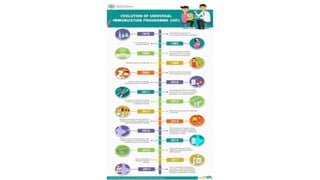
  • #6 Evolution of the programme: 1978: Expanded Programme of immunization (EPI).Limited reach - mostly urban 1985: Universal Immunization Programme (UIP). For reduction of mortality and morbidity due to 6 VPD’s.,Indigenous vaccine production capacity enhanced. Cold chain was established, 1986: Technology Mission On Immunization was introduced under PMO’s 20 point programme 1992: Child Survival and Safe Motherhood (CSSM) was launched and it Included both UIP and Safe motherhood program 1997: Reproductive Child Health (RCH 1) 2005: National Rural Health Mission (NRHM) 2012: Government of India declared 2012 as “Year of Intensification of Routine Immunization”.
  • #8 Diseases Protected by Vaccination under UIP 1. Diphtheria 2. Pertussis. 3. Tetanus 4. Polio 5. Tuberculosis 6. Measles 7. Hepatitis B 8. Japanese Encephalitis ( commonly known as brain fever) 9. Meningitis and Pneumonia caused by Haemophilus Influenzae type b 10.Diarrhoea 11.Rubella
  • #9 India has one of the largest Universal Immunization Programs (UIP) in the world in terms of the quantities of vaccines used, number of beneficiaries covered, geographical spread and human resources involved. Under the UIP, all vaccines are given free of cost to the beneficiaries as per the National Immunization Schedule. The UIP covers all sections of the society across the country with the same high quality vaccines
  • #11 The biggest achievement of the immunization program is the eradication of small pox
  • #12 NCCRC:/TCNational Cold Chain Resource center/Training Center(GOI,GOMH,UNICEF),PUNE EVM:Effective vaccine management asssesement(WHO initiative and UNICEF)
  • #13 VPD surveillance mainly started for polio,neonatal tetanus, diphtheria,pertussis, measles and rubella Vaccine Preventable Diseases (VPD) surveillance system is needed to create evidence base to enable planning and deployment of effective interventions. India has different surveillance models. Integrated Disease Surveillance Project (IDSP) is one of those surveillance systems. IDSP is a case-based surveillance system for detection of early warning signals of outbreaks. There are other sentinel surveillance systems which falls under different vertical national health programs for diseases targeted for control, elimination or eradication..
  • #14 1.BCG (Mycobacterium bovis) 2. DPT (Diphtheriatoxoid , Pertussis and Tetanus Toxoid) 3. OPV (Sabin) Ipv (Salk) 4. Measles(Edmonston Zagreb strain) & Rubella(RA 27/3) 5. Hepatitis B 6. TT (Tetanus Toxoid) 7. JE vaccination (SA 14-14-2) 8. Hib containing Pentavalent vaccine (DPT+HepB+Hib) (In selected States) 9. RotaVirus Vaccine Mumps (jeryl lyn strain , urabe)
  • #16 GoI has identified 180 endemic areas for JE and JE vaccine is given there (Kolar,Raichur,Mandya , belllaary)
  • #17 1. The child should be given DPT 1, OPV-1, measles and 2 ml of vitamin A solution. Then followed by second and third doses of DPT and OPV at one month intervals. Measles second dose is also to be given as per the schedule. The booster dose of OPV/DPT can be given at a minimum of 6 months after administering OPV3/DPT3 2 The child should be given first, second and third doses of DPT at one month intervals. The booster dose of DPT can be given at a minimum of 6 months after administering DPT3 upto 7 years of age.
  • #18 4)Do not start the schedule all over again even if the child is brought late for a dose. Pick up where the schedule was left off. For example: If a child who has received BCG, HepB-1, DPT-1 and OPV-1 at 5 months of age,returns at 11 months of age, vaccinate the child with DPT-2, HepB-2, OPV-2 and measles and do not start from DPT-1, HepB-1 again
  • #19 8. Usually the P (whole cell Pertussis) component of the vaccine responsible for allergy/encephalopathy.
  • #20 11) Yes, the measles vaccine needs to be administered,according to the National Immunization Schedule i.e. after the completion of 9 months until 12 months of age and at 16-24 months. If not administered in the ideal age for measles vaccine, it can be administered upto 5 years of age 13) Special campaign to vaccinate all children between 9 months to 10 years of age in a state or a district with one dose of measles vaccine. Given to all children, both immunized and un-immunized
  • #24 Vaccines and Cold Chain All vaccines should be stored at plus 2 to plus 8 degrees ideally in Ice Lined Refrigerators/ Domestic Refrigerators• All government supply vaccines come with Vaccine Vial Monitors (VVMs)•
  • #25 Live attenuated – BCG, Measles and OPV Inactivated killed – DPT, TT, whole–cell pertussis, hepatitis B BCG and Measles vaccines are in powder form and come with diluents. Reconstitution is needed before use Reconstituted vaccine is most sensitive to heat and light. Use reconstituted BCG and Measles vaccines within 4 hours of reconstitution and JE within 2 hours of reconstitution if kept at +2 to +8 degrees Temperature of diluents & vaccine must be same during reconstitution The damage is irreversible• Physical appearance of the vaccine may remain unchanged but potency might be lost
  • #28 Janani Suraksha Yojana (JSY) is a safe motherhood intervention under the National Rural Health Mission (NRHM) being implemented with the objective of reducing maternal and neonatal mortality by promoting institutional delivery among the poor pregnant women
  • #29  The Yojana, launched on 12th April 2005, The Yojana has identified ASHA, the accredited social health activist as an effective link between the Government and pregnant in executing this program IMR:29.80/1000live birth(3.6% decline from last year) MMR:122/1 lakh live birth
  • #30 Important Features of JSY: Disbursement of Cash Assistance: As the cash assistance to the mother is mainly to meet the cost of delivery, it should be disbursed effectively at the institution itself. For pregnant women going to a public health institution for delivery, entire cash entitlement should be disbursed to her in one go, at the health institution. Considering that some women would access accrediting private institution for antenatal care, they would require some financial support to get atleast 3 ANCs including the TT injections. In such cases, atleast three-fourth (3/4) of the cash assistance under JSY should be paid to the beneficiary in one go, importantly, at the time of delivery. Mother an dchild protection card(MCH)
  • #31 LPS: All pregnant women delivering in government health centres, such as Sub Centers (SCs)/Primary Health Centers(PHCs)/Community Health Centers (CHCs)/First ReferralUnits (FRUs)/general wards of district or state hospitals HPS: All BPL/Scheduled Caste/Scheduled Tribe (SC/ST) womendelivering in a government health centre, such as SC/PHC/CHC/FRU/general wards of district or state hospital *ASHA package of Rs. 600 in rural areas include Rs. 300 for ANC component and Rs. 300 for facilitating institutional delivery. **ASHA package of Rs. 400 in urban areas include Rs. 200 for ANC component and Rs. 200 for facilitating institutional delivery
  • #32 The Yojana subsidizes the cost of caesarean section and for management of obstetric complications, upto Rs. 1500 per delivery to the government institutions, In low performing and high performing states, all below poverty line pregnant women preferring to deliver at home, are entitled to cash assistance of Rs. 500 per delivery,regardless of age and number of children (1). Vandemataram scheme This is a voluntary scheme wherein any obstetric and gynaec specialist, maternity home, nursing home, lady doctor/MBBS doctor can volunteer themselves for providing safe motherhood services. The enrolled doctors will display 'Vandemataram logo' at their clinic. Iron and Folic Acid tablets, oral pills, TT injections etc. will be provided by the respective District Medical Officers to the 'Vandemataram doctors/ clinics' for free distribution to beneficiaries. The cases needing special care and treatment can be referred to the government hospitals, who have been advised to take due care of the patients coming with Vandemataram cards.
  • #33 Safe abortion services :Under RCH phase II following facilities are provided : . a. Medical method of abortion : Termination of early pregnancy with two drugs Mifepristone (RU 486) followed by Misoprostol.. Currently its use in India is recommended upto 7 weeks (49 days) of amenorrhoea in a facility with provision for safe abortion services and blood transfusion. b. Manual Vacuum Aspiration (MVA) : approved till 12 weeks Village Health and Nutrition Day: Organizing Village Health and Nutrition Day once a month at anganwadi centre to provide antenatal/postpartum care for pregnant women, promote institutionaldelivery, health education, immunization, family planning and nutrition services etc. Maternal death review: Maternal death review as a strategy conducted at both facility and community based, is an important strategy to improve the quality of obstetric care and reduce maternal mortality and morbidity. Pregnancy tracking The link between pregnancy-related care and maternal mortality is well established. RCH-2 stresses the need for universal screening of pregnant women and providing essential and emergency obstetric care.
  • #36 As India strives towards achieving the Sustainable Development Goals (SDGs), reducing maternal mortality becomes an important frontier. Any pregnant woman can develop life-threatening complications with little or no advance warning, so all pregnant women need access to quality antenatal services to detect and prevent life-threatening complications during childbirth. In spite of this massive increase in the number of pregnant women coming to institutions for delivery, till date only 61.8% women receive first ANC in first trimester (RSOC) and the coverage of full ANC(provision of 100 IFA tablets, 2 tetanus toxoid injections and minimum 3 ANC visits) is as low as 20% (RSOC). Maternal mortality with MMR of 129 per 1,00,000 live births still remains high even with improved access to maternal health care services. Timely detection of risk factor during pregnancy and childbirth can prevent deaths due to 5 preventable causes(haemorrhage,sepsis,eclampsis,Obstructed labor,Complication of abortion and Rupture uterus). This can only be possible if the complete range of the required services is accessed by the pregnant women.
  • #38 All applicable diagnostic services: Appropriate management of any existing clinical condition such as Anaemia, Pregnancy induced hypertension, Gestational Diabetes etc. Identification and line-listing of high risk pregnancies based on obstetric/medical history and existing clinical conditions. Appropriate birth planning and complication readiness for each pregnant woman especially those identified with any risk factor or comorbid condition. Special emphasis on early diagnosis, adequate and appropriate management of women with malnutrition. Special focus on adolescent and early pregnancies as these pregnancies need extra and specialized care
  • #42 India was the first country in the world to have launched a National Programme for Family Planning in 1952. Over the decades, the programme has undergone transformation in terms of policy and actual programme implementation and currently the goal is to …. Current fertility rate is 2.179births /woman
  • #51 Pop Pill-Mini pill