
Nasal Bone & Nasal Cavity

            Present by
      M.Anandha Prabhakaran
      Department of Biotechnology
      Periyar Maniammai University
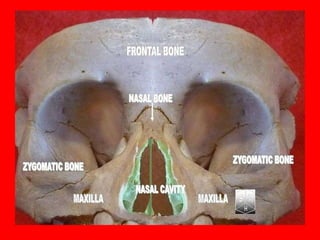
Nasal Bone
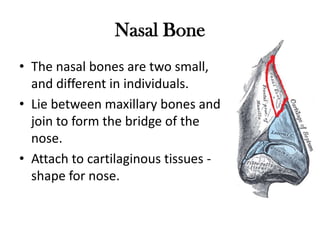
• The nasal bones are two small,
  and different in individuals.
• Lie between maxillary bones and
  join to form the bridge of the
  nose.
• Attach to cartilaginous tissues -
  shape for nose.
Nasal Cavity


•   Function
•   Segments
•   Blood supply
•   Innervation
Function

• Air passing through the nasal cavity is warmed
  or cooled to within 1 degree of body
  temperature.
• Dust and other particulate matter is removed
  by vibrissae.
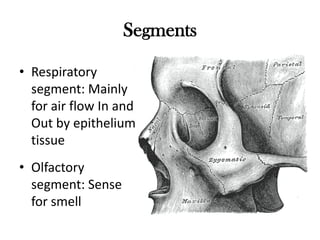
Segments

• Respiratory
  segment: Mainly
  for air flow In and
  Out by epithelium
  tissue
• Olfactory
  segment: Sense
  for smell
Nerve in nasal cavity

Sensory:
  – Nasociliary nerve (V1)
  – Nasopalatine nerve (V2)
  – Posterior nasal branches of Maxillary nerve (V2)
Nasal bone & nasal cavity

Nasal bone & nasal cavity

  • 1.
    Nasal Bone &Nasal Cavity Present by M.Anandha Prabhakaran Department of Biotechnology Periyar Maniammai University
  • 2.
    Nasal Bone • Thenasal bones are two small, and different in individuals. • Lie between maxillary bones and join to form the bridge of the nose. • Attach to cartilaginous tissues - shape for nose.
  • 3.
    Nasal Cavity • Function • Segments • Blood supply • Innervation
  • 5.
    Function • Air passingthrough the nasal cavity is warmed or cooled to within 1 degree of body temperature. • Dust and other particulate matter is removed by vibrissae.
  • 6.
    Segments • Respiratory segment: Mainly for air flow In and Out by epithelium tissue • Olfactory segment: Sense for smell
  • 7.
    Nerve in nasalcavity Sensory: – Nasociliary nerve (V1) – Nasopalatine nerve (V2) – Posterior nasal branches of Maxillary nerve (V2)