Karen S.
Wright
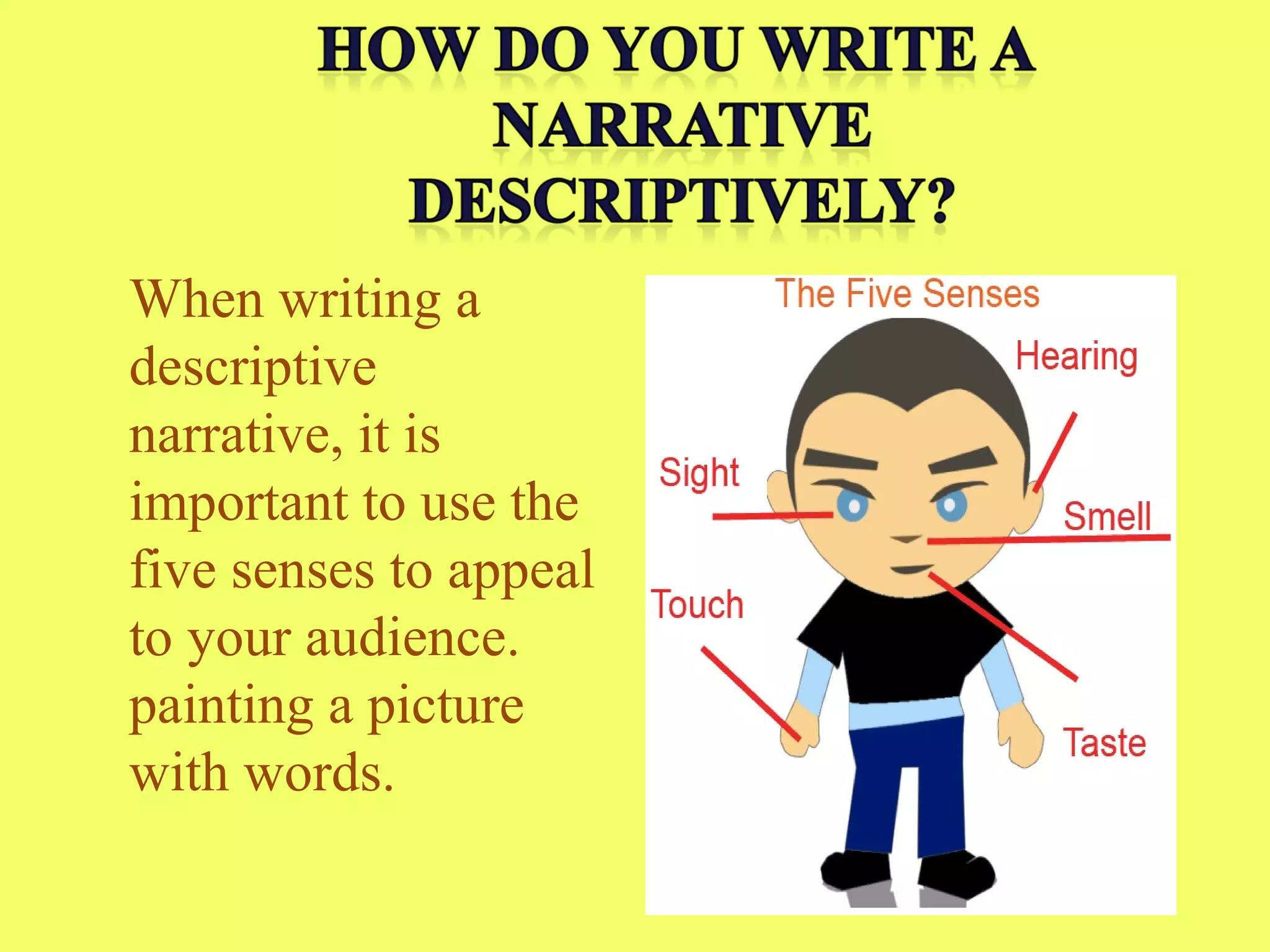
When writing a
descriptive
narrative, it is
important to use the
five senses to appeal
to your audience.
painting a picture
with words.
Everyone likes a good story. . . .
• We go to movies.
•We read books.
•We listen as others tell their
stories.
•We tell our children stories.
•We tell our friends ā€œwhat happened
last weekend.ā€
Sometimes when we hear or tell a story,
we ask: ā€œWhat is the reason for that
story?ā€
•When we write, ask—What is the
purpose?
•To entertain
•To inform
•To instruct
To persuade
Repeatedly ask yourself:
What point am I trying
to make?
What is the aim of this
story?
Who is my audience
A brief descriptive narrative =
can also be called, an anecdote.
Sometimes we use anecdotes
• To make a point
•To draw a picture
•To produce an emotional
response
•To emphasize a point
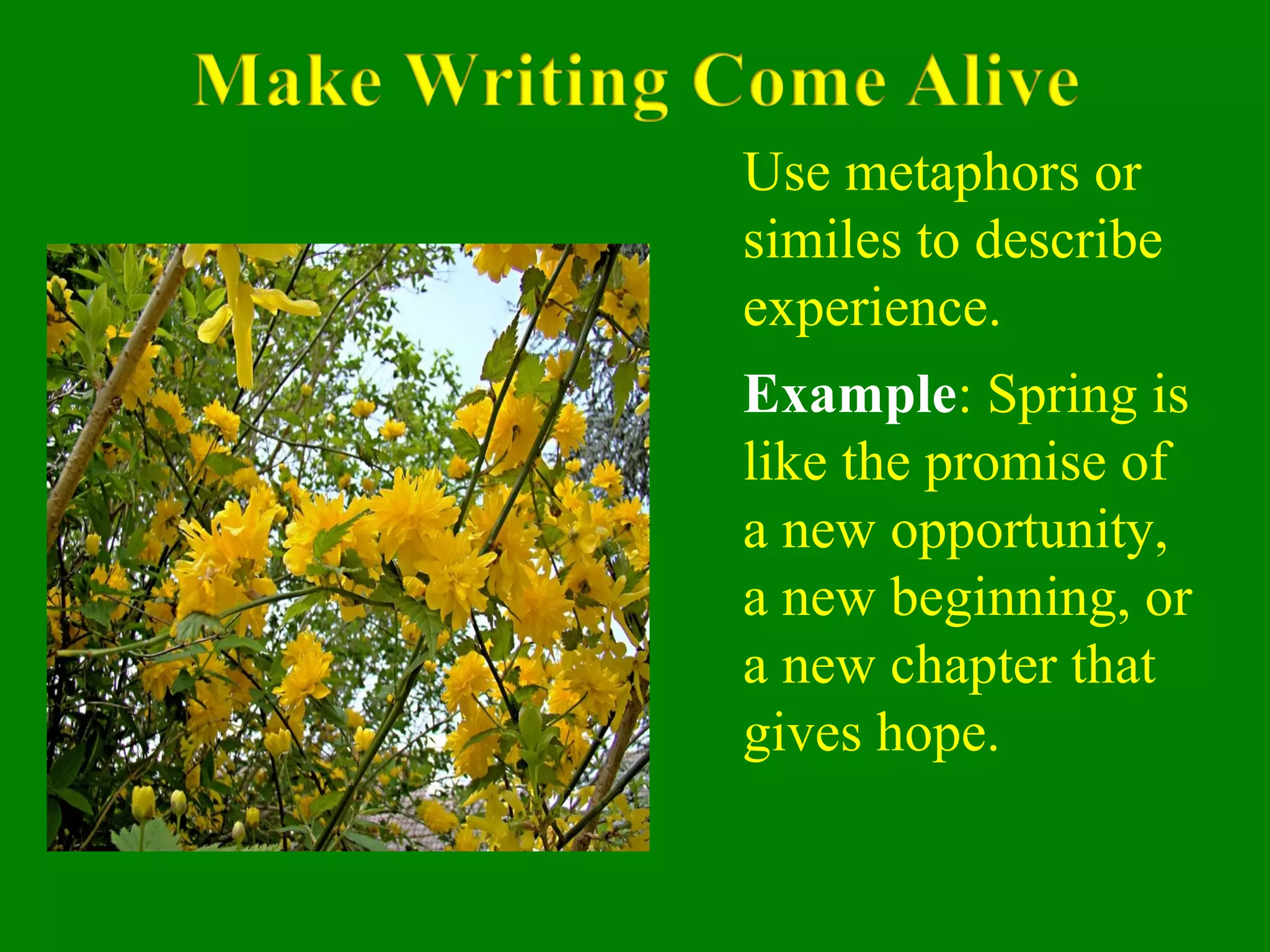
Example: Spring is
like the promise of
a new opportunity,
a new beginning, or
a new chapter that
gives hope.
Use metaphors or
similes to describe
experience.
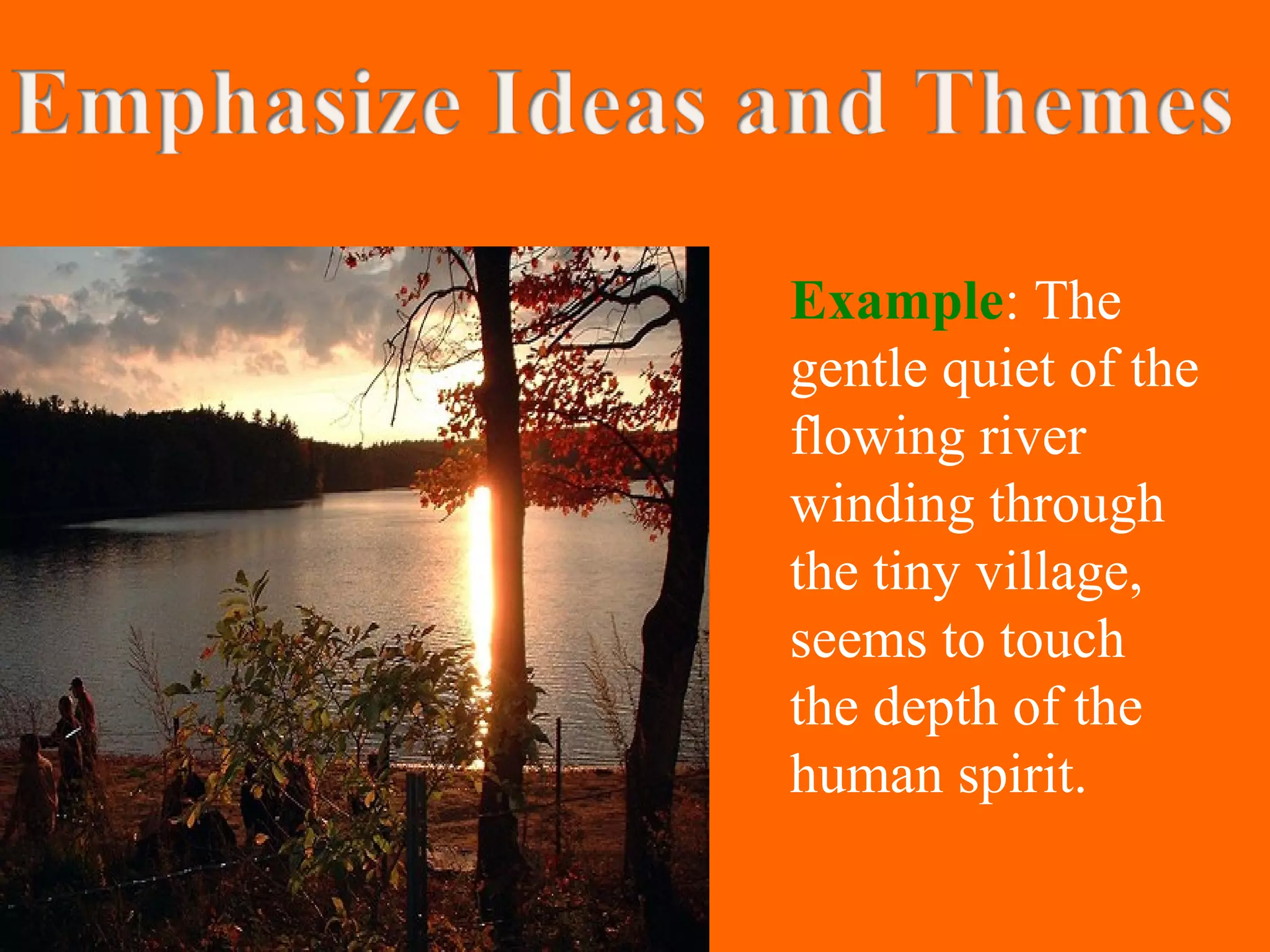
Example: The
gentle quiet of the
flowing river
winding through
the tiny village,
seems to touch
the depth of the
human spirit.
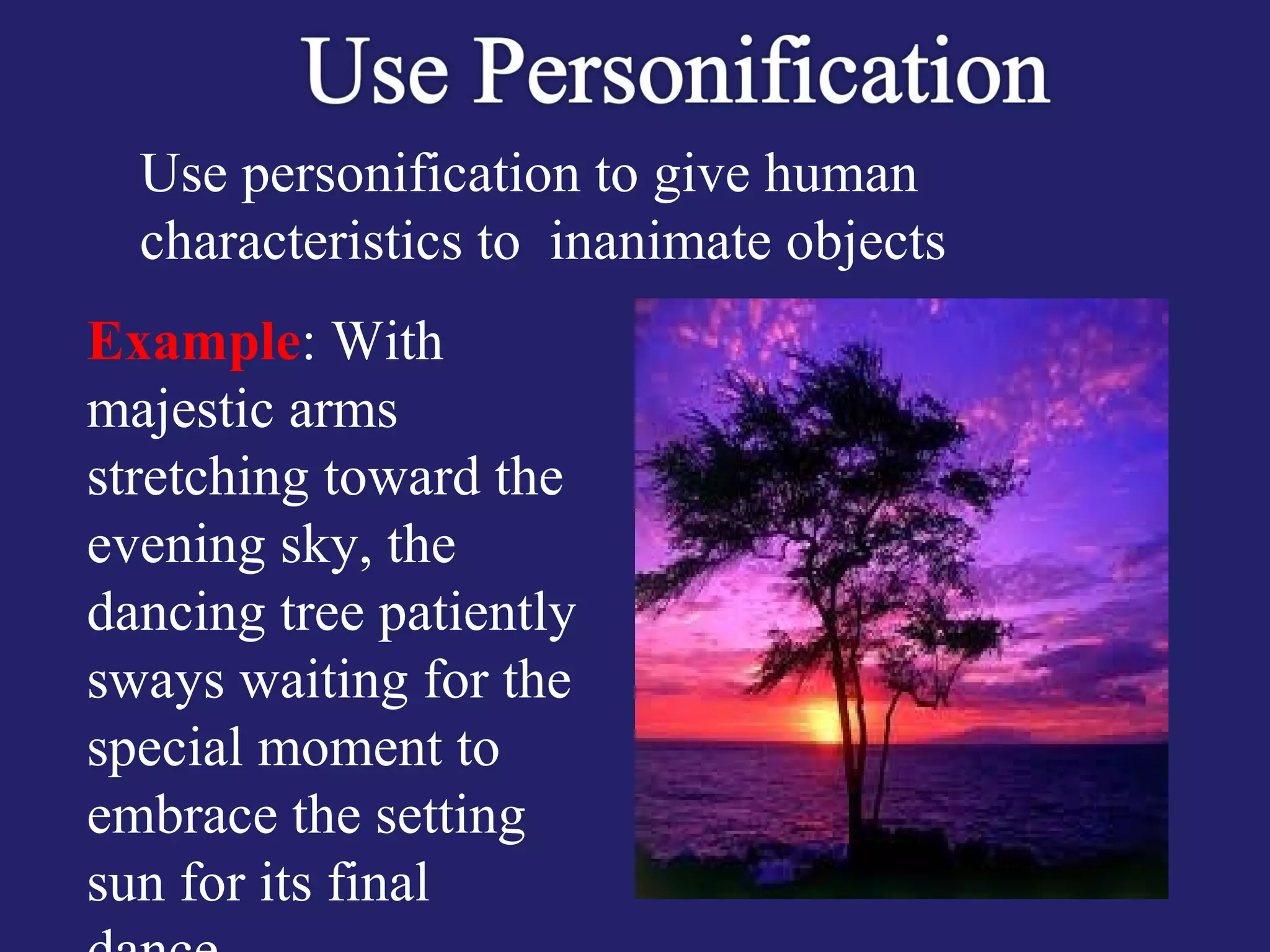
Use personification to give human
characteristics to inanimate objects
Example: With
majestic arms
stretching toward the
evening sky, the
dancing tree patiently
sways waiting for the
special moment to
embrace the setting
sun for its final
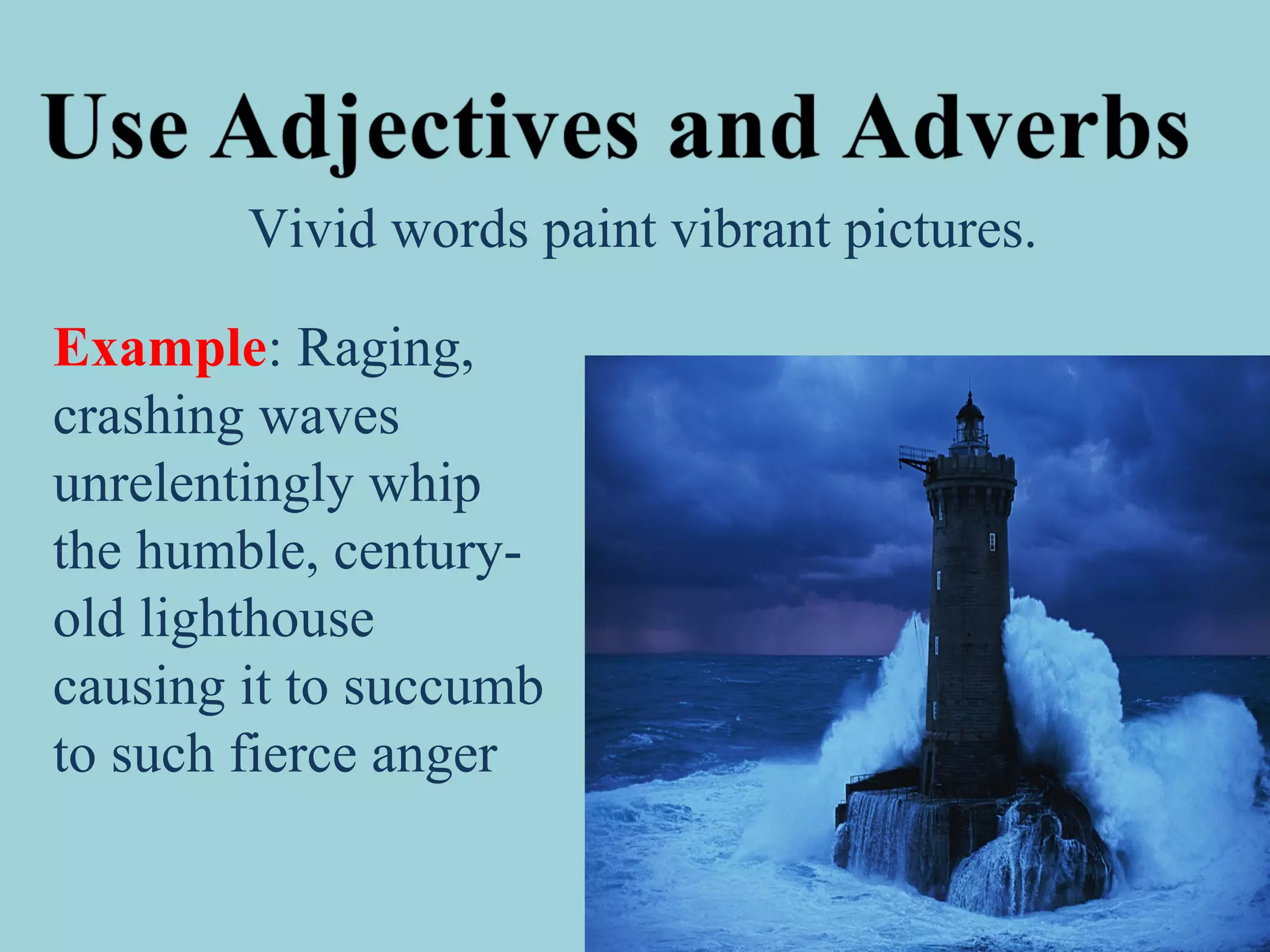
Vivid words paint vibrant pictures.
Example: Raging,
crashing waves
unrelentingly whip
the humble, century-
old lighthouse
causing it to succumb
to such fierce anger
1. Chronological/Sequ
ential
2. Spatial
3. Psychological
There are the three main patterns used for
writing the descriptive narrative.
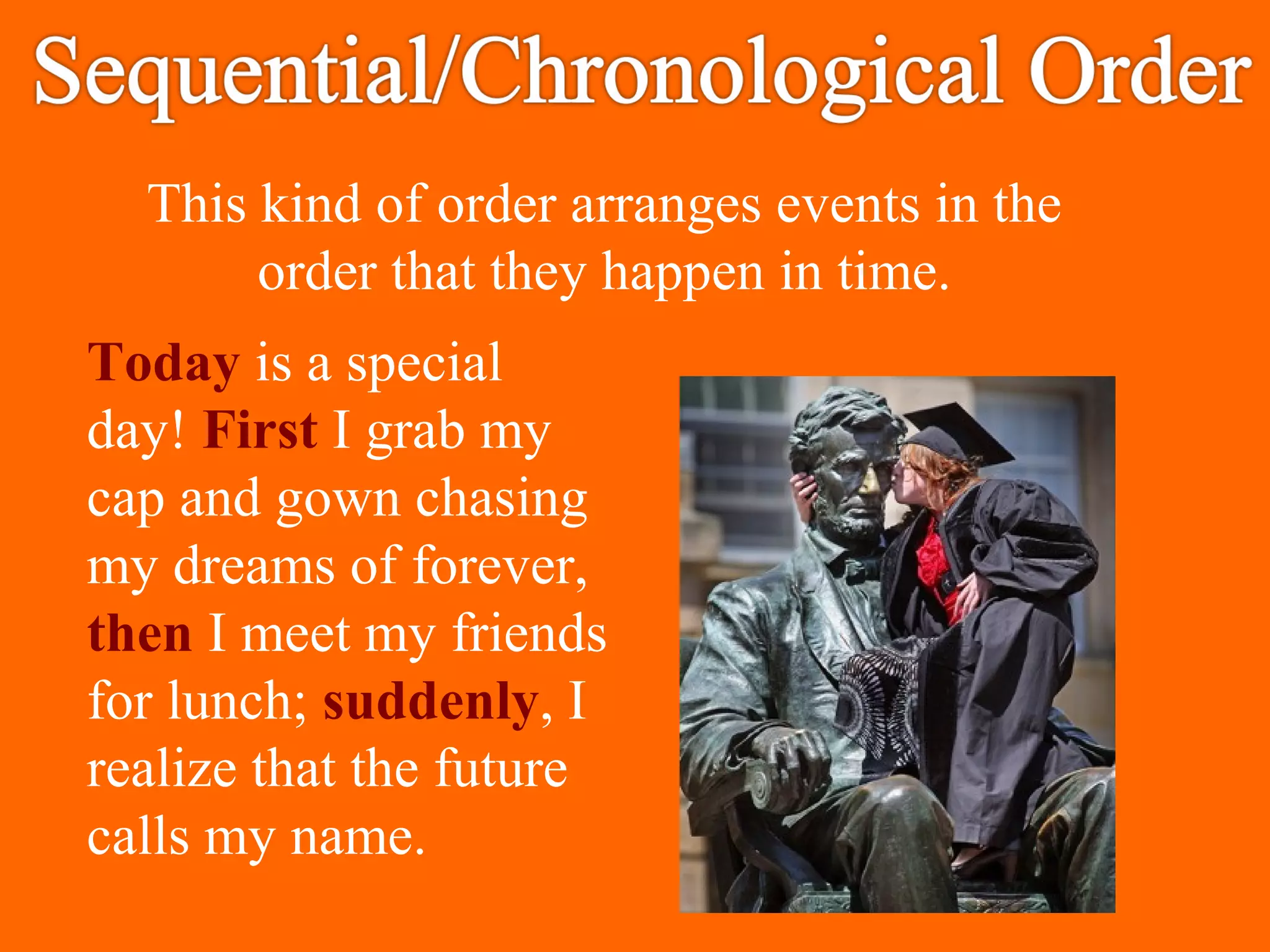
This kind of order arranges events in the
order that they happen in time.
Today is a special
day! First I grab my
cap and gown chasing
my dreams of forever,
then I meet my friends
for lunch; suddenly, I
realize that the future
calls my name.
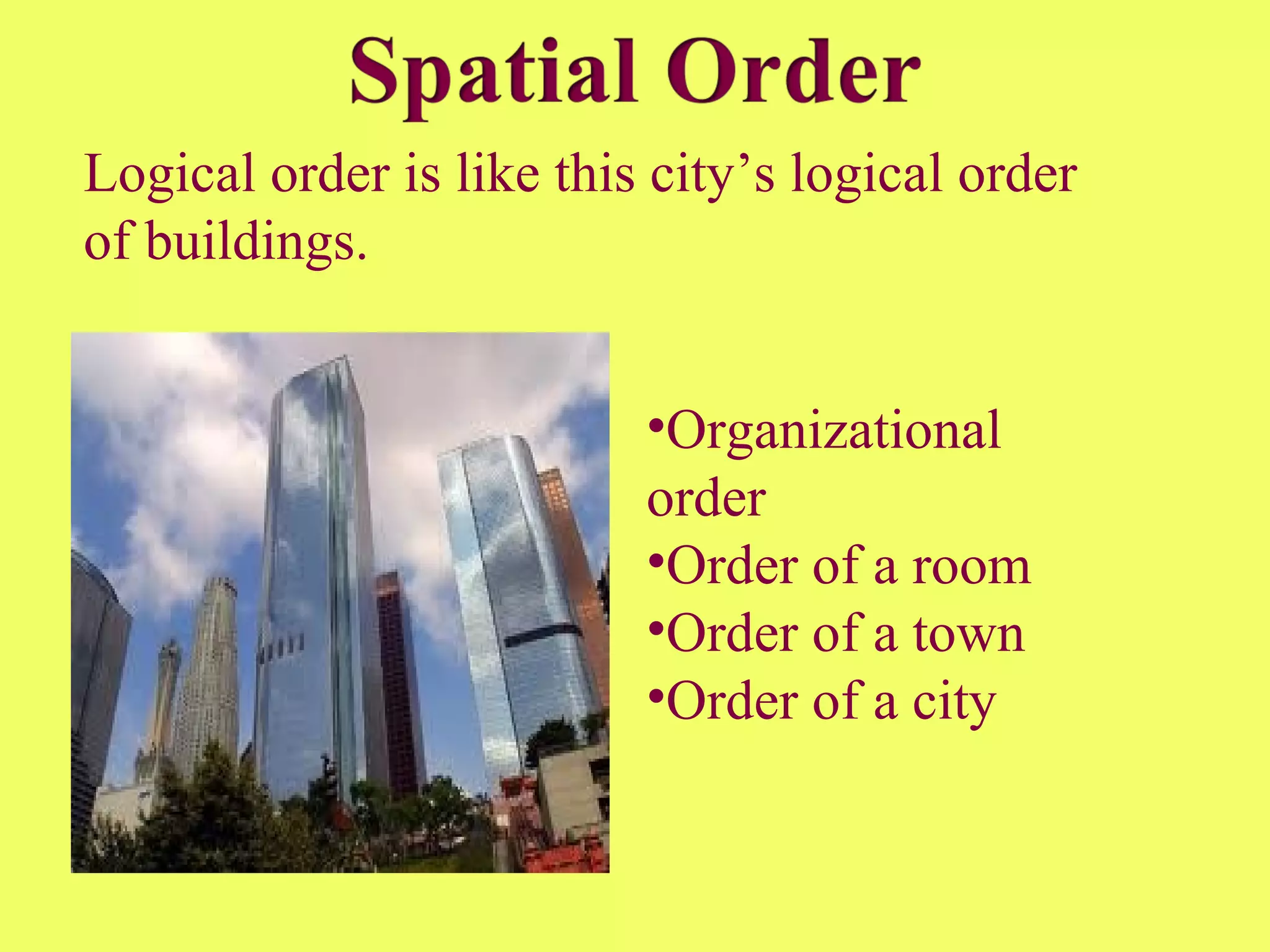
Logical order is like this city’s logical order
of buildings.
•Organizational
order
•Order of a room
•Order of a town
•Order of a city
Up Down Next
Beside Behind Under
South North East
West Above Over
Use psychological order to discuss the
importance of events, objects, or things.
•Most important to
least important
•Least important to
most important
•Over-rated to
under-rated
•Under-rated to
over-rated
Who? How?
What? When?
Where? Why?
Use supporting details to answer these
questions:
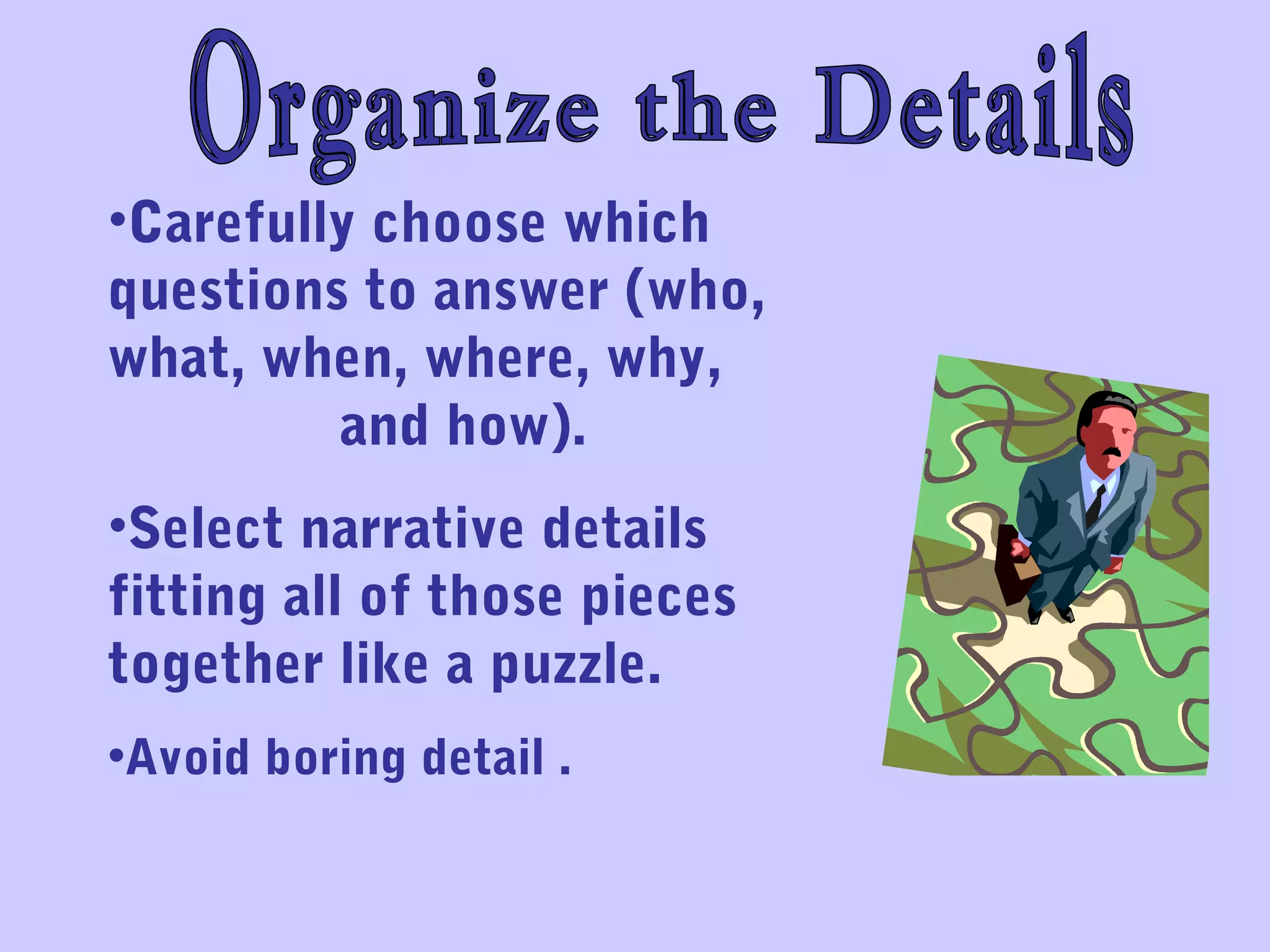
•Carefully choose which
questions to answer (who,
what, when, where, why,
and how).
•Select narrative details
fitting all of those pieces
together like a puzzle.
•Avoid boring detail .
1. What is the point? Write out a
statement on the point of the
narration.
2. Which ideas will you use? Who, what,
when, where, why, or how questions.
3. Then begin organizing your ideas.
4. Write
5. Revise
6. Proofread
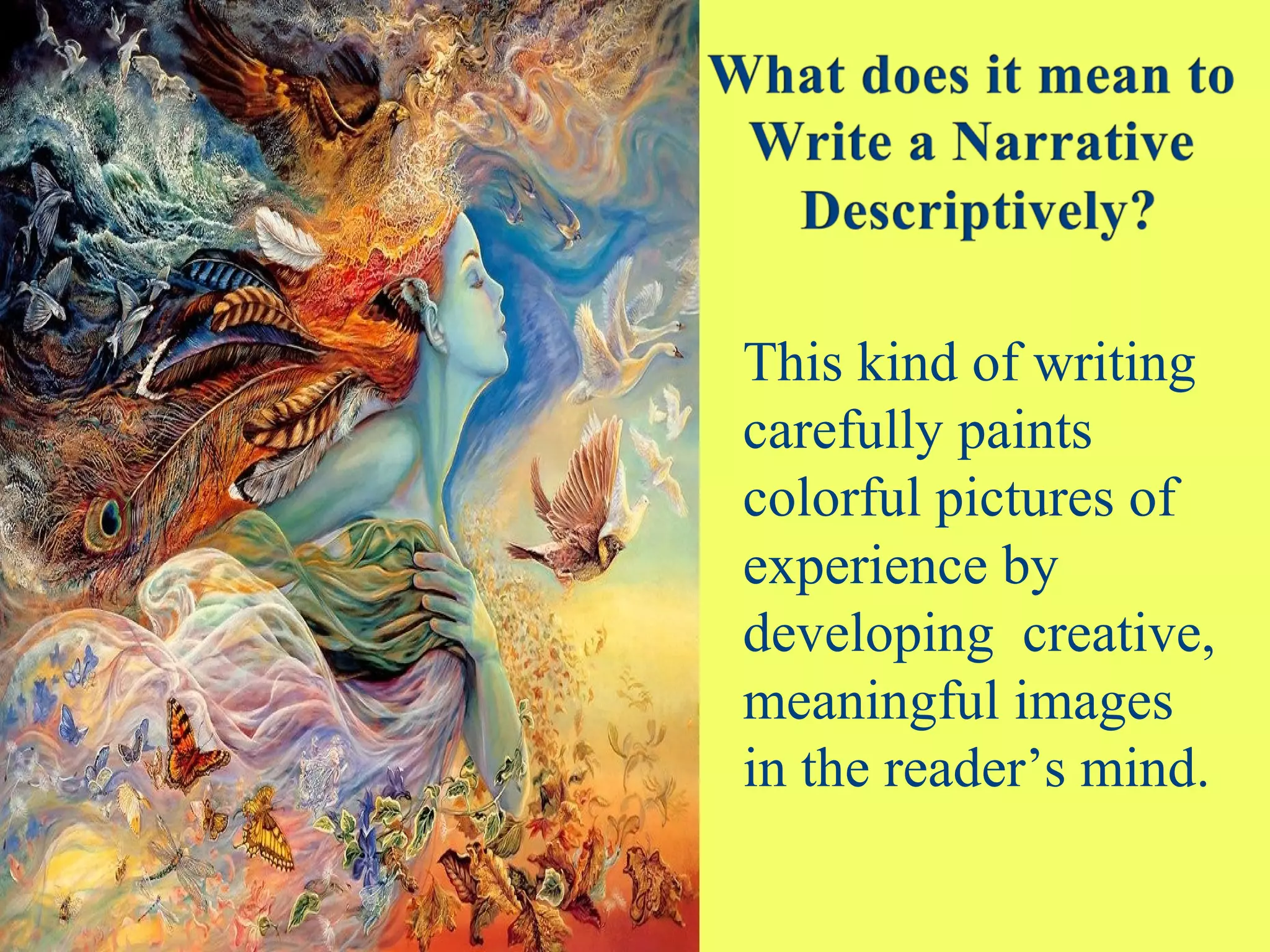
This kind of writing
carefully paints
colorful pictures of
experience by
developing creative,
meaningful images
in the reader’s mind.

Narrative descriptive 2013

  • 1.
  • 2.
    When writing a descriptive narrative,it is important to use the five senses to appeal to your audience. painting a picture with words.
  • 3.
    Everyone likes agood story. . . . • We go to movies. •We read books. •We listen as others tell their stories. •We tell our children stories. •We tell our friends ā€œwhat happened last weekend.ā€
  • 4.
    Sometimes when wehear or tell a story, we ask: ā€œWhat is the reason for that story?ā€ •When we write, ask—What is the purpose? •To entertain •To inform •To instruct To persuade
  • 5.
    Repeatedly ask yourself: Whatpoint am I trying to make? What is the aim of this story? Who is my audience
  • 6.
    A brief descriptivenarrative = can also be called, an anecdote. Sometimes we use anecdotes • To make a point •To draw a picture •To produce an emotional response •To emphasize a point
  • 7.
    Example: Spring is likethe promise of a new opportunity, a new beginning, or a new chapter that gives hope. Use metaphors or similes to describe experience.
  • 8.
    Example: The gentle quietof the flowing river winding through the tiny village, seems to touch the depth of the human spirit.
  • 9.
    Use personification togive human characteristics to inanimate objects Example: With majestic arms stretching toward the evening sky, the dancing tree patiently sways waiting for the special moment to embrace the setting sun for its final
  • 10.
    Vivid words paintvibrant pictures. Example: Raging, crashing waves unrelentingly whip the humble, century- old lighthouse causing it to succumb to such fierce anger
  • 11.
    1. Chronological/Sequ ential 2. Spatial 3.Psychological There are the three main patterns used for writing the descriptive narrative.
  • 12.
    This kind oforder arranges events in the order that they happen in time. Today is a special day! First I grab my cap and gown chasing my dreams of forever, then I meet my friends for lunch; suddenly, I realize that the future calls my name.
  • 13.
    Logical order islike this city’s logical order of buildings. •Organizational order •Order of a room •Order of a town •Order of a city
  • 14.
    Up Down Next BesideBehind Under South North East West Above Over
  • 15.
    Use psychological orderto discuss the importance of events, objects, or things. •Most important to least important •Least important to most important •Over-rated to under-rated •Under-rated to over-rated
  • 16.
    Who? How? What? When? Where?Why? Use supporting details to answer these questions:
  • 17.
    •Carefully choose which questionsto answer (who, what, when, where, why, and how). •Select narrative details fitting all of those pieces together like a puzzle. •Avoid boring detail .
  • 18.
    1. What isthe point? Write out a statement on the point of the narration. 2. Which ideas will you use? Who, what, when, where, why, or how questions. 3. Then begin organizing your ideas. 4. Write 5. Revise 6. Proofread
  • 19.
    This kind ofwriting carefully paints colorful pictures of experience by developing creative, meaningful images in the reader’s mind.