Downloaded 11 times
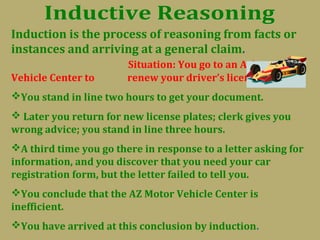
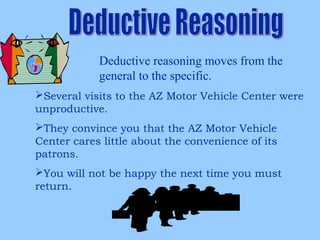
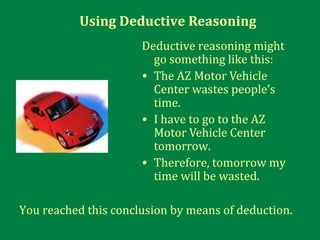
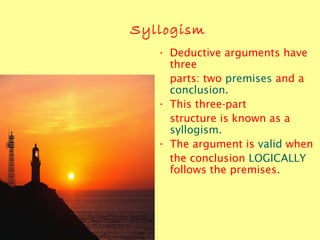
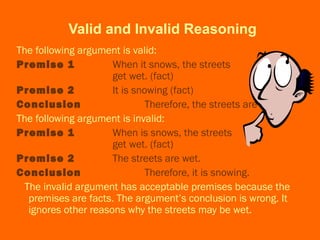

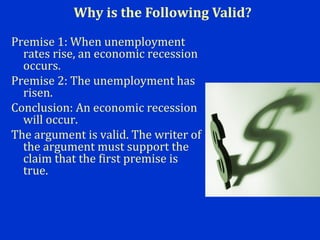
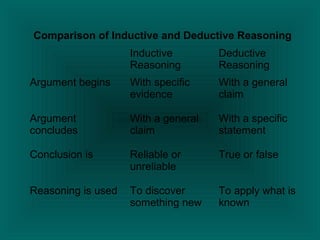



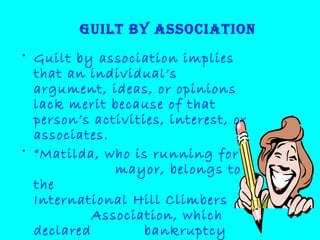


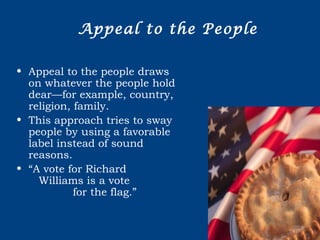

The document discusses different types of reasoning including induction, deduction, and logical fallacies. It provides examples of each: - Induction involves reasoning from specific facts or instances to arrive at a general conclusion. An example is concluding the motor vehicle center is inefficient based on multiple unproductive visits. - Deductive reasoning moves from a general statement to a specific conclusion. An example is concluding your time will be wasted at the motor vehicle center tomorrow based on the premise it wastes people's time. - Logical fallacies are flaws in reasoning that seem logical but are invalid. Examples of fallacies discussed include hasty generalization, self-contradiction, guilt by association, and ambiguity.


![Paragraphdevelopment2012[1]](https://cdn.slidesharecdn.com/ss_thumbnails/paragraphdevelopment20121-121006081411-phpapp01-thumbnail.jpg?width=640&height=640&fit=bounds)


