 INTRODUCTION
 HISTORY OF NANOTECHNOLOGY
 TECHNIQUES IN NANOTECHNOLOGY
 NANOMATERIALS
 NANODENTISTRY AND ITS APPLICATION
 NANOROBOTICS
 NANODIAGNOSTICS
 NANOMATERIALS
 NANOMATERIALS FOR PERIODONTAL
 CONCLUSION
 REFERENCES
 Science is undergoing yet another change in helping
mankind enter a new era, the era of nanotechnology.
 ‘Nanotechnology’ includes structures ranging in the
size of 100 nanometers or smaller in at least one
dimension and other developing materials or devices
within that size, -: fibers that are less than 100 nm
diameter, films less than 100 nm in thickness,
nanoholes, and composites.
 ‘Nano’ is derived from the Greek word ‘vaos’, meaning
‘dwarf ’.
 Is a prefix literally refers to 1 billionth of a physical size.
 According to defintion of the ‘National Nanotechnology
Initiative ‘
direct manipulation of materials at the nanoscale
 General :- “Science Of The Small”
 The central idea of nanotechnology is to employ
individual atoms and molecules to construct functional
structures.
 The late Nobel Prize winning scientst Richard P. Feynman
established the potential of nanosize devices in 1959.
 proposed using machine tools to make smaller machine
tools, which, in turn, would be used to make still smaller
machine tools, and so on all the way down to the molecular
level.
 He suggested that such nanomachines, nanorobots and
nanodevices ultimately could be used to develop a wide
range of atomically precise microscopic instrumentation and
manufacturing tools.
 Feynman argued that these tools could be applied to
produce vast quantities of ultrasmall computers and
various microscale and nanoscale robots. He concluded
that this is “a development which I think cannot be
avoided.”
 The vision of nanotechnology was born.
 K Eric Drexler independently used the term
‘nanotechnology’ in 1986. Humans have been
using nanotechnology for a long time without
realizing it. The processes of making steel,
vulcanizing rubber and sharpening a dental
instrument, all rely on manipulations of
nanoparticles.
 Richard Zsigmondy studied nanomaterials in the
early 20th century.
 Applications began in the 1980s with the invention of
the scanning tunneling microscope and the discovery of
carbon nanotubes.
 Top-down Technique
 Bottom-up Technique
 In this technique smaller devices are created by using
larger ones to direct their assembly. So, small features
are made by starting with larger materials patterning
and carving down to make nanoscale structures in
precise patterns.
 Complex structures containing hundreds of millions of
precisely positioned nanostructures can be fabricated.
 Materials are reduced to the nanoscale and can
suddenly show very different properties, enabling
unique applications.
 As the size of system decreases there is increase in
ratio of surface area to volume and number of physical
phenomena becomes noticeably pronounced
 In this technique smaller components are arranged into
more complex assembly.
 This begins by designing and synthesizing custom
made molecules that have the ability to self-assemble or
self-organize into higher order mesoscale or
macroscale structures.
 Modern synthetic chemistry has reached the point
where it is possible to prepare small molecules to
almost any structure.
 These methods are used today to manufacture a wide
variety of useful chemicals such as pharmaceuticals or
commercial polymers. Such bottom- up approaches are
much cheaper than top-down methods, but could
potentially be overwhelmed as the size and complexity
of the desired assembly increases.
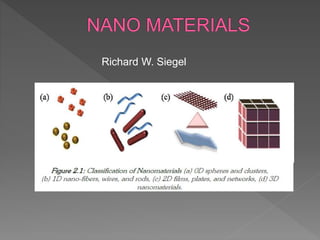
Richard W. Siegel
› Nanoparticles
› Nanopores
› Nanotubes
› Nanorods
› Nanospheres
› Nanofibers
› Nanoshells
› Dendrimers
› Nanorings
› Nanocapsules
› Quantum dots
› Dendrimers
 Inorganic nanoparticles
 (Semiconductor nanoparticles, Metal nanoparticles,
Metal oxide nanoparticles, Silica
nanoparticles,Polyoxometalates,Gold nanocrystals)
 Nanodentistry will make possible the
maintenance of comprehensive oral health by
employing nanomaterials, biotechnology,
including tissue engineering, and ultimately,
dental nanorobotics. Nanodentistry includes:
 Nanorobotics
 Nanodiagnostics
 Nanomaterials
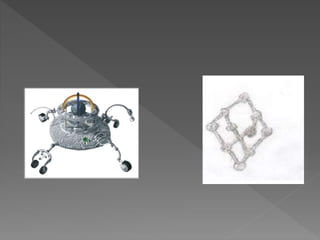
Nanorobot 'an artificially fabricated objects able to
freely diffuse in the human body and interact with
specific cell at the molecular level by itself.’
Nanorobotics is the technology of creating
machines or robots at or close to the
microscopic scale of nanometers.
Nanites, Nanoant
•DIAMETER:-0.5-2MICRONS, PARTS WITH DIMENSIONS 1-10nm
•CARBON-PRINCIPAL ELEMENT
•THE EXTERIOR CARBON DIAMONOID STRUCTURE
•SPIDER LIKE BODY.
•ON BOARD NANO COMPUTERS.
o The powering of nanorobots can be done by metabolizing local
glucose, oxygen and externally supplied acoustic energy.
o controlled by onboard computers capable of performing around
1000 or more computations per second.
o Communication with the device can be achieved by broadcast type
acoustic signaling. A navigational network installed in the body
provides high positional accuracy to all passing nanorobots and
keep track of the various devices in the body.
o Nanorobots are able to distinguish between different cell types by
checking their surface antigens.
o Building nanorobots involves sensors, actuators, control, power,
communications and interfacial signals across spatial scales and
between organic/inorganic as well as biotic/ abiotic systems.
o When the task of the nanorobots is completed, they can be
retrieved by allowing them to effuse themselves via the usual
human excretory channels. They can also be removed by active
scavenger systems
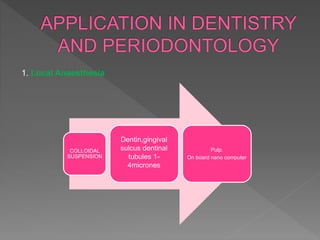
1. Local Anaesthesia
COLLOIDAL
SUSPENSION
Pulp.
On board nano computer
Dentin,gingival
sulcus dentinal
tubules 1-
4micrones
 the analgesic dental nanorobots may be commanded by the dentist
to shut down all sensitivity in any particular tooth that requires
treatment. When on the hand-held controller display, the selected
tooth immediately becomes numb. After the oral procedures
completed, the dentist orders the nanorobots to restore all
sensation, to relinquish control of nerve traffic and to egress,
followed by aspiration.
 Nanorobotic analgesics offer greater patient comfort
and reduced anxiety, no needles, greater selectivity, and
controllability of the analgesic effect, fast and
completely reversible switchable action and avoidance
of most side effects and complications.
2. Dental Biomimetics
 The most interesting venue for speculation on the
nanorestoration of tooth structures is that of
nanotechnology mimicking processes that occur in
nature (biomimetics), such as the formation of
dental enamel.
 Through an affordable desktop manufacturing
facility, fabrication of a new tooth in the dentist's
office within the time & economic constraints of a
typical dental office visit, complete dentition
replacement therapy will become feasible soon.
 Chen et al utilizing nanotechnology simulated the
natural biomineralization process to create the dental
enamel, using highly organized microarchitectural units
of nanorod-like calcium hydroxyapatite crystals
arranged roughly parallel to each other
3. Dental Durability and Cosmetics
 Tooth durability and appearance may be improved by
replacing upper enamel layers with covalently bonded
artificial materials, such as sapphire or diamond, which
have 20 to 100 times the hardness and failure strength
of natural enamel, or contemporary ceramic veneers as
well as good biocompatibility.
 Pure sapphire and diamond are brittle and prone to
fracture resistant as part of a nanostructure composite
material that possibly includes embedded carbon
nanotubes.
4. Orthodontic Treatment
 Orthodontic nanorobots could directly manipulate the
periodontal tissues, including gingivae, periodontal ligament,
cementum and alveolar bone, allowing rapid and painless
tooth straightening, rotating and vertical repositioning within
minutes to hours. This is in contrast to current molar-
uprighting techniques, which require weeks or months to
complete.
5. Renaturalization Procedures
 Dentition renaturalization procedures may become a
popular addition to the future dental practice, made
possible through esthetic dentistry.
 patients who desire to have their old dental amalgams
excavated and their teeth remanufactured with native
biological materials.
 Full coronal renaturalization procedures in which all fillings
and crowns are removed, and the affected teeth are
remanufactured to become indistinguishable from the
original teeth .
6. Dentirobots
 Subocclusal dwelling nanorobotics dentifrice delivered by
mouthwash or toothpaste could patrol all Supragingival
and subgingival surfaces atleast once a day, metabolizing
trapped organic matter into harmless and odorless vapors
and performing continuous calculus debridement.
 small dentifrobots [1-10 micon], crawling at 1-10
microns/sec, would be inexpensive, purely mechanical
devices, that would safely deactivate themselves if
swallowed, and would be programmed with strict occlusal
avoidance protocol.
 Properly configured dentifrobots could identify and
destroy pathogenic bacteria residing in the plaque and
elsewhere, while allowing the ~500 species of harmless
oral microflora to flourish in a healthy ecosystem.
 Dentifrobots also would provide a continuous barrier to
halitosis, since bacterial petrification is the central
metabolic process involved in oral malodor .
7. Hypersensitivity Cure
 Dentin hypersensitivity may be caused by changes in
pressure transmitted hydrodynamically to the pulp.
 Natural hypersensitive teeth have eight times higher
surface density of dentinal tubules and diameter with
twice as large than nonsensitive teeth.
 Reconstructive dental nanorobots, using native
biological materials, could selectively and precisely
occlude specific tubules within minutes, offering patients
a quick and permanent cure.
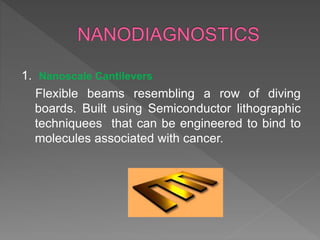
1. Nanoscale Cantilevers
Flexible beams resembling a row of diving
boards. Built using Semiconductor lithographic
techniquees that can be engineered to bind to
molecules associated with cancer.
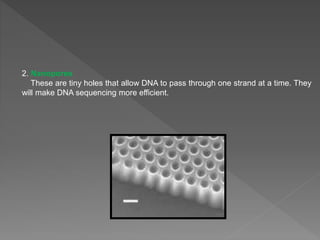
2. Nanopores
These are tiny holes that allow DNA to pass through one strand at a time. They
will make DNA sequencing more efficient.
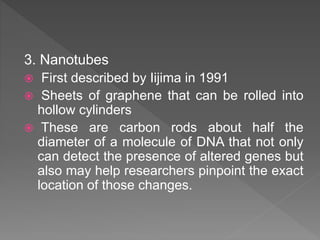
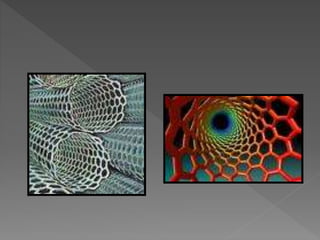
3. Nanotubes
 First described by Iijima in 1991
 Sheets of graphene that can be rolled into
hollow cylinders
 These are carbon rods about half the
diameter of a molecule of DNA that not only
can detect the presence of altered genes but
also may help researchers pinpoint the exact
location of those changes.
4. Quantum Dots
 These are nanomaterials that glow very brightly when
illuminated by ultraviolet light.
 They can be coated with a material that makes the dots
attach specifically to the molecules to be tracked.
 Quantum dots bind themselves to proteins unique to
cancer cells, literally bringing tumours to light.
5. Nano Electromechanical Systems (NEMS)
 Nanotechnology based NEMS biosensors that
exhibit –sensitivity and specificity diagnose even a small
molecular change.
 They convert (bio) chemical to electrical signal.
6. Lab-on-a-chip methods
 Lab-on-a-chip (LOC) is a device which integrates
several laboratory functions on a single chip. LOCs deal
with the handling of extremely small fluid volumes down
to less than pico liters.
 LOC methodologies have been used to assess the
levels of interleukin-1beta (IL-1beta), C- reactive protein
(CRP), and matrix metalloproteinase-8 (MMP-8) in
whole saliva- diagnosing and categorizing the severity
and extent of periodontitis.
 Sensing large number of different
biomolecules simultaneously in real time.
 Useful in diagnosis of oral cancer and
diabetes mellitus and for detection of
bacteria, fungi and viruses.
1. Nanocomposites
 Discrete nanoparticles are homogeneously
distributed in resins or coatings to produce
nanocomposites. The nanofiller used includes
an aluminosilicate powder having a mean
particle size of 80 mm and a 1:4 M ratio of
alumina to silica and a refractive index of 1.508
2.Nanosolution
 Nanosolutions produce unique and dispersible
nanoparticles, which can be added to various solvents,
paints & polymers in which they are dispersed
homogenously.
 Nano technology in bonding agents ensures
homogeneity and that the adhesive is perfectly mixed
everytime
Impression Material
 Impression material is available with
nanotechnology application.
 Nanofillers are integrated in vinylpolysiloxanes,
producing a unique addition of siloxane
impression material. The material has better
flow, improved hydrophilic properties and
enhanced detail precision.
Nanoneedles
 Scientists have achieved a subtle surgical operation on a
parti cular living cell, by means of a needle that is just a
few billionths of a meter wide.
 Nanoneedles are nanosized stain less steel needles,
which will make cell surgery possi ble in the near future.
 Nanoneedles can be used to deliver molecules, -nucleic
acids, proteins, or other chemicals to the nucleus, or may
even be used to carry out cell surgery.
 Using the nanoneedle approach, we can get to a very
specific location within the nucleus; this is the key
advantage of this method.
Nanotweezers
 The Danish research group (Nanohand) has developed
nano tweezers, which can be used for both imaging and
manipulation of nanosized objects to make cell surgery
feasible in the near future.
 These nanotweezer probes consist of two wires tapered
consecutively through a nanopipette and kept
electrically isolated.
Nanomaterials for Periodontal Drug Delivery
 Drugs can be incorporated into nano spheres
composed of a biodegradable polymer, and this allows
for timed release of the drug as the nanospheres
degrade facilitating site-specific drug delivery
 Recently triclosanloaded nanoparticles prepared using
poly (d, llactidecoglycolide), poly (d,llactide) and
cellulose acetate phthalate reduction of inflammation.
 Tetracycline incorporated into microspheres is available
as Arestin for drug delivery by local means into
periodontal pocket.
 A nanostructured 8.5% doxycycline gel was observed to
afford periodontal surface preservation following
experimental periodontal disease in rats.
 The most popular ones to date are nanoHAP (n-HAP)
bone grafts, which are available in crystalline and titanium-
reinforced forms. These n-HAP composite bone graft
scaffolds are highly biocompatible, have superior
mechanical properties, and induce better cellular
responses
 A clinical study comparing the use of nanocrystalline HAP
(NHAP) paste vs open flap debridement (control) in
intrabony defects demonstrated clinically significant
outcomes in the NHAP group, with a clinical attachment
level gain of 3.6 ± 1.6 mm vs the control group’s gain of
1.8 ± 1.2 mm.44 This indicated that the use of an NHAP
paste significantly improved the clinical outcome when
compared to open flap debridement.
 conventional CaSO4 bone grafts have now developed,
with particulate sizes ranging from 200-900 nm, while
the conventional CaSO4 bone graft particle size ranges
from 30-40 µm.
 These nanoparticles are further condensed into pellets
of 425-1000 µm. This nanotization of particles results in
a graft material which is more resistant to degradation
and lasts longer (12-14 weeks) than conventional
CaSO4 (4-6 weeks). This rate of degradation matches
the rate of bone growth in the intrabony defects,
resulting in better treatment outcomes
 Carbon nanotubes provide a strong, flexible,
and inert scaffold on which cells could
proliferate and deposit new bone, while the ZnO
nanoparticles provide the antibacterial
properties. This material enhances HAP
formation in bone defects.
 The use of nanoparticulate bone grafts show
promise in postextraction ridge preservation,
intrabony defects regeneration, root
perforations, and fenestration corrections.
 Nanoparticles can also be designed— using ultrasonic
assessment of the bone quality and structure—to
simulate bone.
Guided tissue regeneration
 The concept of guided tissue regeneration (GTR) is being researched to
replace earlier functional graded membranes with novel 3-layered
membranes.
 The former system included bilayered GTR membranes with a porous
surface on one side (for cellular ingrowth), and a smooth surface on the
opposite side (for cellular occlusion).
 A novel system has come up with a 3-layered GTR membrane composed of
an inner- most layer made of 8%
nanocarbonatedhydroxyapatite/collagen/polylactic-co- glycolic acid
(nCHAC/PLGA) porous membrane, a middle layer of 4% nCHAC/ PLGA,
and an outer layer of PLGA non- porous membrane.
 These 3 layers combine to form a highly flexible,
biocompatible, osteoconductive, and biodegradable
composite membrane.
 When osteoblastic cells were cultured on this
membrane, they showed a more positive response
compared to a pure PLGA membrane.
Implants
 Nanotechnologies are increasingly used for surface
modifications of dental implants as surfaces properties
such as chemistry and roughness play a determinant
role in achieving and maintaining their long-term
stability in bone tissue. Direct bone-to-implant contact is
desired for a biomechanical anchoring of implants to
bone rather than fibrous tissue encapsulation
 Nucryst (Wakefield, USA) has made a wound-
healing material (dressing) that is generally
used in specialist burn-treatment hospitals in
America. The dressing contains nanocrystalline
silver that stops 150 types of fungus and
bacteria, including several bacteria that are
resistant to antibiotics. Meanwhile, another
company has placed nanoparticles into a plastic
material to make it biocidal. This can be useful
for devices that are placed inside the body.
 Nanotechnology is part of a predicted future in which
dentistry and periodontal practice may become more
high-tech and more effective looking to manage
individual dental health on a microscopic level by
enabling us to battle decay where it begins with
bacteria.
 Construction of a comprehensive research facility is
crucial to meet the rigorous requirements for the
development of nanotechnologies.
 Trends in oral health and disease also may change the
focus on specific diagnostic and treatment modalities.
Increasingly preventive approaches will reduce the need
for cure prevention a viable approach for the most of
them.
 Diagnosis and treatment will be customized to match the
preferences and genetics of each patient. Treatment
options will become more numerous and exciting. All this
will demand, even more so than today, the best technical
abilities, professional skills those are the hallmark of the
contemporary dentist and periodontist. Developments are
expected to accelerate significantly.
 SUHAIL Et al Role of Nanotechnology in Dentistry
Scholars Journal of Applied Medical Sciences 2014;
2(2D):785-789
 Mayuresh Et al. Nanotechnology: A Boon to Dentistry
JDSOR 2014;5(2):78-88.
 Shaeesta Et al. Current applications of nanotechnology
in dentistry: a review General dentistry; 2014
 LING et al. Nanotechnology and its role in the
management of periodontal diseases Periodontology
2000,2006; 40: 184–196

Nanotechnology

  • 2.
     INTRODUCTION  HISTORYOF NANOTECHNOLOGY  TECHNIQUES IN NANOTECHNOLOGY  NANOMATERIALS  NANODENTISTRY AND ITS APPLICATION  NANOROBOTICS  NANODIAGNOSTICS  NANOMATERIALS  NANOMATERIALS FOR PERIODONTAL  CONCLUSION  REFERENCES
  • 3.
     Science isundergoing yet another change in helping mankind enter a new era, the era of nanotechnology.  ‘Nanotechnology’ includes structures ranging in the size of 100 nanometers or smaller in at least one dimension and other developing materials or devices within that size, -: fibers that are less than 100 nm diameter, films less than 100 nm in thickness, nanoholes, and composites.
  • 4.
     ‘Nano’ isderived from the Greek word ‘vaos’, meaning ‘dwarf ’.  Is a prefix literally refers to 1 billionth of a physical size.  According to defintion of the ‘National Nanotechnology Initiative ‘ direct manipulation of materials at the nanoscale  General :- “Science Of The Small”  The central idea of nanotechnology is to employ individual atoms and molecules to construct functional structures.
  • 5.
     The lateNobel Prize winning scientst Richard P. Feynman established the potential of nanosize devices in 1959.  proposed using machine tools to make smaller machine tools, which, in turn, would be used to make still smaller machine tools, and so on all the way down to the molecular level.  He suggested that such nanomachines, nanorobots and nanodevices ultimately could be used to develop a wide range of atomically precise microscopic instrumentation and manufacturing tools.
  • 6.
     Feynman arguedthat these tools could be applied to produce vast quantities of ultrasmall computers and various microscale and nanoscale robots. He concluded that this is “a development which I think cannot be avoided.”  The vision of nanotechnology was born.
  • 7.
     K EricDrexler independently used the term ‘nanotechnology’ in 1986. Humans have been using nanotechnology for a long time without realizing it. The processes of making steel, vulcanizing rubber and sharpening a dental instrument, all rely on manipulations of nanoparticles.
  • 8.
     Richard Zsigmondystudied nanomaterials in the early 20th century.  Applications began in the 1980s with the invention of the scanning tunneling microscope and the discovery of carbon nanotubes.
  • 9.
     Top-down Technique Bottom-up Technique
  • 11.
     In thistechnique smaller devices are created by using larger ones to direct their assembly. So, small features are made by starting with larger materials patterning and carving down to make nanoscale structures in precise patterns.  Complex structures containing hundreds of millions of precisely positioned nanostructures can be fabricated.
  • 12.
     Materials arereduced to the nanoscale and can suddenly show very different properties, enabling unique applications.  As the size of system decreases there is increase in ratio of surface area to volume and number of physical phenomena becomes noticeably pronounced
  • 13.
     In thistechnique smaller components are arranged into more complex assembly.  This begins by designing and synthesizing custom made molecules that have the ability to self-assemble or self-organize into higher order mesoscale or macroscale structures.
  • 14.
     Modern syntheticchemistry has reached the point where it is possible to prepare small molecules to almost any structure.  These methods are used today to manufacture a wide variety of useful chemicals such as pharmaceuticals or commercial polymers. Such bottom- up approaches are much cheaper than top-down methods, but could potentially be overwhelmed as the size and complexity of the desired assembly increases.
  • 15.
  • 16.
    › Nanoparticles › Nanopores ›Nanotubes › Nanorods › Nanospheres › Nanofibers › Nanoshells › Dendrimers › Nanorings › Nanocapsules › Quantum dots › Dendrimers
  • 17.
     Inorganic nanoparticles (Semiconductor nanoparticles, Metal nanoparticles, Metal oxide nanoparticles, Silica nanoparticles,Polyoxometalates,Gold nanocrystals)
  • 18.
     Nanodentistry willmake possible the maintenance of comprehensive oral health by employing nanomaterials, biotechnology, including tissue engineering, and ultimately, dental nanorobotics. Nanodentistry includes:  Nanorobotics  Nanodiagnostics  Nanomaterials
  • 19.
    Nanorobot 'an artificiallyfabricated objects able to freely diffuse in the human body and interact with specific cell at the molecular level by itself.’ Nanorobotics is the technology of creating machines or robots at or close to the microscopic scale of nanometers. Nanites, Nanoant
  • 20.
    •DIAMETER:-0.5-2MICRONS, PARTS WITHDIMENSIONS 1-10nm •CARBON-PRINCIPAL ELEMENT •THE EXTERIOR CARBON DIAMONOID STRUCTURE •SPIDER LIKE BODY. •ON BOARD NANO COMPUTERS.
  • 21.
    o The poweringof nanorobots can be done by metabolizing local glucose, oxygen and externally supplied acoustic energy. o controlled by onboard computers capable of performing around 1000 or more computations per second. o Communication with the device can be achieved by broadcast type acoustic signaling. A navigational network installed in the body provides high positional accuracy to all passing nanorobots and keep track of the various devices in the body.
  • 22.
    o Nanorobots areable to distinguish between different cell types by checking their surface antigens. o Building nanorobots involves sensors, actuators, control, power, communications and interfacial signals across spatial scales and between organic/inorganic as well as biotic/ abiotic systems. o When the task of the nanorobots is completed, they can be retrieved by allowing them to effuse themselves via the usual human excretory channels. They can also be removed by active scavenger systems
  • 24.
    1. Local Anaesthesia COLLOIDAL SUSPENSION Pulp. Onboard nano computer Dentin,gingival sulcus dentinal tubules 1- 4micrones
  • 25.
     the analgesicdental nanorobots may be commanded by the dentist to shut down all sensitivity in any particular tooth that requires treatment. When on the hand-held controller display, the selected tooth immediately becomes numb. After the oral procedures completed, the dentist orders the nanorobots to restore all sensation, to relinquish control of nerve traffic and to egress, followed by aspiration.
  • 26.
     Nanorobotic analgesicsoffer greater patient comfort and reduced anxiety, no needles, greater selectivity, and controllability of the analgesic effect, fast and completely reversible switchable action and avoidance of most side effects and complications.
  • 27.
    2. Dental Biomimetics The most interesting venue for speculation on the nanorestoration of tooth structures is that of nanotechnology mimicking processes that occur in nature (biomimetics), such as the formation of dental enamel.  Through an affordable desktop manufacturing facility, fabrication of a new tooth in the dentist's office within the time & economic constraints of a typical dental office visit, complete dentition replacement therapy will become feasible soon.
  • 28.
     Chen etal utilizing nanotechnology simulated the natural biomineralization process to create the dental enamel, using highly organized microarchitectural units of nanorod-like calcium hydroxyapatite crystals arranged roughly parallel to each other
  • 29.
    3. Dental Durabilityand Cosmetics  Tooth durability and appearance may be improved by replacing upper enamel layers with covalently bonded artificial materials, such as sapphire or diamond, which have 20 to 100 times the hardness and failure strength of natural enamel, or contemporary ceramic veneers as well as good biocompatibility.  Pure sapphire and diamond are brittle and prone to fracture resistant as part of a nanostructure composite material that possibly includes embedded carbon nanotubes.
  • 30.
    4. Orthodontic Treatment Orthodontic nanorobots could directly manipulate the periodontal tissues, including gingivae, periodontal ligament, cementum and alveolar bone, allowing rapid and painless tooth straightening, rotating and vertical repositioning within minutes to hours. This is in contrast to current molar- uprighting techniques, which require weeks or months to complete.
  • 31.
    5. Renaturalization Procedures Dentition renaturalization procedures may become a popular addition to the future dental practice, made possible through esthetic dentistry.  patients who desire to have their old dental amalgams excavated and their teeth remanufactured with native biological materials.  Full coronal renaturalization procedures in which all fillings and crowns are removed, and the affected teeth are remanufactured to become indistinguishable from the original teeth .
  • 32.
    6. Dentirobots  Subocclusaldwelling nanorobotics dentifrice delivered by mouthwash or toothpaste could patrol all Supragingival and subgingival surfaces atleast once a day, metabolizing trapped organic matter into harmless and odorless vapors and performing continuous calculus debridement.  small dentifrobots [1-10 micon], crawling at 1-10 microns/sec, would be inexpensive, purely mechanical devices, that would safely deactivate themselves if swallowed, and would be programmed with strict occlusal avoidance protocol.
  • 33.
     Properly configureddentifrobots could identify and destroy pathogenic bacteria residing in the plaque and elsewhere, while allowing the ~500 species of harmless oral microflora to flourish in a healthy ecosystem.  Dentifrobots also would provide a continuous barrier to halitosis, since bacterial petrification is the central metabolic process involved in oral malodor .
  • 34.
    7. Hypersensitivity Cure Dentin hypersensitivity may be caused by changes in pressure transmitted hydrodynamically to the pulp.  Natural hypersensitive teeth have eight times higher surface density of dentinal tubules and diameter with twice as large than nonsensitive teeth.  Reconstructive dental nanorobots, using native biological materials, could selectively and precisely occlude specific tubules within minutes, offering patients a quick and permanent cure.
  • 35.
    1. Nanoscale Cantilevers Flexiblebeams resembling a row of diving boards. Built using Semiconductor lithographic techniquees that can be engineered to bind to molecules associated with cancer.
  • 36.
    2. Nanopores These aretiny holes that allow DNA to pass through one strand at a time. They will make DNA sequencing more efficient.
  • 37.
    3. Nanotubes  Firstdescribed by Iijima in 1991  Sheets of graphene that can be rolled into hollow cylinders  These are carbon rods about half the diameter of a molecule of DNA that not only can detect the presence of altered genes but also may help researchers pinpoint the exact location of those changes.
  • 39.
    4. Quantum Dots These are nanomaterials that glow very brightly when illuminated by ultraviolet light.  They can be coated with a material that makes the dots attach specifically to the molecules to be tracked.  Quantum dots bind themselves to proteins unique to cancer cells, literally bringing tumours to light.
  • 40.
    5. Nano ElectromechanicalSystems (NEMS)  Nanotechnology based NEMS biosensors that exhibit –sensitivity and specificity diagnose even a small molecular change.  They convert (bio) chemical to electrical signal.
  • 41.
    6. Lab-on-a-chip methods Lab-on-a-chip (LOC) is a device which integrates several laboratory functions on a single chip. LOCs deal with the handling of extremely small fluid volumes down to less than pico liters.  LOC methodologies have been used to assess the levels of interleukin-1beta (IL-1beta), C- reactive protein (CRP), and matrix metalloproteinase-8 (MMP-8) in whole saliva- diagnosing and categorizing the severity and extent of periodontitis.
  • 42.
     Sensing largenumber of different biomolecules simultaneously in real time.  Useful in diagnosis of oral cancer and diabetes mellitus and for detection of bacteria, fungi and viruses.
  • 43.
    1. Nanocomposites  Discretenanoparticles are homogeneously distributed in resins or coatings to produce nanocomposites. The nanofiller used includes an aluminosilicate powder having a mean particle size of 80 mm and a 1:4 M ratio of alumina to silica and a refractive index of 1.508
  • 44.
    2.Nanosolution  Nanosolutions produceunique and dispersible nanoparticles, which can be added to various solvents, paints & polymers in which they are dispersed homogenously.  Nano technology in bonding agents ensures homogeneity and that the adhesive is perfectly mixed everytime
  • 45.
    Impression Material  Impressionmaterial is available with nanotechnology application.  Nanofillers are integrated in vinylpolysiloxanes, producing a unique addition of siloxane impression material. The material has better flow, improved hydrophilic properties and enhanced detail precision.
  • 46.
    Nanoneedles  Scientists haveachieved a subtle surgical operation on a parti cular living cell, by means of a needle that is just a few billionths of a meter wide.  Nanoneedles are nanosized stain less steel needles, which will make cell surgery possi ble in the near future.  Nanoneedles can be used to deliver molecules, -nucleic acids, proteins, or other chemicals to the nucleus, or may even be used to carry out cell surgery.  Using the nanoneedle approach, we can get to a very specific location within the nucleus; this is the key advantage of this method.
  • 47.
    Nanotweezers  The Danishresearch group (Nanohand) has developed nano tweezers, which can be used for both imaging and manipulation of nanosized objects to make cell surgery feasible in the near future.  These nanotweezer probes consist of two wires tapered consecutively through a nanopipette and kept electrically isolated.
  • 48.
    Nanomaterials for PeriodontalDrug Delivery  Drugs can be incorporated into nano spheres composed of a biodegradable polymer, and this allows for timed release of the drug as the nanospheres degrade facilitating site-specific drug delivery  Recently triclosanloaded nanoparticles prepared using poly (d, llactidecoglycolide), poly (d,llactide) and cellulose acetate phthalate reduction of inflammation.
  • 49.
     Tetracycline incorporatedinto microspheres is available as Arestin for drug delivery by local means into periodontal pocket.  A nanostructured 8.5% doxycycline gel was observed to afford periodontal surface preservation following experimental periodontal disease in rats.
  • 50.
     The mostpopular ones to date are nanoHAP (n-HAP) bone grafts, which are available in crystalline and titanium- reinforced forms. These n-HAP composite bone graft scaffolds are highly biocompatible, have superior mechanical properties, and induce better cellular responses  A clinical study comparing the use of nanocrystalline HAP (NHAP) paste vs open flap debridement (control) in intrabony defects demonstrated clinically significant outcomes in the NHAP group, with a clinical attachment level gain of 3.6 ± 1.6 mm vs the control group’s gain of 1.8 ± 1.2 mm.44 This indicated that the use of an NHAP paste significantly improved the clinical outcome when compared to open flap debridement.
  • 51.
     conventional CaSO4bone grafts have now developed, with particulate sizes ranging from 200-900 nm, while the conventional CaSO4 bone graft particle size ranges from 30-40 µm.  These nanoparticles are further condensed into pellets of 425-1000 µm. This nanotization of particles results in a graft material which is more resistant to degradation and lasts longer (12-14 weeks) than conventional CaSO4 (4-6 weeks). This rate of degradation matches the rate of bone growth in the intrabony defects, resulting in better treatment outcomes
  • 52.
     Carbon nanotubesprovide a strong, flexible, and inert scaffold on which cells could proliferate and deposit new bone, while the ZnO nanoparticles provide the antibacterial properties. This material enhances HAP formation in bone defects.  The use of nanoparticulate bone grafts show promise in postextraction ridge preservation, intrabony defects regeneration, root perforations, and fenestration corrections.
  • 53.
     Nanoparticles canalso be designed— using ultrasonic assessment of the bone quality and structure—to simulate bone.
  • 54.
    Guided tissue regeneration The concept of guided tissue regeneration (GTR) is being researched to replace earlier functional graded membranes with novel 3-layered membranes.  The former system included bilayered GTR membranes with a porous surface on one side (for cellular ingrowth), and a smooth surface on the opposite side (for cellular occlusion).  A novel system has come up with a 3-layered GTR membrane composed of an inner- most layer made of 8% nanocarbonatedhydroxyapatite/collagen/polylactic-co- glycolic acid (nCHAC/PLGA) porous membrane, a middle layer of 4% nCHAC/ PLGA, and an outer layer of PLGA non- porous membrane.
  • 55.
     These 3layers combine to form a highly flexible, biocompatible, osteoconductive, and biodegradable composite membrane.  When osteoblastic cells were cultured on this membrane, they showed a more positive response compared to a pure PLGA membrane.
  • 56.
    Implants  Nanotechnologies areincreasingly used for surface modifications of dental implants as surfaces properties such as chemistry and roughness play a determinant role in achieving and maintaining their long-term stability in bone tissue. Direct bone-to-implant contact is desired for a biomechanical anchoring of implants to bone rather than fibrous tissue encapsulation
  • 57.
     Nucryst (Wakefield,USA) has made a wound- healing material (dressing) that is generally used in specialist burn-treatment hospitals in America. The dressing contains nanocrystalline silver that stops 150 types of fungus and bacteria, including several bacteria that are resistant to antibiotics. Meanwhile, another company has placed nanoparticles into a plastic material to make it biocidal. This can be useful for devices that are placed inside the body.
  • 58.
     Nanotechnology ispart of a predicted future in which dentistry and periodontal practice may become more high-tech and more effective looking to manage individual dental health on a microscopic level by enabling us to battle decay where it begins with bacteria.  Construction of a comprehensive research facility is crucial to meet the rigorous requirements for the development of nanotechnologies.
  • 59.
     Trends inoral health and disease also may change the focus on specific diagnostic and treatment modalities. Increasingly preventive approaches will reduce the need for cure prevention a viable approach for the most of them.  Diagnosis and treatment will be customized to match the preferences and genetics of each patient. Treatment options will become more numerous and exciting. All this will demand, even more so than today, the best technical abilities, professional skills those are the hallmark of the contemporary dentist and periodontist. Developments are expected to accelerate significantly.
  • 60.
     SUHAIL Etal Role of Nanotechnology in Dentistry Scholars Journal of Applied Medical Sciences 2014; 2(2D):785-789  Mayuresh Et al. Nanotechnology: A Boon to Dentistry JDSOR 2014;5(2):78-88.  Shaeesta Et al. Current applications of nanotechnology in dentistry: a review General dentistry; 2014  LING et al. Nanotechnology and its role in the management of periodontal diseases Periodontology 2000,2006; 40: 184–196