Periodontic
CONTENTS
INTRODUCTION
HISTORICAL BACKGROUND
VARIOUS NANOPARTICLES
HOW ARE NANOPRODUCTS MADE?
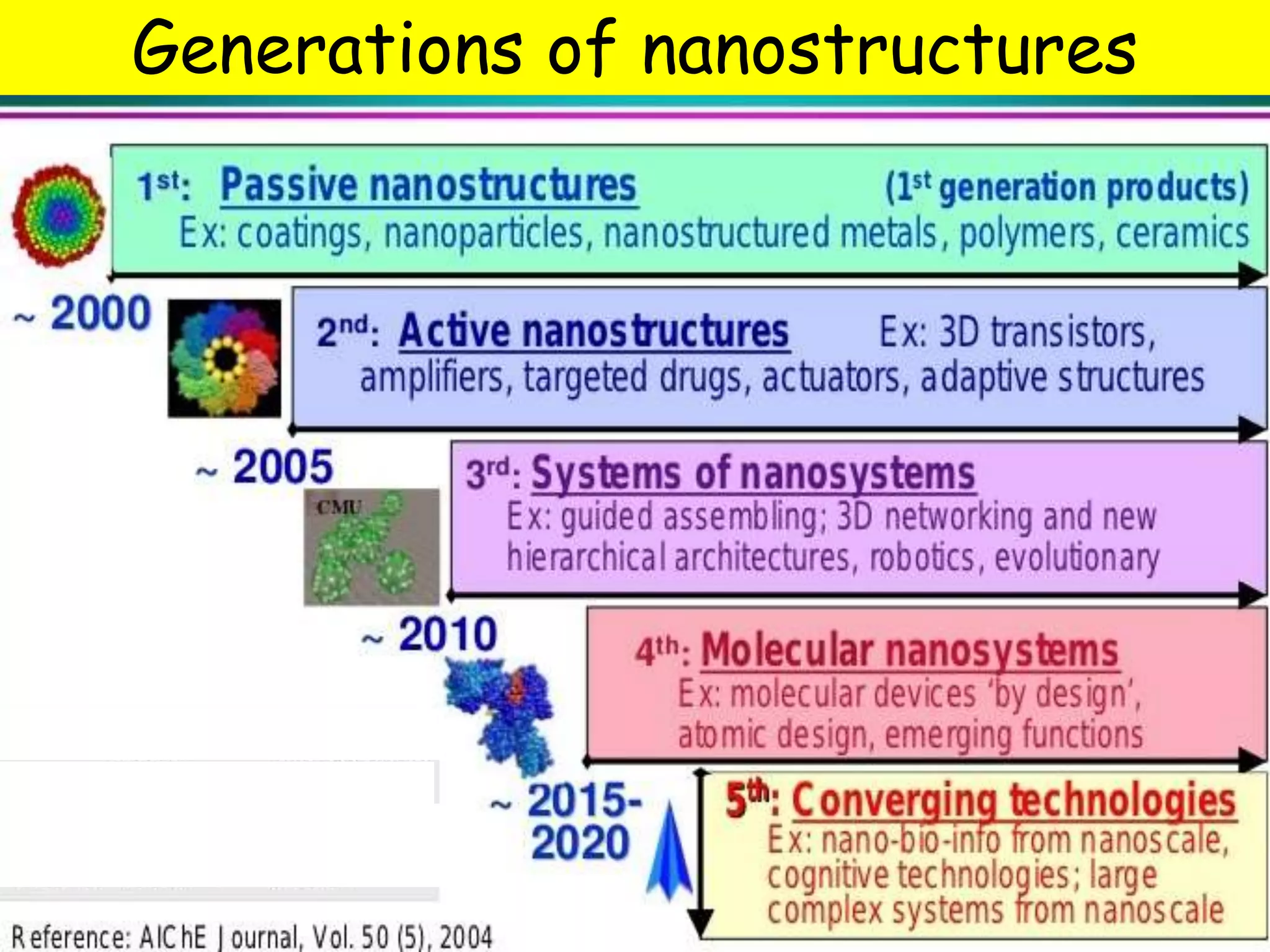
GENERATIONS OF NANOSTRUCTURES
PROPERTIES OF NANOMATERIALS
SELF ASSEMBLY
APPLICATIONS IN PERIODONTICS
NANOROBOTS
CONCLUSION
REFERENCES
INTRODUCTION
 The word ‘’Nano’’ means ‘’dwarf’’ and in greek prefix
signifies a ‘’billionth’’.
 Nanotechnology can be defined as science and
engineering involved in the design, synthesis,
characterization and application of materials and
devices whose smallest functional organization in
atleast one dimensions is on the nanometer scale.
 It symbolizes inexpensive control of the structure of
matter based on molecule-molecule control of products
and byproducts.
Historical Background
 In 1959 Richard.P. Feynman(Father of Nanotechnology)
proposed using machine tools,which,in turn,would be
used to make still smaller tools, and so on all the way
down to the molecular level.
 He suggested that such nanomachines,nanorobots and
nanodevices could ultimately be used to develop a wide
range atomically precise microscopic instrumentation and
manufacturing tools.
 The term ‘’nanotechnology’’ was coined by Nario
Taniguchi in 1975.
 In 1979,Eric Drexler encountered Freynman’s 1959
talk ‘’There’s Plenty of room at the bottom’’.
 In 1986 Drexler recoined the term ‘’Nanotechnology’’
and wrote ‘’Engines of Creation’’:The Coming Era of
Nanotechnology, a book to popularize the potentials of
molecular nanotechnology.
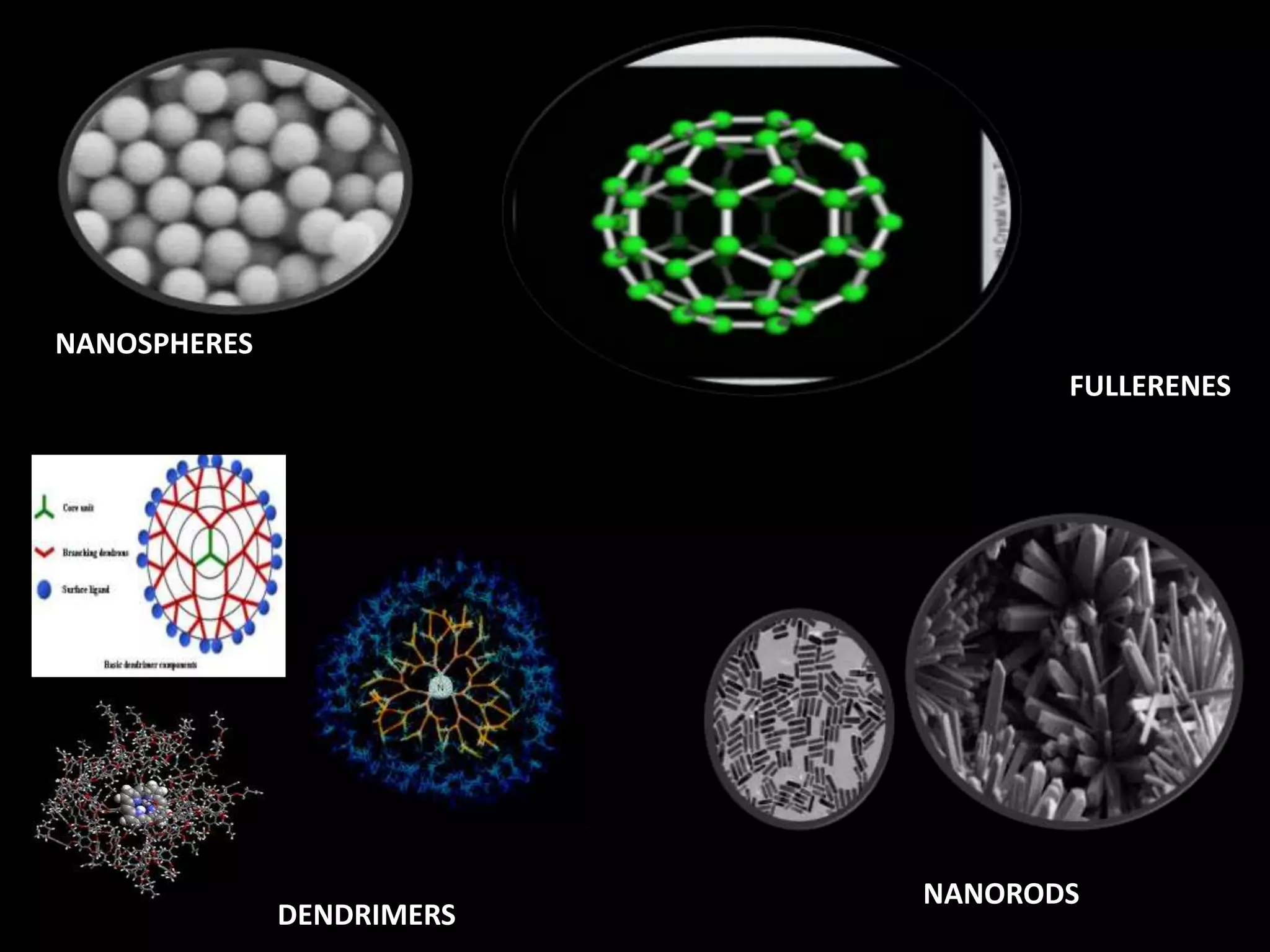
VARIOUS NANOPARTICLES
NANOPORES
NANOTUBES
QUANTUM DOTS
NANOSHELLS
NANOSPHERES
FULLERENES
DENDRIMERS
NANORODS
LIPOSOMES
NANOCAPSULES
NANORINGS
NANOWIRES
NANOBELTS
HOW ARE NANOPRODUCTS MADE?
• TOP- DOWN:
From top(larger) to bottom(smaller).
These seek to create smaller devices by using larger
ones to direct their assembly.
• BOTTOM-UP:
From bottom(smaller) to top(larger).
These seek to begin with a nanometric
structure(molecule) and creating a mechanism
larger than original structure.
Generations of nanostructures
Properties of Nanomaterials
• They exhibit much better performance
properties than traditional materials
which include
enhanced toughness,
stiffness,
improved transparency,
increased scratch,
abrasion, solvent and heat resistance,
 decreased gas permeability .
In addition. nanoparticles have special properties,including
 chemical,
optical,
magnetic, and
electro-optical properties,which differ from those of either
individual molecules or bulk species.
Nanoparticles have a greater surface area per unit mass
than compared with larger particles .
SELF ASSEMBLY
 Self-assembly is an important feature of
nanostructured materials. Here, an autonomous
organization of components into patterns or
structures without human intervention occurs .
 The whole process can be manipulated and
facilitated through the correct setting of conditions.
• Self assembly can be classified into
Static dynamic processes
The most commonly used in self assembly are the
polyelectrolyte materials
Cationic polyelectrolytes
Anionic polyelectrolytes
The most universal driving forces for establishing self-
assembly are electrostatic attractive interactions
between positive and negative charges.
INORGANIC NANOMATERIALS EITHER
CURRENTLY IN USE OR UNDER DEVELOPMENT
• Semiconductor nanoparticles
• Metal nanoparticles
• Metal oxide nanoparticles
• Silica nanoparticles
• Polyoxometalates
• Gold nanocrystals
APPLICATIONS IN PERIODONTICS(Ling Xue Kong
et al 2006)
NANOMATERIALS FOR PERIODONTAL DRUG DELIVERY
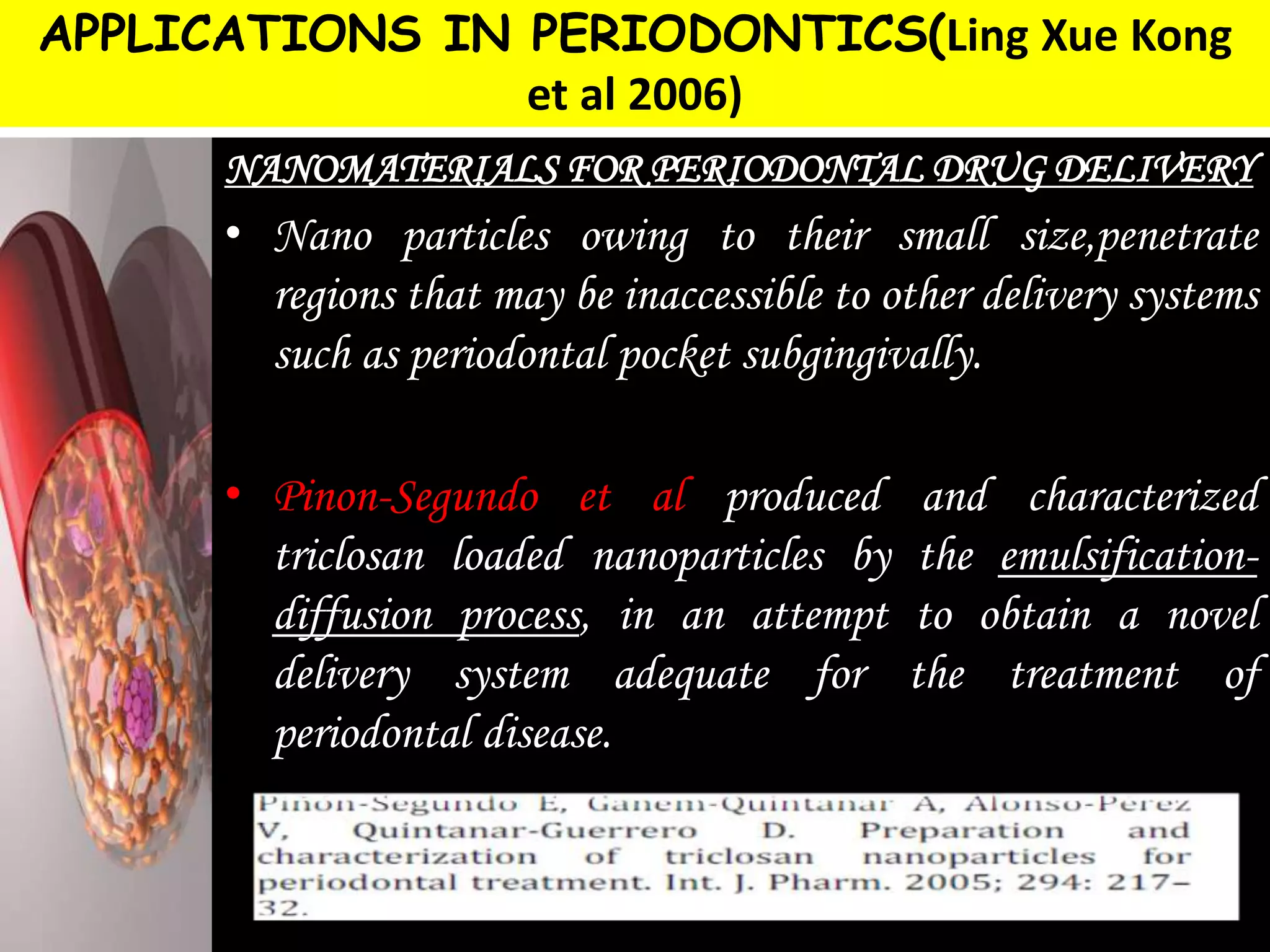
• Nano particles owing to their small size,penetrate
regions that may be inaccessible to other delivery systems
such as periodontal pocket subgingivally.
• Pinon-Segundo et al produced and characterized
triclosan loaded nanoparticles by the emulsification-
diffusion process, in an attempt to obtain a novel
delivery system adequate for the treatment of
periodontal disease.
 These behave as homogenous
polymer matrix-delivery system,with the drug molecularly
dispersed.
 It was concluded that triclosan nanoparticles were able to
effect a reduction of the inflammation of the experimental
sites.
 Timed release of drugs may occur from biodegradable
nanospheres.This also allows for site specific drug delivery.
triclosan-nanoparticles
NANOMATERIALS FOR PERIODONTAL TISSUE
ENGINEERING
Currently tissue engineering concepts for periodontal
regeneration are focused on the utilization of synthetic
scaffolds for cell delivery purposes.
Non biologic self assembling nanosystems will automatically
undergo pre-specified assemblies much in line with known
biologic systems associated with cells and tissues.
• It is possible to create polymer scaffolds in the future for cell
seeding,growth factor delivery and tissue engineering via
nanodevices implanted to sites of tissue damage.
 Dentinal Hypersensitivity
 Oral Hygiene and halitosis(Mouthwashes)
 Oral anaesthetic induction
NANOROBOTS
It metabolizes trapped organic matter into harmless and
odourless vapours and performing continuous calculus
debridement.
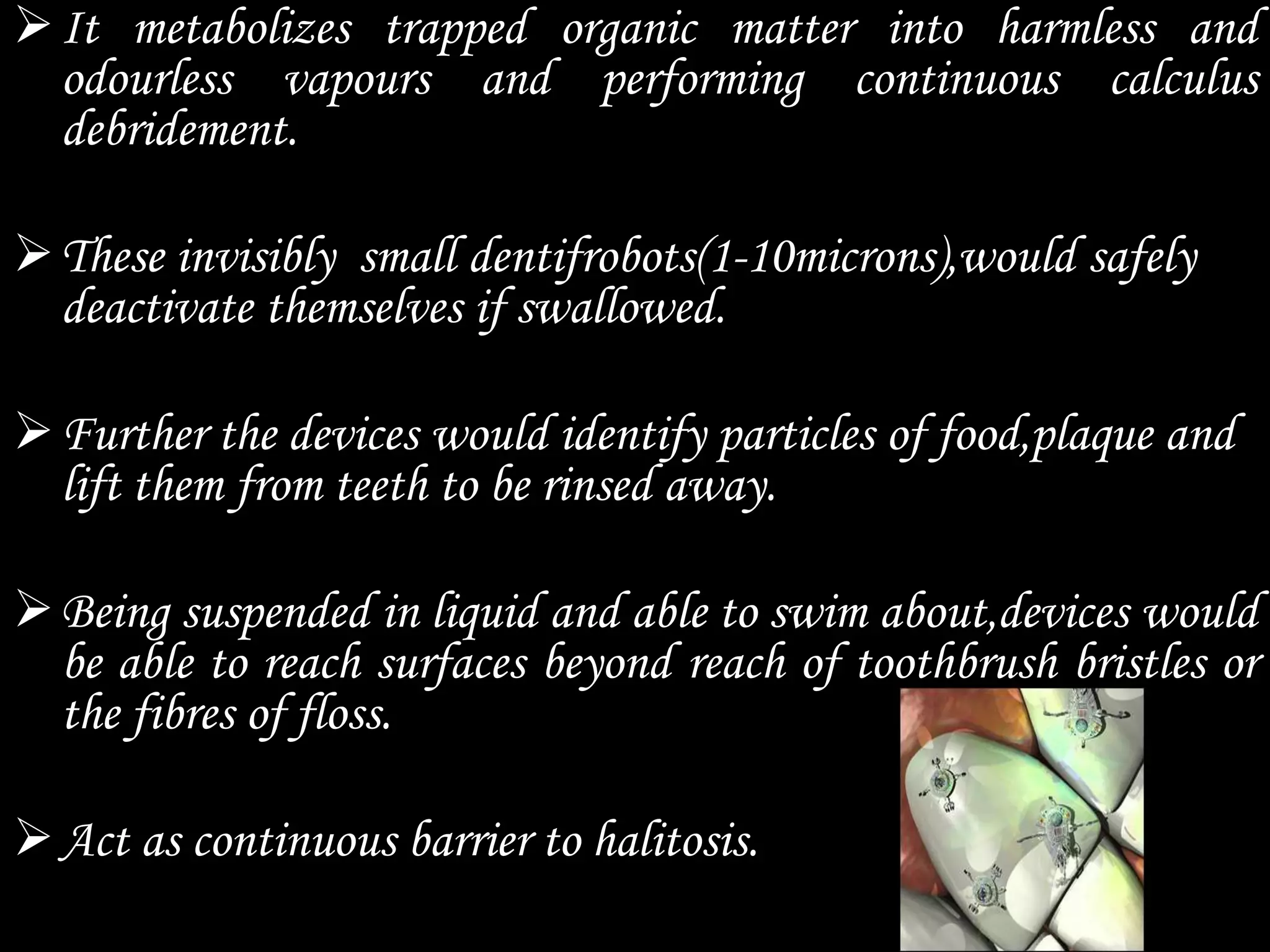
These invisibly small dentifrobots(1-10microns),would safely
deactivate themselves if swallowed.
Further the devices would identify particles of food,plaque and
lift them from teeth to be rinsed away.
Being suspended in liquid and able to swim about,devices would
be able to reach surfaces beyond reach of toothbrush bristles or
the fibres of floss.
Act as continuous barrier to halitosis.
Bone replacement materials
Nanotechnology aims to emulate bone for orthopedic and dental
applications and more particularly for development of nanobone.
Chitsazi MT et al 2011 evaluated the efficacy of autogenus bone
graft and nanocystalline hydroxyapatite in the management of
human intrabony periodontal defects.
Complete resorption of the nanohydroxyapatite had taken place
after 12 weeks.
Osseous defects in periodontal surgeries can be treated by
using HA nanoparticles.
TRADE NAMES
OSTIM(Oscartis GmbH,Obernburg-Germany)HA
VITOSSO(Orthovita,Inc.,Great Valley Parkway Malvern
USA)HA+TCP
NanoOSSTM(Angstrom Medica,USA)HA
NANOTECHNOLOGY IN PERIODONTAL
BIOFILMS
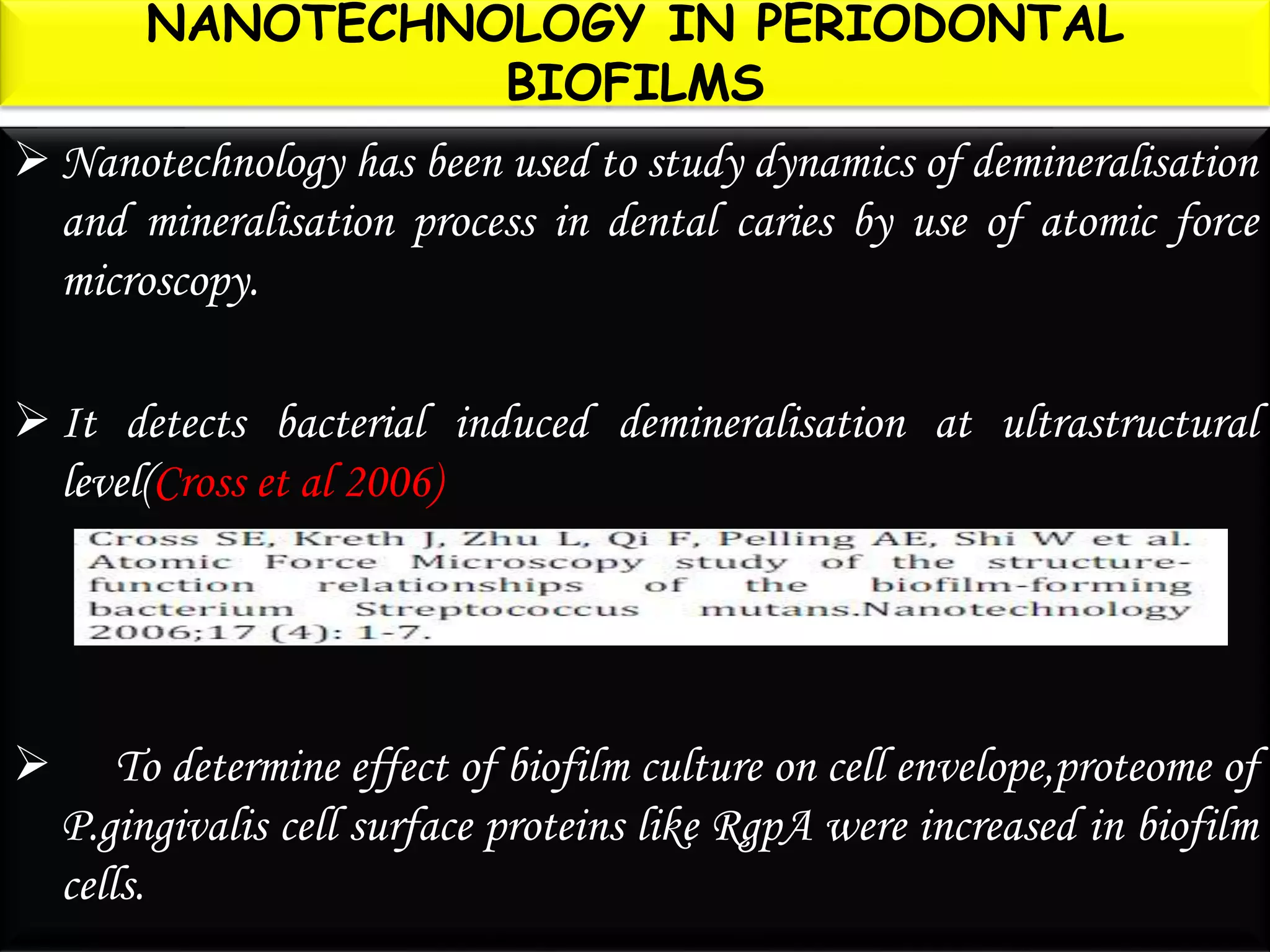
 Nanotechnology has been used to study dynamics of demineralisation
and mineralisation process in dental caries by use of atomic force
microscopy.
 It detects bacterial induced demineralisation at ultrastructural
level(Cross et al 2006)
 To determine effect of biofilm culture on cell envelope,proteome of
P.gingivalis cell surface proteins like RgpA were increased in biofilm
cells.
• Old culture techniques might have been gold standard till
date but are slow and detects only cultivable bacteria.
• Nanotechnology selectively removes periodontal and
cariogenic bacteria while preserving normal flora in a more
targeted and protective approach.
Tooth Repair
• Chen et al made use of nanotechnology to simulate the
natural biomineralisation process to create the hardest
tissue in the body,the enamel by using highly organized
microarchitectural units of nanorod like calcium HA
crystals arranged parallel to each other.
Implants
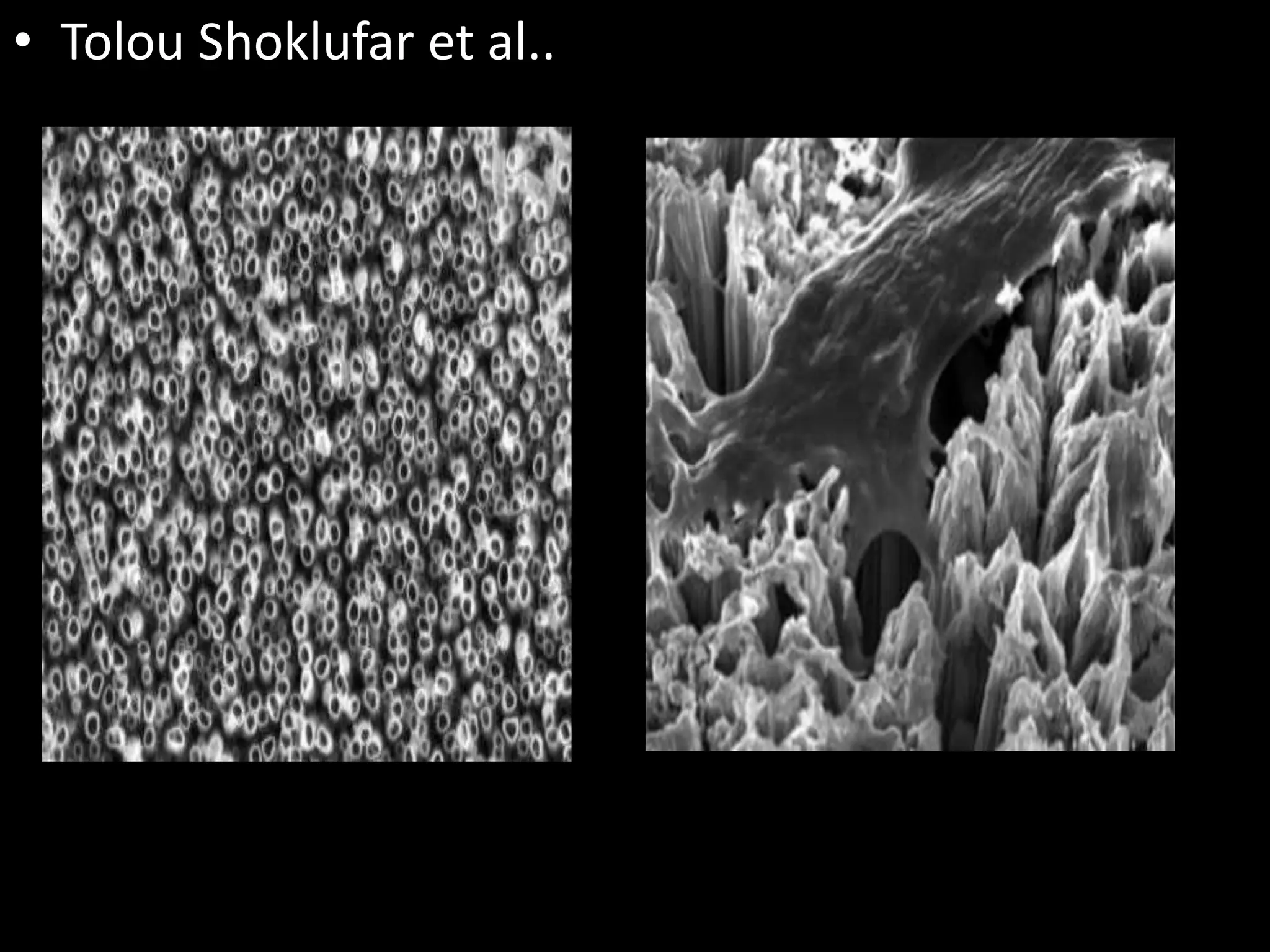
• These implants use nanometer scale calcium
phosphate to create a more complex
topography on the implant surface,which as
proven to expediate osseointegration by
150% thereby decreasing the length of
treatment by one to three months.
• Tolou Shoklufar et al..
• Ostman et al.2008 in a 1 year clinical and radigraphic study
concluded that immediate loading of NanoTite Prevail
implants seems to be a viable option in implant
rehabiltation,at least when a good initial fixation is
achieved.
• Further periimplantitis surface conditioning with citric acid
improves nanoparticle sized hydroxyaopatite blended clot
adhesion to titanium implant surfaces.(Ghamal Abdel-
Ghaffar and Iacono 2013)
NANOROBOTS
NANOROBOTS
Nanorobotics is the technology of creating machines
or robots at or close to the microscopic scale of
nanometers
A nanorobot can be defined as an ‘an artificially
fabricated objects able to freely diffuse in the
human body and interact with specific cell at the
molecular level by itself.
These miniature robots are so small that they can be
introduced into the body either through the vascular
system or through the catheters, and with external
guidance and monitoring by the surgeon they can
perform precise intracellular surgery,which would
not be possible with the human hand.
COMPOSITION OF NANOROBOTS
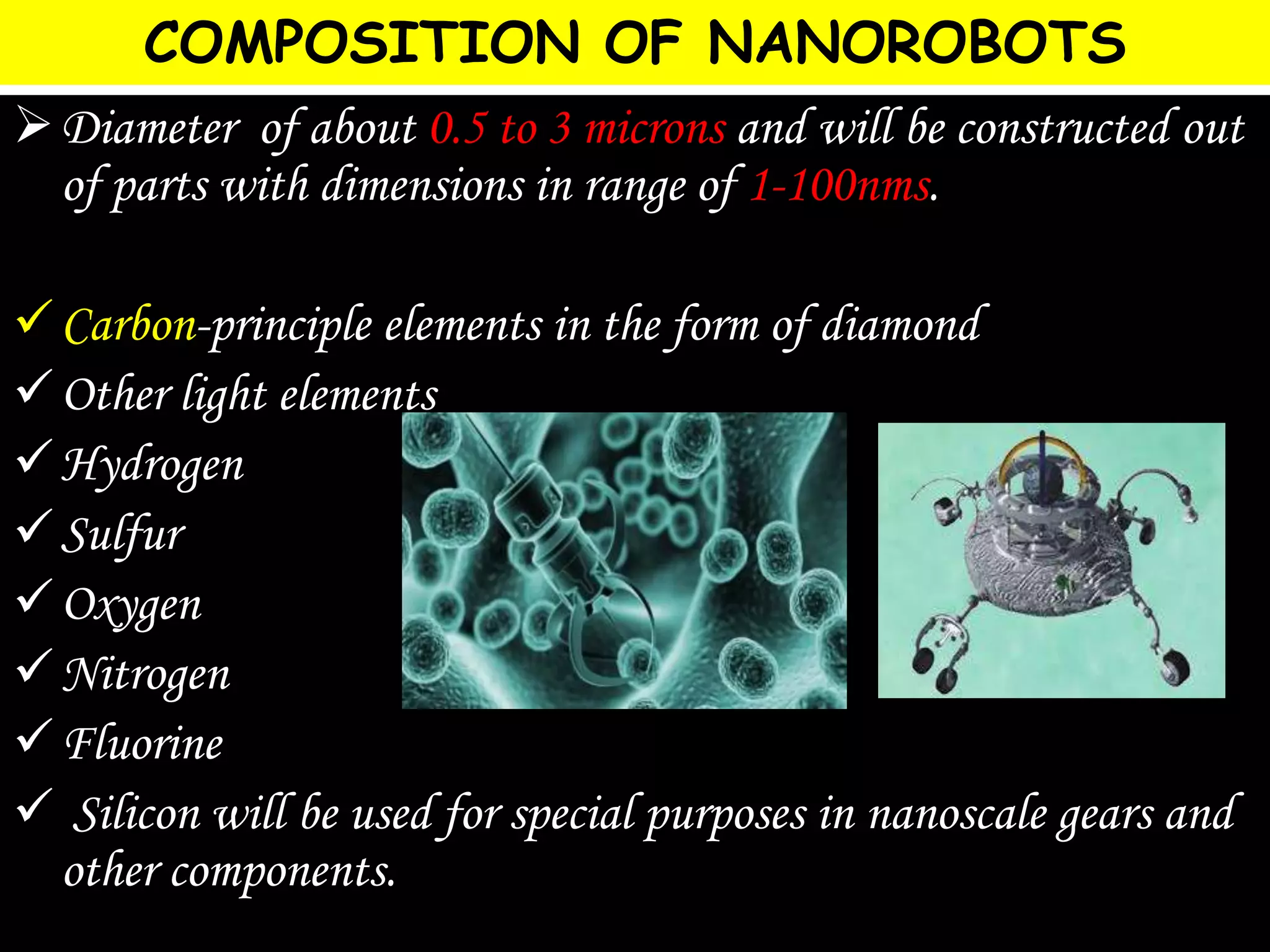
Diameter of about 0.5 to 3 microns and will be constructed out
of parts with dimensions in range of 1-100nms.
Carbon-principle elements in the form of diamond
Other light elements
Hydrogen
Sulfur
Oxygen
Nitrogen
Fluorine
 Silicon will be used for special purposes in nanoscale gears and
other components.
The exterior of a nanorobot will likely be constructed of
carbon atoms because of its inert properties and strength.
Supersmooth surfaces will lessen the likelihood of triggering
the body’s immune system ,allowing the nanorobots to go
about their business unimpeded.
Glucose or natural body sugars and oxygen might be a
source for propulsion and the nanorobot will have other
biochemical or molecular parts depending on its task.
MECHANISM OF ACTION OF NANOROBOTS.
 The powering of nanorobots can be done by metabolizing local
glucose and oxygen for energy and externally supplied acoustic
energy.
 Other sources of energy within the body can also be used to supply
the necessary energy for the devices.
Communication
Is an important fundamental capability of nanorobots.
 They must be able to communicate with each other in order
to monitor collective task progress and pass along relevant
sensory, messaging,navigational and other operational data.
Light signals(optical nanosensors)
Chemical signals(chemical nanosensors)monitoring glucose level.
Nanorobots function will be controlled by simple onboard
computers capable of performing about 1000 or fewer
computations per second.
Communication with the device can be achieved by
broadcast-type acoustic signaling.
Navigational network may be installed in the body
providing accuracy to all passing nanorobots that
interrogate them,wanting to know their location.
This will help to keep track of various devices in the body.
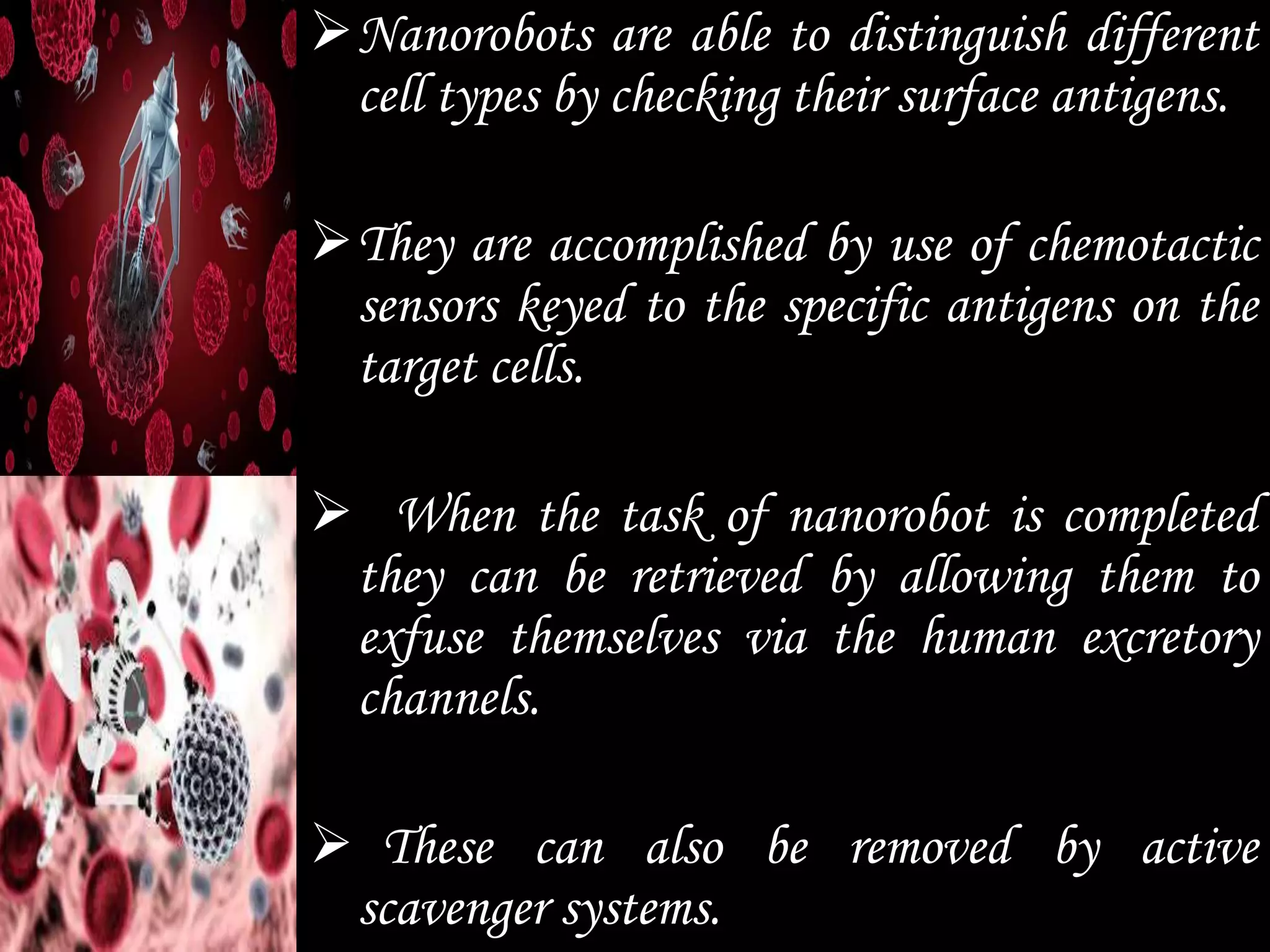
Nanorobots are able to distinguish different
cell types by checking their surface antigens.
They are accomplished by use of chemotactic
sensors keyed to the specific antigens on the
target cells.
 When the task of nanorobot is completed
they can be retrieved by allowing them to
exfuse themselves via the human excretory
channels.
 These can also be removed by active
scavenger systems.
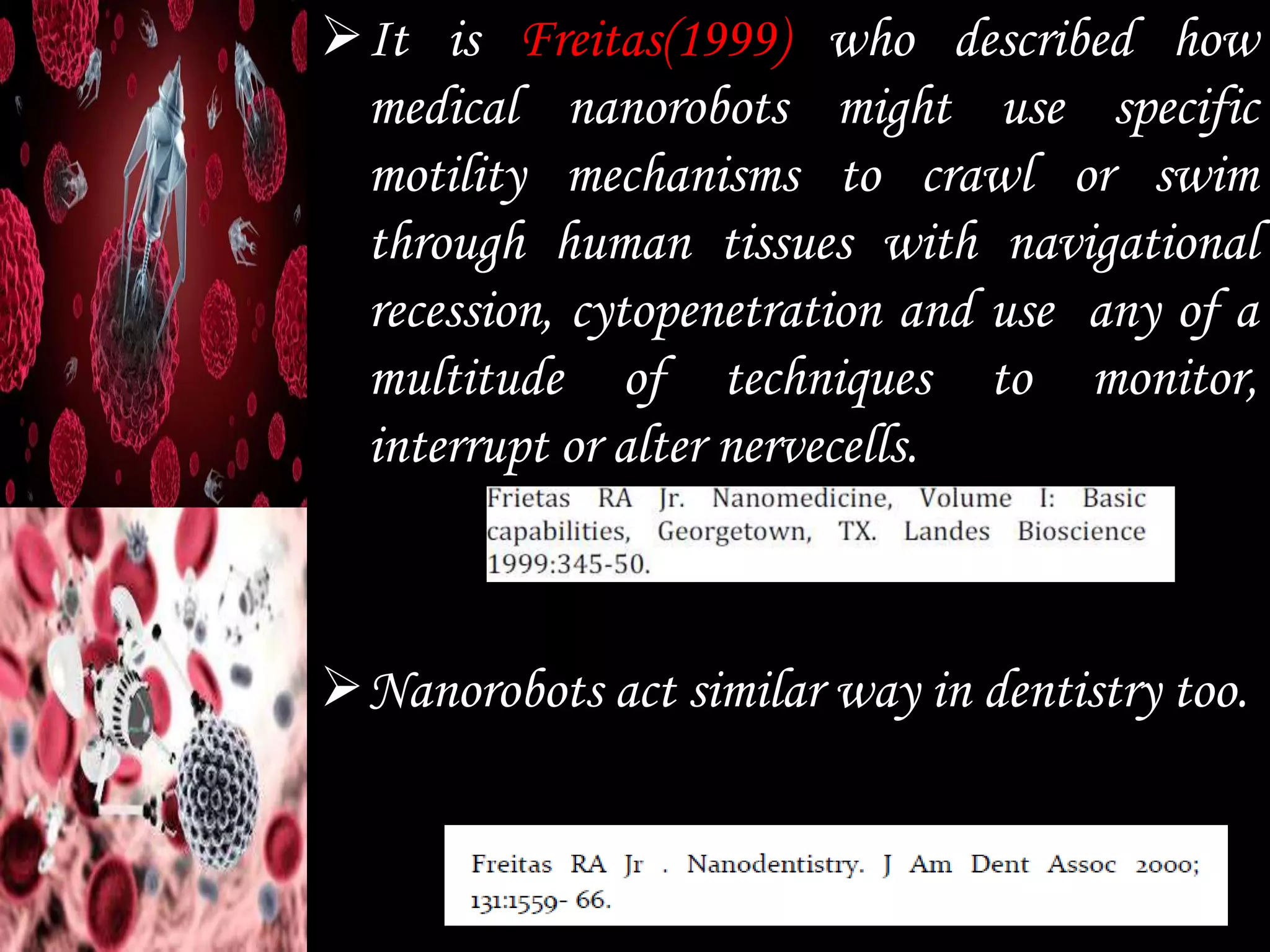
It is Freitas(1999) who described how
medical nanorobots might use specific
motility mechanisms to crawl or swim
through human tissues with navigational
recession, cytopenetration and use any of a
multitude of techniques to monitor,
interrupt or alter nervecells.
Nanorobots act similar way in dentistry too.
HOW SAFE ARE THESE NANOROBOTS?
• The non pyrogenic nanorobots used in vivo are bulk Teflon,
carbon powder and monocystal sapphire.
• Pyrogenic nanorobots are alumina ,silica,copper,zinc.
• Nanorobots may release inhibitors,antagonists or down
regulators for the pyrogenic pathway in a targeted fashion
to selectively absorb the endogenous pyrogens,chemically
modify them and then release them back into the body in a
harmless inactivated form.
APPLICATION OF NANOROBOTS IN
PERIODONTICS
Oral hygiene and halitosis
Bone replacement materials
Oral anaesthesia induction
Dental Hypersenstivity
ORAL ANAESTHETIC INDUCTION
To induce oral anaesthesia in the era of nanodentistry,
dental professional will instill a colloidal suspension
containing millions of active analgesic micrometer sized
dental nanorobots on the patients gingiva.
Nanorobotic analgesics offer
 greater patient comfort
 Reduced anxiety
 no-needle
 greater selectivity
Control ability of the analgesic effect,
fast and completely reversible action
Avoidance of most of side effects and complications.
MOUTHWASHES
 Subocclusally dwelling nanorobotic dentrifice(dentifrobots) delivered
by mouthwash or toothpaste could patrol all supragingival and
subgingival surfaces at least once a day and destroy pathogenic
bacteria residing in plaque and elsewhere,while allowing harmless
oral microflora to fluorish in health ecosystem.
Dental Hypersenstivity
• Natural hypersensitive teeth have eight times higher surface density of
dentinal tubules and diameter with twice as large as nonsensitive
teeth.
• Reconstructive dental nanorobots, using native biological
materials,could selectively and precisely occlude specific tubules within
minutes,offering patients a quick and permanent cure as the nanorobots
pass through the journey of enamel -dentin reaches pulp.
• Once installed in the pulp,having established control over nerve impulse
traffic,dental nanorobots may be commanded by the dentist to shut
down the sensitivity in the selected tooth that requires treatment
• Dentrifice:Protein technologiesRecaldent CPP-ACP nanocomplexes.
DISADVANTAGES OF NANOROBOTS
• Design Cost is high
• Installation cost is high
• Maintenance is difficult
• Hard to interface,customize, and design,complex.
• Social challenges of ethics,public acceptance,regulation and human
safety.
• Precise positioning and assembly of molecular scale parts.
• Biocompatibility.
ADVANTAGES OF NANOROBOTS
• Build up artificial immunity
• Treat and fight disease and restore lost tissue at the cellular
level.
• No harm with their use
• Bloodless surgery.
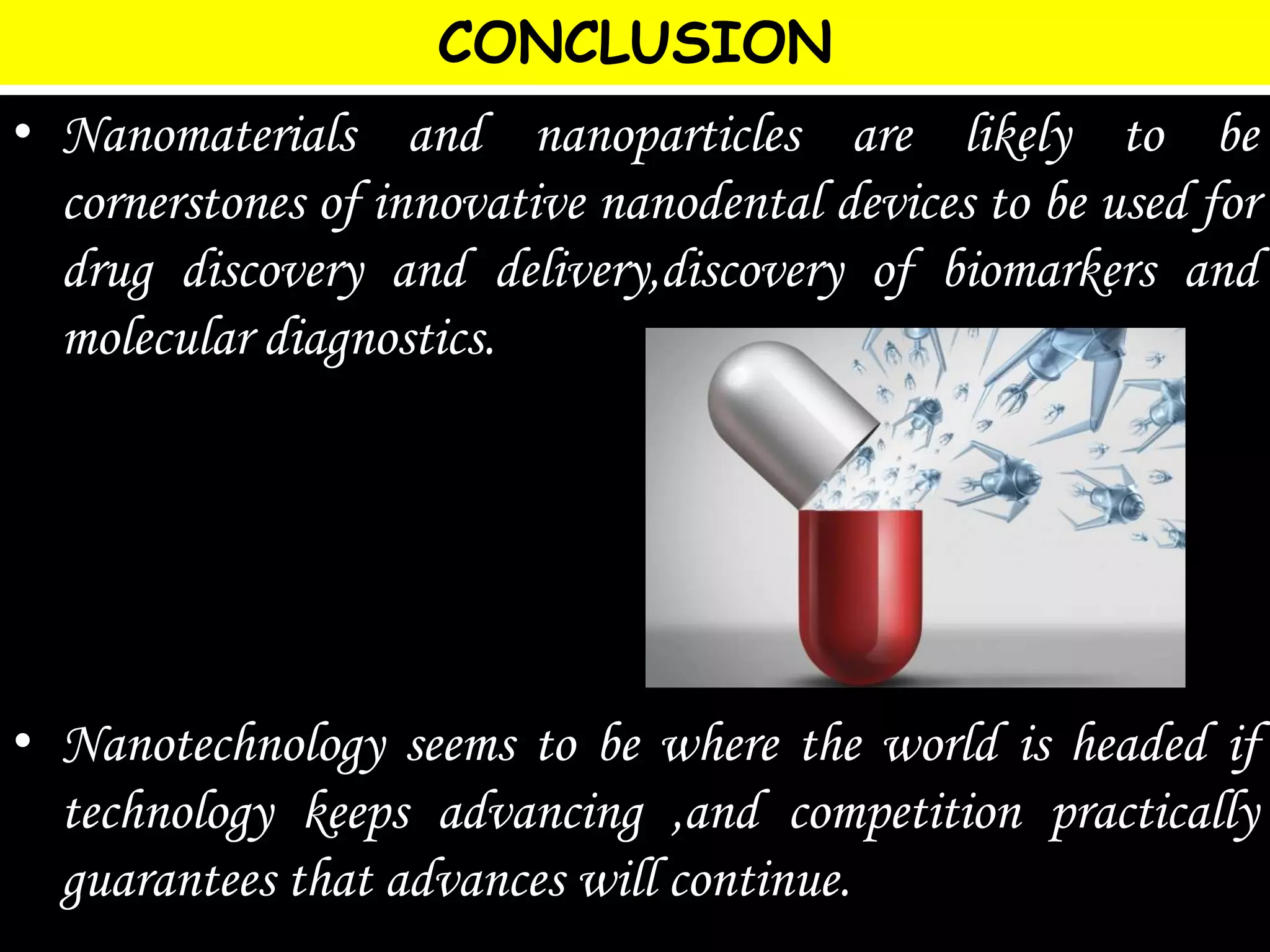
CONCLUSION
• Nanomaterials and nanoparticles are likely to be
cornerstones of innovative nanodental devices to be used for
drug discovery and delivery,discovery of biomarkers and
molecular diagnostics.
• Nanotechnology seems to be where the world is headed if
technology keeps advancing ,and competition practically
guarantees that advances will continue.
It will open a huge range of opportunities of benefit for
both the dentist and the patient.
 Although the achievement of the goal of complete
regeneration of the periodontal tissues for periodontal
management may not be possible for many years,recent
developments in nanomaterials and nanotechnology have
provided a promising insight into the commercial
applications of nanomaterials in the management of
periodontal diseases.
REFERENCES
1. Nanotechnology and its role in the management of periodontal diseases ,Ling xue
kong, zheng peng, si-dong li & p. Mark bartold periodontology 2000, vol. 40,
2006, 184–196
2. Chen HF, Chen YQ, Orr BG, Holl MMB, Majoros I, Clarkson BH. Nanoscale
probing of the enamel nanorod surface using polyamidoamine dendrimers.
Langmuir 2004: 20: 4168–4171.
3. Chen HF, Clarkson BH, Sun K, Mansfield JF. Self-assembly of synthetic
hydroxyapatite nanorods into an enamel prism-like structure. J Colloid Interf
Sci 2005: 288: 97–103.
4. Murugan R, Ramakrishna S. Bioresorbable composite bone paste using
polysaccharide based nano hydroxyapatite. Biomaterials 2004: 25: 3829–3835.
5. Pinon-Segundo E, Ganem-Quintanar A, Alonso-Perez V, Quintanar-Guerrero D.
Preparation and characterization of triclosan nanoparticles for periodontal
treatment. IntJ Pharm 2005: 294: 217–232.
6. Freitas RA.Nanomedicine basic capabilities, George Town TX:Landes Bioscience:
1999,p345-47.
7. R. Hemalatha, A. Sivachandran, R. Kalaivani,Nanotechnology - A
Novel Strategy in Periodontal Regeneration? Int J Med Biosci.
2014; 3(1): 26 – 28
8. Freitas RA Jr . Nanodentistry. J Am Dent Assoc 2000;
131:1559- 66.
9. Ira Gupta,Shankar T Gokhale,Rohit Gupta,Shweta,Journal of
dental sciences and research,Nanorobots in Periodontics Vol
4,Issue 2,Page 6-9.
10. Arora Komal,Dodwad Vidya,Puri Nikhil,Nanodentistry:A
Paradigm Shift-from Fiction to reality,Journal of Pharmaceutical
and Biomedical Sciences,Vol.22,Issue 22.
11. Nanorobotics, wikepedia, free encyclopedia.
12. www.nanowerk.com
Small things have big
impact
THANK YOU

"NANOTECHNOLOGY IN PERIODONTICS"

  • 1.
  • 2.
    CONTENTS INTRODUCTION HISTORICAL BACKGROUND VARIOUS NANOPARTICLES HOWARE NANOPRODUCTS MADE? GENERATIONS OF NANOSTRUCTURES PROPERTIES OF NANOMATERIALS SELF ASSEMBLY APPLICATIONS IN PERIODONTICS NANOROBOTS CONCLUSION REFERENCES
  • 4.
    INTRODUCTION  The word‘’Nano’’ means ‘’dwarf’’ and in greek prefix signifies a ‘’billionth’’.  Nanotechnology can be defined as science and engineering involved in the design, synthesis, characterization and application of materials and devices whose smallest functional organization in atleast one dimensions is on the nanometer scale.  It symbolizes inexpensive control of the structure of matter based on molecule-molecule control of products and byproducts.
  • 6.
    Historical Background  In1959 Richard.P. Feynman(Father of Nanotechnology) proposed using machine tools,which,in turn,would be used to make still smaller tools, and so on all the way down to the molecular level.  He suggested that such nanomachines,nanorobots and nanodevices could ultimately be used to develop a wide range atomically precise microscopic instrumentation and manufacturing tools.
  • 7.
     The term‘’nanotechnology’’ was coined by Nario Taniguchi in 1975.  In 1979,Eric Drexler encountered Freynman’s 1959 talk ‘’There’s Plenty of room at the bottom’’.  In 1986 Drexler recoined the term ‘’Nanotechnology’’ and wrote ‘’Engines of Creation’’:The Coming Era of Nanotechnology, a book to popularize the potentials of molecular nanotechnology.
  • 8.
  • 9.
  • 10.
  • 11.
    HOW ARE NANOPRODUCTSMADE? • TOP- DOWN: From top(larger) to bottom(smaller). These seek to create smaller devices by using larger ones to direct their assembly. • BOTTOM-UP: From bottom(smaller) to top(larger). These seek to begin with a nanometric structure(molecule) and creating a mechanism larger than original structure.
  • 12.
  • 13.
    Properties of Nanomaterials •They exhibit much better performance properties than traditional materials which include enhanced toughness, stiffness, improved transparency, increased scratch, abrasion, solvent and heat resistance,  decreased gas permeability .
  • 14.
    In addition. nanoparticleshave special properties,including  chemical, optical, magnetic, and electro-optical properties,which differ from those of either individual molecules or bulk species. Nanoparticles have a greater surface area per unit mass than compared with larger particles .
  • 15.
    SELF ASSEMBLY  Self-assemblyis an important feature of nanostructured materials. Here, an autonomous organization of components into patterns or structures without human intervention occurs .  The whole process can be manipulated and facilitated through the correct setting of conditions.
  • 16.
    • Self assemblycan be classified into Static dynamic processes The most commonly used in self assembly are the polyelectrolyte materials Cationic polyelectrolytes Anionic polyelectrolytes The most universal driving forces for establishing self- assembly are electrostatic attractive interactions between positive and negative charges.
  • 17.
    INORGANIC NANOMATERIALS EITHER CURRENTLYIN USE OR UNDER DEVELOPMENT • Semiconductor nanoparticles • Metal nanoparticles • Metal oxide nanoparticles • Silica nanoparticles • Polyoxometalates • Gold nanocrystals
  • 18.
    APPLICATIONS IN PERIODONTICS(LingXue Kong et al 2006) NANOMATERIALS FOR PERIODONTAL DRUG DELIVERY • Nano particles owing to their small size,penetrate regions that may be inaccessible to other delivery systems such as periodontal pocket subgingivally. • Pinon-Segundo et al produced and characterized triclosan loaded nanoparticles by the emulsification- diffusion process, in an attempt to obtain a novel delivery system adequate for the treatment of periodontal disease.
  • 19.
     These behaveas homogenous polymer matrix-delivery system,with the drug molecularly dispersed.  It was concluded that triclosan nanoparticles were able to effect a reduction of the inflammation of the experimental sites.  Timed release of drugs may occur from biodegradable nanospheres.This also allows for site specific drug delivery. triclosan-nanoparticles
  • 20.
    NANOMATERIALS FOR PERIODONTALTISSUE ENGINEERING Currently tissue engineering concepts for periodontal regeneration are focused on the utilization of synthetic scaffolds for cell delivery purposes. Non biologic self assembling nanosystems will automatically undergo pre-specified assemblies much in line with known biologic systems associated with cells and tissues.
  • 21.
    • It ispossible to create polymer scaffolds in the future for cell seeding,growth factor delivery and tissue engineering via nanodevices implanted to sites of tissue damage.  Dentinal Hypersensitivity  Oral Hygiene and halitosis(Mouthwashes)  Oral anaesthetic induction NANOROBOTS
  • 22.
    It metabolizes trappedorganic matter into harmless and odourless vapours and performing continuous calculus debridement. These invisibly small dentifrobots(1-10microns),would safely deactivate themselves if swallowed. Further the devices would identify particles of food,plaque and lift them from teeth to be rinsed away. Being suspended in liquid and able to swim about,devices would be able to reach surfaces beyond reach of toothbrush bristles or the fibres of floss. Act as continuous barrier to halitosis.
  • 23.
    Bone replacement materials Nanotechnologyaims to emulate bone for orthopedic and dental applications and more particularly for development of nanobone. Chitsazi MT et al 2011 evaluated the efficacy of autogenus bone graft and nanocystalline hydroxyapatite in the management of human intrabony periodontal defects. Complete resorption of the nanohydroxyapatite had taken place after 12 weeks.
  • 24.
    Osseous defects inperiodontal surgeries can be treated by using HA nanoparticles. TRADE NAMES OSTIM(Oscartis GmbH,Obernburg-Germany)HA VITOSSO(Orthovita,Inc.,Great Valley Parkway Malvern USA)HA+TCP NanoOSSTM(Angstrom Medica,USA)HA
  • 25.
    NANOTECHNOLOGY IN PERIODONTAL BIOFILMS Nanotechnology has been used to study dynamics of demineralisation and mineralisation process in dental caries by use of atomic force microscopy.  It detects bacterial induced demineralisation at ultrastructural level(Cross et al 2006)  To determine effect of biofilm culture on cell envelope,proteome of P.gingivalis cell surface proteins like RgpA were increased in biofilm cells.
  • 26.
    • Old culturetechniques might have been gold standard till date but are slow and detects only cultivable bacteria. • Nanotechnology selectively removes periodontal and cariogenic bacteria while preserving normal flora in a more targeted and protective approach.
  • 27.
    Tooth Repair • Chenet al made use of nanotechnology to simulate the natural biomineralisation process to create the hardest tissue in the body,the enamel by using highly organized microarchitectural units of nanorod like calcium HA crystals arranged parallel to each other.
  • 28.
    Implants • These implantsuse nanometer scale calcium phosphate to create a more complex topography on the implant surface,which as proven to expediate osseointegration by 150% thereby decreasing the length of treatment by one to three months.
  • 29.
  • 30.
    • Ostman etal.2008 in a 1 year clinical and radigraphic study concluded that immediate loading of NanoTite Prevail implants seems to be a viable option in implant rehabiltation,at least when a good initial fixation is achieved.
  • 31.
    • Further periimplantitissurface conditioning with citric acid improves nanoparticle sized hydroxyaopatite blended clot adhesion to titanium implant surfaces.(Ghamal Abdel- Ghaffar and Iacono 2013)
  • 32.
  • 33.
    NANOROBOTS Nanorobotics is thetechnology of creating machines or robots at or close to the microscopic scale of nanometers A nanorobot can be defined as an ‘an artificially fabricated objects able to freely diffuse in the human body and interact with specific cell at the molecular level by itself. These miniature robots are so small that they can be introduced into the body either through the vascular system or through the catheters, and with external guidance and monitoring by the surgeon they can perform precise intracellular surgery,which would not be possible with the human hand.
  • 34.
    COMPOSITION OF NANOROBOTS Diameterof about 0.5 to 3 microns and will be constructed out of parts with dimensions in range of 1-100nms. Carbon-principle elements in the form of diamond Other light elements Hydrogen Sulfur Oxygen Nitrogen Fluorine  Silicon will be used for special purposes in nanoscale gears and other components.
  • 35.
    The exterior ofa nanorobot will likely be constructed of carbon atoms because of its inert properties and strength. Supersmooth surfaces will lessen the likelihood of triggering the body’s immune system ,allowing the nanorobots to go about their business unimpeded. Glucose or natural body sugars and oxygen might be a source for propulsion and the nanorobot will have other biochemical or molecular parts depending on its task.
  • 36.
    MECHANISM OF ACTIONOF NANOROBOTS.  The powering of nanorobots can be done by metabolizing local glucose and oxygen for energy and externally supplied acoustic energy.  Other sources of energy within the body can also be used to supply the necessary energy for the devices.
  • 37.
    Communication Is an importantfundamental capability of nanorobots.  They must be able to communicate with each other in order to monitor collective task progress and pass along relevant sensory, messaging,navigational and other operational data. Light signals(optical nanosensors) Chemical signals(chemical nanosensors)monitoring glucose level.
  • 38.
    Nanorobots function willbe controlled by simple onboard computers capable of performing about 1000 or fewer computations per second. Communication with the device can be achieved by broadcast-type acoustic signaling. Navigational network may be installed in the body providing accuracy to all passing nanorobots that interrogate them,wanting to know their location. This will help to keep track of various devices in the body.
  • 39.
    Nanorobots are ableto distinguish different cell types by checking their surface antigens. They are accomplished by use of chemotactic sensors keyed to the specific antigens on the target cells.  When the task of nanorobot is completed they can be retrieved by allowing them to exfuse themselves via the human excretory channels.  These can also be removed by active scavenger systems.
  • 40.
    It is Freitas(1999)who described how medical nanorobots might use specific motility mechanisms to crawl or swim through human tissues with navigational recession, cytopenetration and use any of a multitude of techniques to monitor, interrupt or alter nervecells. Nanorobots act similar way in dentistry too.
  • 41.
    HOW SAFE ARETHESE NANOROBOTS? • The non pyrogenic nanorobots used in vivo are bulk Teflon, carbon powder and monocystal sapphire. • Pyrogenic nanorobots are alumina ,silica,copper,zinc. • Nanorobots may release inhibitors,antagonists or down regulators for the pyrogenic pathway in a targeted fashion to selectively absorb the endogenous pyrogens,chemically modify them and then release them back into the body in a harmless inactivated form.
  • 42.
    APPLICATION OF NANOROBOTSIN PERIODONTICS Oral hygiene and halitosis Bone replacement materials Oral anaesthesia induction Dental Hypersenstivity
  • 43.
    ORAL ANAESTHETIC INDUCTION Toinduce oral anaesthesia in the era of nanodentistry, dental professional will instill a colloidal suspension containing millions of active analgesic micrometer sized dental nanorobots on the patients gingiva. Nanorobotic analgesics offer  greater patient comfort  Reduced anxiety  no-needle  greater selectivity
  • 44.
    Control ability ofthe analgesic effect, fast and completely reversible action Avoidance of most of side effects and complications.
  • 45.
    MOUTHWASHES  Subocclusally dwellingnanorobotic dentrifice(dentifrobots) delivered by mouthwash or toothpaste could patrol all supragingival and subgingival surfaces at least once a day and destroy pathogenic bacteria residing in plaque and elsewhere,while allowing harmless oral microflora to fluorish in health ecosystem.
  • 46.
    Dental Hypersenstivity • Naturalhypersensitive teeth have eight times higher surface density of dentinal tubules and diameter with twice as large as nonsensitive teeth. • Reconstructive dental nanorobots, using native biological materials,could selectively and precisely occlude specific tubules within minutes,offering patients a quick and permanent cure as the nanorobots pass through the journey of enamel -dentin reaches pulp. • Once installed in the pulp,having established control over nerve impulse traffic,dental nanorobots may be commanded by the dentist to shut down the sensitivity in the selected tooth that requires treatment • Dentrifice:Protein technologiesRecaldent CPP-ACP nanocomplexes.
  • 48.
    DISADVANTAGES OF NANOROBOTS •Design Cost is high • Installation cost is high • Maintenance is difficult • Hard to interface,customize, and design,complex. • Social challenges of ethics,public acceptance,regulation and human safety. • Precise positioning and assembly of molecular scale parts. • Biocompatibility.
  • 49.
    ADVANTAGES OF NANOROBOTS •Build up artificial immunity • Treat and fight disease and restore lost tissue at the cellular level. • No harm with their use • Bloodless surgery.
  • 50.
    CONCLUSION • Nanomaterials andnanoparticles are likely to be cornerstones of innovative nanodental devices to be used for drug discovery and delivery,discovery of biomarkers and molecular diagnostics. • Nanotechnology seems to be where the world is headed if technology keeps advancing ,and competition practically guarantees that advances will continue.
  • 51.
    It will opena huge range of opportunities of benefit for both the dentist and the patient.  Although the achievement of the goal of complete regeneration of the periodontal tissues for periodontal management may not be possible for many years,recent developments in nanomaterials and nanotechnology have provided a promising insight into the commercial applications of nanomaterials in the management of periodontal diseases.
  • 52.
    REFERENCES 1. Nanotechnology andits role in the management of periodontal diseases ,Ling xue kong, zheng peng, si-dong li & p. Mark bartold periodontology 2000, vol. 40, 2006, 184–196 2. Chen HF, Chen YQ, Orr BG, Holl MMB, Majoros I, Clarkson BH. Nanoscale probing of the enamel nanorod surface using polyamidoamine dendrimers. Langmuir 2004: 20: 4168–4171. 3. Chen HF, Clarkson BH, Sun K, Mansfield JF. Self-assembly of synthetic hydroxyapatite nanorods into an enamel prism-like structure. J Colloid Interf Sci 2005: 288: 97–103. 4. Murugan R, Ramakrishna S. Bioresorbable composite bone paste using polysaccharide based nano hydroxyapatite. Biomaterials 2004: 25: 3829–3835. 5. Pinon-Segundo E, Ganem-Quintanar A, Alonso-Perez V, Quintanar-Guerrero D. Preparation and characterization of triclosan nanoparticles for periodontal treatment. IntJ Pharm 2005: 294: 217–232. 6. Freitas RA.Nanomedicine basic capabilities, George Town TX:Landes Bioscience: 1999,p345-47.
  • 53.
    7. R. Hemalatha,A. Sivachandran, R. Kalaivani,Nanotechnology - A Novel Strategy in Periodontal Regeneration? Int J Med Biosci. 2014; 3(1): 26 – 28 8. Freitas RA Jr . Nanodentistry. J Am Dent Assoc 2000; 131:1559- 66. 9. Ira Gupta,Shankar T Gokhale,Rohit Gupta,Shweta,Journal of dental sciences and research,Nanorobots in Periodontics Vol 4,Issue 2,Page 6-9. 10. Arora Komal,Dodwad Vidya,Puri Nikhil,Nanodentistry:A Paradigm Shift-from Fiction to reality,Journal of Pharmaceutical and Biomedical Sciences,Vol.22,Issue 22. 11. Nanorobotics, wikepedia, free encyclopedia. 12. www.nanowerk.com
  • 54.
    Small things havebig impact THANK YOU