INTRODUCTION
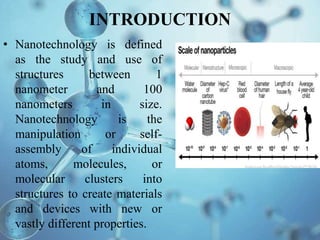
• Nanotechnology is defined
as the study and use of
structures between 1
nanometer and 100
nanometers in size.
Nanotechnology is the
manipulation or self-
assembly of individual
atoms, molecules, or
molecular clusters into
structures to create materials
and devices with new or
vastly different properties.
NANOTECHNOLOGY - APPLICATIONS
NANOTECHNOLOGY IN FOOD
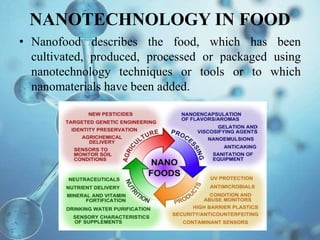
• Nanofood describes the food, which has been
cultivated, produced, processed or packaged using
nanotechnology techniques or tools or to which
nanomaterials have been added.
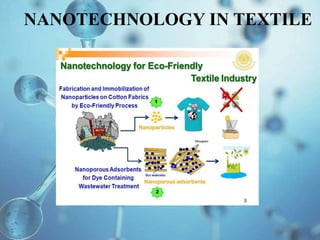
NANOTECHNOLOGY IN TEXTILE
NANOTECHNOLOGY IN ENVIRONMENT
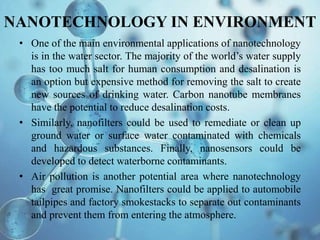
• One of the main environmental applications of nanotechnology
is in the water sector. The majority of the world’s water supply
has too much salt for human consumption and desalination is
an option but expensive method for removing the salt to create
new sources of drinking water. Carbon nanotube membranes
have the potential to reduce desalination costs.
• Similarly, nanofilters could be used to remediate or clean up
ground water or surface water contaminated with chemicals
and hazardous substances. Finally, nanosensors could be
developed to detect waterborne contaminants.
• Air pollution is another potential area where nanotechnology
has great promise. Nanofilters could be applied to automobile
tailpipes and factory smokestacks to separate out contaminants
and prevent them from entering the atmosphere.
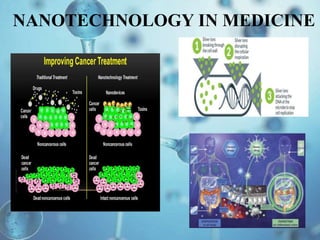
NANOTECHNOLOGY IN MEDICINE
NANOTECHNOLOGY- LIMITATIONS
• Lack of proper knowledge about the
effect of nanoparticles on biochemical
pathways and processes of human body.
• The toxicity associated with Nano
medicine that might pose a serious threat
to the human beings and environment.
CONCLUSION
The nanotechnology development at present is in its
initial stages in India. In an area such as tuberculosis and
rural health, clean water, renewable energy food packaging
and agriculture fertilizers. There is also a danger in viewing
nanotechnology as a solution to developing country
challenges. Therefore, it is necessary to develop responsible
nanotechnology governance, encourage the development of
appropriate products targeted to help meet critical human
development needs, and include methods for addressing the
safety, appropriateness; accessibility and sustainability of
nanotechnology meet the developing countries like India.

Nanotechnology ppt

  • 2.
    INTRODUCTION • Nanotechnology isdefined as the study and use of structures between 1 nanometer and 100 nanometers in size. Nanotechnology is the manipulation or self- assembly of individual atoms, molecules, or molecular clusters into structures to create materials and devices with new or vastly different properties.
  • 3.
  • 4.
    NANOTECHNOLOGY IN FOOD •Nanofood describes the food, which has been cultivated, produced, processed or packaged using nanotechnology techniques or tools or to which nanomaterials have been added.
  • 5.
  • 6.
    NANOTECHNOLOGY IN ENVIRONMENT •One of the main environmental applications of nanotechnology is in the water sector. The majority of the world’s water supply has too much salt for human consumption and desalination is an option but expensive method for removing the salt to create new sources of drinking water. Carbon nanotube membranes have the potential to reduce desalination costs. • Similarly, nanofilters could be used to remediate or clean up ground water or surface water contaminated with chemicals and hazardous substances. Finally, nanosensors could be developed to detect waterborne contaminants. • Air pollution is another potential area where nanotechnology has great promise. Nanofilters could be applied to automobile tailpipes and factory smokestacks to separate out contaminants and prevent them from entering the atmosphere.
  • 7.
  • 8.
    NANOTECHNOLOGY- LIMITATIONS • Lackof proper knowledge about the effect of nanoparticles on biochemical pathways and processes of human body. • The toxicity associated with Nano medicine that might pose a serious threat to the human beings and environment.
  • 9.
    CONCLUSION The nanotechnology developmentat present is in its initial stages in India. In an area such as tuberculosis and rural health, clean water, renewable energy food packaging and agriculture fertilizers. There is also a danger in viewing nanotechnology as a solution to developing country challenges. Therefore, it is necessary to develop responsible nanotechnology governance, encourage the development of appropriate products targeted to help meet critical human development needs, and include methods for addressing the safety, appropriateness; accessibility and sustainability of nanotechnology meet the developing countries like India.