a branch of Nano Science

     MUSAB BIN ABDUL QADIR
          P0935030
NANOMICROBIOLOGY


NANOMICROBIOLOGY
Introduction
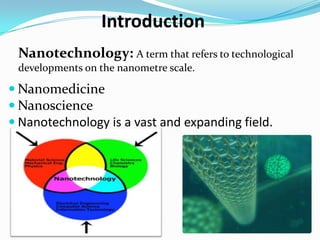
 Nanotechnology: A term that refers to technological
 developments on the nanometre scale.

 Nanomedicine
 Nanoscience
 Nanotechnology is a vast and expanding field.
NANOSCIENCE

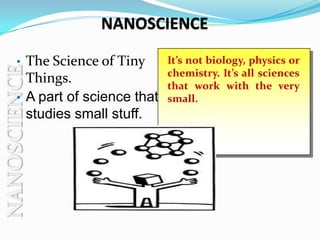
     •    The Science of Tiny      It’s not biology, physics or
NANOSCIENCE

                                   chemistry. It’s all sciences
          Things.                  that work with the very
     •    A part of science that   small.
          studies small stuff.
Nanomicrobiology.
Application of nanobiotechnolgy
in microbiology termed as
           Nanomicrobiology.
It is the exploration of microbial
cells on the nanoscale.
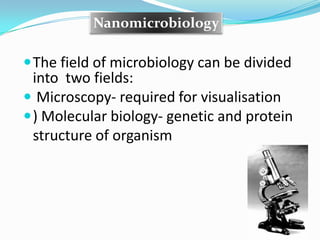
Nanomicrobiology

 The field of microbiology can be divided
  into two fields:
 Microscopy- required for visualisation
 ) Molecular biology- genetic and protein
  structure of organism
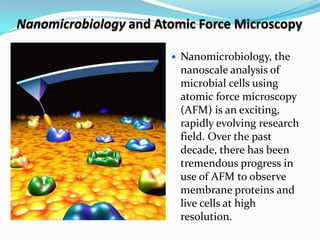
Nanomicrobiology and Atomic Force Microscopy

                          Nanomicrobiology, the
                           nanoscale analysis of
                           microbial cells using
                           atomic force microscopy
                           (AFM) is an exciting,
                           rapidly evolving research
                           field. Over the past
                           decade, there has been
                           tremendous progress in
                           use of AFM to observe
                           membrane proteins and
                           live cells at high
                           resolution.
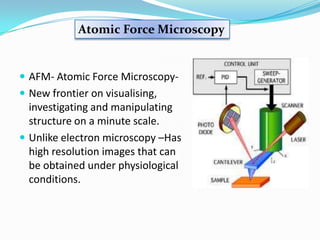
Atomic Force Microscopy


 AFM- Atomic Force Microscopy-
 New frontier on visualising,
  investigating and manipulating
  structure on a minute scale.
 Unlike electron microscopy –Has
  high resolution images that can
  be obtained under physiological
  conditions.
Atomic Force Microscopy

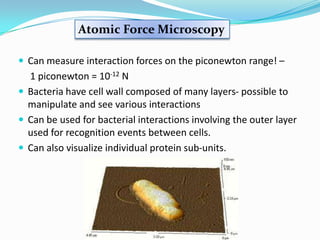
 Can measure interaction forces on the piconewton range! –
  1 piconewton = 10-12 N
 Bacteria have cell wall composed of many layers- possible to
  manipulate and see various interactions
 Can be used for bacterial interactions involving the outer layer
  used for recognition events between cells.
 Can also visualize individual protein sub-units.
Atomic Force Microscopy

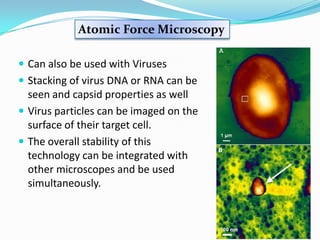
 Can also be used with Viruses
 Stacking of virus DNA or RNA can be
  seen and capsid properties as well
 Virus particles can be imaged on the
  surface of their target cell.
 The overall stability of this
  technology can be integrated with
  other microscopes and be used
  simultaneously.
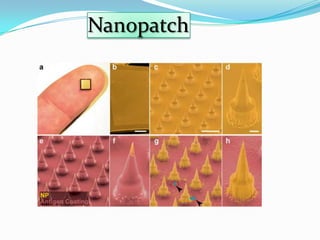
Nanopatch
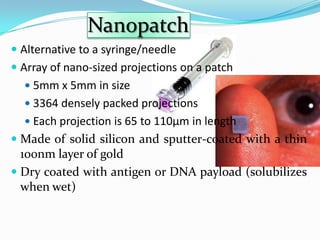
 Alternative to a syringe/needle
 Array of nano-sized projections on a patch
   5mm x 5mm in size
   3364 densely packed projections
   Each projection is 65 to 110µm in length
 Made of solid silicon and sputter-coated with a thin
  100nm layer of gold
 Dry coated with antigen or DNA payload (solubilizes
  when wet)
Nanopatch
How does it work?
•Applied to your skin
•Projections penetrate into the upper epidermal layers of
your skin
•Once contact is made with your skin the vaccine solubilizes
Why would we use Nanopatch?
•Believed to improve efficacy and efficiency of vaccination
Advantages of Nano Patch:
    Needle phobia       Pain-free    Cheap
    Prevent spread of infectious disease
Current Research
•Nanopatch-Targeted Skin Vaccination against West Nile Virus and
Chikungunya Virus in Mice
•Designing a Nanopatch to match the spatial arrangements of APCs on
skin.
Nanopatch
Silver Nanoparticles
What are Silver Nanoparticles?
 Tiny silver particles 1-100nm
 Toxicity towards bacteria is size dependant
 Most effective when 1-10nm in size
How does it work?
 Silver tends to have a higher affinity to react with
  phosphorus and sulfur compounds
 Binds to sulfur-containing proteins in the cell membrane,
  cellular proteins and phosphorous containing compounds
  (i.e. DNA)
 Leads to morphological distortion of cells and impairment
  of bacterial cycles, resulting in cell death
Nanomicrobiology Applications
   in Energy production
Nanomicrobiology Applications

 Production of energy fuels by microbial conversions
  along with renewable energy sources can literally
  replace the need for oil.
 Microorganisms use raw organic materials to make fuel.
 Can be used to yield- ethanol, hydrogen, methane,
  lipids, and butanol.
Nanomicrobiology Applications

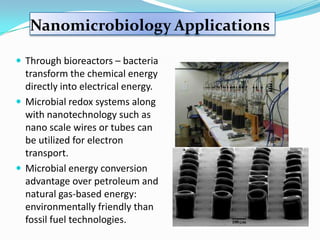
 Through bioreactors – bacteria
  transform the chemical energy
  directly into electrical energy.
 Microbial redox systems along
  with nanotechnology such as
  nano scale wires or tubes can
  be utilized for electron
  transport.
 Microbial energy conversion
  advantage over petroleum and
  natural gas-based energy:
  environmentally friendly than
  fossil fuel technologies.
Nanotechnology also encompasses many other fields:
 Medicine
 Robotics
 Genetics
 Computer science
 Etc...


           The future is nano!

Nanomicrobiology

  • 1.
    a branch ofNano Science MUSAB BIN ABDUL QADIR P0935030 NANOMICROBIOLOGY NANOMICROBIOLOGY
  • 2.
    Introduction Nanotechnology: Aterm that refers to technological developments on the nanometre scale.  Nanomedicine  Nanoscience  Nanotechnology is a vast and expanding field.
  • 3.
    NANOSCIENCE • The Science of Tiny It’s not biology, physics or NANOSCIENCE chemistry. It’s all sciences Things. that work with the very • A part of science that small. studies small stuff.
  • 4.
    Nanomicrobiology. Application of nanobiotechnolgy inmicrobiology termed as Nanomicrobiology. It is the exploration of microbial cells on the nanoscale.
  • 5.
    Nanomicrobiology  The fieldof microbiology can be divided into two fields:  Microscopy- required for visualisation  ) Molecular biology- genetic and protein structure of organism
  • 6.
    Nanomicrobiology and AtomicForce Microscopy  Nanomicrobiology, the nanoscale analysis of microbial cells using atomic force microscopy (AFM) is an exciting, rapidly evolving research field. Over the past decade, there has been tremendous progress in use of AFM to observe membrane proteins and live cells at high resolution.
  • 7.
    Atomic Force Microscopy AFM- Atomic Force Microscopy-  New frontier on visualising, investigating and manipulating structure on a minute scale.  Unlike electron microscopy –Has high resolution images that can be obtained under physiological conditions.
  • 8.
    Atomic Force Microscopy Can measure interaction forces on the piconewton range! – 1 piconewton = 10-12 N  Bacteria have cell wall composed of many layers- possible to manipulate and see various interactions  Can be used for bacterial interactions involving the outer layer used for recognition events between cells.  Can also visualize individual protein sub-units.
  • 9.
    Atomic Force Microscopy Can also be used with Viruses  Stacking of virus DNA or RNA can be seen and capsid properties as well  Virus particles can be imaged on the surface of their target cell.  The overall stability of this technology can be integrated with other microscopes and be used simultaneously.
  • 10.
    Nanopatch  Alternative toa syringe/needle  Array of nano-sized projections on a patch  5mm x 5mm in size  3364 densely packed projections  Each projection is 65 to 110µm in length  Made of solid silicon and sputter-coated with a thin 100nm layer of gold  Dry coated with antigen or DNA payload (solubilizes when wet)
  • 11.
    Nanopatch How does itwork? •Applied to your skin •Projections penetrate into the upper epidermal layers of your skin •Once contact is made with your skin the vaccine solubilizes Why would we use Nanopatch? •Believed to improve efficacy and efficiency of vaccination Advantages of Nano Patch: Needle phobia Pain-free Cheap Prevent spread of infectious disease Current Research •Nanopatch-Targeted Skin Vaccination against West Nile Virus and Chikungunya Virus in Mice •Designing a Nanopatch to match the spatial arrangements of APCs on skin.
  • 12.
  • 13.
    Silver Nanoparticles What areSilver Nanoparticles?  Tiny silver particles 1-100nm  Toxicity towards bacteria is size dependant  Most effective when 1-10nm in size How does it work?  Silver tends to have a higher affinity to react with phosphorus and sulfur compounds  Binds to sulfur-containing proteins in the cell membrane, cellular proteins and phosphorous containing compounds (i.e. DNA)  Leads to morphological distortion of cells and impairment of bacterial cycles, resulting in cell death
  • 14.
    Nanomicrobiology Applications in Energy production
  • 15.
    Nanomicrobiology Applications  Productionof energy fuels by microbial conversions along with renewable energy sources can literally replace the need for oil.  Microorganisms use raw organic materials to make fuel.  Can be used to yield- ethanol, hydrogen, methane, lipids, and butanol.
  • 16.
    Nanomicrobiology Applications  Throughbioreactors – bacteria transform the chemical energy directly into electrical energy.  Microbial redox systems along with nanotechnology such as nano scale wires or tubes can be utilized for electron transport.  Microbial energy conversion advantage over petroleum and natural gas-based energy: environmentally friendly than fossil fuel technologies.
  • 17.
    Nanotechnology also encompassesmany other fields:  Medicine  Robotics  Genetics  Computer science  Etc... The future is nano!