Cell-based
biosensors
LECTURE OF SUBJECT :
Dr. sharafaldin Al-musawi
College of Biotecholgy
LECTURE: 7
SUBJECT: Biosensors & Biochips
LEVEL: 4
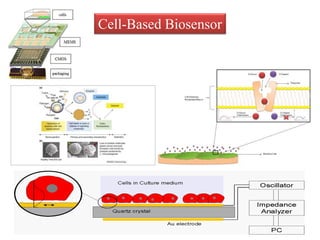
Cell-Based Biosensor
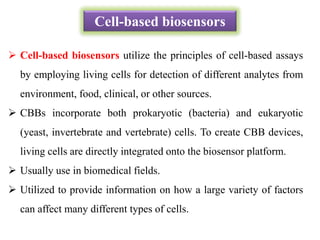
Cell-based biosensors
 Cell-based biosensors utilize the principles of cell-based assays
by employing living cells for detection of different analytes from
environment, food, clinical, or other sources.
 CBBs incorporate both prokaryotic (bacteria) and eukaryotic
(yeast, invertebrate and vertebrate) cells. To create CBB devices,
living cells are directly integrated onto the biosensor platform.
 Usually use in biomedical fields.
 Utilized to provide information on how a large variety of factors
can affect many different types of cells.
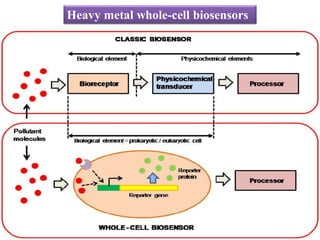
Heavy metal whole-cell biosensors
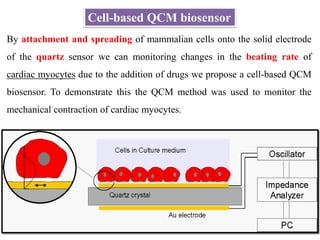
By attachment and spreading of mammalian cells onto the solid electrode
of the quartz sensor we can monitoring changes in the beating rate of
cardiac myocytes due to the addition of drugs we propose a cell-based QCM
biosensor. To demonstrate this the QCM method was used to monitor the
mechanical contraction of cardiac myocytes.
Cell-based QCM biosensor
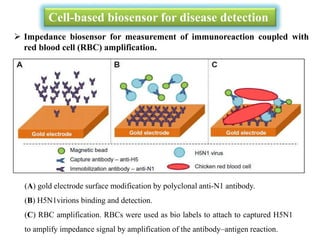
Cell-based biosensor for disease detection
 Impedance biosensor for measurement of immunoreaction coupled with
red blood cell (RBC) amplification.
(A) gold electrode surface modification by polyclonal anti-N1 antibody.
(B) H5N1virions binding and detection.
(C) RBC amplification. RBCs were used as bio labels to attach to captured H5N1
to amplify impedance signal by amplification of the antibody–antigen reaction.
 The main advantage of using cell based biosensor for probing
biotoxins and toxic agents is that cell based biosensor respond to
the toxic exposures in the manner related to actual physiologic
responses of the vulnerable subjects.
 The results obtained from cell based biosensor are based on the
toxin-cell interactions, and therefore, reveal functional information
(such as mode of action, toxic potency, bioavailability, target tissue
or organ, etc.) about the toxin.
Cell-based biosensor for toxin detection
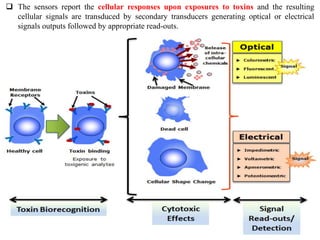
 The sensors report the cellular responses upon exposures to toxins and the resulting
cellular signals are transduced by secondary transducers generating optical or electrical
signals outputs followed by appropriate read-outs.
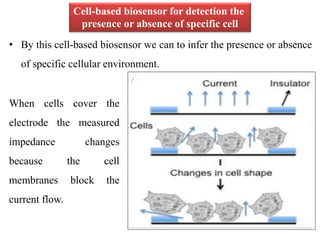
• By this cell-based biosensor we can to infer the presence or absence
of specific cellular environment.
Cell-based biosensor for detection the
presence or absence of specific cell
When cells cover the
electrode the measured
impedance changes
because the cell
membranes block the
current flow.
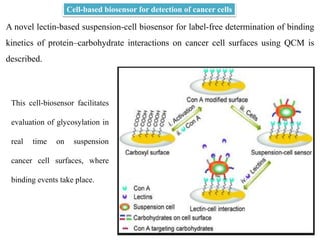
A novel lectin-based suspension-cell biosensor for label-free determination of binding
kinetics of protein–carbohydrate interactions on cancer cell surfaces using QCM is
described.
Cell-based biosensor for detection of cancer cells
This cell-biosensor facilitates
evaluation of glycosylation in
real time on suspension
cancer cell surfaces, where
binding events take place.
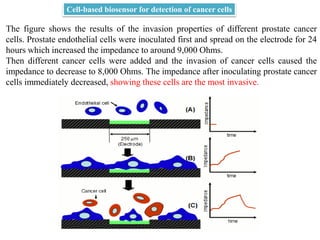
The figure shows the results of the invasion properties of different prostate cancer
cells. Prostate endothelial cells were inoculated first and spread on the electrode for 24
hours which increased the impedance to around 9,000 Ohms.
Then different cancer cells were added and the invasion of cancer cells caused the
impedance to decrease to 8,000 Ohms. The impedance after inoculating prostate cancer
cells immediately decreased, showing these cells are the most invasive.
Cell-based biosensor for detection of cancer cells

cell-based-biosensor-lecture-7

  • 1.
    Cell-based biosensors LECTURE OF SUBJECT: Dr. sharafaldin Al-musawi College of Biotecholgy LECTURE: 7 SUBJECT: Biosensors & Biochips LEVEL: 4
  • 2.
  • 3.
    Cell-based biosensors  Cell-basedbiosensors utilize the principles of cell-based assays by employing living cells for detection of different analytes from environment, food, clinical, or other sources.  CBBs incorporate both prokaryotic (bacteria) and eukaryotic (yeast, invertebrate and vertebrate) cells. To create CBB devices, living cells are directly integrated onto the biosensor platform.  Usually use in biomedical fields.  Utilized to provide information on how a large variety of factors can affect many different types of cells.
  • 4.
  • 5.
    By attachment andspreading of mammalian cells onto the solid electrode of the quartz sensor we can monitoring changes in the beating rate of cardiac myocytes due to the addition of drugs we propose a cell-based QCM biosensor. To demonstrate this the QCM method was used to monitor the mechanical contraction of cardiac myocytes. Cell-based QCM biosensor
  • 6.
    Cell-based biosensor fordisease detection  Impedance biosensor for measurement of immunoreaction coupled with red blood cell (RBC) amplification. (A) gold electrode surface modification by polyclonal anti-N1 antibody. (B) H5N1virions binding and detection. (C) RBC amplification. RBCs were used as bio labels to attach to captured H5N1 to amplify impedance signal by amplification of the antibody–antigen reaction.
  • 7.
     The mainadvantage of using cell based biosensor for probing biotoxins and toxic agents is that cell based biosensor respond to the toxic exposures in the manner related to actual physiologic responses of the vulnerable subjects.  The results obtained from cell based biosensor are based on the toxin-cell interactions, and therefore, reveal functional information (such as mode of action, toxic potency, bioavailability, target tissue or organ, etc.) about the toxin. Cell-based biosensor for toxin detection
  • 8.
     The sensorsreport the cellular responses upon exposures to toxins and the resulting cellular signals are transduced by secondary transducers generating optical or electrical signals outputs followed by appropriate read-outs.
  • 9.
    • By thiscell-based biosensor we can to infer the presence or absence of specific cellular environment. Cell-based biosensor for detection the presence or absence of specific cell When cells cover the electrode the measured impedance changes because the cell membranes block the current flow.
  • 10.
    A novel lectin-basedsuspension-cell biosensor for label-free determination of binding kinetics of protein–carbohydrate interactions on cancer cell surfaces using QCM is described. Cell-based biosensor for detection of cancer cells This cell-biosensor facilitates evaluation of glycosylation in real time on suspension cancer cell surfaces, where binding events take place.
  • 11.
    The figure showsthe results of the invasion properties of different prostate cancer cells. Prostate endothelial cells were inoculated first and spread on the electrode for 24 hours which increased the impedance to around 9,000 Ohms. Then different cancer cells were added and the invasion of cancer cells caused the impedance to decrease to 8,000 Ohms. The impedance after inoculating prostate cancer cells immediately decreased, showing these cells are the most invasive. Cell-based biosensor for detection of cancer cells