TEAM MEMBERS
KEERTHANA L
VEER
S.AISHWARYA
T.G THIRU VUDAIYAN
B.NANDANA
PUTTA RACHANA
PES1201802318
PES120180
PES1201802286
PES1201802328
PES1201802304
PES1201802306
INTRODUCTION
• Namma Metro is a rapid transit system serving the city of Bengaluru, India.
• The Bangalore Metro Rail Corporation Ltd (BMRCL), a joint venture of Government of India and
Government of Karnataka, built and operates the Namma Metro.
• The power output is supplied by 750 volt direct current through third rail. Namma Metro was the second
rail transport system in India to use 750 V DC third rail traction.
• It is the fourth longest operational metro network in India.
• It also contains the first underground metro line in South India.
INTRODUCTION
• The Delhi Metro Rail Corporation Limited (DMRC) prepared and submitted the detailed project for the first
phase of the Namma Metro project to the BMRCL in May 2003. The project was approved by the Union
Cabinet on 25 April 2006.
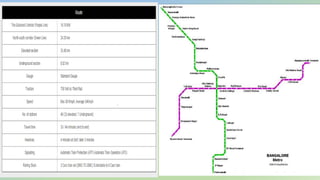
• The metro network consists of two colour-coded lines, with a total length of 42.3 kilometres serving 40
stations.
• The budget proposed for Phase I was ₹11,609 crore.
• The project has an East-West corridor - 18.10 km long, starting from Baiyappanahalli in the East and
terminating at Mysore Road terminal in the West and a 24.20 km North-South corridor commencing at
Nagasandra in the North and terminating at Puttenahalli in the South.
• The metro has an average daily ridership of 400,000 passengers.
INTRODUCTION
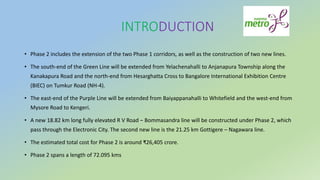
• Phase 2 includes the extension of the two Phase 1 corridors, as well as the construction of two new lines.
• The south-end of the Green Line will be extended from Yelachenahalli to Anjanapura Township along the
Kanakapura Road and the north-end from Hesarghatta Cross to Bangalore International Exhibition Centre
(BIEC) on Tumkur Road (NH-4).
• The east-end of the Purple Line will be extended from Baiyappanahalli to Whitefield and the west-end from
Mysore Road to Kengeri.
• A new 18.82 km long fully elevated R V Road – Bommasandra line will be constructed under Phase 2, which
pass through the Electronic City. The second new line is the 21.25 km Gottigere – Nagawara line.
• The estimated total cost for Phase 2 is around ₹26,405 crore.
• Phase 2 spans a length of 72.095 kms
Services offered in nammametro
• Safe parking for vehicles.
• Quick & Safety Ride.
• Reserved Seats.
• Smart Cards.
• Security Check.
• Sufficient Trains.
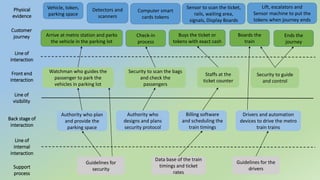
Physical
evidence
Customer
journey
Line of
interaction
Line of
visibility
Front end
interaction
Back stage of
interaction
Line of
internal
interaction
Support
process
Arrive at metro station and parks
the vehicle in the parking lot
Watchman who guides the
passenger to park the
vehicles in parking lot
Authority who
designs and plans
security protocol
Drivers and automation
devices to drive the metro
train trains
Vehicle, token,
parking space
Billing software
and scheduling the
train timings
Check-in
process
Security to scan the bags
and check the
passengers
Authority who plan
and provide the
parking space
Detectors and
scanners
Buys the ticket or
tokens with exact cash
Staffs at the
ticket counter
Security to guide
and control
Computer smart
cards tokens
Ends the
journey
Sensor to scan the ticket,
rails, waiting area,
signals, Display Boards
Lift, escalators and
Sensor machine to put the
tokens when journey ends
Boards the
train
Guidelines for
security
Data base of the train
timings and ticket
rates
Guidelines for the
drivers
PROBLEM DEFINITION
▸ Purchasing of tickets through cash alone is not
feasible for the commuters due to lack of
alternative payment methods.
OBJECTIVE
▸ To reduce the issues faced by with the available
payment options in purchasing tickets.
10
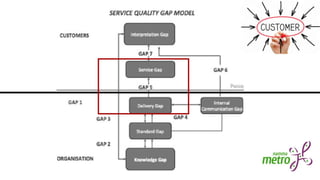
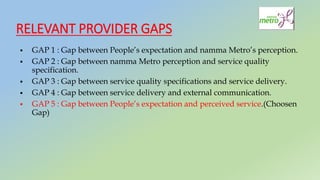
RELEVANT PROVIDER GAPS
 GAP 1 : Gap between People’s expectation and namma Metro’s perception.
 GAP 2 : Gap between namma Metro perception and service quality
specification.
 GAP 3 : Gap between service quality specifications and service delivery.
 GAP 4 : Gap between service delivery and external communication.
 GAP 5 : Gap between People’s expectation and perceived service.(Choosen
Gap)
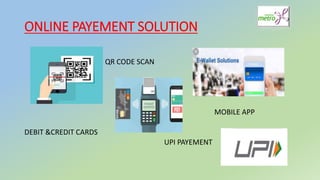
ONLINE PAYEMENT SOLUTION
QR CODE SCAN
MOBILE APP
DEBIT &CREDIT CARDS
UPI PAYEMENT
CONCLUSION:
• Majority of the commuters are satisfied with Bengaluru metro because of
the services provided.
• The metro is made economical in nature.
• The various factors which increased commuter’s satisfaction include
services like cleanliness at metro stations, well informed staff, adequate
display inside the coaches and proper reservations of seats for senior
citizens.
• They must improve on better parking facility, better display of route maps,
• Going cash less in metro stations, vending machines for tickets to skip lines.
They should consider to area were metro is required in their future
projects.
Thank
you…!

Namma Metro sm.ppt

  • 2.
    TEAM MEMBERS KEERTHANA L VEER S.AISHWARYA T.GTHIRU VUDAIYAN B.NANDANA PUTTA RACHANA PES1201802318 PES120180 PES1201802286 PES1201802328 PES1201802304 PES1201802306
  • 3.
    INTRODUCTION • Namma Metrois a rapid transit system serving the city of Bengaluru, India. • The Bangalore Metro Rail Corporation Ltd (BMRCL), a joint venture of Government of India and Government of Karnataka, built and operates the Namma Metro. • The power output is supplied by 750 volt direct current through third rail. Namma Metro was the second rail transport system in India to use 750 V DC third rail traction. • It is the fourth longest operational metro network in India. • It also contains the first underground metro line in South India.
  • 4.
    INTRODUCTION • The DelhiMetro Rail Corporation Limited (DMRC) prepared and submitted the detailed project for the first phase of the Namma Metro project to the BMRCL in May 2003. The project was approved by the Union Cabinet on 25 April 2006. • The metro network consists of two colour-coded lines, with a total length of 42.3 kilometres serving 40 stations. • The budget proposed for Phase I was ₹11,609 crore. • The project has an East-West corridor - 18.10 km long, starting from Baiyappanahalli in the East and terminating at Mysore Road terminal in the West and a 24.20 km North-South corridor commencing at Nagasandra in the North and terminating at Puttenahalli in the South. • The metro has an average daily ridership of 400,000 passengers.
  • 6.
    INTRODUCTION • Phase 2includes the extension of the two Phase 1 corridors, as well as the construction of two new lines. • The south-end of the Green Line will be extended from Yelachenahalli to Anjanapura Township along the Kanakapura Road and the north-end from Hesarghatta Cross to Bangalore International Exhibition Centre (BIEC) on Tumkur Road (NH-4). • The east-end of the Purple Line will be extended from Baiyappanahalli to Whitefield and the west-end from Mysore Road to Kengeri. • A new 18.82 km long fully elevated R V Road – Bommasandra line will be constructed under Phase 2, which pass through the Electronic City. The second new line is the 21.25 km Gottigere – Nagawara line. • The estimated total cost for Phase 2 is around ₹26,405 crore. • Phase 2 spans a length of 72.095 kms
  • 7.
    Services offered innammametro • Safe parking for vehicles. • Quick & Safety Ride. • Reserved Seats. • Smart Cards. • Security Check. • Sufficient Trains.
  • 8.
    Physical evidence Customer journey Line of interaction Line of visibility Frontend interaction Back stage of interaction Line of internal interaction Support process Arrive at metro station and parks the vehicle in the parking lot Watchman who guides the passenger to park the vehicles in parking lot Authority who designs and plans security protocol Drivers and automation devices to drive the metro train trains Vehicle, token, parking space Billing software and scheduling the train timings Check-in process Security to scan the bags and check the passengers Authority who plan and provide the parking space Detectors and scanners Buys the ticket or tokens with exact cash Staffs at the ticket counter Security to guide and control Computer smart cards tokens Ends the journey Sensor to scan the ticket, rails, waiting area, signals, Display Boards Lift, escalators and Sensor machine to put the tokens when journey ends Boards the train Guidelines for security Data base of the train timings and ticket rates Guidelines for the drivers
  • 9.
    PROBLEM DEFINITION ▸ Purchasingof tickets through cash alone is not feasible for the commuters due to lack of alternative payment methods. OBJECTIVE ▸ To reduce the issues faced by with the available payment options in purchasing tickets.
  • 10.
  • 11.
    RELEVANT PROVIDER GAPS GAP 1 : Gap between People’s expectation and namma Metro’s perception.  GAP 2 : Gap between namma Metro perception and service quality specification.  GAP 3 : Gap between service quality specifications and service delivery.  GAP 4 : Gap between service delivery and external communication.  GAP 5 : Gap between People’s expectation and perceived service.(Choosen Gap)
  • 12.
    ONLINE PAYEMENT SOLUTION QRCODE SCAN MOBILE APP DEBIT &CREDIT CARDS UPI PAYEMENT
  • 13.
    CONCLUSION: • Majority ofthe commuters are satisfied with Bengaluru metro because of the services provided. • The metro is made economical in nature. • The various factors which increased commuter’s satisfaction include services like cleanliness at metro stations, well informed staff, adequate display inside the coaches and proper reservations of seats for senior citizens. • They must improve on better parking facility, better display of route maps, • Going cash less in metro stations, vending machines for tickets to skip lines. They should consider to area were metro is required in their future projects.
  • 15.