MYELOPROLIFERATIVE DISORDERS www.freelivedoctor.com
Hematopoietic Neoplasms overview The majority of hematopoietic neoplasms can be classified and characterized according to three characteristics: 1. Lineage: Lymphoid vs. Myelogenous 2. Survival: Acute vs. Chronic 3. Blood/Bone Marrow vs. Tissue Virtually any combination of these characteristics can occur. www.freelivedoctor.com
Lymphoid vs Myelogenous Lymphoid neoplasms : derived from the CFU-L or one of its more differentiated derivatives can exhibit B-cell lineage or T-cell lineage Myelogenous neoplasms : derived from the CFU-GEMM or one of the differentiated derivatives of the CFU-GEMM can exhibit features of multiple lineages www.freelivedoctor.com
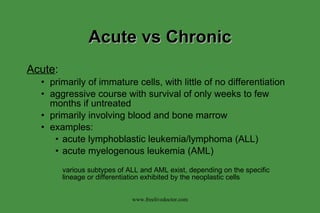
Acute vs Chronic Acute : primarily of immature cells, with little of no differentiation aggressive course with survival of only weeks to few months if untreated primarily involving blood and bone marrow examples: acute lymphoblastic leukemia/lymphoma (ALL) acute myelogenous leukemia (AML) various subtypes of ALL and AML exist, depending on the specific lineage or differentiation exhibited by the neoplastic cells www.freelivedoctor.com
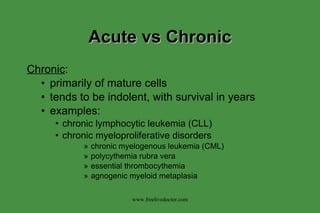
Acute vs Chronic Chronic : primarily of mature cells tends to be indolent, with survival in years examples: chronic lymphocytic leukemia (CLL) chronic myeloproliferative disorders chronic myelogenous leukemia (CML) polycythemia rubra vera essential thrombocythemia agnogenic myeloid metaplasia www.freelivedoctor.com
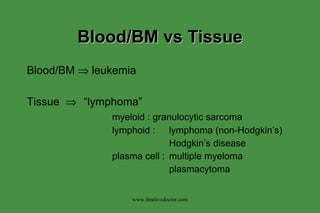
Blood/BM vs Tissue Blood/BM    leukemia Tissue   “lymphoma” myeloid : granulocytic sarcoma lymphoid : lymphoma (non-Hodgkin’s) Hodgkin’s disease plasma cell : multiple myeloma plasmacytoma www.freelivedoctor.com
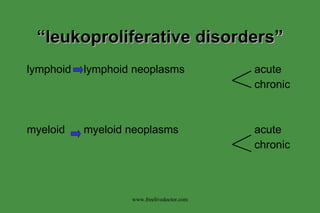
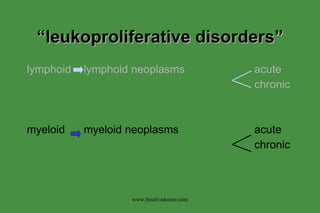
“ leukoproliferative disorders” lymphoid lymphoid neoplasms acute chronic myeloid myeloid neoplasms acute chronic www.freelivedoctor.com
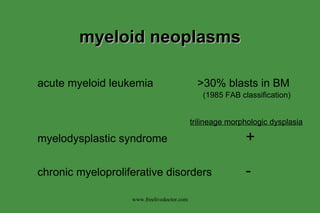
myeloid neoplasms acute myeloid leukemia >30% blasts in BM   (1985 FAB classification)   trilineage morphologic dysplasia myelodysplastic syndrome   +   chronic myeloproliferative disorders   -  www.freelivedoctor.com
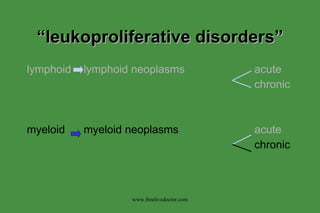
“ leukoproliferative disorders” lymphoid lymphoid neoplasms acute chronic myeloid myeloid neoplasms acute chronic www.freelivedoctor.com
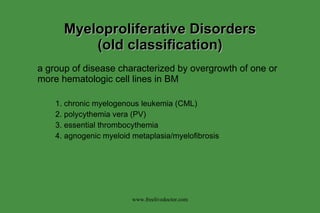
Myeloproliferative Disorders (old classification) a group of disease characterized by overgrowth of one or more hematologic cell lines in BM 1. chronic myelogenous leukemia (CML) 2. polycythemia vera (PV) 3. essential thrombocythemia 4. agnogenic myeloid metaplasia/myelofibrosis www.freelivedoctor.com
Chronic Myeloproliferative Disorders (new WHO classification) 1. polycythemia vera 2. chronic idiopathic myelofibrosis 3. essential thrombocytosis 4. chronic myeloid leukemia (CML) 5. [chronic neutrophilic leukemia] 6. [chronic eosinophilic leukemia] 7. [hypereosinophilic syndrome] “ myelodysplastic/myeloproliferative diseases” juvenile myelomonocytic leukemia atypical chronic myeloid leukemia (lacking t(9;22)) chronic myelomocytic leukemia www.freelivedoctor.com
Chronic Myelogenous Leukemia (CML) second most common leukemia middle aged  excess number of “mature” and immature granulocytes all stages of maturation in bone marrow chromosomal abnormality Philadelphia chromosome   t(9;22) www.freelivedoctor.com
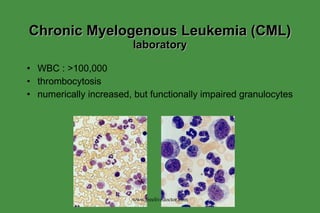
Chronic Myelogenous Leukemia (CML)  laboratory WBC : >100,000 thrombocytosis numerically increased, but functionally impaired granulocytes www.freelivedoctor.com
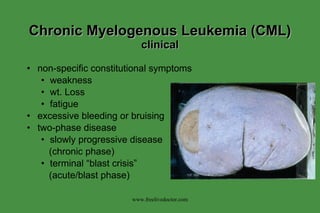
Chronic Myelogenous Leukemia (CML)  clinical non-specific constitutional symptoms weakness wt. Loss fatigue excessive bleeding or bruising two-phase disease slowly progressive disease (chronic phase) terminal “blast crisis” (acute/blast phase) www.freelivedoctor.com
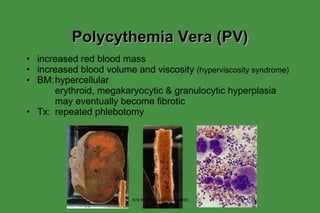
Polycythemia Vera (PV) increased red blood mass increased blood volume and viscosity  (hyperviscosity syndrome) BM: hypercellular erythroid, megakaryocytic & granulocytic hyperplasia may eventually become fibrotic Tx: repeated phlebotomy www.freelivedoctor.com
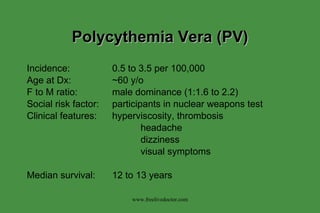
Polycythemia Vera (PV) Incidence: 0.5 to 3.5 per 100,000 Age at Dx: ~60 y/o F to M ratio: male dominance (1:1.6 to 2.2) Social risk factor: participants in nuclear weapons test Clinical features: hyperviscosity, thrombosis headache dizziness visual symptoms Median survival: 12 to 13 years www.freelivedoctor.com
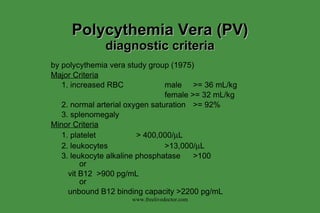
Polycythemia Vera (PV) diagnostic criteria by polycythemia vera study group (1975) Major Criteria 1. increased RBC male >= 36 mL/kg female >= 32 mL/kg 2. normal arterial oxygen saturation >= 92% 3. splenomegaly Minor Criteria 1. platelet > 400,000/  L 2. leukocytes >13,000/  L 3. leukocyte alkaline phosphatase >100 or   vit B12  >900 pg/mL or   unbound B12 binding capacity >2200 pg/mL www.freelivedoctor.com
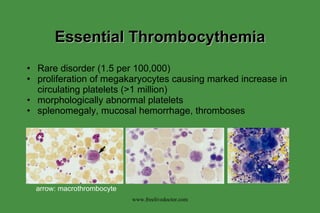
Essential Thrombocythemia Rare disorder (1.5 per 100,000) proliferation of megakaryocytes causing marked increase in circulating platelets (>1 million) morphologically abnormal platelets splenomegaly, mucosal hemorrhage, thromboses arrow: macrothrombocyte www.freelivedoctor.com
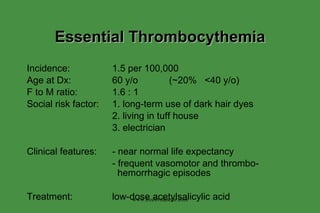
Essential Thrombocythemia Incidence: 1.5 per 100,000 Age at Dx: 60 y/o  (~20%  <40 y/o) F to M ratio: 1.6 : 1 Social risk factor: 1. long-term use of dark hair dyes 2. living in tuff house 3. electrician Clinical features: - near normal life expectancy - frequent vasomotor and thrombo-   hemorrhagic episodes Treatment: low-dose acetylsalicylic acid www.freelivedoctor.com
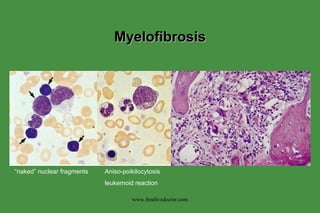
Myelofibrosis bone marrow fibrosis fibroblasts may be “innocent bystanders” fibrosis probably driven by neoplastic megakaryocytes middle aged adults (50-60 y/o) extramedullary hematopoiesis (spleen, liver) may occur as an extension of CML or PV abnormal peripheral RBCs (“tear-drop” & nucleated RBCs) immature WBC and abnormal platelets infection, thrombosis and hemorrhage as a major complication www.freelivedoctor.com
Myelofibrosis Aniso-poikilocytosis leukemoid reaction “ naked” nuclear fragments www.freelivedoctor.com
www.freelivedoctor.com
Acute Myelogenous Leukemia (AML) 60% of acute leukemias arises from myeloid stem cell line young to middle aged adults pallor & petechiae may be initial presentation lymphadenopathy/splenomegaly may or may not be present no fever unless secondary infection www.freelivedoctor.com
Acute Myelogenous Leukemia Incidence: ~3.6 per 100,000 people per year M:F = 4.4:3.0 (M>F) incidence increases with age   1.7 in <65 yrs age group 16.2 in >65 yrs age group Etiology: heredity, radiation, chemical and other occupational exposures and drugs have been implicated increased incidence in trisomy 21, XXY, trisomy 13, Fanconi anemia, Bloom syndrome, ataxia telangiectasia, Kostmann syndrome www.freelivedoctor.com
AML clinical symptoms non-specific symptoms that are consequence of anemia leukocytosis leukopenia or leukocyte dysfunction thrombocytopenia fatigue (most common) anorexia and wt. loss fever with or without infection (~10%) bleeding, easy bruising (~5%) www.freelivedoctor.com
AML physical findings hepatosplenomegaly, lymphadenopathy, sternal tenderness, evidence of infection and hemorrhage acute promyelocytic leukemia (APL) gastrointestinal bleeding intrapulmonary hemorrhage intracranial hemorrhage monocytic AML coagulopathy www.freelivedoctor.com
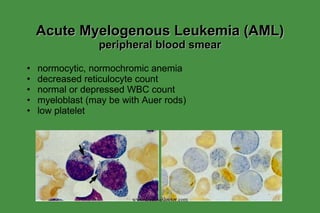
Acute Myelogenous Leukemia (AML)  peripheral blood smear normocytic, normochromic anemia decreased reticulocyte count normal or depressed WBC count myeloblast (may be with Auer rods) low platelet www.freelivedoctor.com
AML hematologic findings anemia:  can be severe usually normocytic normochromic reduced reticulocyte count    low erythropoiesis short erythrocyte survival    accelerated destruction median WBC count: 15,000/ μ L platelet count: <100,000/ μ L (~75% of patients) <25,000/ μ L (~25% of patients) morphologic and functional platelet abnormalities www.freelivedoctor.com
Acute Myelogenous Leukemia (AML)  special stains myeloperoxidase (MP) Sudan black B (SBB) nonspecific esterase (NSE) chloroacetate esterase (CLE) periodic acid Schiff (PAS) www.freelivedoctor.com
AML classification Until 2000, the diagnosis of AML was established by the presence of  ≥30% myeloblasts in the marrow and further classified based on morphology and cytochemistry according to the French-American-British (FAB) schema, which includes eight major subtypes, M0 to M7. The 2001 WHO classification modified the FAB schema by reducing the number of blasts required for a diagnosis and incorporating molecular (including cytogenetic), morphologic (multilineage dysplasia), and clinical features (such as prior hematologic disorder) in defining disease entities.  www.freelivedoctor.com
Acute Myelogenous Leukemia (AML)  WHO classification (2001) I. AML with rucurrent genetic abnormalities AML with t(8;21)(q22;q22);AML1(CBF α )/ETO AML with abnormal bone marrow eosinophils [inv(16)(p13q22) or t(16;16)(p13;q22);CBF β /MYH11] Acute promyelocytic leukemia [AML with t(15;17)(q22;q12) (PML/RAR α  and variants] AML with 11q23 (MLL) abnormalities II. AML with multilineage dysplasia Following a myelodysplastic syndrome or myelodysplastic syndrome/myeloproliferative disorder Without antecedent myelodysplastic syndrome III. AML and myelodysplastic syndromes, therapy-related Alkylating agent-related Topoisomerase type II inhibitor-related Other types IV. AML not otherwise categorized AML minimally differentiated AML without maturation AML with maturation Acute myelomonocytic leukemia Acute monoblastic and monocytic leukemia Acute erythroid leukemia Acute megakaryoblastic leukemia Acute basophilic leukemia Acute panmyelosis with myelofibrosis Myeloid sarcoma ≥ 20% myeloblasts in blood and/or bone marrow = AML positive myeloperoxidase reaction in >3% of blasts = AML (↔ ALL) www.freelivedoctor.com
Acute Myelogenous Leukemia (AML)  FAB classification (1985) M0 : minimally differentiated acute myeloblastic leukemia M1 : acute myeloblastic leukemia without maturation M2 : acute myeloblastic leukemia with maturation M3 : acute promyelocytic leukemia M4 : acute myelomonocytic leukemia M5 : acute monocytic leukemia M6 : erythroleukemia M7 : acute megakaryoblastic leukemia www.freelivedoctor.com
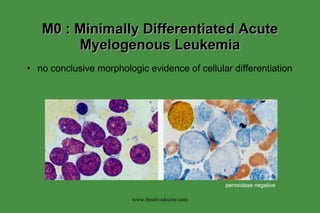
M0 : Minimally Differentiated Acute Myelogenous Leukemia no conclusive morphologic evidence of cellular differentiation www.freelivedoctor.com peroxidase negative
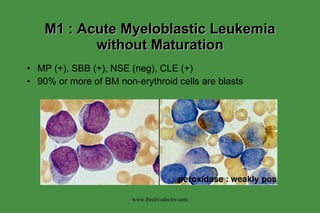
M1 : Acute Myeloblastic Leukemia without Maturation MP (+), SBB (+), NSE (neg), CLE (+) 90% or more of BM non-erythroid cells are blasts www.freelivedoctor.com
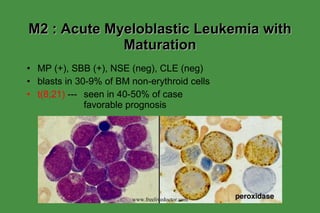
M2 : Acute Myeloblastic Leukemia with Maturation MP (+), SBB (+), NSE (neg), CLE (neg) blasts in 30-9% of BM non-erythroid cells t(8;21)  --- seen in 40-50% of case favorable prognosis www.freelivedoctor.com
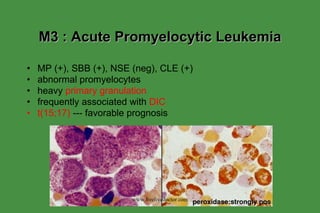
M3 : Acute Promyelocytic Leukemia MP (+), SBB (+), NSE (neg), CLE (+) abnormal promyelocytes heavy  primary granulation frequently associated with  DIC t(15;17)  --- favorable prognosis www.freelivedoctor.com
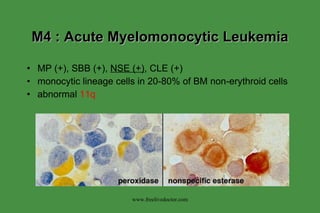
M4 : Acute Myelomonocytic Leukemia MP (+), SBB (+),  NSE (+) , CLE (+) monocytic lineage cells in 20-80% of BM non-erythroid cells abnormal  11q www.freelivedoctor.com
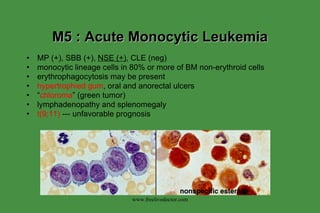
M5 : Acute Monocytic Leukemia MP (+), SBB (+),  NSE (+) , CLE (neg) monocytic lineage cells in 80% or more of BM non-erythroid cells erythrophagocytosis may be present hypertrophied gum , oral and anorectal ulcers “ chloroma ” (green tumor) lymphadenopathy and splenomegaly t(9;11)  --- unfavorable prognosis www.freelivedoctor.com
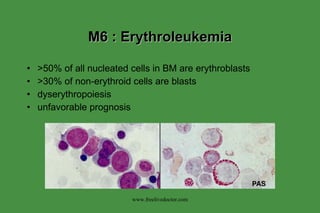
M6 : Erythroleukemia >50% of all nucleated cells in BM are erythroblasts >30% of non-erythroid cells are blasts dyserythropoiesis unfavorable prognosis www.freelivedoctor.com
M7 : Acute Megakaryoblastic Leukemia MP (neg), SBB (neg) associated with  trisomy 21 unfavorable prognosis www.freelivedoctor.com
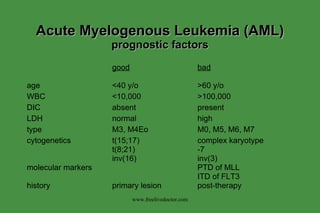
Acute Myelogenous Leukemia (AML)  prognostic factors good bad age <40 y/o >60 y/o WBC <10,000 >100,000 DIC absent present LDH normal high type M3, M4Eo M0, M5, M6, M7 cytogenetics t(15;17) complex karyotype t(8;21) -7 inv(16) inv(3) molecular markers PTD of MLL ITD of FLT3 history primary lesion post-therapy www.freelivedoctor.com
www.freelivedoctor.com

Myeloproliferative

  • 1.
  • 2.
    Hematopoietic Neoplasms overviewThe majority of hematopoietic neoplasms can be classified and characterized according to three characteristics: 1. Lineage: Lymphoid vs. Myelogenous 2. Survival: Acute vs. Chronic 3. Blood/Bone Marrow vs. Tissue Virtually any combination of these characteristics can occur. www.freelivedoctor.com
  • 3.
    Lymphoid vs MyelogenousLymphoid neoplasms : derived from the CFU-L or one of its more differentiated derivatives can exhibit B-cell lineage or T-cell lineage Myelogenous neoplasms : derived from the CFU-GEMM or one of the differentiated derivatives of the CFU-GEMM can exhibit features of multiple lineages www.freelivedoctor.com
  • 4.
    Acute vs ChronicAcute : primarily of immature cells, with little of no differentiation aggressive course with survival of only weeks to few months if untreated primarily involving blood and bone marrow examples: acute lymphoblastic leukemia/lymphoma (ALL) acute myelogenous leukemia (AML) various subtypes of ALL and AML exist, depending on the specific lineage or differentiation exhibited by the neoplastic cells www.freelivedoctor.com
  • 5.
    Acute vs ChronicChronic : primarily of mature cells tends to be indolent, with survival in years examples: chronic lymphocytic leukemia (CLL) chronic myeloproliferative disorders chronic myelogenous leukemia (CML) polycythemia rubra vera essential thrombocythemia agnogenic myeloid metaplasia www.freelivedoctor.com
  • 6.
    Blood/BM vs TissueBlood/BM  leukemia Tissue  “lymphoma” myeloid : granulocytic sarcoma lymphoid : lymphoma (non-Hodgkin’s) Hodgkin’s disease plasma cell : multiple myeloma plasmacytoma www.freelivedoctor.com
  • 7.
    “ leukoproliferative disorders”lymphoid lymphoid neoplasms acute chronic myeloid myeloid neoplasms acute chronic www.freelivedoctor.com
  • 8.
    “ leukoproliferative disorders”lymphoid lymphoid neoplasms acute chronic myeloid myeloid neoplasms acute chronic www.freelivedoctor.com
  • 9.
    myeloid neoplasms acutemyeloid leukemia >30% blasts in BM (1985 FAB classification) trilineage morphologic dysplasia myelodysplastic syndrome + chronic myeloproliferative disorders - www.freelivedoctor.com
  • 10.
    “ leukoproliferative disorders”lymphoid lymphoid neoplasms acute chronic myeloid myeloid neoplasms acute chronic www.freelivedoctor.com
  • 11.
    Myeloproliferative Disorders (oldclassification) a group of disease characterized by overgrowth of one or more hematologic cell lines in BM 1. chronic myelogenous leukemia (CML) 2. polycythemia vera (PV) 3. essential thrombocythemia 4. agnogenic myeloid metaplasia/myelofibrosis www.freelivedoctor.com
  • 12.
    Chronic Myeloproliferative Disorders(new WHO classification) 1. polycythemia vera 2. chronic idiopathic myelofibrosis 3. essential thrombocytosis 4. chronic myeloid leukemia (CML) 5. [chronic neutrophilic leukemia] 6. [chronic eosinophilic leukemia] 7. [hypereosinophilic syndrome] “ myelodysplastic/myeloproliferative diseases” juvenile myelomonocytic leukemia atypical chronic myeloid leukemia (lacking t(9;22)) chronic myelomocytic leukemia www.freelivedoctor.com
  • 13.
    Chronic Myelogenous Leukemia(CML) second most common leukemia middle aged excess number of “mature” and immature granulocytes all stages of maturation in bone marrow chromosomal abnormality Philadelphia chromosome t(9;22) www.freelivedoctor.com
  • 14.
    Chronic Myelogenous Leukemia(CML) laboratory WBC : >100,000 thrombocytosis numerically increased, but functionally impaired granulocytes www.freelivedoctor.com
  • 15.
    Chronic Myelogenous Leukemia(CML) clinical non-specific constitutional symptoms weakness wt. Loss fatigue excessive bleeding or bruising two-phase disease slowly progressive disease (chronic phase) terminal “blast crisis” (acute/blast phase) www.freelivedoctor.com
  • 16.
    Polycythemia Vera (PV)increased red blood mass increased blood volume and viscosity (hyperviscosity syndrome) BM: hypercellular erythroid, megakaryocytic & granulocytic hyperplasia may eventually become fibrotic Tx: repeated phlebotomy www.freelivedoctor.com
  • 17.
    Polycythemia Vera (PV)Incidence: 0.5 to 3.5 per 100,000 Age at Dx: ~60 y/o F to M ratio: male dominance (1:1.6 to 2.2) Social risk factor: participants in nuclear weapons test Clinical features: hyperviscosity, thrombosis headache dizziness visual symptoms Median survival: 12 to 13 years www.freelivedoctor.com
  • 18.
    Polycythemia Vera (PV)diagnostic criteria by polycythemia vera study group (1975) Major Criteria 1. increased RBC male >= 36 mL/kg female >= 32 mL/kg 2. normal arterial oxygen saturation >= 92% 3. splenomegaly Minor Criteria 1. platelet > 400,000/  L 2. leukocytes >13,000/  L 3. leukocyte alkaline phosphatase >100 or vit B12 >900 pg/mL or unbound B12 binding capacity >2200 pg/mL www.freelivedoctor.com
  • 19.
    Essential Thrombocythemia Raredisorder (1.5 per 100,000) proliferation of megakaryocytes causing marked increase in circulating platelets (>1 million) morphologically abnormal platelets splenomegaly, mucosal hemorrhage, thromboses arrow: macrothrombocyte www.freelivedoctor.com
  • 20.
    Essential Thrombocythemia Incidence:1.5 per 100,000 Age at Dx: 60 y/o (~20% <40 y/o) F to M ratio: 1.6 : 1 Social risk factor: 1. long-term use of dark hair dyes 2. living in tuff house 3. electrician Clinical features: - near normal life expectancy - frequent vasomotor and thrombo- hemorrhagic episodes Treatment: low-dose acetylsalicylic acid www.freelivedoctor.com
  • 21.
    Myelofibrosis bone marrowfibrosis fibroblasts may be “innocent bystanders” fibrosis probably driven by neoplastic megakaryocytes middle aged adults (50-60 y/o) extramedullary hematopoiesis (spleen, liver) may occur as an extension of CML or PV abnormal peripheral RBCs (“tear-drop” & nucleated RBCs) immature WBC and abnormal platelets infection, thrombosis and hemorrhage as a major complication www.freelivedoctor.com
  • 22.
    Myelofibrosis Aniso-poikilocytosis leukemoidreaction “ naked” nuclear fragments www.freelivedoctor.com
  • 23.
  • 24.
    Acute Myelogenous Leukemia(AML) 60% of acute leukemias arises from myeloid stem cell line young to middle aged adults pallor & petechiae may be initial presentation lymphadenopathy/splenomegaly may or may not be present no fever unless secondary infection www.freelivedoctor.com
  • 25.
    Acute Myelogenous LeukemiaIncidence: ~3.6 per 100,000 people per year M:F = 4.4:3.0 (M>F) incidence increases with age 1.7 in <65 yrs age group 16.2 in >65 yrs age group Etiology: heredity, radiation, chemical and other occupational exposures and drugs have been implicated increased incidence in trisomy 21, XXY, trisomy 13, Fanconi anemia, Bloom syndrome, ataxia telangiectasia, Kostmann syndrome www.freelivedoctor.com
  • 26.
    AML clinical symptomsnon-specific symptoms that are consequence of anemia leukocytosis leukopenia or leukocyte dysfunction thrombocytopenia fatigue (most common) anorexia and wt. loss fever with or without infection (~10%) bleeding, easy bruising (~5%) www.freelivedoctor.com
  • 27.
    AML physical findingshepatosplenomegaly, lymphadenopathy, sternal tenderness, evidence of infection and hemorrhage acute promyelocytic leukemia (APL) gastrointestinal bleeding intrapulmonary hemorrhage intracranial hemorrhage monocytic AML coagulopathy www.freelivedoctor.com
  • 28.
    Acute Myelogenous Leukemia(AML) peripheral blood smear normocytic, normochromic anemia decreased reticulocyte count normal or depressed WBC count myeloblast (may be with Auer rods) low platelet www.freelivedoctor.com
  • 29.
    AML hematologic findingsanemia: can be severe usually normocytic normochromic reduced reticulocyte count  low erythropoiesis short erythrocyte survival  accelerated destruction median WBC count: 15,000/ μ L platelet count: <100,000/ μ L (~75% of patients) <25,000/ μ L (~25% of patients) morphologic and functional platelet abnormalities www.freelivedoctor.com
  • 30.
    Acute Myelogenous Leukemia(AML) special stains myeloperoxidase (MP) Sudan black B (SBB) nonspecific esterase (NSE) chloroacetate esterase (CLE) periodic acid Schiff (PAS) www.freelivedoctor.com
  • 31.
    AML classification Until2000, the diagnosis of AML was established by the presence of ≥30% myeloblasts in the marrow and further classified based on morphology and cytochemistry according to the French-American-British (FAB) schema, which includes eight major subtypes, M0 to M7. The 2001 WHO classification modified the FAB schema by reducing the number of blasts required for a diagnosis and incorporating molecular (including cytogenetic), morphologic (multilineage dysplasia), and clinical features (such as prior hematologic disorder) in defining disease entities. www.freelivedoctor.com
  • 32.
    Acute Myelogenous Leukemia(AML) WHO classification (2001) I. AML with rucurrent genetic abnormalities AML with t(8;21)(q22;q22);AML1(CBF α )/ETO AML with abnormal bone marrow eosinophils [inv(16)(p13q22) or t(16;16)(p13;q22);CBF β /MYH11] Acute promyelocytic leukemia [AML with t(15;17)(q22;q12) (PML/RAR α and variants] AML with 11q23 (MLL) abnormalities II. AML with multilineage dysplasia Following a myelodysplastic syndrome or myelodysplastic syndrome/myeloproliferative disorder Without antecedent myelodysplastic syndrome III. AML and myelodysplastic syndromes, therapy-related Alkylating agent-related Topoisomerase type II inhibitor-related Other types IV. AML not otherwise categorized AML minimally differentiated AML without maturation AML with maturation Acute myelomonocytic leukemia Acute monoblastic and monocytic leukemia Acute erythroid leukemia Acute megakaryoblastic leukemia Acute basophilic leukemia Acute panmyelosis with myelofibrosis Myeloid sarcoma ≥ 20% myeloblasts in blood and/or bone marrow = AML positive myeloperoxidase reaction in >3% of blasts = AML (↔ ALL) www.freelivedoctor.com
  • 33.
    Acute Myelogenous Leukemia(AML) FAB classification (1985) M0 : minimally differentiated acute myeloblastic leukemia M1 : acute myeloblastic leukemia without maturation M2 : acute myeloblastic leukemia with maturation M3 : acute promyelocytic leukemia M4 : acute myelomonocytic leukemia M5 : acute monocytic leukemia M6 : erythroleukemia M7 : acute megakaryoblastic leukemia www.freelivedoctor.com
  • 34.
    M0 : MinimallyDifferentiated Acute Myelogenous Leukemia no conclusive morphologic evidence of cellular differentiation www.freelivedoctor.com peroxidase negative
  • 35.
    M1 : AcuteMyeloblastic Leukemia without Maturation MP (+), SBB (+), NSE (neg), CLE (+) 90% or more of BM non-erythroid cells are blasts www.freelivedoctor.com
  • 36.
    M2 : AcuteMyeloblastic Leukemia with Maturation MP (+), SBB (+), NSE (neg), CLE (neg) blasts in 30-9% of BM non-erythroid cells t(8;21) --- seen in 40-50% of case favorable prognosis www.freelivedoctor.com
  • 37.
    M3 : AcutePromyelocytic Leukemia MP (+), SBB (+), NSE (neg), CLE (+) abnormal promyelocytes heavy primary granulation frequently associated with DIC t(15;17) --- favorable prognosis www.freelivedoctor.com
  • 38.
    M4 : AcuteMyelomonocytic Leukemia MP (+), SBB (+), NSE (+) , CLE (+) monocytic lineage cells in 20-80% of BM non-erythroid cells abnormal 11q www.freelivedoctor.com
  • 39.
    M5 : AcuteMonocytic Leukemia MP (+), SBB (+), NSE (+) , CLE (neg) monocytic lineage cells in 80% or more of BM non-erythroid cells erythrophagocytosis may be present hypertrophied gum , oral and anorectal ulcers “ chloroma ” (green tumor) lymphadenopathy and splenomegaly t(9;11) --- unfavorable prognosis www.freelivedoctor.com
  • 40.
    M6 : Erythroleukemia>50% of all nucleated cells in BM are erythroblasts >30% of non-erythroid cells are blasts dyserythropoiesis unfavorable prognosis www.freelivedoctor.com
  • 41.
    M7 : AcuteMegakaryoblastic Leukemia MP (neg), SBB (neg) associated with trisomy 21 unfavorable prognosis www.freelivedoctor.com
  • 42.
    Acute Myelogenous Leukemia(AML) prognostic factors good bad age <40 y/o >60 y/o WBC <10,000 >100,000 DIC absent present LDH normal high type M3, M4Eo M0, M5, M6, M7 cytogenetics t(15;17) complex karyotype t(8;21) -7 inv(16) inv(3) molecular markers PTD of MLL ITD of FLT3 history primary lesion post-therapy www.freelivedoctor.com
  • 43.
  • 44.
  • 45.
  • 46.
  • 47.
  • 48.
  • 49.