MUTATIONS
BY: BAIJAYANTI MALA SAHOO
scholar no -182104107
CONTENTS
• 1. WHAT ARE MUTATIONS
• 2.CAUSE OF MUTATION
• 3. PHYSICAL AND CHEMICAL MUTAGENS
• 4.CHROMOSOMAL MUTATIONS AND IT’S TYPES
• 5. GENE MUTATION AND IT’S TYPES
• 6.REFERENCES
• Changes in the nucleotide sequence of DNA
• IT is of two types-
1.Somatic mutation
2. Germline mutation
• Somatic mutations occur in somatic cell and are not
passes to offspring
• Germline mutations occurs in gametes and are
passed to offspring
CAUSE OF MUTATION
•NATURAL CAUSE –
DNA fails to copy accurately
•MUTAGENS – It is an agent which causes mutation
1. PHYSICAL
2. CHEMICAL
PHYSICAL AND CHEMICAL MUTAGENS
• PHYSICAL MUTAGENS-
• 1. IONIZING RADIATIONS-
eg - alpha ray, beta ray, gamma ray
• 2 .NON IONIZING RADIATIONS-
eg – uv ray
• CHEMICAL MUTAGENS - Certain chemical like
dimethyl sulfonate, mustard gas, , caffeine, food
preservatives , pesticides also cause mutations
TYPES-
• SPONTANEOUS MUTATION-
They are mainly caused during DNA replication or incorporation of incorrect
nucleotide in the growing DNA chain.
they occur naturally during DNA replication
• INDUCED MUTATION -
These are caused by mutagens
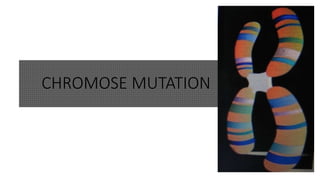
CHROMOSE MUTATION
• Chromosome mutations may involve
1.changing the structure of a chromosome
2.the loss or gain of a part of a chromosome
TYPES-
1.deletion
2. inversion
3.translocation
4. duplication
5.aneuploidy
6. polyploidy
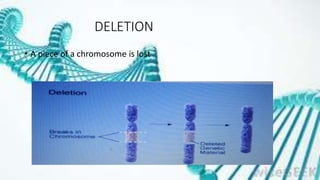
DELETION
• A piece of a chromosome is lost
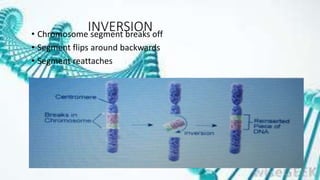
INVERSION• Chromosome segment breaks off
• Segment flips around backwards
• Segment reattaches
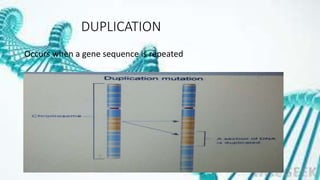
DUPLICATION
Occurs when a gene sequence is repeated
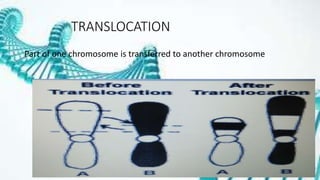
TRANSLOCATION
Part of one chromosome is transferred to another chromosome
ANEUPLOIDY
• The abnormal condition where one or more chromosomes of a normal
set of chromosomes are missing or present in more than their usual
number of copies
• TYPES-
1.nullisomy
2.monosomy
3.trisomy
4. tetrasomy
NULLISOMY
• The loss of both the members of a homologous pair of chromosomes
• Represented as 2N-2
• Where N refers to the haploid no. of chromosomes
• So here we have 44 chromosomes
• eg - wheat
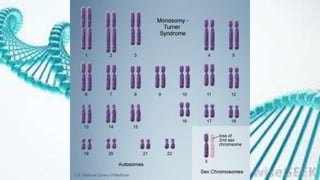
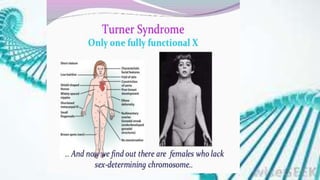
MONOSOMY
• The loss of single chromosome
• Represented as 2N-1=45
• Eg- turner syndrome
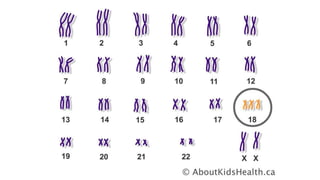
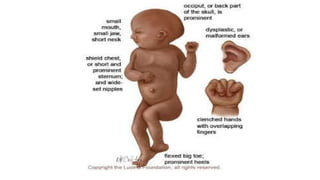
TRISOMY
• Gain of an extra copy of a chromosome
• Represented by 2N+1
• Eg- Edward syndrome
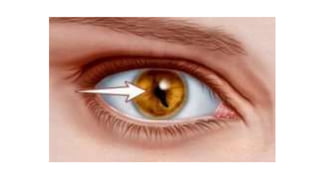
TETRASOMY
• The gain of an extra pair of homologous chromosomes
• represented by 2N+2
• eg- cat eye syndrome, tetrasomy18p
POLYPLOIDY
• The presence of more than 2 genomic sets of chromosomes
• Polyploides include triploid, tetraploid even higher no of
chromosomes
• Mostly found in plants . eg- potato, wheat
GENE MUTATION
 Changes in the nucleotide sequence of a gene
TYPES-
1. frameshift
2. substitution
3. insertion
4. deletion
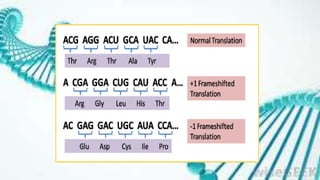
FRAMESHIFT MUTATION
• Since protein-coding DNA is divided into codons
three bases long, insertions and deletions can alter
a gene so that its message is no longer correctly
parsed. These changes are called frameshifts
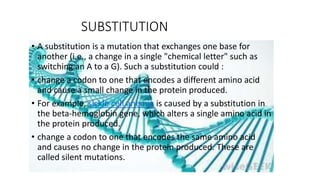
SUBSTITUTION
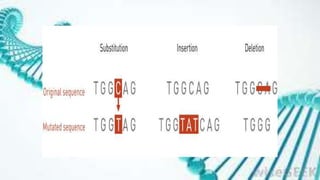
• A substitution is a mutation that exchanges one base for
another (i.e., a change in a single "chemical letter" such as
switching an A to a G). Such a substitution could :
• change a codon to one that encodes a different amino acid
and cause a small change in the protein produced.
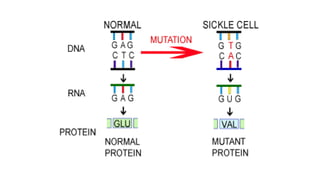
• For example, sickle cell anemia is caused by a substitution in
the beta-hemoglobin gene, which alters a single amino acid in
the protein produced.
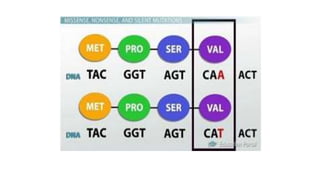
• change a codon to one that encodes the same amino acid
and causes no change in the protein produced. These are
called silent mutations.
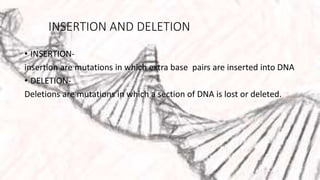
INSERTION AND DELETION
• INSERTION-
insertion are mutations in which extra base pairs are inserted into DNA
• DELETION-
Deletions are mutations in which a section of DNA is lost or deleted.
BIOINFORMATIC DATABASES
• 1.COSMIC-(Catalogue Of Somatic Mutations In Cancer)
• One of the most comprehensive collections of somatic mutations.
• Contains information about mutations, genes and samples.
• Data can be accessed via an online search engines or downloaded
from the Sanger Institute ftp site.
• 2.ICGC-(International Cancer Genome Consortium)
• Provides a great overview of a long list of cancer related projects.
• Has some open access and also some controlled access data.
• 3. SM-EGFR-DB (Somatic Mutations in Epidermal Growth Factor Receptor
Data Base)
• Main focus is non-small cell lung cancer, but has information about other
cancer types.
• Contains information published in peer reviewed journals.
• 4. SomamiR DB (Somatic mutations impacting microRNA targeting)
• One of the more specialized databases concentrating on miRNA related
mutations.
• Database can be downloaded in the form of tab limited text files.
• 5. The Cancer Genome Atlas
• Collection of biological specimens from cancer patients.
• Specimens are analysed with different methods.
• Open access and controlled access datasets are available.
REFERENCES
• https://www.omicsonline.org/scholarly/gene-mutations-journals-
articles-ppts-list.php
• https://www.sciencedirect.com/journal/mutation-research-reviews-
in-mutation-research
• https://www.sciencedirect.com/journal/mutation-research-reviews-
in-mutation-research
THANK YOU

Mutations

  • 1.
    MUTATIONS BY: BAIJAYANTI MALASAHOO scholar no -182104107
  • 3.
    CONTENTS • 1. WHATARE MUTATIONS • 2.CAUSE OF MUTATION • 3. PHYSICAL AND CHEMICAL MUTAGENS • 4.CHROMOSOMAL MUTATIONS AND IT’S TYPES • 5. GENE MUTATION AND IT’S TYPES • 6.REFERENCES
  • 4.
    • Changes inthe nucleotide sequence of DNA • IT is of two types- 1.Somatic mutation 2. Germline mutation • Somatic mutations occur in somatic cell and are not passes to offspring • Germline mutations occurs in gametes and are passed to offspring
  • 5.
    CAUSE OF MUTATION •NATURALCAUSE – DNA fails to copy accurately •MUTAGENS – It is an agent which causes mutation 1. PHYSICAL 2. CHEMICAL
  • 6.
    PHYSICAL AND CHEMICALMUTAGENS • PHYSICAL MUTAGENS- • 1. IONIZING RADIATIONS- eg - alpha ray, beta ray, gamma ray • 2 .NON IONIZING RADIATIONS- eg – uv ray • CHEMICAL MUTAGENS - Certain chemical like dimethyl sulfonate, mustard gas, , caffeine, food preservatives , pesticides also cause mutations
  • 7.
    TYPES- • SPONTANEOUS MUTATION- Theyare mainly caused during DNA replication or incorporation of incorrect nucleotide in the growing DNA chain. they occur naturally during DNA replication • INDUCED MUTATION - These are caused by mutagens
  • 8.
  • 9.
    • Chromosome mutationsmay involve 1.changing the structure of a chromosome 2.the loss or gain of a part of a chromosome TYPES- 1.deletion 2. inversion 3.translocation 4. duplication 5.aneuploidy 6. polyploidy
  • 10.
    DELETION • A pieceof a chromosome is lost
  • 11.
    INVERSION• Chromosome segmentbreaks off • Segment flips around backwards • Segment reattaches
  • 12.
    DUPLICATION Occurs when agene sequence is repeated
  • 13.
    TRANSLOCATION Part of onechromosome is transferred to another chromosome
  • 14.
    ANEUPLOIDY • The abnormalcondition where one or more chromosomes of a normal set of chromosomes are missing or present in more than their usual number of copies • TYPES- 1.nullisomy 2.monosomy 3.trisomy 4. tetrasomy
  • 15.
    NULLISOMY • The lossof both the members of a homologous pair of chromosomes • Represented as 2N-2 • Where N refers to the haploid no. of chromosomes • So here we have 44 chromosomes • eg - wheat
  • 16.
    MONOSOMY • The lossof single chromosome • Represented as 2N-1=45 • Eg- turner syndrome
  • 19.
    TRISOMY • Gain ofan extra copy of a chromosome • Represented by 2N+1 • Eg- Edward syndrome
  • 22.
    TETRASOMY • The gainof an extra pair of homologous chromosomes • represented by 2N+2 • eg- cat eye syndrome, tetrasomy18p
  • 24.
    POLYPLOIDY • The presenceof more than 2 genomic sets of chromosomes • Polyploides include triploid, tetraploid even higher no of chromosomes • Mostly found in plants . eg- potato, wheat
  • 25.
  • 26.
     Changes inthe nucleotide sequence of a gene TYPES- 1. frameshift 2. substitution 3. insertion 4. deletion
  • 27.
    FRAMESHIFT MUTATION • Sinceprotein-coding DNA is divided into codons three bases long, insertions and deletions can alter a gene so that its message is no longer correctly parsed. These changes are called frameshifts
  • 29.
    SUBSTITUTION • A substitutionis a mutation that exchanges one base for another (i.e., a change in a single "chemical letter" such as switching an A to a G). Such a substitution could : • change a codon to one that encodes a different amino acid and cause a small change in the protein produced. • For example, sickle cell anemia is caused by a substitution in the beta-hemoglobin gene, which alters a single amino acid in the protein produced. • change a codon to one that encodes the same amino acid and causes no change in the protein produced. These are called silent mutations.
  • 32.
    INSERTION AND DELETION •INSERTION- insertion are mutations in which extra base pairs are inserted into DNA • DELETION- Deletions are mutations in which a section of DNA is lost or deleted.
  • 34.
    BIOINFORMATIC DATABASES • 1.COSMIC-(CatalogueOf Somatic Mutations In Cancer) • One of the most comprehensive collections of somatic mutations. • Contains information about mutations, genes and samples. • Data can be accessed via an online search engines or downloaded from the Sanger Institute ftp site. • 2.ICGC-(International Cancer Genome Consortium) • Provides a great overview of a long list of cancer related projects. • Has some open access and also some controlled access data.
  • 35.
    • 3. SM-EGFR-DB(Somatic Mutations in Epidermal Growth Factor Receptor Data Base) • Main focus is non-small cell lung cancer, but has information about other cancer types. • Contains information published in peer reviewed journals. • 4. SomamiR DB (Somatic mutations impacting microRNA targeting) • One of the more specialized databases concentrating on miRNA related mutations. • Database can be downloaded in the form of tab limited text files. • 5. The Cancer Genome Atlas • Collection of biological specimens from cancer patients. • Specimens are analysed with different methods. • Open access and controlled access datasets are available.
  • 36.
  • 37.