MUST
HAVE TO
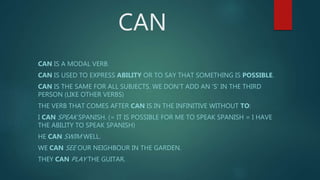
CAN
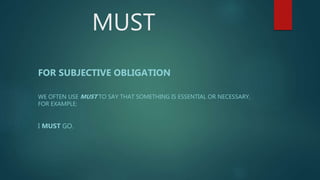
MUST
FOR SUBJECTIVE OBLIGATION
WE OFTEN USE MUST TO SAY THAT SOMETHING IS ESSENTIAL OR NECESSARY,
FOR EXAMPLE:
I MUST GO.
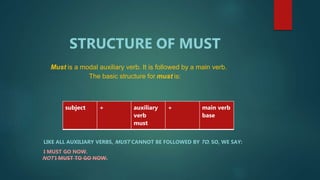
STRUCTURE OF MUST
Must is a modal auxiliary verb. It is followed by a main verb.
The basic structure for must is:
LIKE ALL AUXILIARY VERBS, MUST CANNOT BE FOLLOWED BY TO. SO, WE SAY:
I MUST GO NOW.
NOT I MUST TO GO NOW.
subject + auxiliary
verb
must
+ main verb
base
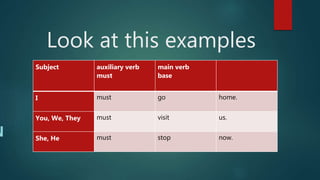
Look at this examples
N
Subject auxiliary verb
must
main verb
base
I must go home.
You, We, They must visit us.
She, He must stop now.
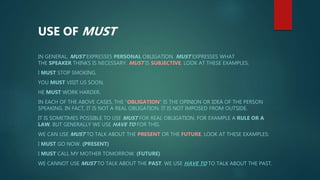
USE OF MUST
IN GENERAL, MUST EXPRESSES PERSONAL OBLIGATION. MUST EXPRESSES WHAT
THE SPEAKER THINKS IS NECESSARY. MUST IS SUBJECTIVE. LOOK AT THESE EXAMPLES:
I MUST STOP SMOKING.
YOU MUST VISIT US SOON.
HE MUST WORK HARDER.
IN EACH OF THE ABOVE CASES, THE "OBLIGATION" IS THE OPINION OR IDEA OF THE PERSON
SPEAKING. IN FACT, IT IS NOT A REAL OBLIGATION. IT IS NOT IMPOSED FROM OUTSIDE.
IT IS SOMETIMES POSSIBLE TO USE MUST FOR REAL OBLIGATION, FOR EXAMPLE A RULE OR A
LAW. BUT GENERALLY WE USE HAVE TO FOR THIS.
WE CAN USE MUST TO TALK ABOUT THE PRESENT OR THE FUTURE. LOOK AT THESE EXAMPLES:
I MUST GO NOW. (PRESENT)
I MUST CALL MY MOTHER TOMORROW. (FUTURE)
WE CANNOT USE MUST TO TALK ABOUT THE PAST. WE USE HAVE TO TO TALK ABOUT THE PAST.
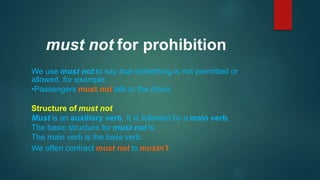
We use must not to say that something is not permitted or
allowed, for example:
•Passengers must not talk to the driver.
Structure of must not
Must is an auxiliary verb. It is followed by a main verb.
The basic structure for must not is:
The main verb is the base verb.
We often contract must not to mustn't.
must not for prohibition
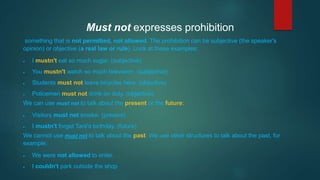
Must not expresses prohibition
something that is not permitted, not allowed. The prohibition can be subjective (the speaker's
opinion) or objective (a real law or rule). Look at these examples:
 I mustn't eat so much sugar. (subjective)
 You mustn't watch so much television. (subjective)
 Students must not leave bicycles here. (objective)
 Policemen must not drink on duty. (objective)
We can use must not to talk about the present or the future:
 Visitors must not smoke. (present)
 I mustn't forget Tara's birthday. (future)
We cannot use must not to talk about the past. We use other structures to talk about the past, for
example:
 We were not allowed to enter.
 I couldn't park outside the shop
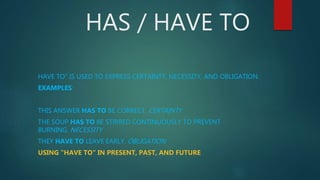
HAS / HAVE TO
HAS / HAVE TO
HAVE TO" IS USED TO EXPRESS CERTAINTY, NECESSITY, AND OBLIGATION.
EXAMPLES:
THIS ANSWER HAS TO BE CORRECT. CERTAINTY
THE SOUP HAS TO BE STIRRED CONTINUOUSLY TO PREVENT
BURNING. NECESSITY
THEY HAVE TO LEAVE EARLY. OBLIGATION
USING "HAVE TO" IN PRESENT, PAST, AND FUTURE
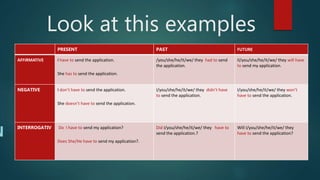
Look at this examples
N
PRESENT PAST FUTURE
AFFIRMATIVE I have to send the application.
She has to send the application.
/you/she/he/it/we/ they had to send
the application.
II/you/she/he/it/we/ they will have
to send my application.
NEGATIVE I don’t have to send the application.
She doesn’t have to send the application.
I/you/she/he/it/we/ they didn’t have
to send the application.
I/you/she/he/it/we/ they won’t
have to send the application.
INTERROGATIV Do I have to send my application?
Does She/He have to send my application?.
Did I/you/she/he/it/we/ they have to
send the application.?
Will I/you/she/he/it/we/ they
have to send the application?
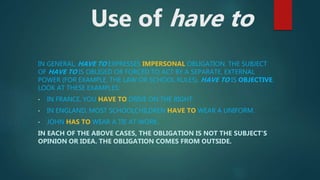
Use of have to
IN GENERAL, HAVE TO EXPRESSES IMPERSONAL OBLIGATION. THE SUBJECT
OF HAVE TO IS OBLIGED OR FORCED TO ACT BY A SEPARATE, EXTERNAL
POWER (FOR EXAMPLE, THE LAW OR SCHOOL RULES). HAVE TO IS OBJECTIVE.
LOOK AT THESE EXAMPLES:
• IN FRANCE, YOU HAVE TO DRIVE ON THE RIGHT.
• IN ENGLAND, MOST SCHOOLCHILDREN HAVE TO WEAR A UNIFORM.
• JOHN HAS TO WEAR A TIE AT WORK.
IN EACH OF THE ABOVE CASES, THE OBLIGATION IS NOT THE SUBJECT'S
OPINION OR IDEA. THE OBLIGATION COMES FROM OUTSIDE.
CAN / CAN’T
CAN
CAN IS A MODAL VERB.
CAN IS USED TO EXPRESS ABILITY OR TO SAY THAT SOMETHING IS POSSIBLE.
CAN IS THE SAME FOR ALL SUBJECTS. WE DON'T ADD AN 'S' IN THE THIRD
PERSON (LIKE OTHER VERBS)
THE VERB THAT COMES AFTER CAN IS IN THE INFINITIVE WITHOUT TO:
I CAN SPEAK SPANISH. (= IT IS POSSIBLE FOR ME TO SPEAK SPANISH = I HAVE
THE ABILITY TO SPEAK SPANISH)
HE CAN SWIM WELL.
WE CAN SEE OUR NEIGHBOUR IN THE GARDEN.
THEY CAN PLAY THE GUITAR.
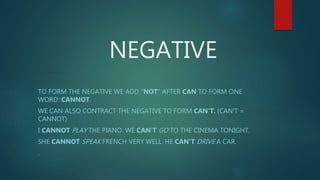
NEGATIVE
TO FORM THE NEGATIVE WE ADD "NOT" AFTER CAN TO FORM ONE
WORD: CANNOT.
WE CAN ALSO CONTRACT THE NEGATIVE TO FORM CAN'T. (CAN'T =
CANNOT)
I CANNOT PLAY THE PIANO. WE CAN'T GO TO THE CINEMA TONIGHT.
SHE CANNOT SPEAK FRENCH VERY WELL. HE CAN'T DRIVE A CAR.
.
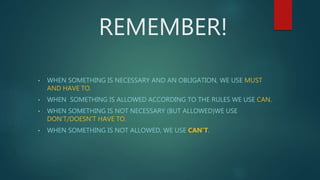
REMEMBER!
• WHEN SOMETHING IS NECESSARY AND AN OBLIGATION, WE USE MUST
AND HAVE TO.
• WHEN SOMETHING IS ALLOWED ACCORDING TO THE RULES WE USE CAN.
• WHEN SOMETHING IS NOT NECESSARY (BUT ALLOWED)WE USE
DON’T/DOESN’T HAVE TO.
• WHEN SOMETHING IS NOT ALLOWED, WE USE CAN’T.
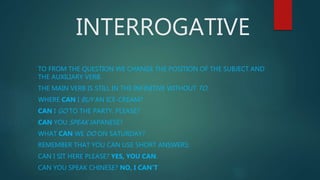
INTERROGATIVE
TO FROM THE QUESTION WE CHANGE THE POSITION OF THE SUBJECT AND
THE AUXILIARY VERB.
THE MAIN VERB IS STILL IN THE INFINITIVE WITHOUT TO.
WHERE CAN I BUY AN ICE-CREAM?
CAN I GO TO THE PARTY, PLEASE?
CAN YOU SPEAK JAPANESE?
WHAT CAN WE DO ON SATURDAY?
REMEMBER THAT YOU CAN USE SHORT ANSWERS:
CAN I SIT HERE PLEASE? YES, YOU CAN.
CAN YOU SPEAK CHINESE? NO, I CAN'T

Diapositivas u2

  • 1.
  • 2.
    MUST FOR SUBJECTIVE OBLIGATION WEOFTEN USE MUST TO SAY THAT SOMETHING IS ESSENTIAL OR NECESSARY, FOR EXAMPLE: I MUST GO.
  • 3.
    STRUCTURE OF MUST Mustis a modal auxiliary verb. It is followed by a main verb. The basic structure for must is: LIKE ALL AUXILIARY VERBS, MUST CANNOT BE FOLLOWED BY TO. SO, WE SAY: I MUST GO NOW. NOT I MUST TO GO NOW. subject + auxiliary verb must + main verb base
  • 4.
    Look at thisexamples N Subject auxiliary verb must main verb base I must go home. You, We, They must visit us. She, He must stop now.
  • 5.
    USE OF MUST INGENERAL, MUST EXPRESSES PERSONAL OBLIGATION. MUST EXPRESSES WHAT THE SPEAKER THINKS IS NECESSARY. MUST IS SUBJECTIVE. LOOK AT THESE EXAMPLES: I MUST STOP SMOKING. YOU MUST VISIT US SOON. HE MUST WORK HARDER. IN EACH OF THE ABOVE CASES, THE "OBLIGATION" IS THE OPINION OR IDEA OF THE PERSON SPEAKING. IN FACT, IT IS NOT A REAL OBLIGATION. IT IS NOT IMPOSED FROM OUTSIDE. IT IS SOMETIMES POSSIBLE TO USE MUST FOR REAL OBLIGATION, FOR EXAMPLE A RULE OR A LAW. BUT GENERALLY WE USE HAVE TO FOR THIS. WE CAN USE MUST TO TALK ABOUT THE PRESENT OR THE FUTURE. LOOK AT THESE EXAMPLES: I MUST GO NOW. (PRESENT) I MUST CALL MY MOTHER TOMORROW. (FUTURE) WE CANNOT USE MUST TO TALK ABOUT THE PAST. WE USE HAVE TO TO TALK ABOUT THE PAST.
  • 6.
    We use mustnot to say that something is not permitted or allowed, for example: •Passengers must not talk to the driver. Structure of must not Must is an auxiliary verb. It is followed by a main verb. The basic structure for must not is: The main verb is the base verb. We often contract must not to mustn't. must not for prohibition
  • 7.
    Must not expressesprohibition something that is not permitted, not allowed. The prohibition can be subjective (the speaker's opinion) or objective (a real law or rule). Look at these examples:  I mustn't eat so much sugar. (subjective)  You mustn't watch so much television. (subjective)  Students must not leave bicycles here. (objective)  Policemen must not drink on duty. (objective) We can use must not to talk about the present or the future:  Visitors must not smoke. (present)  I mustn't forget Tara's birthday. (future) We cannot use must not to talk about the past. We use other structures to talk about the past, for example:  We were not allowed to enter.  I couldn't park outside the shop
  • 8.
  • 9.
    HAS / HAVETO HAVE TO" IS USED TO EXPRESS CERTAINTY, NECESSITY, AND OBLIGATION. EXAMPLES: THIS ANSWER HAS TO BE CORRECT. CERTAINTY THE SOUP HAS TO BE STIRRED CONTINUOUSLY TO PREVENT BURNING. NECESSITY THEY HAVE TO LEAVE EARLY. OBLIGATION USING "HAVE TO" IN PRESENT, PAST, AND FUTURE
  • 10.
    Look at thisexamples N PRESENT PAST FUTURE AFFIRMATIVE I have to send the application. She has to send the application. /you/she/he/it/we/ they had to send the application. II/you/she/he/it/we/ they will have to send my application. NEGATIVE I don’t have to send the application. She doesn’t have to send the application. I/you/she/he/it/we/ they didn’t have to send the application. I/you/she/he/it/we/ they won’t have to send the application. INTERROGATIV Do I have to send my application? Does She/He have to send my application?. Did I/you/she/he/it/we/ they have to send the application.? Will I/you/she/he/it/we/ they have to send the application?
  • 11.
    Use of haveto IN GENERAL, HAVE TO EXPRESSES IMPERSONAL OBLIGATION. THE SUBJECT OF HAVE TO IS OBLIGED OR FORCED TO ACT BY A SEPARATE, EXTERNAL POWER (FOR EXAMPLE, THE LAW OR SCHOOL RULES). HAVE TO IS OBJECTIVE. LOOK AT THESE EXAMPLES: • IN FRANCE, YOU HAVE TO DRIVE ON THE RIGHT. • IN ENGLAND, MOST SCHOOLCHILDREN HAVE TO WEAR A UNIFORM. • JOHN HAS TO WEAR A TIE AT WORK. IN EACH OF THE ABOVE CASES, THE OBLIGATION IS NOT THE SUBJECT'S OPINION OR IDEA. THE OBLIGATION COMES FROM OUTSIDE.
  • 12.
  • 13.
    CAN CAN IS AMODAL VERB. CAN IS USED TO EXPRESS ABILITY OR TO SAY THAT SOMETHING IS POSSIBLE. CAN IS THE SAME FOR ALL SUBJECTS. WE DON'T ADD AN 'S' IN THE THIRD PERSON (LIKE OTHER VERBS) THE VERB THAT COMES AFTER CAN IS IN THE INFINITIVE WITHOUT TO: I CAN SPEAK SPANISH. (= IT IS POSSIBLE FOR ME TO SPEAK SPANISH = I HAVE THE ABILITY TO SPEAK SPANISH) HE CAN SWIM WELL. WE CAN SEE OUR NEIGHBOUR IN THE GARDEN. THEY CAN PLAY THE GUITAR.
  • 14.
    NEGATIVE TO FORM THENEGATIVE WE ADD "NOT" AFTER CAN TO FORM ONE WORD: CANNOT. WE CAN ALSO CONTRACT THE NEGATIVE TO FORM CAN'T. (CAN'T = CANNOT) I CANNOT PLAY THE PIANO. WE CAN'T GO TO THE CINEMA TONIGHT. SHE CANNOT SPEAK FRENCH VERY WELL. HE CAN'T DRIVE A CAR. .
  • 15.
    REMEMBER! • WHEN SOMETHINGIS NECESSARY AND AN OBLIGATION, WE USE MUST AND HAVE TO. • WHEN SOMETHING IS ALLOWED ACCORDING TO THE RULES WE USE CAN. • WHEN SOMETHING IS NOT NECESSARY (BUT ALLOWED)WE USE DON’T/DOESN’T HAVE TO. • WHEN SOMETHING IS NOT ALLOWED, WE USE CAN’T.
  • 16.
    INTERROGATIVE TO FROM THEQUESTION WE CHANGE THE POSITION OF THE SUBJECT AND THE AUXILIARY VERB. THE MAIN VERB IS STILL IN THE INFINITIVE WITHOUT TO. WHERE CAN I BUY AN ICE-CREAM? CAN I GO TO THE PARTY, PLEASE? CAN YOU SPEAK JAPANESE? WHAT CAN WE DO ON SATURDAY? REMEMBER THAT YOU CAN USE SHORT ANSWERS: CAN I SIT HERE PLEASE? YES, YOU CAN. CAN YOU SPEAK CHINESE? NO, I CAN'T