Downloaded 96 times
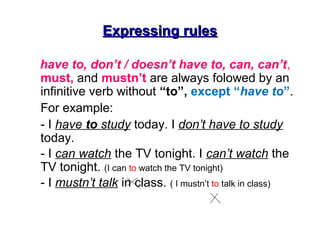
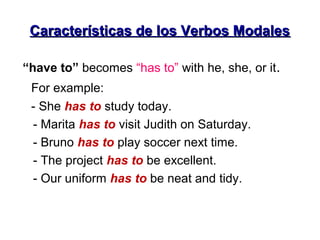
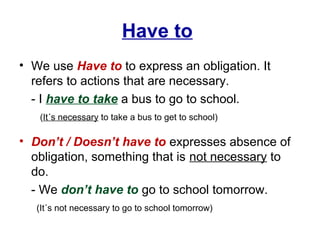
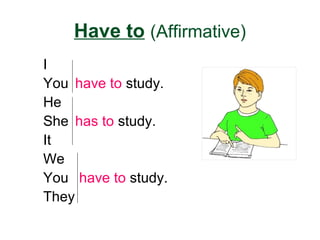
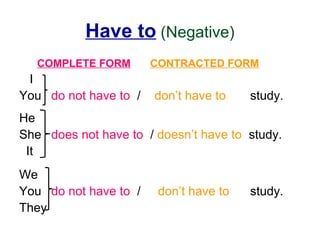
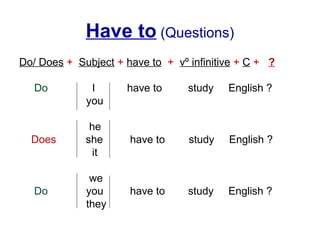
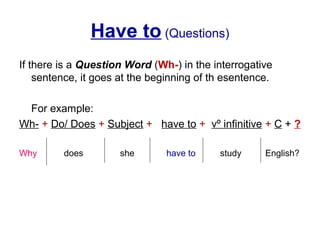
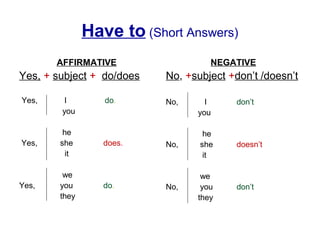
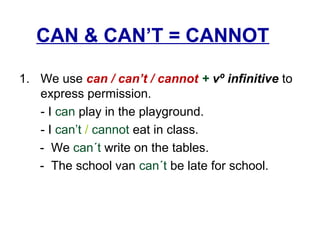
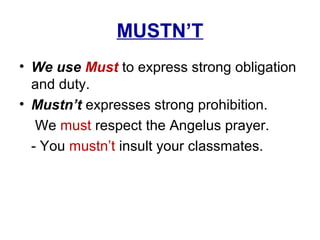

This document discusses rules for expressing obligations and permissions using modal verbs like "have to", "can", "must", and "mustn't" followed by an infinitive verb. It explains that "have to" becomes "has to" with third-person subjects like "he", "she", or "it". Examples are provided to illustrate the correct usage of these modal verbs in affirmative, negative, and question forms. Key points covered include using "don't/doesn't have to" to express lack of obligation and "can/can't" to express permission or prohibition. The document concludes by noting that "must" expresses strong obligation while "mustn't" indicates strong prohibition.


![Your dad did what Sophie Hannah[1]](https://cdn.slidesharecdn.com/ss_thumbnails/yourdaddidwhatsophiehannah1-120312112755-phpapp02-thumbnail.jpg?width=640&height=640&fit=bounds)


