Obligation and Necessity 2
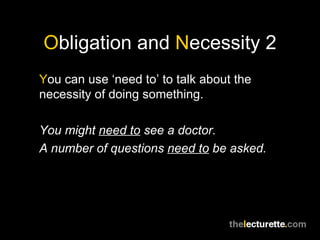
You can use ‘need to’ to talk about the
necessity of doing something.

You might need to see a doctor.
A number of questions need to be asked.
Obligation and Necessity 2
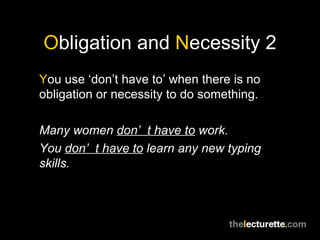
You use ‘don’t have to’ when there is no
obligation or necessity to do something.

Many women don’ t have to work.
You don’ t have to learn any new typing
skills.
Obligation and Necessity 2
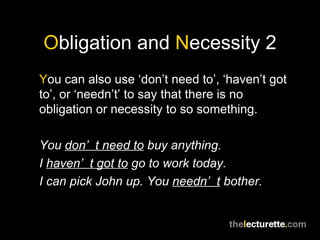
You can also use ‘don’t need to’, ‘haven’t got
to’, or ‘needn’t’ to say that there is no
obligation or necessity to so something.

You don’ t need to buy anything.
I haven’ t got to go to work today.
I can pick John up. You needn’ t bother.
Obligation and Necessity 2
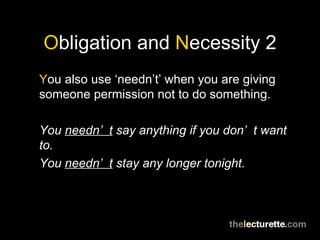
You also use ‘needn’t’ when you are giving
someone permission not to do something.

You needn’ t say anything if you don’ t want
to.
You needn’ t stay any longer tonight.
Obligation and Necessity 2
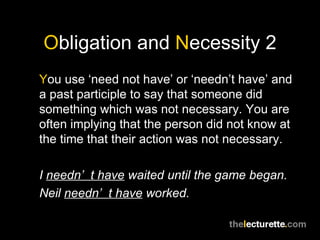
You use ‘need not have’ or ‘needn’t have’ and
a past participle to say that someone did
something which was not necessary. You are
often implying that the person did not know at
the time that their action was not necessary.

I needn’ t have waited until the game began.
Neil needn’ t have worked.
Obligation and Necessity 2
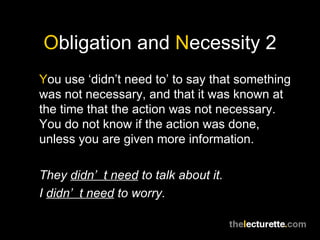
You use ‘didn’t need to’ to say that something
was not necessary, and that it was known at
the time that the action was not necessary.
You do not know if the action was done,
unless you are given more information.

They didn’ t need to talk about it.
I didn’ t need to worry.
Obligation and Necessity 2
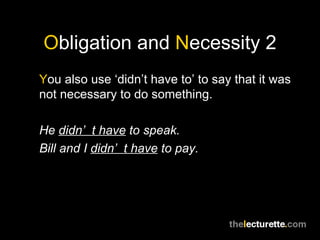
You also use ‘didn’t have to’ to say that it was
not necessary to do something.

He didn’ t have to speak.
Bill and I didn’ t have to pay.
Obligation and Necessity 2
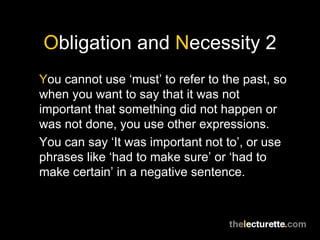
You cannot use ‘must’ to refer to the past, so
when you want to say that it was not
important that something did not happen or
was not done, you use other expressions.
You can say ‘It was important not to’, or use
phrases like ‘had to make sure’ or ‘had to
make certain’ in a negative sentence.
Obligation and Necessity 2
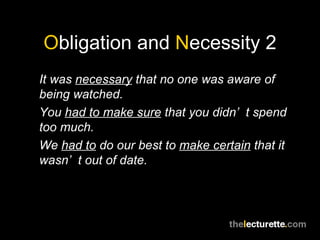
It was necessary that no one was aware of
being watched.
You had to make sure that you didn’ t spend
too much.
We had to do our best to make certain that it
wasn’ t out of date.
Questions?
For more slide presentations visit:

Obligation and Necessity 2

  • 1.
  • 2.
    Obligation and Necessity2 You can use ‘need to’ to talk about the necessity of doing something. You might need to see a doctor. A number of questions need to be asked.
  • 3.
    Obligation and Necessity2 You use ‘don’t have to’ when there is no obligation or necessity to do something. Many women don’ t have to work. You don’ t have to learn any new typing skills.
  • 4.
    Obligation and Necessity2 You can also use ‘don’t need to’, ‘haven’t got to’, or ‘needn’t’ to say that there is no obligation or necessity to so something. You don’ t need to buy anything. I haven’ t got to go to work today. I can pick John up. You needn’ t bother.
  • 5.
    Obligation and Necessity2 You also use ‘needn’t’ when you are giving someone permission not to do something. You needn’ t say anything if you don’ t want to. You needn’ t stay any longer tonight.
  • 6.
    Obligation and Necessity2 You use ‘need not have’ or ‘needn’t have’ and a past participle to say that someone did something which was not necessary. You are often implying that the person did not know at the time that their action was not necessary. I needn’ t have waited until the game began. Neil needn’ t have worked.
  • 7.
    Obligation and Necessity2 You use ‘didn’t need to’ to say that something was not necessary, and that it was known at the time that the action was not necessary. You do not know if the action was done, unless you are given more information. They didn’ t need to talk about it. I didn’ t need to worry.
  • 8.
    Obligation and Necessity2 You also use ‘didn’t have to’ to say that it was not necessary to do something. He didn’ t have to speak. Bill and I didn’ t have to pay.
  • 9.
    Obligation and Necessity2 You cannot use ‘must’ to refer to the past, so when you want to say that it was not important that something did not happen or was not done, you use other expressions. You can say ‘It was important not to’, or use phrases like ‘had to make sure’ or ‘had to make certain’ in a negative sentence.
  • 10.
    Obligation and Necessity2 It was necessary that no one was aware of being watched. You had to make sure that you didn’ t spend too much. We had to do our best to make certain that it wasn’ t out of date.
  • 11.
    Questions? For more slidepresentations visit: