can, could, be able to
ability and possibility
EF Intermediate 4A
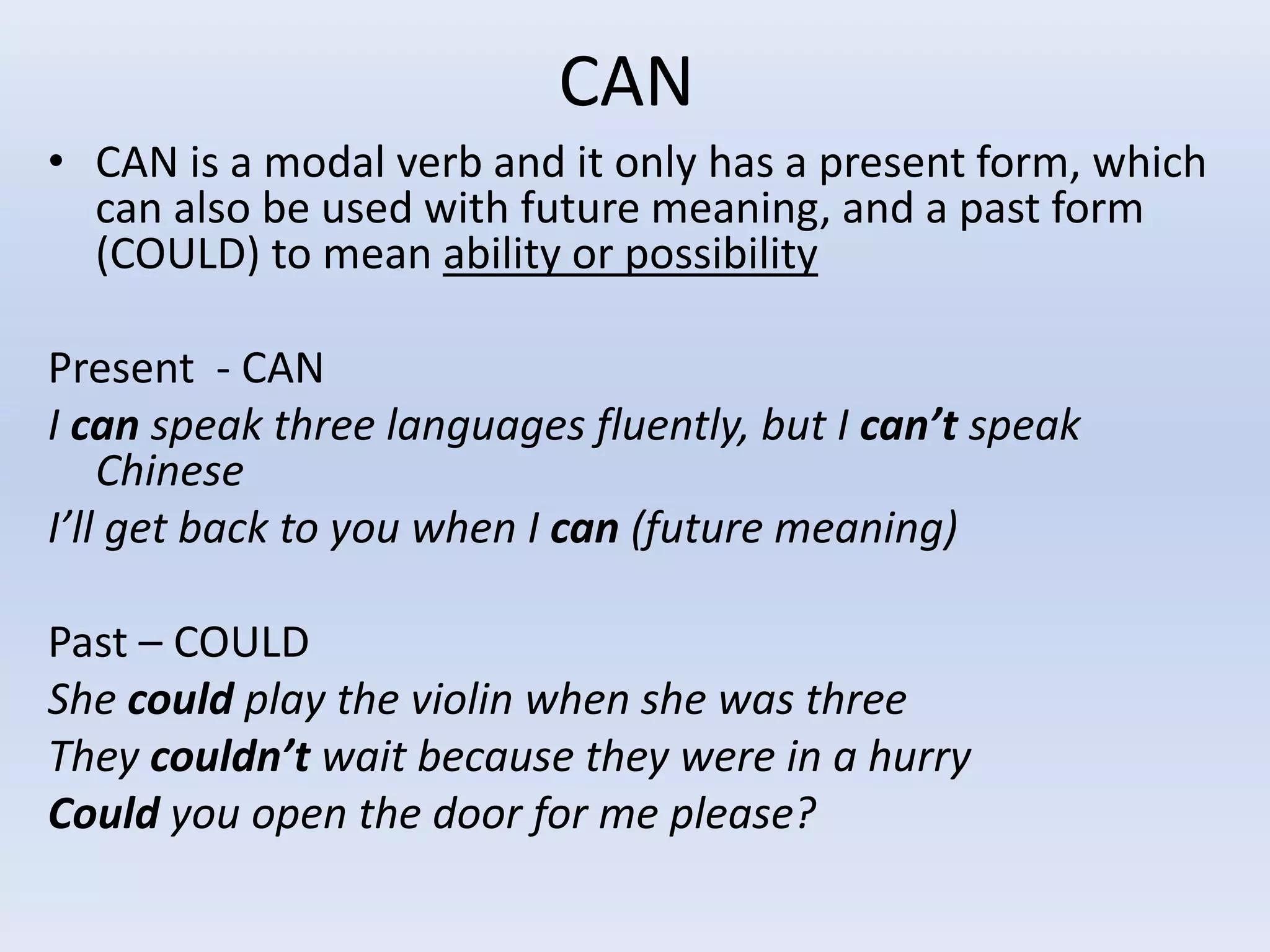
CAN
• CAN is a modal verb and it only has a present form, which
can also be used with future meaning, and a past form
(COULD) to mean ability or possibility
Present - CAN
I can speak three languages fluently, but I can’t speak
Chinese
I’ll get back to you when I can (future meaning)
Past – COULD
She could play the violin when she was three
They couldn’t wait because they were in a hurry
Could you open the door for me please?
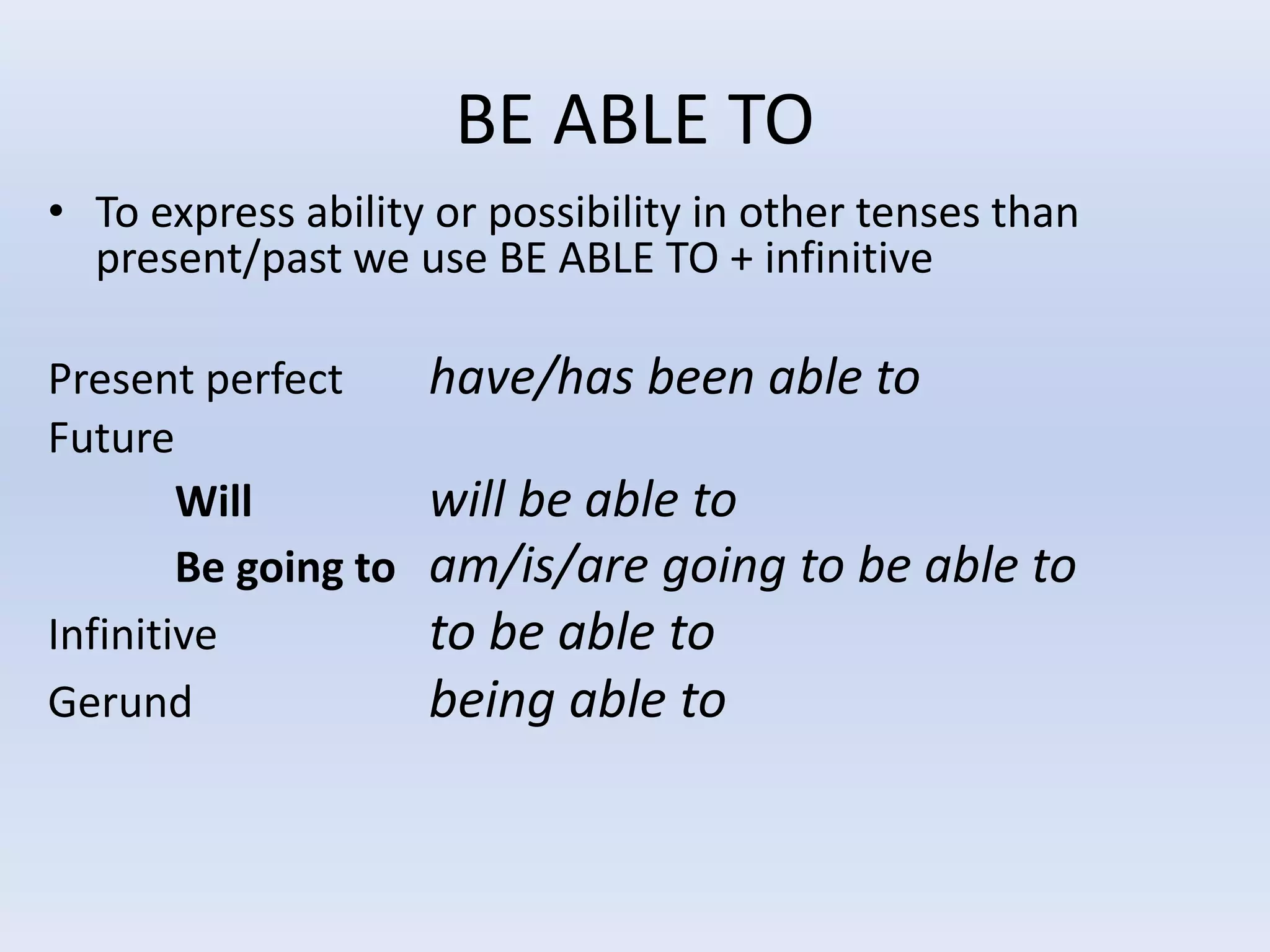
BE ABLE TO
• To express ability or possibility in other tenses than
present/past we use BE ABLE TO + infinitive
Present perfect have/has been able to
Future
Will will be able to
Be going to am/is/are going to be able to
Infinitive to be able to
Gerund being able to
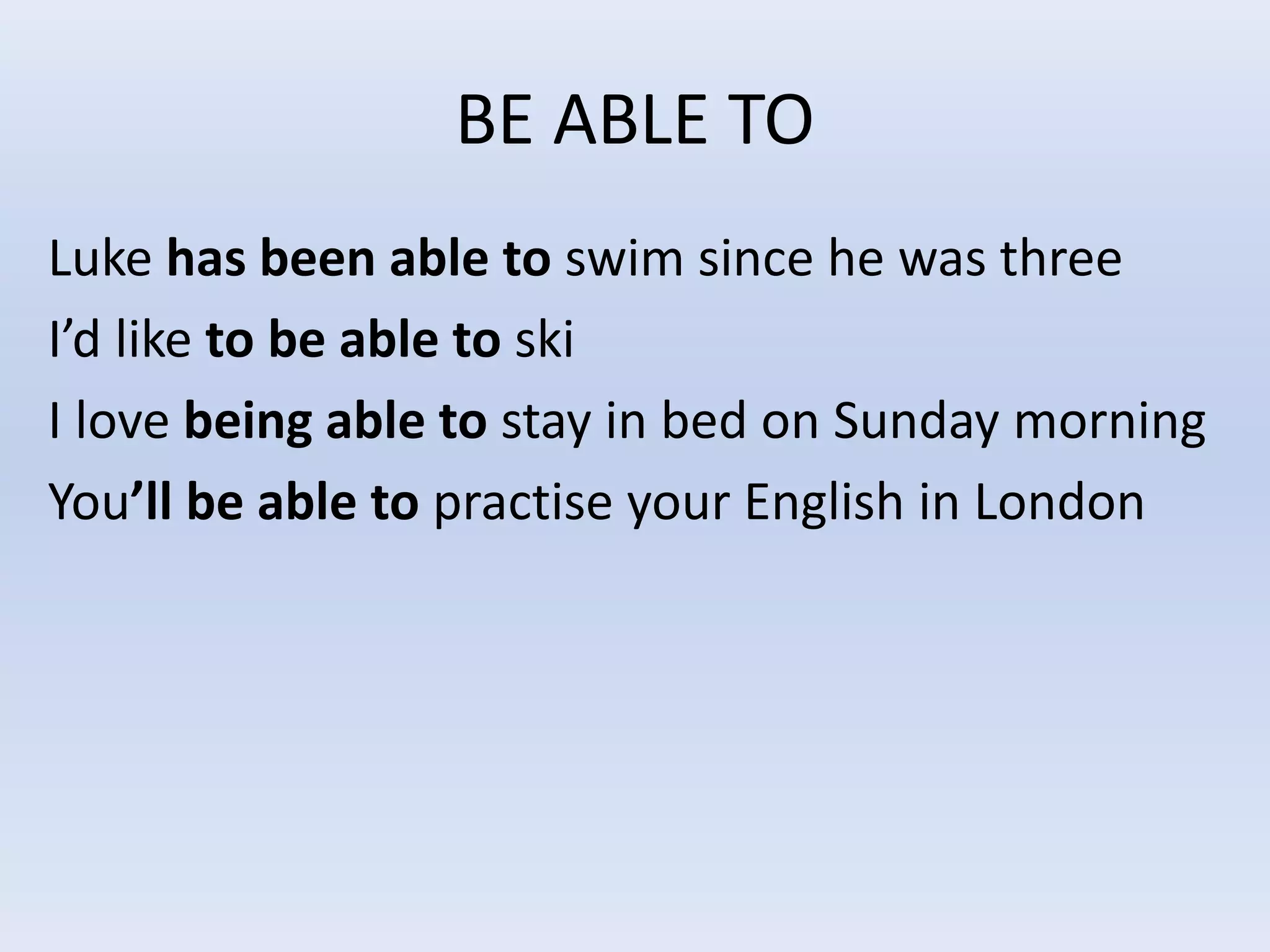
BE ABLE TO
Luke has been able to swim since he was three
I’d like to be able to ski
I love being able to stay in bed on Sunday morning
You’ll be able to practise your English in London
BE ABLE TO
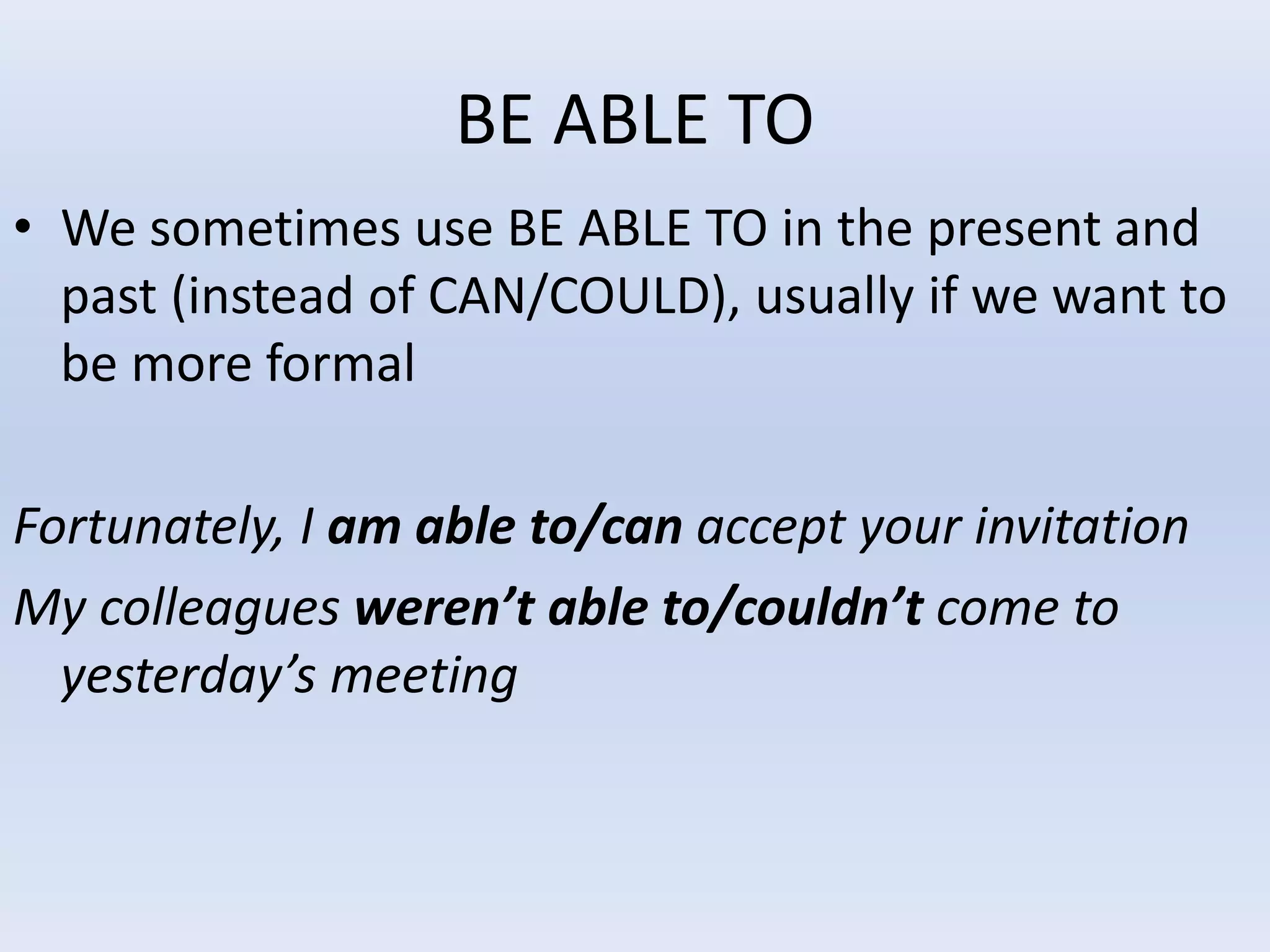
• We sometimes use BE ABLE TO in the present and
past (instead of CAN/COULD), usually if we want to
be more formal
Fortunately, I am able to/can accept your invitation
My colleagues weren’t able to/couldn’t come to
yesterday’s meeting

Can, could, be able to

  • 1.
    can, could, beable to ability and possibility EF Intermediate 4A
  • 2.
    CAN • CAN isa modal verb and it only has a present form, which can also be used with future meaning, and a past form (COULD) to mean ability or possibility Present - CAN I can speak three languages fluently, but I can’t speak Chinese I’ll get back to you when I can (future meaning) Past – COULD She could play the violin when she was three They couldn’t wait because they were in a hurry Could you open the door for me please?
  • 3.
    BE ABLE TO •To express ability or possibility in other tenses than present/past we use BE ABLE TO + infinitive Present perfect have/has been able to Future Will will be able to Be going to am/is/are going to be able to Infinitive to be able to Gerund being able to
  • 4.
    BE ABLE TO Lukehas been able to swim since he was three I’d like to be able to ski I love being able to stay in bed on Sunday morning You’ll be able to practise your English in London
  • 5.
    BE ABLE TO •We sometimes use BE ABLE TO in the present and past (instead of CAN/COULD), usually if we want to be more formal Fortunately, I am able to/can accept your invitation My colleagues weren’t able to/couldn’t come to yesterday’s meeting