Should, must, have to
Should 
 Should + infinitive (without to): You should eat 
more fruit 
 Negative form: You shouldn’t smoke 
 Question form: Should I give her a present? 
(asking for advice) 
 Verb tenses: past, present, future: 
 I should have finished my report yesterday (past – 
always REGRETTING) 
 You should help me, I can not do it alone (present) 
 Tomorrow you should call your parents (future)
Should 
 Used for giving advice: something is good, so 
you should do it. It is a RECOMMENDATION, not 
an obligation: 
If you feel bad you should go to the doctor 
 Obligation, but in a very polite way. Something 
you should do, but it is not a repressive order: 
Anyone who wants to enter the conference should 
show his credentials
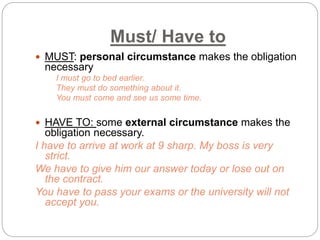
Must/ Have to 
 Strong OBLIGATION, not a recommendation: 
You must come here immediately 
If you want to make a career in a company you 
have to speak English (there is no other 
possibility) 
 Conviction of something that is going to 
We should buy a new car (it is a desire; maybe we 
do it, maybe we don’t) 
We must buy a new car (we will do it, it is almost 
sure)
Must/ Have to 
 MUST: personal circumstance makes the obligation 
necessary 
I must go to bed earlier. 
They must do something about it. 
You must come and see us some time. 
 HAVE TO: some external circumstance makes the 
obligation necessary. 
I have to arrive at work at 9 sharp. My boss is very 
strict. 
We have to give him our answer today or lose out on 
the contract. 
You have to pass your exams or the university will not 
accept you.
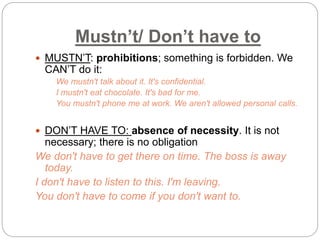
Mustn’t/ Don’t have to 
 MUSTN’T: prohibitions; something is forbidden. We 
CAN’T do it: 
We mustn't talk about it. It's confidential. 
I mustn't eat chocolate. It's bad for me. 
You mustn't phone me at work. We aren't allowed personal calls. 
 DON’T HAVE TO: absence of necessity. It is not 
necessary; there is no obligation 
We don't have to get there on time. The boss is away 
today. 
I don't have to listen to this. I'm leaving. 
You don't have to come if you don't want to.

Should, must, have to

  • 1.
  • 2.
    Should  Should+ infinitive (without to): You should eat more fruit  Negative form: You shouldn’t smoke  Question form: Should I give her a present? (asking for advice)  Verb tenses: past, present, future:  I should have finished my report yesterday (past – always REGRETTING)  You should help me, I can not do it alone (present)  Tomorrow you should call your parents (future)
  • 3.
    Should  Usedfor giving advice: something is good, so you should do it. It is a RECOMMENDATION, not an obligation: If you feel bad you should go to the doctor  Obligation, but in a very polite way. Something you should do, but it is not a repressive order: Anyone who wants to enter the conference should show his credentials
  • 4.
    Must/ Have to  Strong OBLIGATION, not a recommendation: You must come here immediately If you want to make a career in a company you have to speak English (there is no other possibility)  Conviction of something that is going to We should buy a new car (it is a desire; maybe we do it, maybe we don’t) We must buy a new car (we will do it, it is almost sure)
  • 5.
    Must/ Have to  MUST: personal circumstance makes the obligation necessary I must go to bed earlier. They must do something about it. You must come and see us some time.  HAVE TO: some external circumstance makes the obligation necessary. I have to arrive at work at 9 sharp. My boss is very strict. We have to give him our answer today or lose out on the contract. You have to pass your exams or the university will not accept you.
  • 6.
    Mustn’t/ Don’t haveto  MUSTN’T: prohibitions; something is forbidden. We CAN’T do it: We mustn't talk about it. It's confidential. I mustn't eat chocolate. It's bad for me. You mustn't phone me at work. We aren't allowed personal calls.  DON’T HAVE TO: absence of necessity. It is not necessary; there is no obligation We don't have to get there on time. The boss is away today. I don't have to listen to this. I'm leaving. You don't have to come if you don't want to.