 Support the body
 Protect soft organs
Skull and vertebra for brain and spinal cord
Rib cage for thoracic cavity organs.
 Allow movements due to attached skeletal
muscles.
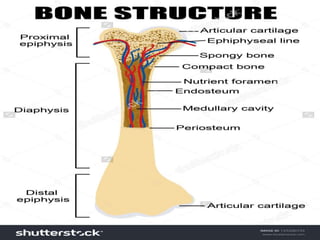
 Store minerals and fats
Calcium and Phosphorus
Fat in the internal marrow cavity
 Blood cell formation (hematopoiesis)
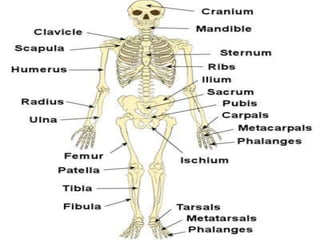
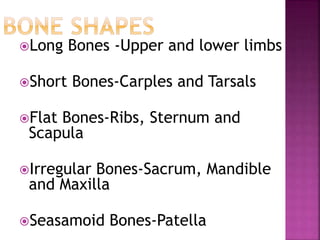
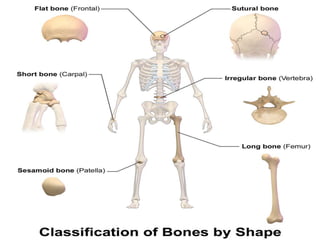
Long Bones -Upper and lower limbs
Short Bones-Carples and Tarsals
Flat Bones-Ribs, Sternum and
Scapula
Irregular Bones-Sacrum, Mandible
and Maxilla
Seasamoid Bones-Patella
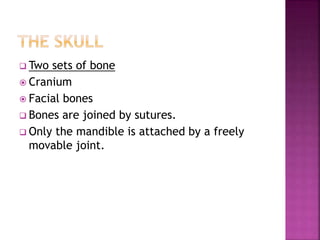
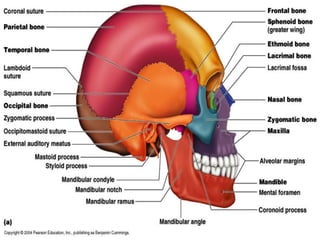
 Two sets of bone
 Cranium
 Facial bones
 Bones are joined by sutures.
 Only the mandible is attached by a freely
movable joint.
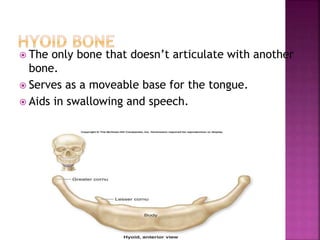
 The only bone that doesn’t articulate with another
bone.
 Serves as a moveable base for the tongue.
 Aids in swallowing and speech.
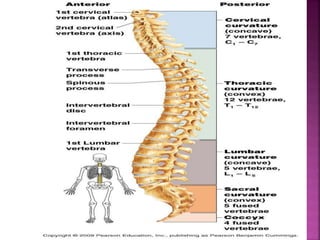
 Each vertebrae is given a name according to
its location.
 There are 24 single vertebral bones
separated by intervertebral discs.
 7 cervical vertebrae in the neck.
 12 thoracic vertebrae are in the chest
region.
 5 lumbar vertebra
 9 vertebrae fuse to form two composite
bones: sacrum and coccyx
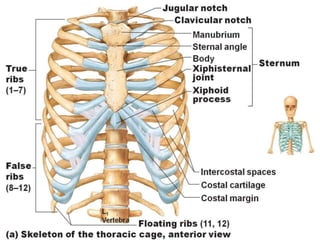
 Forms a cage to protect major organs.
 Consists of three parts
1 Sternum
2 Ribs
True ribs (pairs 1-7 ),False ribs (pairs 8-12), Floating
ribs (pairs 11-12)
 Thoracic vertebra.
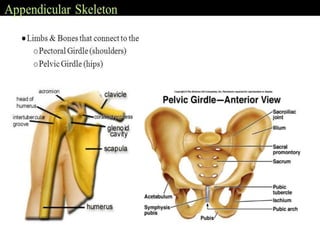
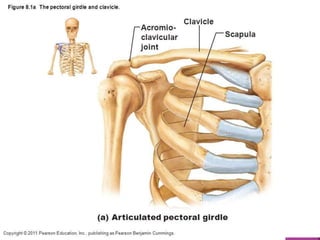
 Composed of two bones.
1) Clavicle- Collarbone
Articulates with the sternum medially and with
the scapula laterally.
2) Scapula- Shoulder blade
Articulates with the clavicle at the
acromioclavicular joint.
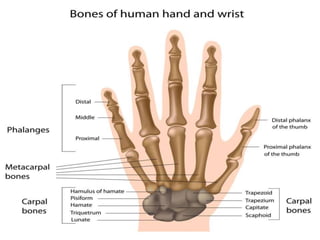
 Carples - Wrist
8 bones arranged in two rows of four bones in
each hand.
 Metacarples – Palm
5 per hand
 Phalanges – Fingers & Thumbs
14 phalanges in each hand
In each finger, there are 3 bones.
In each thumb, there are only 2 bones.
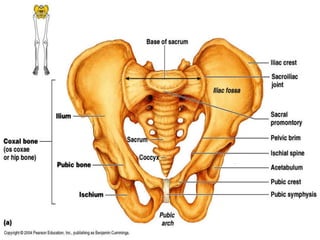
 Composed of 3 pairs of bone
1) Ilium
2) Ischium
3) Pubis
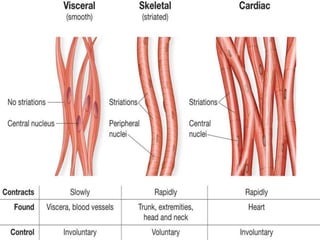
 Smooth-Involuntary, Walls of hollow organs
 Cardiac-Involuntary
 Skeletal- Voluntary, Attached to skeleton
 Attached to bones
 Produce voluntary movement of skeleton
 Also referred to as striated muscle
 Looks striped under microscope
 Associated with internal organs
 Also called visceral muscle
 Stomach
 Respiratory airways
 Blood vessels
 Called smooth because has no microscopic
stripes
 Produces involuntary movement of these
organs
 Also called myocardium
 Makes up walls of heart
 Involuntary contraction of heart to pump
blood

Musculoskeletal system

  • 3.
     Support thebody  Protect soft organs Skull and vertebra for brain and spinal cord Rib cage for thoracic cavity organs.  Allow movements due to attached skeletal muscles.  Store minerals and fats Calcium and Phosphorus Fat in the internal marrow cavity  Blood cell formation (hematopoiesis)
  • 7.
    Long Bones -Upperand lower limbs Short Bones-Carples and Tarsals Flat Bones-Ribs, Sternum and Scapula Irregular Bones-Sacrum, Mandible and Maxilla Seasamoid Bones-Patella
  • 10.
     Two setsof bone  Cranium  Facial bones  Bones are joined by sutures.  Only the mandible is attached by a freely movable joint.
  • 12.
     The onlybone that doesn’t articulate with another bone.  Serves as a moveable base for the tongue.  Aids in swallowing and speech.
  • 13.
     Each vertebraeis given a name according to its location.  There are 24 single vertebral bones separated by intervertebral discs.  7 cervical vertebrae in the neck.  12 thoracic vertebrae are in the chest region.  5 lumbar vertebra  9 vertebrae fuse to form two composite bones: sacrum and coccyx
  • 15.
     Forms acage to protect major organs.  Consists of three parts 1 Sternum 2 Ribs True ribs (pairs 1-7 ),False ribs (pairs 8-12), Floating ribs (pairs 11-12)  Thoracic vertebra.
  • 17.
     Composed oftwo bones. 1) Clavicle- Collarbone Articulates with the sternum medially and with the scapula laterally. 2) Scapula- Shoulder blade Articulates with the clavicle at the acromioclavicular joint.
  • 19.
     Carples -Wrist 8 bones arranged in two rows of four bones in each hand.  Metacarples – Palm 5 per hand  Phalanges – Fingers & Thumbs 14 phalanges in each hand In each finger, there are 3 bones. In each thumb, there are only 2 bones.
  • 21.
     Composed of3 pairs of bone 1) Ilium 2) Ischium 3) Pubis
  • 23.
     Smooth-Involuntary, Wallsof hollow organs  Cardiac-Involuntary  Skeletal- Voluntary, Attached to skeleton
  • 25.
     Attached tobones  Produce voluntary movement of skeleton  Also referred to as striated muscle  Looks striped under microscope
  • 26.
     Associated withinternal organs  Also called visceral muscle  Stomach  Respiratory airways  Blood vessels  Called smooth because has no microscopic stripes  Produces involuntary movement of these organs
  • 27.
     Also calledmyocardium  Makes up walls of heart  Involuntary contraction of heart to pump blood