Municipal Solid Waste (MSW) to Energy
Presented By
Alam, Md Tanvir
ID: 2015311947
Introduction
What is MSW ?
Definition:
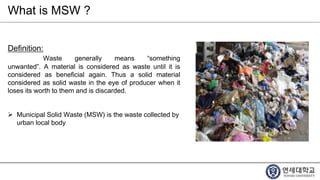
Waste generally means “something
unwanted”. A material is considered as waste until it is
considered as beneficial again. Thus a solid material
considered as solid waste in the eye of producer when it
loses its worth to them and is discarded.
 Municipal Solid Waste (MSW) is the waste collected by
urban local body
Composition of MSW
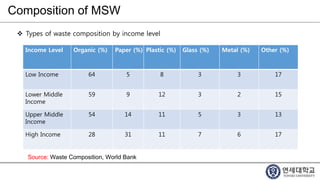
Income Level Organic (%) Paper (%) Plastic (%) Glass (%) Metal (%) Other (%)
Low Income 64 5 8 3 3 17
Lower Middle
Income
59 9 12 3 2 15
Upper Middle
Income
54 14 11 5 3 13
High Income 28 31 11 7 6 17
 Types of waste composition by income level
Source: Waste Composition, World Bank
Chemical Properties of Waste
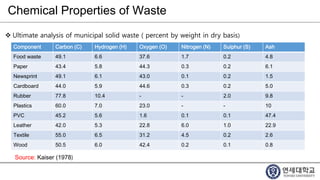
 Ultimate analysis of municipal solid waste ( percent by weight in dry basis)
Component Carbon (C) Hydrogen (H) Oxygen (O) Nitrogen (N) Sulphur (S) Ash
Food waste 49.1 6.6 37.6 1.7 0.2 4.8
Paper 43.4 5.8 44.3 0.3 0.2 6.1
Newsprint 49.1 6.1 43.0 0.1 0.2 1.5
Cardboard 44.0 5.9 44.6 0.3 0.2 5.0
Rubber 77.8 10.4 - - 2.0 9.8
Plastics 60.0 7.0 23.0 - - 10
PVC 45.2 5.6 1.6 0.1 0.1 47.4
Leather 42.0 5.3 22.8 6.0 1.0 22.9
Textile 55.0 6.5 31.2 4.5 0.2 2.6
Wood 50.5 6.0 42.4 0.2 0.1 0.8
Source: Kaiser (1978)
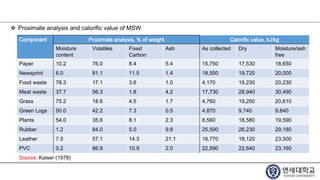
 Proximate analysis and calorific value of MSW
Component Proximate analysis, % of weight Calorific value, kJ/kg
Moisture
content
Volatiles Fixed
Carbon
Ash As collected Dry Moisture/ash
free
Paper 10.2 76.0 8.4 5.4 15,750 17,530 18,650
Newsprint 6.0 81.1 11.5 1.4 18,550 19,720 20,000
Food waste 78.3 17.1 3.6 1.0 4,170 19,230 20,230
Meat waste 37.7 56.3 1.8 4.2 17,730 28,940 30,490
Grass 75.2 18.6 4.5 1.7 4,760 19,250 20,610
Green Logs 50.0 42.2 7.3 0.5 4,870 9,740 9,840
Plants 54.0 35.6 8.1 2.3 8,560 18,580 19,590
Rubber 1.2 84.0 5.0 9.8 25,590 26,230 29,180
Leather 7.5 57.1 14.3 21.1 16,770 18,120 23,500
PVC 0.2 86.9 10.9 2.0 22,590 22,640 23,160
Source: Kaiser (1978)
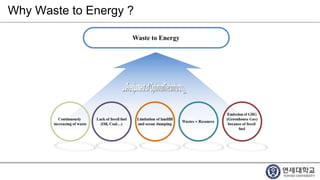
Why Waste to Energy ?
MSW to Energy Conversion Processes
Energy Conversion Processes
Pyrolysis
Pyrolysis/Gasification
Conventional Gasification
Plasma Arc Gasification
Mass Burn (Incineration)
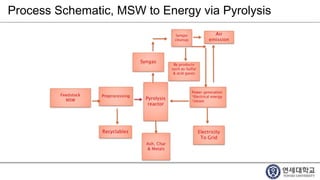
Pyrolysis
 Can be defined as thermal decomposition of carbon based materials in an
oxygen deficient atmosphere using heat to produce syngas
 No air or oxygen is present and no direct burning take place
 Thermal decomposition take place at elevated temperature ( 400-900 °C)
Process Schematic, MSW to Energy via Pyrolysis
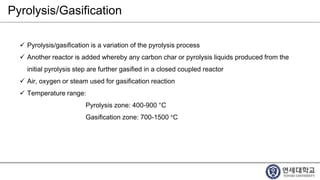
Pyrolysis/Gasification
 Pyrolysis/gasification is a variation of the pyrolysis process
 Another reactor is added whereby any carbon char or pyrolysis liquids produced from the
initial pyrolysis step are further gasified in a closed coupled reactor
 Air, oxygen or steam used for gasification reaction
 Temperature range:
Pyrolysis zone: 400-900 °C
Gasification zone: 700-1500 °C
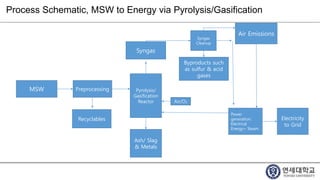
Process Schematic, MSW to Energy via Pyrolysis/Gasification
MSW Preprocessing Pyrolysis/
Gasification
Reactor
Ash/ Slag
& Metals
Recyclables
Syngas
Syngas
Cleanup
Byproducts such
as sulfur & acid
gases
Air/O2
Air Emissions
Power
generation:
Electrical
Energy+ Steam
Electricity
to Grid
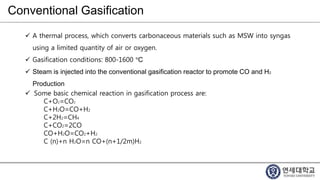
Conventional Gasification
 A thermal process, which converts carbonaceous materials such as MSW into syngas
using a limited quantity of air or oxygen.
 Gasification conditions: 800-1600 °C
 Steam is injected into the conventional gasification reactor to promote CO and H2
Production
 Some basic chemical reaction in gasification process are:
C+O2=CO2
C+H2O=CO+H2
C+2H2=CH4
C+CO2=2CO
CO+H2O=CO2+H2
C (n)+n H2O=n CO+(n+1/2m)H2
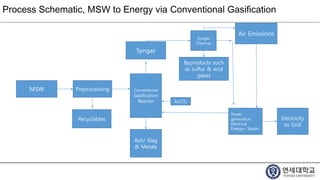
Process Schematic, MSW to Energy via Conventional Gasification
MSW Preprocessing Conventional
Gasification
Reactor
Ash/ Slag
& Metals
Recyclables
Syngas
Syngas
Cleanup
Byproducts such
as sulfur & acid
gases
Air/O2
Power
generation:
Electrical
Energy+ Steam
Air Emissions
Electricity
to Grid
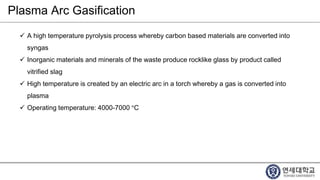
Plasma Arc Gasification
 A high temperature pyrolysis process whereby carbon based materials are converted into
syngas
 Inorganic materials and minerals of the waste produce rocklike glass by product called
vitrified slag
 High temperature is created by an electric arc in a torch whereby a gas is converted into
plasma
 Operating temperature: 4000-7000 °C
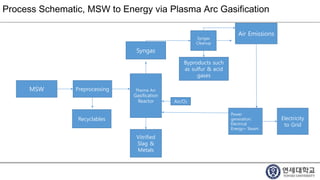
Process Schematic, MSW to Energy via Plasma Arc Gasification
MSW Preprocessing Plasma Arc
Gasification
Reactor
Vitrified
Slag &
Metals
Recyclables
Syngas
Syngas
Cleanup
Byproducts such
as sulfur & acid
gases
Air/O2
Power
generation:
Electrical
Energy+ Steam
Electricity
to Grid
Air Emissions
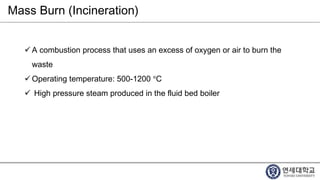
Mass Burn (Incineration)
 A combustion process that uses an excess of oxygen or air to burn the
waste
 Operating temperature: 500-1200 °C
 High pressure steam produced in the fluid bed boiler
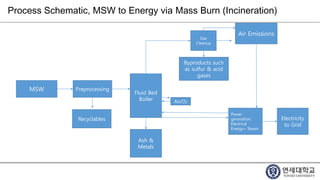
Process Schematic, MSW to Energy via Mass Burn (Incineration)
MSW Preprocessing
Fluid Bed
Boiler
Ash &
Metals
Recyclables
Gas
Cleanup
Byproducts such
as sulfur & acid
gases
Air/O2
Power
generation:
Electrical
Energy+ Steam
Electricity
to Grid
Air Emissions
THANK YOU!
감사합니다!
ধন্যবাদ!

Municipal Solid Waste (MSW) to Energy

  • 1.
    Municipal Solid Waste(MSW) to Energy Presented By Alam, Md Tanvir ID: 2015311947
  • 2.
  • 3.
    What is MSW? Definition: Waste generally means “something unwanted”. A material is considered as waste until it is considered as beneficial again. Thus a solid material considered as solid waste in the eye of producer when it loses its worth to them and is discarded.  Municipal Solid Waste (MSW) is the waste collected by urban local body
  • 4.
    Composition of MSW IncomeLevel Organic (%) Paper (%) Plastic (%) Glass (%) Metal (%) Other (%) Low Income 64 5 8 3 3 17 Lower Middle Income 59 9 12 3 2 15 Upper Middle Income 54 14 11 5 3 13 High Income 28 31 11 7 6 17  Types of waste composition by income level Source: Waste Composition, World Bank
  • 5.
    Chemical Properties ofWaste  Ultimate analysis of municipal solid waste ( percent by weight in dry basis) Component Carbon (C) Hydrogen (H) Oxygen (O) Nitrogen (N) Sulphur (S) Ash Food waste 49.1 6.6 37.6 1.7 0.2 4.8 Paper 43.4 5.8 44.3 0.3 0.2 6.1 Newsprint 49.1 6.1 43.0 0.1 0.2 1.5 Cardboard 44.0 5.9 44.6 0.3 0.2 5.0 Rubber 77.8 10.4 - - 2.0 9.8 Plastics 60.0 7.0 23.0 - - 10 PVC 45.2 5.6 1.6 0.1 0.1 47.4 Leather 42.0 5.3 22.8 6.0 1.0 22.9 Textile 55.0 6.5 31.2 4.5 0.2 2.6 Wood 50.5 6.0 42.4 0.2 0.1 0.8 Source: Kaiser (1978)
  • 6.
     Proximate analysisand calorific value of MSW Component Proximate analysis, % of weight Calorific value, kJ/kg Moisture content Volatiles Fixed Carbon Ash As collected Dry Moisture/ash free Paper 10.2 76.0 8.4 5.4 15,750 17,530 18,650 Newsprint 6.0 81.1 11.5 1.4 18,550 19,720 20,000 Food waste 78.3 17.1 3.6 1.0 4,170 19,230 20,230 Meat waste 37.7 56.3 1.8 4.2 17,730 28,940 30,490 Grass 75.2 18.6 4.5 1.7 4,760 19,250 20,610 Green Logs 50.0 42.2 7.3 0.5 4,870 9,740 9,840 Plants 54.0 35.6 8.1 2.3 8,560 18,580 19,590 Rubber 1.2 84.0 5.0 9.8 25,590 26,230 29,180 Leather 7.5 57.1 14.3 21.1 16,770 18,120 23,500 PVC 0.2 86.9 10.9 2.0 22,590 22,640 23,160 Source: Kaiser (1978)
  • 7.
    Why Waste toEnergy ?
  • 8.
    MSW to EnergyConversion Processes
  • 9.
    Energy Conversion Processes Pyrolysis Pyrolysis/Gasification ConventionalGasification Plasma Arc Gasification Mass Burn (Incineration)
  • 10.
    Pyrolysis  Can bedefined as thermal decomposition of carbon based materials in an oxygen deficient atmosphere using heat to produce syngas  No air or oxygen is present and no direct burning take place  Thermal decomposition take place at elevated temperature ( 400-900 °C)
  • 11.
    Process Schematic, MSWto Energy via Pyrolysis
  • 12.
    Pyrolysis/Gasification  Pyrolysis/gasification isa variation of the pyrolysis process  Another reactor is added whereby any carbon char or pyrolysis liquids produced from the initial pyrolysis step are further gasified in a closed coupled reactor  Air, oxygen or steam used for gasification reaction  Temperature range: Pyrolysis zone: 400-900 °C Gasification zone: 700-1500 °C
  • 13.
    Process Schematic, MSWto Energy via Pyrolysis/Gasification MSW Preprocessing Pyrolysis/ Gasification Reactor Ash/ Slag & Metals Recyclables Syngas Syngas Cleanup Byproducts such as sulfur & acid gases Air/O2 Air Emissions Power generation: Electrical Energy+ Steam Electricity to Grid
  • 14.
    Conventional Gasification  Athermal process, which converts carbonaceous materials such as MSW into syngas using a limited quantity of air or oxygen.  Gasification conditions: 800-1600 °C  Steam is injected into the conventional gasification reactor to promote CO and H2 Production  Some basic chemical reaction in gasification process are: C+O2=CO2 C+H2O=CO+H2 C+2H2=CH4 C+CO2=2CO CO+H2O=CO2+H2 C (n)+n H2O=n CO+(n+1/2m)H2
  • 15.
    Process Schematic, MSWto Energy via Conventional Gasification MSW Preprocessing Conventional Gasification Reactor Ash/ Slag & Metals Recyclables Syngas Syngas Cleanup Byproducts such as sulfur & acid gases Air/O2 Power generation: Electrical Energy+ Steam Air Emissions Electricity to Grid
  • 16.
    Plasma Arc Gasification A high temperature pyrolysis process whereby carbon based materials are converted into syngas  Inorganic materials and minerals of the waste produce rocklike glass by product called vitrified slag  High temperature is created by an electric arc in a torch whereby a gas is converted into plasma  Operating temperature: 4000-7000 °C
  • 17.
    Process Schematic, MSWto Energy via Plasma Arc Gasification MSW Preprocessing Plasma Arc Gasification Reactor Vitrified Slag & Metals Recyclables Syngas Syngas Cleanup Byproducts such as sulfur & acid gases Air/O2 Power generation: Electrical Energy+ Steam Electricity to Grid Air Emissions
  • 18.
    Mass Burn (Incineration) A combustion process that uses an excess of oxygen or air to burn the waste  Operating temperature: 500-1200 °C  High pressure steam produced in the fluid bed boiler
  • 19.
    Process Schematic, MSWto Energy via Mass Burn (Incineration) MSW Preprocessing Fluid Bed Boiler Ash & Metals Recyclables Gas Cleanup Byproducts such as sulfur & acid gases Air/O2 Power generation: Electrical Energy+ Steam Electricity to Grid Air Emissions
  • 20.