

Multivariate statistics
           Overview
           Hoksan | January 10 ,2013 | Rotterdam


Factual
decision
making
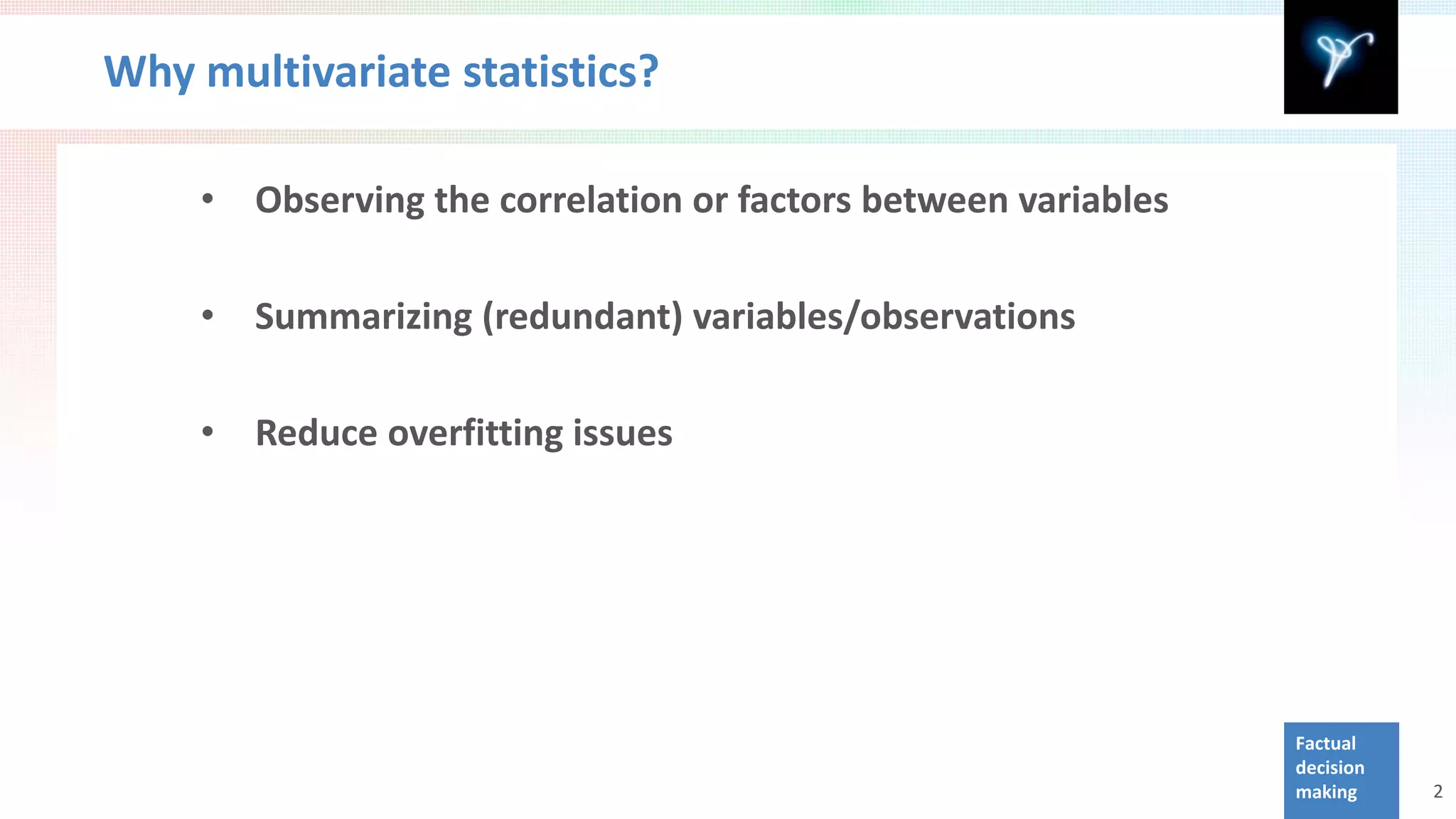
Why multivariate statistics?

    •   Observing the correlation or factors between variables

    •   Summarizing (redundant) variables/observations

    •   Reduce overfitting issues


                                                                 Factual
                                                                 decision
                                                                 making     2
Outline

    •       Factor analysis:
        •     Principal Component Analysis
        •     Explanatory Factor Analysis


    •       Multidimensional scaling:
        •     Principle Coordinates Analysis
        •     Stress Minimization


    •       Cluster Analysis

                                               Factual
                                               decision
                                               making     3
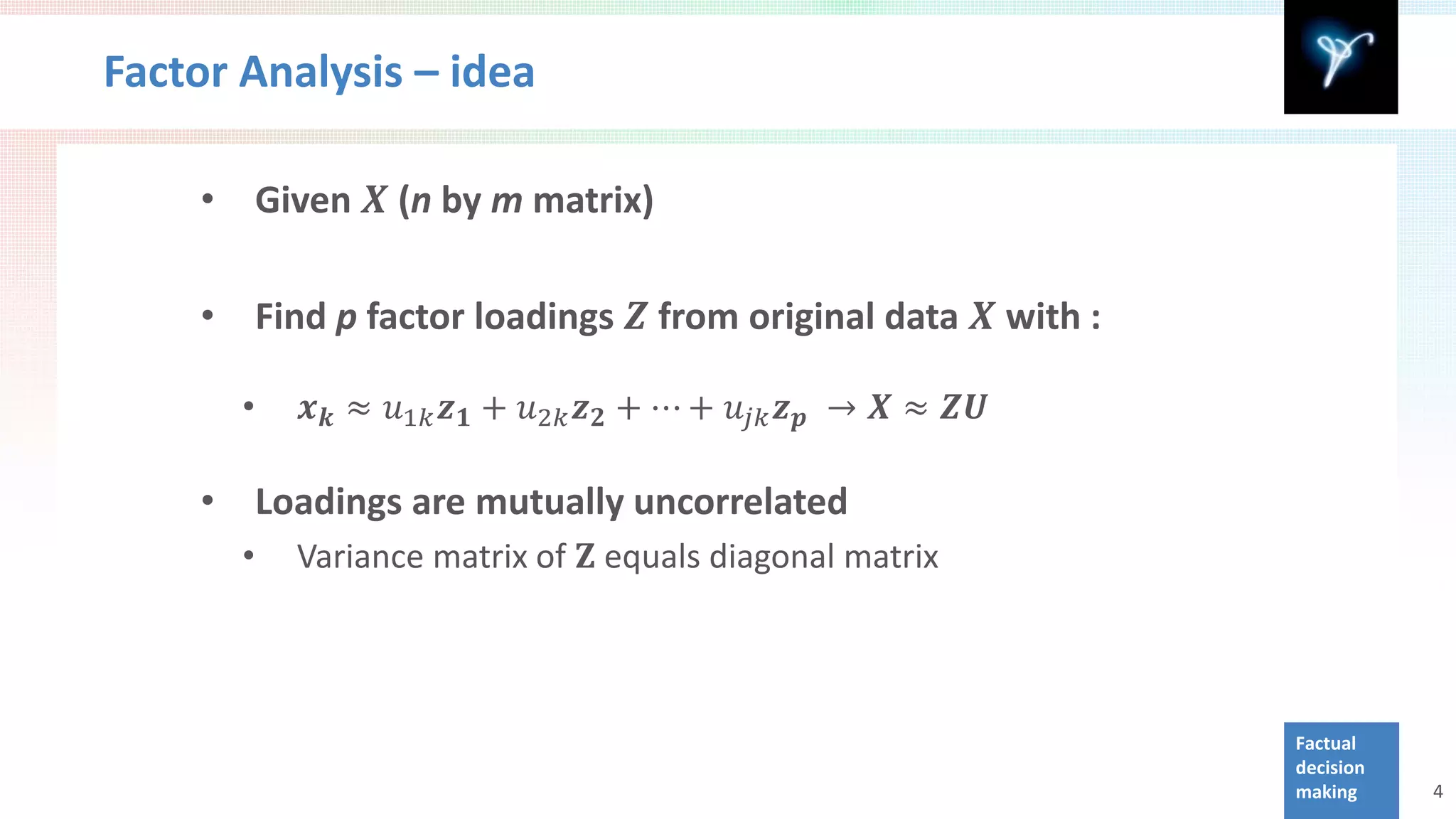
Factor Analysis – idea

    •       Given 𝑿 (n by m matrix)

    •       Find p factor loadings 𝒁 from original data 𝑿 with :

        •      𝒙 𝒌 ≈ 𝑢1𝑘 𝒛 𝟏 + 𝑢2𝑘 𝒛 𝟐 + ⋯ + 𝑢 𝑗𝑗 𝒛 𝒑 → 𝑿 ≈ 𝒁𝒁


              Variance matrix of 𝐙 equals diagonal matrix
    •       Loadings are mutually uncorrelated
        •


                                                                   Factual
                                                                   decision
                                                                   making     4
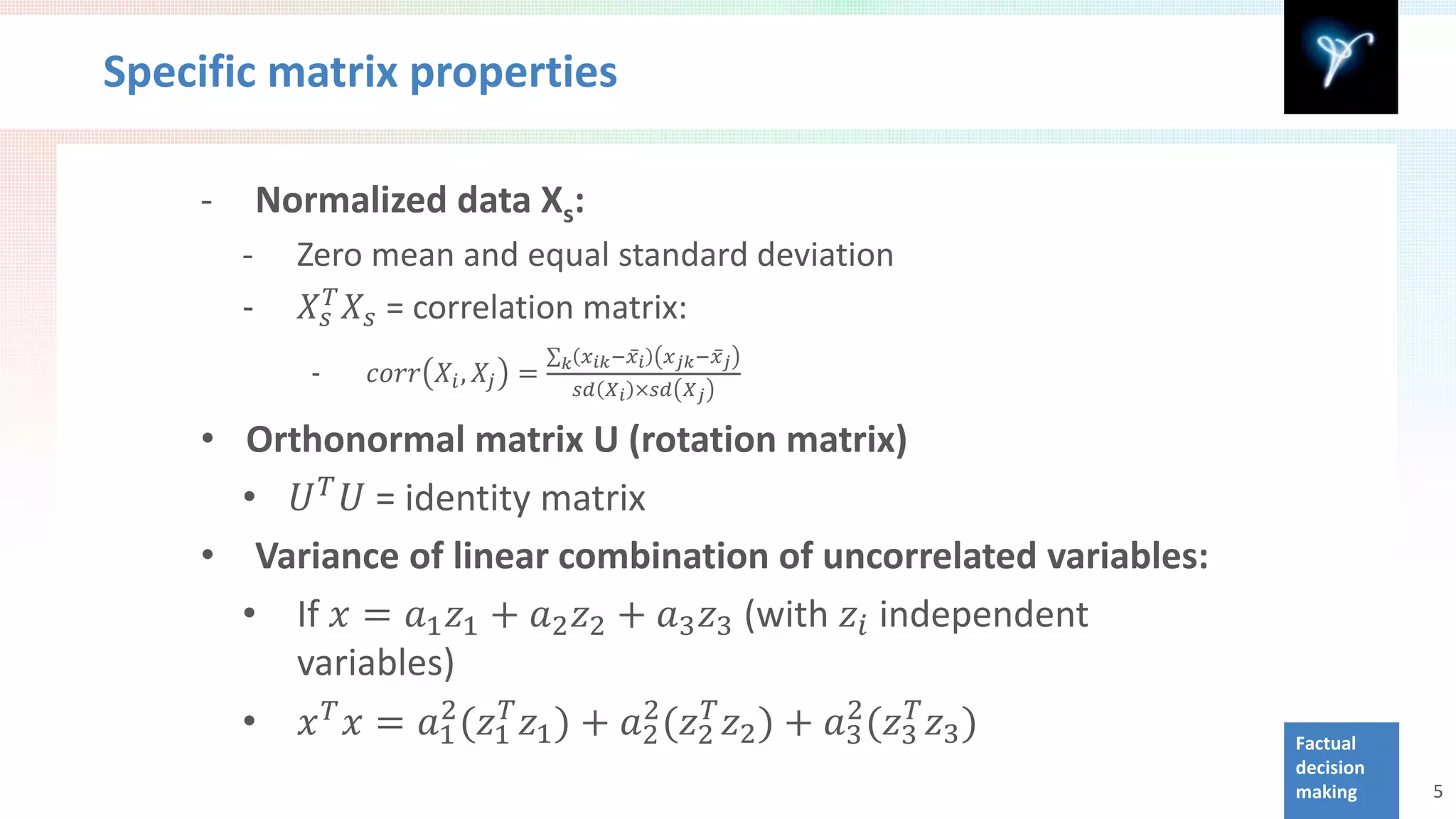
Specific matrix properties

    -       Normalized data Xs:

        -      𝑋 𝑠𝑇 𝑋 𝑠 = correlation matrix:
        -     Zero mean and equal standard deviation


               -   𝑐𝑐𝑐𝑐 𝑋 𝑖 , 𝑋 𝑗 =
                                      ∑ 𝑘 𝑥 𝑖𝑖 −𝑥̅ 𝑖 𝑥 𝑗𝑘 −𝑥̅ 𝑗
                                         𝑠𝑠 𝑋 𝑖 ×𝑠𝑠 𝑋 𝑗


      • 𝑈 𝑇 𝑈 = identity matrix
    • Orthonormal matrix U (rotation matrix)


      • If 𝑥 = 𝑎1 𝑧1 + 𝑎2 𝑧2 + 𝑎3 𝑧3 (with 𝑧 𝑖 independent
    • Variance of linear combination of uncorrelated variables:


      • 𝑥 𝑇 𝑥 = 𝑎1 (𝑧1𝑇 𝑧1 ) + 𝑎2 (𝑧2𝑇 𝑧2 ) + 𝑎3 (𝑧3𝑇 𝑧3 )
                  2             2              2
         variables)
                                                                  Factual
                                                                  decision
                                                                  making     5
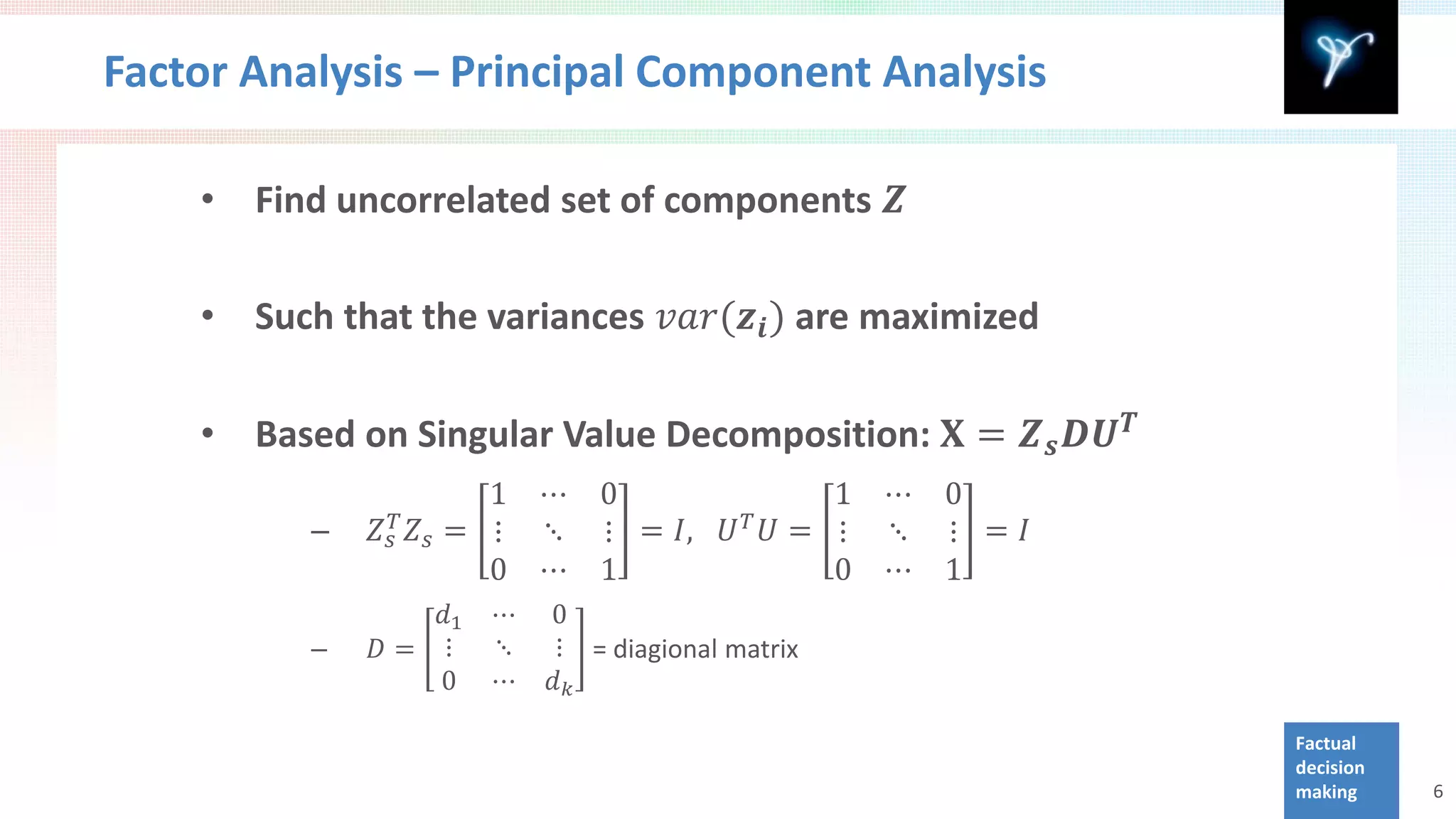
Factor Analysis – Principal Component Analysis

    •   Find uncorrelated set of components 𝒁

    •   Such that the variances 𝑣𝑣𝑣(𝒛 𝒊 ) are maximized

        Based on Singular Value Decomposition: 𝐗 = 𝒁 𝒔 𝑫𝑼 𝑻
                            1 ⋯ 0                1 ⋯ 0
    •

               𝑍 𝑠𝑇   𝑍 𝑠 = ⋮ ⋱ ⋮ = 𝐼,      𝑈 𝑈= ⋮ ⋱ ⋮ = 𝐼
                                             𝑇

                            0 ⋯ 1                0 ⋯ 1
           –

                  𝑑1      ⋯   0
               𝐷= ⋮       ⋱   ⋮ = diagional matrix
                  0       ⋯   𝑑𝑘
           –


                                                              Factual
                                                              decision
                                                              making     6
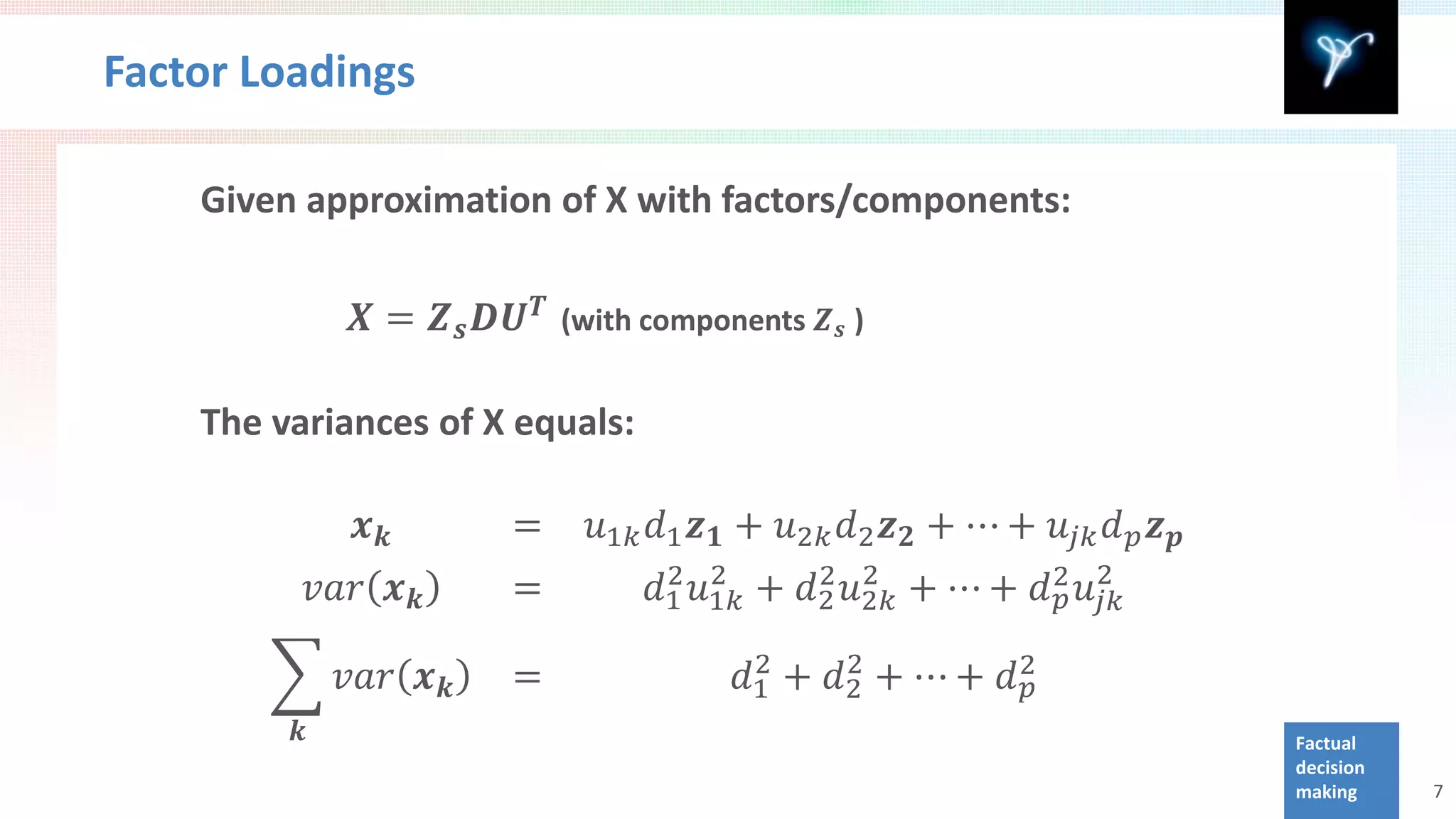
Factor Loadings

    Given approximation of X with factors/components:

                𝑿 = 𝒁 𝒔 𝑫𝑼 𝑻 (with components 𝒁 𝒔 )

    The variances of X equals:

                𝒙𝒌        =     𝑢1𝑘 𝑑1 𝒛 𝟏 + 𝑢2𝑘 𝑑2 𝒛 𝟐 + ⋯ + 𝑢 𝑗𝑗 𝑑 𝑝 𝒛 𝒑
             𝑣𝑣𝑣 𝒙 𝒌      =         𝑑1 𝑢1𝑘 + 𝑑2 𝑢2𝑘 + ⋯ + 𝑑 2 𝑢2
                                     2 2      2 2
                                                            𝑝 𝑗𝑗

        � 𝑣𝑣𝑣 𝒙 𝒌         =               𝑑1 + 𝑑2 + ⋯ + 𝑑 2
                                           2    2
                                                          𝑝
         𝒌                                                                   Factual
                                                                             decision
                                                                             making     7
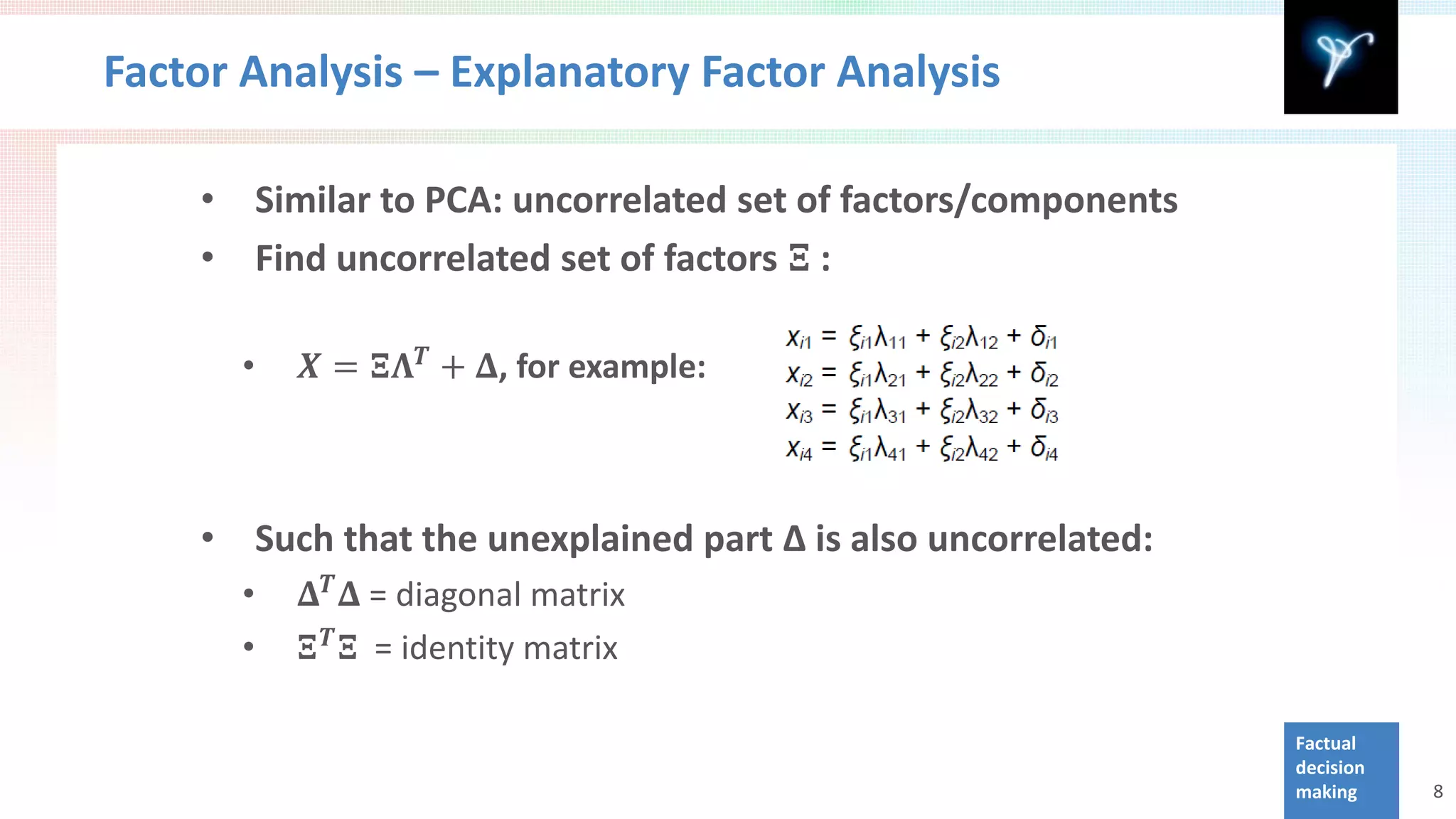
Factor Analysis – Explanatory Factor Analysis


            Find uncorrelated set of factors 𝚵 :
    •       Similar to PCA: uncorrelated set of factors/components
    •

        •      𝑿 = 𝚵𝚲 𝑻 + 𝚫, for example:


               𝚫 𝑻 𝚫 = diagonal matrix
    •       Such that the unexplained part Δ is also uncorrelated:

               𝚵 𝑻 𝚵 = identity matrix
        •
        •

                                                                     Factual
                                                                     decision
                                                                     making     8
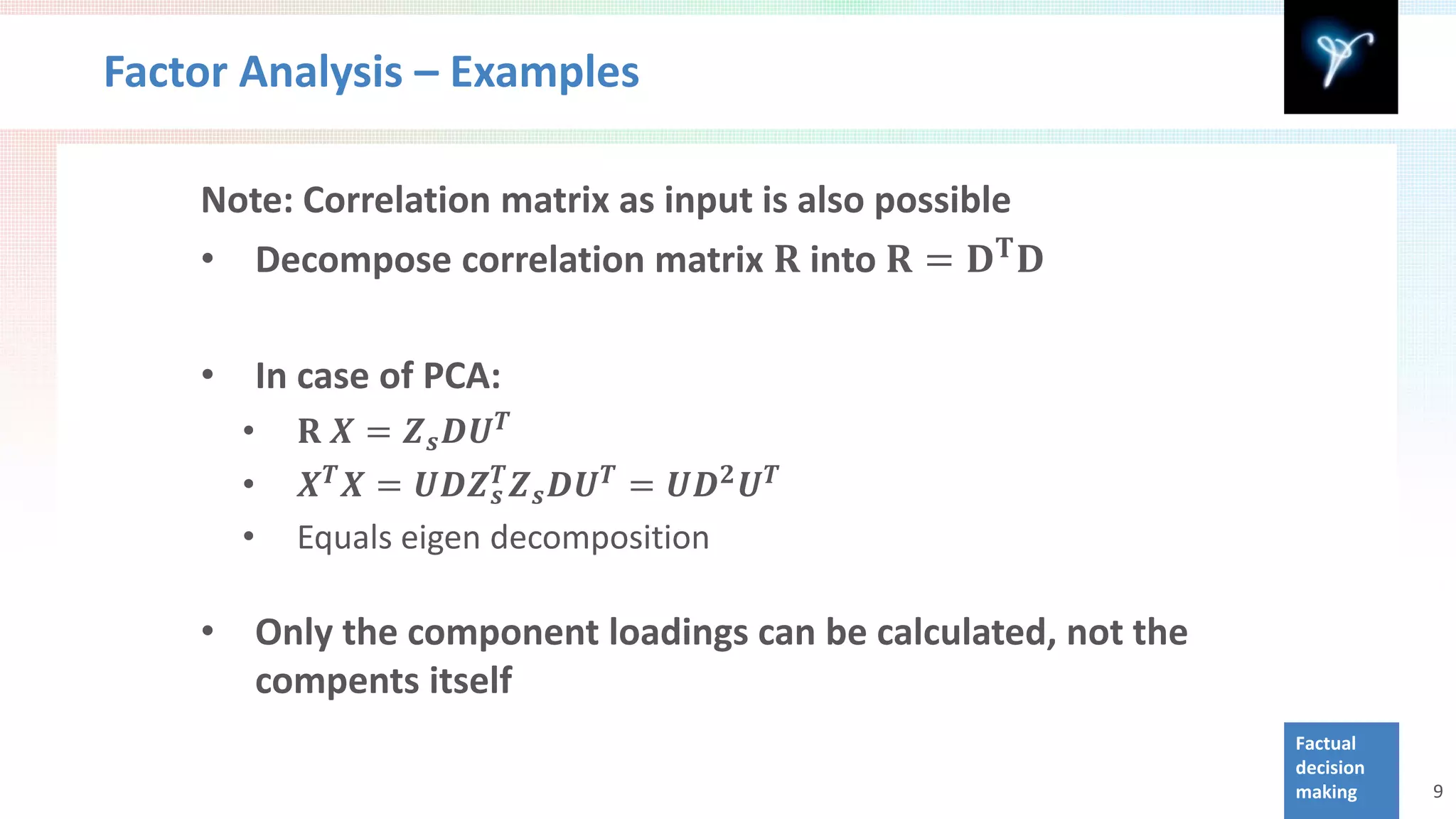
Factor Analysis – Examples


    • Decompose correlation matrix 𝐑 into 𝐑 = 𝐃 𝐓 𝐃
    Note: Correlation matrix as input is also possible


               𝐑 𝑿 = 𝒁 𝒔 𝑫𝑼 𝑻
    •       In case of PCA:

               𝑿 𝑻 𝑿 = 𝑼𝑼𝒁 𝒔𝑻 𝒁 𝒔 𝑫𝑼 𝑻 = 𝑼𝑫 𝟐 𝑼 𝑻
        •
        •
        •     Equals eigen decomposition

    •       Only the component loadings can be calculated, not the
            compents itself
                                                                     Factual
                                                                     decision
                                                                     making     9
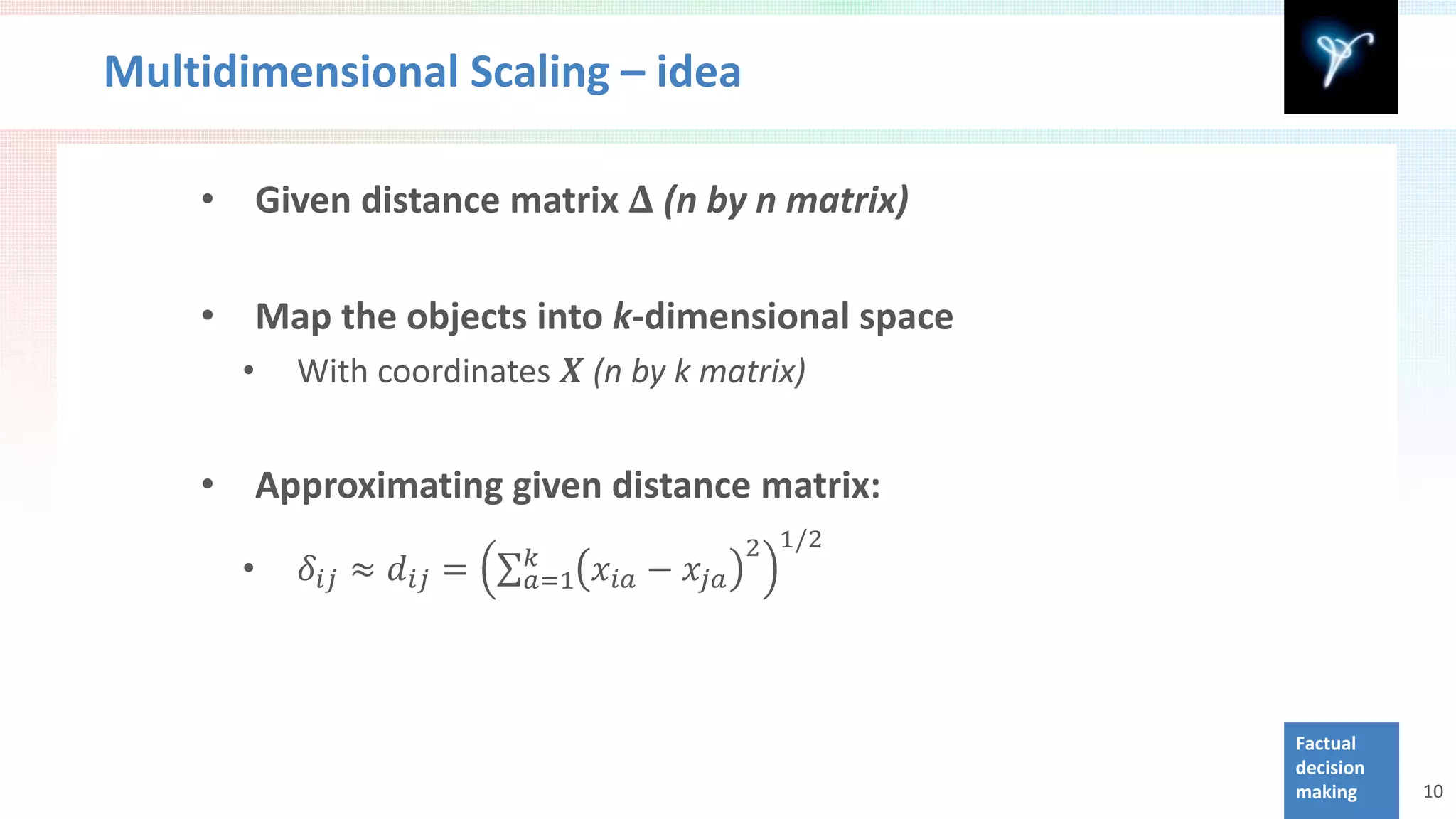
Multidimensional Scaling – idea

    •       Given distance matrix 𝚫 (n by n matrix)


              With coordinates 𝑿 (n by k matrix)
    •       Map the objects into k-dimensional space
        •


            Approximating given distance matrix:
                                                     2 1/2
               𝛿 𝑖𝑖 ≈ 𝑑 𝑖𝑖 = ∑         𝑥 𝑖𝑖 − 𝑥 𝑗𝑗
    •
                                 𝑘
        •                        𝑎=1


                                                             Factual
                                                             decision
                                                             making     10
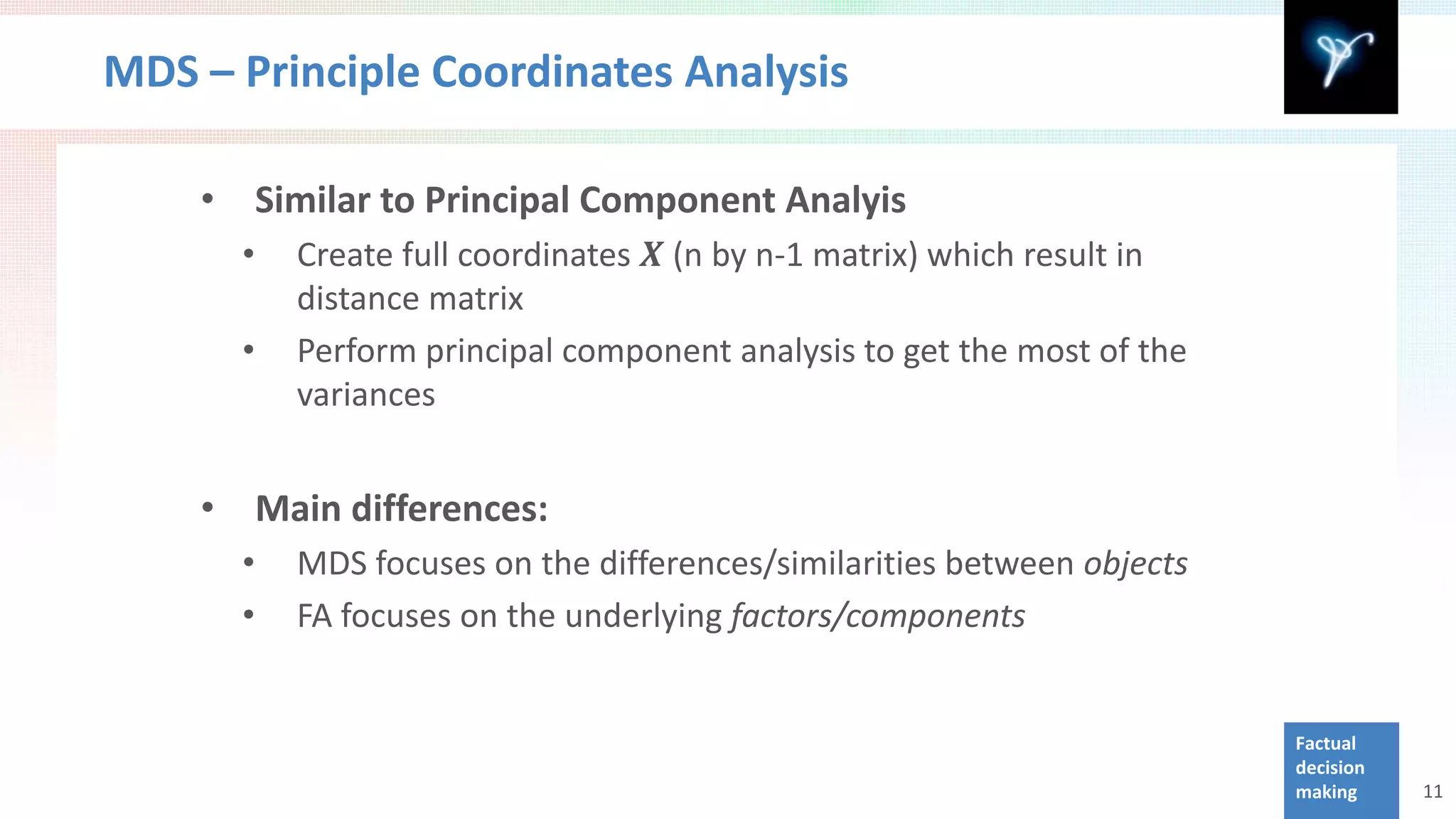
MDS – Principle Coordinates Analysis


              Create full coordinates 𝑿 (n by n-1 matrix) which result in
    •       Similar to Principal Component Analyis
        •
              distance matrix
        •     Perform principal component analysis to get the most of the
              variances


    •       Main differences:
        •     MDS focuses on the differences/similarities between objects
        •     FA focuses on the underlying factors/components


                                                                            Factual
                                                                            decision
                                                                            making     11
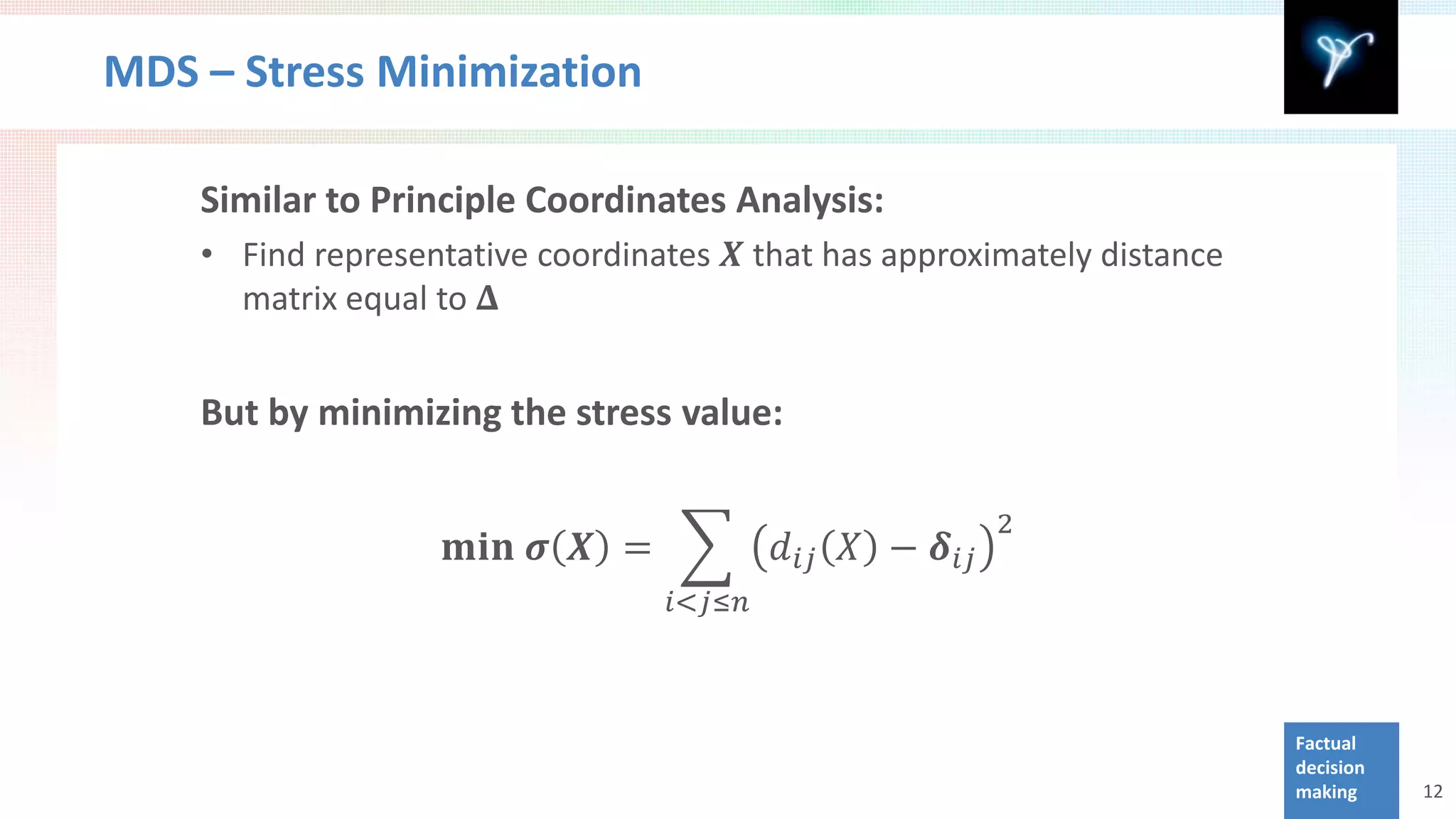
MDS – Stress Minimization


    • Find representative coordinates 𝑿 that has approximately distance
    Similar to Principle Coordinates Analysis:

      matrix equal to 𝚫


    But by minimizing the stress value:


                    𝐦𝐦𝐦 𝝈 𝑿 = �           𝑑 𝑖𝑖 𝑋 − 𝜹 𝑖𝑖
                                                          2

                                  𝑖<𝑗≤𝑛


                                                                          Factual
                                                                          decision
                                                                          making     12
Cluster Analysis – idea

    •       Grouping similar objects in clusters

    •       Two kinds of clustering methods:
        •     Partitioning methods (k-means)

        •     Hierarchical methods (dendrogram)


                                                   Factual
                                                   decision
                                                   making     13
Questions


            ?   Factual
                decision
                making     14

Multivariate statistics

  • 1.
    Multivariate statistics Overview Hoksan | January 10 ,2013 | Rotterdam Factual decision making
  • 2.
    Why multivariate statistics? • Observing the correlation or factors between variables • Summarizing (redundant) variables/observations • Reduce overfitting issues Factual decision making 2
  • 3.
    Outline • Factor analysis: • Principal Component Analysis • Explanatory Factor Analysis • Multidimensional scaling: • Principle Coordinates Analysis • Stress Minimization • Cluster Analysis Factual decision making 3
  • 4.
    Factor Analysis –idea • Given 𝑿 (n by m matrix) • Find p factor loadings 𝒁 from original data 𝑿 with : • 𝒙 𝒌 ≈ 𝑢1𝑘 𝒛 𝟏 + 𝑢2𝑘 𝒛 𝟐 + ⋯ + 𝑢 𝑗𝑗 𝒛 𝒑 → 𝑿 ≈ 𝒁𝒁 Variance matrix of 𝐙 equals diagonal matrix • Loadings are mutually uncorrelated • Factual decision making 4
  • 5.
    Specific matrix properties - Normalized data Xs: - 𝑋 𝑠𝑇 𝑋 𝑠 = correlation matrix: - Zero mean and equal standard deviation - 𝑐𝑐𝑐𝑐 𝑋 𝑖 , 𝑋 𝑗 = ∑ 𝑘 𝑥 𝑖𝑖 −𝑥̅ 𝑖 𝑥 𝑗𝑘 −𝑥̅ 𝑗 𝑠𝑠 𝑋 𝑖 ×𝑠𝑠 𝑋 𝑗 • 𝑈 𝑇 𝑈 = identity matrix • Orthonormal matrix U (rotation matrix) • If 𝑥 = 𝑎1 𝑧1 + 𝑎2 𝑧2 + 𝑎3 𝑧3 (with 𝑧 𝑖 independent • Variance of linear combination of uncorrelated variables: • 𝑥 𝑇 𝑥 = 𝑎1 (𝑧1𝑇 𝑧1 ) + 𝑎2 (𝑧2𝑇 𝑧2 ) + 𝑎3 (𝑧3𝑇 𝑧3 ) 2 2 2 variables) Factual decision making 5
  • 6.
    Factor Analysis –Principal Component Analysis • Find uncorrelated set of components 𝒁 • Such that the variances 𝑣𝑣𝑣(𝒛 𝒊 ) are maximized Based on Singular Value Decomposition: 𝐗 = 𝒁 𝒔 𝑫𝑼 𝑻 1 ⋯ 0 1 ⋯ 0 • 𝑍 𝑠𝑇 𝑍 𝑠 = ⋮ ⋱ ⋮ = 𝐼, 𝑈 𝑈= ⋮ ⋱ ⋮ = 𝐼 𝑇 0 ⋯ 1 0 ⋯ 1 – 𝑑1 ⋯ 0 𝐷= ⋮ ⋱ ⋮ = diagional matrix 0 ⋯ 𝑑𝑘 – Factual decision making 6
  • 7.
    Factor Loadings Given approximation of X with factors/components: 𝑿 = 𝒁 𝒔 𝑫𝑼 𝑻 (with components 𝒁 𝒔 ) The variances of X equals: 𝒙𝒌 = 𝑢1𝑘 𝑑1 𝒛 𝟏 + 𝑢2𝑘 𝑑2 𝒛 𝟐 + ⋯ + 𝑢 𝑗𝑗 𝑑 𝑝 𝒛 𝒑 𝑣𝑣𝑣 𝒙 𝒌 = 𝑑1 𝑢1𝑘 + 𝑑2 𝑢2𝑘 + ⋯ + 𝑑 2 𝑢2 2 2 2 2 𝑝 𝑗𝑗 � 𝑣𝑣𝑣 𝒙 𝒌 = 𝑑1 + 𝑑2 + ⋯ + 𝑑 2 2 2 𝑝 𝒌 Factual decision making 7
  • 8.
    Factor Analysis –Explanatory Factor Analysis Find uncorrelated set of factors 𝚵 : • Similar to PCA: uncorrelated set of factors/components • • 𝑿 = 𝚵𝚲 𝑻 + 𝚫, for example: 𝚫 𝑻 𝚫 = diagonal matrix • Such that the unexplained part Δ is also uncorrelated: 𝚵 𝑻 𝚵 = identity matrix • • Factual decision making 8
  • 9.
    Factor Analysis –Examples • Decompose correlation matrix 𝐑 into 𝐑 = 𝐃 𝐓 𝐃 Note: Correlation matrix as input is also possible 𝐑 𝑿 = 𝒁 𝒔 𝑫𝑼 𝑻 • In case of PCA: 𝑿 𝑻 𝑿 = 𝑼𝑼𝒁 𝒔𝑻 𝒁 𝒔 𝑫𝑼 𝑻 = 𝑼𝑫 𝟐 𝑼 𝑻 • • • Equals eigen decomposition • Only the component loadings can be calculated, not the compents itself Factual decision making 9
  • 10.
    Multidimensional Scaling –idea • Given distance matrix 𝚫 (n by n matrix) With coordinates 𝑿 (n by k matrix) • Map the objects into k-dimensional space • Approximating given distance matrix: 2 1/2 𝛿 𝑖𝑖 ≈ 𝑑 𝑖𝑖 = ∑ 𝑥 𝑖𝑖 − 𝑥 𝑗𝑗 • 𝑘 • 𝑎=1 Factual decision making 10
  • 11.
    MDS – PrincipleCoordinates Analysis Create full coordinates 𝑿 (n by n-1 matrix) which result in • Similar to Principal Component Analyis • distance matrix • Perform principal component analysis to get the most of the variances • Main differences: • MDS focuses on the differences/similarities between objects • FA focuses on the underlying factors/components Factual decision making 11
  • 12.
    MDS – StressMinimization • Find representative coordinates 𝑿 that has approximately distance Similar to Principle Coordinates Analysis: matrix equal to 𝚫 But by minimizing the stress value: 𝐦𝐦𝐦 𝝈 𝑿 = � 𝑑 𝑖𝑖 𝑋 − 𝜹 𝑖𝑖 2 𝑖<𝑗≤𝑛 Factual decision making 12
  • 13.
    Cluster Analysis –idea • Grouping similar objects in clusters • Two kinds of clustering methods: • Partitioning methods (k-means) • Hierarchical methods (dendrogram) Factual decision making 13
  • 14.
    Questions ? Factual decision making 14