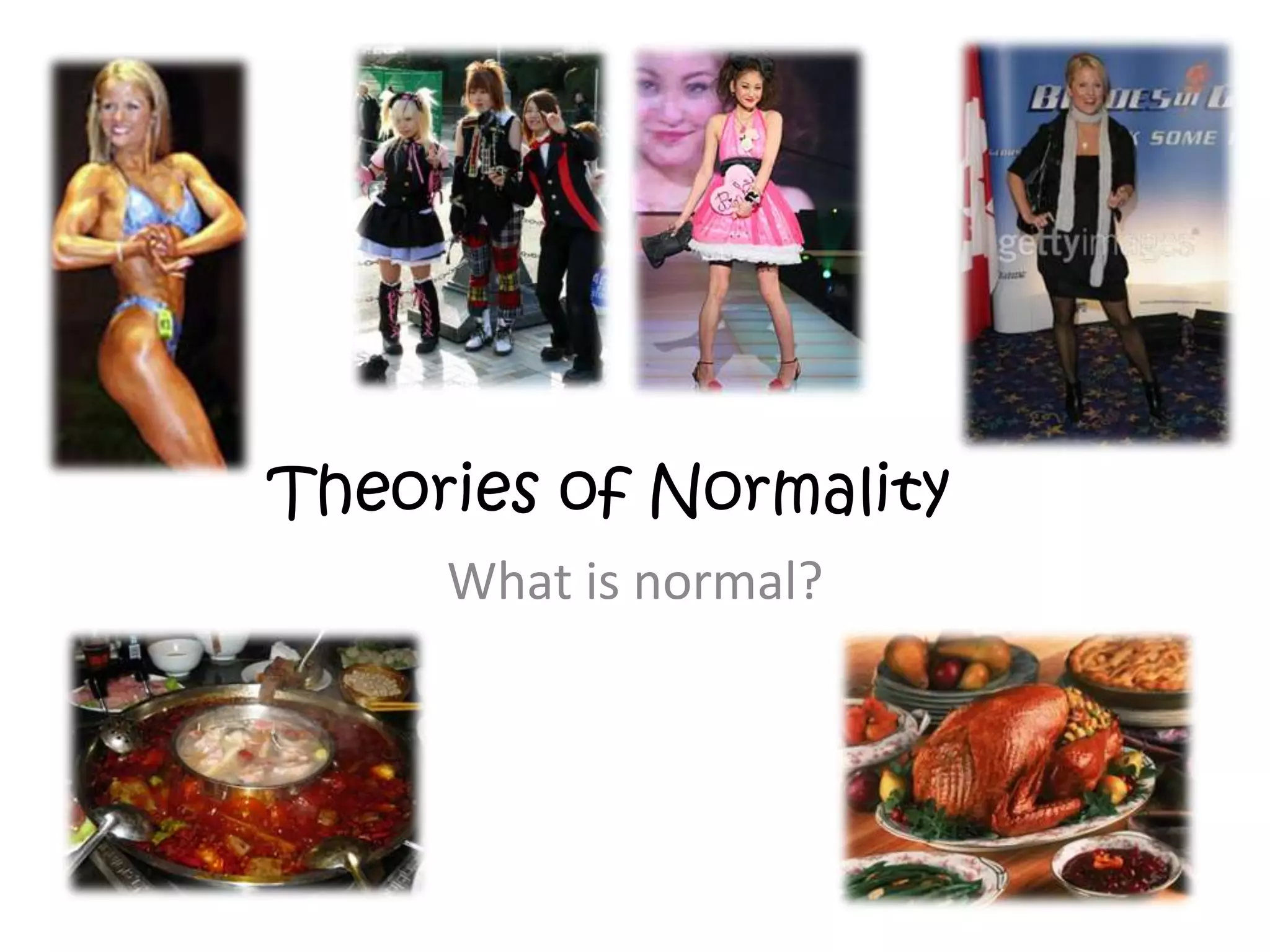
Theories of NormalityWhat is normal?
Categories the following behaviours as either normal or abnormal...homosexualityCrying at a funeralHaving 10 childrenheterosexualityNot talking to Libby... everHearing or seeing that aren’t thereHaving an abnormally high IQWearing a bikini in winterCannibalismNervousness before an examFeeling tired all the timePhobia of spidersUrinating in publicSleeping all dayTapping on every 3rd pane in a fence when walkingPhobia of rabbitsSmoking cigarettes Eating 2 pizzas, a pie and a big packet of nacho cheese doritosUse of leeches in medicineEnjoying coming to Psych class with Miss Sun
Theories of NormalityWe are going to be looking at SIX theories of normality:SocioculturalFunctionalHistoricalSituationalMedicalStatistical	You should be able to describe and distinguish between each of these theories AND be able to discuss their advantages and disadvantages.
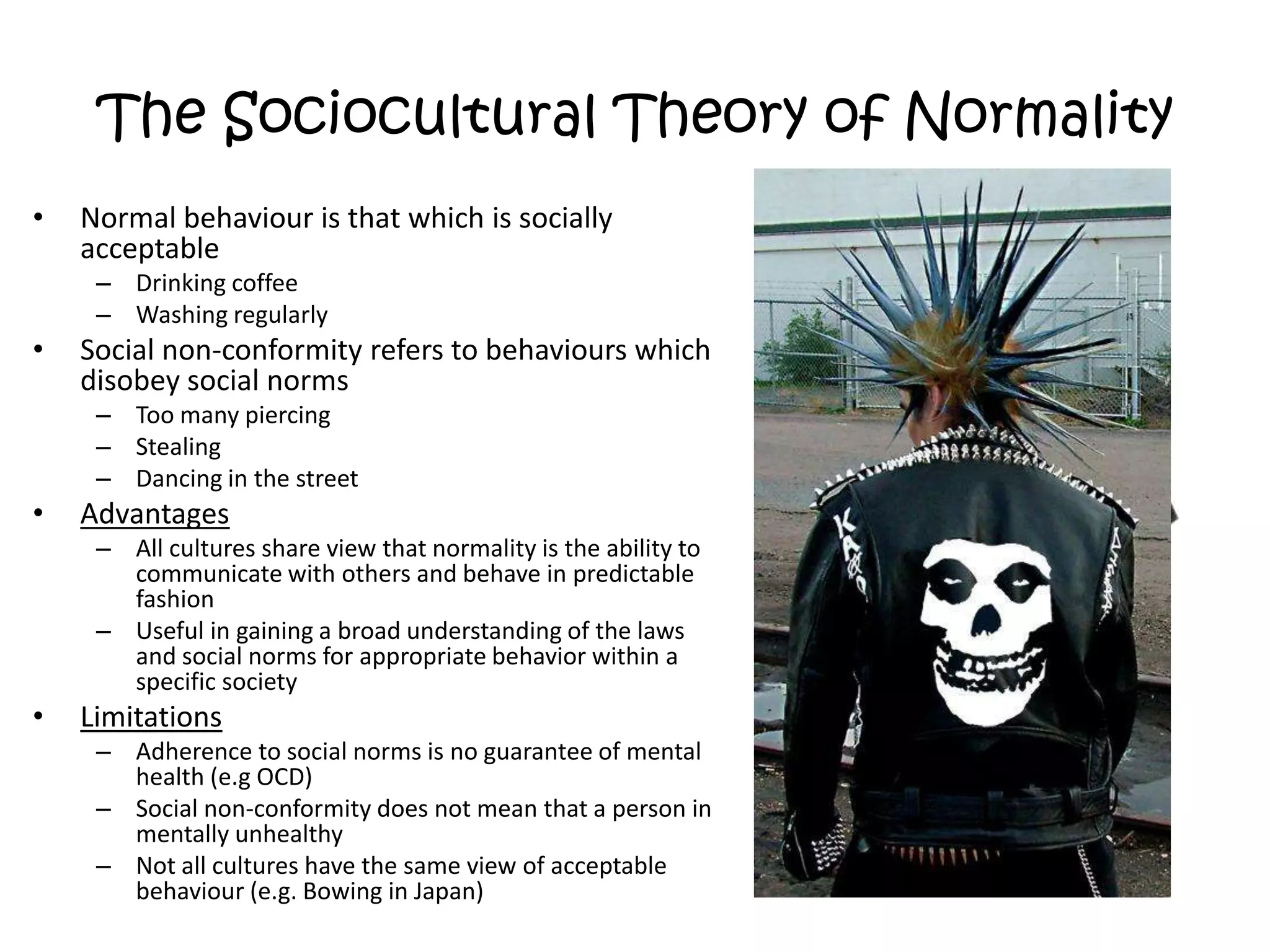
The Sociocultural Theory of NormalityNormal behaviour is that which is socially acceptableDrinking coffeeWashing regularlySocial non-conformity refers to behaviours which disobey social normsToo many piercingStealingDancing in the streetAdvantagesAll cultures share view that normality is the ability to communicate with others and behave in predictable fashionUseful in gaining a broad understanding of the laws and social norms for appropriate behavior within a specific societyLimitationsAdherence to social norms is no guarantee of mental health (e.g OCD)Social non-conformity does not mean that a person in mentally unhealthyNot all cultures have the same view of acceptable behaviour (e.g. Bowing in Japan)
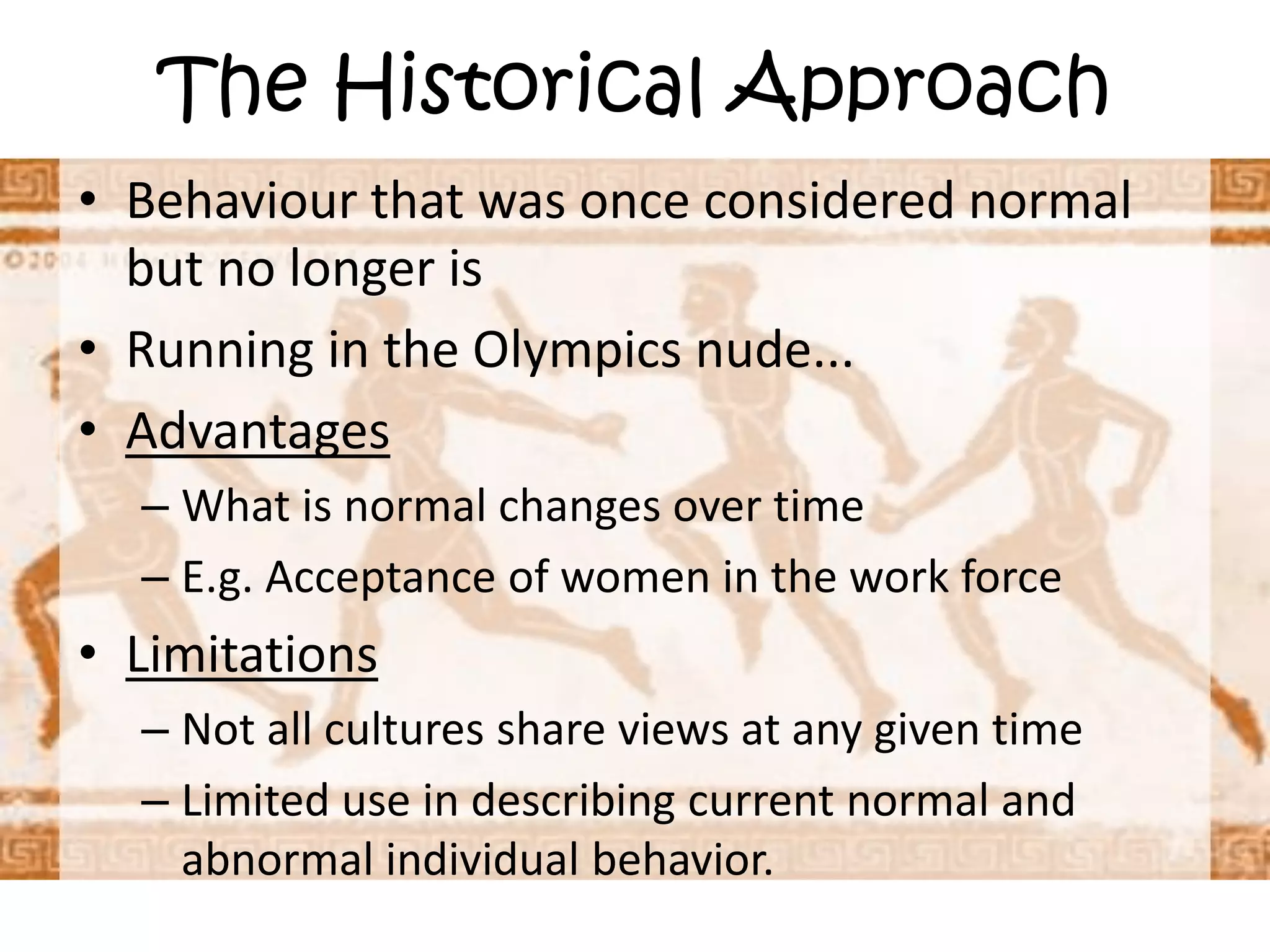
The Historical ApproachBehaviour that was once considered normal but no longer isRunning in the Olympics nude... AdvantagesWhat is normal changes over timeE.g. Acceptance of women in the work forceLimitationsNot all cultures share views at any given timeLimited use in describing current normal and abnormal individual behavior.
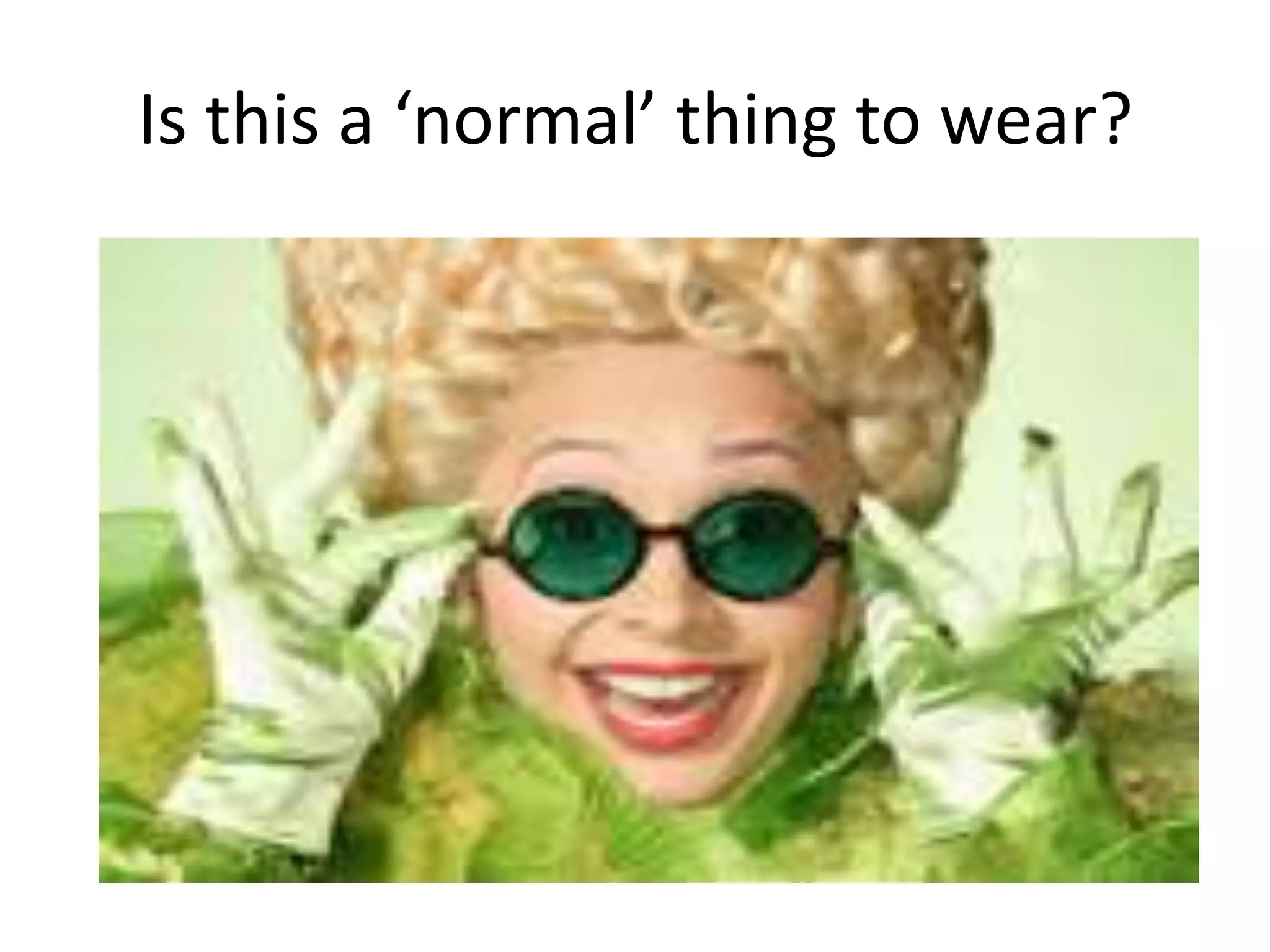
Is this a ‘normal’ thing to wear?
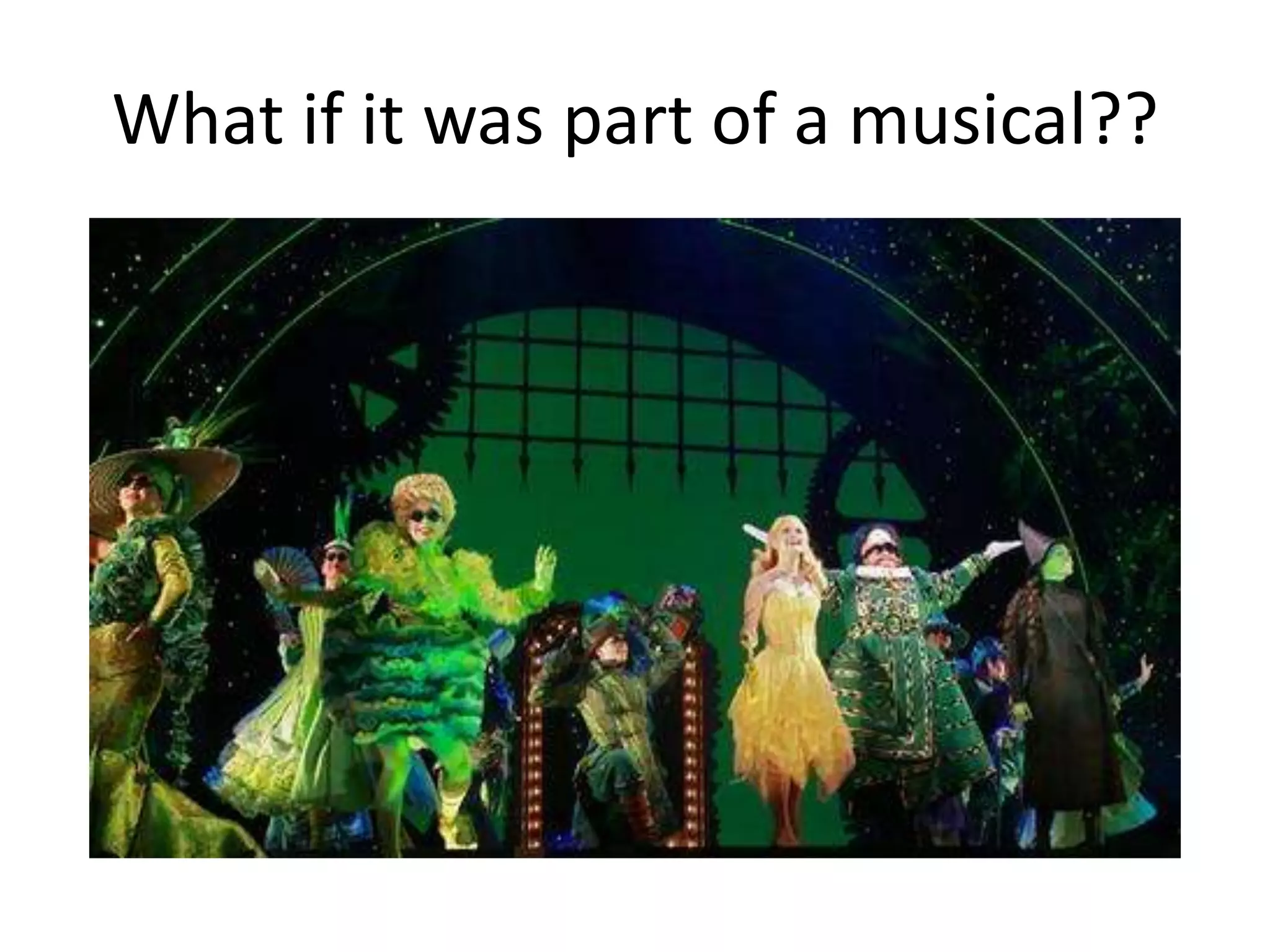
What if it was part of a musical??
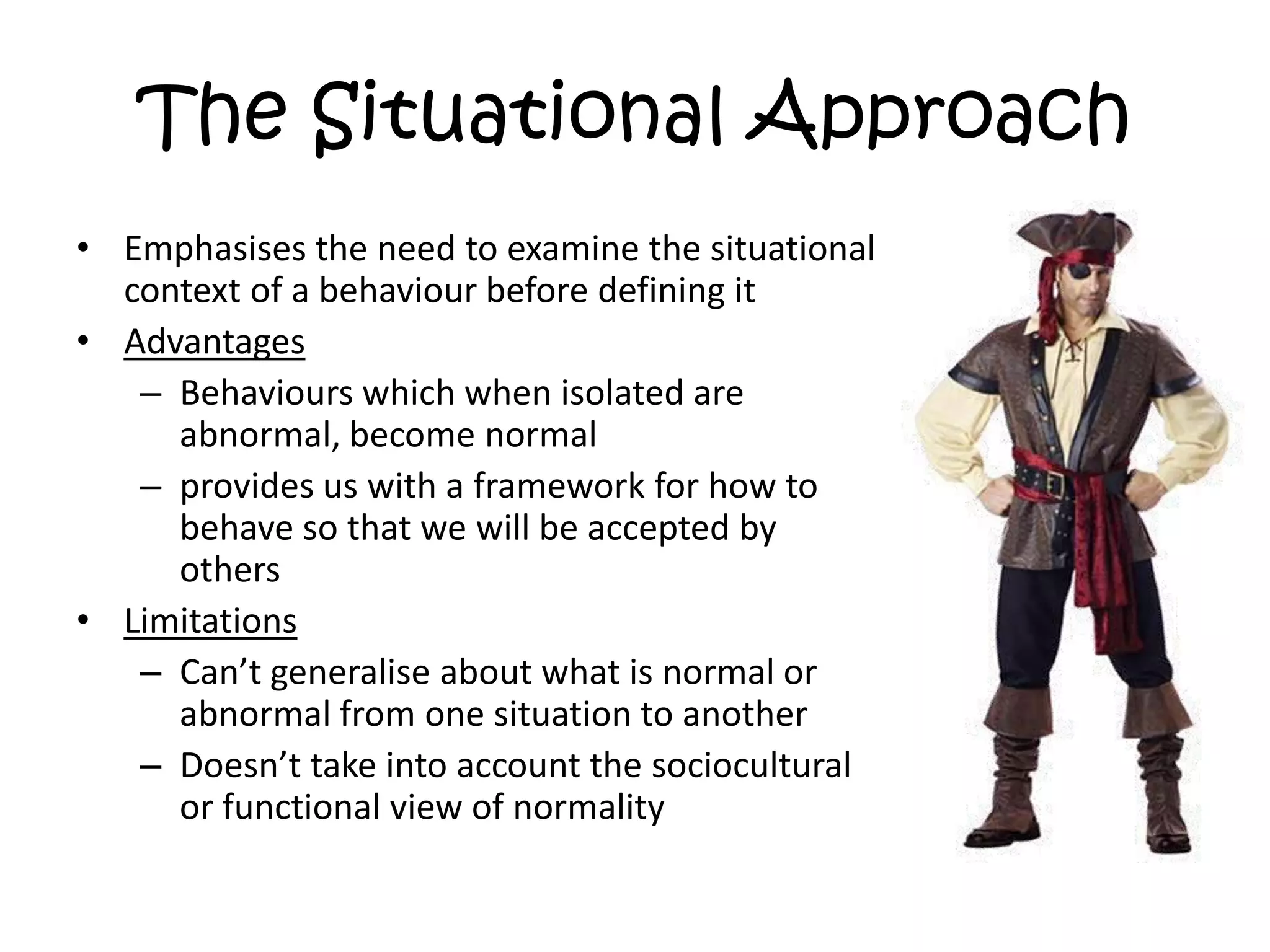
The Situational ApproachEmphasises the need to examine the situational context of a behaviour before defining itAdvantagesBehaviours which when isolated are abnormal, become normalprovides us with a framework for how to behave so that we will be accepted by othersLimitationsCan’t generalise about what is normal or abnormal from one situation to anotherDoesn’t take into account the sociocultural or functional view of normality
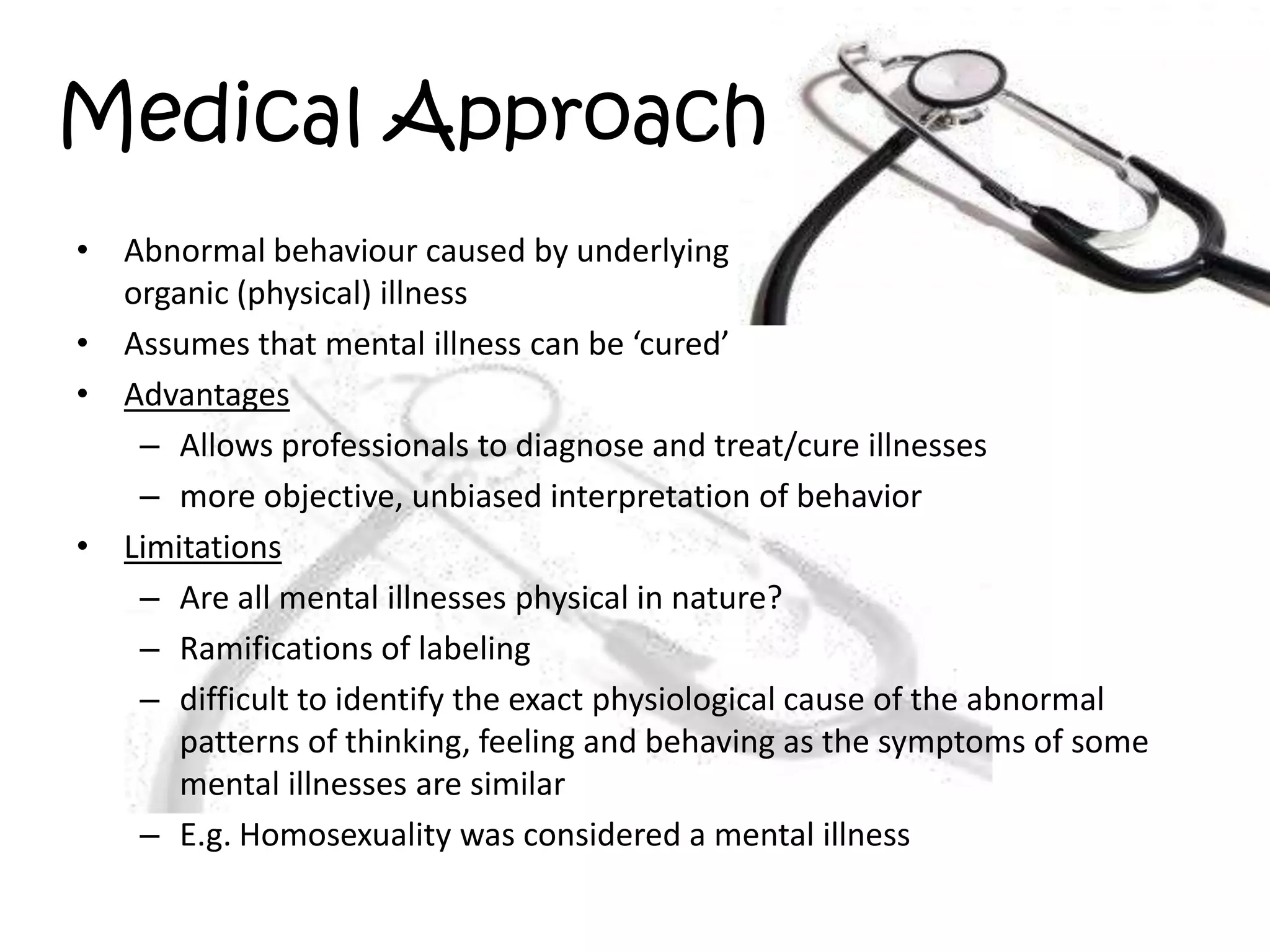
Medical ApproachAbnormal behaviour caused by underlying organic (physical) illnessAssumes that mental illness can be ‘cured’AdvantagesAllows professionals to diagnose and treat/cure illnessesmore objective, unbiased interpretation of behaviorLimitationsAre all mental illnesses physical in nature?Ramifications of labelingdifficult to identify the exact physiological cause of the abnormal patterns of thinking, feeling and behaving as the symptoms of some mental illnesses are similarE.g. Homosexuality was considered a mental illness
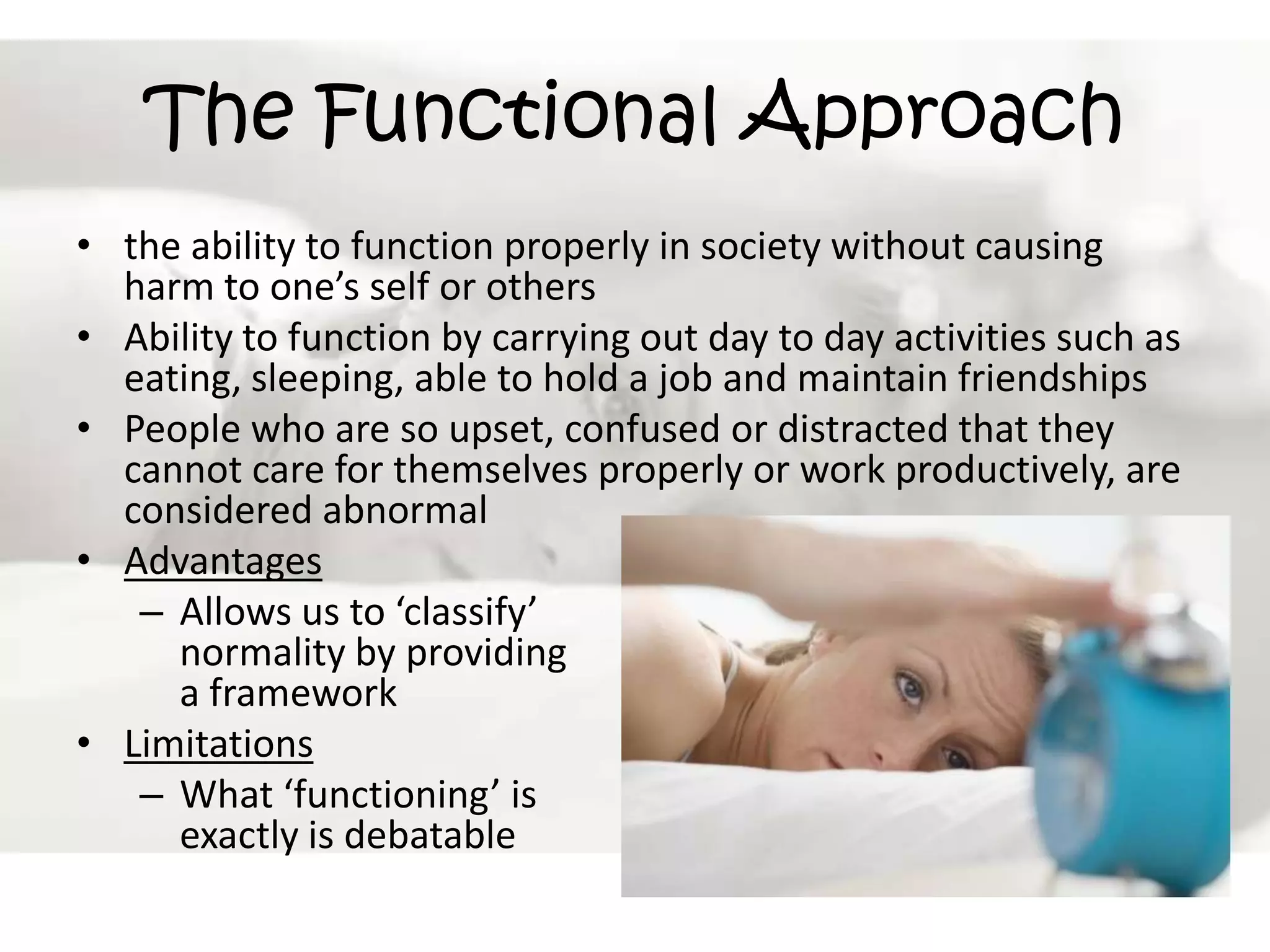
The Functional Approachthe ability to function properly in society without causing harm to one’s self or othersAbility to function by carrying out day to day activities such as eating, sleeping, able to hold a job and maintain friendshipsPeople who are so upset, confused or distracted that they cannot care for themselves properly or work productively, are considered abnormalAdvantagesAllows us to ‘classify’ normality by providing a frameworkLimitationsWhat ‘functioning’ is exactly is debatable
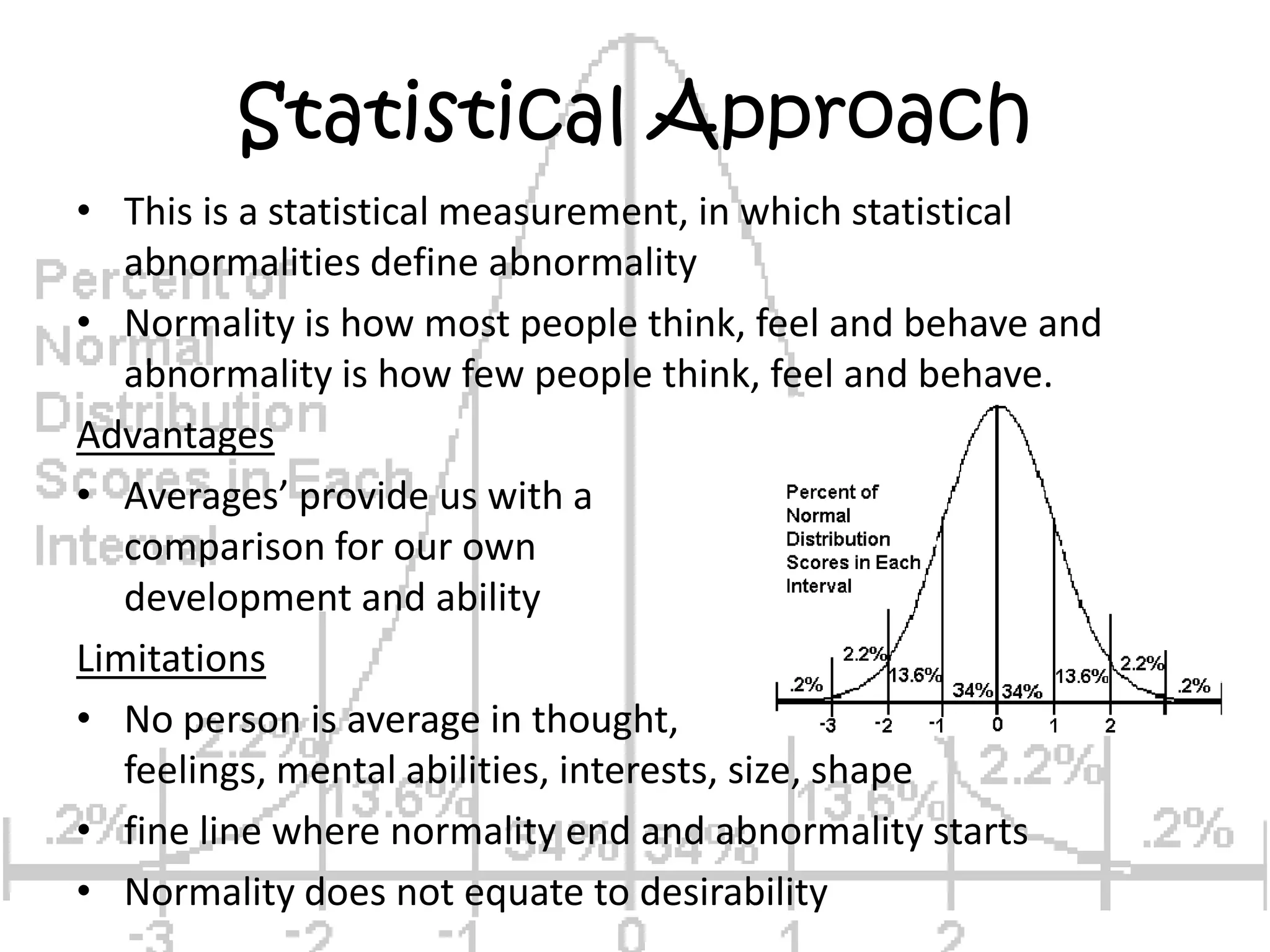
Statistical ApproachThis is a statistical measurement, in which statistical abnormalities define abnormalityNormality is how most people think, feel and behave and abnormality is how few people think, feel and behave.AdvantagesAverages’ provide us with a comparison for our own development and abilityLimitationsNo person is average in thought, feelings, mental abilities, interests, size, shapefine line where normality end and abnormality startsNormality does not equate to desirability
InsanityLegal termInability to manage one’s affairs or foresee the consequences of one’s actions
PsychopathologyScientific study of mental, emotional and behavioural disordersDrug addictionsCompulsive gamblingLoss of contact with realityAny behaviour which interferes with personal growth and fulfillment

Theories Of Normality

  • 2.
  • 4.
    Categories the followingbehaviours as either normal or abnormal...homosexualityCrying at a funeralHaving 10 childrenheterosexualityNot talking to Libby... everHearing or seeing that aren’t thereHaving an abnormally high IQWearing a bikini in winterCannibalismNervousness before an examFeeling tired all the timePhobia of spidersUrinating in publicSleeping all dayTapping on every 3rd pane in a fence when walkingPhobia of rabbitsSmoking cigarettes Eating 2 pizzas, a pie and a big packet of nacho cheese doritosUse of leeches in medicineEnjoying coming to Psych class with Miss Sun
  • 5.
    Theories of NormalityWeare going to be looking at SIX theories of normality:SocioculturalFunctionalHistoricalSituationalMedicalStatistical You should be able to describe and distinguish between each of these theories AND be able to discuss their advantages and disadvantages.
  • 6.
    The Sociocultural Theoryof NormalityNormal behaviour is that which is socially acceptableDrinking coffeeWashing regularlySocial non-conformity refers to behaviours which disobey social normsToo many piercingStealingDancing in the streetAdvantagesAll cultures share view that normality is the ability to communicate with others and behave in predictable fashionUseful in gaining a broad understanding of the laws and social norms for appropriate behavior within a specific societyLimitationsAdherence to social norms is no guarantee of mental health (e.g OCD)Social non-conformity does not mean that a person in mentally unhealthyNot all cultures have the same view of acceptable behaviour (e.g. Bowing in Japan)
  • 7.
    The Historical ApproachBehaviourthat was once considered normal but no longer isRunning in the Olympics nude... AdvantagesWhat is normal changes over timeE.g. Acceptance of women in the work forceLimitationsNot all cultures share views at any given timeLimited use in describing current normal and abnormal individual behavior.
  • 8.
    Is this a‘normal’ thing to wear?
  • 9.
    What if itwas part of a musical??
  • 10.
    The Situational ApproachEmphasisesthe need to examine the situational context of a behaviour before defining itAdvantagesBehaviours which when isolated are abnormal, become normalprovides us with a framework for how to behave so that we will be accepted by othersLimitationsCan’t generalise about what is normal or abnormal from one situation to anotherDoesn’t take into account the sociocultural or functional view of normality
  • 11.
    Medical ApproachAbnormal behaviourcaused by underlying organic (physical) illnessAssumes that mental illness can be ‘cured’AdvantagesAllows professionals to diagnose and treat/cure illnessesmore objective, unbiased interpretation of behaviorLimitationsAre all mental illnesses physical in nature?Ramifications of labelingdifficult to identify the exact physiological cause of the abnormal patterns of thinking, feeling and behaving as the symptoms of some mental illnesses are similarE.g. Homosexuality was considered a mental illness
  • 12.
    The Functional Approachtheability to function properly in society without causing harm to one’s self or othersAbility to function by carrying out day to day activities such as eating, sleeping, able to hold a job and maintain friendshipsPeople who are so upset, confused or distracted that they cannot care for themselves properly or work productively, are considered abnormalAdvantagesAllows us to ‘classify’ normality by providing a frameworkLimitationsWhat ‘functioning’ is exactly is debatable
  • 13.
    Statistical ApproachThis isa statistical measurement, in which statistical abnormalities define abnormalityNormality is how most people think, feel and behave and abnormality is how few people think, feel and behave.AdvantagesAverages’ provide us with a comparison for our own development and abilityLimitationsNo person is average in thought, feelings, mental abilities, interests, size, shapefine line where normality end and abnormality startsNormality does not equate to desirability
  • 14.
    InsanityLegal termInability tomanage one’s affairs or foresee the consequences of one’s actions
  • 15.
    PsychopathologyScientific study ofmental, emotional and behavioural disordersDrug addictionsCompulsive gamblingLoss of contact with realityAny behaviour which interferes with personal growth and fulfillment