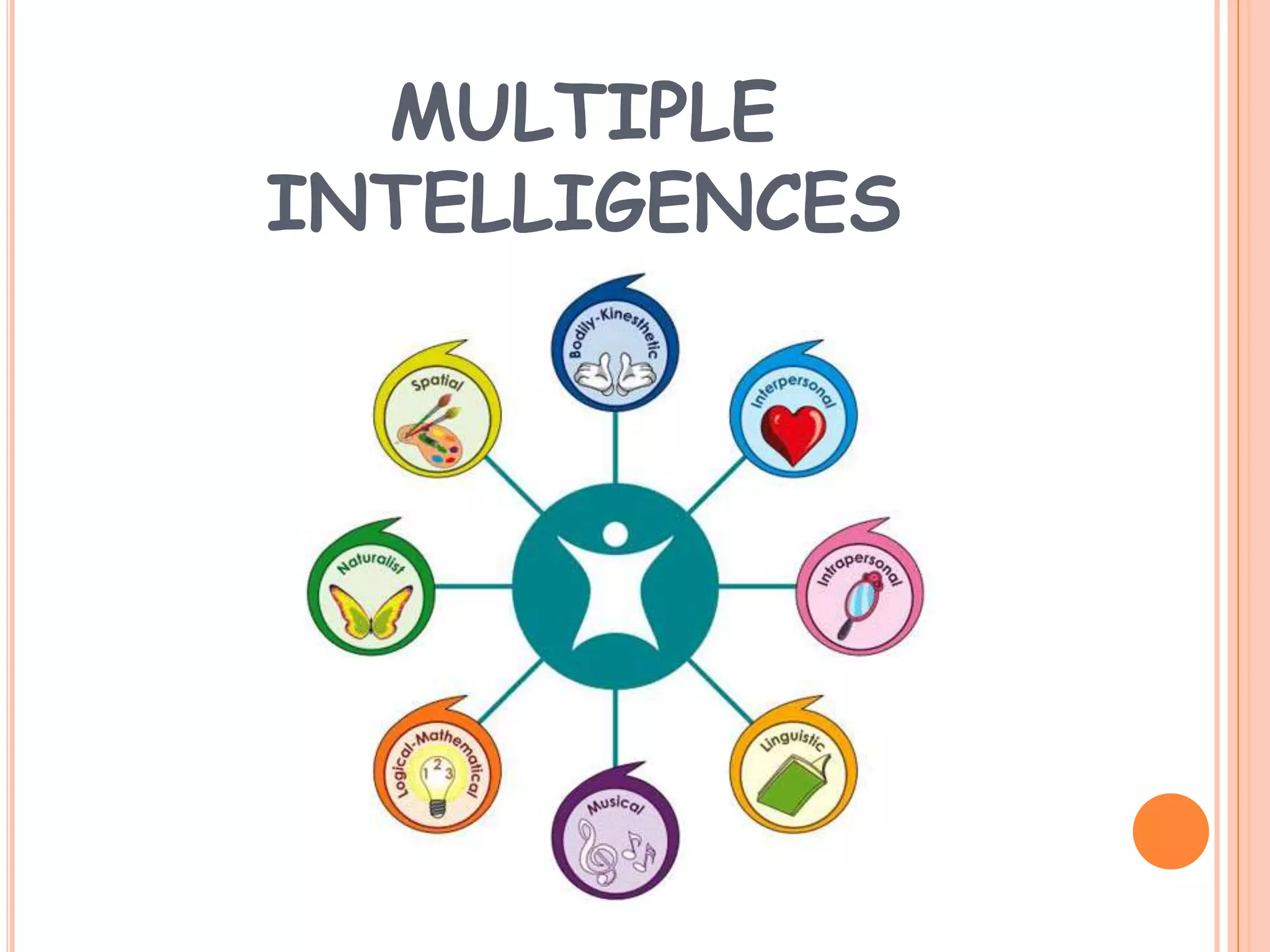
MULTIPLE
INTELLIGENCES
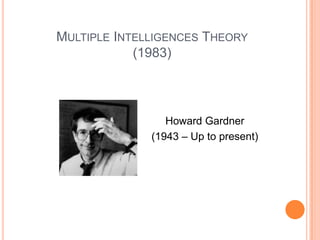
MULTIPLE INTELLIGENCES THEORY
            (1983)


                 Howard Gardner
              (1943 – Up to present)
 . Is there someone in your family who everyone says is
  brilliant? Who and why?
 2. Do you know anyone who shines at languages? How
  do they do it?
 3. Some people say they get flashes of inspiration in
  strange places (in the shower for example). Did this ever
  happen to you? Do you ever get flashes of inspiration?
  Where?
 4. Can you remember someone from your schooldays
  who was very dull? What did they do to make you think
  that?
 5. What do you think of Multiple Intelligence Theory? Do
  you think it is a good way of measuring intelligence? Do
  you think intelligence can be measured?
What does “intelligence” mean to you?


   Intelligence is sometimes measured by a person’s
    IQ (intelligence quotient) which can be obtained
    through a series of tests. The higher your IQ, the
    brighter you are. Tests that measure a person’s IQ
    often consist of a series of logical problems, like
    this one: What is the next letter in the sequence?
    O,T,T,F,F,S,S,E…
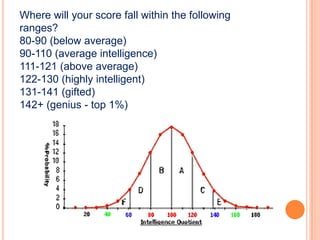
Where will your score fall within the following
ranges?
80-90 (below average)
90-110 (average intelligence)
111-121 (above average)
122-130 (highly intelligent)
131-141 (gifted)
142+ (genius - top 1%)
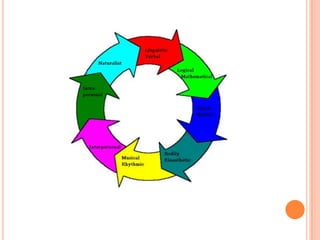
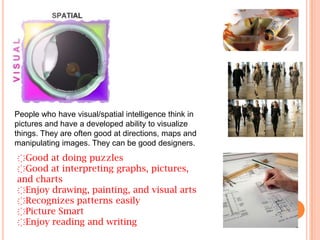
People who have visual/spatial intelligence think in
pictures and have a developed ability to visualize
things. They are often good at directions, maps and
manipulating images. They can be good designers.
҉Good at doing puzzles
҉Good at interpreting graphs, pictures,
and charts
҉Enjoy drawing, painting, and visual arts
҉Recognizes patterns easily
҉Picture Smart
҉Enjoy reading and writing
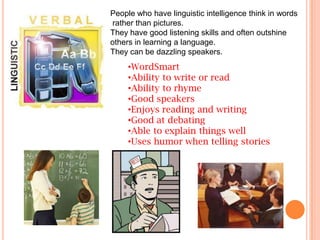
People who have linguistic intelligence think in words
rather than pictures.
They have good listening skills and often outshine
others in learning a language.
They can be dazzling speakers.
     •WordSmart
     •Ability to write or read
     •Ability to rhyme
     •Good speakers
     •Enjoys reading and writing
     •Good at debating
     •Able to explain things well
     •Uses humor when telling stories
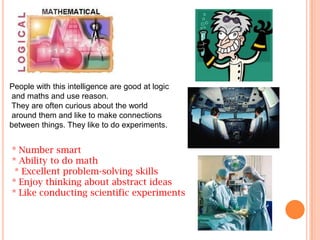
People with this intelligence are good at logic
and maths and use reason.
They are often curious about the world
around them and like to make connections
between things. They like to do experiments.


* Number smart
* Ability to do math
 * Excellent problem-solving skills
* Enjoy thinking about abstract ideas
* Like conducting scientific experiments
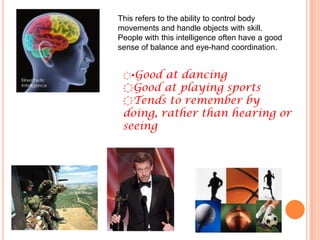
This refers to the ability to control body
movements and handle objects with skill.
People with this intelligence often have a good
sense of balance and eye-hand coordination.


 ҉•Good at dancing
 ҉Good at playing sports
 ҉Tends to remember by
 doing, rather than hearing or
 seeing
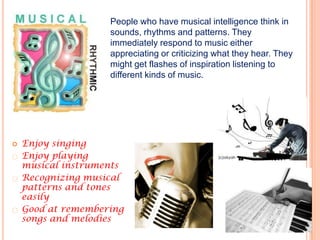
People who have musical intelligence think in
                    sounds, rhythms and patterns. They
                    immediately respond to music either
                    appreciating or criticizing what they hear. They
                    might get flashes of inspiration listening to
                    different kinds of music.


   Enjoy singing
҉   Enjoy playing
    musical instruments
҉   Recognizing musical
    patterns and tones
    easily
҉   Good at remembering
    songs and melodies
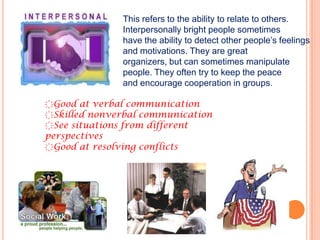
This refers to the ability to relate to others.
              Interpersonally bright people sometimes
              have the ability to detect other people’s feelings
              and motivations. They are great
              organizers, but can sometimes manipulate
              people. They often try to keep the peace
              and encourage cooperation in groups.

҉Good at verbal communication
҉Skilled nonverbal communication
҉See situations from different
perspectives
҉Good at resolving conflicts
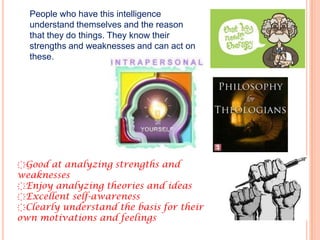
People who have this intelligence
  understand themselves and the reason
  that they do things. They know their
  strengths and weaknesses and can act on
  these.


҉Good at analyzing strengths and
weaknesses
҉Enjoy analyzing theories and ideas
҉Excellent self-awareness
҉Clearly understand the basis for their
own motivations and feelings
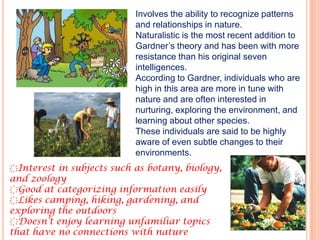
Involves the ability to recognize patterns
                           and relationships in nature.
                           Naturalistic is the most recent addition to
                           Gardner’s theory and has been with more
                           resistance than his original seven
                           intelligences.
                           According to Gardner, individuals who are
                           high in this area are more in tune with
                           nature and are often interested in
                           nurturing, exploring the environment, and
                           learning about other species.
                           These individuals are said to be highly
                           aware of even subtle changes to their
                           environments.
҉Interest in subjects such as botany, biology,
and zoology
҉Good at categorizing information easily
҉Likes camping, hiking, gardening, and
exploring the outdoors
҉Doesn’t enjoy learning unfamiliar topics
that have no connections with nature
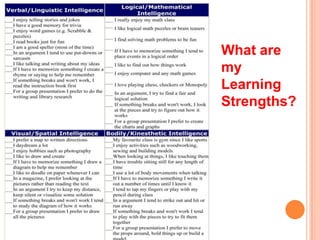
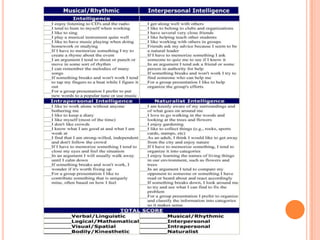
What are
my
Learning
Strengths?
Multiple intelligences mine

Multiple intelligences mine

  • 1.
  • 2.
    MULTIPLE INTELLIGENCES THEORY (1983) Howard Gardner (1943 – Up to present)
  • 3.
     . Isthere someone in your family who everyone says is brilliant? Who and why?  2. Do you know anyone who shines at languages? How do they do it?  3. Some people say they get flashes of inspiration in strange places (in the shower for example). Did this ever happen to you? Do you ever get flashes of inspiration? Where?  4. Can you remember someone from your schooldays who was very dull? What did they do to make you think that?  5. What do you think of Multiple Intelligence Theory? Do you think it is a good way of measuring intelligence? Do you think intelligence can be measured?
  • 4.
    What does “intelligence”mean to you?  Intelligence is sometimes measured by a person’s IQ (intelligence quotient) which can be obtained through a series of tests. The higher your IQ, the brighter you are. Tests that measure a person’s IQ often consist of a series of logical problems, like this one: What is the next letter in the sequence? O,T,T,F,F,S,S,E…
  • 5.
    Where will yourscore fall within the following ranges? 80-90 (below average) 90-110 (average intelligence) 111-121 (above average) 122-130 (highly intelligent) 131-141 (gifted) 142+ (genius - top 1%)
  • 7.
    People who havevisual/spatial intelligence think in pictures and have a developed ability to visualize things. They are often good at directions, maps and manipulating images. They can be good designers. ҉Good at doing puzzles ҉Good at interpreting graphs, pictures, and charts ҉Enjoy drawing, painting, and visual arts ҉Recognizes patterns easily ҉Picture Smart ҉Enjoy reading and writing
  • 8.
    People who havelinguistic intelligence think in words rather than pictures. They have good listening skills and often outshine others in learning a language. They can be dazzling speakers. •WordSmart •Ability to write or read •Ability to rhyme •Good speakers •Enjoys reading and writing •Good at debating •Able to explain things well •Uses humor when telling stories
  • 9.
    People with thisintelligence are good at logic and maths and use reason. They are often curious about the world around them and like to make connections between things. They like to do experiments. * Number smart * Ability to do math * Excellent problem-solving skills * Enjoy thinking about abstract ideas * Like conducting scientific experiments
  • 10.
    This refers tothe ability to control body movements and handle objects with skill. People with this intelligence often have a good sense of balance and eye-hand coordination. ҉•Good at dancing ҉Good at playing sports ҉Tends to remember by doing, rather than hearing or seeing
  • 11.
    People who havemusical intelligence think in sounds, rhythms and patterns. They immediately respond to music either appreciating or criticizing what they hear. They might get flashes of inspiration listening to different kinds of music.  Enjoy singing ҉ Enjoy playing musical instruments ҉ Recognizing musical patterns and tones easily ҉ Good at remembering songs and melodies
  • 12.
    This refers tothe ability to relate to others. Interpersonally bright people sometimes have the ability to detect other people’s feelings and motivations. They are great organizers, but can sometimes manipulate people. They often try to keep the peace and encourage cooperation in groups. ҉Good at verbal communication ҉Skilled nonverbal communication ҉See situations from different perspectives ҉Good at resolving conflicts
  • 13.
    People who havethis intelligence understand themselves and the reason that they do things. They know their strengths and weaknesses and can act on these. ҉Good at analyzing strengths and weaknesses ҉Enjoy analyzing theories and ideas ҉Excellent self-awareness ҉Clearly understand the basis for their own motivations and feelings
  • 14.
    Involves the abilityto recognize patterns and relationships in nature. Naturalistic is the most recent addition to Gardner’s theory and has been with more resistance than his original seven intelligences. According to Gardner, individuals who are high in this area are more in tune with nature and are often interested in nurturing, exploring the environment, and learning about other species. These individuals are said to be highly aware of even subtle changes to their environments. ҉Interest in subjects such as botany, biology, and zoology ҉Good at categorizing information easily ҉Likes camping, hiking, gardening, and exploring the outdoors ҉Doesn’t enjoy learning unfamiliar topics that have no connections with nature
  • 15.