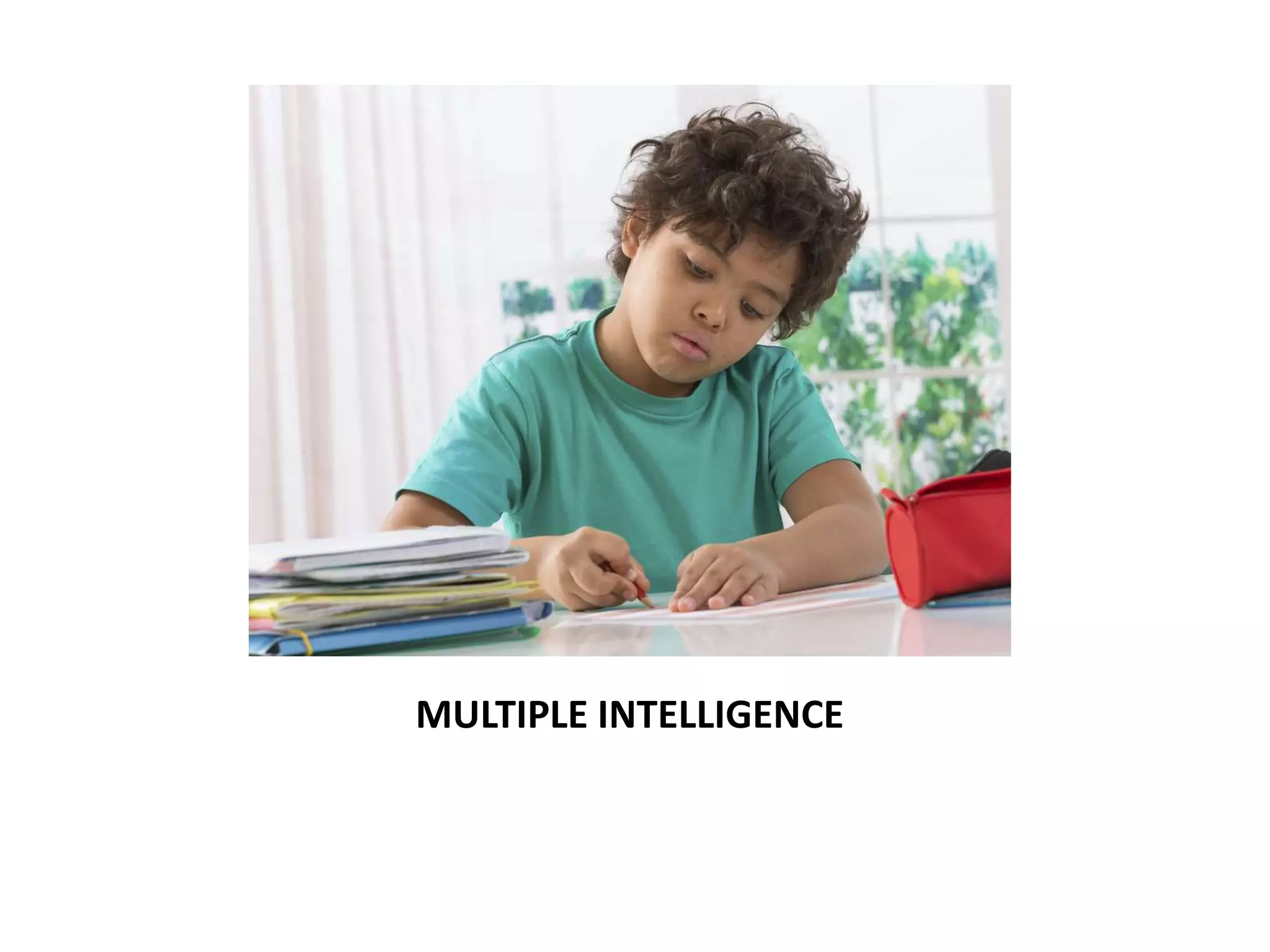
MULTIPLE INTELLIGENCE
THE DIFFERENT WAYS WE LEARN
AND PROCESS INFORMATION
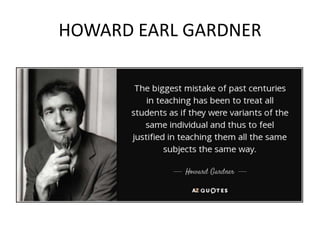
HOWARD EARL GARDNER
An introduction....
Howard Gardner is An American
Developmental Psychologist. He defined
“Multiple Intelligence” in the “Frames of
mind”(1983). He included the last two
intelligences in “Intelligence
Reframed”(1999)
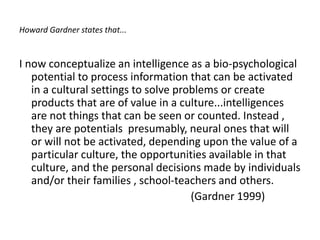
Howard Gardner states that...
I now conceptualize an intelligence as a bio-psychological
potential to process information that can be activated
in a cultural settings to solve problems or create
products that are of value in a culture...intelligences
are not things that can be seen or counted. Instead ,
they are potentials presumably, neural ones that will
or will not be activated, depending upon the value of a
particular culture, the opportunities available in that
culture, and the personal decisions made by individuals
and/or their families , school-teachers and others.
(Gardner 1999)
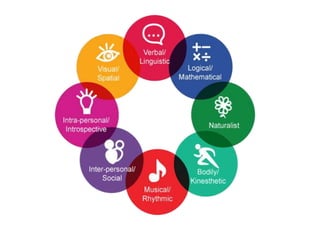
THERE ARE 8 DIFFERENT
INTELLIGENCES PROPOSED BY
GARDNER
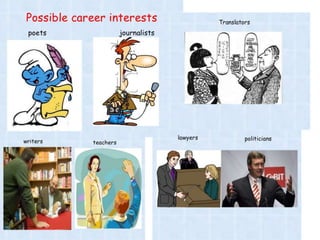
Verbal/Linguistic Intelligence
• Ability to use words and language
• Highly developed auditory skills
• Elegant speakers
• Think in words rather than pictures
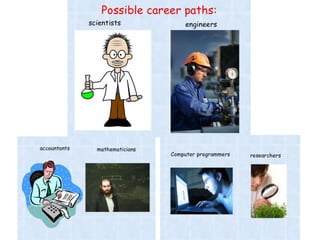
Logical/Mathematical
• Ability to use reason logic, and numbers
• Think conceptually
• Logical and numerical patterns
• Make connections between information and
data
Naturalist Intelligence
• It is the first addition to the original seven
• They observing, understanding and
organizing patters in the environment
• Expertise in the recognition and classification
of plants and animals
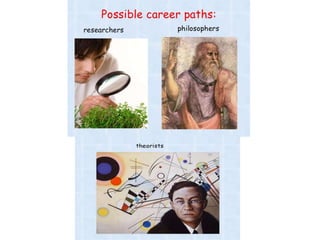
possible career
Animal Trainers, farmers, Marine biologist, Archaeologist
Chef, Veterinarian
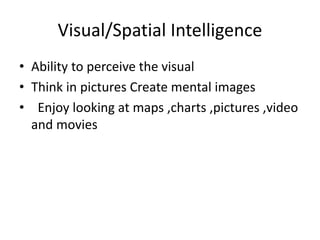
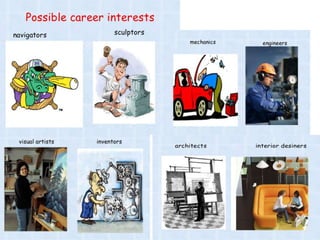
Visual/Spatial Intelligence
• Ability to perceive the visual
• Think in pictures Create mental images
• Enjoy looking at maps ,charts ,pictures ,video
and movies
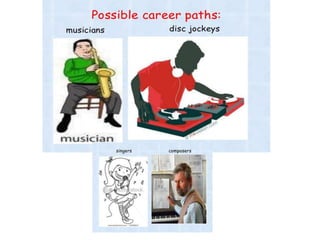
Musical/Rhythmic Intelligence
• Ability to produce and appreciate music
• Think in sounds , rhythms , and patterns
• Respond to music and sounds
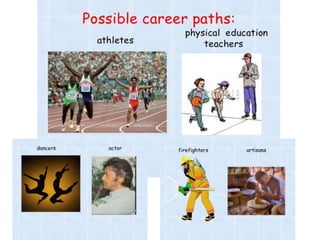
Bodily/kinesthetic Intelligence
• Ability to control body movements and handle
objects
• Express themselves through movement
• Good sense of balance
• Excellent eye hand co-ordination
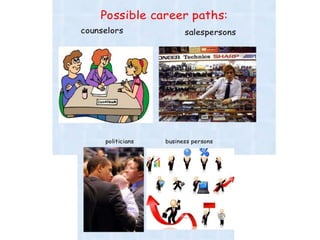
Interpersonal Intelligence
• Ability to relate and understand others
• See other’s point of view
• Understand how others think and feel
• Sense others feelings, intention and
motivation
Intrapersonal Intelligence
• Ability to self-reflect
• Understand inner feelings, dreams,
relationship
• Appreciate their strengths and weaknesses
Summary
• We are individuals with different strength and
weaknesses
• Understanding ourselves is to success
• Theories of Multiple Intelligence provide
framework to analyze and develop skills to
reach goals
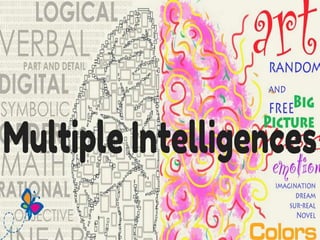
Multiple intelligence

Multiple intelligence

  • 1.
  • 2.
    THE DIFFERENT WAYSWE LEARN AND PROCESS INFORMATION
  • 3.
  • 4.
    An introduction.... Howard Gardneris An American Developmental Psychologist. He defined “Multiple Intelligence” in the “Frames of mind”(1983). He included the last two intelligences in “Intelligence Reframed”(1999)
  • 5.
    Howard Gardner statesthat... I now conceptualize an intelligence as a bio-psychological potential to process information that can be activated in a cultural settings to solve problems or create products that are of value in a culture...intelligences are not things that can be seen or counted. Instead , they are potentials presumably, neural ones that will or will not be activated, depending upon the value of a particular culture, the opportunities available in that culture, and the personal decisions made by individuals and/or their families , school-teachers and others. (Gardner 1999)
  • 6.
    THERE ARE 8DIFFERENT INTELLIGENCES PROPOSED BY GARDNER
  • 8.
    Verbal/Linguistic Intelligence • Abilityto use words and language • Highly developed auditory skills • Elegant speakers • Think in words rather than pictures
  • 10.
    Logical/Mathematical • Ability touse reason logic, and numbers • Think conceptually • Logical and numerical patterns • Make connections between information and data
  • 12.
    Naturalist Intelligence • Itis the first addition to the original seven • They observing, understanding and organizing patters in the environment • Expertise in the recognition and classification of plants and animals possible career Animal Trainers, farmers, Marine biologist, Archaeologist Chef, Veterinarian
  • 13.
    Visual/Spatial Intelligence • Abilityto perceive the visual • Think in pictures Create mental images • Enjoy looking at maps ,charts ,pictures ,video and movies
  • 15.
    Musical/Rhythmic Intelligence • Abilityto produce and appreciate music • Think in sounds , rhythms , and patterns • Respond to music and sounds
  • 17.
    Bodily/kinesthetic Intelligence • Abilityto control body movements and handle objects • Express themselves through movement • Good sense of balance • Excellent eye hand co-ordination
  • 19.
    Interpersonal Intelligence • Abilityto relate and understand others • See other’s point of view • Understand how others think and feel • Sense others feelings, intention and motivation
  • 21.
    Intrapersonal Intelligence • Abilityto self-reflect • Understand inner feelings, dreams, relationship • Appreciate their strengths and weaknesses
  • 23.
    Summary • We areindividuals with different strength and weaknesses • Understanding ourselves is to success • Theories of Multiple Intelligence provide framework to analyze and develop skills to reach goals