Multiple Intelligences and  Adult Learning  By Janice Perry Otto
Multiple Intelligences Where did they come from? What are they?
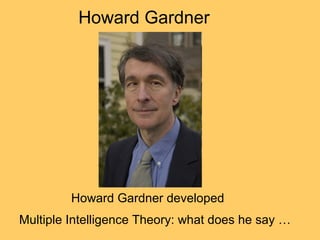
Howard Gardner Howard Gardner developed  Multiple Intelligence Theory: what does he say …
 
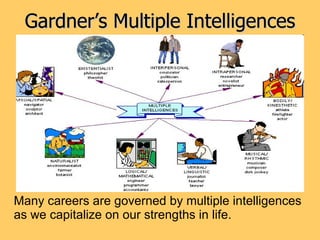
Gardner’s Multiple Intelligences Many careers are governed by multiple intelligences as we capitalize on our strengths in life.
What does this mean?
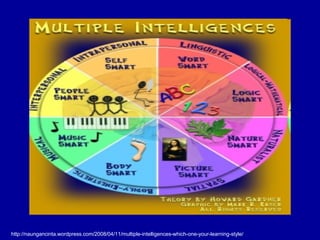
http://naungancinta.wordpress.com/2008/04/11/multiple-intelligences-which-one-your-learning-style/
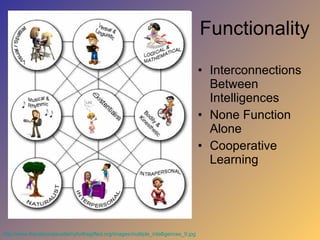
Functionality Interconnections Between Intelligences None Function Alone Cooperative Learning  http://www.thenationalacademyforthegifted.org/images/multiple_intelligences_9.jpg
Some Examples
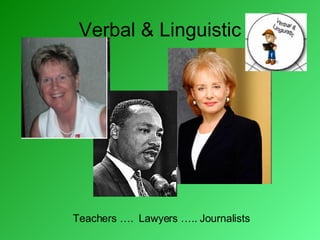
Verbal & Linguistic Teachers ….  Lawyers ….. Journalists
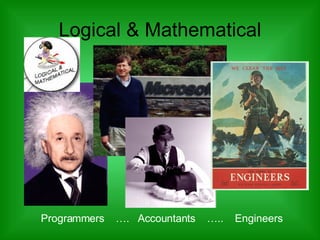
Logical & Mathematical Alan Greenspan Madame Curie Programmers  ….  Accountants  …..  Engineers
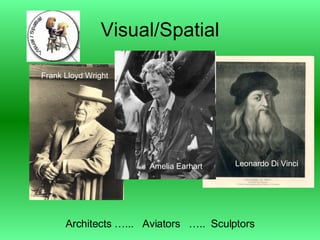
Visual/Spatial Frank Lloyd Wright Amelia Earhart Leonardo Di Vinci Architects …...  Aviators  …..  Sculptors
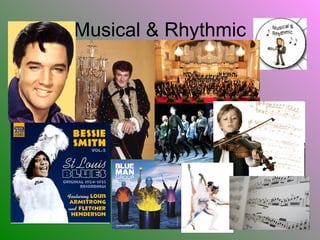
Musical & Rhythmic
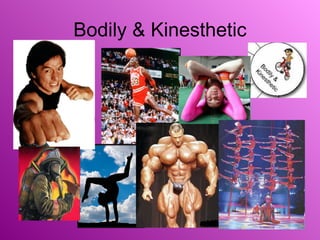
Bodily & Kinesthetic
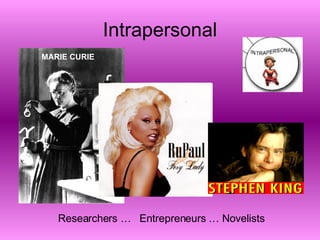
Intrapersonal MARIE CURIE Researchers …  Entrepreneurs … Novelists
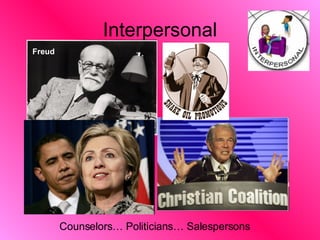
Interpersonal Freud Counselors… Politicians… Salespersons
Naturalist Farmers…  Botanists … Environmentalists
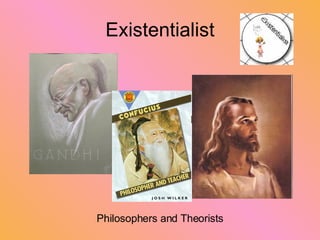
Existentialist Philosophers and Theorists
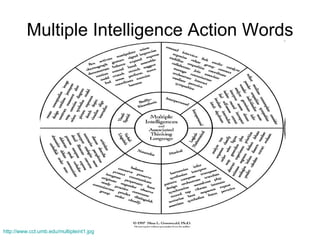
Multiple Intelligence Action Words http://www.cct.umb.edu/multipleint1.jpg
Adult Learning Possess all multiple intelligences to some degree. Some more dominant than others on an individual basis. Adults maximize intelligences Better reasoning skills and problem solving Life experiences Learning and processing of information more difficult  Poorer eyesight Failing vision Loss of range of motion Arthritis
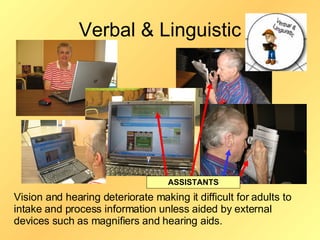
Verbal & Linguistic ASSISTANTS Vision and hearing deteriorate making it difficult for adults to intake and process information unless aided by external devices such as magnifiers and hearing aids.
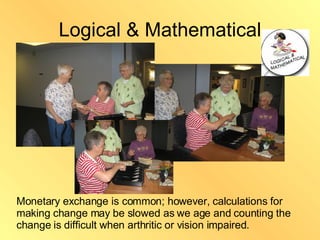
Logical & Mathematical Monetary exchange is common; however, calculations for making change may be slowed as we age and counting the change is difficult when arthritic or vision impaired.
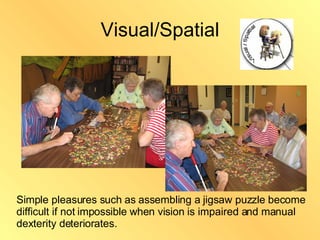
Visual/Spatial Frank Lloyd Wright Leonardo Di Vinci Simple pleasures such as assembling a jigsaw puzzle become difficult if not impossible when vision is impaired and manual dexterity deteriorates.
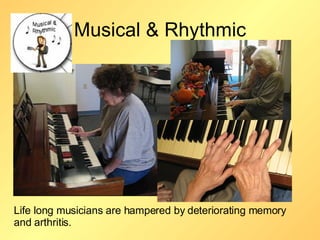
Musical & Rhythmic Music appreciation cannot take the same forms as in the past.  “Busting a move” is limited by arthritis and range of motion.
Musical & Rhythmic Life long musicians are hampered by deteriorating memory and arthritis.
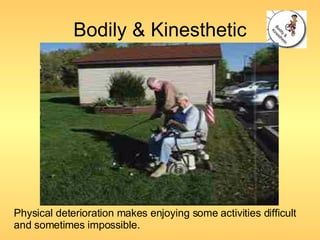
Bodily & Kinesthetic Physical deterioration makes enjoying some activities difficult and sometimes impossible.
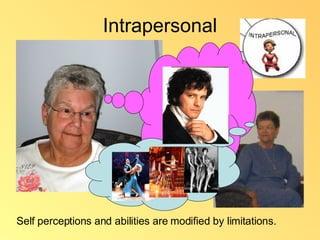
Intrapersonal Self perceptions and abilities are modified by limitations.
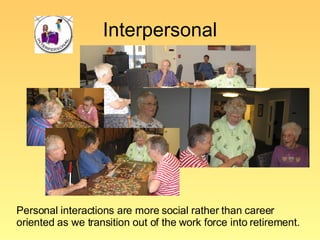
Interpersonal Personal interactions are more social rather than career oriented as we transition out of the work force into retirement.
Naturalist Physical limitations reduce joys such as gardening to potted plants rather than in the backyard.
Multiple Intelligences  &  Adult Learning New knowledge becomes more difficult to process Physical difficulties preclude many former activities Mental capabilities diminish Limitations rather than intelligences govern new learning and experiences
Dee Christiansen Margaret Goodlick Lila Kastigar Myra Komnick Sandy Montgomery Betty Noble Art Riddle Bud Schumm Shirley Schumm June Stoutameyer Elaine Tipsord Oscar Voelker Joan Welch Mattie Young L.James Blythe The End Special Thanks To:

Multiple Intelligences and Adult Learning