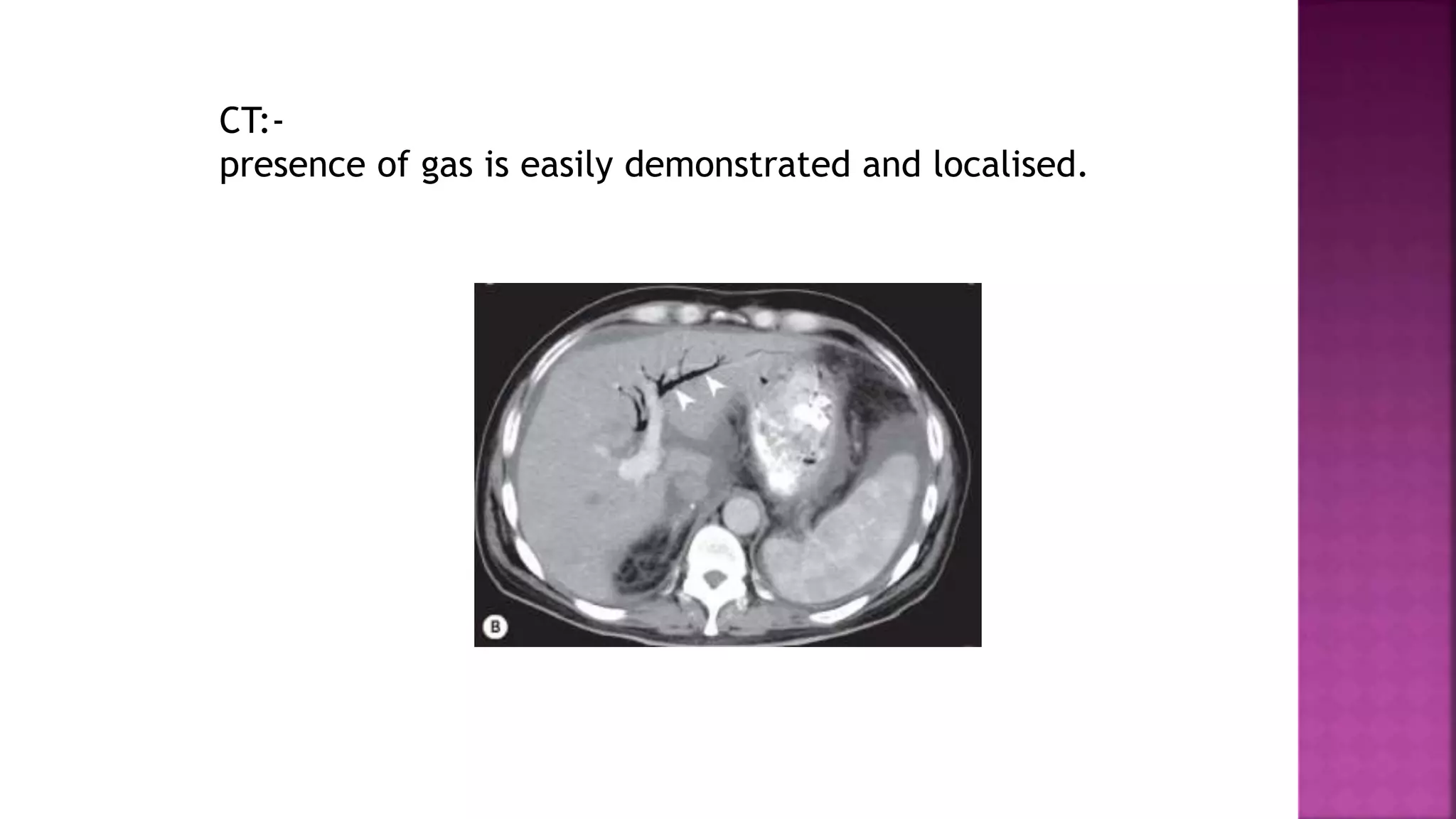
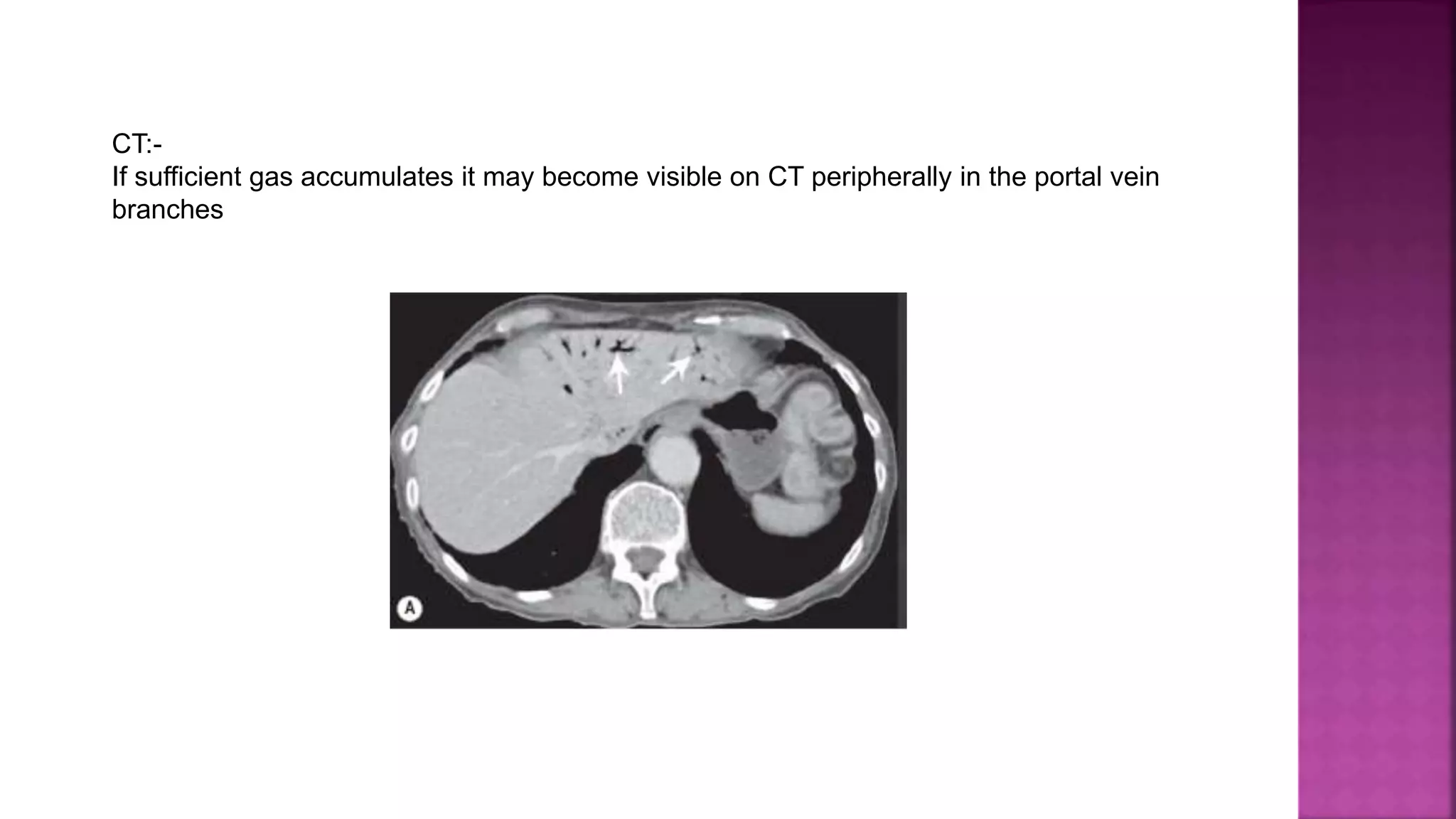
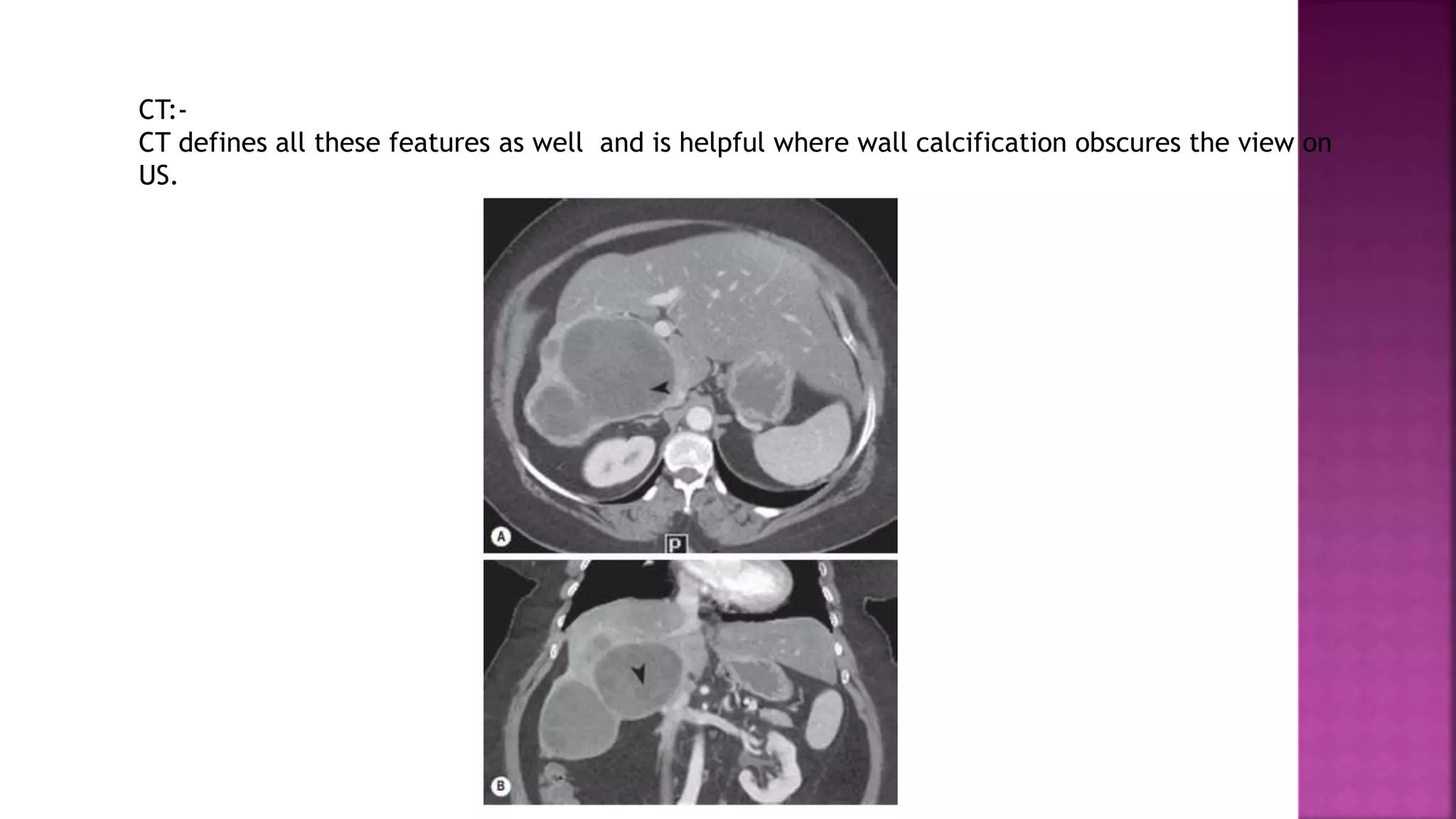
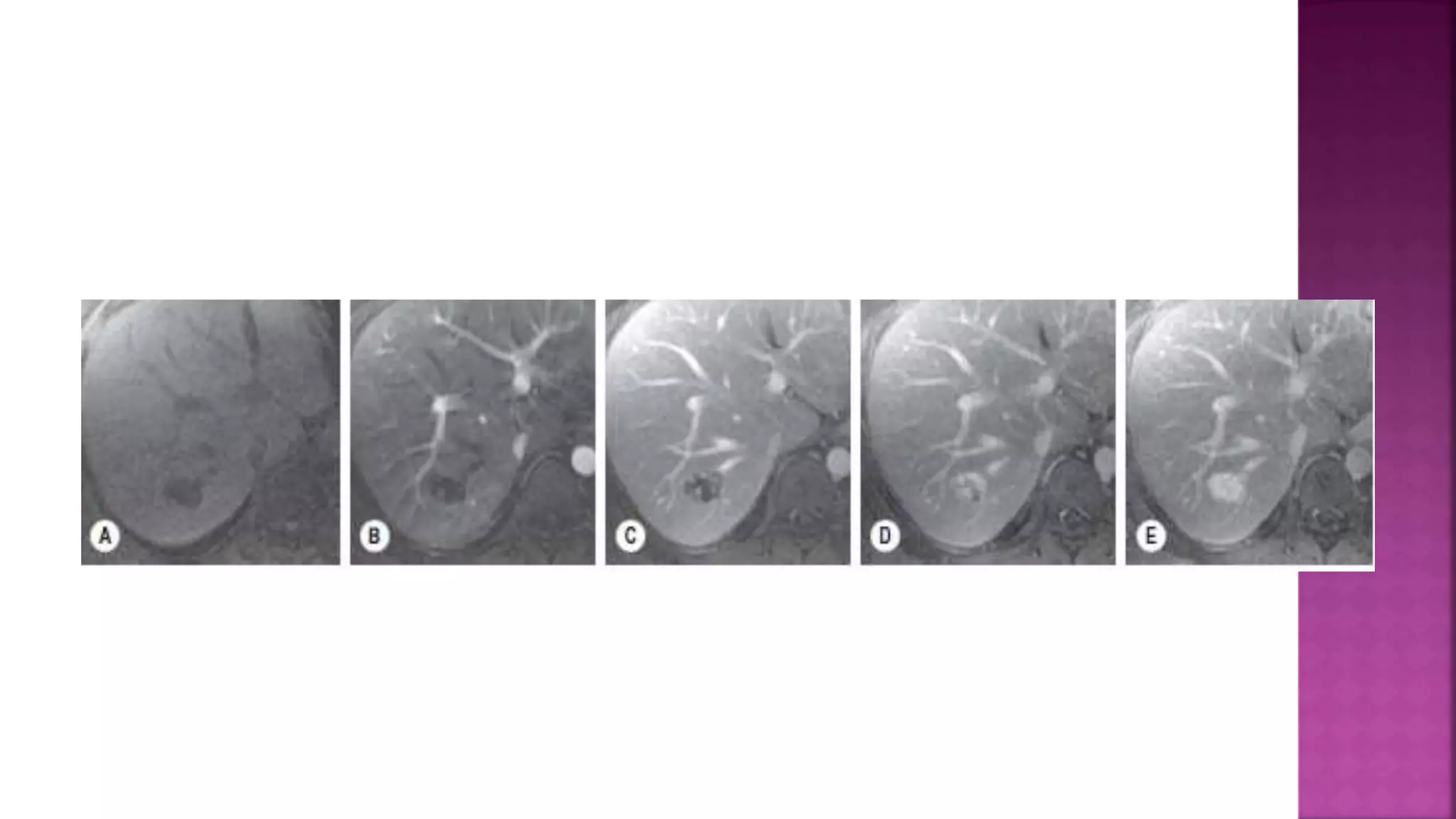
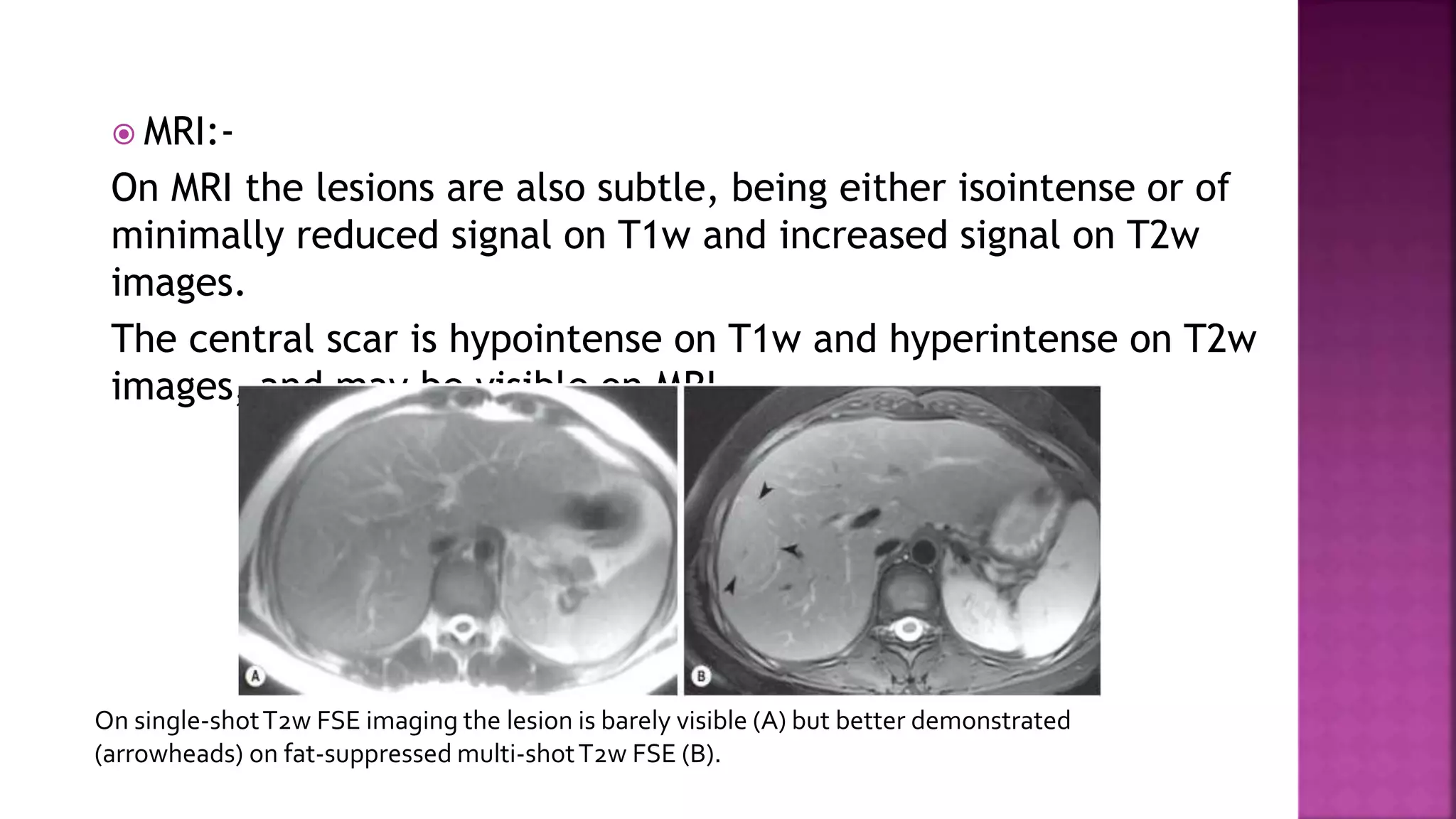
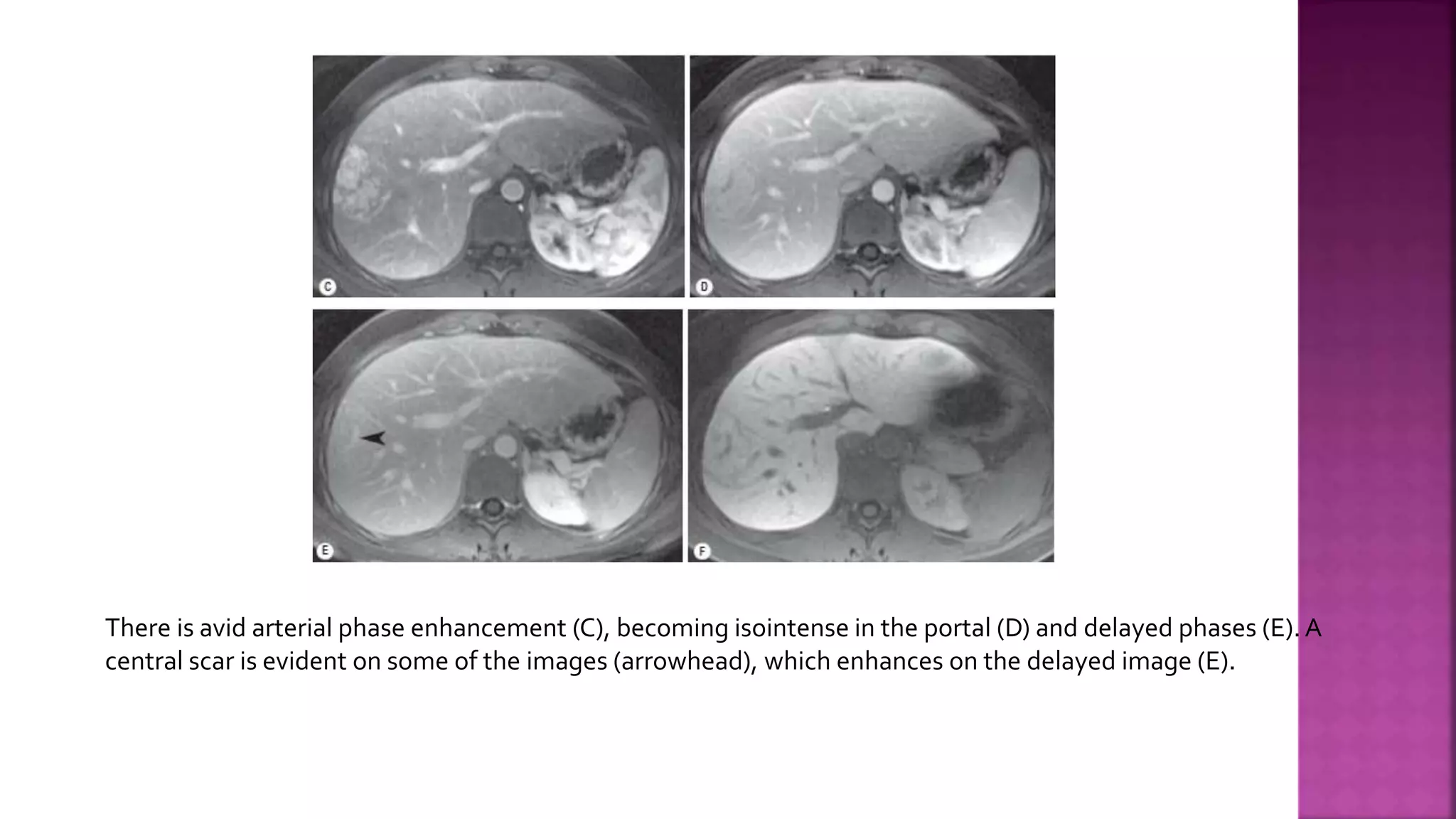
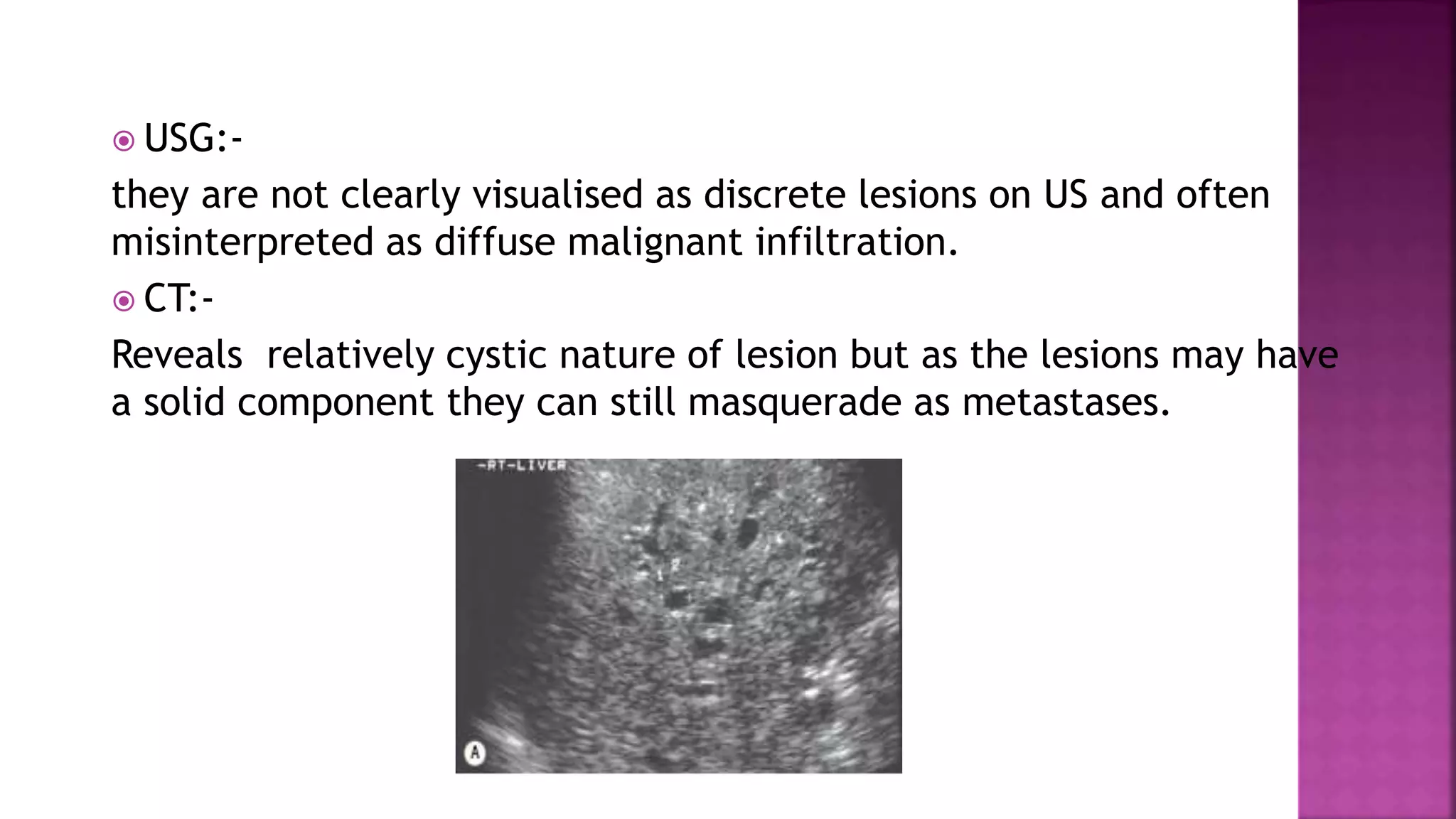
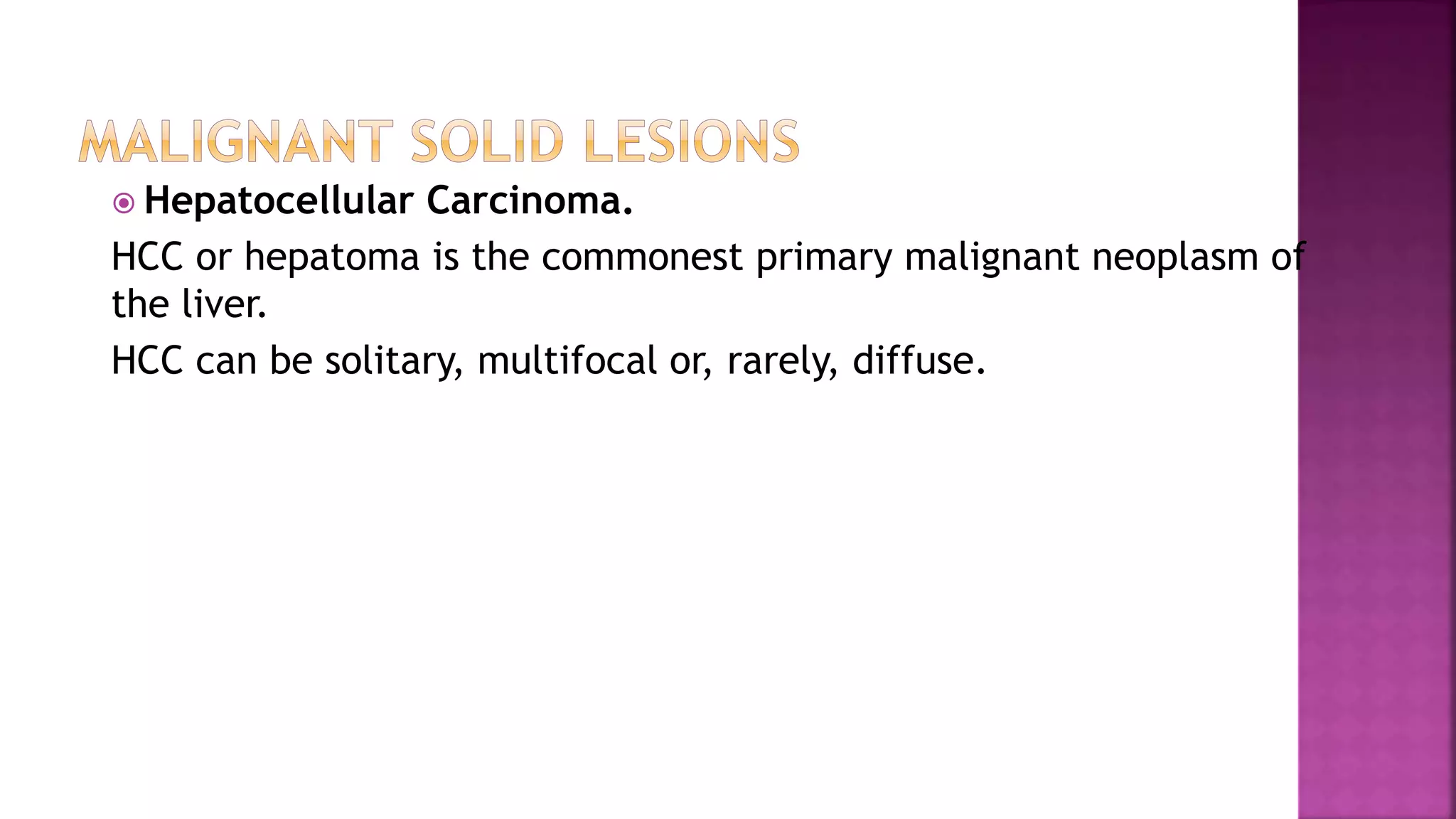
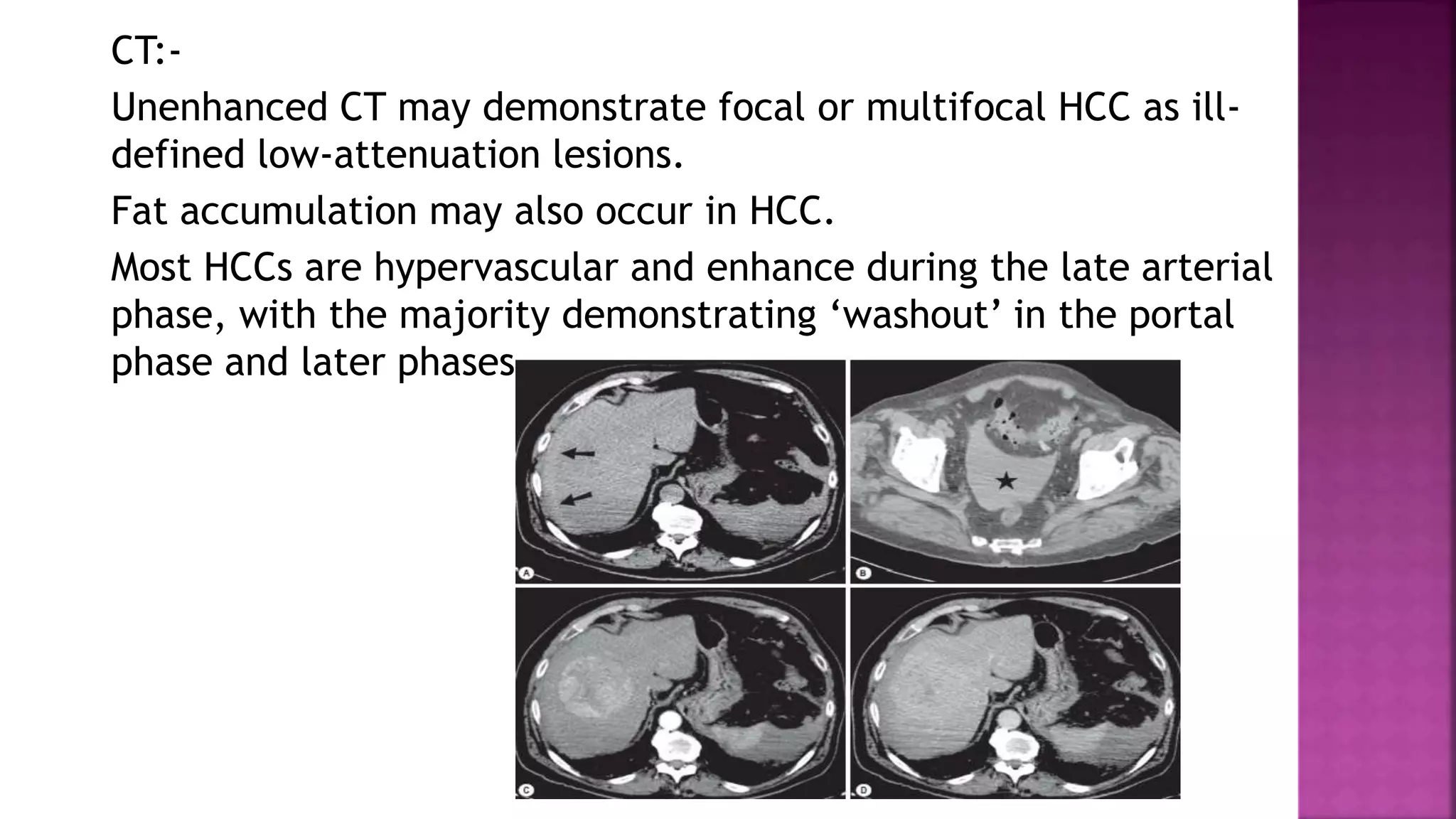
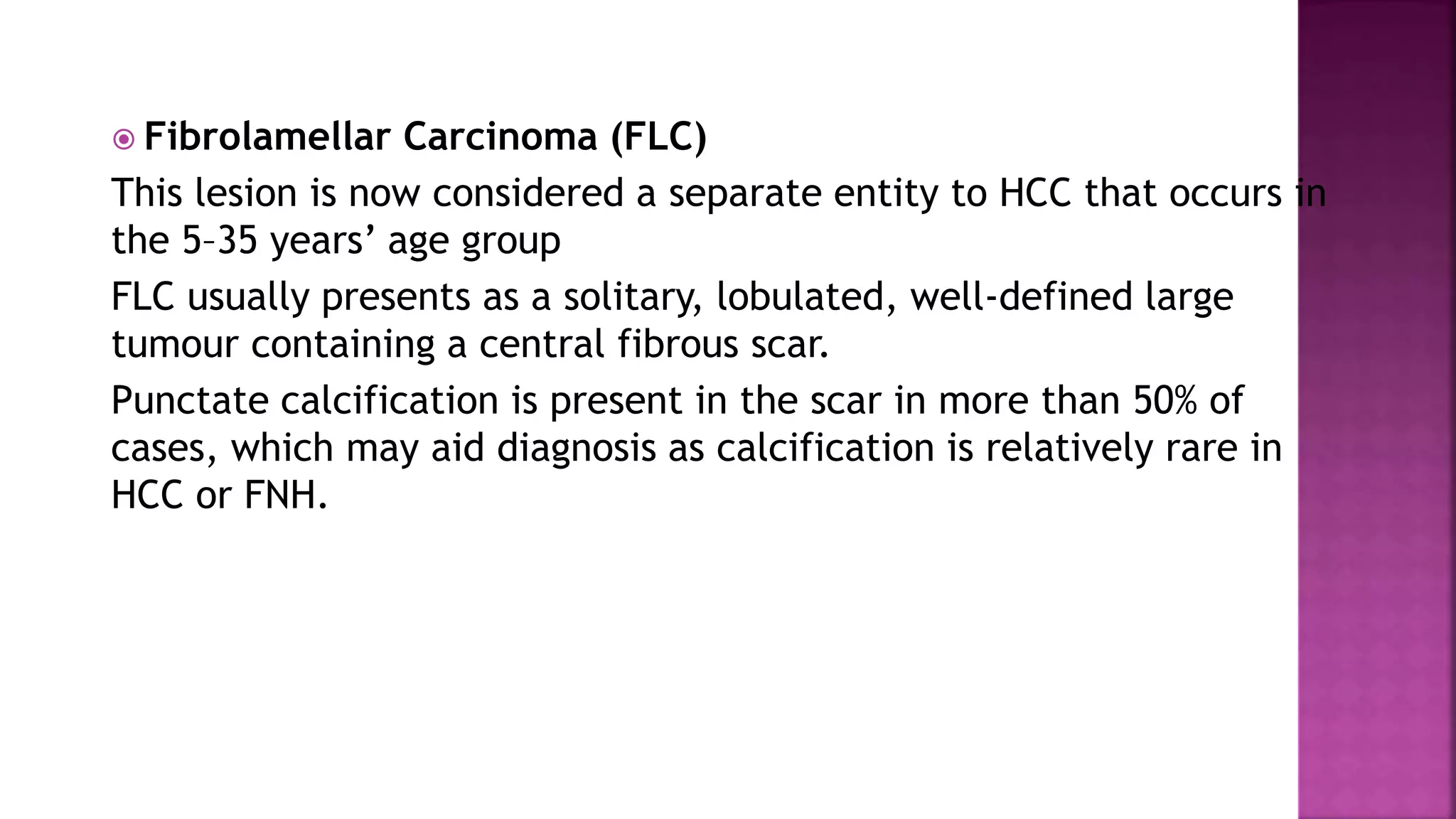
Diffuse hepatic diseases are difficult to detect as they minimally affect liver architecture. Hepatic steatosis involves increased triglyceride storage in hepatocytes and is caused by conditions like obesity, diabetes, and malnutrition. MRI is the most sensitive technique for detecting steatosis using Dixon-based chemical shift imaging. Cirrhosis is the end-stage of liver disease and causes nodular regeneration and lobar atrophy visible on ultrasound, CT, and MRI. Focal lesions like haemangiomas, cysts, and abscesses can also be identified and characterized using their specific imaging features on ultrasound, CT, and MRI.