CONTRAST REACTIONS AND ITS
MANAGEMENT
DR MOHAMMAD NAUFAL B.Y.
POST GRADUATE IN RADIODIAGNOSIS
ALAMEEN MEDICAL COLLEGE
INTRODUCTION
contrast reactions vary from minor physiological disturbances to rare severe
life-threatening situations.
Preparation for prompt treatment of contrast media reactions must include
preparation for the entire spectrum of potential adverse events and include
prearranged response planning with availability of appropriately trained
personnel, equipment, and medications.
Thorough familiarity with the presentation and emergency treatment of
contrast media reactions must be part of the environment in which all
intravascular contrast media are administered.
Preliminary considerations for the radiologist include:
1) Assessment of patient risk versus potential benefit of the contrast assisted
examination.
2) Imaging alternatives that would provide the same or better diagnostic
information.
3) Assurance of a valid clinical indication for each contrast medium
administration.
Because of the documented low incidence of adverse events, intravenous
injection of contrast media may be exempted from the need for informed
consent, but this decision should be based on state law, institutional policy, and
departmental policy.
The approach to patients about to undergo a contrast-enhanced examination has
three general goals:
1) to assure that the administration of contrast is appropriate for the patient
and the indication;
2) to minimize the likelihood of a contrast reaction; and
3) to be fully prepared to treat a reaction should one occur
Achieving these aims depends on :
1) obtaining an appropriate and adequate history for each patient,
2) preparing the patient appropriately for the examination,
3) having equipment available to treat reactions, and
4) ensuring that expertise sufficient to treat even the most severe reactions is
readily at hand.
• Although mild reactions to contrast media are relatively common, they are
almost invariably self-limited and of no consequence.
• Severe, life threatening reactions, although rare, can occur in the absence of
any specific risk factors with any type of media.
RISK FACTORS FOR ADVERSE REACTIONS
1) Previous contrast reaction
2) Type of contrast agent
3) Allergy
4) Asthma
5) Renal insufficiency
6) Cardiovascular disease
7) Diabetes
8) Anxiety
9) Multiple myeloma
10) Beta-blockers
11) Sickle cell disease
12) Age
13) Concomitant use of intra-arterial medications like papavarine
14) Pheochromocytoma
15) Hyperthyroidism
16) Myasthenia Gravis
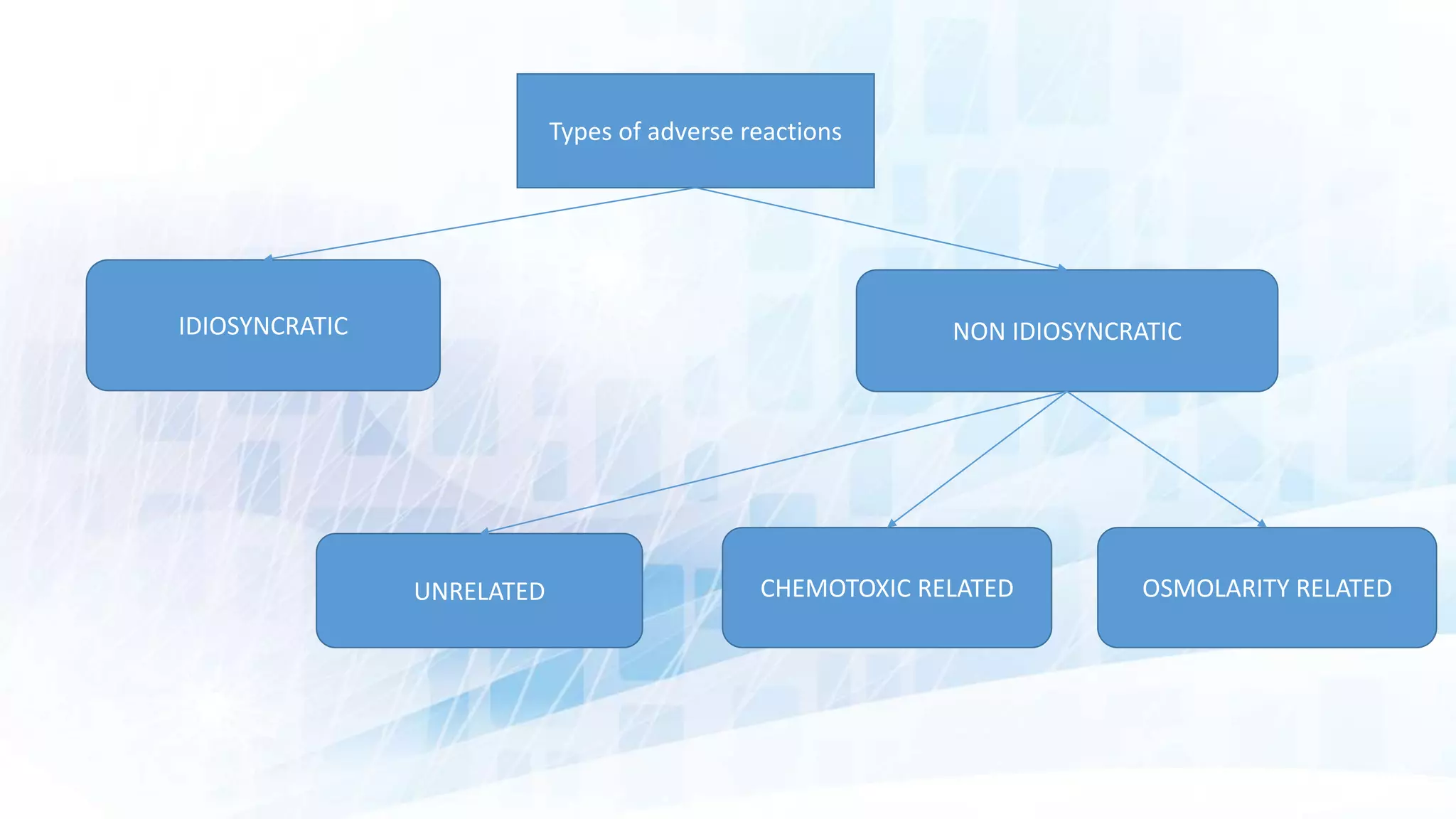
Types of adverse reactions
IDIOSYNCRATIC NON IDIOSYNCRATIC
UNRELATED CHEMOTOXIC RELATED OSMOLARITY RELATED
IDIOSYNCRATIC REACTIONS
Definition : unpredictable reactions which occur within 1 hour of contrast medium
administration and which are unrelated to the dose of the contrast medium above a
certain level.
• Serious and most dreaded
• Occur without warning
• Cannot be reliably predicted
• Are not preventable in the present state of our knowledge
Mechanism :
• Anaphylactoid reactions(NOT IgE Related)
• There is no evidence to suggest a true antigen-antibody reaction
• These involve bradykinin,histamine,leukotrienes, prostagalndins and complement
factors
Proposed mechanisms include:
Enzyme inhibition : cholinesterase inhibition
Vasoactive substances
Cascade systems : Complement, Coagulation, Kinin, fibrinolysis
Immune disturbances
Anxiety, apprehension and fear
RISK REDUCTION TECHNIQUES
• Obtaining Clinical information – history of previous reaction is the most
important risk factor to consider.
• Alternative Diagnostic test
• If still necessary , then risk may be reduced by :
1) Choice of contrast media : non-ionic LOCM have 4-5 times lower risk
2) Premedication : Elective or Emergency
Elective
• Prednisone 50 mg PO @ 13,7 and1h prior
• Diphenhydramine – 50 mg IV/IM/PO 1h before
• If patient cannot take oral medication,
Hydrocortisone 200 mg IV may be substituted for
prednisone
Emergency
• Hydrocortisone 200 mg IV every 4 hours till the
study
• Diphenhydramine 50 mg IV 1 hour prior
• No use of steroids if given less than 4-6 hrs before
• Diphenhydramine 50 mg IV (without steroids) in
very urgent scans.
TYPES AND MANAGEMENT OF ACUTE IDIOSYNCRATIC
REACTIONS
Mild
• Nausea, mild vomiting,
mild urticaria, itching
• Observation, monitoring of
vitals, reassurance
• Antihistaminics as and
when required
Moderate
• Urticaria, Facial or laryngeal
edema, bronchospasm
• Close monitoring until
symptoms resolve
• Treatment specific for the type
Severe
• Hypotension with
tachycardia
• Hypotension with
bradycardia
• Severe hypertension
• Seizures
• Pulmonary edema
INITIAL APPROACH – ABCDE of Critical care
A – Airway
B – Breathing
C – Circulation
D – Disability
E – Exposure
Call for help immediately while resuscitating – do not hesitate
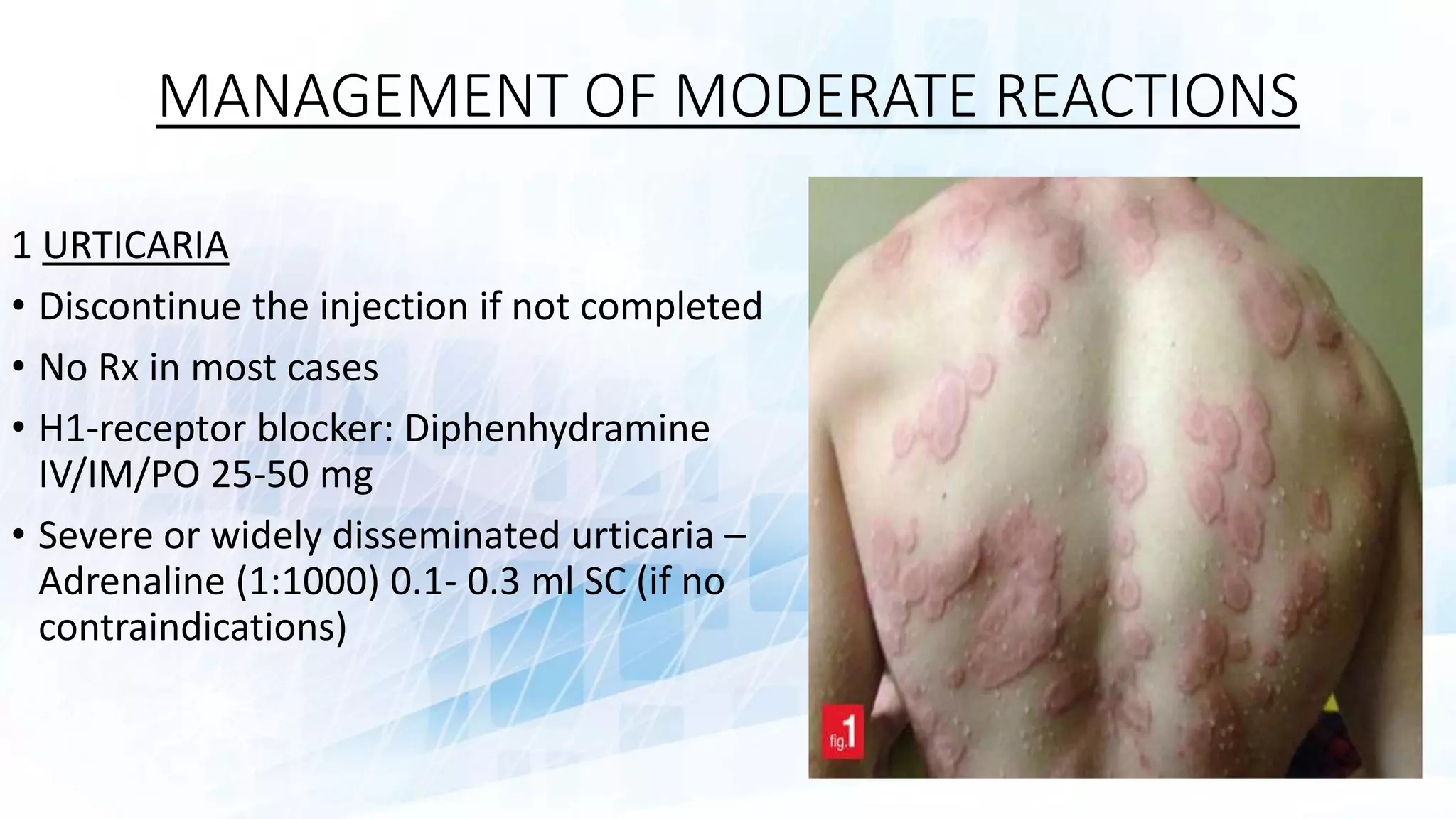
MANAGEMENT OF MODERATE REACTIONS
1 URTICARIA
• Discontinue the injection if not completed
• No Rx in most cases
• H1-receptor blocker: Diphenhydramine
IV/IM/PO 25-50 mg
• Severe or widely disseminated urticaria –
Adrenaline (1:1000) 0.1- 0.3 ml SC (if no
contraindications)
2. Facial or laryngeal edema
• Oxygen @6-10 L/min (by mask)
• Adrenaline SC or IM 0.1- 0.3 ml of
1:1000
• If Hypotension is present – Adrenaline 3
ml of 1:10000 IV preferably under ECG
monitoring
• If not responsive – can be repeated upto
1 mg
• Always seek appropriate assisstance in
nonresponsive cases
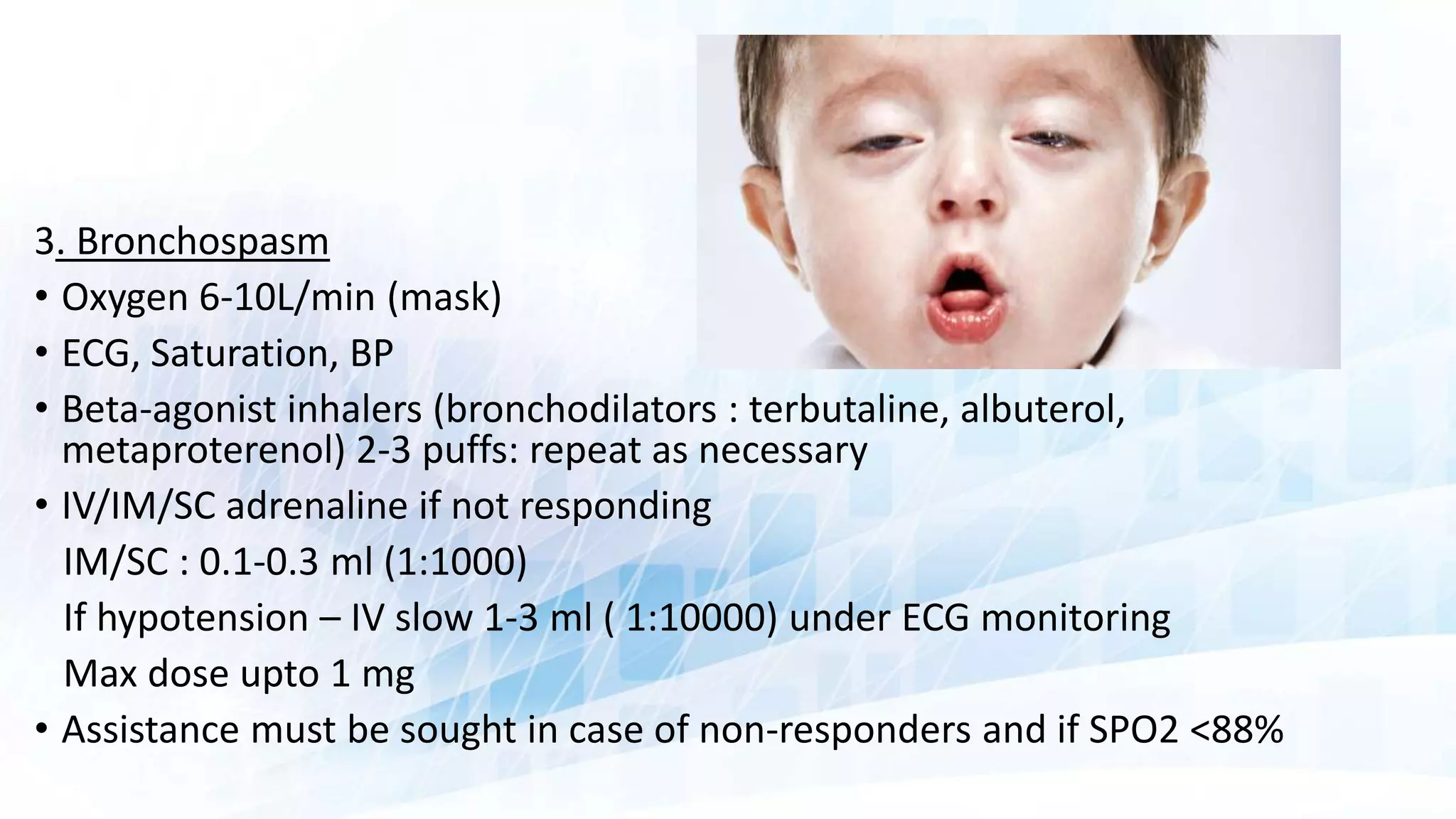
3. Bronchospasm
• Oxygen 6-10L/min (mask)
• ECG, Saturation, BP
• Beta-agonist inhalers (bronchodilators : terbutaline, albuterol,
metaproterenol) 2-3 puffs: repeat as necessary
• IV/IM/SC adrenaline if not responding
IM/SC : 0.1-0.3 ml (1:1000)
If hypotension – IV slow 1-3 ml ( 1:10000) under ECG monitoring
Max dose upto 1 mg
• Assistance must be sought in case of non-responders and if SPO2 <88%
MANAGEMENT OF SEVERE REACTIONS
1. Hypotension with tachycardia
• Legs elevated or Trendelenberg position
• ECG, Saturation, BP
• Oxygen @6-10 L/min (mask)
• Rapid IV fluids [ Ringer Lactate/NS)
• If poorly responsive, I.V Adrenaline 1:10000 1 ml upto max 1 mg dose
• Appropriate assisstance must be sought
2. Hypotension with Bradycardia (Vagal reaction)
• Secure airway. Oxygen 6-10 L/min
• Monitor vitals
• Raise Legs >60 deg or Trendelenberg position
• IV fluids : Ringer lactate/NS
• Atropine 0.6-1 mg IV slow , max dose upto 0.04mg/kg (2-3 mg) in
adult
• Complete resolution of bradycardia and hypotension before discharge
Trendelenberg position
3. Hypertension (severe)
• Oxygen @ 6-10 L/min (mask)
• Monitor ECG, Saturation, BP
• Nitroglycerine 0.4 mg Tab, Sublingual ( may repeat x 3 times) or, topical 2%
ointment, apply 1-inch strip
• If not responsive, then Labetalol 20 mg IV stat, F/B 20-80 mg IV every 10
minutes upto a maximum of 300 mg.
• Shift to ICU or emergency medicine department
• For Pheochromocytoma – Phentolamine 5 mg IV . ( may use Labetolol if
Phentolamine is not available)
4. Seizures
• Oxygen @ 6-10 ml/min (mask)
• Diazepam 5 mg IV ( or more as appropriate) or midazolam 0.5 – 1 mg IV
• Phenytoin 15-18 mg/kg @ 50 mg/min for longer effect – after physician
consultation.
• Benzodiazepines may cause respiratory depression – close monitoring of
vitals is necessary
• Appropriate assistance must be sought
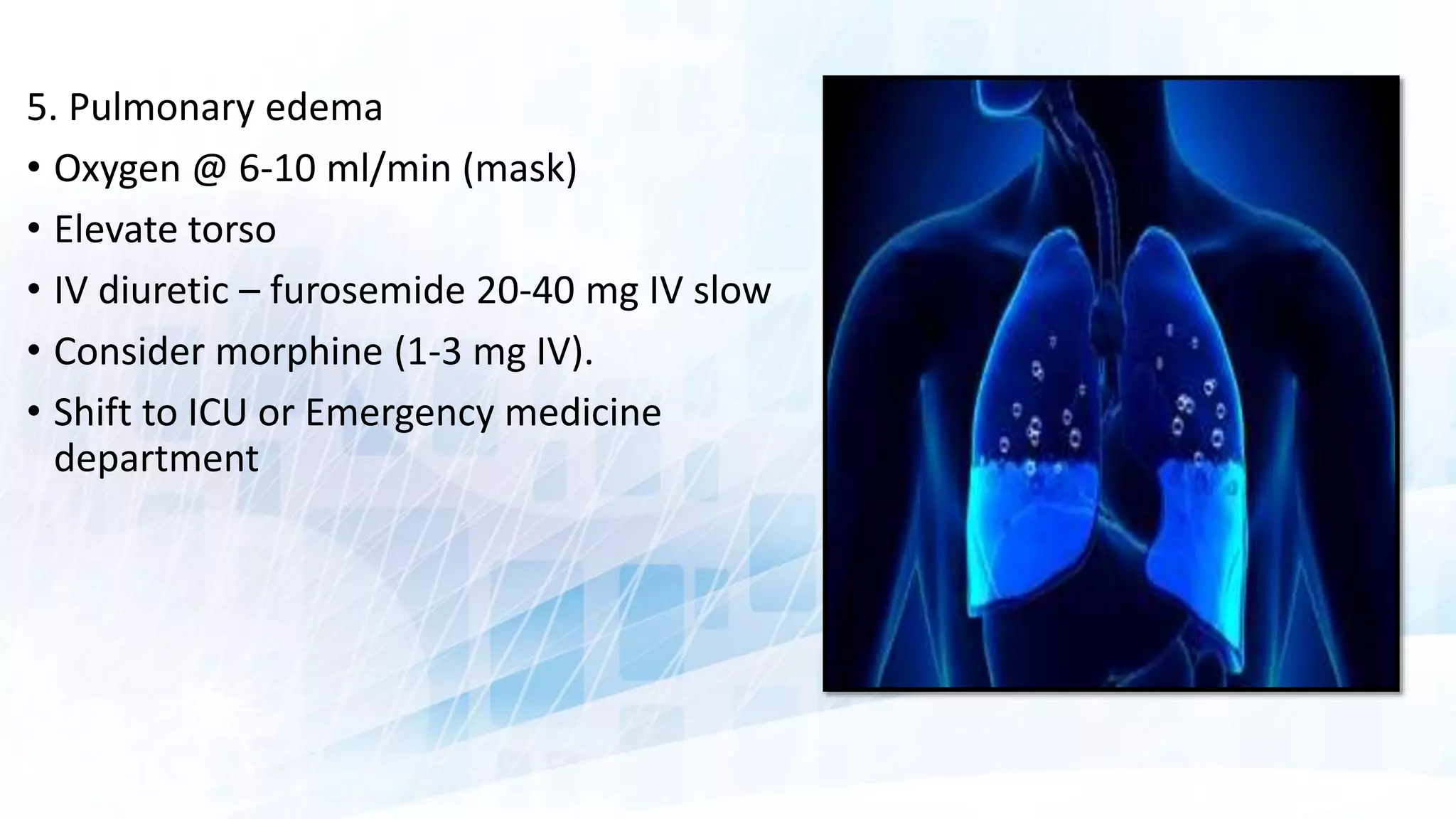
5. Pulmonary edema
• Oxygen @ 6-10 ml/min (mask)
• Elevate torso
• IV diuretic – furosemide 20-40 mg IV slow
• Consider morphine (1-3 mg IV).
• Shift to ICU or Emergency medicine
department
NON-IDIOSYNCRATIC REACTIONS
• Definition : These are dose related reactions and depend upon the
physiochemical properties of the contrast medium, i.e. chemical composiion,
Osmolality and concentration of the injected contrast and also on the volume,
speed and multiplicity of the injection.
1) Reactions unrelated to contrast media :
• Pyrogenic
• Vasovagal
• vasomotor
• Excessive dehydration
• Hypertensive crisis in pheochromocytoma
• Hypoglycemia
2)Chemotoxic:
Cardiovascular
Neurologic
Renal
3)Hyperosmolar reactions:
erythrocyte damage, BBB damage, endothelial damage, vaodalitation,
hypervolemia and cardiac depression.
• Occur either following idiosyncratic or nonidiosyncratic reactions or may
occur independently.
Vasomotor reactions:
Are characterized by severe hypotension, tachycardia or bradycardia with
depression of myocardial contractility , reduced cardiac output, cardio
respiratory collapse and possibly death.
Vasovagal reactions:
Are characterized by bradycardia.
VASOMOTOR & VASOVAGAL REACTIONS
CHEMOTOXIC REACTIONS
• Caused by toxicity to contrast medium molecule as a whole, and is more often
due to cations , particularly -Na.
• They may be cardiac, neurological, renal.
• Nephrotoxicity of contrast media is due to
decreased renal perfusion (low BP, peripheral vasodilatation).
glomerular injury – manifests as proteinuria.
Tubular injury- due to osmolality, chemotoxicity, ichaemia
CM precipitation of Tamm Horsefall proteins that blocks tubules
Swelling of renal tubular cells causing obstruction
HYPEROSMOLAR REACTIONS
Due to high osmolarity of the contrast media than plasma
More common with conventional CM.
Erythrocyte damage:
• loss of H2O from RBC –dehydrated shrunken RBC- increased internal
viscosity- loss of ability of RBC to deform to traverse capillaries- obstruction
of important capillary beds (cerebral, coronary, renal, pulmonary)
Endothelial damage & BBB damage:
• shrinkage of endothelial cells- widening of intercellular gaps- capillary
permeability.
Vasodilatation :
• of the arteriolar or capillary bed of the injected artery, due to direct
effect of hyperosmolar CM, manifested as warmth, heat discomfort or
severe pain during peripheral arteriography.
Hypervolumia :
• due osmotic extraction of extravascular fluid-> increased blood
volume by about10 to 20%.
Cardiac depression:
• with hypotension, diminished venous return, myocardial ischaemia
and direct depression of myocardial contractility
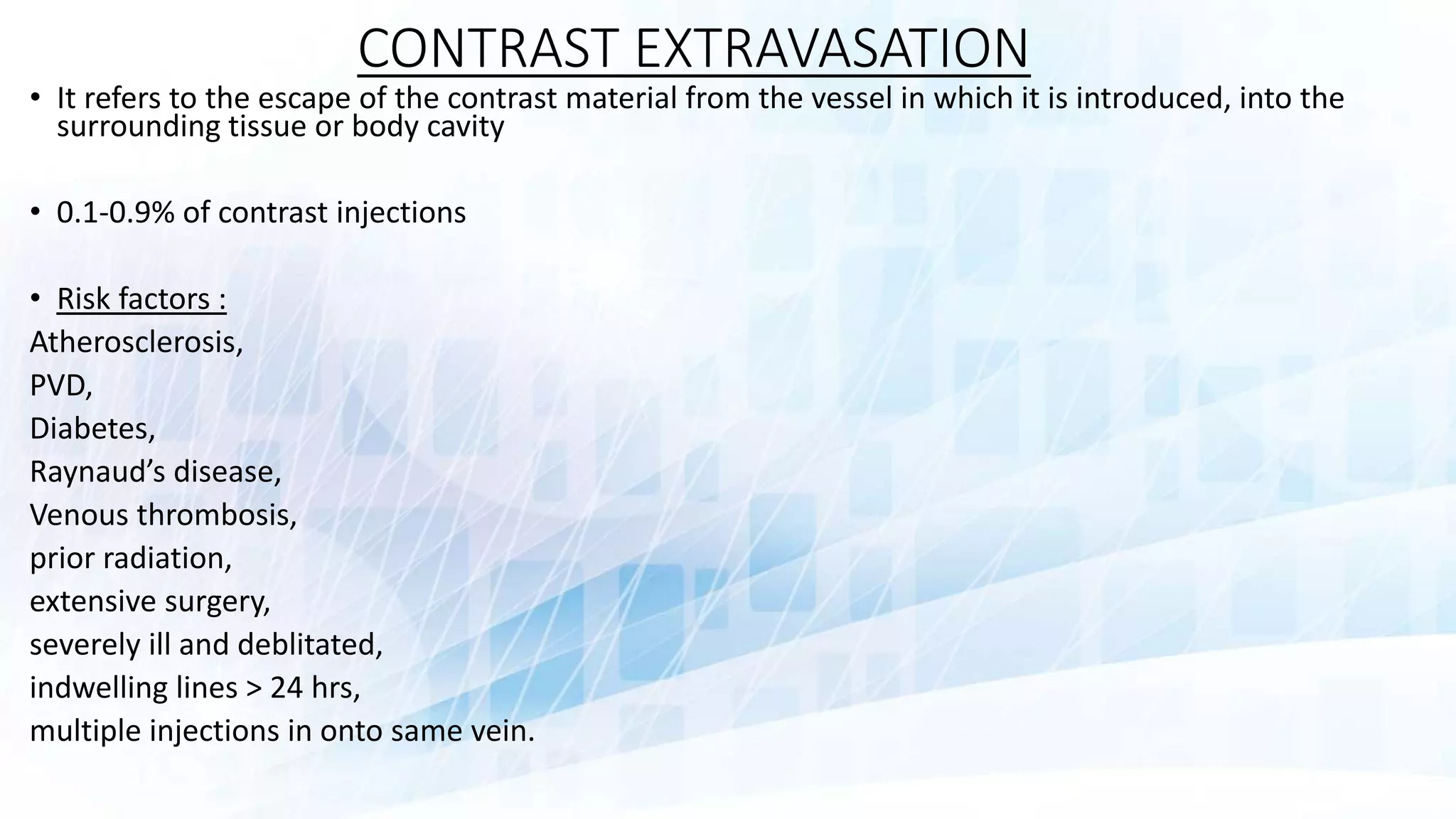
CONTRAST EXTRAVASATION
• It refers to the escape of the contrast material from the vessel in which it is introduced, into the
surrounding tissue or body cavity
• 0.1-0.9% of contrast injections
• Risk factors :
Atherosclerosis,
PVD,
Diabetes,
Raynaud’s disease,
Venous thrombosis,
prior radiation,
extensive surgery,
severely ill and deblitated,
indwelling lines > 24 hrs,
multiple injections in onto same vein.
• Clinical features :
Mild – edema, erythema, stinging, tenderness
Severe – Compartment syndrome, ulcers, necrosis.
• Prevention is better than cure:
ensure properly secured IV access, extravasation detectors
• Treatment:
depends on the volume of extravasation
MANAGEMENT OF CONTRAST EXTRAVASATION
< 20 Ml
- Elevate the arm and observe
20-100 mL
-Aspirate
- Intermittent Ice
-Hyaluronidase (50- 250 U) locally
>100 mL
-Aspirate
-Intermittent Ice
-Hyaluronidase (50- 250 U) locally
-In case of pallor/pulselessness/
worsening pain/parasthesias/skin
changes – Plastic surgery
consultation
NEPHROGENIC SYSTEMIC FIBROSIS
• Nephrogenic systemic fibrosis (NSF) is a fibrosing disease, primarily
involving the skin and subcutaneous tissues but also known to involve
other organs, such as the lungs, esophagus, heart, and skeletal
muscles.
• Initial symptoms typically include skin thickening and/or pruritis.
• Symptoms and signs may develop and progress rapidly, with some
affected patients developing contractures and joint immobility.
• In some patients, the disease may be fatal.
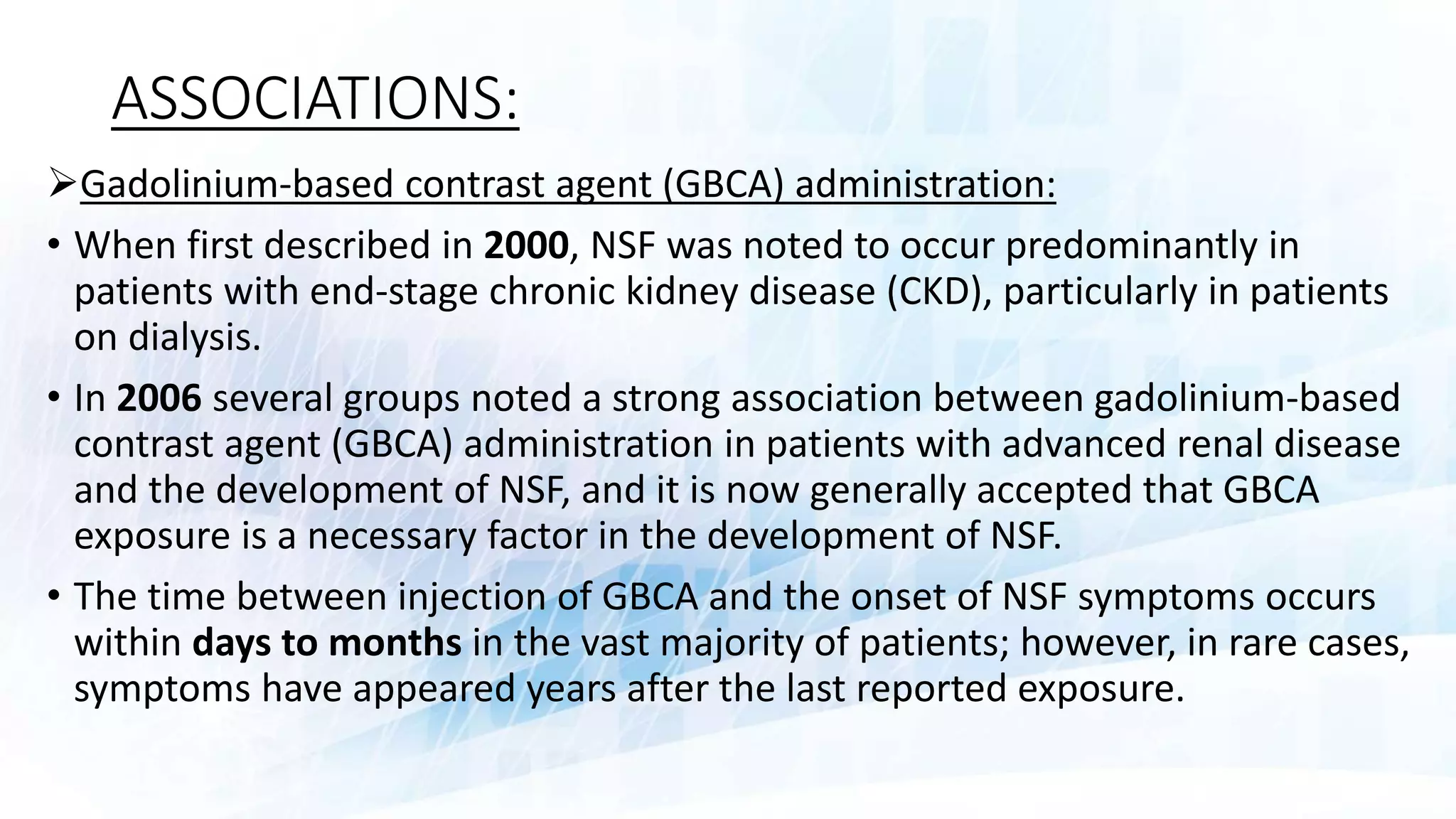
ASSOCIATIONS:
Gadolinium-based contrast agent (GBCA) administration:
• When first described in 2000, NSF was noted to occur predominantly in
patients with end-stage chronic kidney disease (CKD), particularly in patients
on dialysis.
• In 2006 several groups noted a strong association between gadolinium-based
contrast agent (GBCA) administration in patients with advanced renal disease
and the development of NSF, and it is now generally accepted that GBCA
exposure is a necessary factor in the development of NSF.
• The time between injection of GBCA and the onset of NSF symptoms occurs
within days to months in the vast majority of patients; however, in rare cases,
symptoms have appeared years after the last reported exposure.
Chronic kidney disease
• Based upon current knowledge, it is estimated that patients with end-stage
CKD (CKD5, eGFR < 15 ml/ min/1.73 m2) and severe CKD (CKD4, eGFR 15 to
29 ml/min/1.73 m2) have a 1% to 7% chance of developing NSF after one or
more exposures to at least some GBCAs.
• However, most patients who developed NSF had end-stage kidney disease
and were on dialysis at the time of exposure. Moreover, among patients with
severe CKD (CKD4) that developed NSF (approximately 3% of all reported NSF
cases), most had an eGFR closer to 15 ml/min/1.73 m2 than to 30
ml/min/1.73 m2.
• There has been only one published case report of a patient with eGFR values
above 30 ml/min/1.73 m2.
Acute kidney injury (AKI)
• Between 12% and 20% of confirmed cases of NSF have occurred in
patients with AKI, often superimposed upon CKD.
• Some cases of NSF have developed in patients with AKI without
underlying CKD.
• AKI alone is also a risk factor for NSF development in the consensus
opinion of the ACR Committee on Drugs and Contrast Media.
Others – high dose, multiple doses, Elevated serum
calcium/phosphate/iron levels, metabolic acidosis, high-dose
erythropoietin therapy, imunosuppression, hepato-renal syndrome
POSTULATED MECHANISM
• The exact mechanism of NSF causation is unknown.
• The most widely held hypothesis is that gadolinium ions dissociate
from the chelates in GBCAs in patients with significantly degraded
renal function due to the prolonged clearance times of the GBCAs, as
well as to other metabolic factors associated with this level of renal
disease.
• The free gadolinium then binds with an anion such as phosphate, and
the resulting insoluble precipitate is deposited in various tissues.
• A fibrotic reaction ensues, involving the activation of circulating
fibrocytes.
Patients at Risk for NSF
1) On dialysis (of any form)
2) Severe or end-stage CKD (CKD 4 or 5, EGFR < 30 ml/min/1.73 m2)
without dialysis
3) EGFR 30 to 40 ml/min/1.73 m2 without dialysis
4) AKI
• Patients with eGFR 30 to 40 ml/min/1.73 m2 should also be considered
at risk because eGFR levels may fluctuate (e.g., from the 30 to 40
ml/min/1.73 m2 range one day to below < 30 ml/min/1.73 m2 on
another day).
General Recommendations for Imaging Patients at
Risk for NSF
• Once a patient at risk for NSF is identified, alternative diagnostic examinations
that do not employ a GBCA should be considered.
• In nonemergent or nonurgent cases if the potential benefits of a GBCA-
enhanced MRI are felt to outweigh the risk of NSF in an individual patient and
there is no suitable alternative, the referring physician and patient should be
informed of the risks of GBCA administration, and both should agree with the
decision to proceed.
• In emergent or urgent cases it may not always be possible to inform the
patient or referring physician prior to GBCA administration. If the decision is
made to administer a GBCA to a patient at increased risk for developing NSF,
the supervising radiologist (including the name) should document the reason
for the examination and the rationale for use of intravenous GBCA.
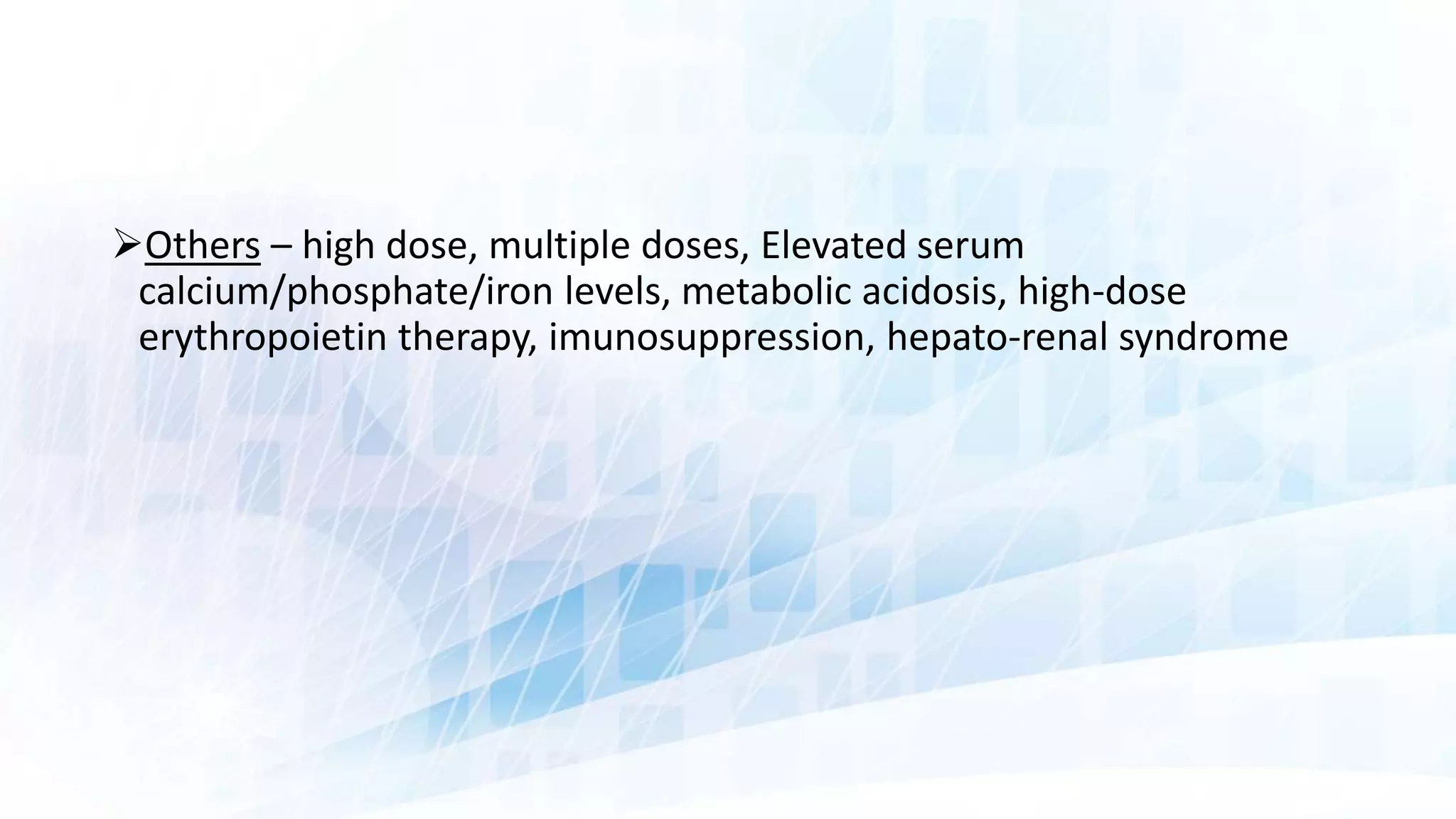
• Group I agents, the GBCAs that have been most often associated with
NSF, have been contraindicated by the FDA in these patients.
• Alternative agents should be used. The lowest possible dose of GBCA
required to obtain the needed clinical information should be used,
and it should generally not exceed the recommended single dose
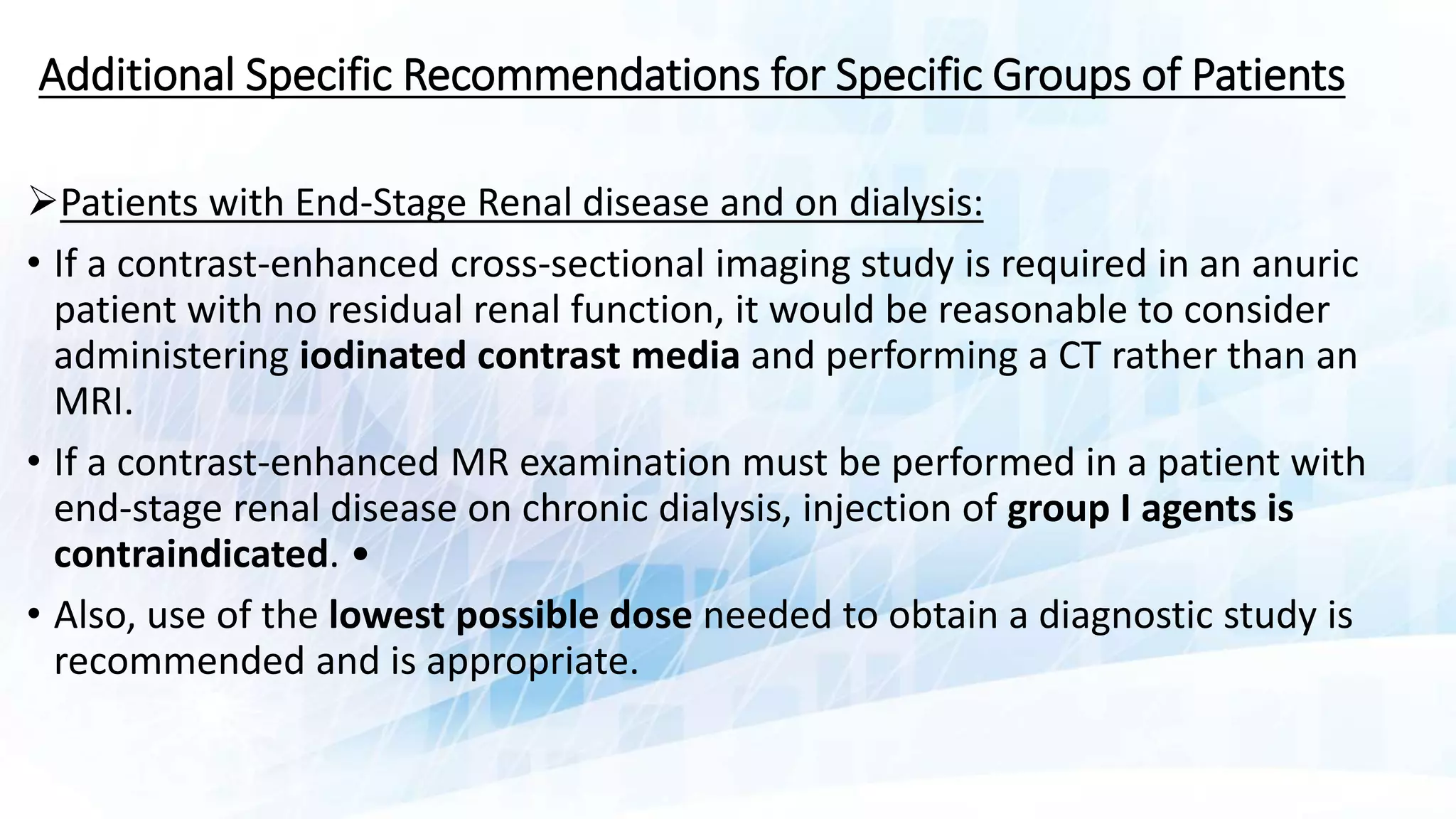
Additional Specific Recommendations for Specific Groups of Patients
Patients with End-Stage Renal disease and on dialysis:
• If a contrast-enhanced cross-sectional imaging study is required in an anuric
patient with no residual renal function, it would be reasonable to consider
administering iodinated contrast media and performing a CT rather than an
MRI.
• If a contrast-enhanced MR examination must be performed in a patient with
end-stage renal disease on chronic dialysis, injection of group I agents is
contraindicated. •
• Also, use of the lowest possible dose needed to obtain a diagnostic study is
recommended and is appropriate.
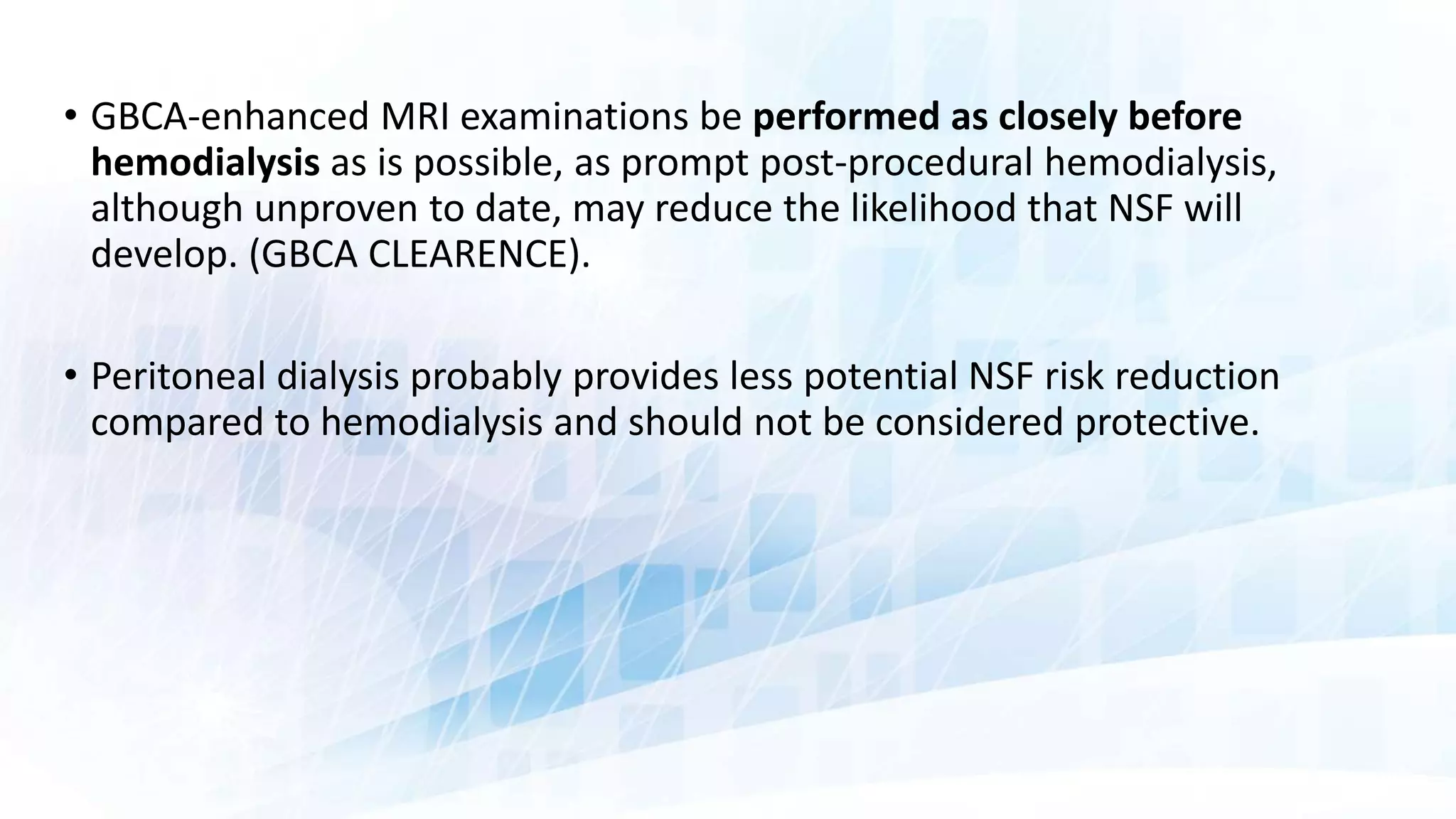
• GBCA-enhanced MRI examinations be performed as closely before
hemodialysis as is possible, as prompt post-procedural hemodialysis,
although unproven to date, may reduce the likelihood that NSF will
develop. (GBCA CLEARENCE).
• Peritoneal dialysis probably provides less potential NSF risk reduction
compared to hemodialysis and should not be considered protective.
Patients with CKD 4 or 5 (eGFR < 30 ml/min/1.73 m2) not on chronic dialysis:
• The correct course of action in this patient group is problematic, as
administration of iodinated contrast media for CT may lead to further
deterioration of renal function, while administration of GBCA for MRI could
result in NSF.
• It is recommended that any GBCA be avoided in this patient group. However if
GBCA enhanced MRI is deemed essential, use of the lowest possible dose
needed to obtain a diagnostic study is recommended
• Although there is no absolute proof that any GBCA is completely safe in this
patient group, group I agents have been contraindicated.
Patients with CKD 3 (eGFR 30 to 59 ml/min/1.73 m2):
• NSF developing after GBCA administration to patients with eGFR > 30
ml/min/1.73 m2 is exceedingly rare.
• However, eGFR determinations may fluctuate from one day to the next
(with an eGFR level just above 30 on one day changing to an eGFR below 30
on another day).
• It is for this reason that the precautions described for CKD4 and CKD5
patients are also recommended for inpatients with an eGFR < 40 ml
min/1.73 m2.
• In comparison, no special precautions are required in patients with an eGFR
of 40 to 59 ml/ min/1.73 m2.
Patients with CKD 1 or 2 (eGFR 60 to 119 ml min/1.73 m2):
• There is no evidence that patients in these groups are at increased
risk of developing NSF.
• Current consensus is that any GBCA can be administered safely to
these patients.
Patients with acute kidney injury (AKI):
• Patients with AKI who have been exposed to GBCA are at risk for developing
NSF.
• Due to the temporal lag between eGFR (which is calculated using serum
creatinine values) and actual glomerular filtration rates, it is not possible to
determine whether a given patient has AKI based on a single eGFR
determination.
• Accordingly, caution should be exercised in use of GBCA in patients with
known or suspected AKI regardless of measured serum creatinine or
calculated eGFR values.
• GBCA should only be administered to these patients if absolutely necessary.
• When GBCA administration is required, group I agents should be avoided.
OTHER REACTIONS TO GBCAs
Gadolinium deposition in brain:
• Recently, residual gadolinium has been found within the brain tissue of
patients who received multiple doses of GBCAs over their lifetimes.
• For reasons that remain unclear, gadolinium deposition appears to occur
preferentially in certain specific areas of the brain, even in the absence of
clinically evident disease and in the setting of an intact blood brain barrier.
• Such deposition is not expected, and led the FDA to publish a Safety Alert in
July of 2015 indicating that they were actively investigating the risk and clinical
significance of these gadolinium deposits.
• To date, no adverse health effects have been uncovered, but the radiology
community has initiated a rigorous investigation.
• Breath-holding Difficulty with Gadoxetate Disodium:
• Several studies have noted that gadoxetate disodium may be associated with
transient severe respiratory motion-related artifact that manifests in the
arterial phase of dynamic T1-weighted gradient echo imaging and resolves
shortly thereafter.
• This manifestation has been described as “transient dyspnea”.
• At one institution, patient surveys showed that significantly more patients
complained of subjective shortness of breath following gadoxetate disodium
compared to gadobenate dimeglumine exposure.
• The reported rate of occurrence of “transient dyspnea” has varied by site,
imaging acquisition parameters, and administered volume, ranging from 4% to
14%
• It’s a physiological reaction – not related to allergic bronchospasm.
• At risk – COPD, Large volume, previous such episode
• GBCAs in Sickle cell disease - Safe. No in vivo vasoocclusive effect has
been documented although in vito alignment of HbS RBCs has been
shown.
• Extravasation – GBCAs have a low risk for extravasation and low risk of
compartment syndrome as low volume is used.
• Serum Calcium levels and GBCAs - Only affect lab testing, not actual
serum calcium levels.
• GBCAs have not been approved by US-FDA for use with power injector .
• Not Recommended for Off-label use.
Contrast reactions and its management

Contrast reactions and its management

  • 1.
    CONTRAST REACTIONS ANDITS MANAGEMENT DR MOHAMMAD NAUFAL B.Y. POST GRADUATE IN RADIODIAGNOSIS ALAMEEN MEDICAL COLLEGE
  • 2.
    INTRODUCTION contrast reactions varyfrom minor physiological disturbances to rare severe life-threatening situations. Preparation for prompt treatment of contrast media reactions must include preparation for the entire spectrum of potential adverse events and include prearranged response planning with availability of appropriately trained personnel, equipment, and medications. Thorough familiarity with the presentation and emergency treatment of contrast media reactions must be part of the environment in which all intravascular contrast media are administered.
  • 3.
    Preliminary considerations forthe radiologist include: 1) Assessment of patient risk versus potential benefit of the contrast assisted examination. 2) Imaging alternatives that would provide the same or better diagnostic information. 3) Assurance of a valid clinical indication for each contrast medium administration. Because of the documented low incidence of adverse events, intravenous injection of contrast media may be exempted from the need for informed consent, but this decision should be based on state law, institutional policy, and departmental policy.
  • 4.
    The approach topatients about to undergo a contrast-enhanced examination has three general goals: 1) to assure that the administration of contrast is appropriate for the patient and the indication; 2) to minimize the likelihood of a contrast reaction; and 3) to be fully prepared to treat a reaction should one occur Achieving these aims depends on : 1) obtaining an appropriate and adequate history for each patient, 2) preparing the patient appropriately for the examination, 3) having equipment available to treat reactions, and 4) ensuring that expertise sufficient to treat even the most severe reactions is readily at hand.
  • 5.
    • Although mildreactions to contrast media are relatively common, they are almost invariably self-limited and of no consequence. • Severe, life threatening reactions, although rare, can occur in the absence of any specific risk factors with any type of media.
  • 6.
    RISK FACTORS FORADVERSE REACTIONS 1) Previous contrast reaction 2) Type of contrast agent 3) Allergy 4) Asthma 5) Renal insufficiency 6) Cardiovascular disease 7) Diabetes 8) Anxiety 9) Multiple myeloma 10) Beta-blockers 11) Sickle cell disease 12) Age 13) Concomitant use of intra-arterial medications like papavarine 14) Pheochromocytoma 15) Hyperthyroidism 16) Myasthenia Gravis
  • 7.
    Types of adversereactions IDIOSYNCRATIC NON IDIOSYNCRATIC UNRELATED CHEMOTOXIC RELATED OSMOLARITY RELATED
  • 8.
    IDIOSYNCRATIC REACTIONS Definition :unpredictable reactions which occur within 1 hour of contrast medium administration and which are unrelated to the dose of the contrast medium above a certain level. • Serious and most dreaded • Occur without warning • Cannot be reliably predicted • Are not preventable in the present state of our knowledge Mechanism : • Anaphylactoid reactions(NOT IgE Related) • There is no evidence to suggest a true antigen-antibody reaction • These involve bradykinin,histamine,leukotrienes, prostagalndins and complement factors
  • 9.
    Proposed mechanisms include: Enzymeinhibition : cholinesterase inhibition Vasoactive substances Cascade systems : Complement, Coagulation, Kinin, fibrinolysis Immune disturbances Anxiety, apprehension and fear
  • 10.
    RISK REDUCTION TECHNIQUES •Obtaining Clinical information – history of previous reaction is the most important risk factor to consider. • Alternative Diagnostic test • If still necessary , then risk may be reduced by : 1) Choice of contrast media : non-ionic LOCM have 4-5 times lower risk 2) Premedication : Elective or Emergency Elective • Prednisone 50 mg PO @ 13,7 and1h prior • Diphenhydramine – 50 mg IV/IM/PO 1h before • If patient cannot take oral medication, Hydrocortisone 200 mg IV may be substituted for prednisone Emergency • Hydrocortisone 200 mg IV every 4 hours till the study • Diphenhydramine 50 mg IV 1 hour prior • No use of steroids if given less than 4-6 hrs before • Diphenhydramine 50 mg IV (without steroids) in very urgent scans.
  • 11.
    TYPES AND MANAGEMENTOF ACUTE IDIOSYNCRATIC REACTIONS Mild • Nausea, mild vomiting, mild urticaria, itching • Observation, monitoring of vitals, reassurance • Antihistaminics as and when required Moderate • Urticaria, Facial or laryngeal edema, bronchospasm • Close monitoring until symptoms resolve • Treatment specific for the type Severe • Hypotension with tachycardia • Hypotension with bradycardia • Severe hypertension • Seizures • Pulmonary edema
  • 12.
    INITIAL APPROACH –ABCDE of Critical care A – Airway B – Breathing C – Circulation D – Disability E – Exposure Call for help immediately while resuscitating – do not hesitate
  • 13.
    MANAGEMENT OF MODERATEREACTIONS 1 URTICARIA • Discontinue the injection if not completed • No Rx in most cases • H1-receptor blocker: Diphenhydramine IV/IM/PO 25-50 mg • Severe or widely disseminated urticaria – Adrenaline (1:1000) 0.1- 0.3 ml SC (if no contraindications)
  • 14.
    2. Facial orlaryngeal edema • Oxygen @6-10 L/min (by mask) • Adrenaline SC or IM 0.1- 0.3 ml of 1:1000 • If Hypotension is present – Adrenaline 3 ml of 1:10000 IV preferably under ECG monitoring • If not responsive – can be repeated upto 1 mg • Always seek appropriate assisstance in nonresponsive cases
  • 15.
    3. Bronchospasm • Oxygen6-10L/min (mask) • ECG, Saturation, BP • Beta-agonist inhalers (bronchodilators : terbutaline, albuterol, metaproterenol) 2-3 puffs: repeat as necessary • IV/IM/SC adrenaline if not responding IM/SC : 0.1-0.3 ml (1:1000) If hypotension – IV slow 1-3 ml ( 1:10000) under ECG monitoring Max dose upto 1 mg • Assistance must be sought in case of non-responders and if SPO2 <88%
  • 16.
    MANAGEMENT OF SEVEREREACTIONS 1. Hypotension with tachycardia • Legs elevated or Trendelenberg position • ECG, Saturation, BP • Oxygen @6-10 L/min (mask) • Rapid IV fluids [ Ringer Lactate/NS) • If poorly responsive, I.V Adrenaline 1:10000 1 ml upto max 1 mg dose • Appropriate assisstance must be sought
  • 17.
    2. Hypotension withBradycardia (Vagal reaction) • Secure airway. Oxygen 6-10 L/min • Monitor vitals • Raise Legs >60 deg or Trendelenberg position • IV fluids : Ringer lactate/NS • Atropine 0.6-1 mg IV slow , max dose upto 0.04mg/kg (2-3 mg) in adult • Complete resolution of bradycardia and hypotension before discharge
  • 18.
  • 19.
    3. Hypertension (severe) •Oxygen @ 6-10 L/min (mask) • Monitor ECG, Saturation, BP • Nitroglycerine 0.4 mg Tab, Sublingual ( may repeat x 3 times) or, topical 2% ointment, apply 1-inch strip • If not responsive, then Labetalol 20 mg IV stat, F/B 20-80 mg IV every 10 minutes upto a maximum of 300 mg. • Shift to ICU or emergency medicine department • For Pheochromocytoma – Phentolamine 5 mg IV . ( may use Labetolol if Phentolamine is not available)
  • 20.
    4. Seizures • Oxygen@ 6-10 ml/min (mask) • Diazepam 5 mg IV ( or more as appropriate) or midazolam 0.5 – 1 mg IV • Phenytoin 15-18 mg/kg @ 50 mg/min for longer effect – after physician consultation. • Benzodiazepines may cause respiratory depression – close monitoring of vitals is necessary • Appropriate assistance must be sought
  • 21.
    5. Pulmonary edema •Oxygen @ 6-10 ml/min (mask) • Elevate torso • IV diuretic – furosemide 20-40 mg IV slow • Consider morphine (1-3 mg IV). • Shift to ICU or Emergency medicine department
  • 22.
    NON-IDIOSYNCRATIC REACTIONS • Definition: These are dose related reactions and depend upon the physiochemical properties of the contrast medium, i.e. chemical composiion, Osmolality and concentration of the injected contrast and also on the volume, speed and multiplicity of the injection. 1) Reactions unrelated to contrast media : • Pyrogenic • Vasovagal • vasomotor • Excessive dehydration • Hypertensive crisis in pheochromocytoma • Hypoglycemia
  • 23.
    2)Chemotoxic: Cardiovascular Neurologic Renal 3)Hyperosmolar reactions: erythrocyte damage,BBB damage, endothelial damage, vaodalitation, hypervolemia and cardiac depression.
  • 24.
    • Occur eitherfollowing idiosyncratic or nonidiosyncratic reactions or may occur independently. Vasomotor reactions: Are characterized by severe hypotension, tachycardia or bradycardia with depression of myocardial contractility , reduced cardiac output, cardio respiratory collapse and possibly death. Vasovagal reactions: Are characterized by bradycardia. VASOMOTOR & VASOVAGAL REACTIONS
  • 25.
    CHEMOTOXIC REACTIONS • Causedby toxicity to contrast medium molecule as a whole, and is more often due to cations , particularly -Na. • They may be cardiac, neurological, renal. • Nephrotoxicity of contrast media is due to decreased renal perfusion (low BP, peripheral vasodilatation). glomerular injury – manifests as proteinuria. Tubular injury- due to osmolality, chemotoxicity, ichaemia CM precipitation of Tamm Horsefall proteins that blocks tubules Swelling of renal tubular cells causing obstruction
  • 26.
    HYPEROSMOLAR REACTIONS Due tohigh osmolarity of the contrast media than plasma More common with conventional CM. Erythrocyte damage: • loss of H2O from RBC –dehydrated shrunken RBC- increased internal viscosity- loss of ability of RBC to deform to traverse capillaries- obstruction of important capillary beds (cerebral, coronary, renal, pulmonary) Endothelial damage & BBB damage: • shrinkage of endothelial cells- widening of intercellular gaps- capillary permeability.
  • 27.
    Vasodilatation : • ofthe arteriolar or capillary bed of the injected artery, due to direct effect of hyperosmolar CM, manifested as warmth, heat discomfort or severe pain during peripheral arteriography. Hypervolumia : • due osmotic extraction of extravascular fluid-> increased blood volume by about10 to 20%. Cardiac depression: • with hypotension, diminished venous return, myocardial ischaemia and direct depression of myocardial contractility
  • 28.
    CONTRAST EXTRAVASATION • Itrefers to the escape of the contrast material from the vessel in which it is introduced, into the surrounding tissue or body cavity • 0.1-0.9% of contrast injections • Risk factors : Atherosclerosis, PVD, Diabetes, Raynaud’s disease, Venous thrombosis, prior radiation, extensive surgery, severely ill and deblitated, indwelling lines > 24 hrs, multiple injections in onto same vein.
  • 29.
    • Clinical features: Mild – edema, erythema, stinging, tenderness Severe – Compartment syndrome, ulcers, necrosis. • Prevention is better than cure: ensure properly secured IV access, extravasation detectors • Treatment: depends on the volume of extravasation
  • 30.
    MANAGEMENT OF CONTRASTEXTRAVASATION < 20 Ml - Elevate the arm and observe 20-100 mL -Aspirate - Intermittent Ice -Hyaluronidase (50- 250 U) locally >100 mL -Aspirate -Intermittent Ice -Hyaluronidase (50- 250 U) locally -In case of pallor/pulselessness/ worsening pain/parasthesias/skin changes – Plastic surgery consultation
  • 31.
    NEPHROGENIC SYSTEMIC FIBROSIS •Nephrogenic systemic fibrosis (NSF) is a fibrosing disease, primarily involving the skin and subcutaneous tissues but also known to involve other organs, such as the lungs, esophagus, heart, and skeletal muscles. • Initial symptoms typically include skin thickening and/or pruritis. • Symptoms and signs may develop and progress rapidly, with some affected patients developing contractures and joint immobility. • In some patients, the disease may be fatal.
  • 33.
    ASSOCIATIONS: Gadolinium-based contrast agent(GBCA) administration: • When first described in 2000, NSF was noted to occur predominantly in patients with end-stage chronic kidney disease (CKD), particularly in patients on dialysis. • In 2006 several groups noted a strong association between gadolinium-based contrast agent (GBCA) administration in patients with advanced renal disease and the development of NSF, and it is now generally accepted that GBCA exposure is a necessary factor in the development of NSF. • The time between injection of GBCA and the onset of NSF symptoms occurs within days to months in the vast majority of patients; however, in rare cases, symptoms have appeared years after the last reported exposure.
  • 35.
    Chronic kidney disease •Based upon current knowledge, it is estimated that patients with end-stage CKD (CKD5, eGFR < 15 ml/ min/1.73 m2) and severe CKD (CKD4, eGFR 15 to 29 ml/min/1.73 m2) have a 1% to 7% chance of developing NSF after one or more exposures to at least some GBCAs. • However, most patients who developed NSF had end-stage kidney disease and were on dialysis at the time of exposure. Moreover, among patients with severe CKD (CKD4) that developed NSF (approximately 3% of all reported NSF cases), most had an eGFR closer to 15 ml/min/1.73 m2 than to 30 ml/min/1.73 m2. • There has been only one published case report of a patient with eGFR values above 30 ml/min/1.73 m2.
  • 36.
    Acute kidney injury(AKI) • Between 12% and 20% of confirmed cases of NSF have occurred in patients with AKI, often superimposed upon CKD. • Some cases of NSF have developed in patients with AKI without underlying CKD. • AKI alone is also a risk factor for NSF development in the consensus opinion of the ACR Committee on Drugs and Contrast Media.
  • 37.
    Others – highdose, multiple doses, Elevated serum calcium/phosphate/iron levels, metabolic acidosis, high-dose erythropoietin therapy, imunosuppression, hepato-renal syndrome
  • 38.
    POSTULATED MECHANISM • Theexact mechanism of NSF causation is unknown. • The most widely held hypothesis is that gadolinium ions dissociate from the chelates in GBCAs in patients with significantly degraded renal function due to the prolonged clearance times of the GBCAs, as well as to other metabolic factors associated with this level of renal disease. • The free gadolinium then binds with an anion such as phosphate, and the resulting insoluble precipitate is deposited in various tissues. • A fibrotic reaction ensues, involving the activation of circulating fibrocytes.
  • 39.
    Patients at Riskfor NSF 1) On dialysis (of any form) 2) Severe or end-stage CKD (CKD 4 or 5, EGFR < 30 ml/min/1.73 m2) without dialysis 3) EGFR 30 to 40 ml/min/1.73 m2 without dialysis 4) AKI • Patients with eGFR 30 to 40 ml/min/1.73 m2 should also be considered at risk because eGFR levels may fluctuate (e.g., from the 30 to 40 ml/min/1.73 m2 range one day to below < 30 ml/min/1.73 m2 on another day).
  • 41.
    General Recommendations forImaging Patients at Risk for NSF • Once a patient at risk for NSF is identified, alternative diagnostic examinations that do not employ a GBCA should be considered. • In nonemergent or nonurgent cases if the potential benefits of a GBCA- enhanced MRI are felt to outweigh the risk of NSF in an individual patient and there is no suitable alternative, the referring physician and patient should be informed of the risks of GBCA administration, and both should agree with the decision to proceed. • In emergent or urgent cases it may not always be possible to inform the patient or referring physician prior to GBCA administration. If the decision is made to administer a GBCA to a patient at increased risk for developing NSF, the supervising radiologist (including the name) should document the reason for the examination and the rationale for use of intravenous GBCA.
  • 42.
    • Group Iagents, the GBCAs that have been most often associated with NSF, have been contraindicated by the FDA in these patients. • Alternative agents should be used. The lowest possible dose of GBCA required to obtain the needed clinical information should be used, and it should generally not exceed the recommended single dose
  • 43.
    Additional Specific Recommendationsfor Specific Groups of Patients Patients with End-Stage Renal disease and on dialysis: • If a contrast-enhanced cross-sectional imaging study is required in an anuric patient with no residual renal function, it would be reasonable to consider administering iodinated contrast media and performing a CT rather than an MRI. • If a contrast-enhanced MR examination must be performed in a patient with end-stage renal disease on chronic dialysis, injection of group I agents is contraindicated. • • Also, use of the lowest possible dose needed to obtain a diagnostic study is recommended and is appropriate.
  • 44.
    • GBCA-enhanced MRIexaminations be performed as closely before hemodialysis as is possible, as prompt post-procedural hemodialysis, although unproven to date, may reduce the likelihood that NSF will develop. (GBCA CLEARENCE). • Peritoneal dialysis probably provides less potential NSF risk reduction compared to hemodialysis and should not be considered protective.
  • 45.
    Patients with CKD4 or 5 (eGFR < 30 ml/min/1.73 m2) not on chronic dialysis: • The correct course of action in this patient group is problematic, as administration of iodinated contrast media for CT may lead to further deterioration of renal function, while administration of GBCA for MRI could result in NSF. • It is recommended that any GBCA be avoided in this patient group. However if GBCA enhanced MRI is deemed essential, use of the lowest possible dose needed to obtain a diagnostic study is recommended • Although there is no absolute proof that any GBCA is completely safe in this patient group, group I agents have been contraindicated.
  • 46.
    Patients with CKD3 (eGFR 30 to 59 ml/min/1.73 m2): • NSF developing after GBCA administration to patients with eGFR > 30 ml/min/1.73 m2 is exceedingly rare. • However, eGFR determinations may fluctuate from one day to the next (with an eGFR level just above 30 on one day changing to an eGFR below 30 on another day). • It is for this reason that the precautions described for CKD4 and CKD5 patients are also recommended for inpatients with an eGFR < 40 ml min/1.73 m2. • In comparison, no special precautions are required in patients with an eGFR of 40 to 59 ml/ min/1.73 m2.
  • 47.
    Patients with CKD1 or 2 (eGFR 60 to 119 ml min/1.73 m2): • There is no evidence that patients in these groups are at increased risk of developing NSF. • Current consensus is that any GBCA can be administered safely to these patients.
  • 48.
    Patients with acutekidney injury (AKI): • Patients with AKI who have been exposed to GBCA are at risk for developing NSF. • Due to the temporal lag between eGFR (which is calculated using serum creatinine values) and actual glomerular filtration rates, it is not possible to determine whether a given patient has AKI based on a single eGFR determination. • Accordingly, caution should be exercised in use of GBCA in patients with known or suspected AKI regardless of measured serum creatinine or calculated eGFR values. • GBCA should only be administered to these patients if absolutely necessary. • When GBCA administration is required, group I agents should be avoided.
  • 49.
    OTHER REACTIONS TOGBCAs Gadolinium deposition in brain: • Recently, residual gadolinium has been found within the brain tissue of patients who received multiple doses of GBCAs over their lifetimes. • For reasons that remain unclear, gadolinium deposition appears to occur preferentially in certain specific areas of the brain, even in the absence of clinically evident disease and in the setting of an intact blood brain barrier. • Such deposition is not expected, and led the FDA to publish a Safety Alert in July of 2015 indicating that they were actively investigating the risk and clinical significance of these gadolinium deposits. • To date, no adverse health effects have been uncovered, but the radiology community has initiated a rigorous investigation.
  • 50.
    • Breath-holding Difficultywith Gadoxetate Disodium: • Several studies have noted that gadoxetate disodium may be associated with transient severe respiratory motion-related artifact that manifests in the arterial phase of dynamic T1-weighted gradient echo imaging and resolves shortly thereafter. • This manifestation has been described as “transient dyspnea”. • At one institution, patient surveys showed that significantly more patients complained of subjective shortness of breath following gadoxetate disodium compared to gadobenate dimeglumine exposure. • The reported rate of occurrence of “transient dyspnea” has varied by site, imaging acquisition parameters, and administered volume, ranging from 4% to 14% • It’s a physiological reaction – not related to allergic bronchospasm. • At risk – COPD, Large volume, previous such episode
  • 51.
    • GBCAs inSickle cell disease - Safe. No in vivo vasoocclusive effect has been documented although in vito alignment of HbS RBCs has been shown. • Extravasation – GBCAs have a low risk for extravasation and low risk of compartment syndrome as low volume is used. • Serum Calcium levels and GBCAs - Only affect lab testing, not actual serum calcium levels. • GBCAs have not been approved by US-FDA for use with power injector . • Not Recommended for Off-label use.