MORPHOLOGICAL PATTERNS,
SYSTEMIC EFFECTS & FATE OF
ACUTE INFLAMMATION
DR. DUSSA VAMSHIKRISHNA MD(H)
• Inflammation of an organ is usually named by
adding the suffix-itis to its Latin/Greek name .
• E.g.
- Appendix- Appendicitis,
- Liver (Hepar)- Hepatitis,
- Gall bladder (Cholecyst)- Cholecystitis,
- Meninges- Meningitis.
Morphologic varieties of acute inflammation
are described below:
1. Serous Inflammation
2. Fibrinous Inflammation
3. Suppurative or Purulent Inflammation: Abscess
4. Hemorrhagic Inflammation
5. Catarrhal Inflammation
6. Membranous Inflammation
MORPHOLOGICAL TYPES OF
ACUTE INFLAMMATION:
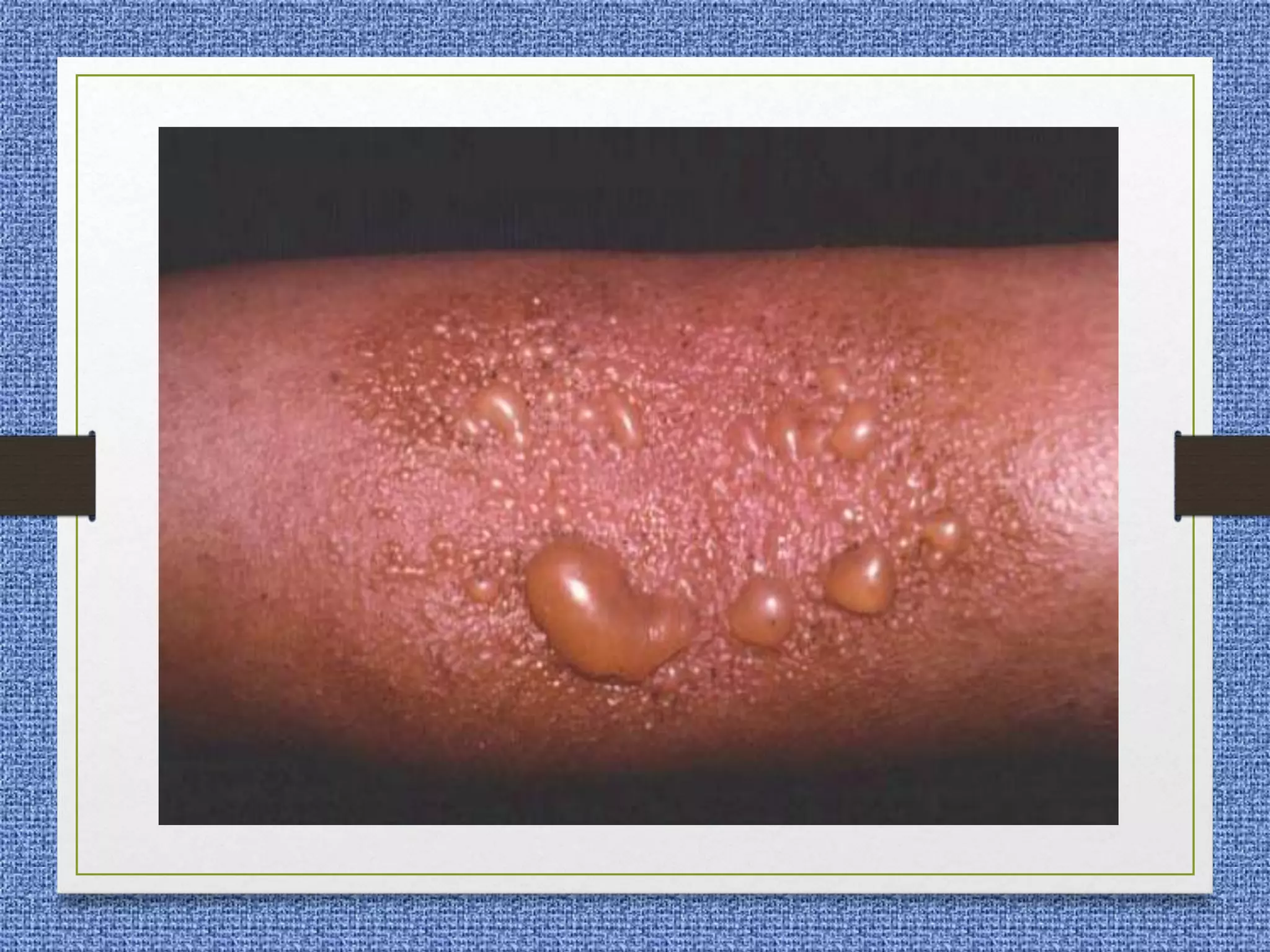
1. Serous Inflammation:
• Characterized by marked outpouring of a thin
serous fluid.
• Serous exudate or effusion is yellow, straw-like in
color and microscopically shows either few or no
cells.
• Example: Pleural effusion as a complication of
lobar pneumonia.
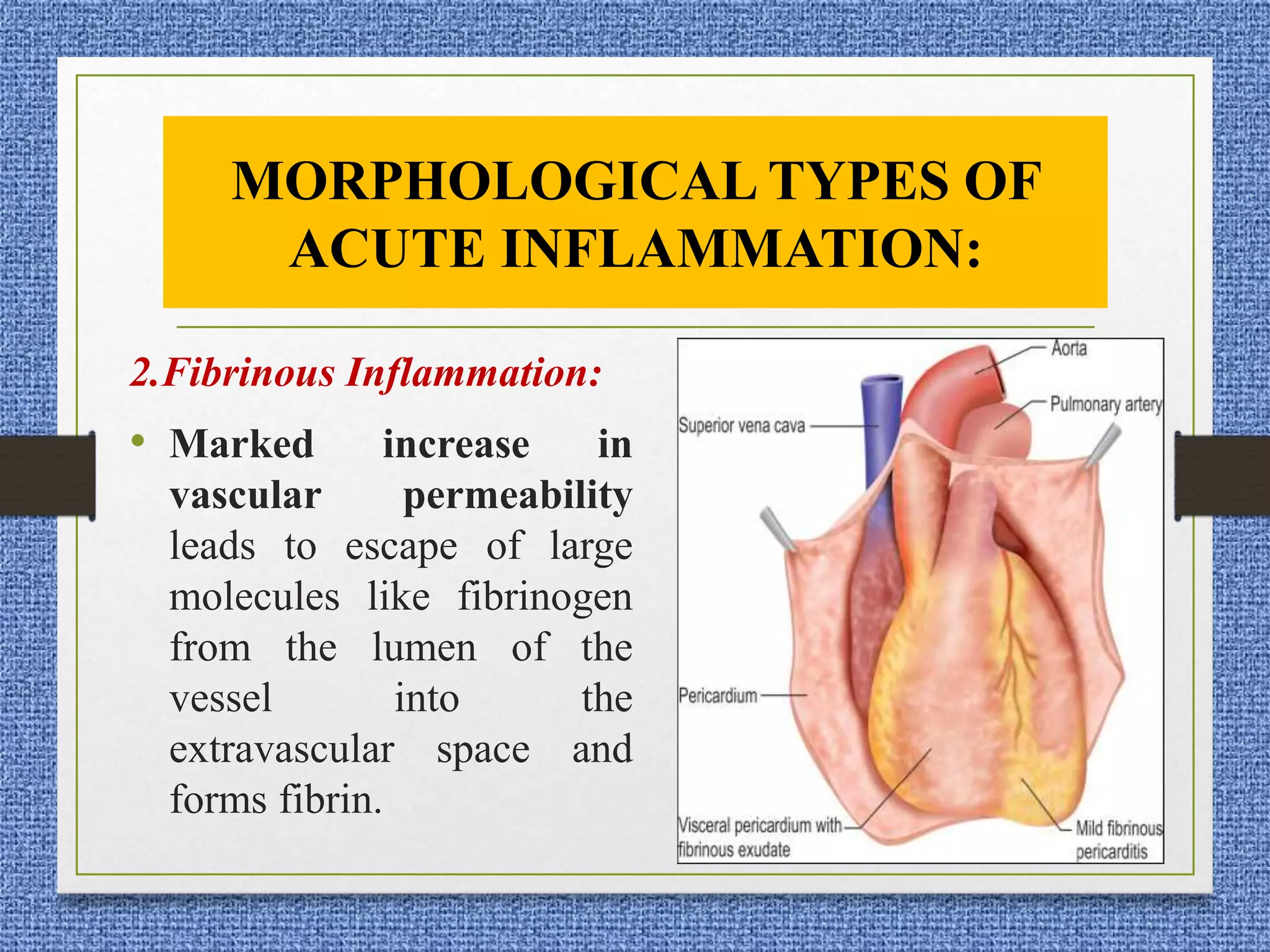
2.Fibrinous Inflammation:
• Marked increase in
vascular permeability
leads to escape of large
molecules like fibrinogen
from the lumen of the
vessel into the
extravascular space and
forms fibrin.
MORPHOLOGICAL TYPES OF
ACUTE INFLAMMATION:
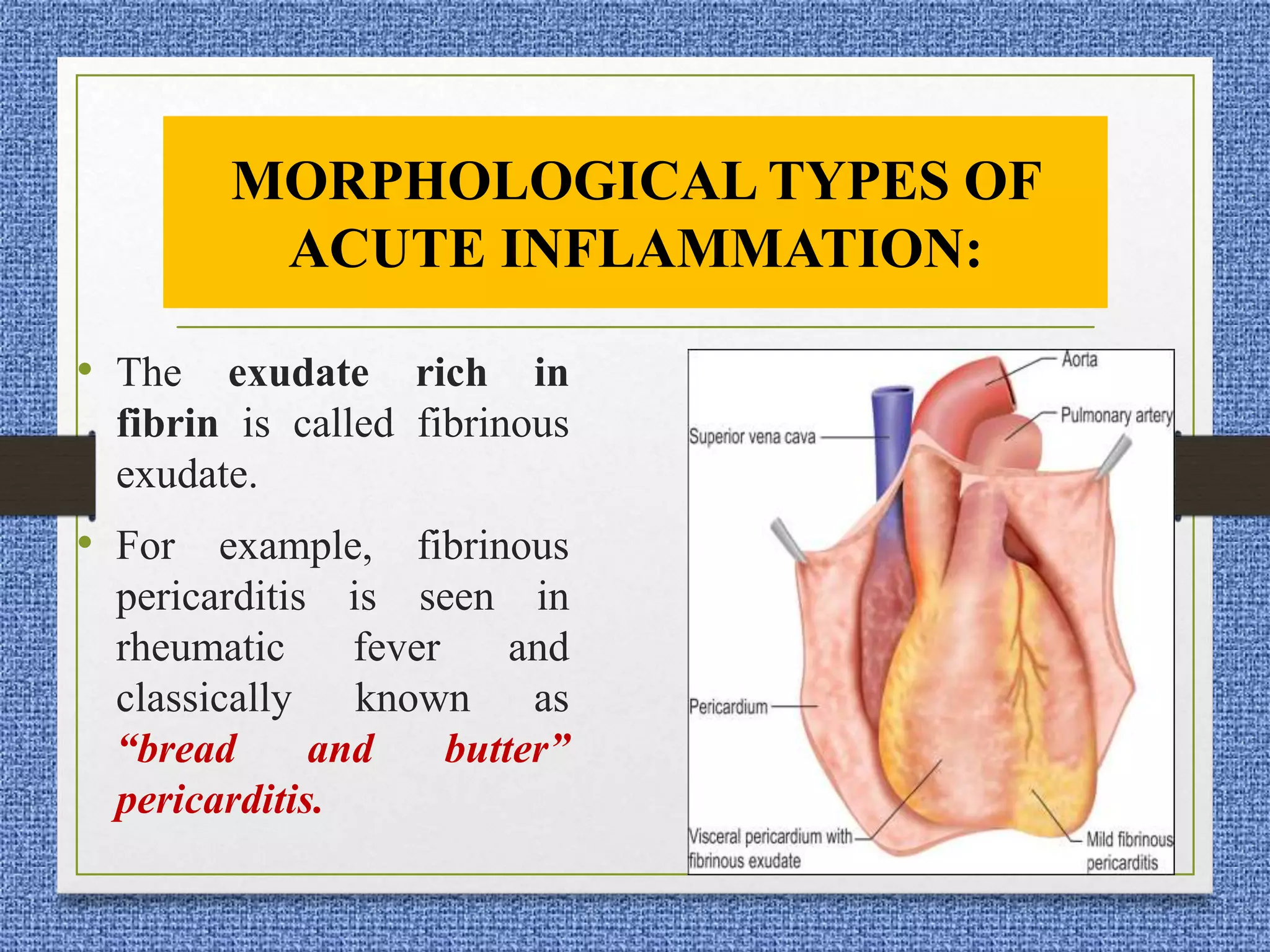
• The exudate rich in
fibrin is called fibrinous
exudate.
• For example, fibrinous
pericarditis is seen in
rheumatic fever and
classically known as
“bread and butter”
pericarditis.
MORPHOLOGICAL TYPES OF
ACUTE INFLAMMATION:
“bread and butter”
pericarditis.
3. Suppurative or Purulent Inflammation: Abscess
• It is characterized by the production of large
amounts of pus or purulent exudate.
• Microscopically, shows neutrophils, liquefactive
necrosis, and edema fluid.
MORPHOLOGICAL TYPES OF
ACUTE INFLAMMATION:
• Bacteria (e.g. staphylococci) which produce
localized suppuration and are called as pyogenic
(pus-producing) bacteria.
For example, acute appendicitis.
• Abscesses: It is the localized collections of
purulent inflammatory exudates in a tissue, an
organ, or a confined space.
MORPHOLOGICAL TYPES OF
ACUTE INFLAMMATION:
ABSCESSES
4. Hemorrhagic Inflammation:
• When inflammation is associated with severe
vascular injury or deficiency of coagulation factors,
it causes hemorrhagic inflammation,
• e.g. Acute pancreatitis due to proteolytic
destruction of vascular walls.
MORPHOLOGICAL TYPES OF
ACUTE INFLAMMATION:
5. Catarrhal Inflammation:
• Acute inflammation of a mucous membrane is
accompanied by excessive secretion of mucus and
the appearance is described as catarrhal.
• e.g. common cold.
MORPHOLOGICAL TYPES OF
ACUTE INFLAMMATION:
6. Membranous Inflammation:
• In this type, epithelium is covered by membrane
consisting of fibrin, desquamated epithelial cells
and inflammatory cells
• e.g. pharyngitis or laryngitis due to
Corynebacterium diphtheria.
MORPHOLOGICAL TYPES OF
ACUTE INFLAMMATION:
7. Necrotizing (Gangrenous) Inflammation:
• The combination of necrosis and bacterial
putrefaction is gangrene
• e.g. gangrenous FOOT.
MORPHOLOGICAL TYPES OF
ACUTE INFLAMMATION:
• Systemic changes in acute inflammation are
collectively known as acute-phase response, or
the Systemic Inflammatory Response Syndrome
(SIRS).
• Causes: Due to cytokines produced by leukocytes,
in response to infections or immune reactions.
• Most important cytokines are TNF, IL-1, and IL-6.
SYSTEMIC EFFECTS OF
ACUTE INFLAMMATION
• The Clinical and Pathologic changes of acute-phase
response are:
1. Fever:
• Pyrogens: These are molecules that cause fever. It may
be exogenous (bacterial products, like LPS), which
stimulate leukocytes to release endogenous pyrogens
(cytokines such as IL-1 and TNF).
• The cytokines increase the enzymes cyclooxygenases
resulting in conversion of AA into prostaglandins.
SYSTEMIC EFFECTS OF
ACUTE INFLAMMATION
2. Raised plasma levels of acute-phase proteins:
• These are plasma proteins synthesized in the liver and
may be markedly raised in response to inflammatory
stimuli.
Types of acute-phase proteins:
• (1) C-reactive protein (CRP)
• (2) fibrinogen
• (3) serum amyloid A (SAA) protein.
SYSTEMIC EFFECTS OF
ACUTE INFLAMMATION
3. Changes in the leukocytes:
A. Leukocytosis
• Total leukocyte count more than 11,000/μL are
termed as leukocytosis.
• Common in inflammatory reactions, especially
those caused by bacterial infections.
SYSTEMIC EFFECTS OF
ACUTE INFLAMMATION
B. Lymphocytosis:
• It is seen in viral infections (e.g. Infectious
mononucleosis, mumps, and German measles).
SYSTEMIC EFFECTS OF
ACUTE INFLAMMATION
SYSTEMIC EFFECTS OF
INFLAMMATION
C. Eosinophilia:
• It is seen in bronchial asthma, allergy, and
parasitic infestations.
D. Leukopenia:
• Decreased number of circulating white cells is
associated with few infections like typhoid fever
and some viruses, rickettsia, and certain
protozoa.
SYSTEMIC EFFECTS OF
ACUTE INFLAMMATION
SYSTEMIC EFFECTS OF
INFLAMMATION
E. Shock may occur in severe cases.
• Massive release of cytokine TNF, a mediator of
inflammation, in response to severe tissue injury or
infection results in profuse systemic vasodilatation,
increased vascular permeability and intravascular
volume loss.
• The net effect of these changes is hypotension and
shock.
SYSTEMIC EFFECTS OF
ACUTE INFLAMMATION
SYSTEMIC EFFECTS OF
INFLAMMATION
Other features of the acute-phase response:
It includes:
• Increased pulse and blood pressure.
• Anorexia and malaise, probably due to cytokines acting
on brain cells.
• In severe bacterial infections (sepsis) cytokines (mainly
TNF and IL-1) may be produced in large quantities and
can result in disseminated intravascular coagulation and
cardiovascular failure.
SYSTEMIC EFFECTS OF
ACUTE INFLAMMATION
FATE OF ACUTE
INFLAMMATION
• Acute inflammatory process can culminate in one
of the following outcomes:
• 1. Resolution
• 2. Healing
• 3. Suppuration
• 4. Chronic inflammation
1. Resolution
• Complete return to normal tissue following acute
inflammation.- RESOLUTION
• Occurs when tissue damage is less & Reversible
cell injury is seen.
• e.g. resolution in lobar pneumonia.
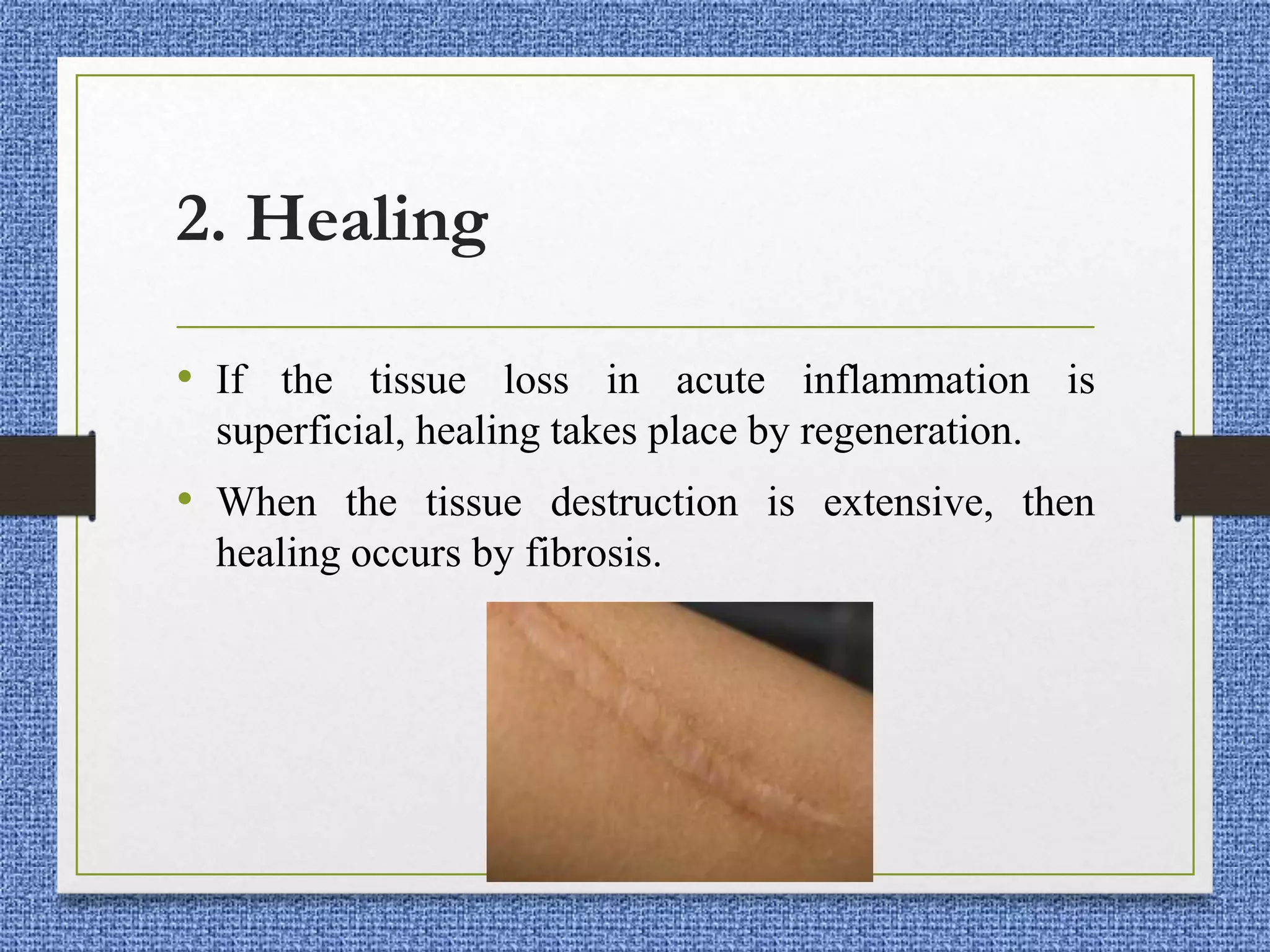
2. Healing
• If the tissue loss in acute inflammation is
superficial, healing takes place by regeneration.
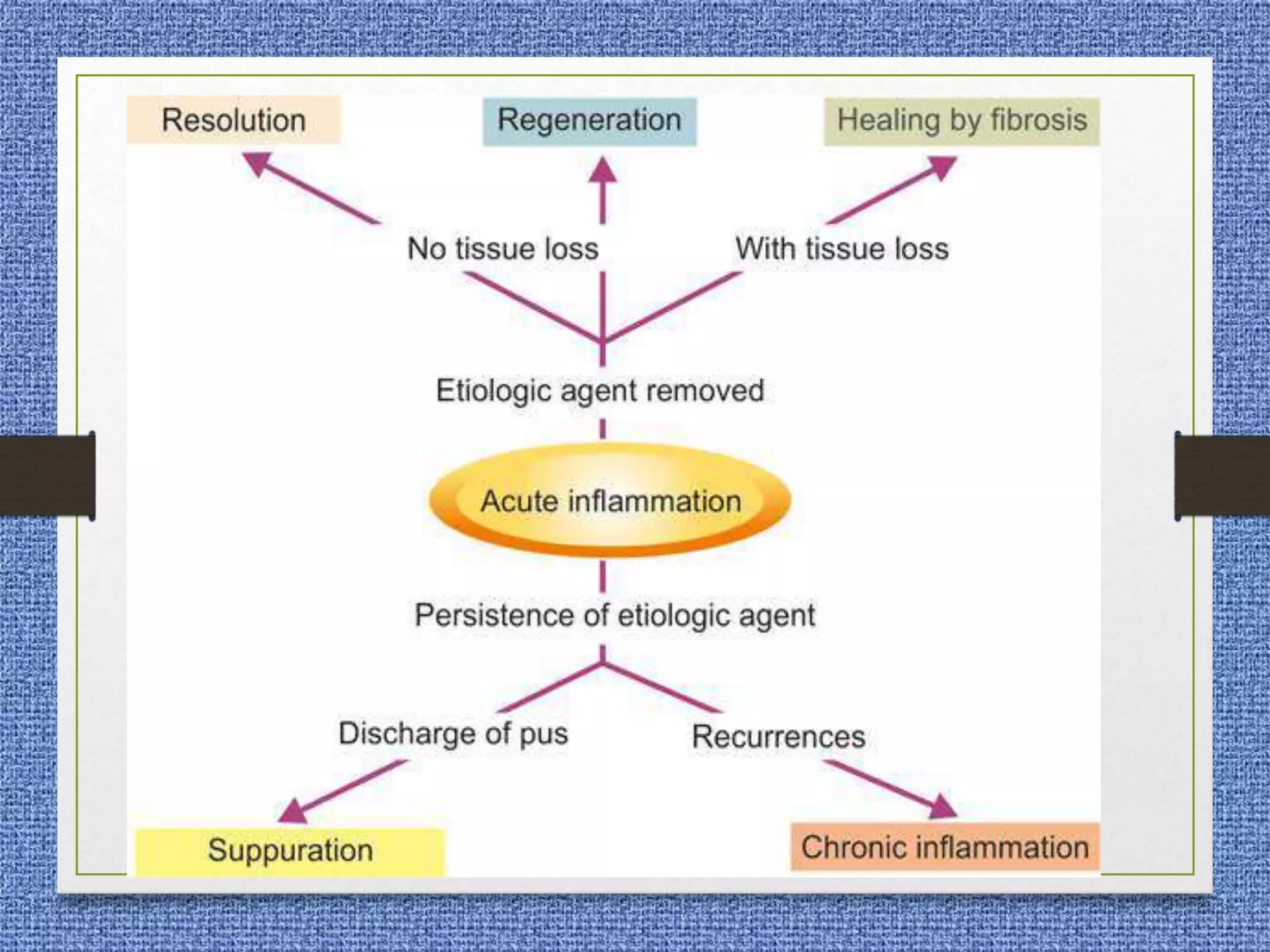
• When the tissue destruction is extensive, then
healing occurs by fibrosis.
3. Suppuration
• When the pyogenic bacteria causing acute
inflammation result in severe tissue necrosis, the
process progresses to suppuration.
• Initially, there is intense neutrophilic infiltration.
Subsequently, mixture of neutrophils, bacteria,
fragments of necrotic tissue, cell debris and fibrin
comprise pus which is contained in a cavity to form
an abscess.
4. Chronic inflammation
• Persisting or recurrent acute inflammation may
progress to chronic inflammation in which the
processes of inflammation and healing proceed side
by side.
Morphology of-acute-inflammation

Morphology of-acute-inflammation

  • 1.
    MORPHOLOGICAL PATTERNS, SYSTEMIC EFFECTS& FATE OF ACUTE INFLAMMATION DR. DUSSA VAMSHIKRISHNA MD(H)
  • 2.
    • Inflammation ofan organ is usually named by adding the suffix-itis to its Latin/Greek name . • E.g. - Appendix- Appendicitis, - Liver (Hepar)- Hepatitis, - Gall bladder (Cholecyst)- Cholecystitis, - Meninges- Meningitis.
  • 3.
    Morphologic varieties ofacute inflammation are described below: 1. Serous Inflammation 2. Fibrinous Inflammation 3. Suppurative or Purulent Inflammation: Abscess 4. Hemorrhagic Inflammation 5. Catarrhal Inflammation 6. Membranous Inflammation
  • 4.
    MORPHOLOGICAL TYPES OF ACUTEINFLAMMATION: 1. Serous Inflammation: • Characterized by marked outpouring of a thin serous fluid. • Serous exudate or effusion is yellow, straw-like in color and microscopically shows either few or no cells. • Example: Pleural effusion as a complication of lobar pneumonia.
  • 6.
    2.Fibrinous Inflammation: • Markedincrease in vascular permeability leads to escape of large molecules like fibrinogen from the lumen of the vessel into the extravascular space and forms fibrin. MORPHOLOGICAL TYPES OF ACUTE INFLAMMATION:
  • 7.
    • The exudaterich in fibrin is called fibrinous exudate. • For example, fibrinous pericarditis is seen in rheumatic fever and classically known as “bread and butter” pericarditis. MORPHOLOGICAL TYPES OF ACUTE INFLAMMATION:
  • 8.
  • 9.
    3. Suppurative orPurulent Inflammation: Abscess • It is characterized by the production of large amounts of pus or purulent exudate. • Microscopically, shows neutrophils, liquefactive necrosis, and edema fluid. MORPHOLOGICAL TYPES OF ACUTE INFLAMMATION:
  • 10.
    • Bacteria (e.g.staphylococci) which produce localized suppuration and are called as pyogenic (pus-producing) bacteria. For example, acute appendicitis. • Abscesses: It is the localized collections of purulent inflammatory exudates in a tissue, an organ, or a confined space. MORPHOLOGICAL TYPES OF ACUTE INFLAMMATION:
  • 11.
  • 12.
    4. Hemorrhagic Inflammation: •When inflammation is associated with severe vascular injury or deficiency of coagulation factors, it causes hemorrhagic inflammation, • e.g. Acute pancreatitis due to proteolytic destruction of vascular walls. MORPHOLOGICAL TYPES OF ACUTE INFLAMMATION:
  • 14.
    5. Catarrhal Inflammation: •Acute inflammation of a mucous membrane is accompanied by excessive secretion of mucus and the appearance is described as catarrhal. • e.g. common cold. MORPHOLOGICAL TYPES OF ACUTE INFLAMMATION:
  • 16.
    6. Membranous Inflammation: •In this type, epithelium is covered by membrane consisting of fibrin, desquamated epithelial cells and inflammatory cells • e.g. pharyngitis or laryngitis due to Corynebacterium diphtheria. MORPHOLOGICAL TYPES OF ACUTE INFLAMMATION:
  • 18.
    7. Necrotizing (Gangrenous)Inflammation: • The combination of necrosis and bacterial putrefaction is gangrene • e.g. gangrenous FOOT. MORPHOLOGICAL TYPES OF ACUTE INFLAMMATION:
  • 20.
    • Systemic changesin acute inflammation are collectively known as acute-phase response, or the Systemic Inflammatory Response Syndrome (SIRS). • Causes: Due to cytokines produced by leukocytes, in response to infections or immune reactions. • Most important cytokines are TNF, IL-1, and IL-6. SYSTEMIC EFFECTS OF ACUTE INFLAMMATION
  • 21.
    • The Clinicaland Pathologic changes of acute-phase response are: 1. Fever: • Pyrogens: These are molecules that cause fever. It may be exogenous (bacterial products, like LPS), which stimulate leukocytes to release endogenous pyrogens (cytokines such as IL-1 and TNF). • The cytokines increase the enzymes cyclooxygenases resulting in conversion of AA into prostaglandins. SYSTEMIC EFFECTS OF ACUTE INFLAMMATION
  • 23.
    2. Raised plasmalevels of acute-phase proteins: • These are plasma proteins synthesized in the liver and may be markedly raised in response to inflammatory stimuli. Types of acute-phase proteins: • (1) C-reactive protein (CRP) • (2) fibrinogen • (3) serum amyloid A (SAA) protein. SYSTEMIC EFFECTS OF ACUTE INFLAMMATION
  • 24.
    3. Changes inthe leukocytes: A. Leukocytosis • Total leukocyte count more than 11,000/μL are termed as leukocytosis. • Common in inflammatory reactions, especially those caused by bacterial infections. SYSTEMIC EFFECTS OF ACUTE INFLAMMATION
  • 25.
    B. Lymphocytosis: • Itis seen in viral infections (e.g. Infectious mononucleosis, mumps, and German measles). SYSTEMIC EFFECTS OF ACUTE INFLAMMATION
  • 26.
    SYSTEMIC EFFECTS OF INFLAMMATION C.Eosinophilia: • It is seen in bronchial asthma, allergy, and parasitic infestations. D. Leukopenia: • Decreased number of circulating white cells is associated with few infections like typhoid fever and some viruses, rickettsia, and certain protozoa. SYSTEMIC EFFECTS OF ACUTE INFLAMMATION
  • 27.
    SYSTEMIC EFFECTS OF INFLAMMATION E.Shock may occur in severe cases. • Massive release of cytokine TNF, a mediator of inflammation, in response to severe tissue injury or infection results in profuse systemic vasodilatation, increased vascular permeability and intravascular volume loss. • The net effect of these changes is hypotension and shock. SYSTEMIC EFFECTS OF ACUTE INFLAMMATION
  • 28.
    SYSTEMIC EFFECTS OF INFLAMMATION Otherfeatures of the acute-phase response: It includes: • Increased pulse and blood pressure. • Anorexia and malaise, probably due to cytokines acting on brain cells. • In severe bacterial infections (sepsis) cytokines (mainly TNF and IL-1) may be produced in large quantities and can result in disseminated intravascular coagulation and cardiovascular failure. SYSTEMIC EFFECTS OF ACUTE INFLAMMATION
  • 29.
    FATE OF ACUTE INFLAMMATION •Acute inflammatory process can culminate in one of the following outcomes: • 1. Resolution • 2. Healing • 3. Suppuration • 4. Chronic inflammation
  • 30.
    1. Resolution • Completereturn to normal tissue following acute inflammation.- RESOLUTION • Occurs when tissue damage is less & Reversible cell injury is seen. • e.g. resolution in lobar pneumonia.
  • 31.
    2. Healing • Ifthe tissue loss in acute inflammation is superficial, healing takes place by regeneration. • When the tissue destruction is extensive, then healing occurs by fibrosis.
  • 32.
    3. Suppuration • Whenthe pyogenic bacteria causing acute inflammation result in severe tissue necrosis, the process progresses to suppuration. • Initially, there is intense neutrophilic infiltration. Subsequently, mixture of neutrophils, bacteria, fragments of necrotic tissue, cell debris and fibrin comprise pus which is contained in a cavity to form an abscess.
  • 33.
    4. Chronic inflammation •Persisting or recurrent acute inflammation may progress to chronic inflammation in which the processes of inflammation and healing proceed side by side.