Entomology
         Original PowerPoint by
             Mark Morgan
          Modified by Georgia
         Agriculture Education
           Curriculum Office
What is
  Entomology?


- the branch of zoology
  that deals with the
  study of insects
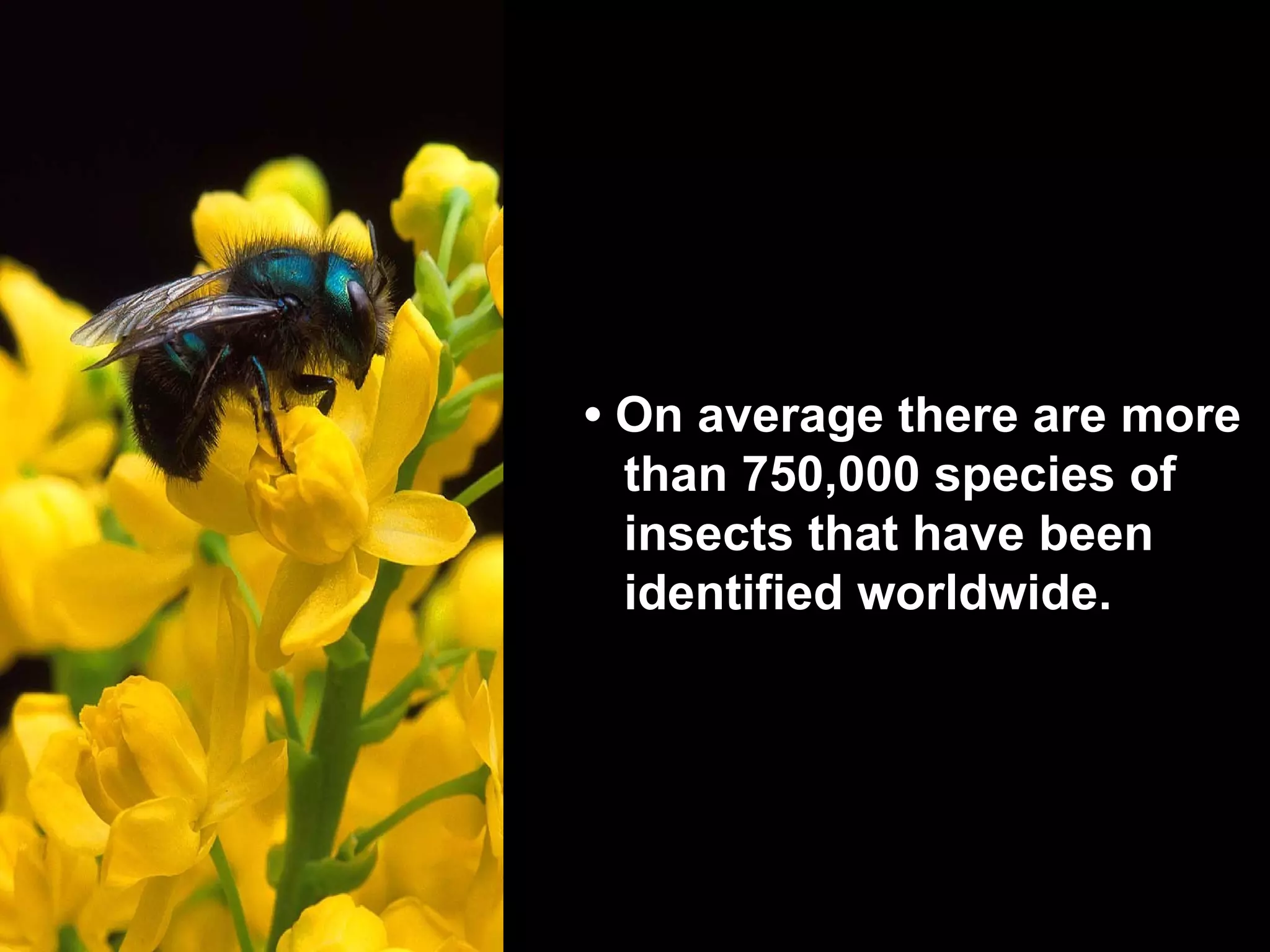
• On average there are more
  than 750,000 species of
  insects that have been
  identified worldwide.
• There are only
 approximately 10,000
 species of insects that
 are harmful to humans.
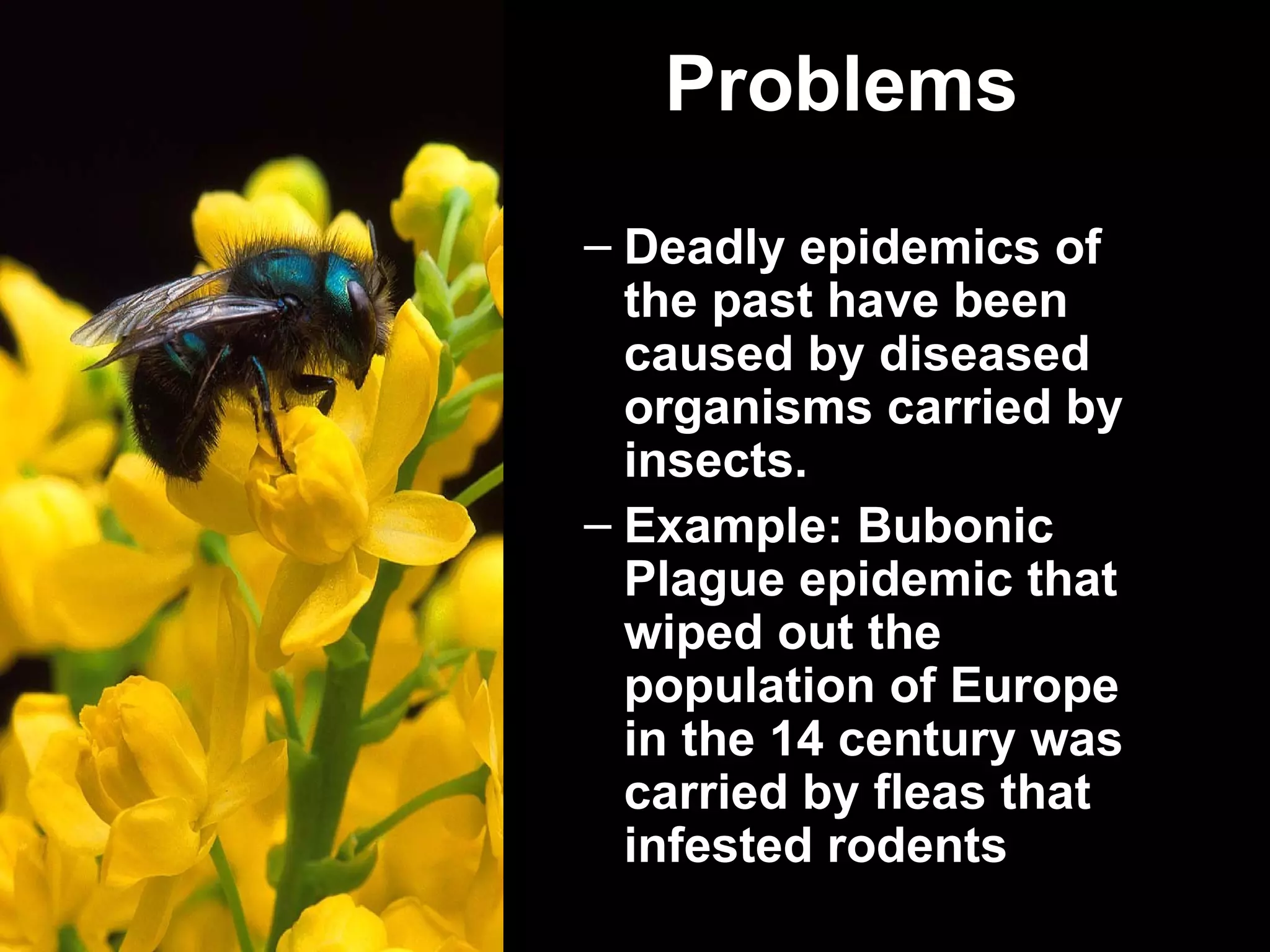
Problems
– Deadly epidemics of
  the past have been
  caused by diseased
  organisms carried by
  insects.
– Example: Bubonic
  Plague epidemic that
  wiped out the
  population of Europe
  in the 14 century was
  carried by fleas that
  infested rodents
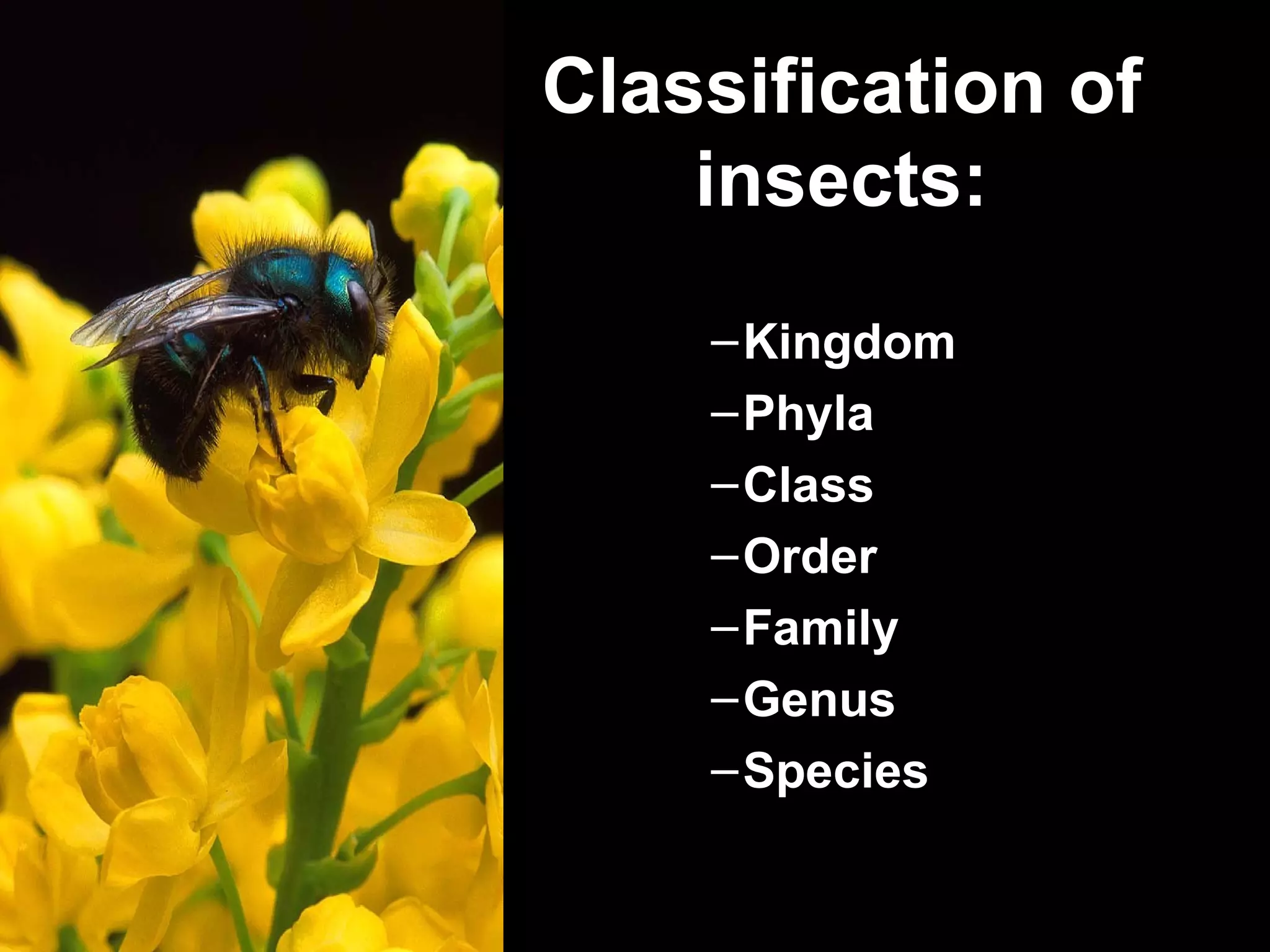
Classification of
    insects:
    – Kingdom
    – Phyla
    – Class
    – Order
    – Family
    – Genus
    – Species
• The highest level is the
  Kingdom
• The most specific is the
  species level.
• Organisms are usually
  classified by the genus
  and species.
• This is called a binomial
  nomenclature.
Six orders of
   insects:
- Orthoptera- which
  includes the grasshopper
  and locust
– Hemiptera- which
  includes the true bugs
  such as leaf hoppers and
  plant bugs
– Lepidoptera – moths and
  butterflies
– Homoptera- aphids
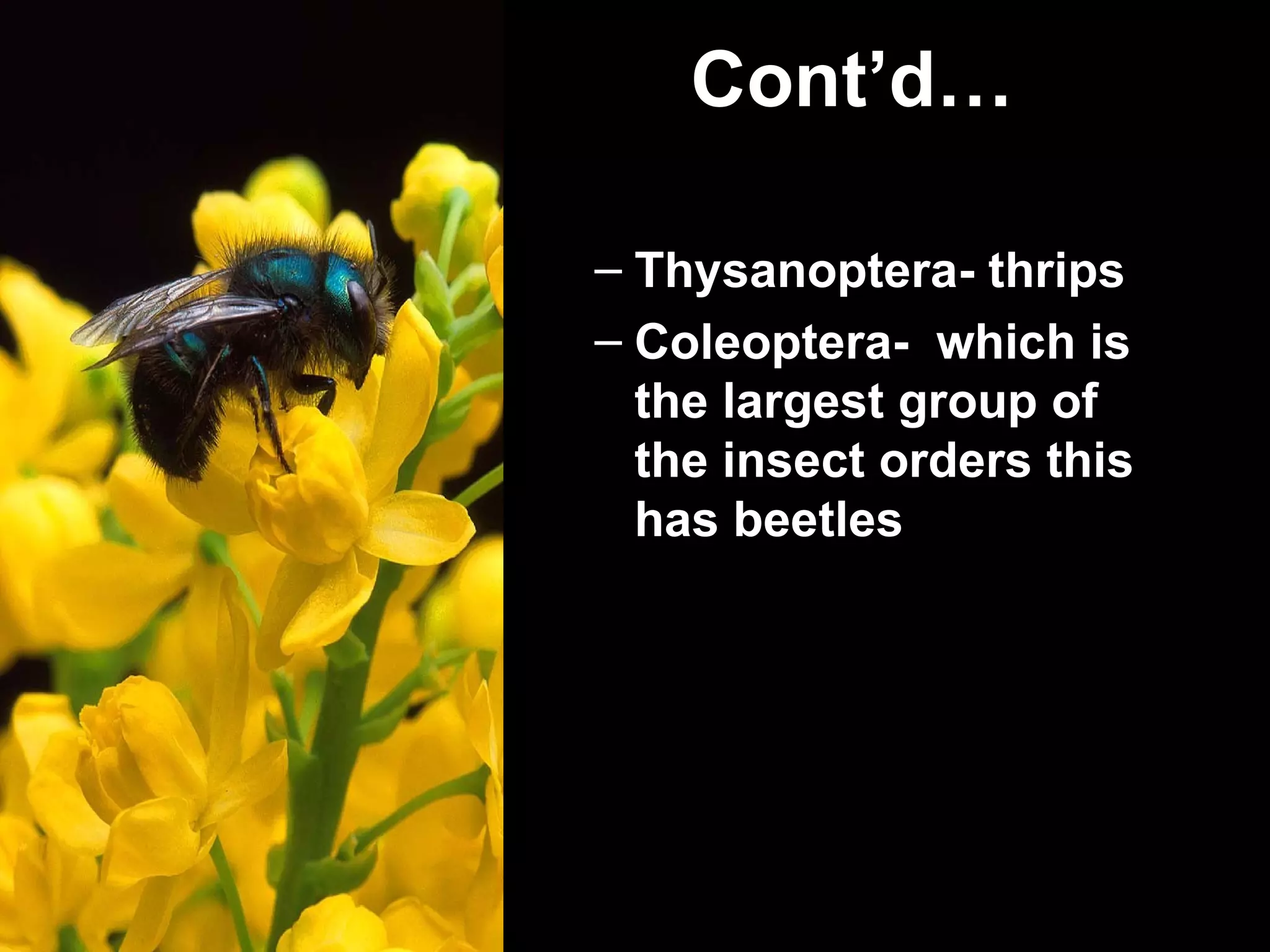
Cont’d…

– Thysanoptera- thrips
– Coleoptera- which is
  the largest group of
  the insect orders this
  has beetles
How are insects
   grouped?


• by the way they feed on
 plants

• by their mouth parts
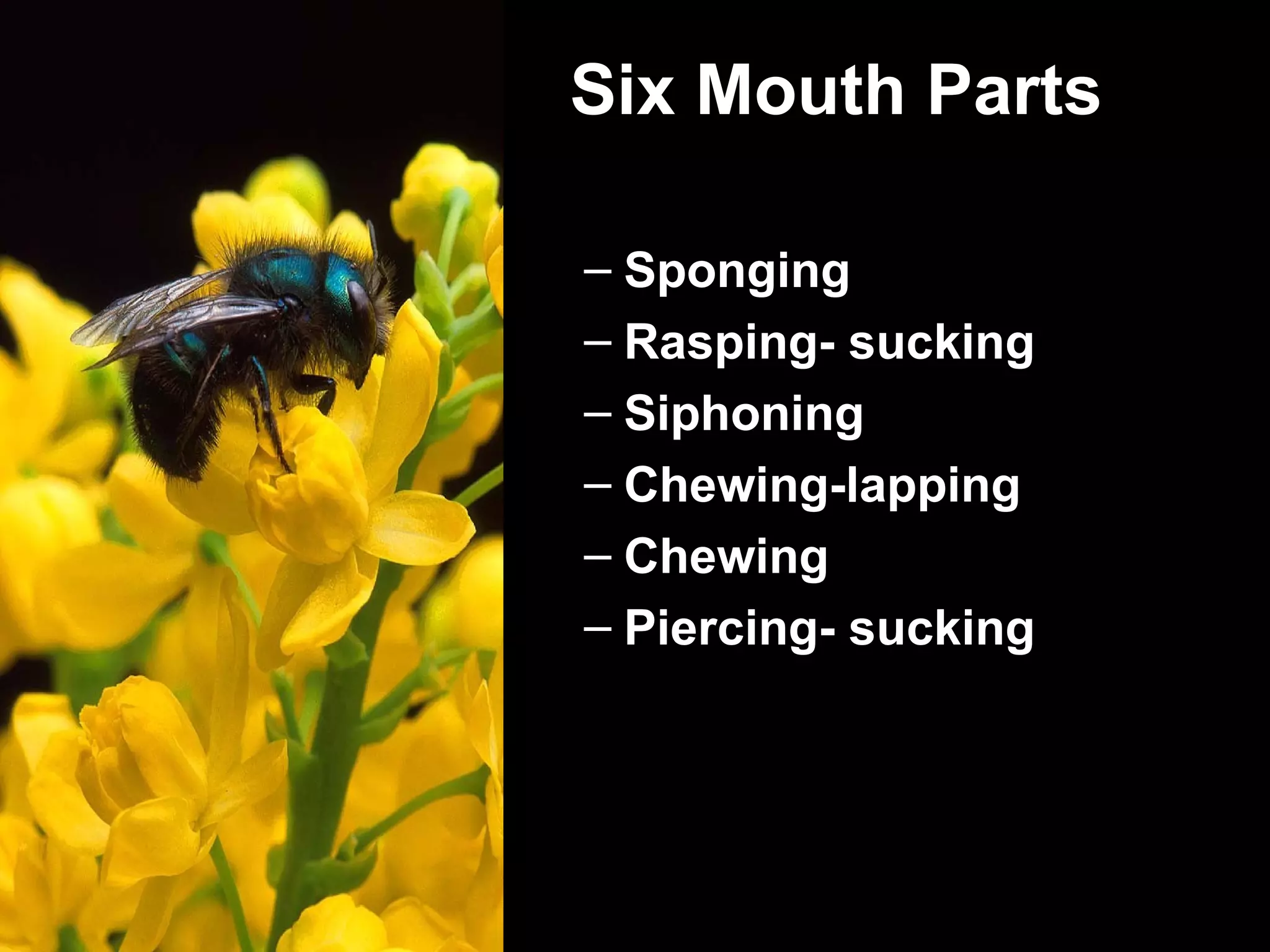
Six Mouth Parts

– Sponging
– Rasping- sucking
– Siphoning
– Chewing-lapping
– Chewing
– Piercing- sucking
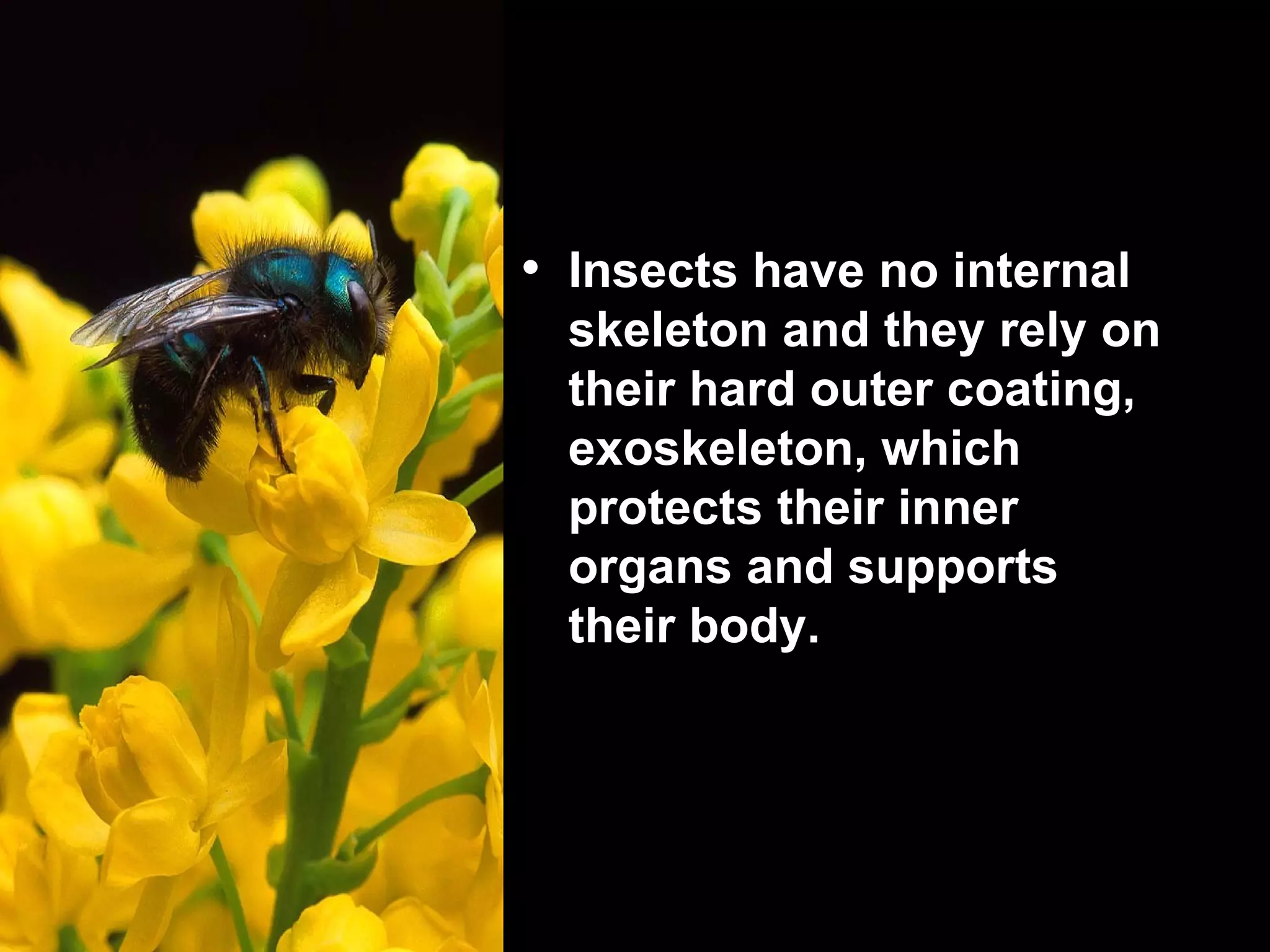
• Insects have no internal
  skeleton and they rely on
  their hard outer coating,
  exoskeleton, which
  protects their inner
  organs and supports
  their body.
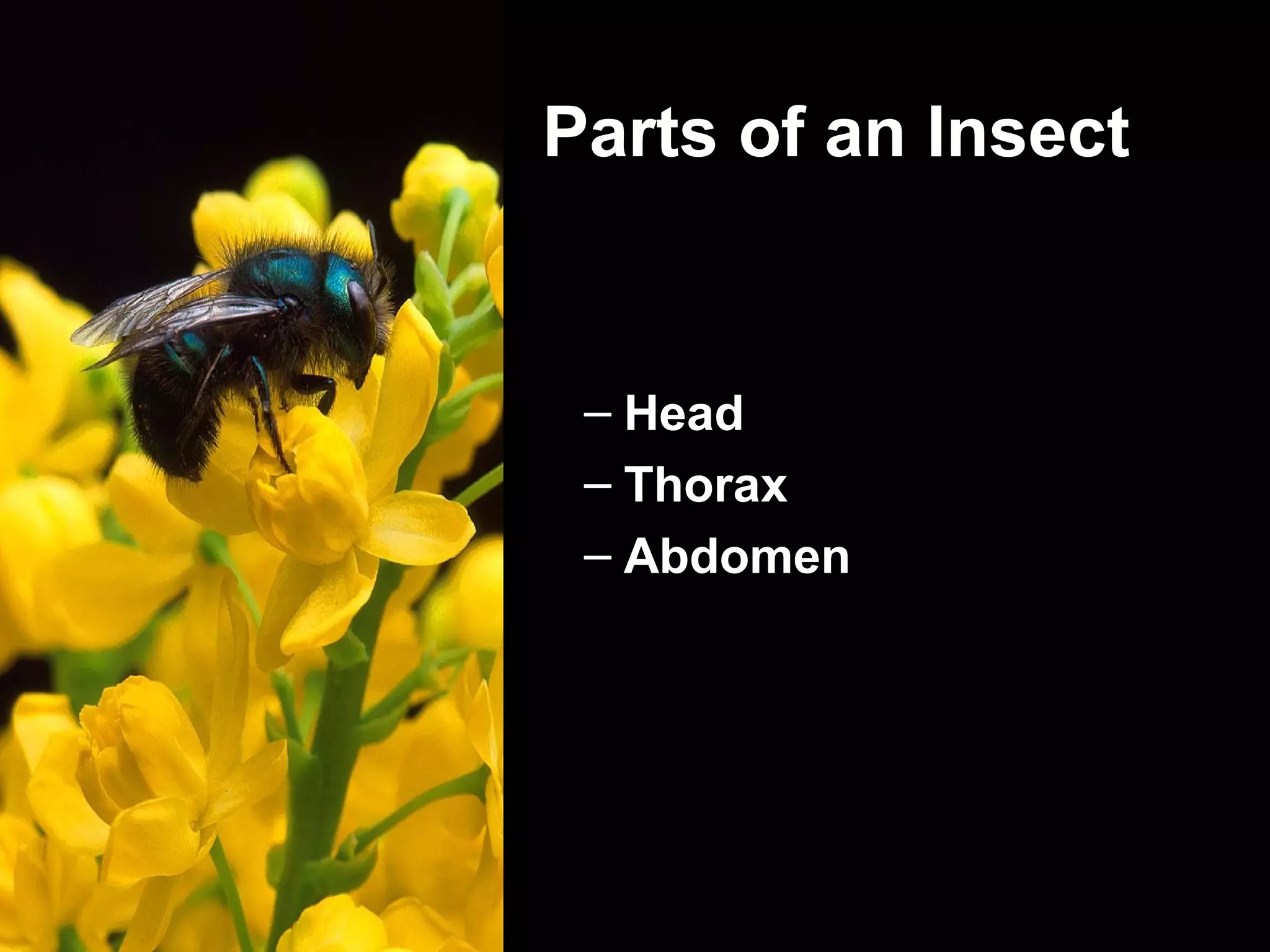
Parts of an Insect


 – Head
 – Thorax
 – Abdomen
Head

– Has a pair of
  compound eye and
  two sensory
  appendages called
  antennae
Thorax

– is divided into three
 segments from which
 are attached three
 pairs of legs
Abdomen


– is attached to the
  thorax
– which will contain
  more segments
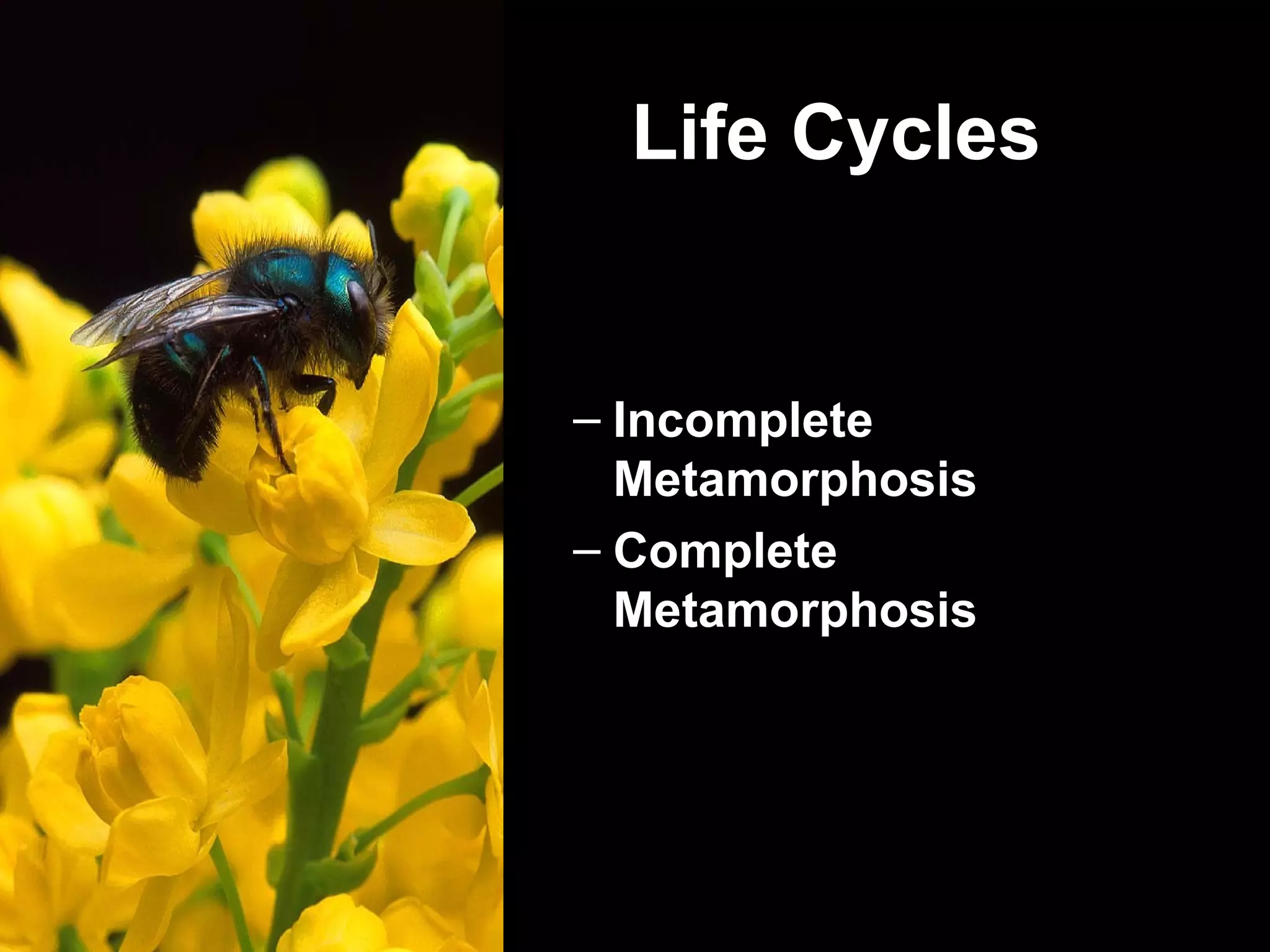
Life Cycles


– Incomplete
  Metamorphosis
– Complete
  Metamorphosis
Incomplete
Metamorphosis

• Eggs
• to Early nymph (no
  wings)
• to late nymph (wings
  developing)
• Goes to Adult
Complete
    Metamorphosis


•   Eggs to
•   Larva to
•   Pupa to
•   Adult
What Is a Larva?

• It is when the young
  insect has soft tubular
  body and looks very
  much like a worm
What Is the Pupa
     Stage?

• The larva matures and
 will pass through the
 pupa stages which is
 usually a relatively
 dormant stage.
What is DDT?
– This is a chemical that
  was discovered by
  German name Othmar
  Zeidler in 1874.

– It is a chemical used to
  reduce the number of
  insects in a given area.

– Example: mosquitoes in
  the tropics
Integrated Pest
  Management

• Cultural methods
• Insect diseases and
  predators
• Pheromones
• Release of sterile
  males
• Insect resistant
  plants varieties

Entomology

  • 1.
    Entomology Original PowerPoint by Mark Morgan Modified by Georgia Agriculture Education Curriculum Office
  • 2.
    What is Entomology? - the branch of zoology that deals with the study of insects
  • 3.
    • On averagethere are more than 750,000 species of insects that have been identified worldwide.
  • 4.
    • There areonly approximately 10,000 species of insects that are harmful to humans.
  • 5.
    Problems – Deadly epidemicsof the past have been caused by diseased organisms carried by insects. – Example: Bubonic Plague epidemic that wiped out the population of Europe in the 14 century was carried by fleas that infested rodents
  • 6.
    Classification of insects: – Kingdom – Phyla – Class – Order – Family – Genus – Species
  • 7.
    • The highestlevel is the Kingdom • The most specific is the species level. • Organisms are usually classified by the genus and species. • This is called a binomial nomenclature.
  • 8.
    Six orders of insects: - Orthoptera- which includes the grasshopper and locust – Hemiptera- which includes the true bugs such as leaf hoppers and plant bugs – Lepidoptera – moths and butterflies – Homoptera- aphids
  • 9.
    Cont’d… – Thysanoptera- thrips –Coleoptera- which is the largest group of the insect orders this has beetles
  • 10.
    How are insects grouped? • by the way they feed on plants • by their mouth parts
  • 11.
    Six Mouth Parts –Sponging – Rasping- sucking – Siphoning – Chewing-lapping – Chewing – Piercing- sucking
  • 12.
    • Insects haveno internal skeleton and they rely on their hard outer coating, exoskeleton, which protects their inner organs and supports their body.
  • 13.
    Parts of anInsect – Head – Thorax – Abdomen
  • 14.
    Head – Has apair of compound eye and two sensory appendages called antennae
  • 15.
    Thorax – is dividedinto three segments from which are attached three pairs of legs
  • 16.
    Abdomen – is attachedto the thorax – which will contain more segments
  • 17.
    Life Cycles – Incomplete Metamorphosis – Complete Metamorphosis
  • 18.
    Incomplete Metamorphosis • Eggs • toEarly nymph (no wings) • to late nymph (wings developing) • Goes to Adult
  • 19.
    Complete Metamorphosis • Eggs to • Larva to • Pupa to • Adult
  • 20.
    What Is aLarva? • It is when the young insect has soft tubular body and looks very much like a worm
  • 21.
    What Is thePupa Stage? • The larva matures and will pass through the pupa stages which is usually a relatively dormant stage.
  • 22.
    What is DDT? –This is a chemical that was discovered by German name Othmar Zeidler in 1874. – It is a chemical used to reduce the number of insects in a given area. – Example: mosquitoes in the tropics
  • 23.
    Integrated Pest Management • Cultural methods • Insect diseases and predators • Pheromones • Release of sterile males • Insect resistant plants varieties