obstetric and gynaecology
 Moniliasis (candidiasis) is more common with
  cancer, obesity, diabetes, immunologic
  disorder, pregnancy, and the use of hormonal
  contraceptives.
 However approximately 75% of all woman
  have a yeast infection some time in their
  lives.
 Moniliasis (candidiasis) is an infection with a
  fungus of the genus candida.
 Usually a superficial infection of the moist
  areas of the body
 Caused inflammation of the vulva and
  vagina or vulvovaginal glands.
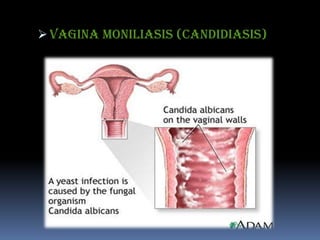
 VAGINA MONILIASIS (candidiasis)
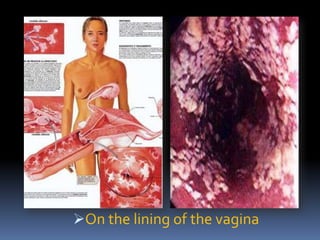
On the lining of the vagina
 Yeast infection occurs when the normal
  environment in the vagina changes.
  e.g : poor hygiene (soiled underwear and
  transfer of fecal yeasts) and douching.
 Prolonged antibiotic use.
 Using oral contraceptives.
 Transmitted by sexual intercourse.
Woman with :
o Diabetes
o HIV infection
o Pregnancy
o Obese
o Broad-spectrum antibiotic use
 Redness and burning sensation
 Vaginal pain.
 Burning sensation.
 Internal or external genital itching.
 Clumped discharge resembling cottage cheese.
 Irritation of the cervix.
 Bread-like, "yeasty" odor from the genital area.
 Vaginal discharge.
 Medical history , physical examination ,
  laboratory test
 Cultures
 Pap and gonococci smear
 Urinalysis
 Moniliasis can spread throughout the body,
  causing yeast infections in vital organs, such as
  the heart and the brain.

 This can result in critical, life-threatening
  complications, such as:

 Endocarditis
 Meningitis
 Nephritis
   Invasive candidiasis
   Effect the quality of life
   The infection interferes with sexual cavity
   Secondary infections
Treatment consist of :
o    Advice regarding personal hygiene.
o    Avoidance of synthetic undergarments.
o    Finger nails should be clipped short.
o    Antifungal product :
     e.g : miconazole ; butoconazole.
    - Miconazole nitrate vagina suppository, 200mg at
     bed time for 3 day.
    - Butoconazole 2% cream 5g intravaginally at
     bed time for 3 day.
 Teach the patient to keep her or his skin dry
  and free of irritation and to use a clean towel
  and wash cloth daily.

 Applied to the creams should be continued
  for 2 weeks after the symptoms disappear.
 Recommend cornstarch, nystatin powder, or
  encourage the patient to use cold compresses
  or sitz baths to relieve itching.

 Instruct the patient to wash his or her hands
  thoroughly after touching infected areas dry
  padding to obese patients to help avoid
  irritation in skin folds.
 Educate the patient with a vaginal infection
  to avoid contamination with feces from the GI
  tract by wiping from front to back after
  defecation.
 Nursing diagnosis
 Expected outcomes
 Nursing intervention
 Rationale
 Evaluation
 Nursing diagnosis : high risk for infection
  related to inflammatory process such as
  impaired skin and organ integrity
 Expected outcome : the patient infection
  will be resolute or he brought under
  control without complication
Nursing intervention
 Discuss important treatment regimed and
  followed up care
 Monitor vital sign
 Laboratory test result
 Assist patient in observing for sign of
  worsening condition or systemic
  complication
Evaluation
 Patient outcome : infection has resolved or
  been bought under control and inflammatory
  and immunologic risk has been minimized
 Nursing diagnosis : pain
 (discomfort)related to infection

 Goals : the patient will have no pain or
 discomfort
Nursing intervention
 assess the client perineal area for redness ,
  irritation and drainage
 Ask the client the rate her level of discomfort
  on a scale 1 to 10
 Help patient minimize discomfort with
  prescribed treatment
 Reassure patient that most symptom will
  subside
Evaluate
 Patient outcome : patient has no pain
  or discomfort
Nursing diagnosis
Deficient knowledge : measure to prevent infection
Expected outcomes
 Client will exhibit sign and symptom of resolving
  infection
 Client will state situation that increase the risk
  for yeast infection
 Client will identify measure to maintain vaginal
  integrity and healthy
Nursing intervention
 Assist the client the cleaning the perineal
  area with warm soap and water . instruct her
  to perform frequently perinael care
 Encourage the client to wipe the area using a
  front to back motion
 Discuss the client that can contribute to yeast
  infection such as medication , douching ,
  perfumed feminine hygiene spray and tight
  poorly ventilated clothing
Evaluation
 Assist the client the cleaning the perineal
  area with warm soap and water . instruct her
  to perform frequently perinael care
 Encourage the client to wipe the area using a
  front to back motion
 Discuss the client that can contribute to yeast
  infection such as medication , douching ,
  perfumed feminine hygiene spray and tight
  poorly ventilated clothing
 Lower risk of developing or transmitting
  candidiasis by:

 Avoid douching.
 Changing tampons frequently.
 Cleansing the genitals daily with mild soap
  and water.
 Eating a well-balanced, healthy diet.
 Following treatment plan for conditions such
  as diabetes and HIV/AIDS.
 Getting early and regular prenatal care when
  pregnant.
 Not using feminine deodorants or scented or
  deodorant tampons.
 Not wearing tight-fitting underwear, thongs,
  jeans, or other pants.
 Seeking regular routine medical care.

Moniliasis

  • 1.
  • 2.
     Moniliasis (candidiasis)is more common with cancer, obesity, diabetes, immunologic disorder, pregnancy, and the use of hormonal contraceptives.  However approximately 75% of all woman have a yeast infection some time in their lives.
  • 3.
     Moniliasis (candidiasis)is an infection with a fungus of the genus candida.  Usually a superficial infection of the moist areas of the body  Caused inflammation of the vulva and vagina or vulvovaginal glands.
  • 4.
     VAGINA MONILIASIS(candidiasis)
  • 5.
    On the liningof the vagina
  • 6.
     Yeast infectionoccurs when the normal environment in the vagina changes. e.g : poor hygiene (soiled underwear and transfer of fecal yeasts) and douching.  Prolonged antibiotic use.  Using oral contraceptives.  Transmitted by sexual intercourse.
  • 7.
    Woman with : oDiabetes o HIV infection o Pregnancy o Obese o Broad-spectrum antibiotic use
  • 8.
     Redness andburning sensation  Vaginal pain.  Burning sensation.  Internal or external genital itching.  Clumped discharge resembling cottage cheese.  Irritation of the cervix.  Bread-like, "yeasty" odor from the genital area.  Vaginal discharge.
  • 9.
     Medical history, physical examination , laboratory test  Cultures  Pap and gonococci smear  Urinalysis
  • 10.
     Moniliasis canspread throughout the body, causing yeast infections in vital organs, such as the heart and the brain.  This can result in critical, life-threatening complications, such as:  Endocarditis  Meningitis  Nephritis
  • 11.
    Invasive candidiasis  Effect the quality of life  The infection interferes with sexual cavity  Secondary infections
  • 12.
    Treatment consist of: o Advice regarding personal hygiene. o Avoidance of synthetic undergarments. o Finger nails should be clipped short. o Antifungal product : e.g : miconazole ; butoconazole. - Miconazole nitrate vagina suppository, 200mg at bed time for 3 day. - Butoconazole 2% cream 5g intravaginally at bed time for 3 day.
  • 14.
     Teach thepatient to keep her or his skin dry and free of irritation and to use a clean towel and wash cloth daily.  Applied to the creams should be continued for 2 weeks after the symptoms disappear.
  • 15.
     Recommend cornstarch,nystatin powder, or encourage the patient to use cold compresses or sitz baths to relieve itching.  Instruct the patient to wash his or her hands thoroughly after touching infected areas dry padding to obese patients to help avoid irritation in skin folds.
  • 16.
     Educate thepatient with a vaginal infection to avoid contamination with feces from the GI tract by wiping from front to back after defecation.
  • 18.
     Nursing diagnosis Expected outcomes  Nursing intervention  Rationale  Evaluation
  • 19.
     Nursing diagnosis: high risk for infection related to inflammatory process such as impaired skin and organ integrity  Expected outcome : the patient infection will be resolute or he brought under control without complication
  • 20.
    Nursing intervention  Discussimportant treatment regimed and followed up care  Monitor vital sign  Laboratory test result  Assist patient in observing for sign of worsening condition or systemic complication
  • 21.
    Evaluation  Patient outcome: infection has resolved or been bought under control and inflammatory and immunologic risk has been minimized
  • 22.
     Nursing diagnosis: pain (discomfort)related to infection  Goals : the patient will have no pain or discomfort
  • 23.
    Nursing intervention  assessthe client perineal area for redness , irritation and drainage  Ask the client the rate her level of discomfort on a scale 1 to 10  Help patient minimize discomfort with prescribed treatment  Reassure patient that most symptom will subside
  • 24.
    Evaluate  Patient outcome: patient has no pain or discomfort
  • 25.
    Nursing diagnosis Deficient knowledge: measure to prevent infection Expected outcomes  Client will exhibit sign and symptom of resolving infection  Client will state situation that increase the risk for yeast infection  Client will identify measure to maintain vaginal integrity and healthy
  • 26.
    Nursing intervention  Assistthe client the cleaning the perineal area with warm soap and water . instruct her to perform frequently perinael care  Encourage the client to wipe the area using a front to back motion  Discuss the client that can contribute to yeast infection such as medication , douching , perfumed feminine hygiene spray and tight poorly ventilated clothing
  • 27.
    Evaluation  Assist theclient the cleaning the perineal area with warm soap and water . instruct her to perform frequently perinael care  Encourage the client to wipe the area using a front to back motion  Discuss the client that can contribute to yeast infection such as medication , douching , perfumed feminine hygiene spray and tight poorly ventilated clothing
  • 28.
     Lower riskof developing or transmitting candidiasis by:  Avoid douching.  Changing tampons frequently.  Cleansing the genitals daily with mild soap and water.  Eating a well-balanced, healthy diet.
  • 29.
     Following treatmentplan for conditions such as diabetes and HIV/AIDS.  Getting early and regular prenatal care when pregnant.  Not using feminine deodorants or scented or deodorant tampons.  Not wearing tight-fitting underwear, thongs, jeans, or other pants.  Seeking regular routine medical care.