ENGAGE
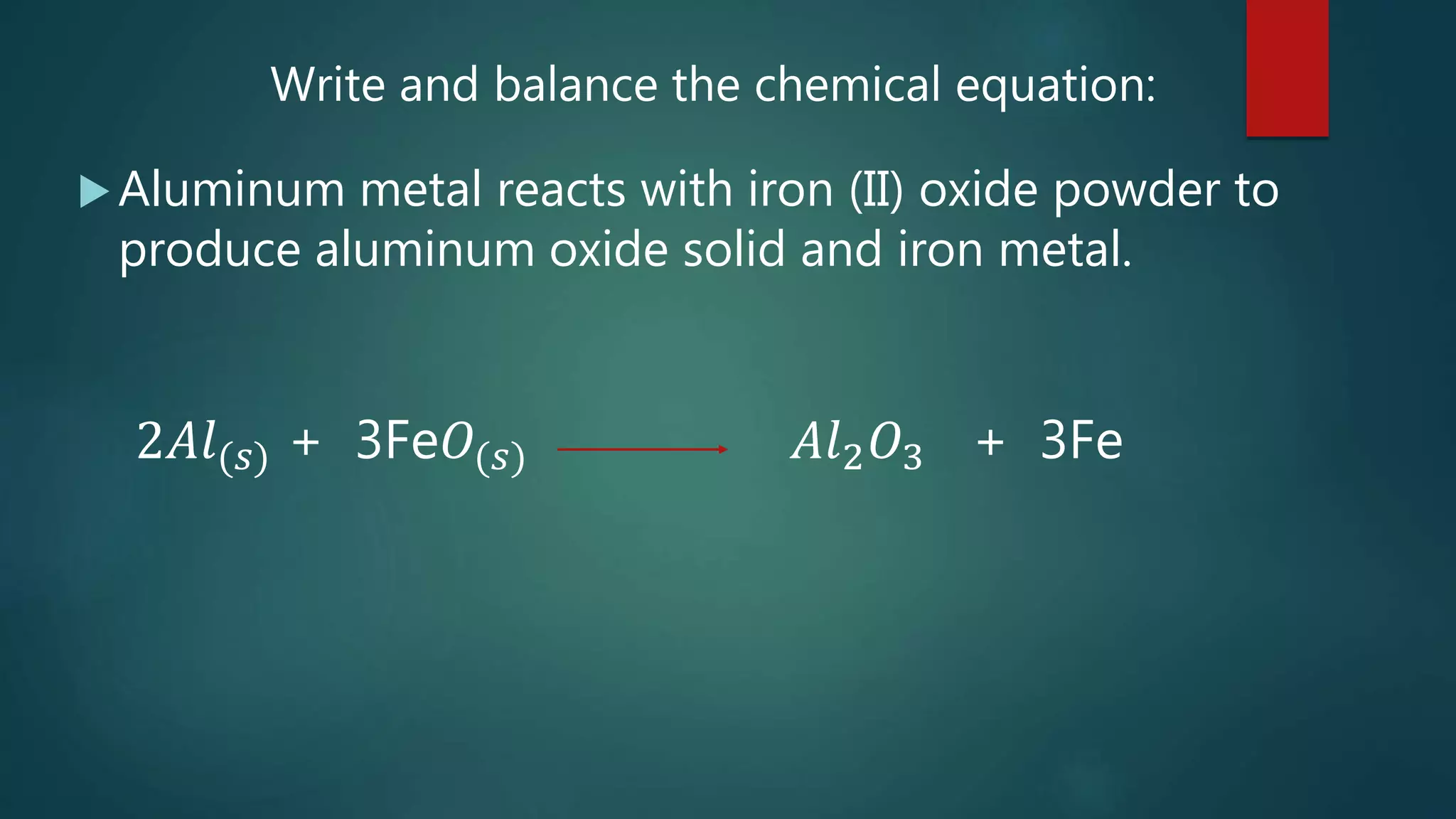
Aluminum metal reacts with iron (II) oxide powder to
produce aluminum oxide solid and iron metal.
Write and balance the chemical equation:
2𝐴𝑙(𝑠) + 3Fe𝑂(𝑠) 𝐴𝑙2𝑂3 + 3Fe
A balanced chemical equation shows what reactants combine to
form what products .It also shows the numerical relationships
between the reactants and products
It also shows the numerical relationships between
the reactants and products
STOICHIOMETRY
A common type of stoichiometric relationship is
the mole ratio, which relates the amounts in moles
of any two substances in a chemical reaction.
Balanced equations and mole ratios
We can write a mole ratio for a pair of substances by
looking at the coefficients in front of each species in
the balanced chemical equation.
Balanced equations and mole ratios
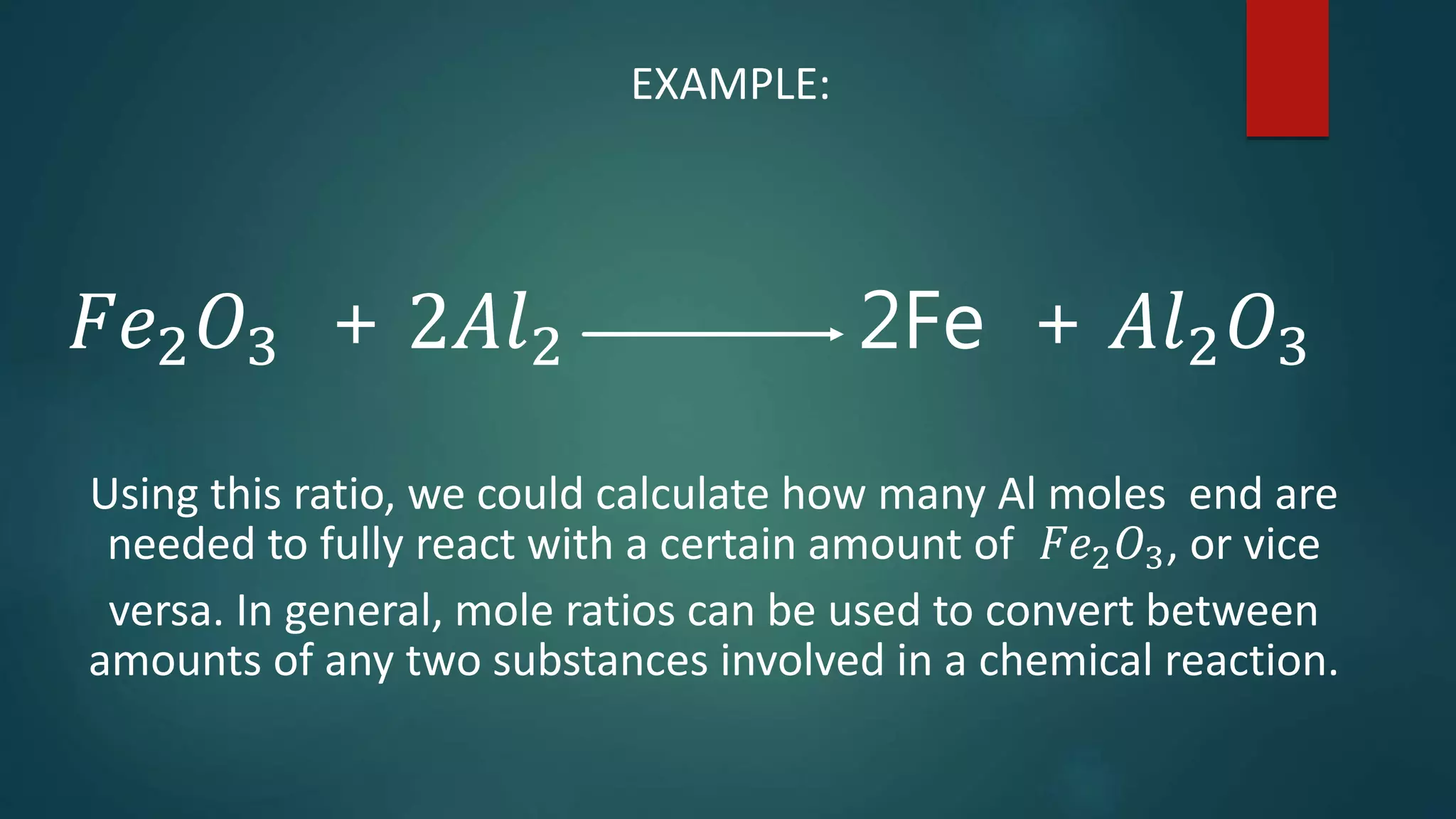
EXAMPLE:
𝐹𝑒2𝑂3 + 2𝐴𝑙2 2Fe + 𝐴𝑙2𝑂3
Using this ratio, we could calculate how many Al moles end are
needed to fully react with a certain amount of 𝐹𝑒2𝑂3, or vice
versa. In general, mole ratios can be used to convert between
amounts of any two substances involved in a chemical reaction.
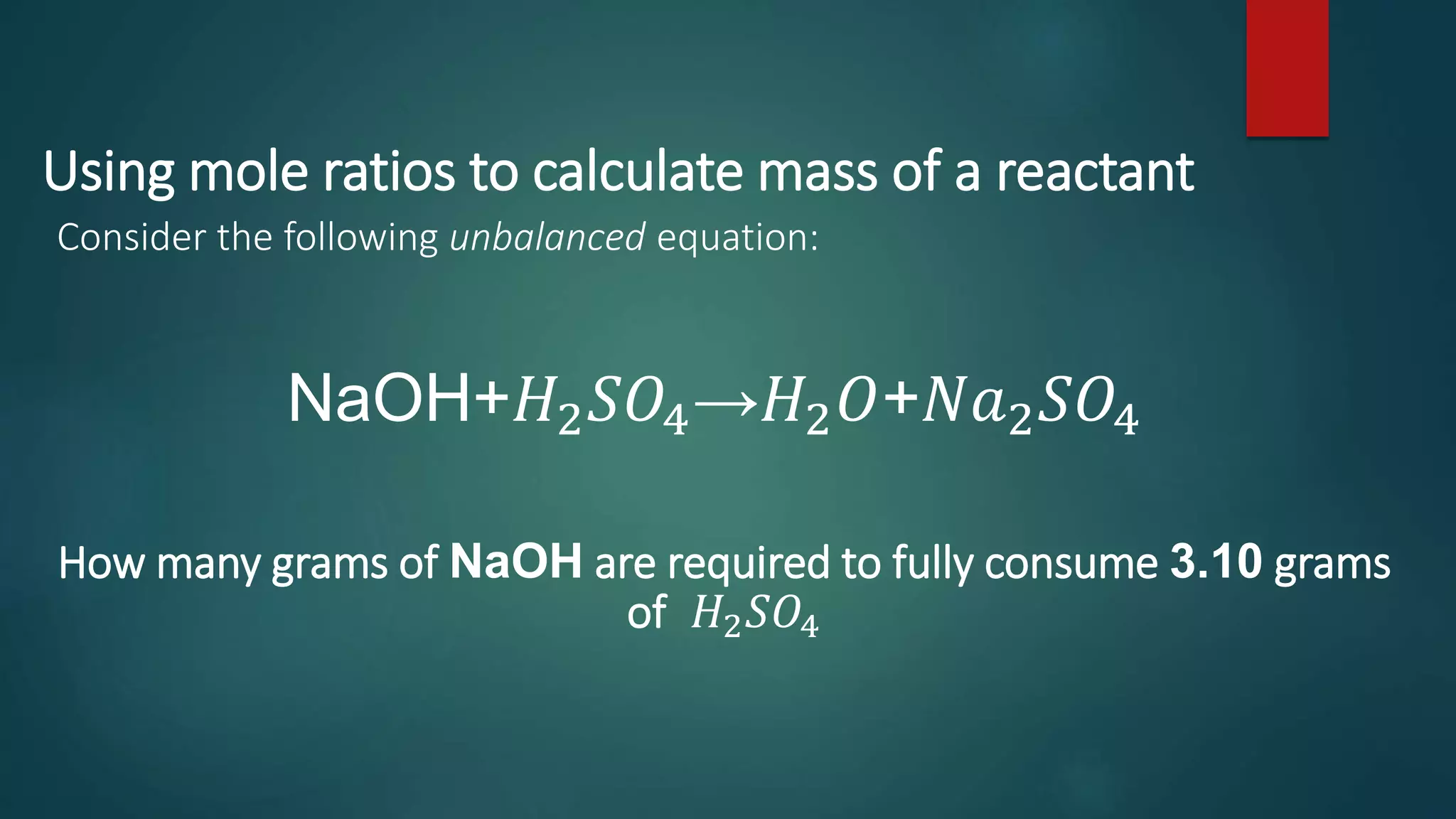
Using mole ratios to calculate mass of a reactant
Consider the following unbalanced equation:
NaOH+𝐻2𝑆𝑂4→𝐻2𝑂+𝑁𝑎2𝑆𝑂4
How many grams of NaOH are required to fully consume 3.10 grams
of 𝐻2𝑆𝑂4
SOLUTION
1.Balance the chemical equation.
2NaOH+𝐻2𝑆𝑂4→2𝐻2𝑂+𝑁𝑎2𝑆𝑂4
SOLUTION
2NaOH+𝐻2𝑆𝑂4→2𝐻2𝑂+𝑁𝑎2𝑆𝑂4
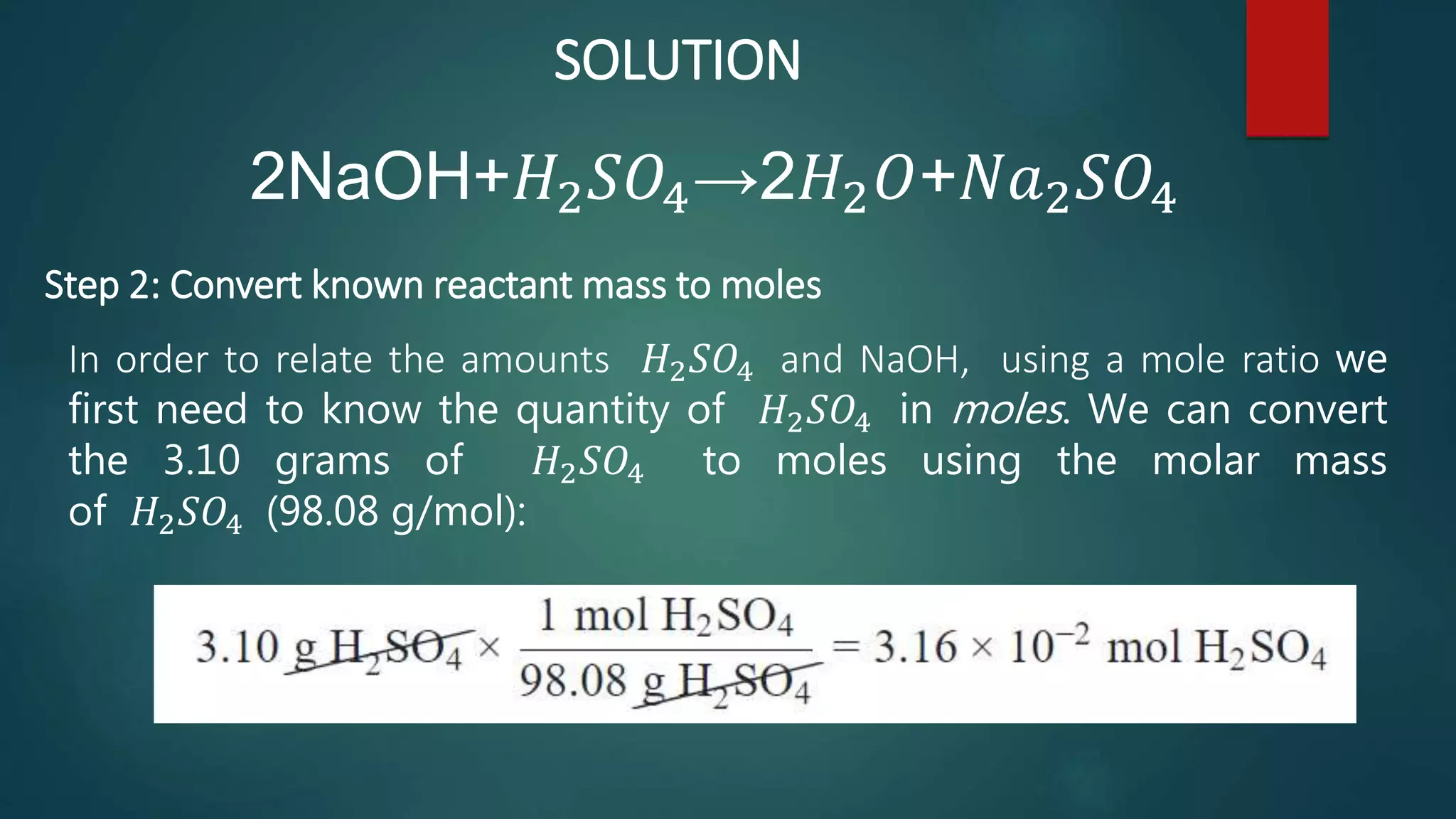
Step 2: Convert known reactant mass to moles
In order to relate the amounts 𝐻2𝑆𝑂4 and NaOH, using a mole ratio we
first need to know the quantity of 𝐻2𝑆𝑂4 in moles. We can convert
the 3.10 grams of 𝐻2𝑆𝑂4 to moles using the molar mass
of 𝐻2𝑆𝑂4 (98.08 g/mol):
SOLUTION
2NaOH+𝐻2𝑆𝑂4→2𝐻2𝑂+𝑁𝑎2𝑆𝑂4
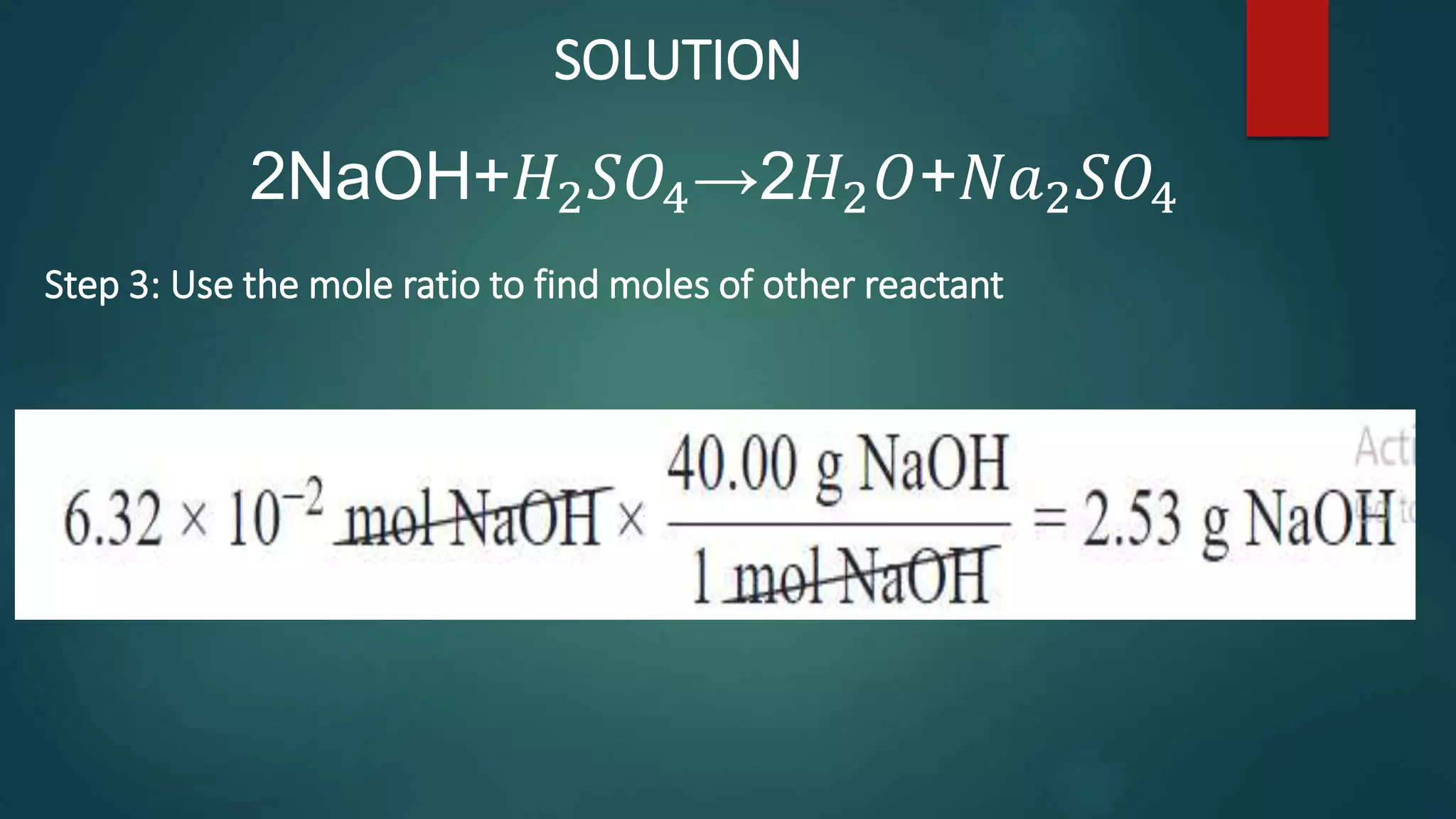
Step 3: Use the mole ratio to find moles of other reactant
SHORTCUT SOLUTION
Be sure to pay extra close attention to the units if you take this approach, though!
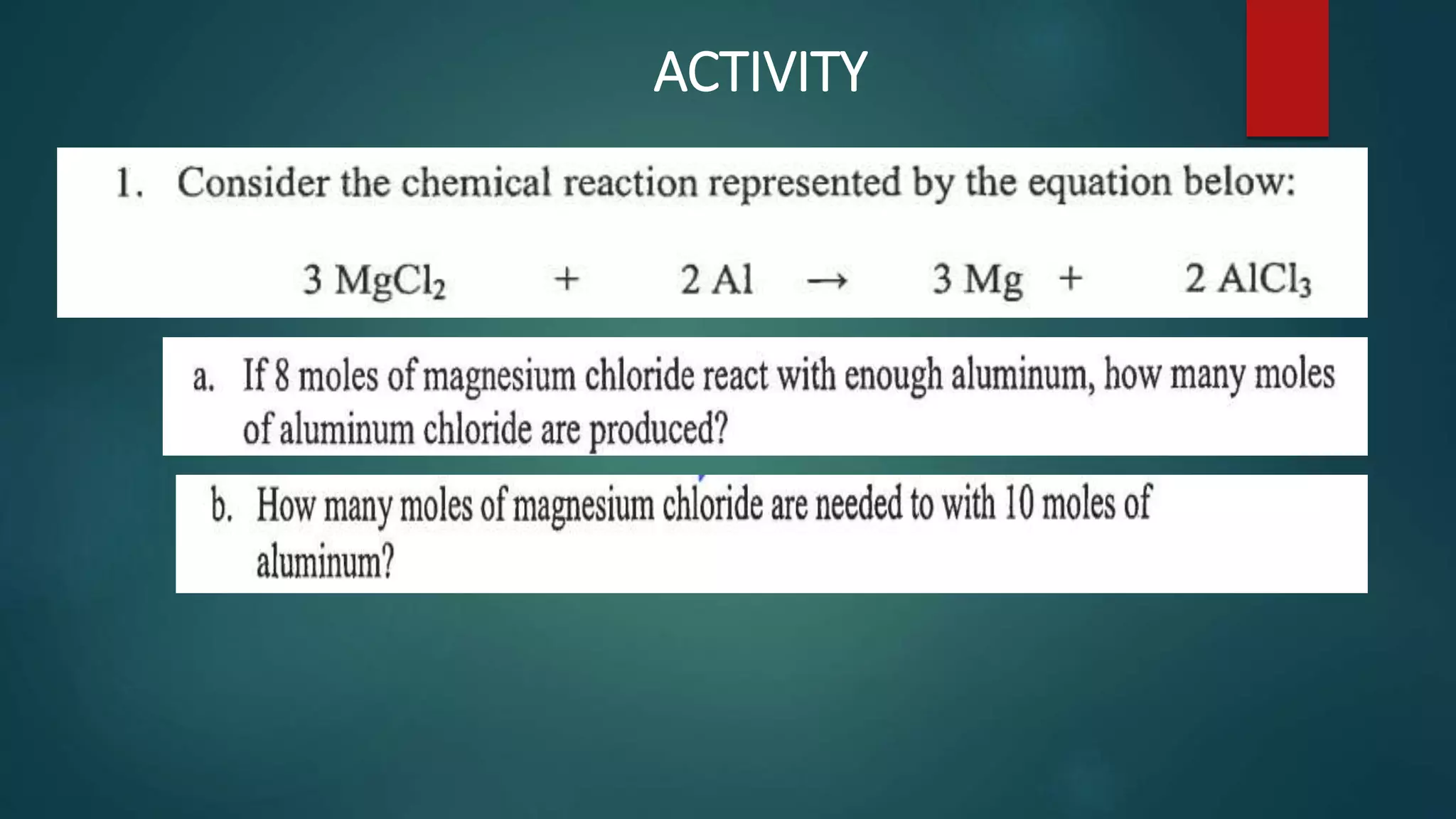
ACTIVITY

Mole Ratio.pptx

  • 1.
  • 2.
    Aluminum metal reactswith iron (II) oxide powder to produce aluminum oxide solid and iron metal. Write and balance the chemical equation: 2𝐴𝑙(𝑠) + 3Fe𝑂(𝑠) 𝐴𝑙2𝑂3 + 3Fe
  • 3.
    A balanced chemicalequation shows what reactants combine to form what products .It also shows the numerical relationships between the reactants and products
  • 4.
    It also showsthe numerical relationships between the reactants and products STOICHIOMETRY
  • 5.
    A common typeof stoichiometric relationship is the mole ratio, which relates the amounts in moles of any two substances in a chemical reaction. Balanced equations and mole ratios
  • 6.
    We can writea mole ratio for a pair of substances by looking at the coefficients in front of each species in the balanced chemical equation. Balanced equations and mole ratios
  • 7.
    EXAMPLE: 𝐹𝑒2𝑂3 + 2𝐴𝑙22Fe + 𝐴𝑙2𝑂3 Using this ratio, we could calculate how many Al moles end are needed to fully react with a certain amount of 𝐹𝑒2𝑂3, or vice versa. In general, mole ratios can be used to convert between amounts of any two substances involved in a chemical reaction.
  • 8.
    Using mole ratiosto calculate mass of a reactant Consider the following unbalanced equation: NaOH+𝐻2𝑆𝑂4→𝐻2𝑂+𝑁𝑎2𝑆𝑂4 How many grams of NaOH are required to fully consume 3.10 grams of 𝐻2𝑆𝑂4
  • 9.
    SOLUTION 1.Balance the chemicalequation. 2NaOH+𝐻2𝑆𝑂4→2𝐻2𝑂+𝑁𝑎2𝑆𝑂4
  • 10.
    SOLUTION 2NaOH+𝐻2𝑆𝑂4→2𝐻2𝑂+𝑁𝑎2𝑆𝑂4 Step 2: Convertknown reactant mass to moles In order to relate the amounts 𝐻2𝑆𝑂4 and NaOH, using a mole ratio we first need to know the quantity of 𝐻2𝑆𝑂4 in moles. We can convert the 3.10 grams of 𝐻2𝑆𝑂4 to moles using the molar mass of 𝐻2𝑆𝑂4 (98.08 g/mol):
  • 11.
  • 12.
    SHORTCUT SOLUTION Be sureto pay extra close attention to the units if you take this approach, though!
  • 13.