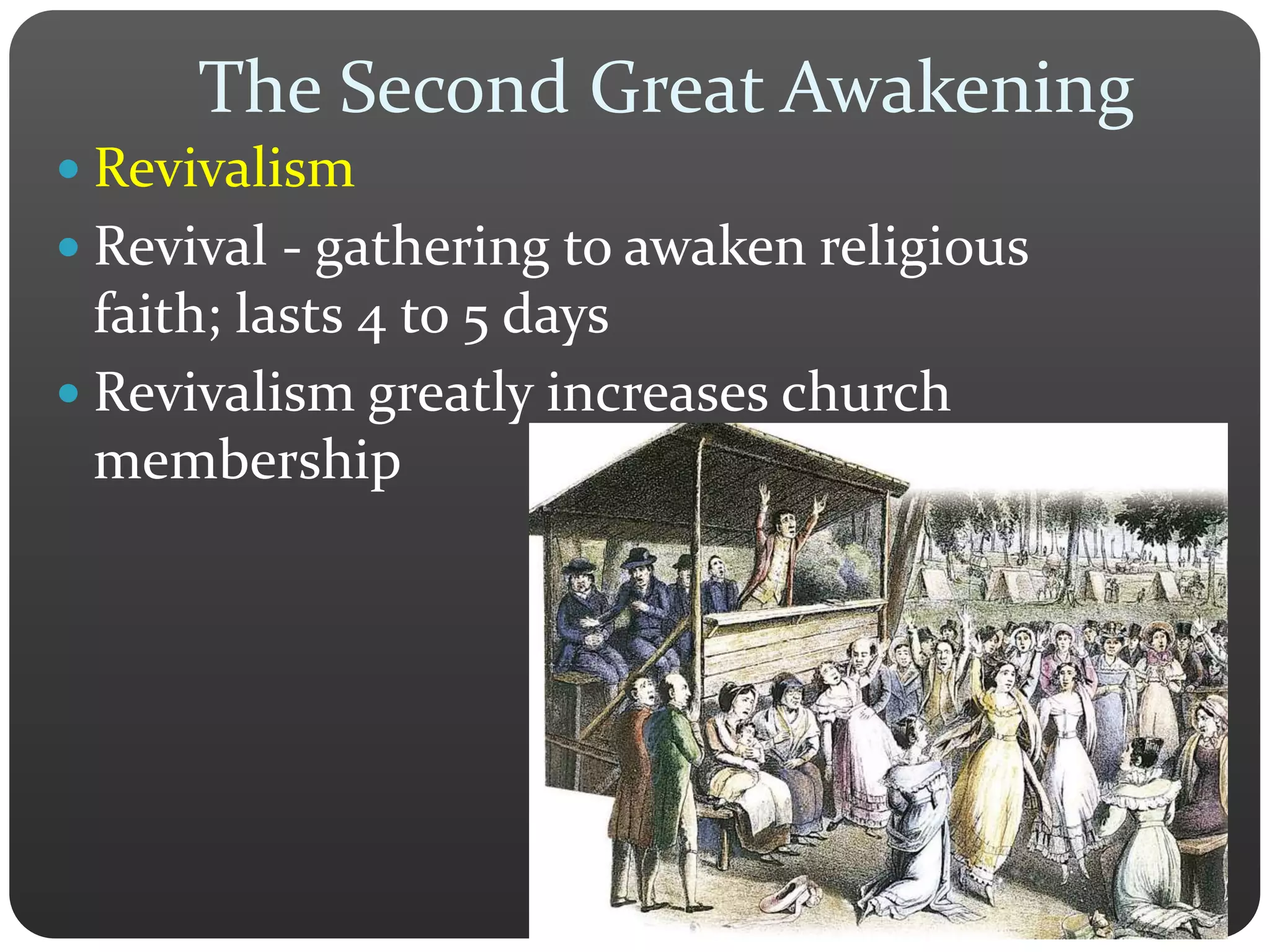
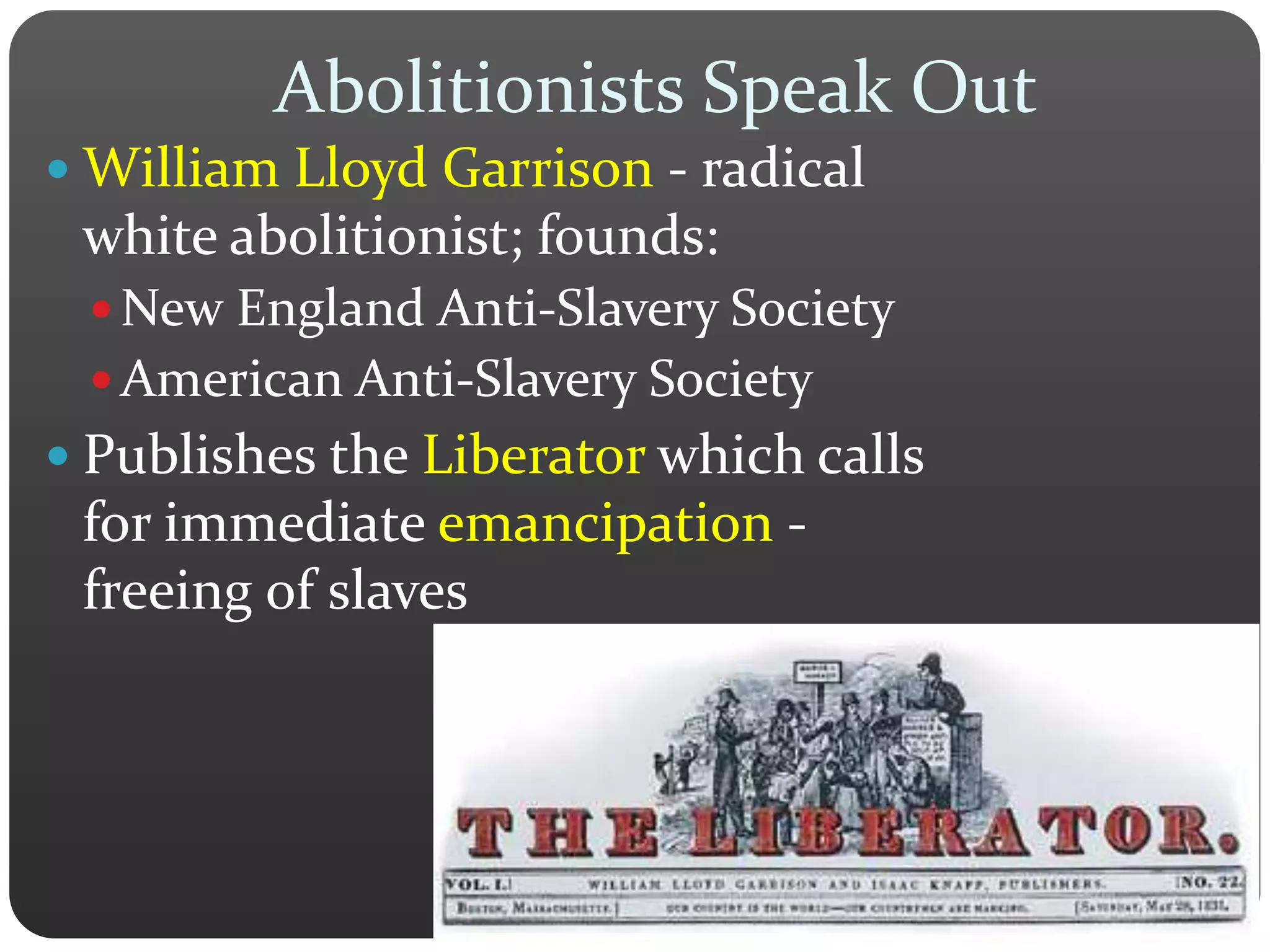
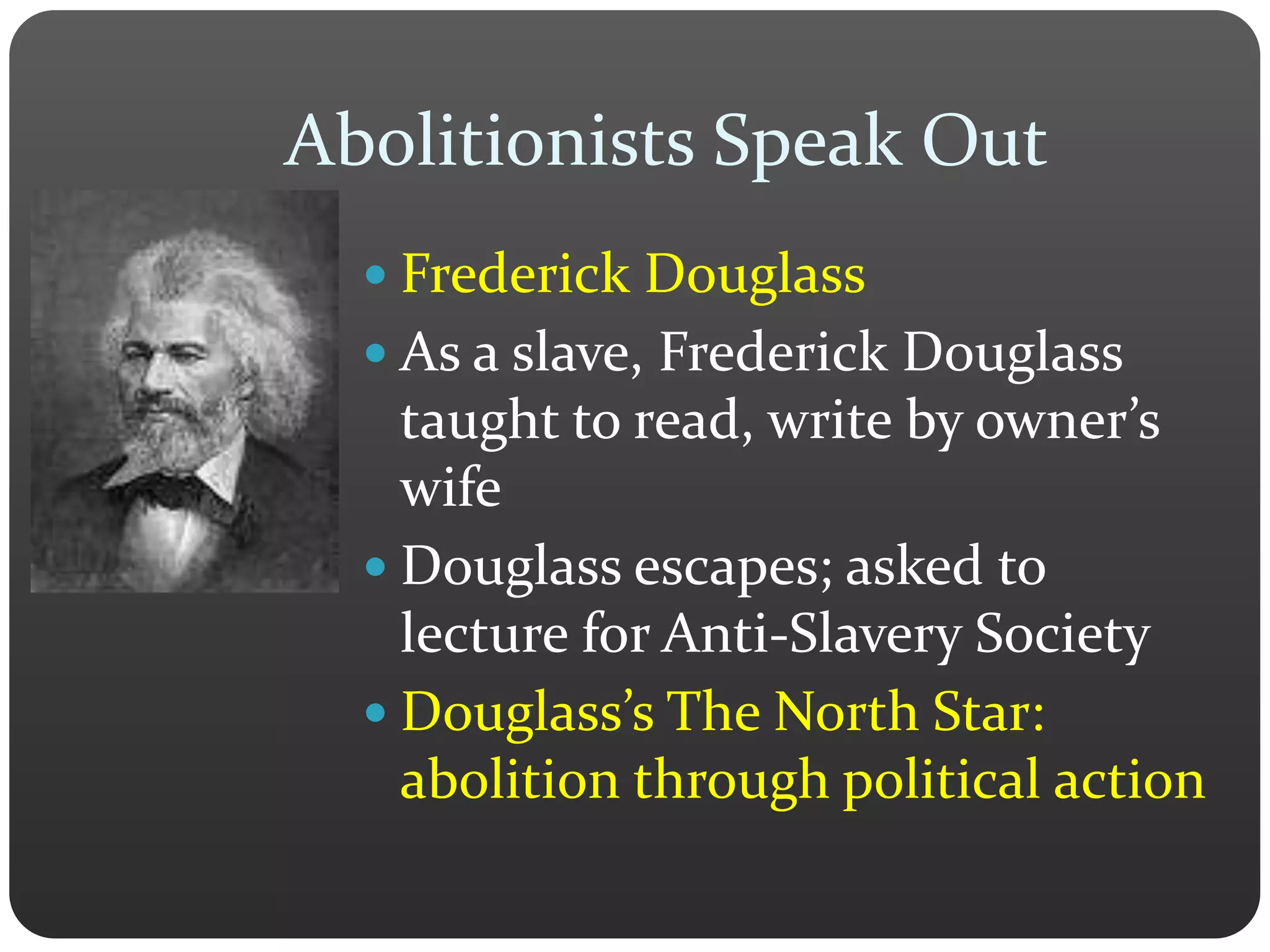
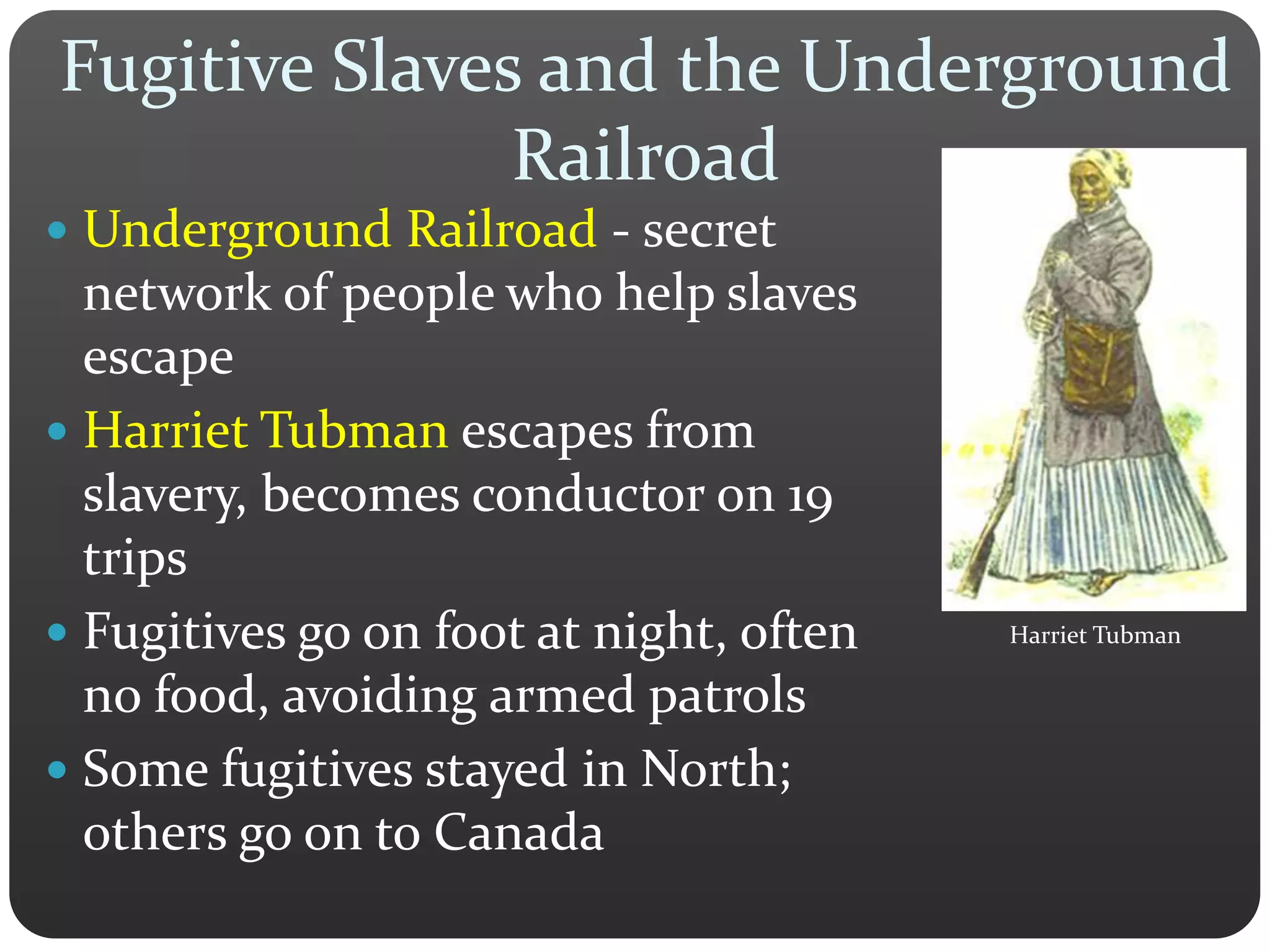
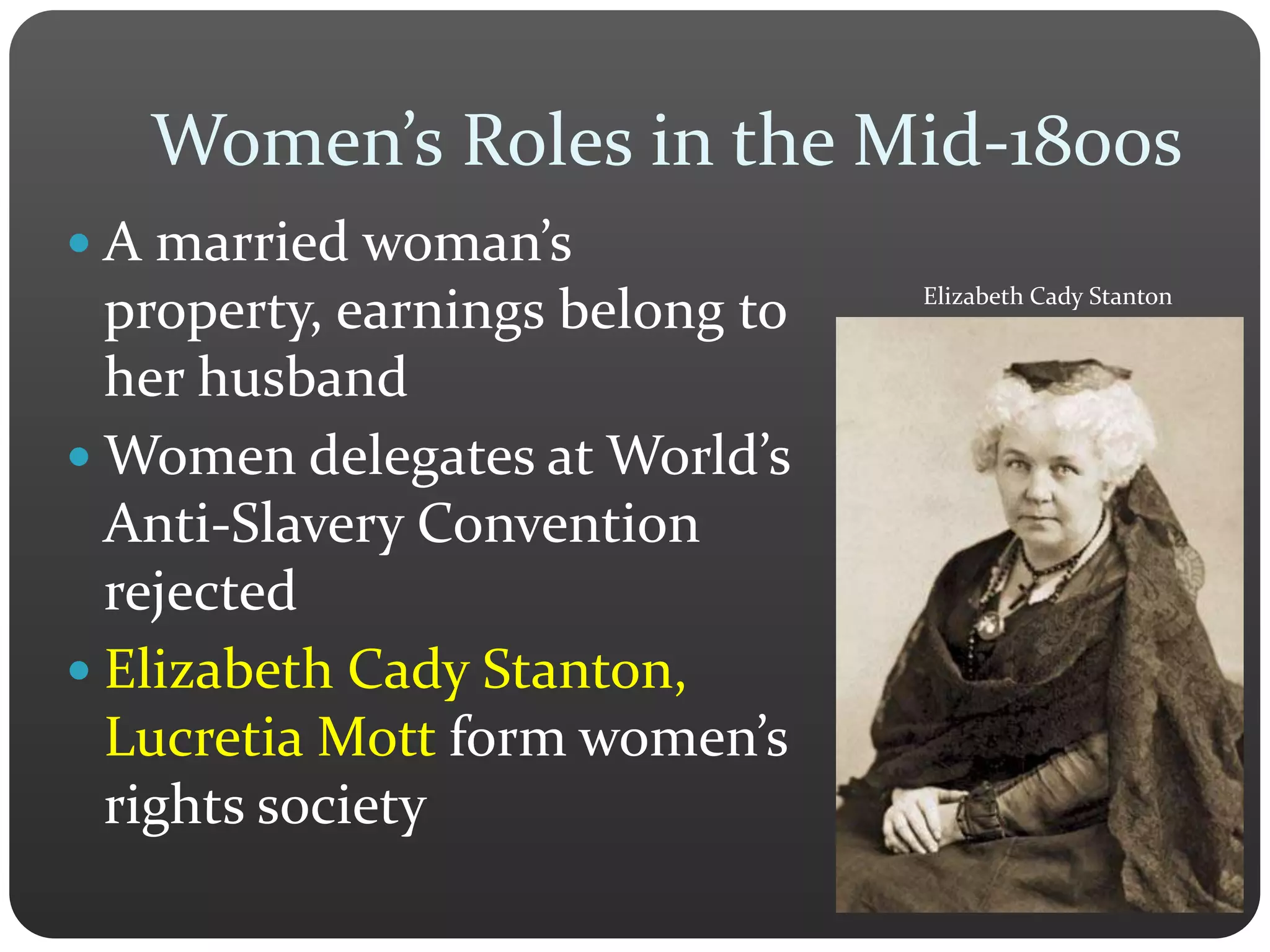
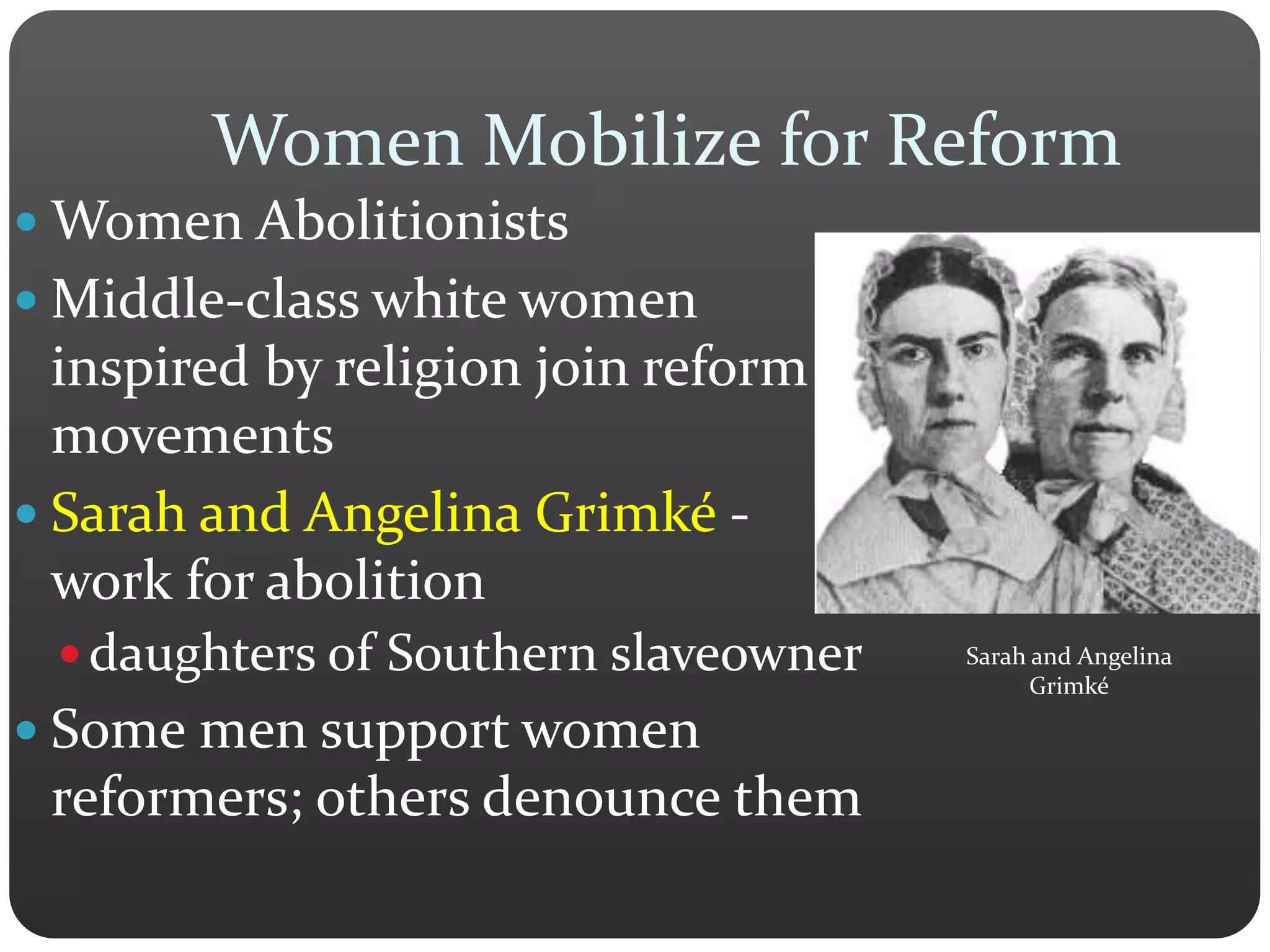
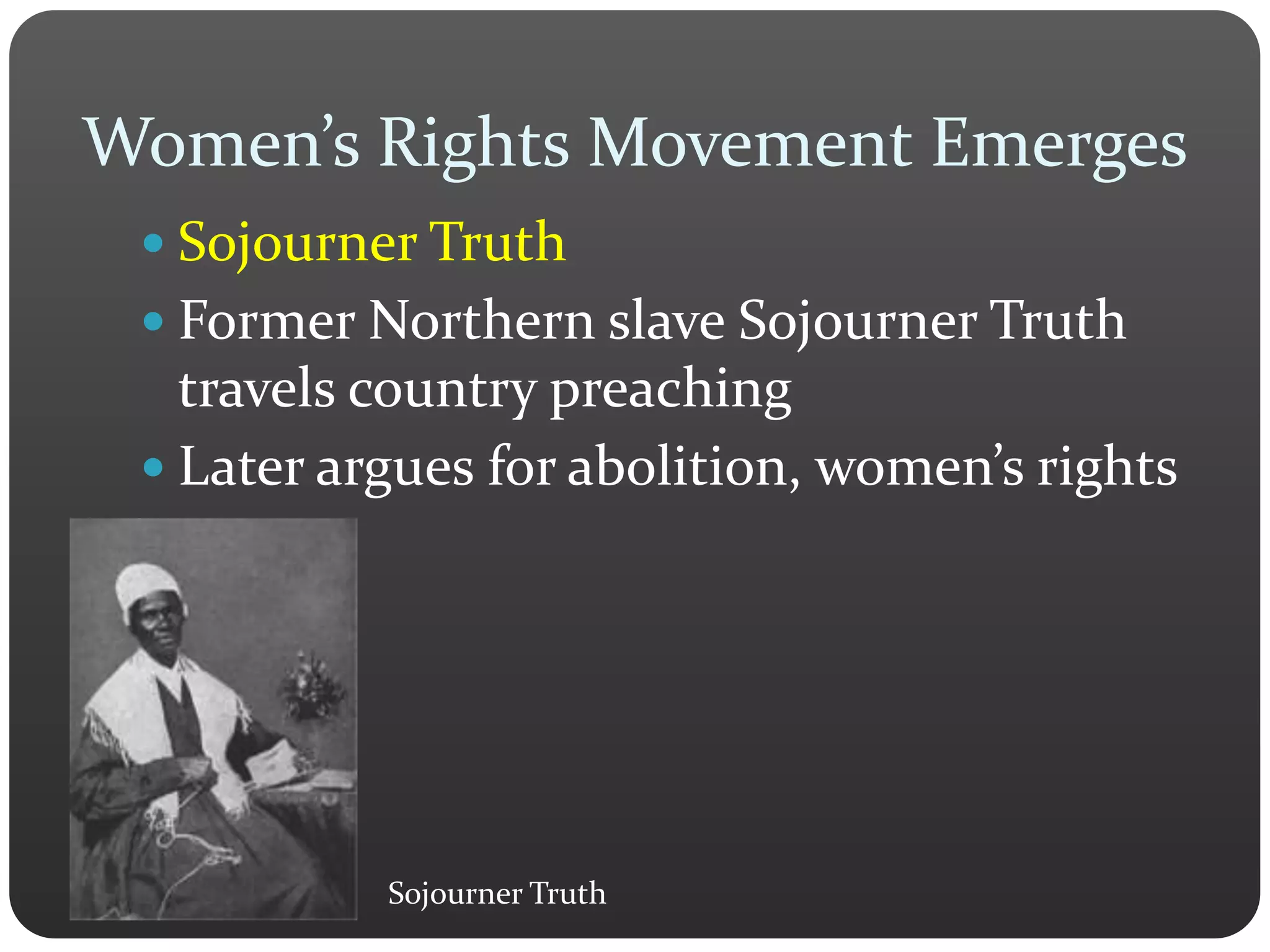
The Second Great Awakening saw a revival of religious faith through large camp meetings and revivals in the early 1800s. This led to growth in church membership and influenced other religious and social reform movements. Abolitionists like William Lloyd Garrison and Frederick Douglass advocated the immediate end of slavery through publications like The Liberator. The Underground Railroad helped fugitive slaves escape to freedom. Meanwhile, women's roles were expanding as they joined temperance and abolition societies, and the women's rights movement emerged with the Seneca Falls Convention in 1848.