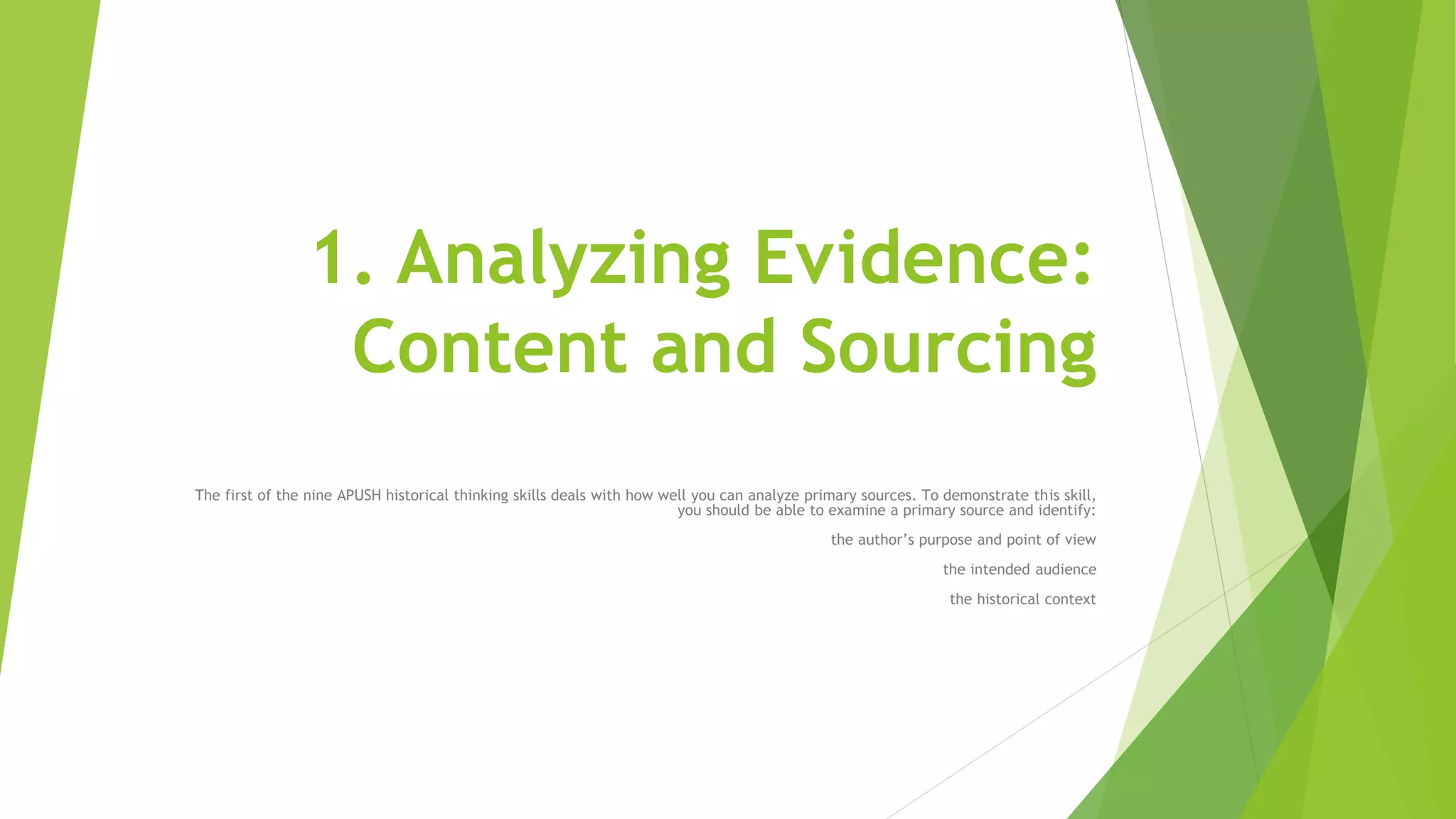
1. Analyzing Evidence:
Content and Sourcing
The first of the nine APUSH historical thinking skills deals with how well you can analyze primary sources. To demonstrate this skill,
you should be able to examine a primary source and identify:
the author’s purpose and point of view
the intended audience
the historical context
2. Interpretation
This skill deals with analyzing secondary sources — those in which a historian is interpreting the past. To demonstrate this skill, you
should be able to examine a secondary source and describe:
the author’s argument
how well the author supports the argument with evidence
how it relates to other historical interpretations
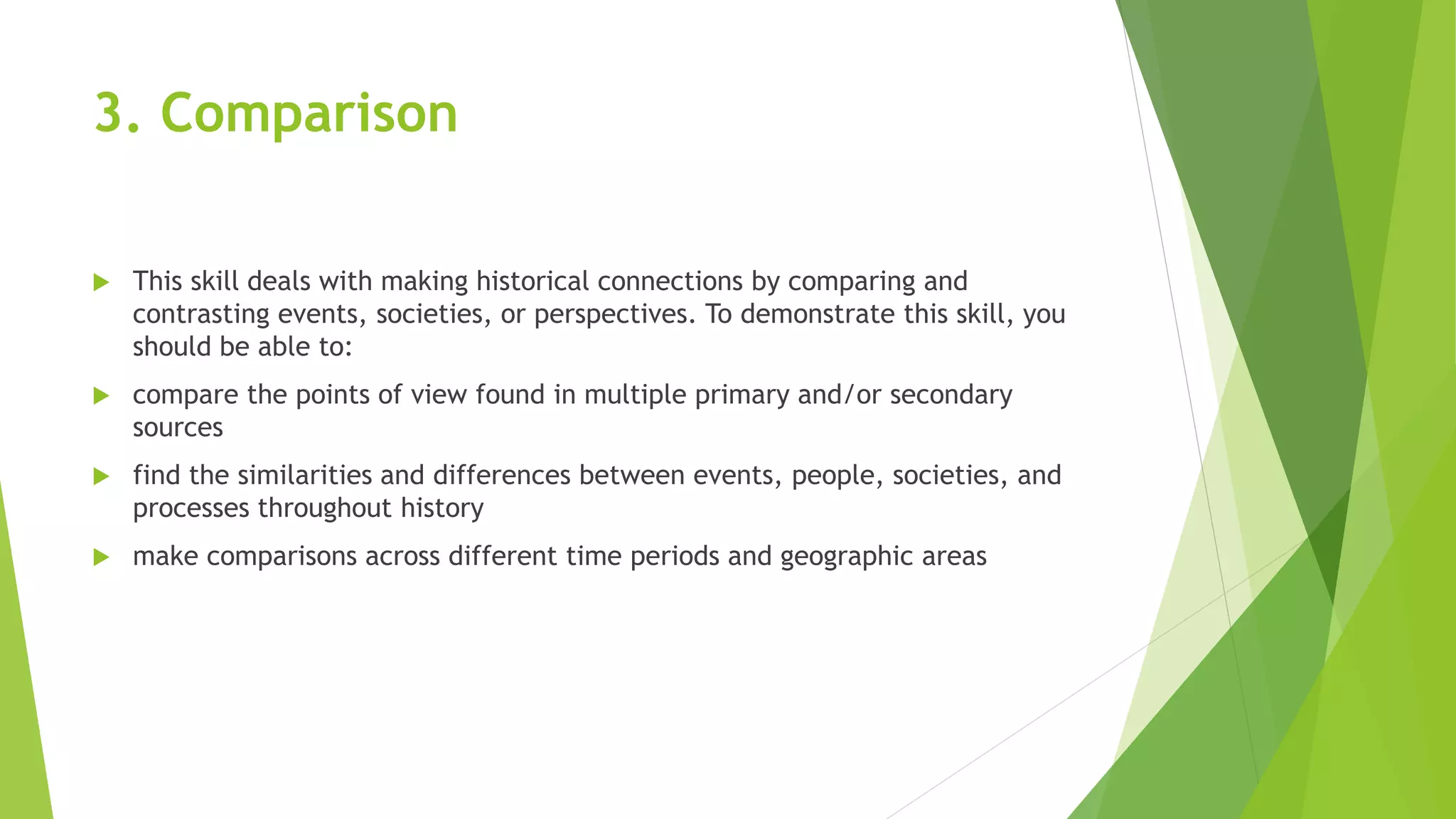
3. Comparison
 This skill deals with making historical connections by comparing and
contrasting events, societies, or perspectives. To demonstrate this skill, you
should be able to:
 compare the points of view found in multiple primary and/or secondary
sources
 find the similarities and differences between events, people, societies, and
processes throughout history
 make comparisons across different time periods and geographic areas
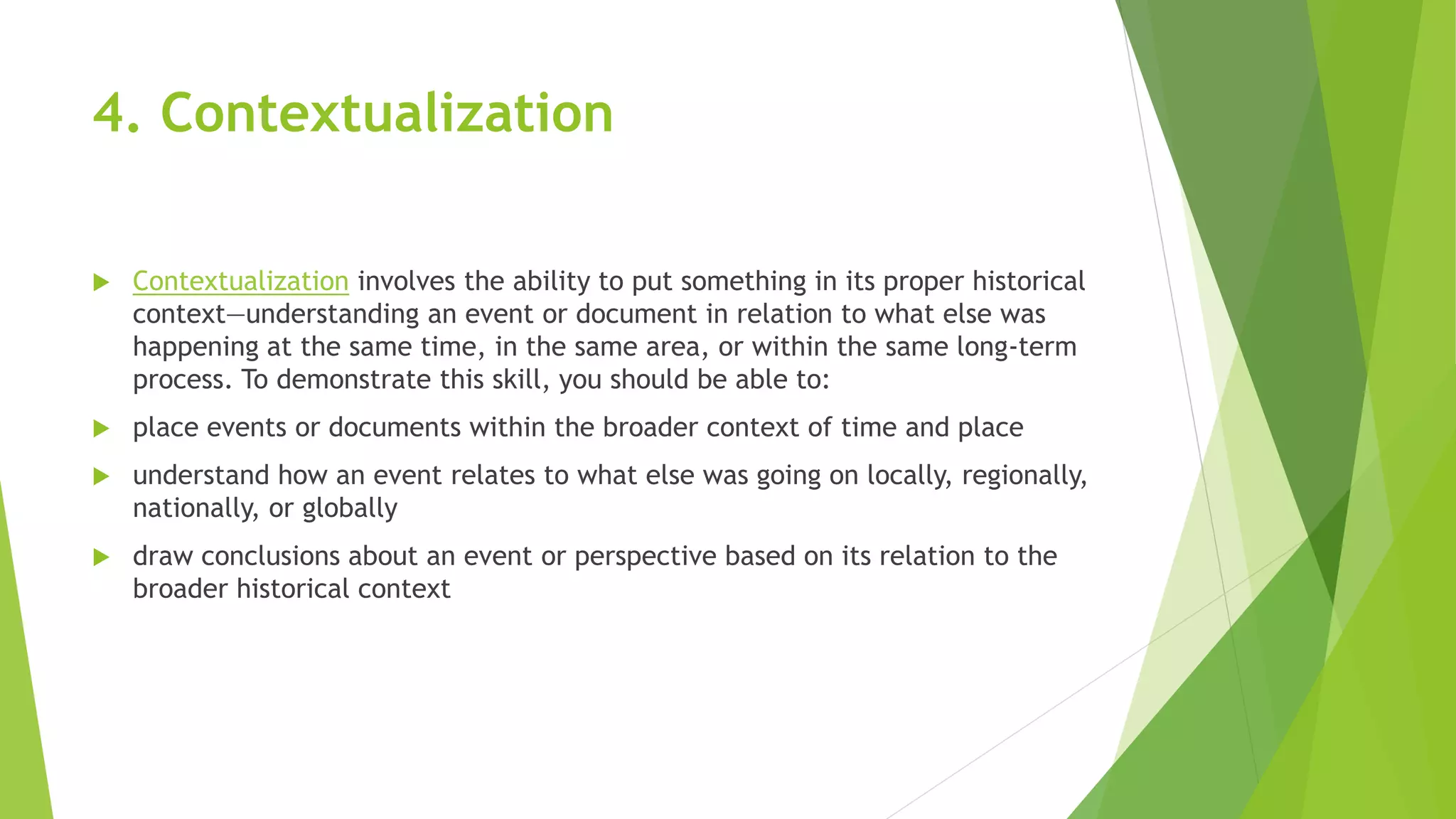
4. Contextualization
 Contextualization involves the ability to put something in its proper historical
context—understanding an event or document in relation to what else was
happening at the same time, in the same area, or within the same long-term
process. To demonstrate this skill, you should be able to:
 place events or documents within the broader context of time and place
 understand how an event relates to what else was going on locally, regionally,
nationally, or globally
 draw conclusions about an event or perspective based on its relation to the
broader historical context
5. Synthesis
Synthesis is bringing multiple elements together by making connections between different time periods, events, people,
cultures, locations, and perspectives. To demonstrate this skill, you should be able to:
make connections between various historical issues across time periods and locations
make connections between different historical themes
6. Causation
Causation is a chronological reasoning skill. It involves understanding cause-and-effect
relationships throughout history. To demonstrate this skill, you should be able to:
identify long- and short-term causes of historical events
evaluate the relative significance of multiple causes of a historical event
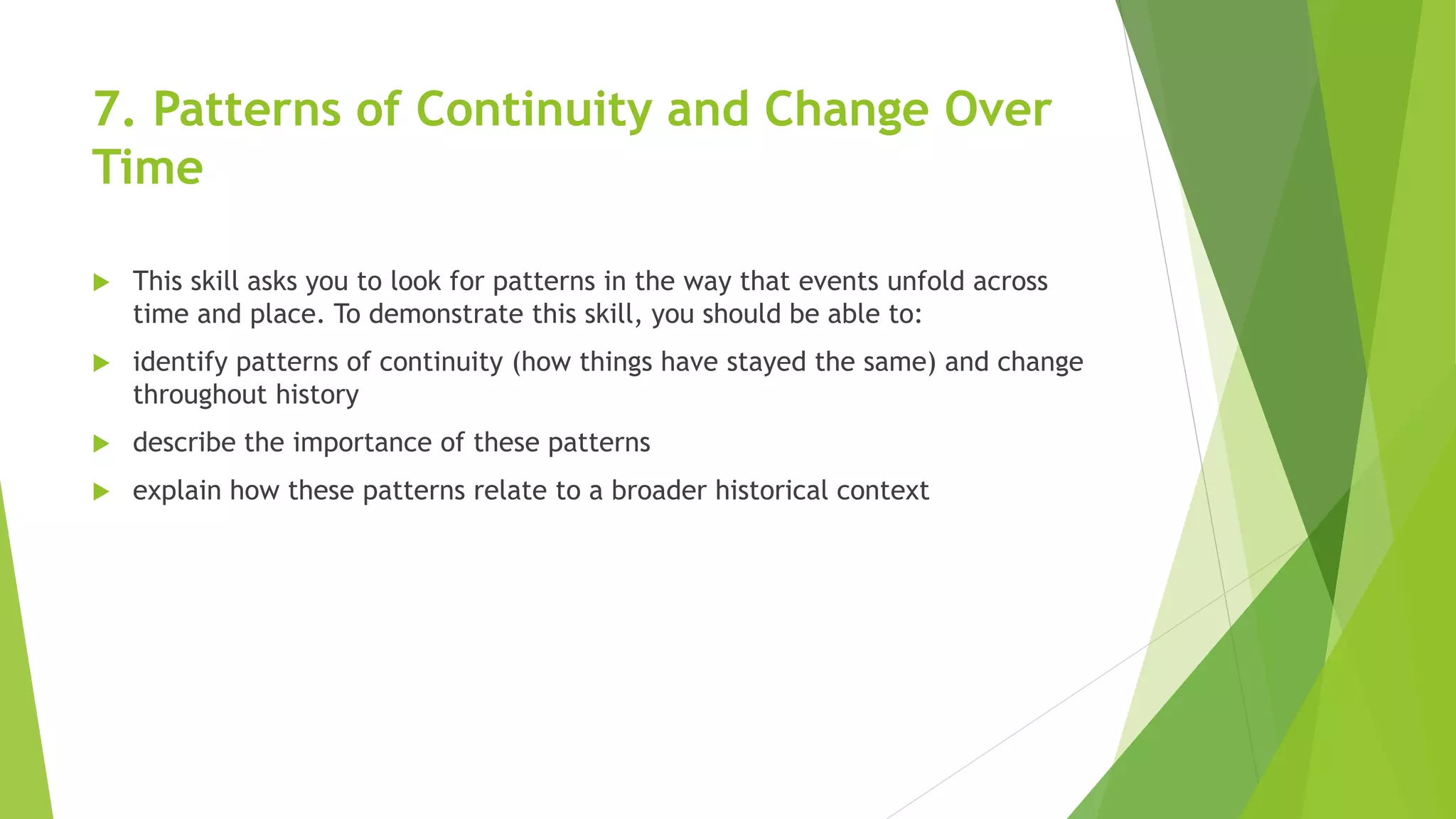
7. Patterns of Continuity and Change Over
Time
 This skill asks you to look for patterns in the way that events unfold across
time and place. To demonstrate this skill, you should be able to:
 identify patterns of continuity (how things have stayed the same) and change
throughout history
 describe the importance of these patterns
 explain how these patterns relate to a broader historical context
8. Periodization
Periodization involves understanding how and why historians organize history into periods the way that they do. To demonstrate
this skill, you should be able to:
explain how historical events are grouped into periods
identify turning points in history
analyze different models of periodization
9.
Argumentation
The last one of the APUSH
historical thinking skills centers
on the ability to make and
support an argument about
historical events and processes.
This skill comes in especially
handy on the APUSH essay
questions. To demonstrate this
skill, you should be able to:
construct an argument concerning
historical events or processes
using a clear thesis
develop your argument and
support it with relevant evidence
evaluate the quality of evidence,
including how well the evidence
relates to or supports a given
argument

Historical thinking skills

  • 1.
    1. Analyzing Evidence: Contentand Sourcing The first of the nine APUSH historical thinking skills deals with how well you can analyze primary sources. To demonstrate this skill, you should be able to examine a primary source and identify: the author’s purpose and point of view the intended audience the historical context
  • 2.
    2. Interpretation This skilldeals with analyzing secondary sources — those in which a historian is interpreting the past. To demonstrate this skill, you should be able to examine a secondary source and describe: the author’s argument how well the author supports the argument with evidence how it relates to other historical interpretations
  • 3.
    3. Comparison  Thisskill deals with making historical connections by comparing and contrasting events, societies, or perspectives. To demonstrate this skill, you should be able to:  compare the points of view found in multiple primary and/or secondary sources  find the similarities and differences between events, people, societies, and processes throughout history  make comparisons across different time periods and geographic areas
  • 4.
    4. Contextualization  Contextualizationinvolves the ability to put something in its proper historical context—understanding an event or document in relation to what else was happening at the same time, in the same area, or within the same long-term process. To demonstrate this skill, you should be able to:  place events or documents within the broader context of time and place  understand how an event relates to what else was going on locally, regionally, nationally, or globally  draw conclusions about an event or perspective based on its relation to the broader historical context
  • 5.
    5. Synthesis Synthesis isbringing multiple elements together by making connections between different time periods, events, people, cultures, locations, and perspectives. To demonstrate this skill, you should be able to: make connections between various historical issues across time periods and locations make connections between different historical themes
  • 6.
    6. Causation Causation isa chronological reasoning skill. It involves understanding cause-and-effect relationships throughout history. To demonstrate this skill, you should be able to: identify long- and short-term causes of historical events evaluate the relative significance of multiple causes of a historical event
  • 7.
    7. Patterns ofContinuity and Change Over Time  This skill asks you to look for patterns in the way that events unfold across time and place. To demonstrate this skill, you should be able to:  identify patterns of continuity (how things have stayed the same) and change throughout history  describe the importance of these patterns  explain how these patterns relate to a broader historical context
  • 8.
    8. Periodization Periodization involvesunderstanding how and why historians organize history into periods the way that they do. To demonstrate this skill, you should be able to: explain how historical events are grouped into periods identify turning points in history analyze different models of periodization
  • 9.
    9. Argumentation The last oneof the APUSH historical thinking skills centers on the ability to make and support an argument about historical events and processes. This skill comes in especially handy on the APUSH essay questions. To demonstrate this skill, you should be able to: construct an argument concerning historical events or processes using a clear thesis develop your argument and support it with relevant evidence evaluate the quality of evidence, including how well the evidence relates to or supports a given argument