American Colonization Society –
wanted to send freed slaves
to Africa (new nation Liberia)
Anti-Slavery Alphabet
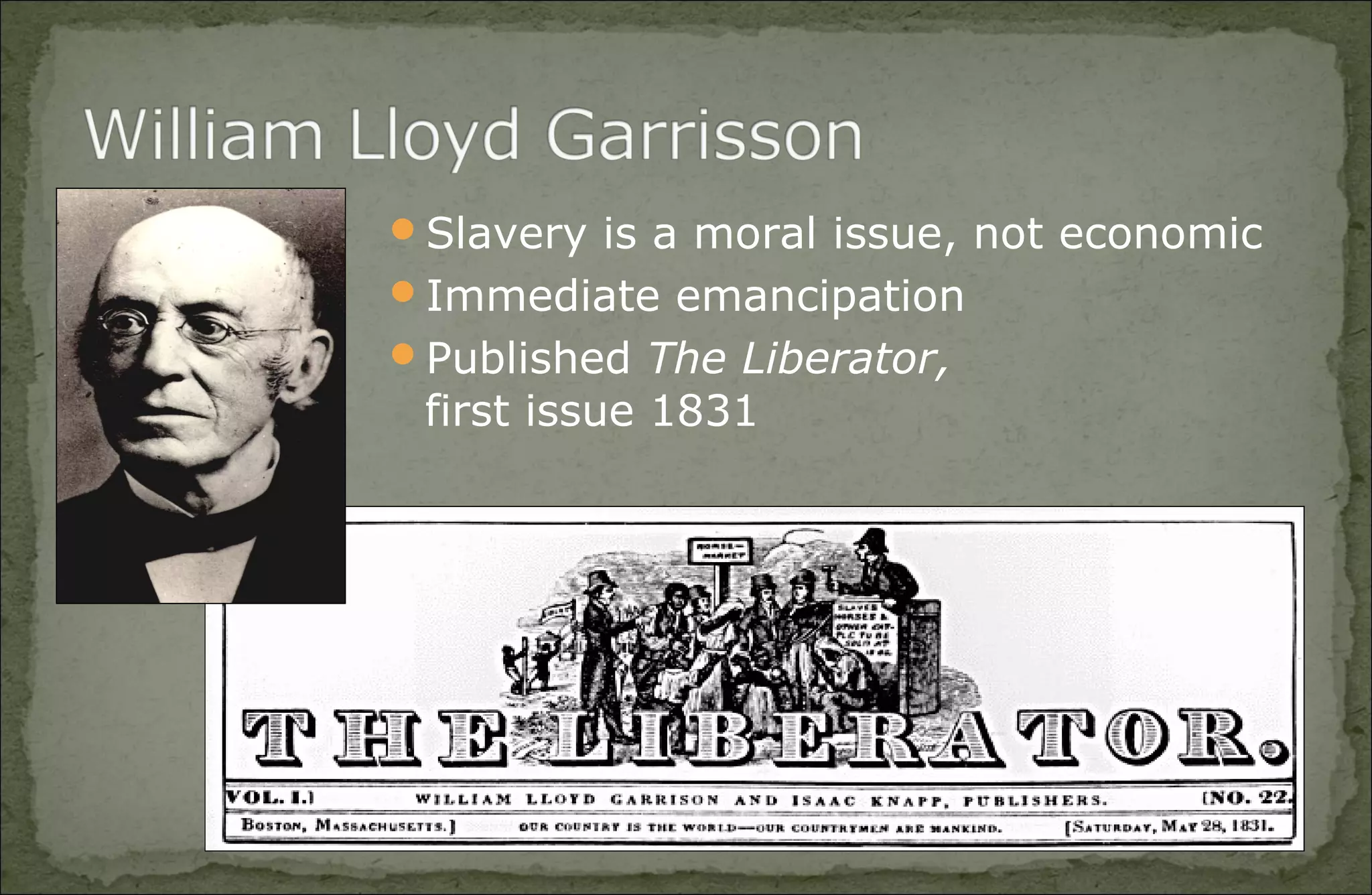
Slavery is a moral issue, not economic
Immediate emancipation
Published The Liberator,
first issue 1831
David Walker - Appeal to the Coloured Citizens
of the World - Don’t wait for whites, fight for freedom
Frederick Douglass - 1845  The Narrative of the
Life Of Frederick Douglass

Sojourner Truth - 1850 –The
Narrative of Sojourner Truth
Harriet Tubman
Helped over 300
slaves to freedom.
$40,000 bounty
onher head.
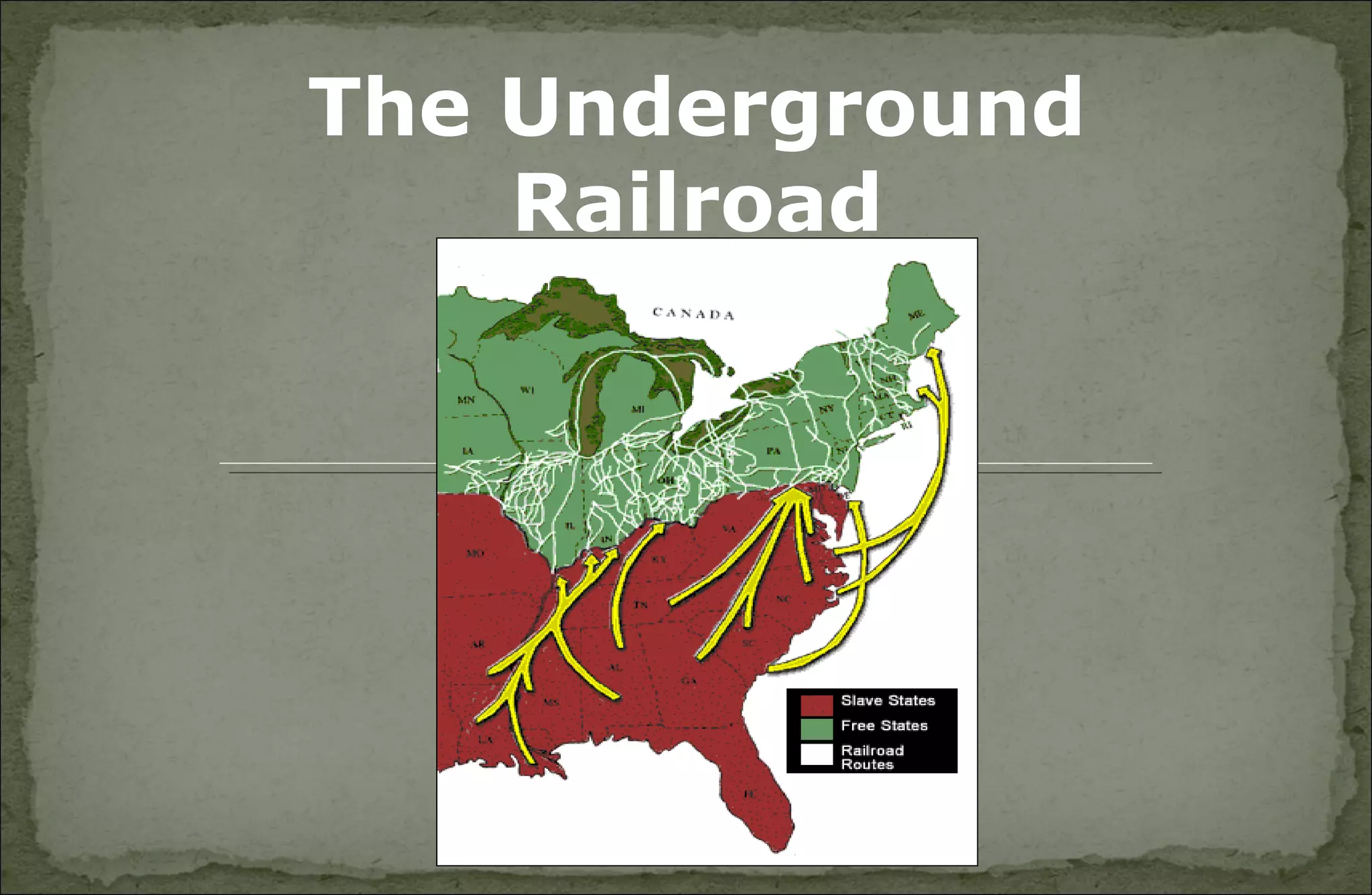
The Underground
Railroad
“Separate Spheres”
Concept
“Cult of Domesticity”
 A woman’s “sphere” was in the home (it was a
refuge from the cruel world outside).
 Her role was to “civilize” her husband and family.
 An 1830s MA minister:
The power of woman is her dependence. A woman who
gives up that dependence on man to become a reformer
yields the power God has given her for her protection, and
her character becomes unnatural!
Early 19th
Century Women
1. Unable to vote.
2. Legal status of a minor.
3. Single  could own her own
property.
4. Married  no control over her
property or her children.
5. Could not initiate divorce.
6. Couldn’t make wills, sign a contract,
or bring suit in court without her
husband’s permission.
What It Would Be Like If Ladies
Had Their Own Way!”
Cult of Domesticity = Slavery
The 2nd
Great Awakening inspired
women to improve society.
Angelina Grimké Sarah Grimké
 Southern Abolitionists
Lucy Stone
 American Women’s
Suffrage Assoc.
 edited Woman’s Journal
R2-9
Women’s Rights
1840 --> split in the abolitionist movement
over women’s role in it.
London --> World Anti-Slavery Convention
Lucretia Mott Elizabeth Cady Stanton
1848 --> Seneca Falls Declaration of Sentiments
Temperance Movement
Frances Willard
The Beecher Family
1826 - American Temperance Society
“Demon Rum”!
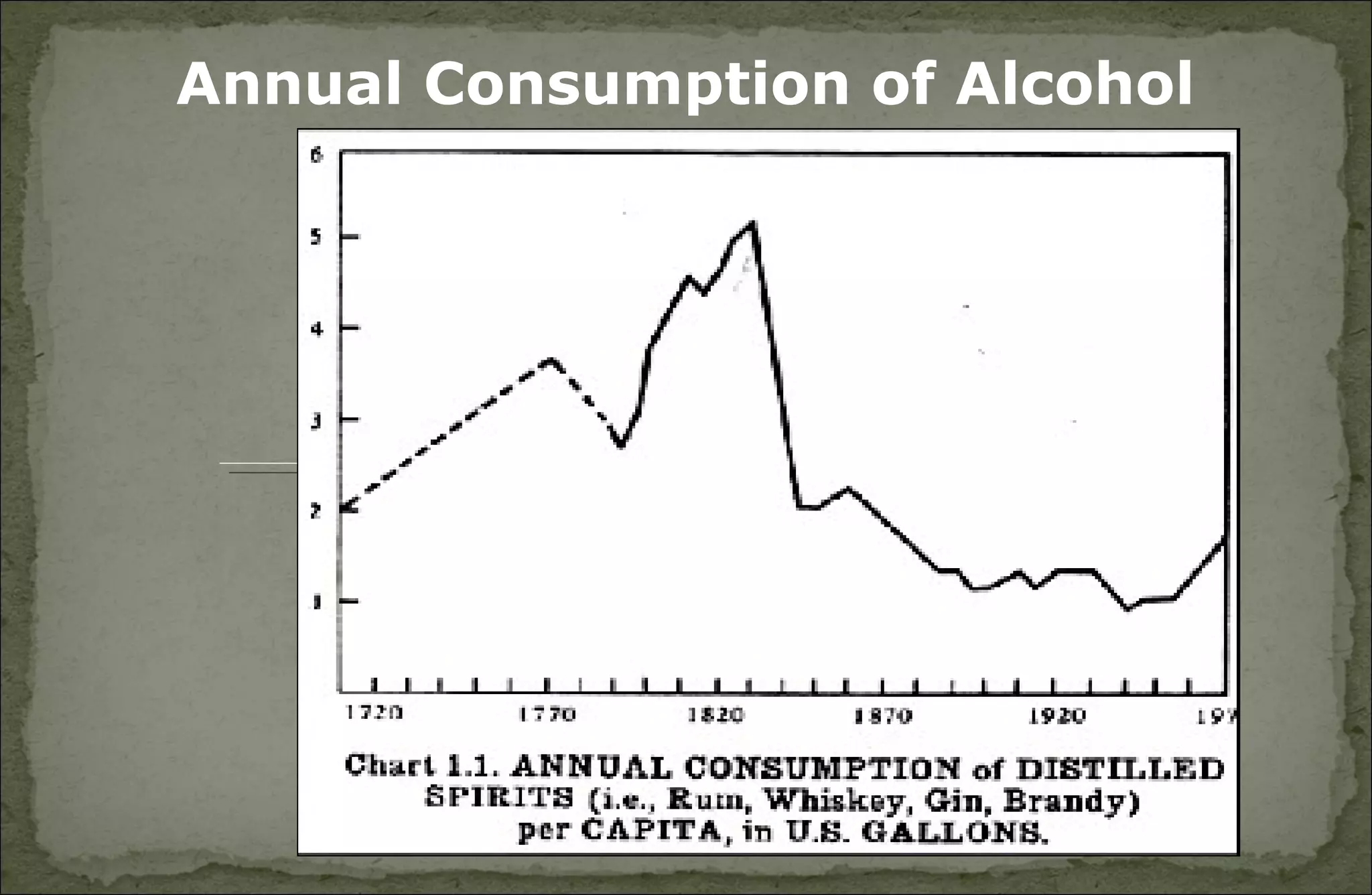
Annual Consumption of Alcohol
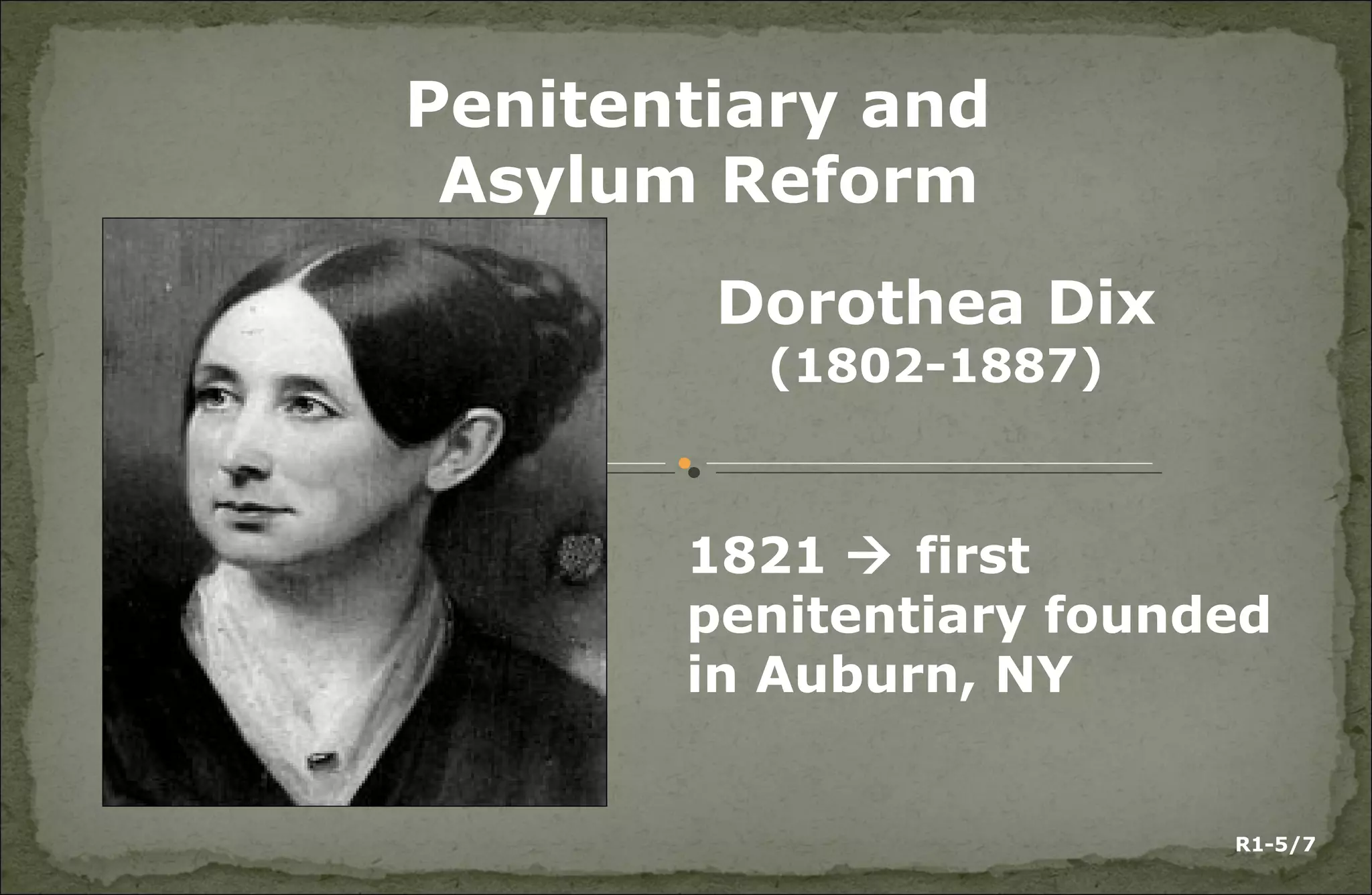
Penitentiary and
Asylum Reform
Dorothea Dix
(1802-1887)
1821  first
penitentiary founded
in Auburn, NY
R1-5/7
http://easternstate.org/contact/press-room/photos/restored-cell
Educational Reform
Religious Training  Secular Education
 MA  always on the forefront of public
educational reform
* 1st
state to establish tax support for
local public schools.
 By 1860 every state offered free public
education to whites.
* US had one of the highest literacy rates.
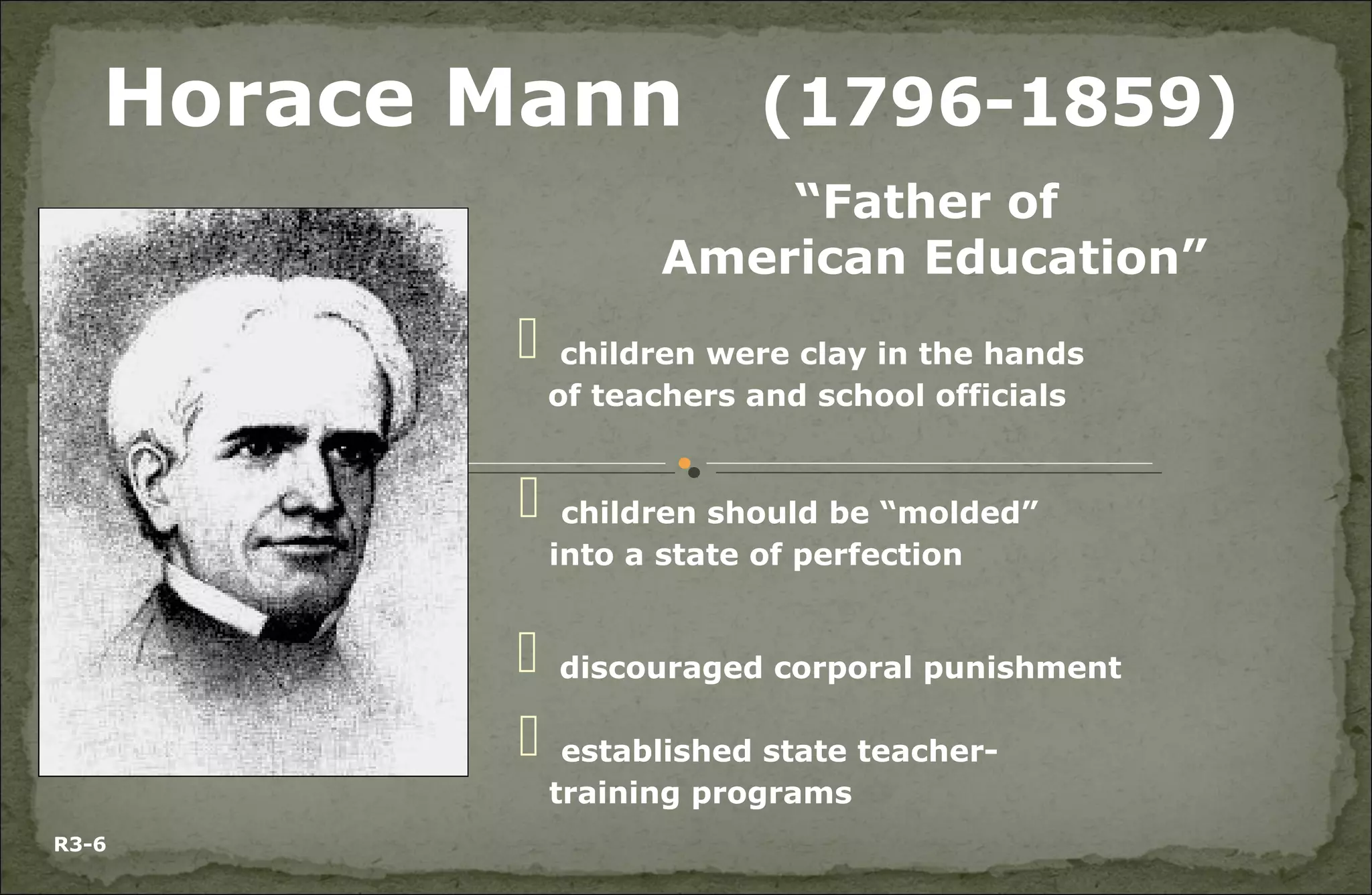
“Father of
American Education”
Horace Mann (1796-1859)
 children were clay in the hands
of teachers and school officials
 children should be “molded”
into a state of perfection
 discouraged corporal punishment
 established state teacher-
training programs
R3-6
The McGuffey Eclectic
Readers
 Used religious parables to teach “American values.”
 Teach middle class morality and respect for order.
 Teach “3 Rs” + “Protestant ethic” (frugality,
hard work, sobriety)

Reformers

  • 2.
    American Colonization Society– wanted to send freed slaves to Africa (new nation Liberia)
  • 3.
  • 4.
    Slavery is amoral issue, not economic Immediate emancipation Published The Liberator, first issue 1831
  • 6.
    David Walker -Appeal to the Coloured Citizens of the World - Don’t wait for whites, fight for freedom Frederick Douglass - 1845  The Narrative of the Life Of Frederick Douglass 
  • 7.
    Sojourner Truth -1850 –The Narrative of Sojourner Truth Harriet Tubman Helped over 300 slaves to freedom. $40,000 bounty onher head.
  • 8.
  • 9.
    “Separate Spheres” Concept “Cult ofDomesticity”  A woman’s “sphere” was in the home (it was a refuge from the cruel world outside).  Her role was to “civilize” her husband and family.  An 1830s MA minister: The power of woman is her dependence. A woman who gives up that dependence on man to become a reformer yields the power God has given her for her protection, and her character becomes unnatural!
  • 10.
    Early 19th Century Women 1.Unable to vote. 2. Legal status of a minor. 3. Single  could own her own property. 4. Married  no control over her property or her children. 5. Could not initiate divorce. 6. Couldn’t make wills, sign a contract, or bring suit in court without her husband’s permission.
  • 11.
    What It WouldBe Like If Ladies Had Their Own Way!”
  • 12.
    Cult of Domesticity= Slavery The 2nd Great Awakening inspired women to improve society. Angelina Grimké Sarah Grimké  Southern Abolitionists Lucy Stone  American Women’s Suffrage Assoc.  edited Woman’s Journal R2-9
  • 13.
    Women’s Rights 1840 -->split in the abolitionist movement over women’s role in it. London --> World Anti-Slavery Convention Lucretia Mott Elizabeth Cady Stanton 1848 --> Seneca Falls Declaration of Sentiments
  • 14.
    Temperance Movement Frances Willard TheBeecher Family 1826 - American Temperance Society “Demon Rum”!
  • 15.
  • 17.
    Penitentiary and Asylum Reform DorotheaDix (1802-1887) 1821  first penitentiary founded in Auburn, NY R1-5/7
  • 18.
  • 19.
    Educational Reform Religious Training Secular Education  MA  always on the forefront of public educational reform * 1st state to establish tax support for local public schools.  By 1860 every state offered free public education to whites. * US had one of the highest literacy rates.
  • 20.
    “Father of American Education” HoraceMann (1796-1859)  children were clay in the hands of teachers and school officials  children should be “molded” into a state of perfection  discouraged corporal punishment  established state teacher- training programs R3-6
  • 21.
    The McGuffey Eclectic Readers Used religious parables to teach “American values.”  Teach middle class morality and respect for order.  Teach “3 Rs” + “Protestant ethic” (frugality, hard work, sobriety)