Name: Monjurul Islam
ID: 181002050
Section: DB
Dept. Of CSE
Green university of Bangladesh
Outline
 Definition.
 Main concept of mobile computing.
 Why go mobile?.
 Where mobile computing can be used?
 Types of wireless devices.
 Importance of Mobile Computing.
 Wireless Communication.
 Characteristics of Mobile Computing.
 Advantages & Disadvantage.
 Applications.
 Conclusion
Definition
 Mobile computing is human–computer interaction in
which a computer is expected to be transported
during normal usage, which allows for the
transmission of data, voice, and video.
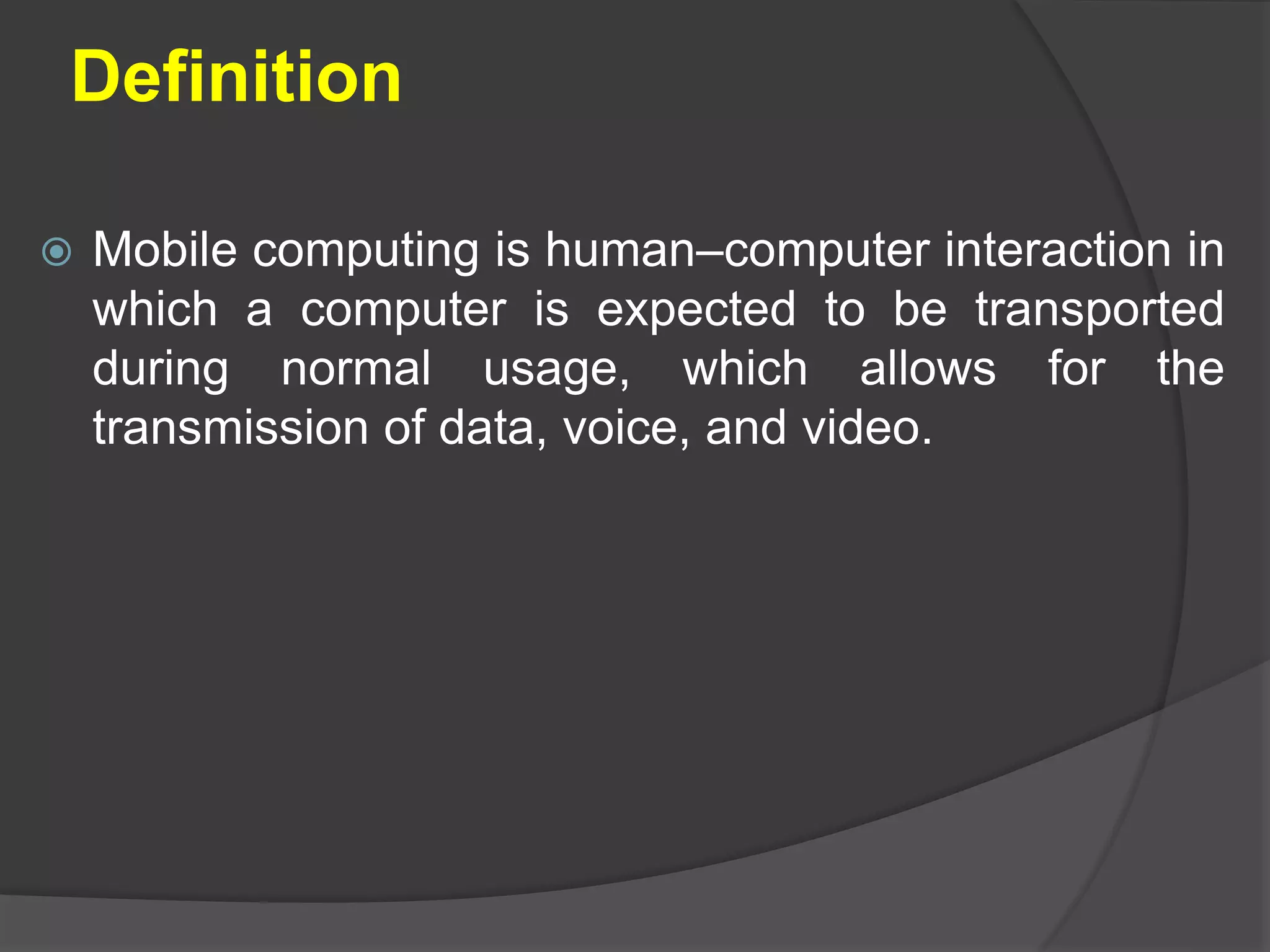
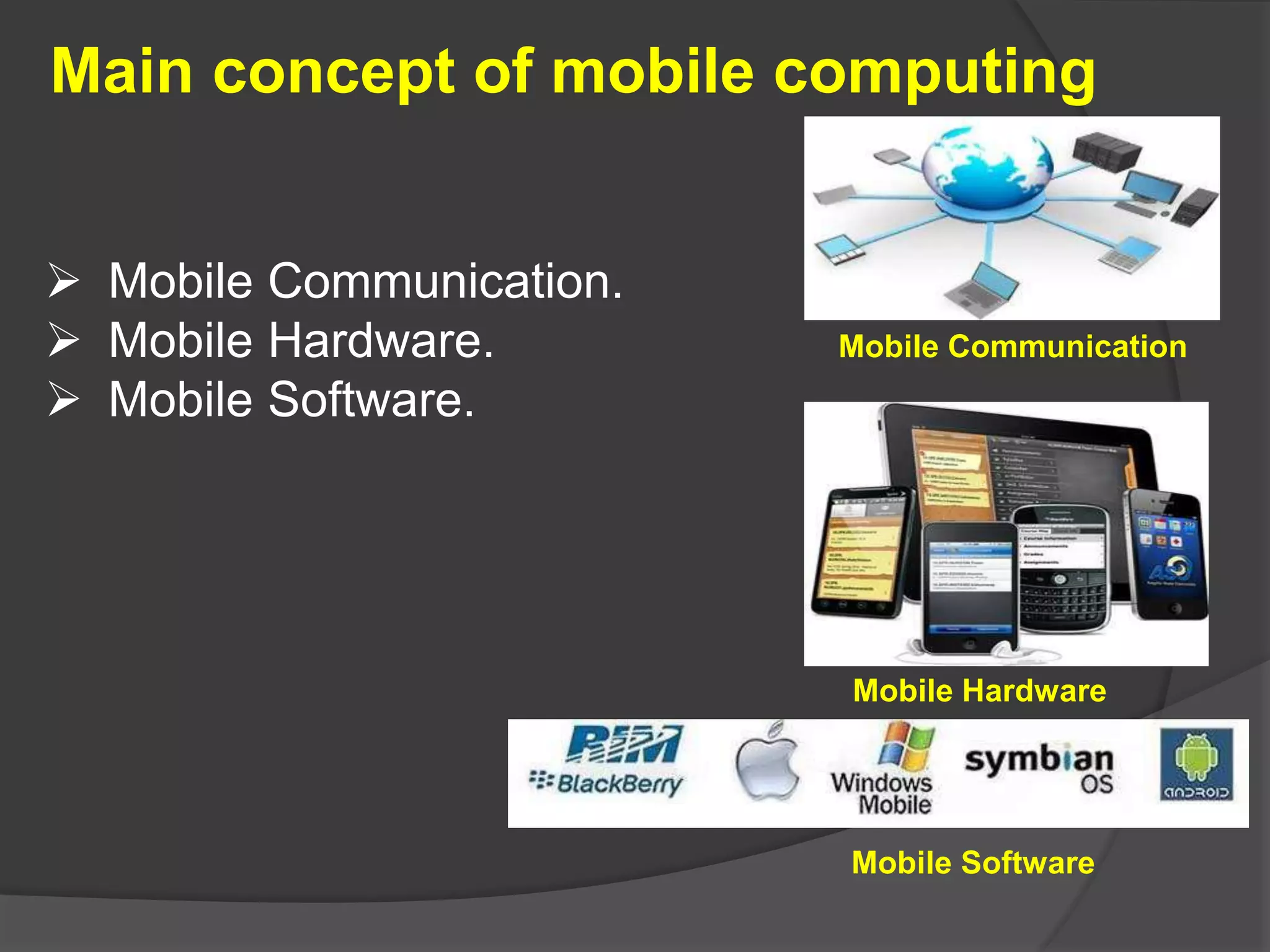
Main concept of mobile computing
 Mobile Communication.
 Mobile Hardware.
 Mobile Software.
Mobile Communication
Mobile Hardware
Mobile Software
Why go
mobile?
 Enable anywhere/anytime connectivity.
 Bring computer communications to areas.
 Without pre-existing infrastructure.
 Enable mobility.
 Enable new applications.
 An exciting new research area.
Where mobile computing can be
used?
 For Estate Agents.
 Emergency Services.
 In courts.
 In companies.
 Stock Information Collation/Control.
 Credit Card Verification.
 Taxi/Truck Dispatch.
 Electronic Mail/Paging.
And many more places…
Types of wireless
devices
 Laptops.
 Palmtops.
 PDAs.
 Cell phones.
 Pagers.
 Sensors.
Importance of Mobile
Computing
 Desire to have continuous network connectivity
irrespective of the location.
 Mobile Internet Protocol is an extension to the
Internet Protocol proposed by IETF (Internet
Engineering Task Force).
Wireless Communication
Wireless communication refers
as an enable different devices
to connect and transfer data
without using physical
connection.
Characteristics of Mobile
Computing
 Portability
 Social Interactivity
 Context Sensitivity
 Connectivity
 Individual
 Small Size
 Wireless Communication
Mobile Computing - Major
Advantages
 Location Flexibility.
 Saves Time.
 Enhanced Productivity.
 Ease of Research.
 Entertainment.
 Streamlining of Business Processes.
Disadvantage of Mobile
Computing
 Battery consumption stops.
 Interference is persisted in save.
 Inefficient bandwidth in transmission.
 Connection losses over entitle re network.
 Network stability.
 Interoperability problem.
 Protection discipline.
Applications
 Consumer Goods.
 Delivery & Route Sales.
 Government.
 Healthcare.
 Transportation.
 Emergency services.
 Credit card verification.
 Entertainment.
Conclusion
Today's computing has rapidly grown from being
confined to a single location. With mobile
computing, people can work from the comfort of
any location.
Mobile computing

Mobile computing

  • 1.
    Name: Monjurul Islam ID:181002050 Section: DB Dept. Of CSE Green university of Bangladesh
  • 2.
    Outline  Definition.  Mainconcept of mobile computing.  Why go mobile?.  Where mobile computing can be used?  Types of wireless devices.  Importance of Mobile Computing.  Wireless Communication.  Characteristics of Mobile Computing.  Advantages & Disadvantage.  Applications.  Conclusion
  • 3.
    Definition  Mobile computingis human–computer interaction in which a computer is expected to be transported during normal usage, which allows for the transmission of data, voice, and video.
  • 4.
    Main concept ofmobile computing  Mobile Communication.  Mobile Hardware.  Mobile Software. Mobile Communication Mobile Hardware Mobile Software
  • 5.
    Why go mobile?  Enableanywhere/anytime connectivity.  Bring computer communications to areas.  Without pre-existing infrastructure.  Enable mobility.  Enable new applications.  An exciting new research area.
  • 6.
    Where mobile computingcan be used?  For Estate Agents.  Emergency Services.  In courts.  In companies.  Stock Information Collation/Control.  Credit Card Verification.  Taxi/Truck Dispatch.  Electronic Mail/Paging. And many more places…
  • 7.
    Types of wireless devices Laptops.  Palmtops.  PDAs.  Cell phones.  Pagers.  Sensors.
  • 8.
    Importance of Mobile Computing Desire to have continuous network connectivity irrespective of the location.  Mobile Internet Protocol is an extension to the Internet Protocol proposed by IETF (Internet Engineering Task Force).
  • 9.
    Wireless Communication Wireless communicationrefers as an enable different devices to connect and transfer data without using physical connection.
  • 10.
    Characteristics of Mobile Computing Portability  Social Interactivity  Context Sensitivity  Connectivity  Individual  Small Size  Wireless Communication
  • 11.
    Mobile Computing -Major Advantages  Location Flexibility.  Saves Time.  Enhanced Productivity.  Ease of Research.  Entertainment.  Streamlining of Business Processes.
  • 12.
    Disadvantage of Mobile Computing Battery consumption stops.  Interference is persisted in save.  Inefficient bandwidth in transmission.  Connection losses over entitle re network.  Network stability.  Interoperability problem.  Protection discipline.
  • 13.
    Applications  Consumer Goods. Delivery & Route Sales.  Government.  Healthcare.  Transportation.  Emergency services.  Credit card verification.  Entertainment.
  • 14.
    Conclusion Today's computing hasrapidly grown from being confined to a single location. With mobile computing, people can work from the comfort of any location.