 Introduction
 Distinguish b/w wireless & Mobile
 Mobile Devices
 Challenges in mobile computing
 Merits
 Future Scope
 Applications
 Conclusion
 Wireless networking technology has
engendered a new era of computing, called
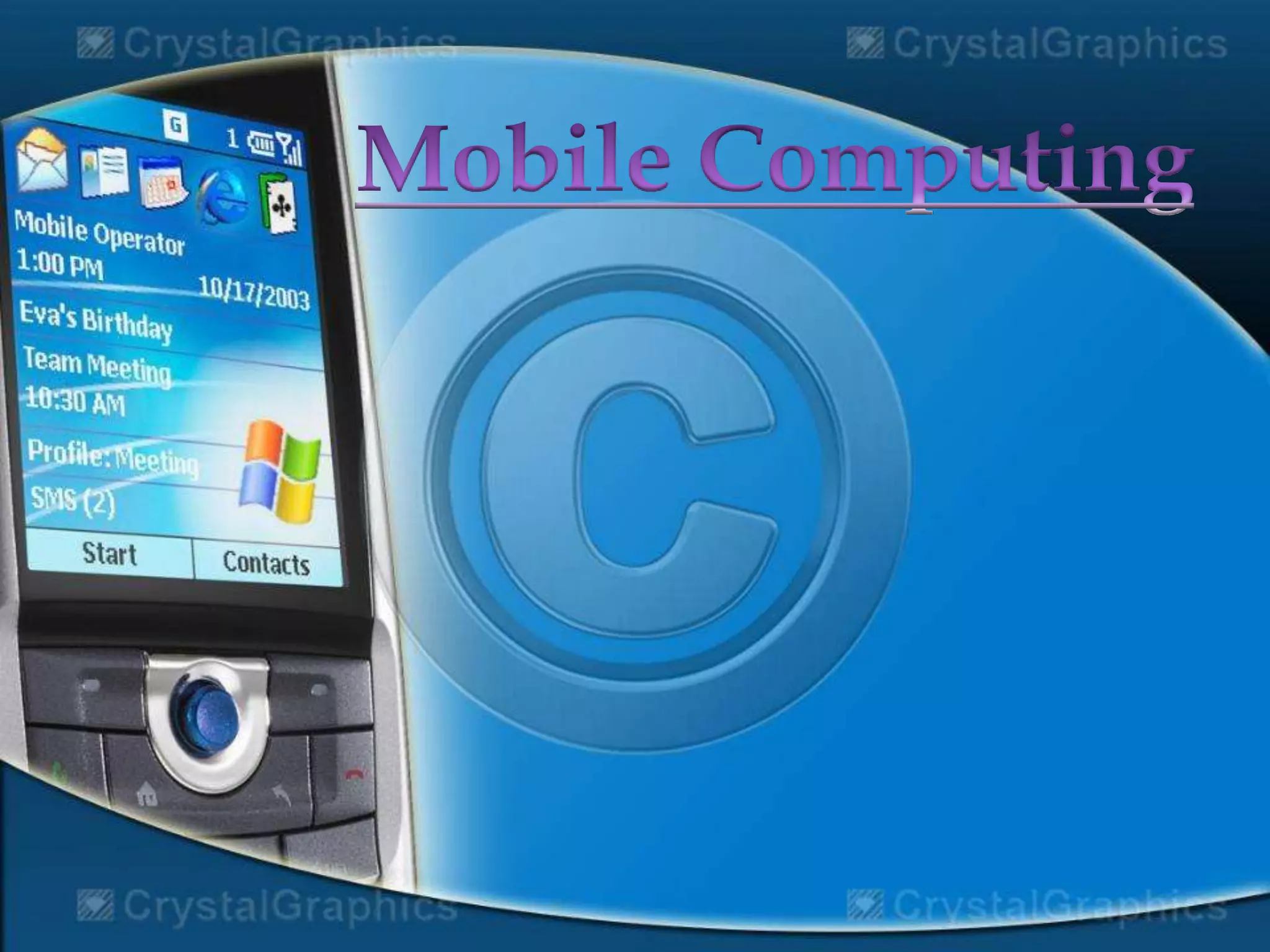
mobile computing. Mobile Computing is an
umbrella term used to describe technologies
that enable people to access network services
any place, anytime, and anywhere.
 Wireless refers to the method of transferring
information between computing devices, such
as a personal data assistant (PDA), and a data
source, such as an agency database server,
without a physical connection.
 Mobile simply describes a computing device
that is not restricted to a desktop.
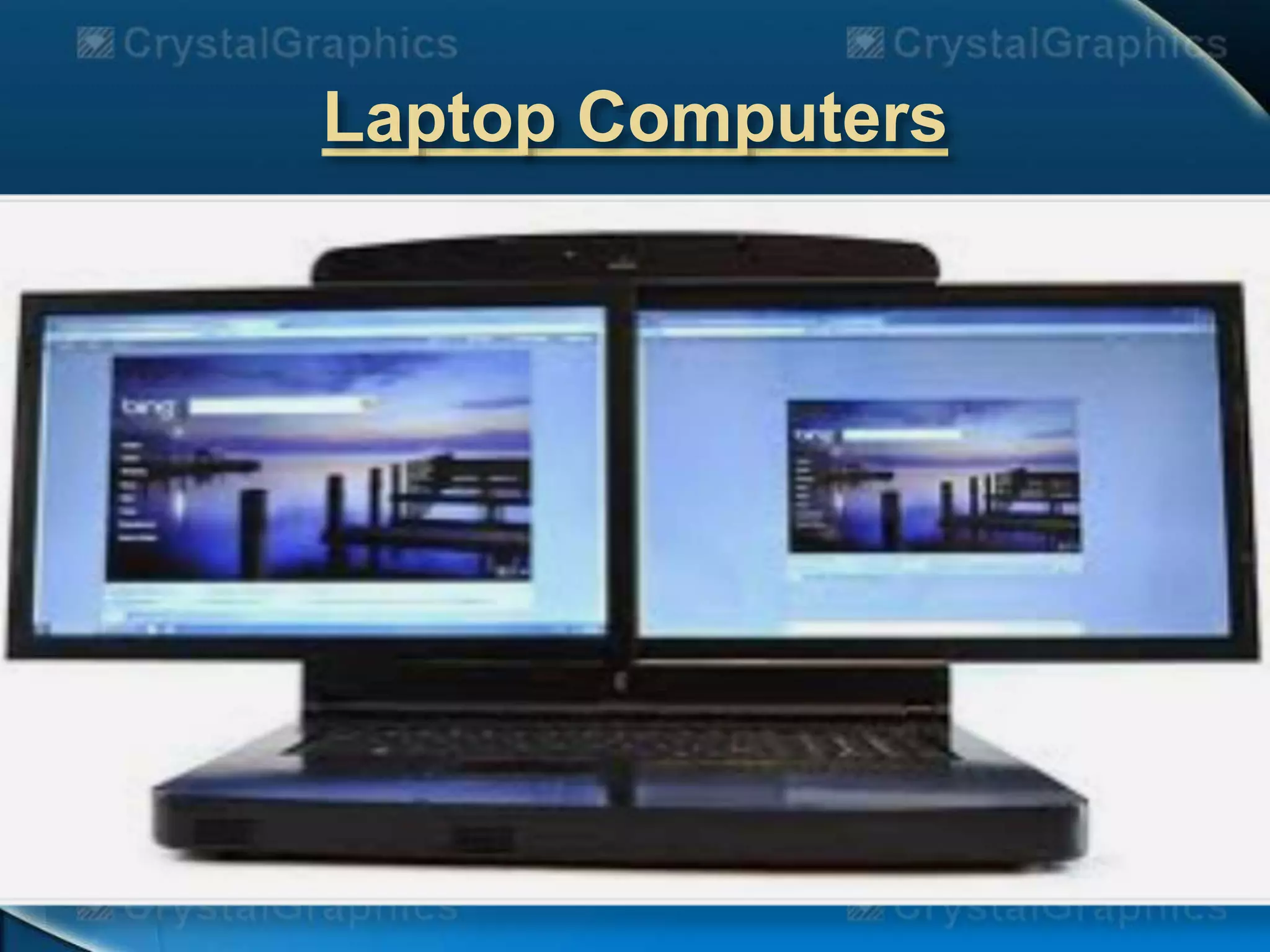
 Laptop computers
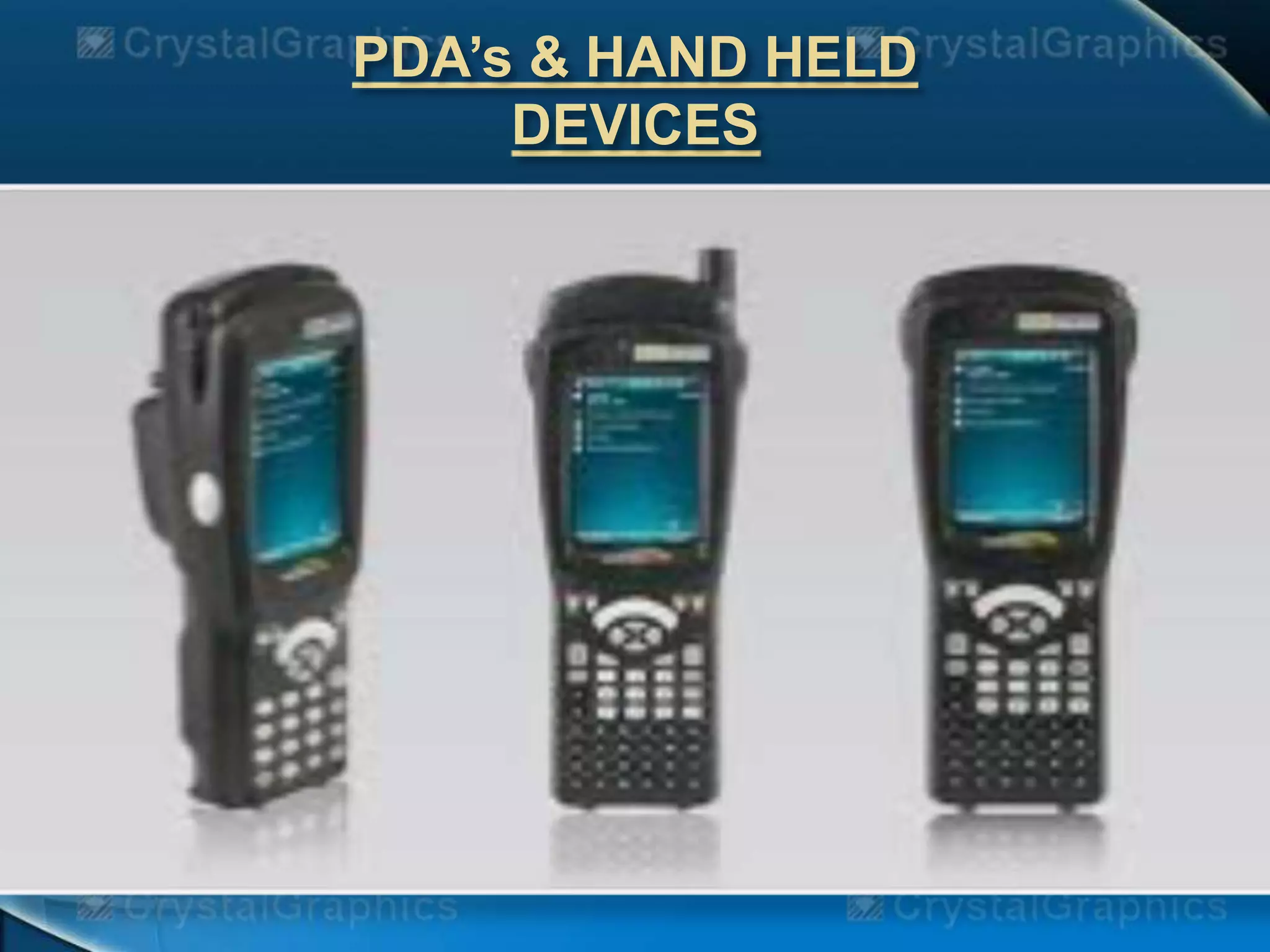
 PDA’s and handheld PCs
 Pagers
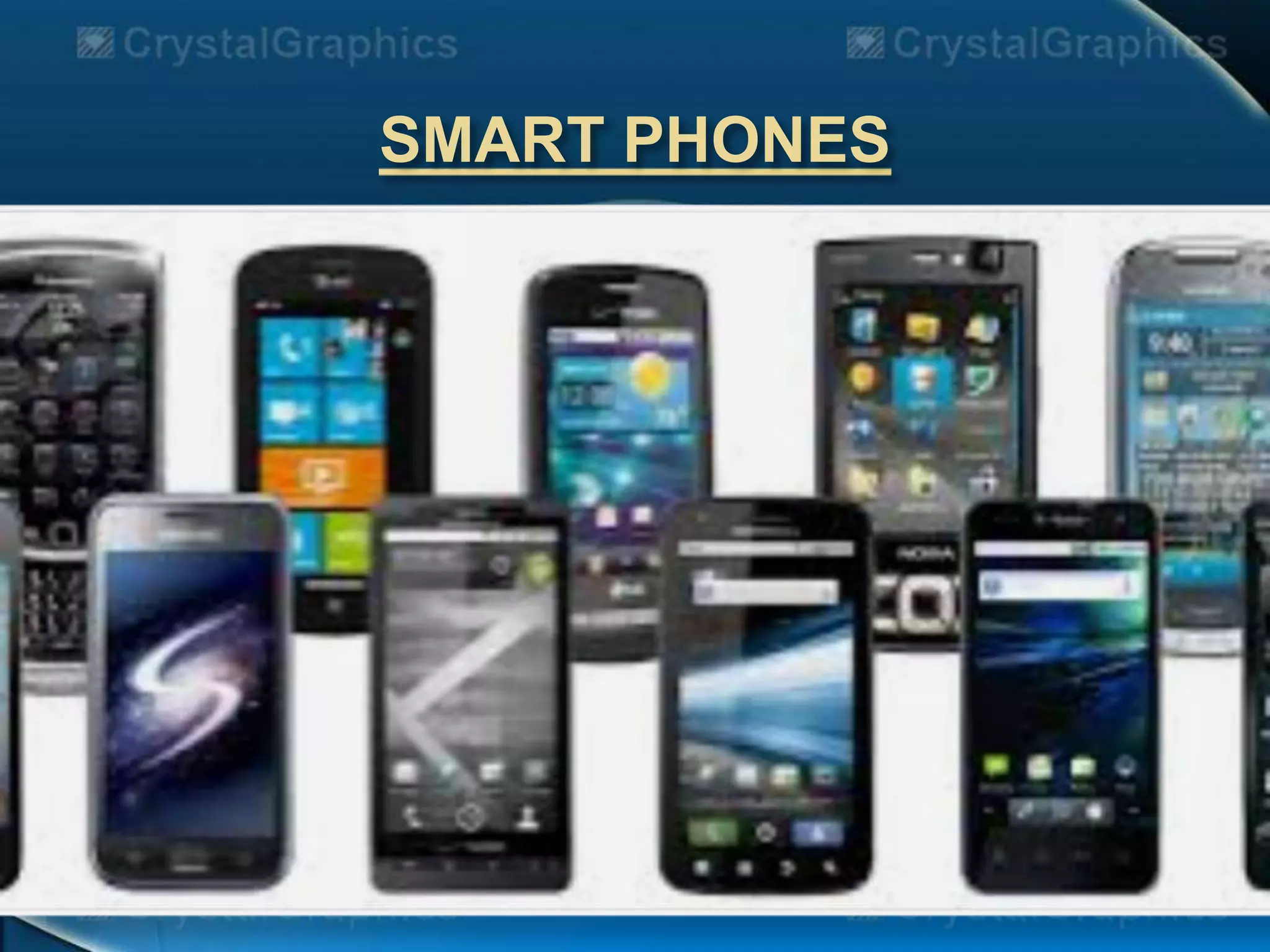
 Smart phones and cellular phones
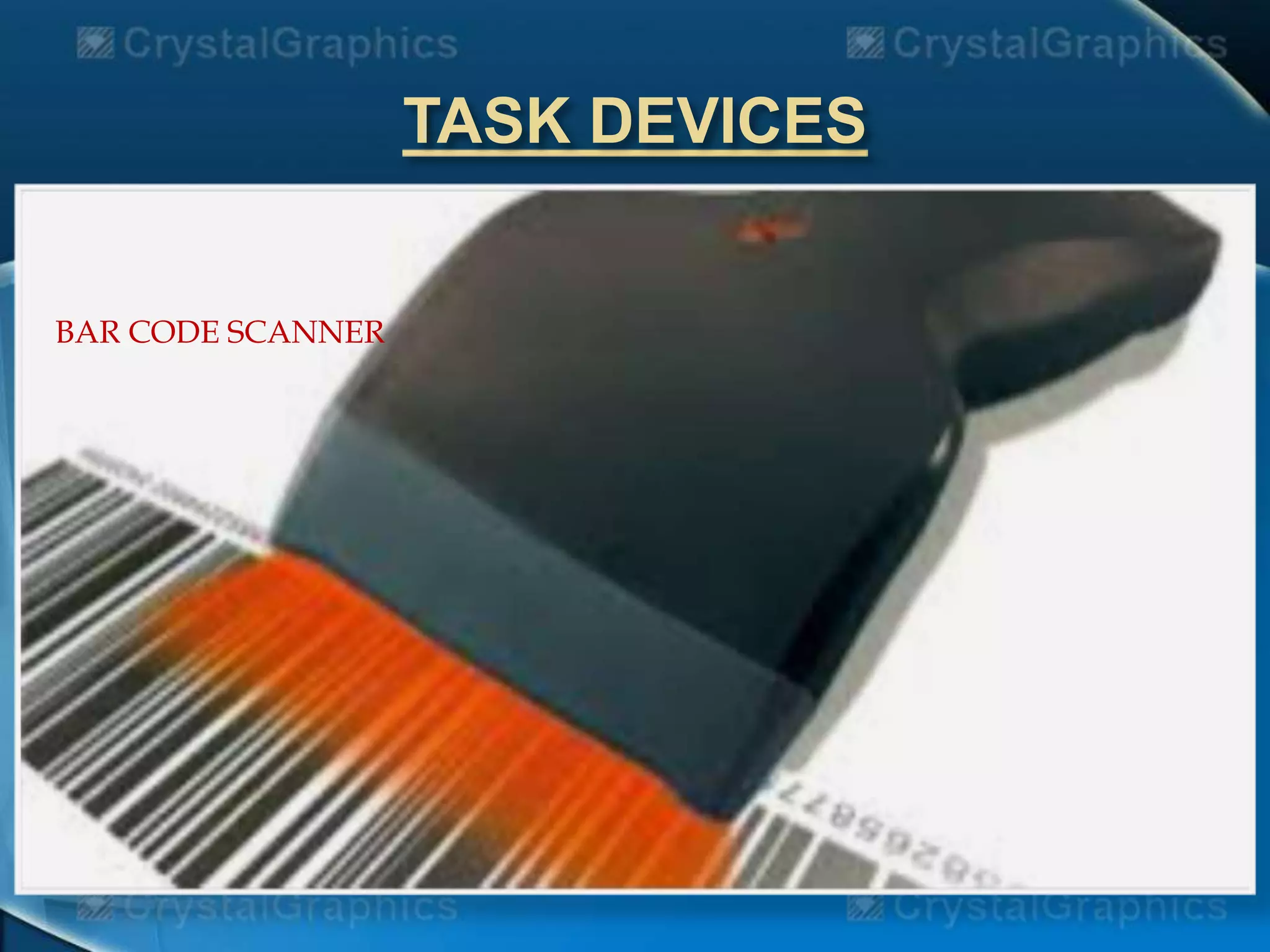
 Task devices, such as bar code
scanners
 Blue tooth
 Bridge
 Here we have seven different types of mobile
devices.
BAR CODE SCANNER
USED TO CONNECT THE DEVICES
USING THE SIGNALS
WIRED CONNECTIONS
WIRELESS CONNECTIONS
USING SIGNALS
 Low Bandwidth
 Power Limitations
 High Error Rate
 Security
 LOW BANDWIDTH:-Wireless networks
deliver lower bandwidth than wired networks.
As a result mobile applications have to be
carefully designed to control the bandwidth
consumption.
 HIGH ERROR RATE:-The network quality
varies as the mobile computer moves across the
heterogeneous network connections.The
wireless environment exhibits higher error
rates, which results in retransmission and
effects the quality of services
 POWER LIMITATIONS:-Mobile computers are
concerned with the limited power supply, an
issue that does not appear in distributed wired
environment .Hardware improvements on
batteries can help to lengthen the life of a
charge and reduce battery weight.
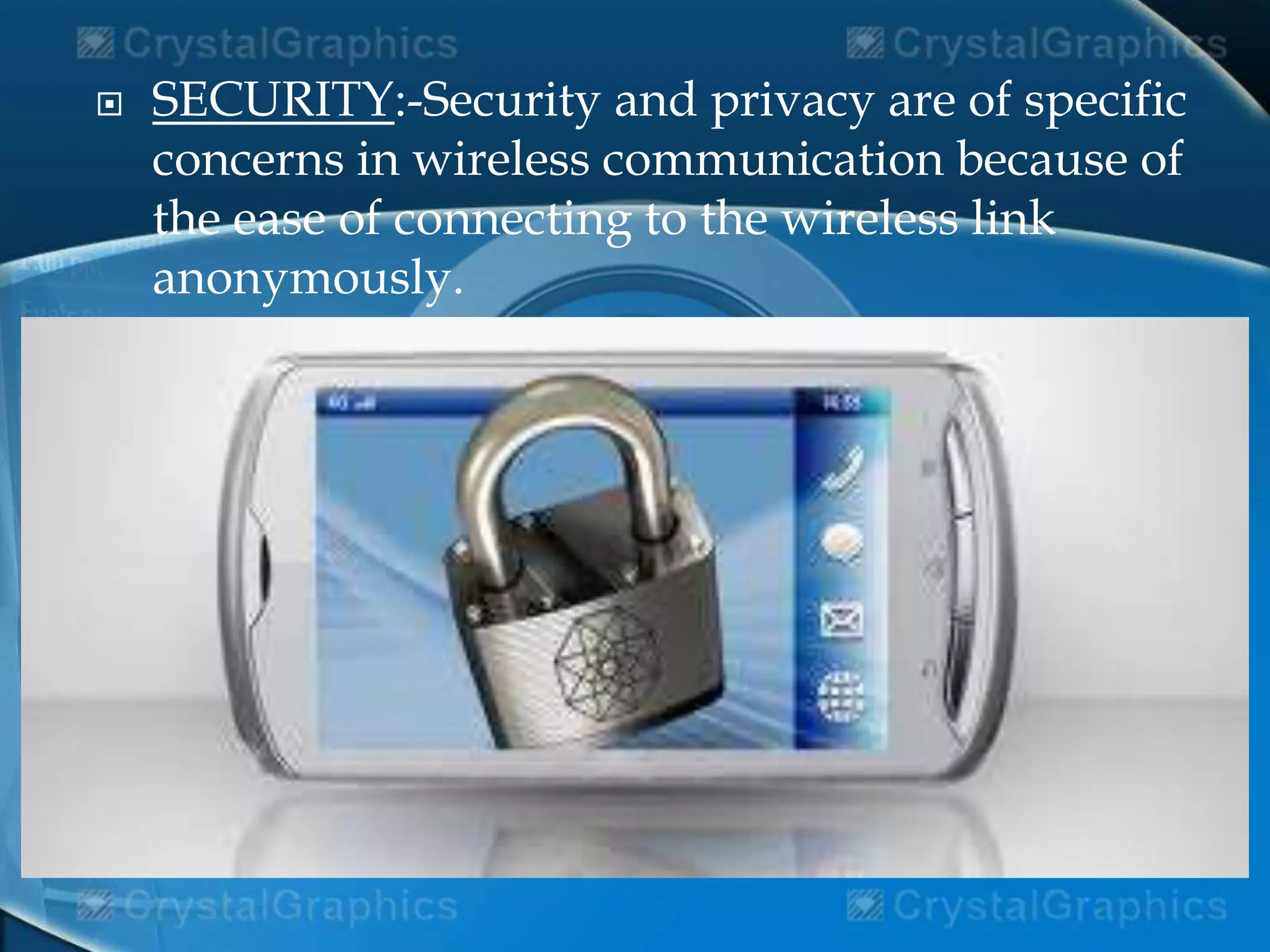
 SECURITY:-Security and privacy are of specific
concerns in wireless communication because of
the ease of connecting to the wireless link
anonymously.
 Improving the data collection process
 Improving data accuracy
 Reducing paperwork
 Enforcing collection of more complete information
 Facilitating collection of more useful information
 Eliminating redundant data entry
 Reducing administrative costs
 Reducing billing errors
 Reducing data backlog
 Improving information flow
 Allowing faster adaptation to changing business
conditions
 Information access via a mobile device is
plagued by low available bandwidth, poor
connection maintenance, poor security, and
addressing problems. Unlike their wired
counterparts, design of software for mobile
devices must consider resource limitation,
battery power and display size. Consequently,
new hardware and software techniques must
be developed. For example, applications need
to be highly optimized for space, in order to fit
in the limited memory on the mobile devices
 Consumer Goods.
 Transportation.
 Utilities.
 Delivery & Route Sales
 Government.
 Healthcare.
 Market Research.
 Pharmaceuticals
 Mobile computing is rapidly becoming
popular, and user demand for useful wireless
applications is increasing.
 Additionally, this paper shows how these
behavioral extensions serve as a powerful
abstraction for practical systems
Mobile Computing
Mobile Computing

Mobile Computing

  • 2.
     Introduction  Distinguishb/w wireless & Mobile  Mobile Devices  Challenges in mobile computing  Merits  Future Scope  Applications  Conclusion
  • 3.
     Wireless networkingtechnology has engendered a new era of computing, called mobile computing. Mobile Computing is an umbrella term used to describe technologies that enable people to access network services any place, anytime, and anywhere.
  • 4.
     Wireless refersto the method of transferring information between computing devices, such as a personal data assistant (PDA), and a data source, such as an agency database server, without a physical connection.  Mobile simply describes a computing device that is not restricted to a desktop.
  • 5.
     Laptop computers PDA’s and handheld PCs  Pagers  Smart phones and cellular phones  Task devices, such as bar code scanners  Blue tooth  Bridge  Here we have seven different types of mobile devices.
  • 10.
  • 12.
    USED TO CONNECTTHE DEVICES USING THE SIGNALS
  • 13.
  • 14.
     Low Bandwidth Power Limitations  High Error Rate  Security
  • 15.
     LOW BANDWIDTH:-Wirelessnetworks deliver lower bandwidth than wired networks. As a result mobile applications have to be carefully designed to control the bandwidth consumption.  HIGH ERROR RATE:-The network quality varies as the mobile computer moves across the heterogeneous network connections.The wireless environment exhibits higher error rates, which results in retransmission and effects the quality of services
  • 16.
     POWER LIMITATIONS:-Mobilecomputers are concerned with the limited power supply, an issue that does not appear in distributed wired environment .Hardware improvements on batteries can help to lengthen the life of a charge and reduce battery weight.
  • 17.
     SECURITY:-Security andprivacy are of specific concerns in wireless communication because of the ease of connecting to the wireless link anonymously.
  • 18.
     Improving thedata collection process  Improving data accuracy  Reducing paperwork  Enforcing collection of more complete information  Facilitating collection of more useful information  Eliminating redundant data entry  Reducing administrative costs  Reducing billing errors  Reducing data backlog  Improving information flow  Allowing faster adaptation to changing business conditions
  • 19.
     Information accessvia a mobile device is plagued by low available bandwidth, poor connection maintenance, poor security, and addressing problems. Unlike their wired counterparts, design of software for mobile devices must consider resource limitation, battery power and display size. Consequently, new hardware and software techniques must be developed. For example, applications need to be highly optimized for space, in order to fit in the limited memory on the mobile devices
  • 20.
     Consumer Goods. Transportation.  Utilities.  Delivery & Route Sales  Government.  Healthcare.  Market Research.  Pharmaceuticals
  • 21.
     Mobile computingis rapidly becoming popular, and user demand for useful wireless applications is increasing.  Additionally, this paper shows how these behavioral extensions serve as a powerful abstraction for practical systems