MLA STYLE
This guide reflect the rules from MLA Handbook for
Writers of Research Papers (7th ed.)
FORMATTING BASICS
 The margins of your document should be set at 1
inch.
 Double space your paper, including the Works
Cited page, and use a 12 point font such as Times
New Roman.
 Indent the first line of all paragraphs one ½ inch
from your margin by clicking the TAB key.
FIRST PAGE
 MLA does not require a cover page but if your
professor asks for one, follow his/her instructions.
If they do not ask for a cover page, then follow the
general rules:
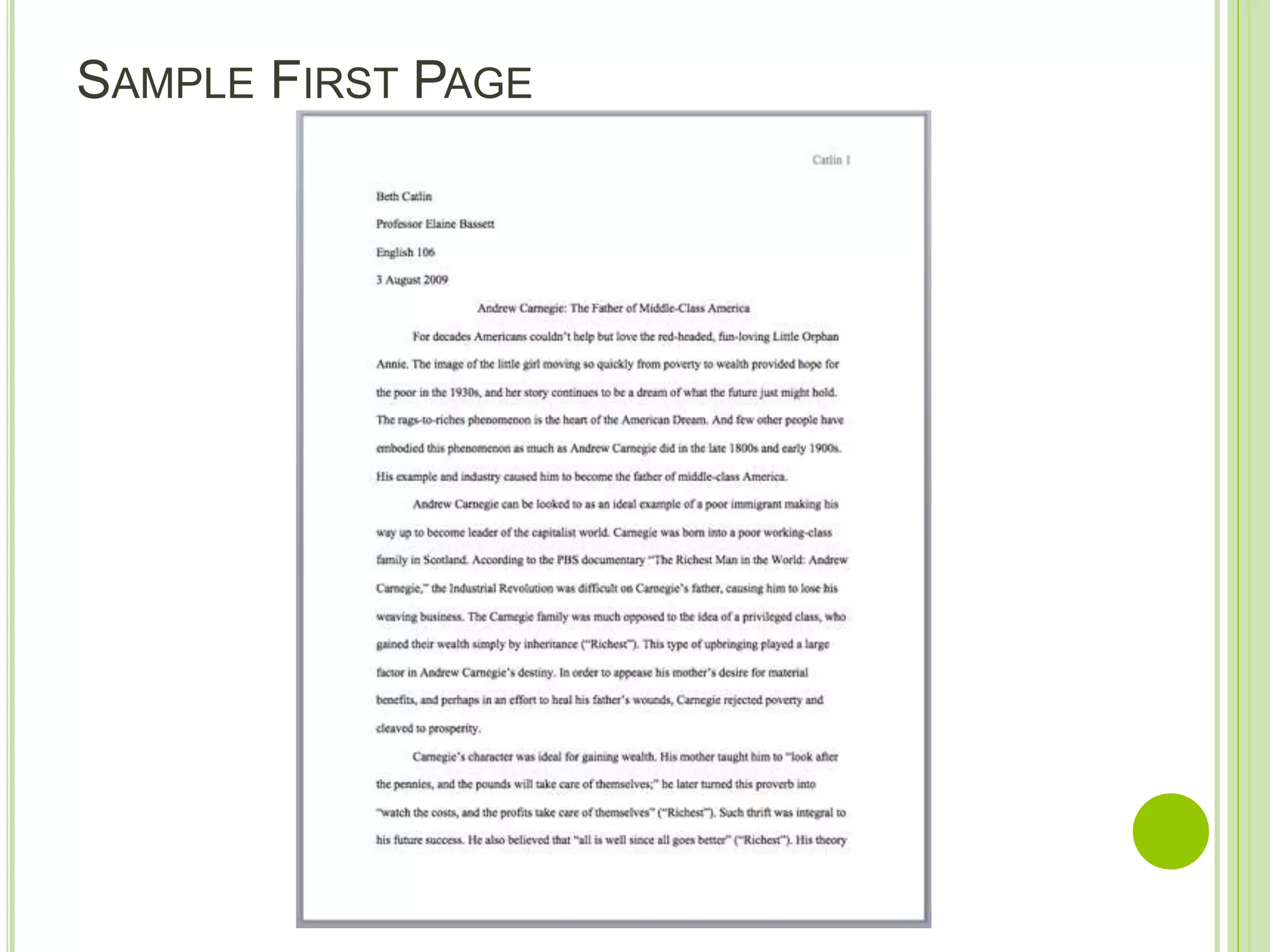
 The right-hand corner of the first page should
contain a header with your last name and the page
number. Be sure to number the first page
 On the first page on the left corner, you give the
following information: your name, course,
instructor’s name and the date.
 Center the title of your paper
SAMPLE FIRST PAGE
FORMATTING IN-TEXT CITATIONS
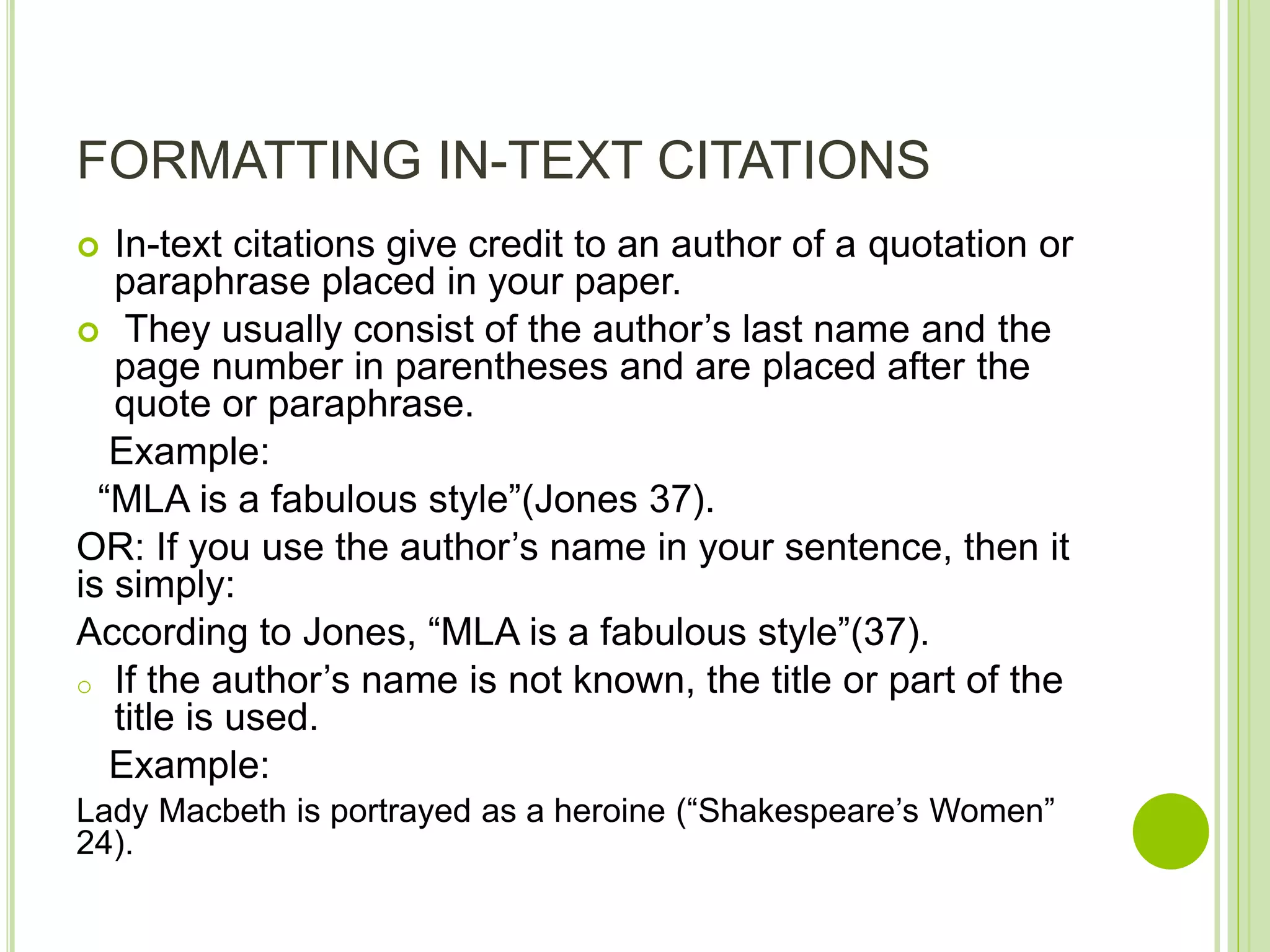
 In-text citations give credit to an author of a quotation or
paraphrase placed in your paper.
 They usually consist of the author’s last name and the
page number in parentheses and are placed after the
quote or paraphrase.
Example:
“MLA is a fabulous style”(Jones 37).
OR: If you use the author’s name in your sentence, then it
is simply:
According to Jones, “MLA is a fabulous style”(37).
o If the author’s name is not known, the title or part of the
title is used.
Example:
Lady Macbeth is portrayed as a heroine (“Shakespeare’s Women”
24).
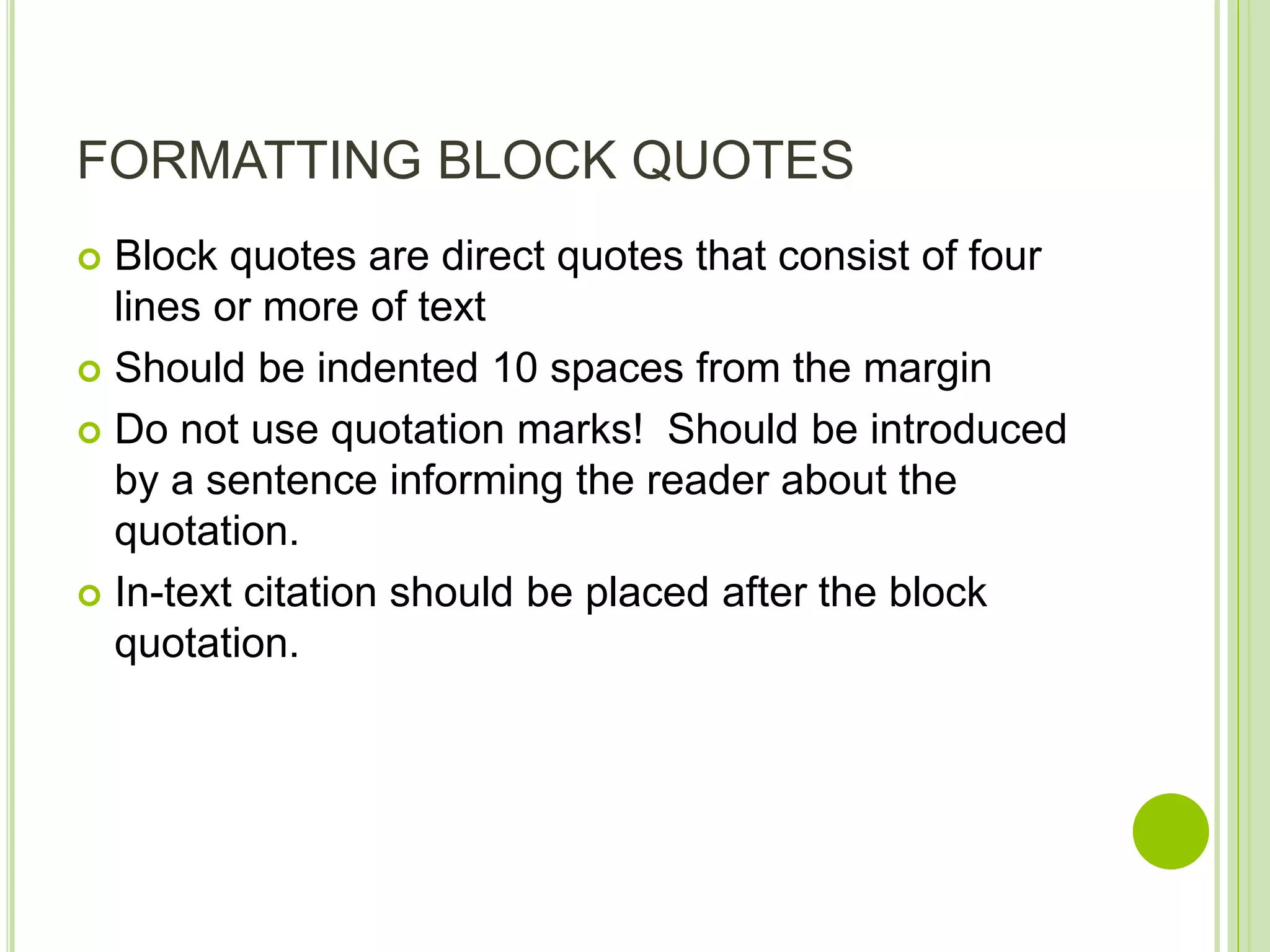
FORMATTING BLOCK QUOTES
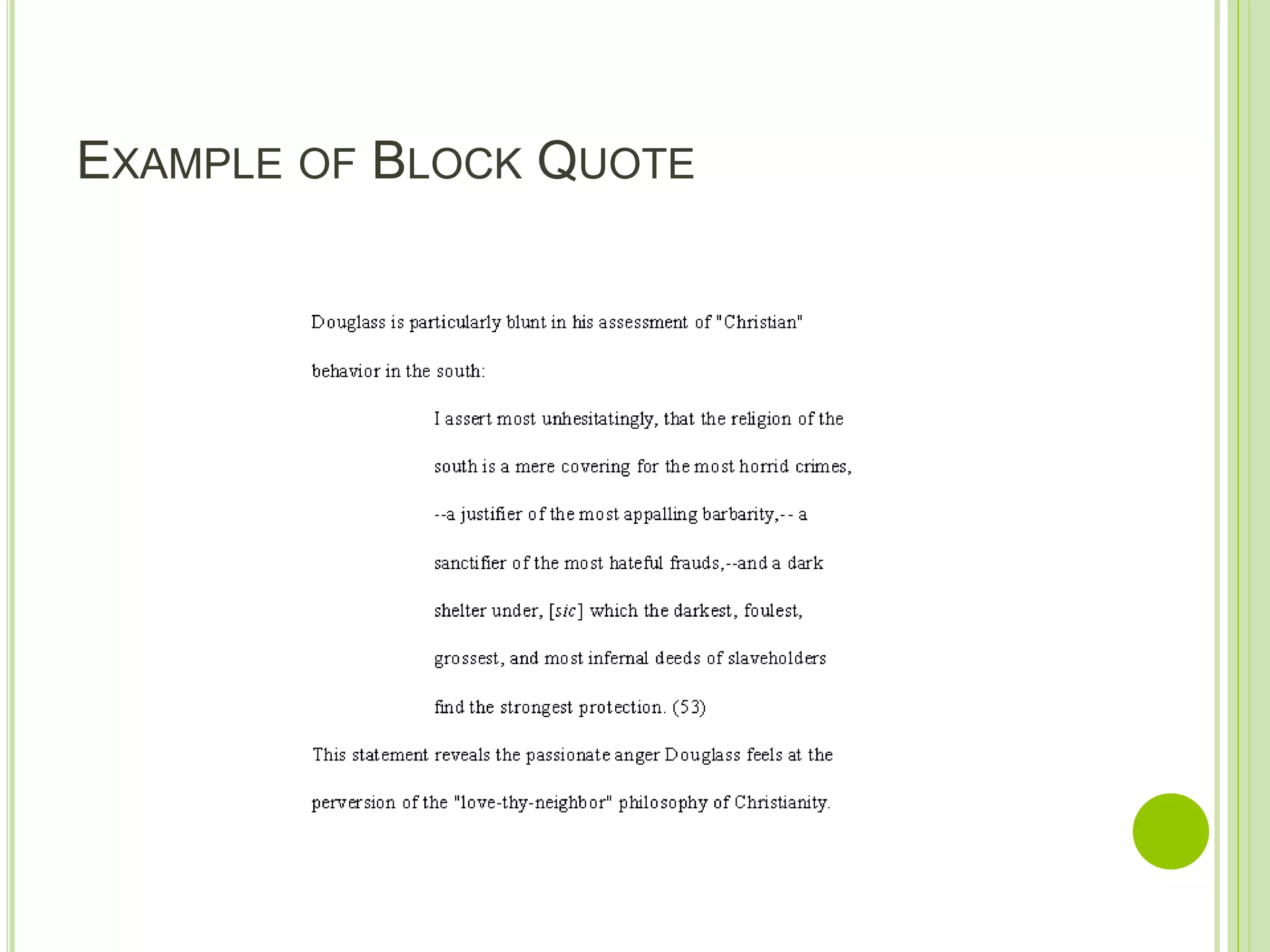
 Block quotes are direct quotes that consist of four
lines or more of text
 Should be indented 10 spaces from the margin
 Do not use quotation marks! Should be introduced
by a sentence informing the reader about the
quotation.
 In-text citation should be placed after the block
quotation.
EXAMPLE OF BLOCK QUOTE
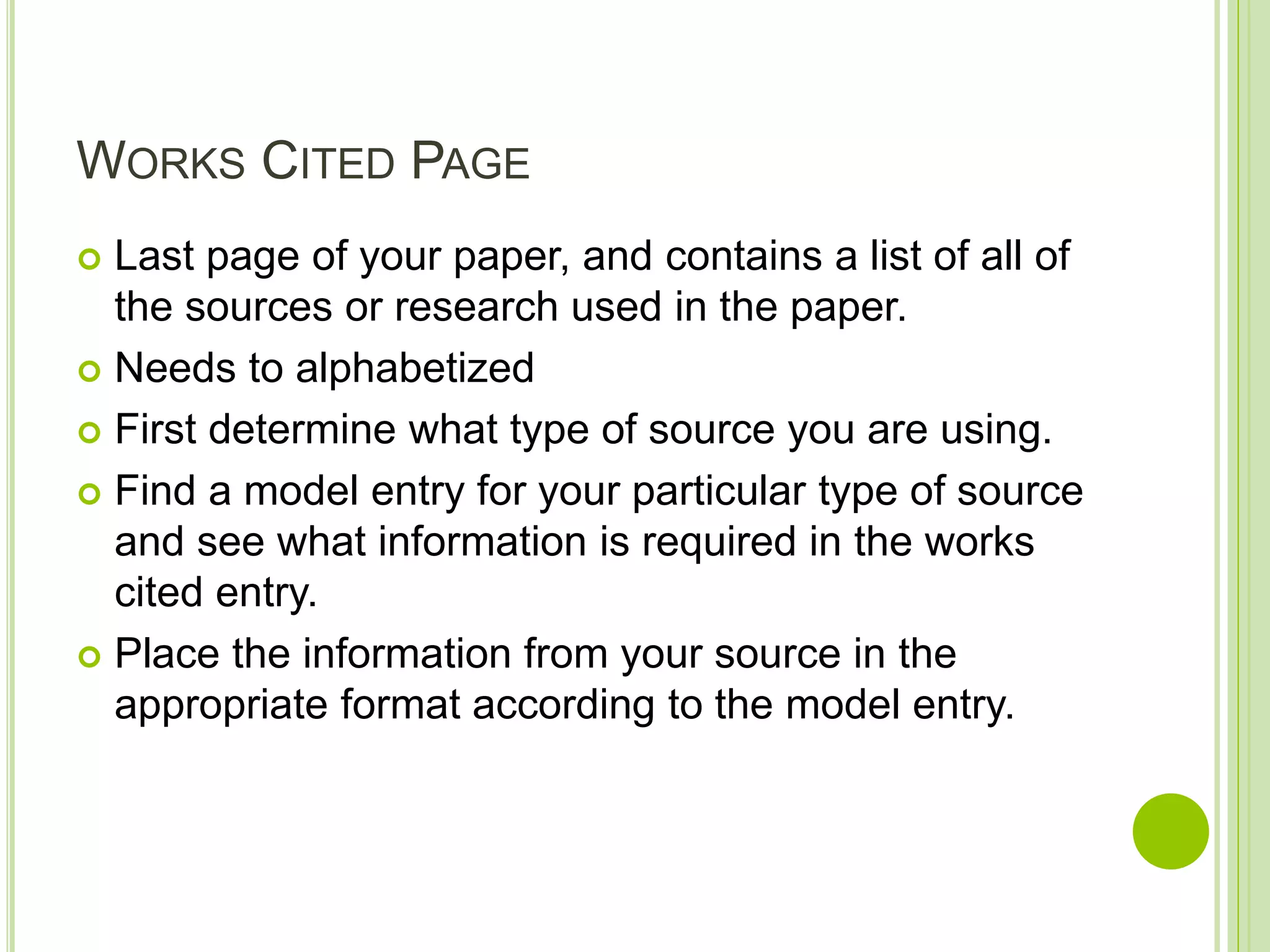
WORKS CITED PAGE
 Last page of your paper, and contains a list of all of
the sources or research used in the paper.
 Needs to alphabetized
 First determine what type of source you are using.
 Find a model entry for your particular type of source
and see what information is required in the works
cited entry.
 Place the information from your source in the
appropriate format according to the model entry.
WORKS CITED PAGE
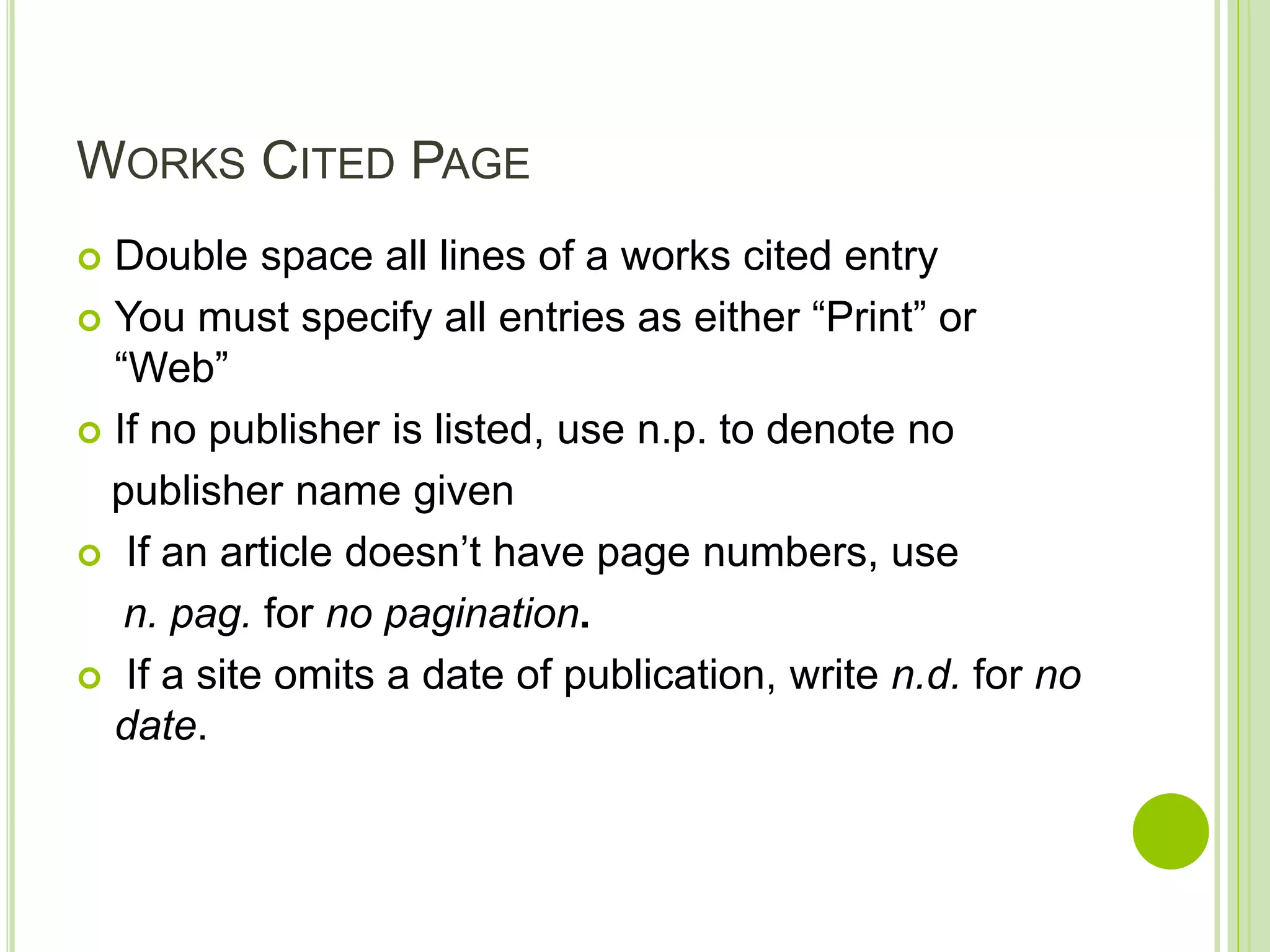
 Double space all lines of a works cited entry
 You must specify all entries as either “Print” or
“Web”
 If no publisher is listed, use n.p. to denote no
publisher name given
 If an article doesn’t have page numbers, use
n. pag. for no pagination.
 If a site omits a date of publication, write n.d. for no
date.
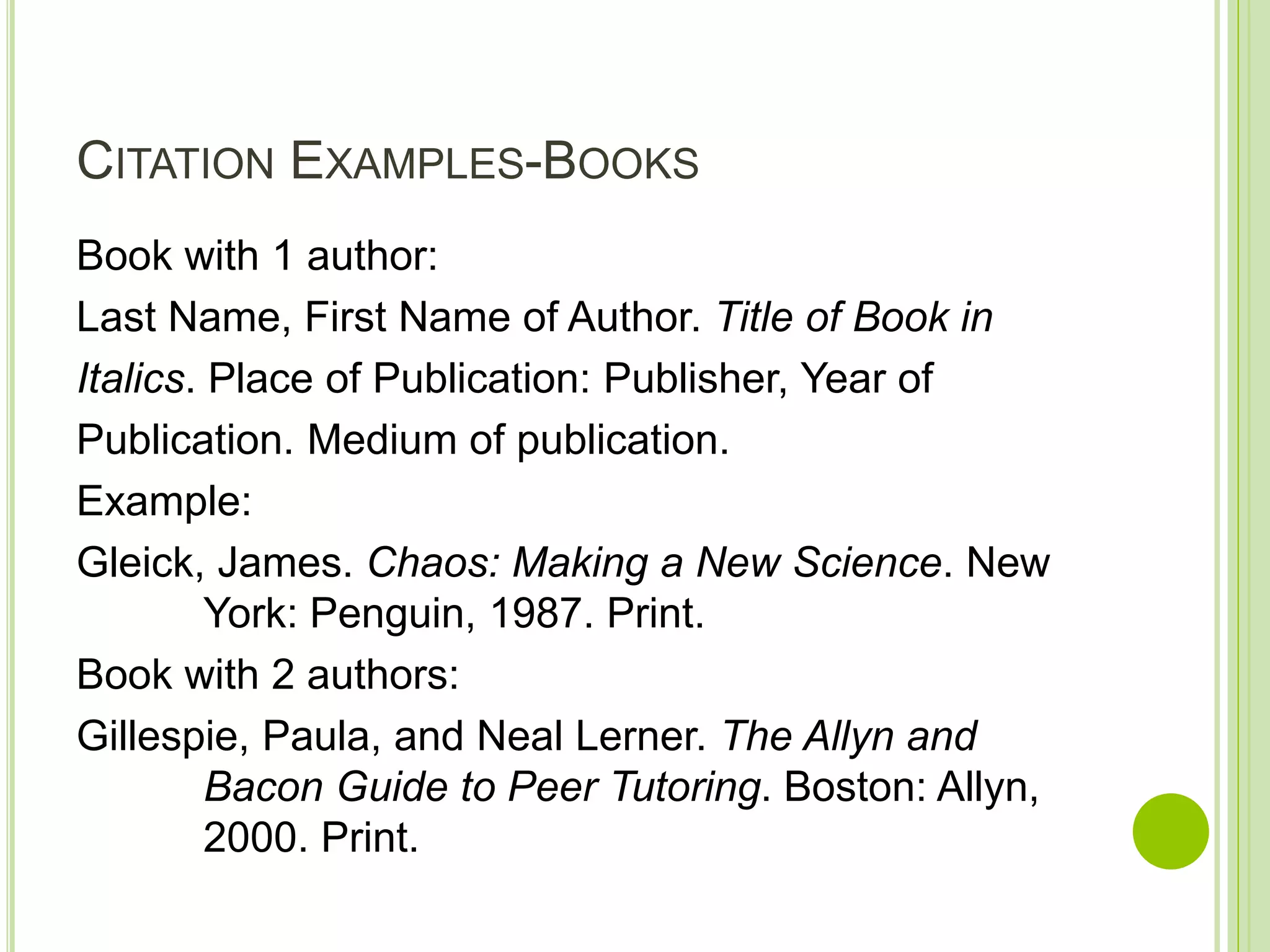
CITATION EXAMPLES-BOOKS
Book with 1 author:
Last Name, First Name of Author. Title of Book in
Italics. Place of Publication: Publisher, Year of
Publication. Medium of publication.
Example:
Gleick, James. Chaos: Making a New Science. New
York: Penguin, 1987. Print.
Book with 2 authors:
Gillespie, Paula, and Neal Lerner. The Allyn and
Bacon Guide to Peer Tutoring. Boston: Allyn,
2000. Print.

MLA style

  • 1.
    MLA STYLE This guidereflect the rules from MLA Handbook for Writers of Research Papers (7th ed.)
  • 2.
    FORMATTING BASICS  Themargins of your document should be set at 1 inch.  Double space your paper, including the Works Cited page, and use a 12 point font such as Times New Roman.  Indent the first line of all paragraphs one ½ inch from your margin by clicking the TAB key.
  • 3.
    FIRST PAGE  MLAdoes not require a cover page but if your professor asks for one, follow his/her instructions. If they do not ask for a cover page, then follow the general rules:  The right-hand corner of the first page should contain a header with your last name and the page number. Be sure to number the first page  On the first page on the left corner, you give the following information: your name, course, instructor’s name and the date.  Center the title of your paper
  • 4.
  • 5.
    FORMATTING IN-TEXT CITATIONS In-text citations give credit to an author of a quotation or paraphrase placed in your paper.  They usually consist of the author’s last name and the page number in parentheses and are placed after the quote or paraphrase. Example: “MLA is a fabulous style”(Jones 37). OR: If you use the author’s name in your sentence, then it is simply: According to Jones, “MLA is a fabulous style”(37). o If the author’s name is not known, the title or part of the title is used. Example: Lady Macbeth is portrayed as a heroine (“Shakespeare’s Women” 24).
  • 6.
    FORMATTING BLOCK QUOTES Block quotes are direct quotes that consist of four lines or more of text  Should be indented 10 spaces from the margin  Do not use quotation marks! Should be introduced by a sentence informing the reader about the quotation.  In-text citation should be placed after the block quotation.
  • 7.
  • 8.
    WORKS CITED PAGE Last page of your paper, and contains a list of all of the sources or research used in the paper.  Needs to alphabetized  First determine what type of source you are using.  Find a model entry for your particular type of source and see what information is required in the works cited entry.  Place the information from your source in the appropriate format according to the model entry.
  • 9.
    WORKS CITED PAGE Double space all lines of a works cited entry  You must specify all entries as either “Print” or “Web”  If no publisher is listed, use n.p. to denote no publisher name given  If an article doesn’t have page numbers, use n. pag. for no pagination.  If a site omits a date of publication, write n.d. for no date.
  • 10.
    CITATION EXAMPLES-BOOKS Book with1 author: Last Name, First Name of Author. Title of Book in Italics. Place of Publication: Publisher, Year of Publication. Medium of publication. Example: Gleick, James. Chaos: Making a New Science. New York: Penguin, 1987. Print. Book with 2 authors: Gillespie, Paula, and Neal Lerner. The Allyn and Bacon Guide to Peer Tutoring. Boston: Allyn, 2000. Print.