
EMOTIONAL AND
 BEHAVIOURAL
 DIFFICULTIES
     (EBD)

         Maria
       Nazia Malik
Noer FWD Hastuti Marchant
        Souhaila


    Sutton College London
            2012
EBD are often
 seen in the
 classroom
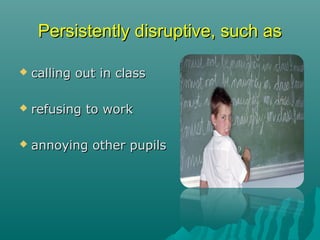
Persistently disruptive, such as

   calling out in class

   refusing to work

   annoying other pupils
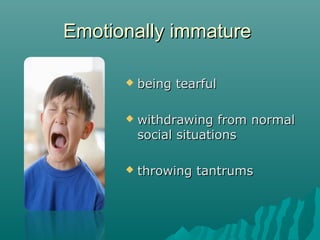
Emotionally immature

         being tearful

         withdrawing from normal
          social situations

         throwing tantrums
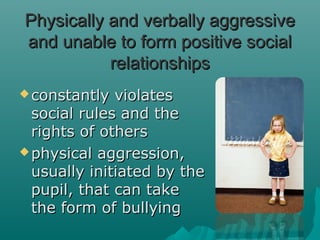
Physically and verbally aggressive
and unable to form positive social
           relationships
 constantly  violates
  social rules and the
  rights of others
 physical aggression,
  usually initiated by the
  pupil, that can take
  the form of bullying
 destruction of property, such as
 pencil, ruler, book, etc.

 stealing
         – ranging from ‘borrowing’
 other pupils’ possessions

 cheating   in school work

 run   away from class
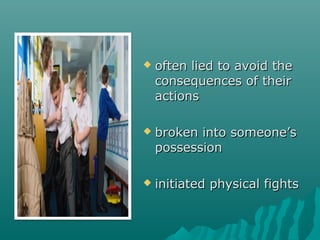
   often lied to avoid the
    consequences of their
    actions

   broken into someone’s
    possession

   initiated physical fights
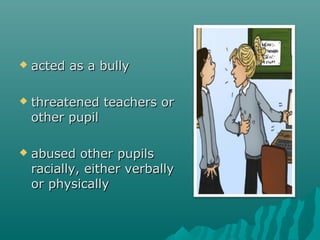
   acted as a bully

   threatened teachers or
    other pupil

   abused other pupils
    racially, either verbally
    or physically
The causes of
 classroom
misbehaviour
 Attention-Getting   Behaviours.
 A common cause of misbehaviour is
 the need for attention.
 Power   Struggles. This type of
 misbehaviour is often symptomatic of
 a power struggle through which the
 child is actively trying to engage the
 teacher in a fight for domination, the
 more a teacher fights against the
 student’s behaviour, the more he/she
 is rewarding it.
   Revenge-Seeking Behaviour. He/she
    seek revenge when they are frustrated in
    their desire for attention or power. Revenge-
    seeking students are angry and rebellious,
    and their motive is to hurt the teacher or
    other pupils.
   Avoiding Inadequacy. Children will
    misbehave when they would rather appear
    bad. For example:
~if a class assignment is too difficult, the
  child may choose to intentionally
  misbehave and be sent from the room to
  avoid having to participate and look
  inferior.

~a matter of perfectionism, where the child
 will misbehave if they know they will not
 be the best at a task.
Key ideas in
 supporting
children who
 have EBD
Here are some support
          strategies
 The most appropriate response to
 attention-seeking behaviour is to
 provide special attention only when
 the student is behaving properly. An
 appropriate behaviour should be
 reinforced repeatedly until it
 becomes the preferred method of
 gaining attention. Instead,
 misbehaviour should be ignored
 unless dangerous
 An appropriate response to power-
 seeking behavior is to acknowledge
 the need with the student, perhaps
 even complimenting his natural
 leadership, and to give the child
 power whenever it is appropriate,
 making him leader of a group or
 giving her a visible and important
 responsibility.
 By working with power-seeking
 students, teachers can make allies
 out of dominating students.
 Rebellious  students expect an angry
  or hurt response to their behaviour,
  but teachers who can acknowledge
  the anger the child feels, apologize if
  the child is appropriately angry over
  a specific incident
 Responses to feelings of inferiority in
  children are best handled within the
  context of a classroom climate where
  effort and incremental growth is
  valued as much or more than the
  final product.
 ensure  a consistent approach to the
  child’s behavioural difficulties by all
  members of staff by developing
  positive behaviour-management
  strategies
 encourage the provision of a positive
  classroom environment
 have group and class discussions to
  focus on problems and give all
  children opportunities to air their
  views in a controlled environment
 set  up small social skills groups for
  children who have difficulties in
  particular areas such as relating to
  other children or anger management
 develop social interaction through
  games and paired problem-solving
  activities
 give short and clearly-defined tasks

 encourage the development of ICT
  skills to increase motivation
 provide  activities that encourage the
  building of self-esteem
 give the child opportunities to
  express their feelings through the
  use of puppets or role-play in pairs
  or small groups
 develop positive links between older
  and younger children
 arrange for educational psychologist
  or behavioural support input such as
  circle of friends
 arrange for counselling or family
 support provision usually through
 either the Educational Welfare
 Service, the Family Centre or the
 Child and Adult Mental Health
 service.
Resources
http://www.teachingexpertise.com/articles/emotion
al-and-behavioural-difficulties-ebd-1226
http://www.napta.org.uk/art_ebd.html
http://www.specialeducationalneeds.co.uk/UsefulInfo
rmation/TypesofSEN-Disability/ebd.htm
http://suite101.com/article/identifying-the-causes-
of-classroom-misbehavior-a108218
THANK YOU VERY MUCH
  FOR YOUR ATTENTION


   ESOL/Prepare for Teaching
                    Assistant

Emotional and Behavioural Difficulties

  • 1.
    EMOTIONAL AND BEHAVIOURAL DIFFICULTIES (EBD) Maria Nazia Malik Noer FWD Hastuti Marchant Souhaila Sutton College London 2012
  • 2.
    EBD are often seen in the classroom
  • 3.
    Persistently disruptive, suchas  calling out in class  refusing to work  annoying other pupils
  • 4.
    Emotionally immature  being tearful  withdrawing from normal social situations  throwing tantrums
  • 5.
    Physically and verballyaggressive and unable to form positive social relationships  constantly violates social rules and the rights of others  physical aggression, usually initiated by the pupil, that can take the form of bullying
  • 6.
     destruction ofproperty, such as pencil, ruler, book, etc.  stealing – ranging from ‘borrowing’ other pupils’ possessions  cheating in school work  run away from class
  • 7.
    often lied to avoid the consequences of their actions  broken into someone’s possession  initiated physical fights
  • 8.
    acted as a bully  threatened teachers or other pupil  abused other pupils racially, either verbally or physically
  • 9.
    The causes of classroom misbehaviour
  • 10.
     Attention-Getting Behaviours. A common cause of misbehaviour is the need for attention.  Power Struggles. This type of misbehaviour is often symptomatic of a power struggle through which the child is actively trying to engage the teacher in a fight for domination, the more a teacher fights against the student’s behaviour, the more he/she is rewarding it.
  • 11.
    Revenge-Seeking Behaviour. He/she seek revenge when they are frustrated in their desire for attention or power. Revenge- seeking students are angry and rebellious, and their motive is to hurt the teacher or other pupils.  Avoiding Inadequacy. Children will misbehave when they would rather appear bad. For example:
  • 12.
    ~if a classassignment is too difficult, the child may choose to intentionally misbehave and be sent from the room to avoid having to participate and look inferior. ~a matter of perfectionism, where the child will misbehave if they know they will not be the best at a task.
  • 13.
    Key ideas in supporting children who have EBD
  • 14.
    Here are somesupport strategies  The most appropriate response to attention-seeking behaviour is to provide special attention only when the student is behaving properly. An appropriate behaviour should be reinforced repeatedly until it becomes the preferred method of gaining attention. Instead, misbehaviour should be ignored unless dangerous
  • 15.
     An appropriateresponse to power- seeking behavior is to acknowledge the need with the student, perhaps even complimenting his natural leadership, and to give the child power whenever it is appropriate, making him leader of a group or giving her a visible and important responsibility. By working with power-seeking students, teachers can make allies out of dominating students.
  • 16.
     Rebellious students expect an angry or hurt response to their behaviour, but teachers who can acknowledge the anger the child feels, apologize if the child is appropriately angry over a specific incident  Responses to feelings of inferiority in children are best handled within the context of a classroom climate where effort and incremental growth is valued as much or more than the final product.
  • 17.
     ensure a consistent approach to the child’s behavioural difficulties by all members of staff by developing positive behaviour-management strategies  encourage the provision of a positive classroom environment  have group and class discussions to focus on problems and give all children opportunities to air their views in a controlled environment
  • 18.
     set up small social skills groups for children who have difficulties in particular areas such as relating to other children or anger management  develop social interaction through games and paired problem-solving activities  give short and clearly-defined tasks  encourage the development of ICT skills to increase motivation
  • 19.
     provide activities that encourage the building of self-esteem  give the child opportunities to express their feelings through the use of puppets or role-play in pairs or small groups  develop positive links between older and younger children  arrange for educational psychologist or behavioural support input such as circle of friends
  • 20.
     arrange forcounselling or family support provision usually through either the Educational Welfare Service, the Family Centre or the Child and Adult Mental Health service.
  • 21.
  • 22.
    THANK YOU VERYMUCH FOR YOUR ATTENTION ESOL/Prepare for Teaching Assistant