Understanding Psychology to
         discipline
      Dr. Kanwal kaisser
Activity…
• Recall a time when a student misbehaved in one of your
  classes.
      Describe the student’s attitude/actions:


          How did this behavior affect the teacher, other
          students, and the learning environment?


              How did the teacher react to this behavior?


                   Were the teacher’s actions effective in
                   changing the student’s behavior? Explain.


                       Share your recollections with the class.
Normal kids
•   Not perfect
•   Don’t do what we think they should do
•   Not always happy
•   Don’t talk about everything
•   Not perfect students
•   Don’t always behave within rules
•   Want to take care of themselves
•   Have distinct self-identity
•   Resilient
•   Proactive
•   Assertive
•   Can have fun
•   Can accept new challenges
•   Require discipline
•   Know about personal boundaries
•   Assume that others are responsible for themselves
•   Self-controlled
•   Honest with themselves
•   Not easily manipulated
•   Optimistic & Humorous
•   Not persistent in doing what someone else wants them to do
•   Can lead without controlling
•   Value-guided
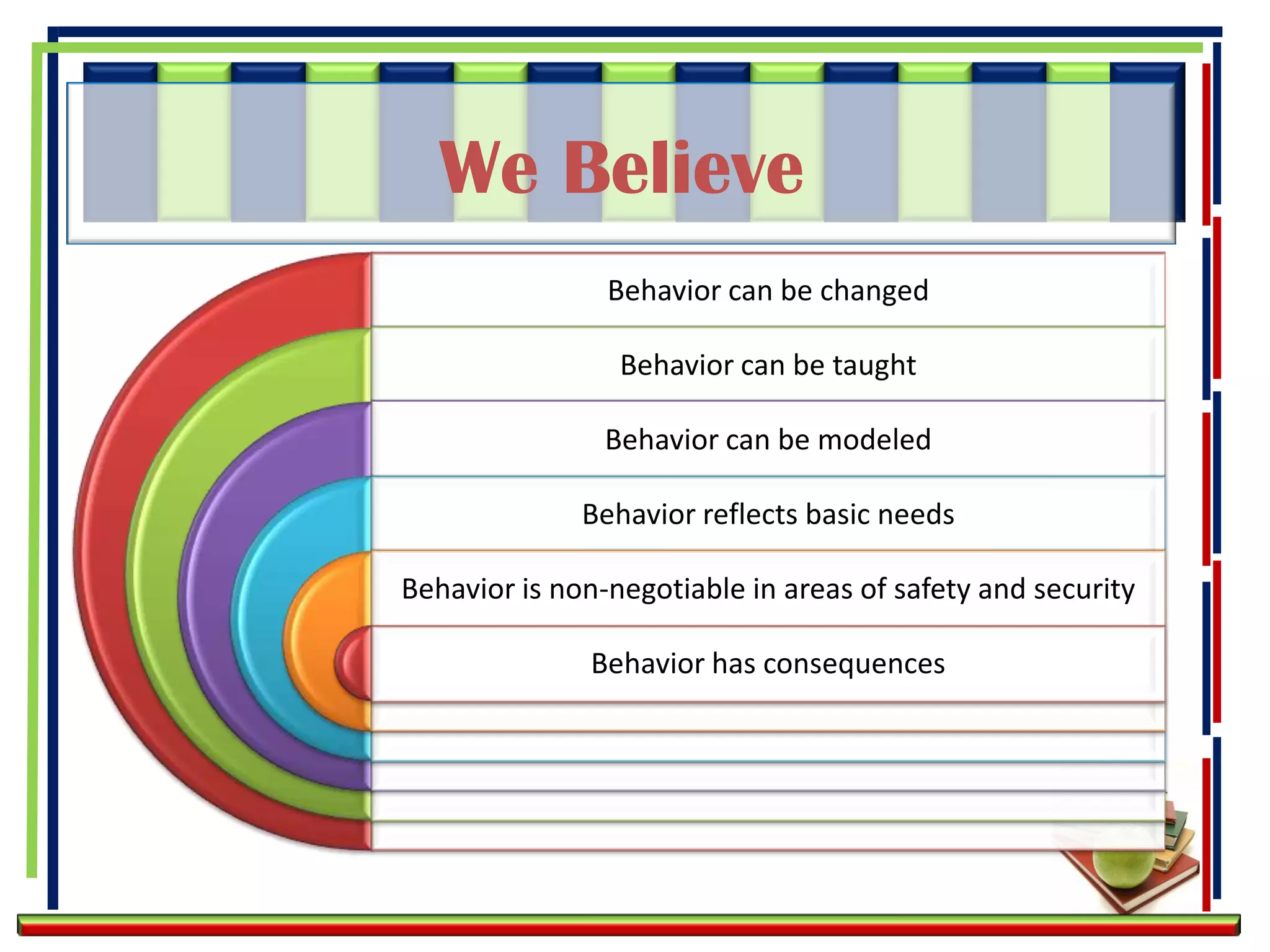
We Believe
                Behavior can be changed

                 Behavior can be taught

                Behavior can be modeled

              Behavior reflects basic needs

Behavior is non-negotiable in areas of safety and security

              Behavior has consequences
Behavior that needs to be
  learned, needs to be taught.
                     .
When children are well-
trained,
it is habit-forming.
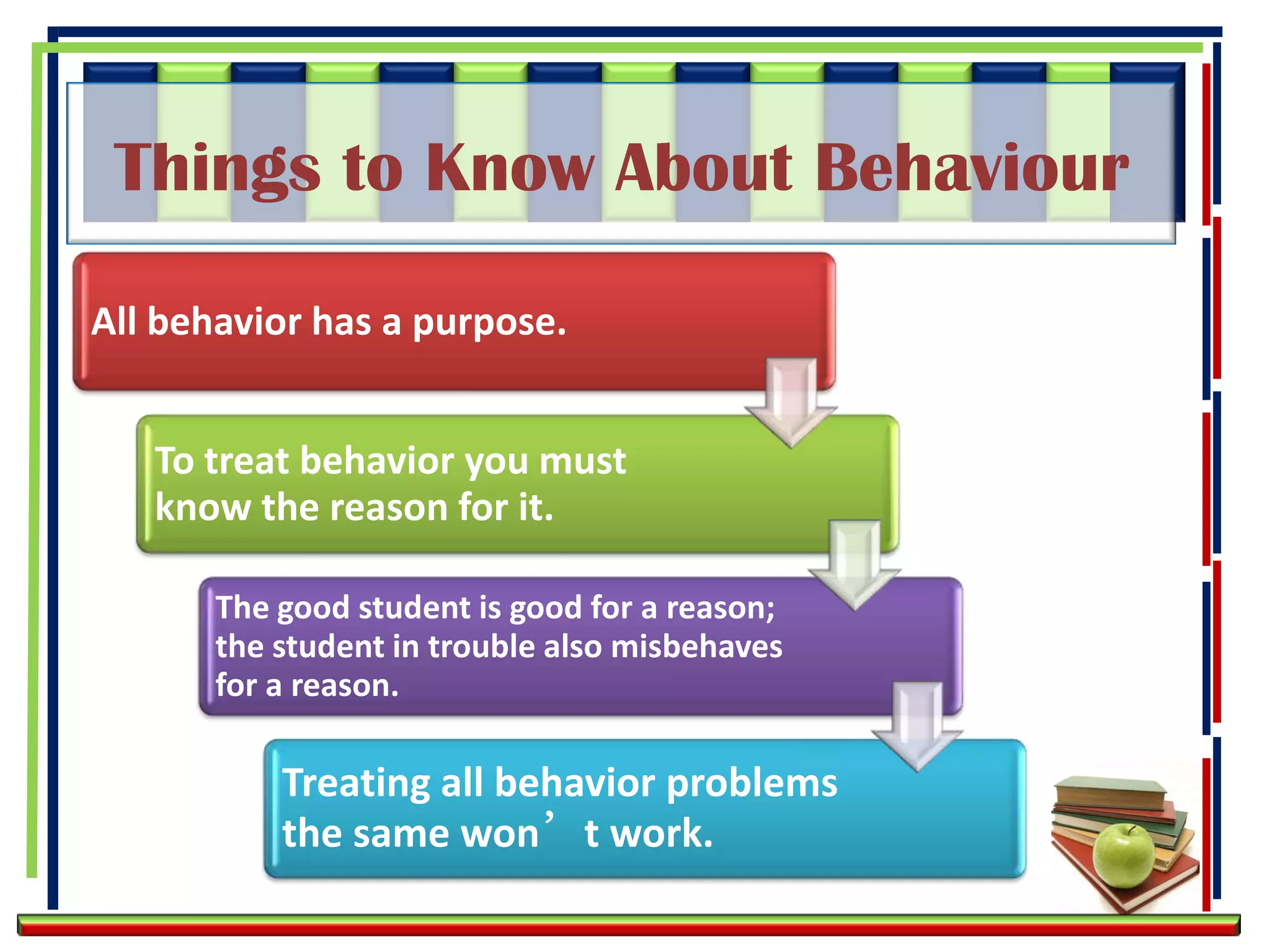
Things to Know About Behaviour

All behavior has a purpose.


   To treat behavior you must
   know the reason for it.

       The good student is good for a reason;
       the student in trouble also misbehaves
       for a reason.

           Treating all behavior problems
           the same won’t work.
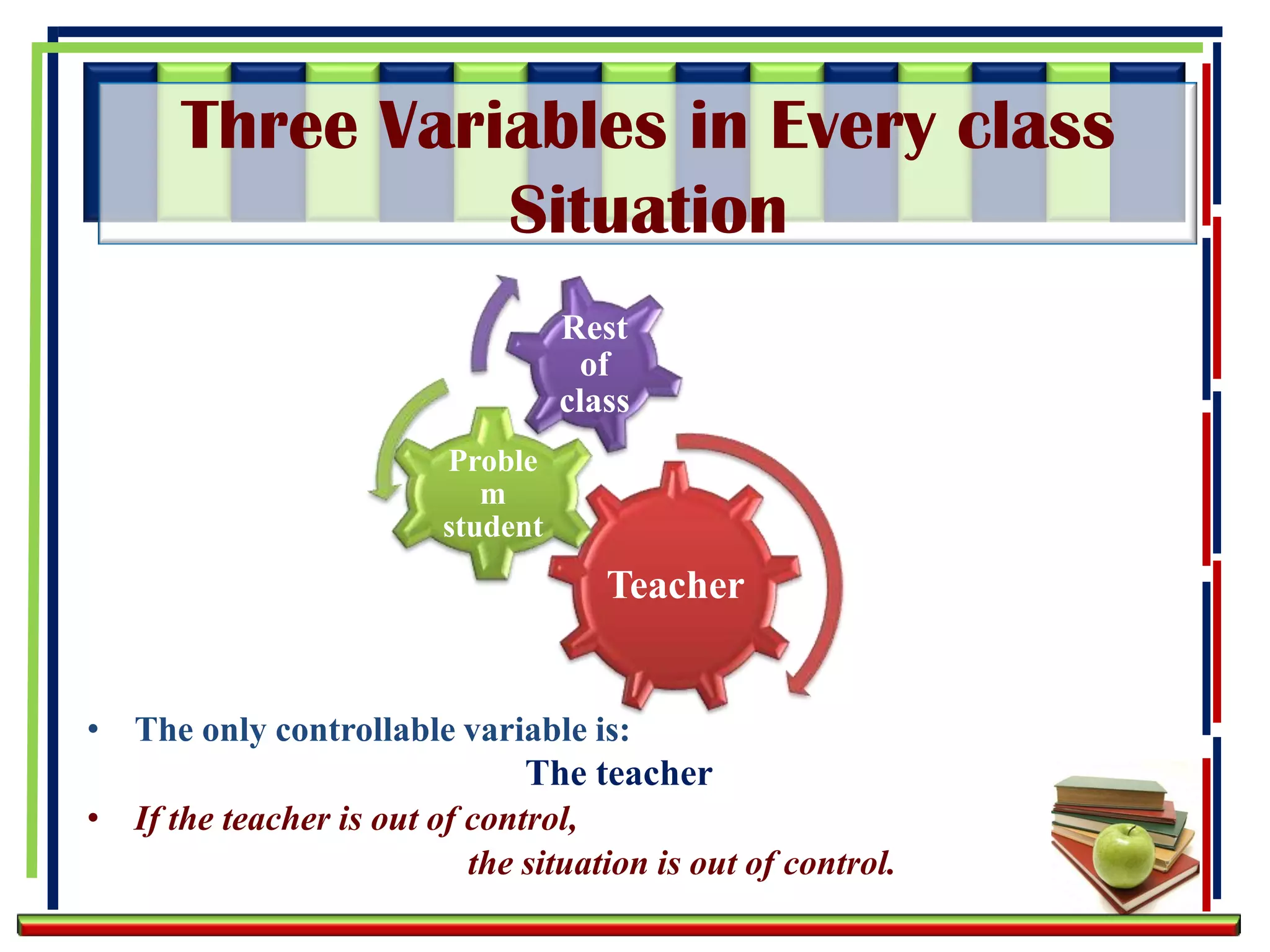
Three Variables in Every class
                Situation
                                   Rest
                                    of
                                   class
                         Proble
                            m
                         student
                                      Teacher


• The only controllable variable is:
                               The teacher
• If the teacher is out of control,
                           the situation is out of control.
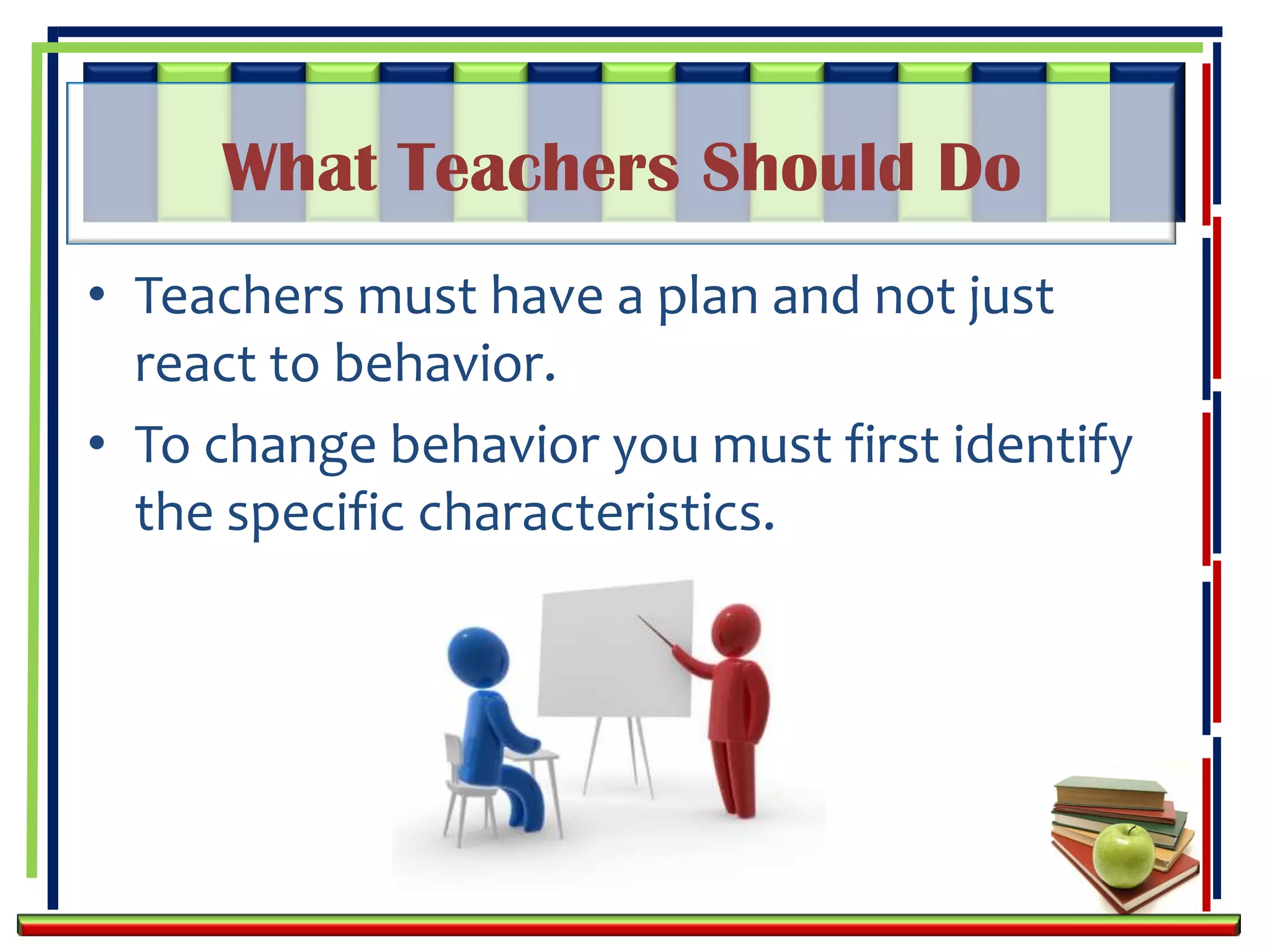
What Teachers Should Do
• Teachers must have a plan and not just
  react to behavior.
• To change behavior you must first identify
  the specific characteristics.
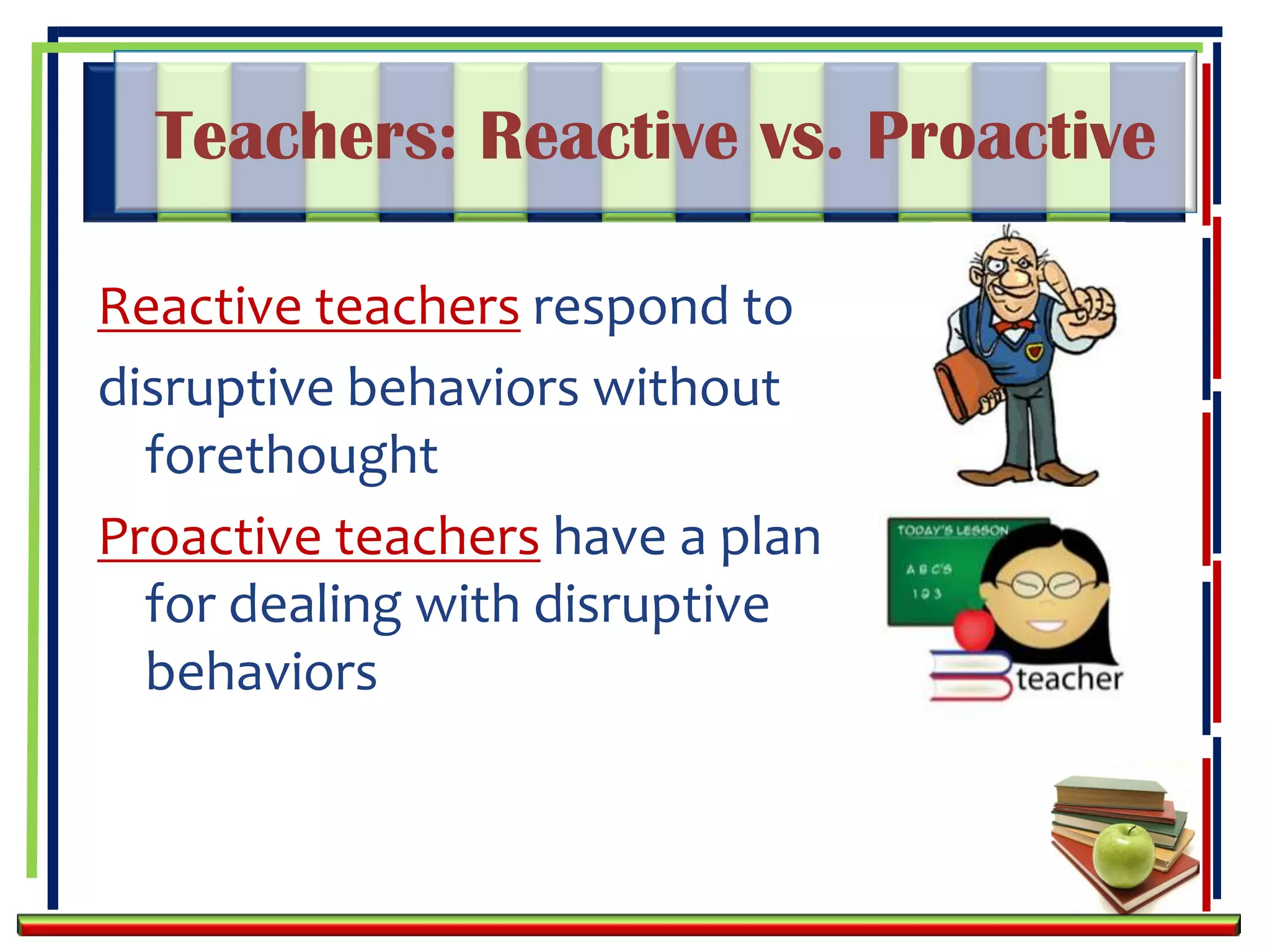
Teachers: Reactive vs. Proactive

Reactive teachers respond to
disruptive behaviors without
  forethought
Proactive teachers have a plan
  for dealing with disruptive
  behaviors
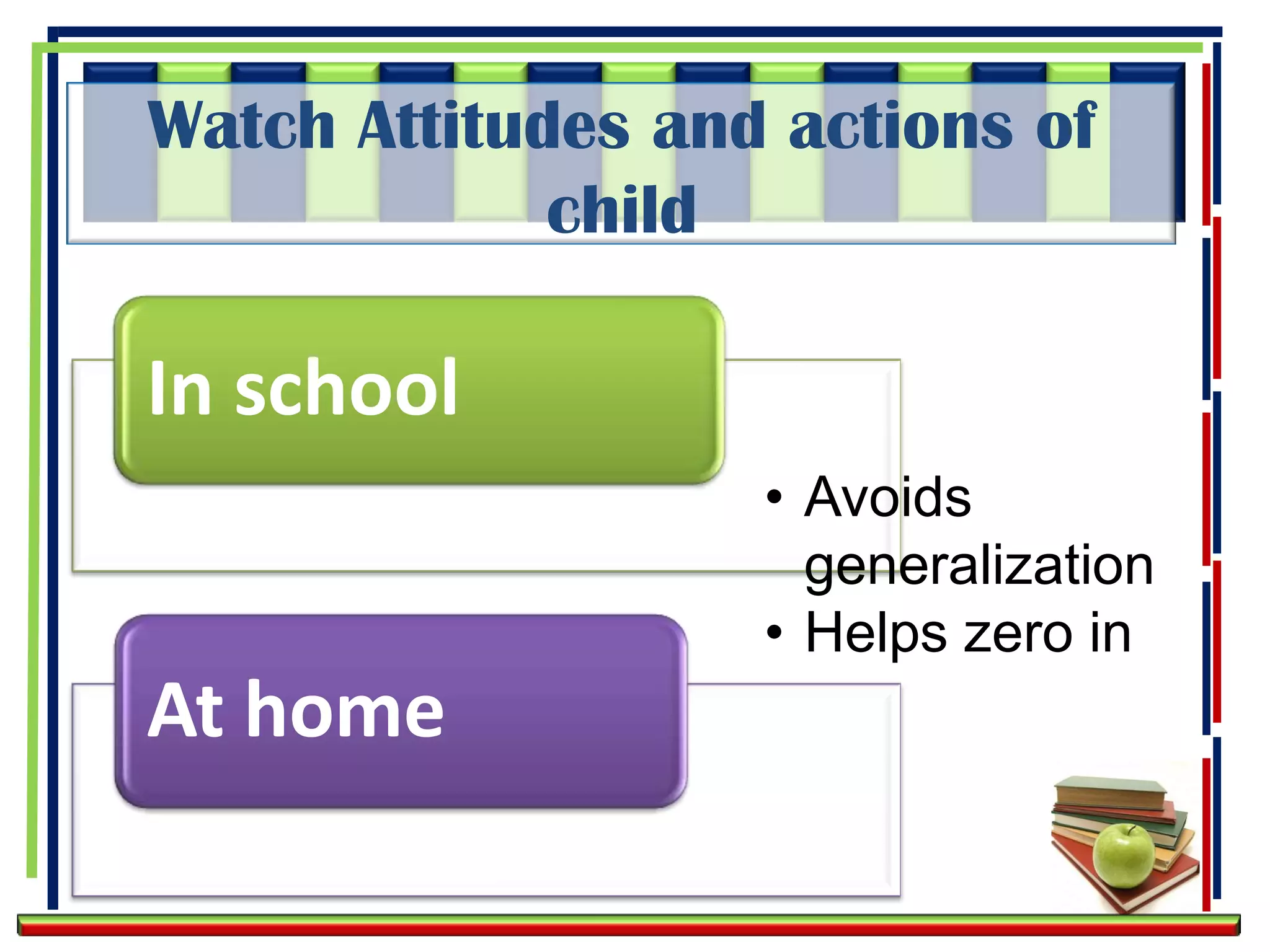
Watch Attitudes and actions of
             child

In school
                   • Avoids
                     generalization
                   • Helps zero in
At home
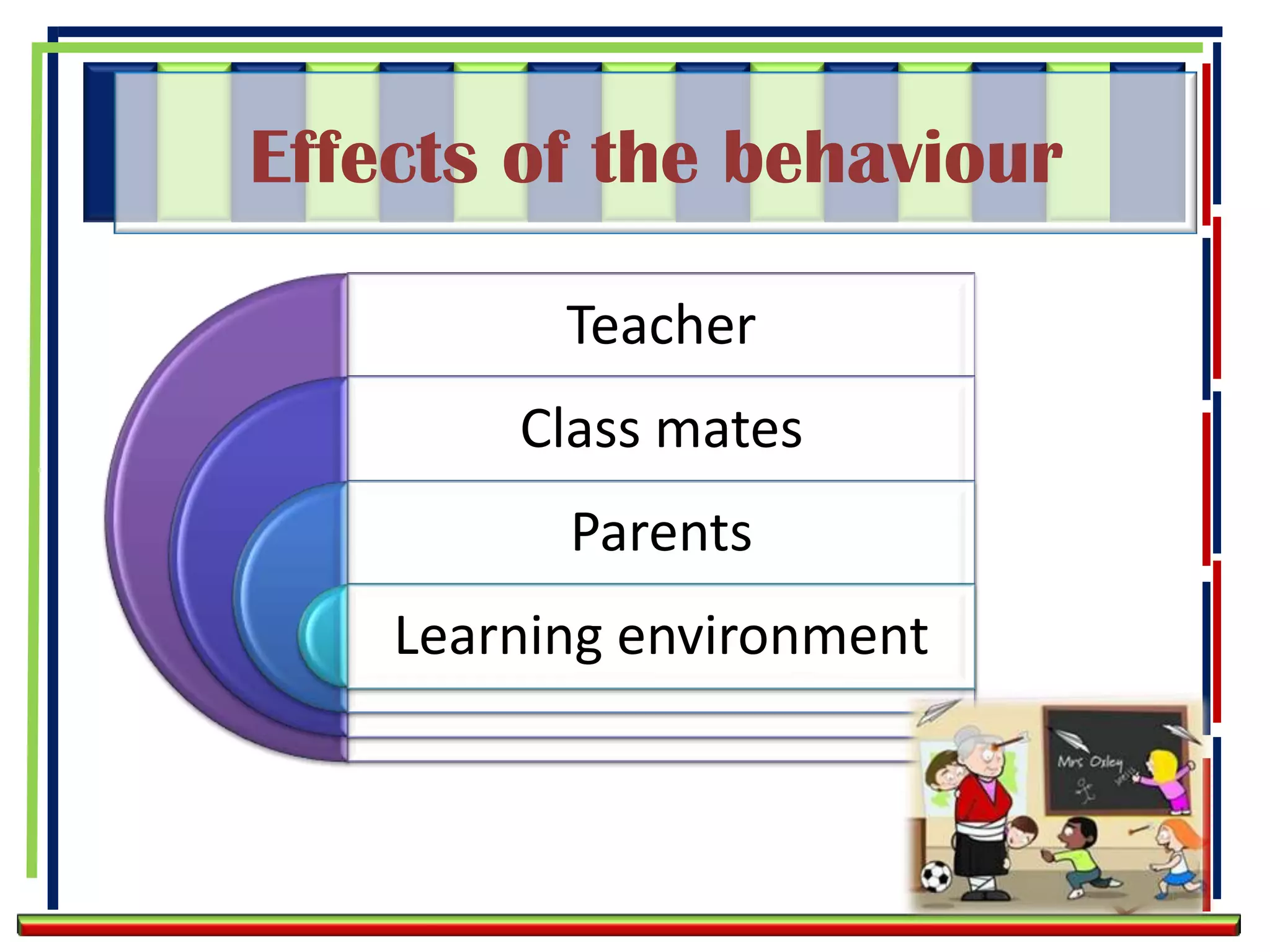
Effects of the behaviour

          Teacher
        Class mates
          Parents
    Learning environment
Vision is necessary
• Effective management can
  prevent the beginning and
  spread of inappropriate
  behavior.
• Some inappropriate behavior
  is a symptom of another
  problem
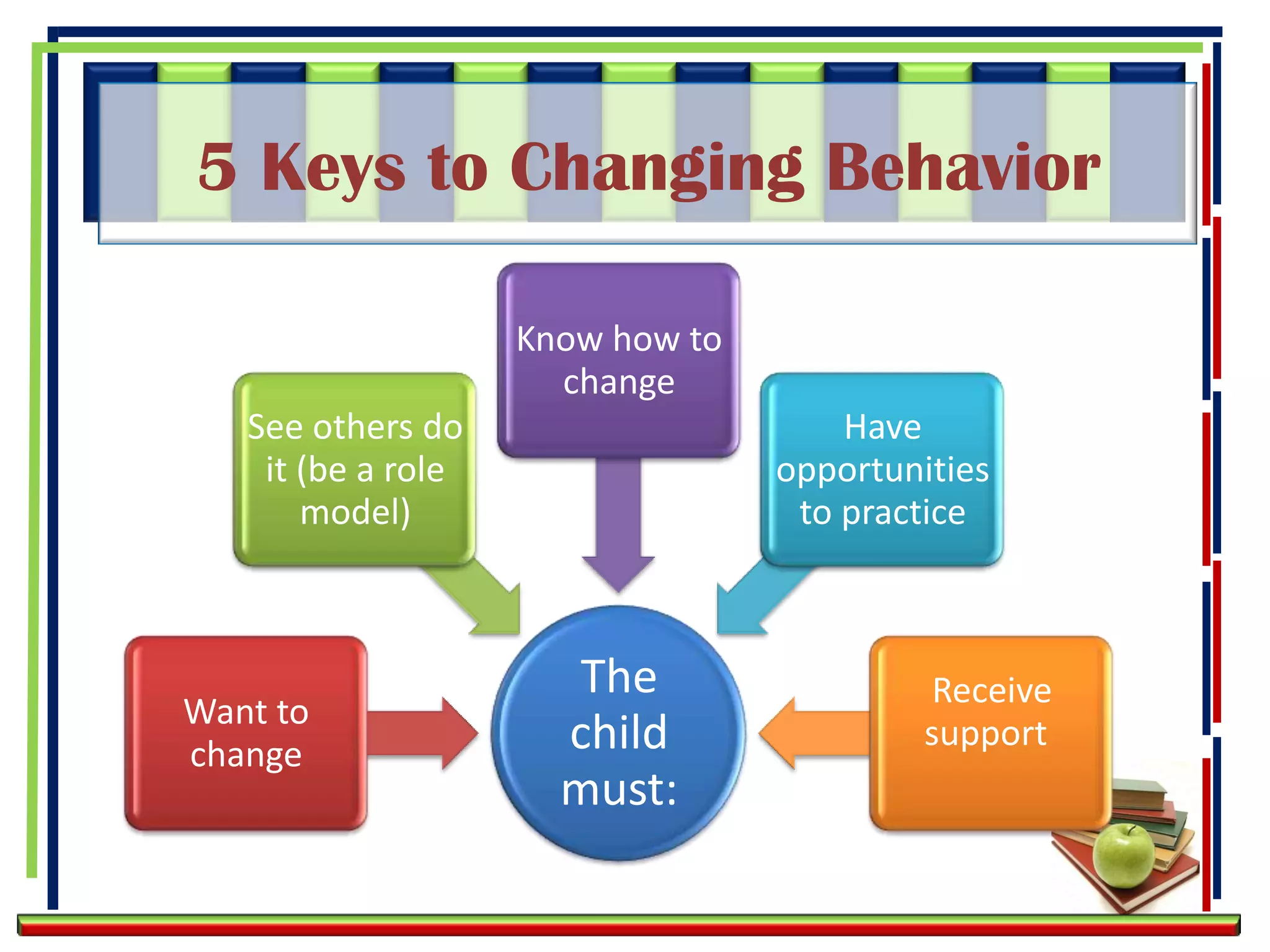
5 Keys to Changing Behavior

                    Know how to
                      change
   See others do                      Have
    it (be a role                 opportunities
       model)                      to practice


                       The                  Receive
Want to
change                child                support
                      must:
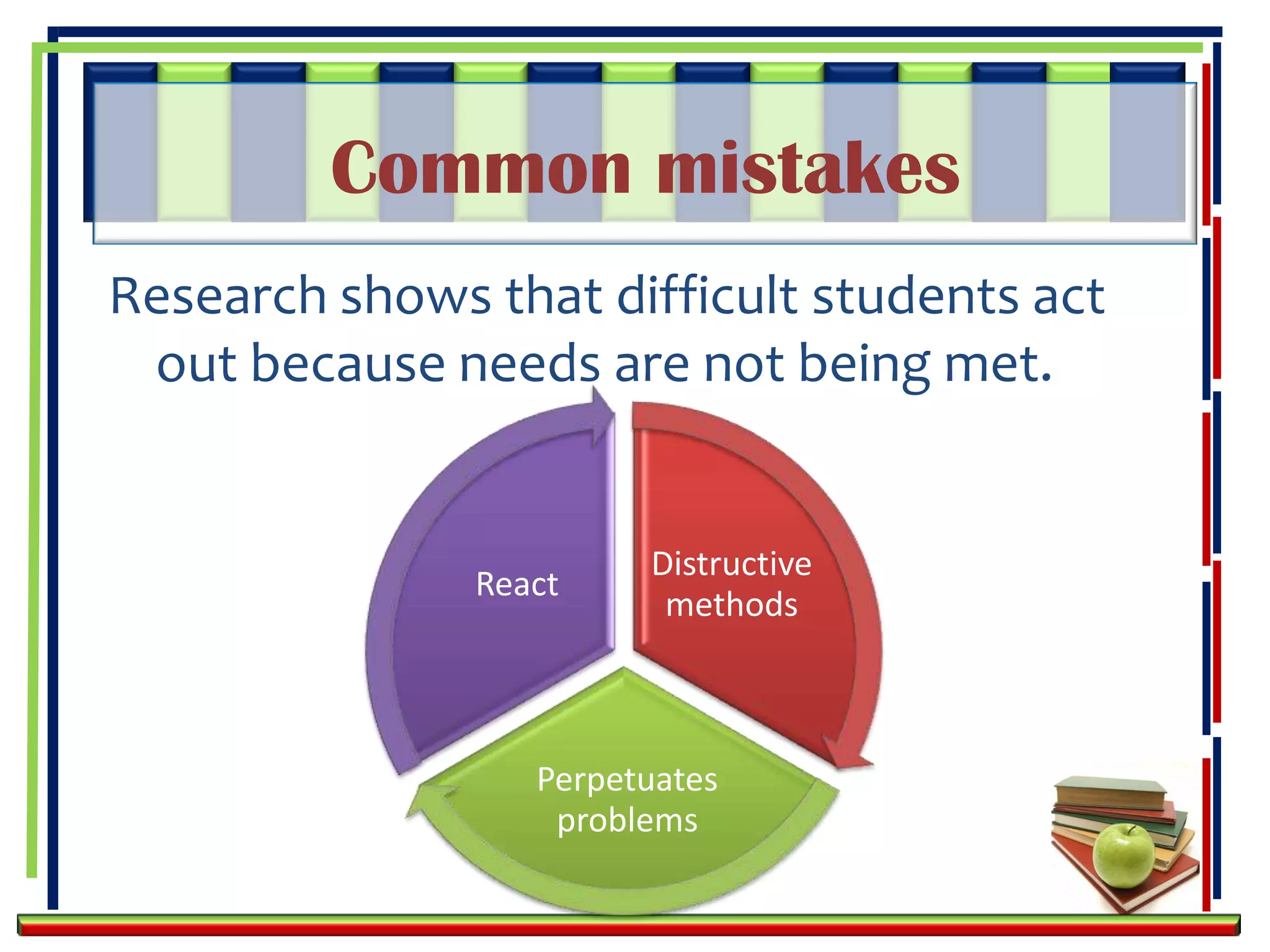
Common mistakes
Research shows that difficult students act
 out because needs are not being met.


                        Distructive
               React
                         methods


                  Perpetuates
                   problems
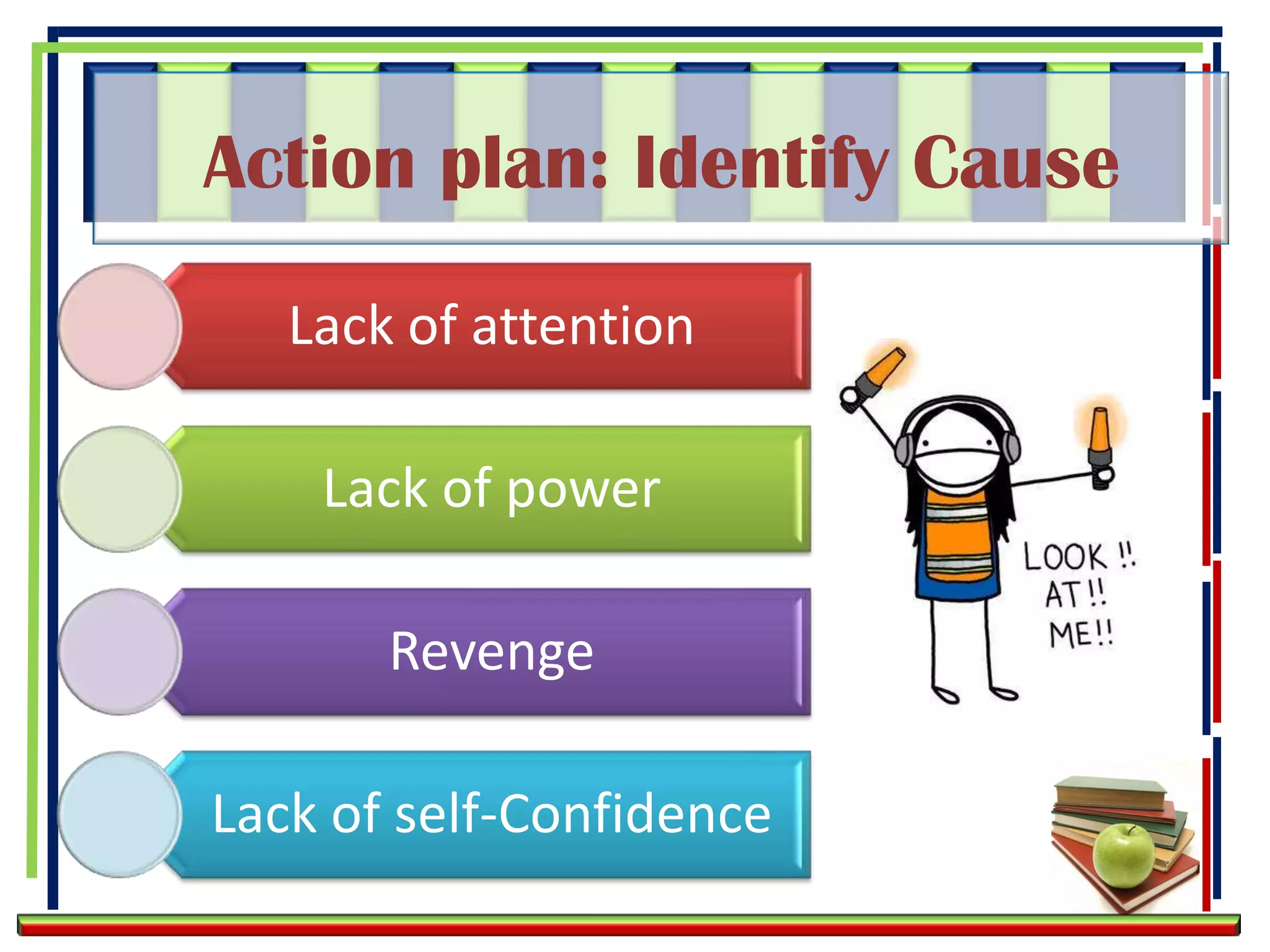
Action plan: Identify Cause

   Lack of attention

    Lack of power

       Revenge

Lack of self-Confidence
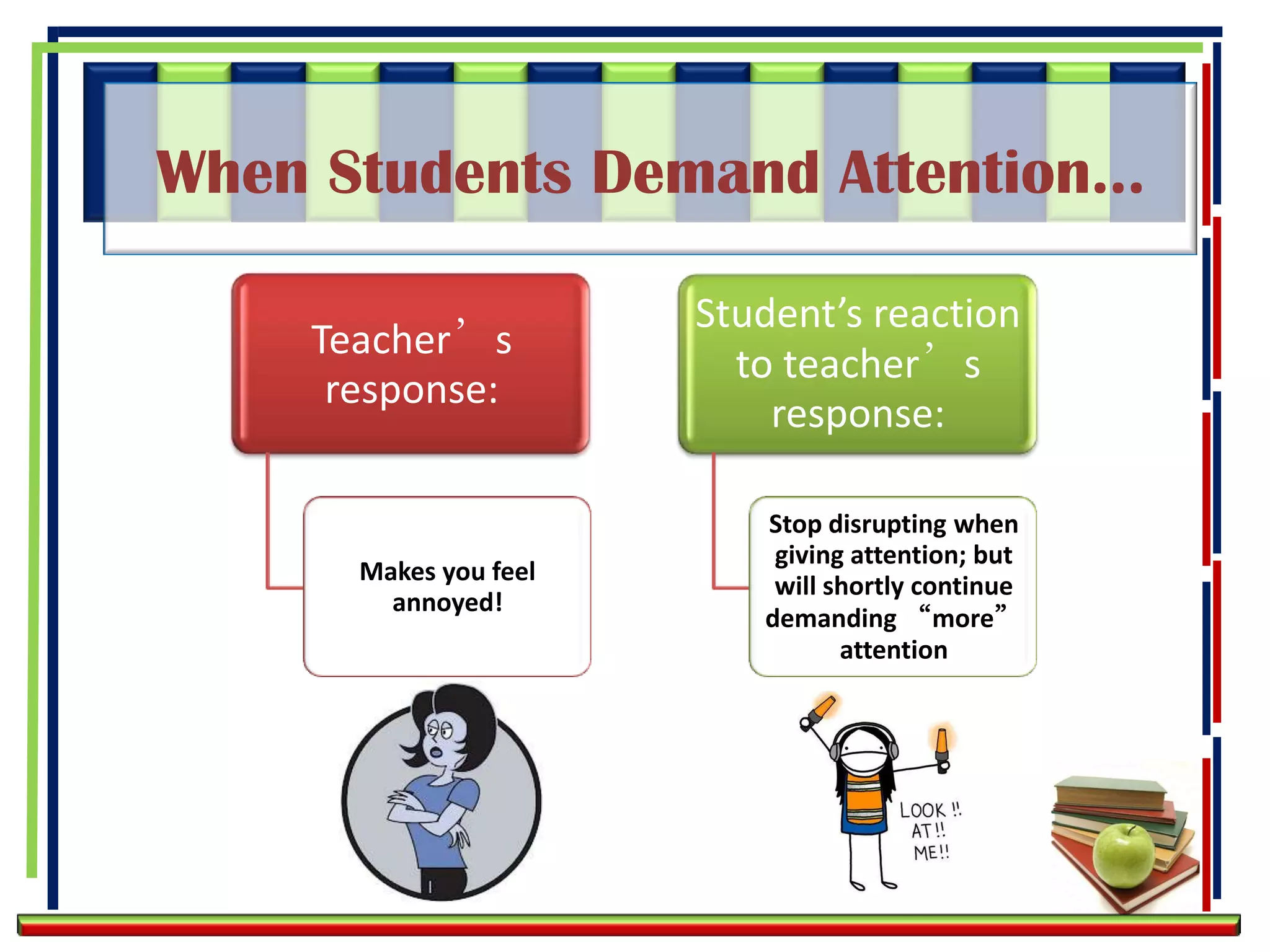
When Students Demand Attention…

                       Student’s reaction
    Teacher’s
                         to teacher’s
     response:
                           response:

                          Stop disrupting when
                           giving attention; but
      Makes you feel
                           will shortly continue
        annoyed!
                          demanding “more”
                                 attention
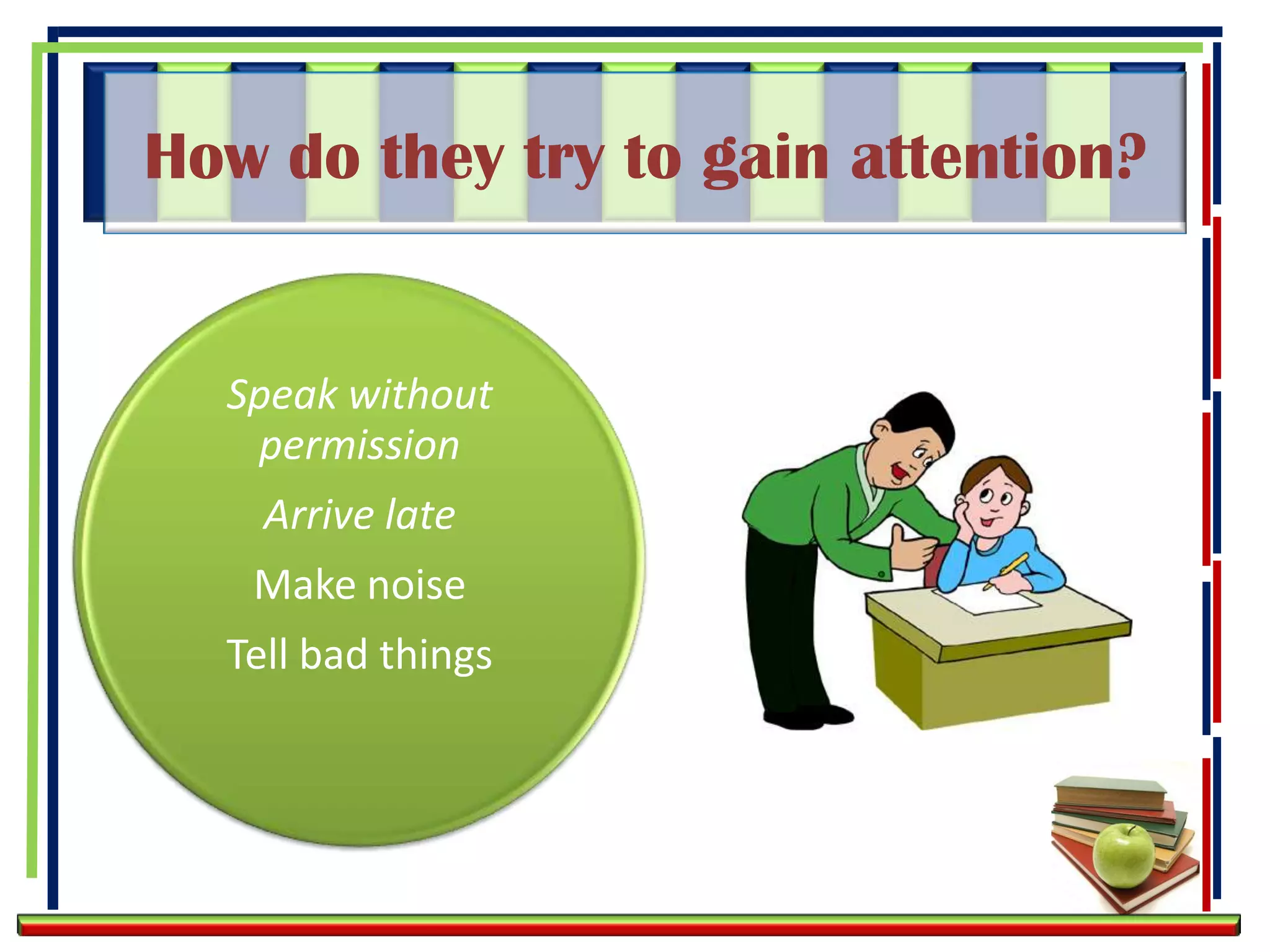
How do they try to gain attention?


  Speak without
   permission
    Arrive late
   Make noise
  Tell bad things
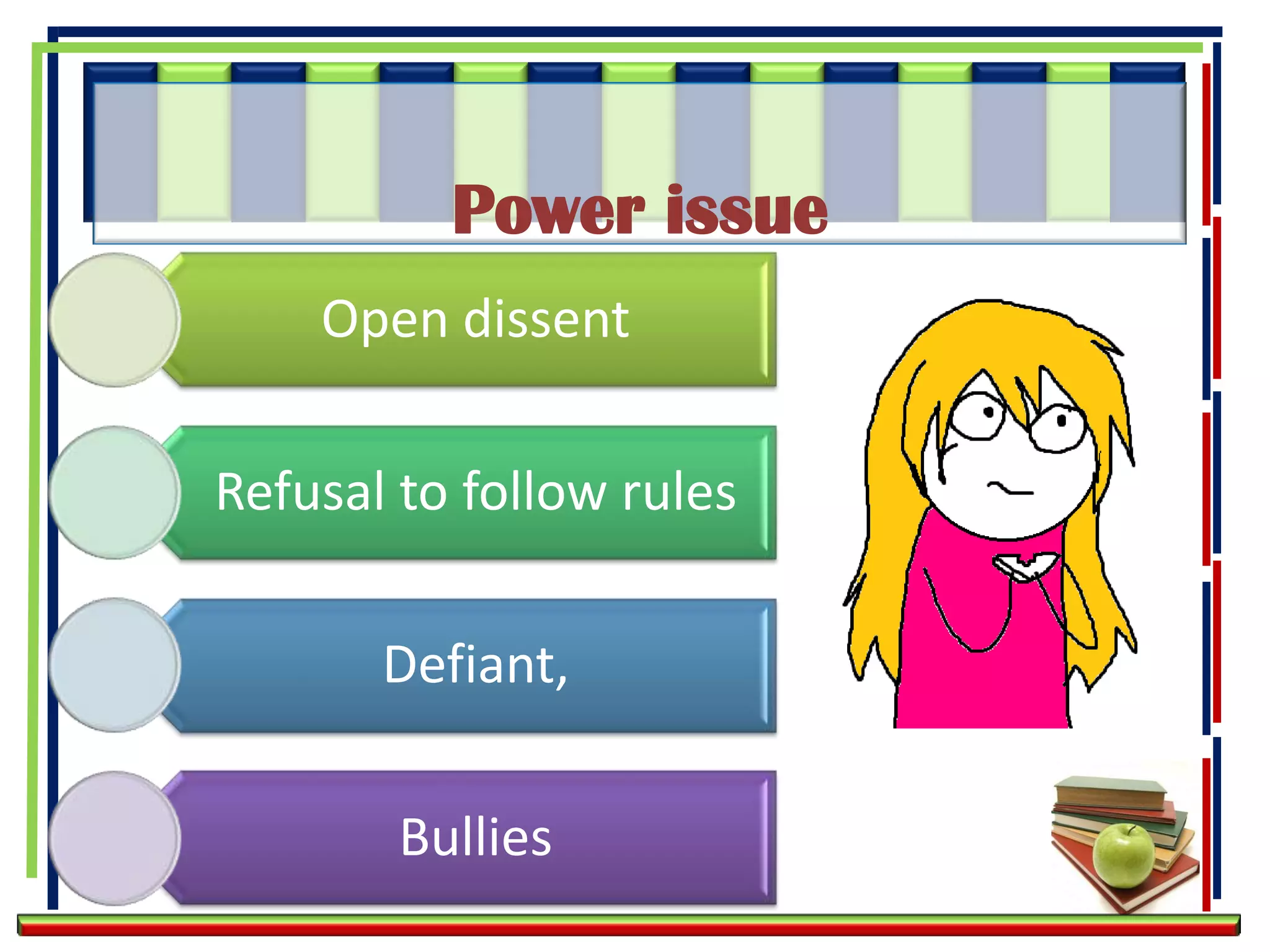
Power issue
    Open dissent

Refusal to follow rules

       Defiant,

        Bullies
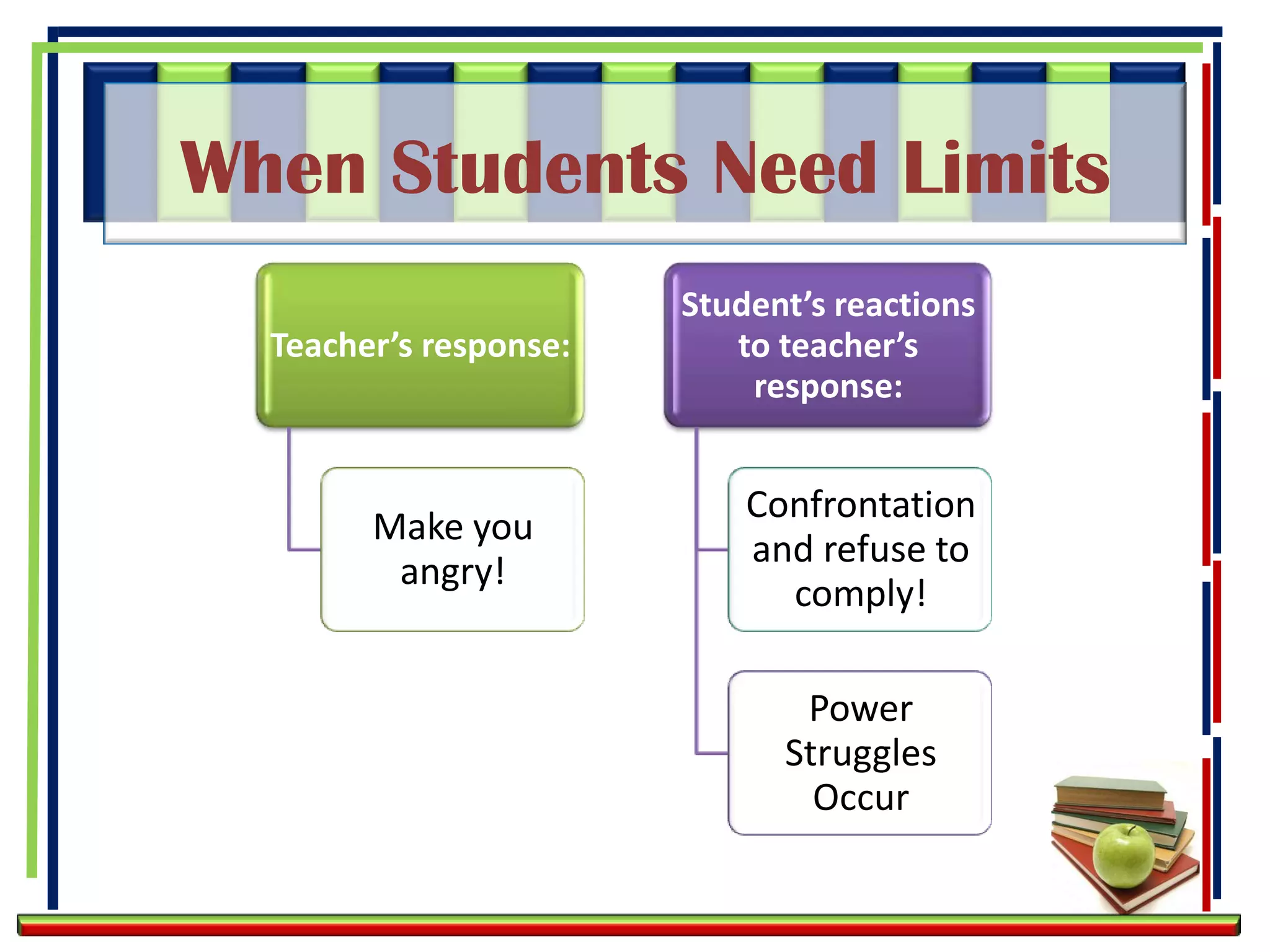
When Students Need Limits
                        Student’s reactions
  Teacher’s response:      to teacher’s
                            response:


                            Confrontation
        Make you
                            and refuse to
         angry!
                              comply!

                               Power
                              Struggles
                                Occur
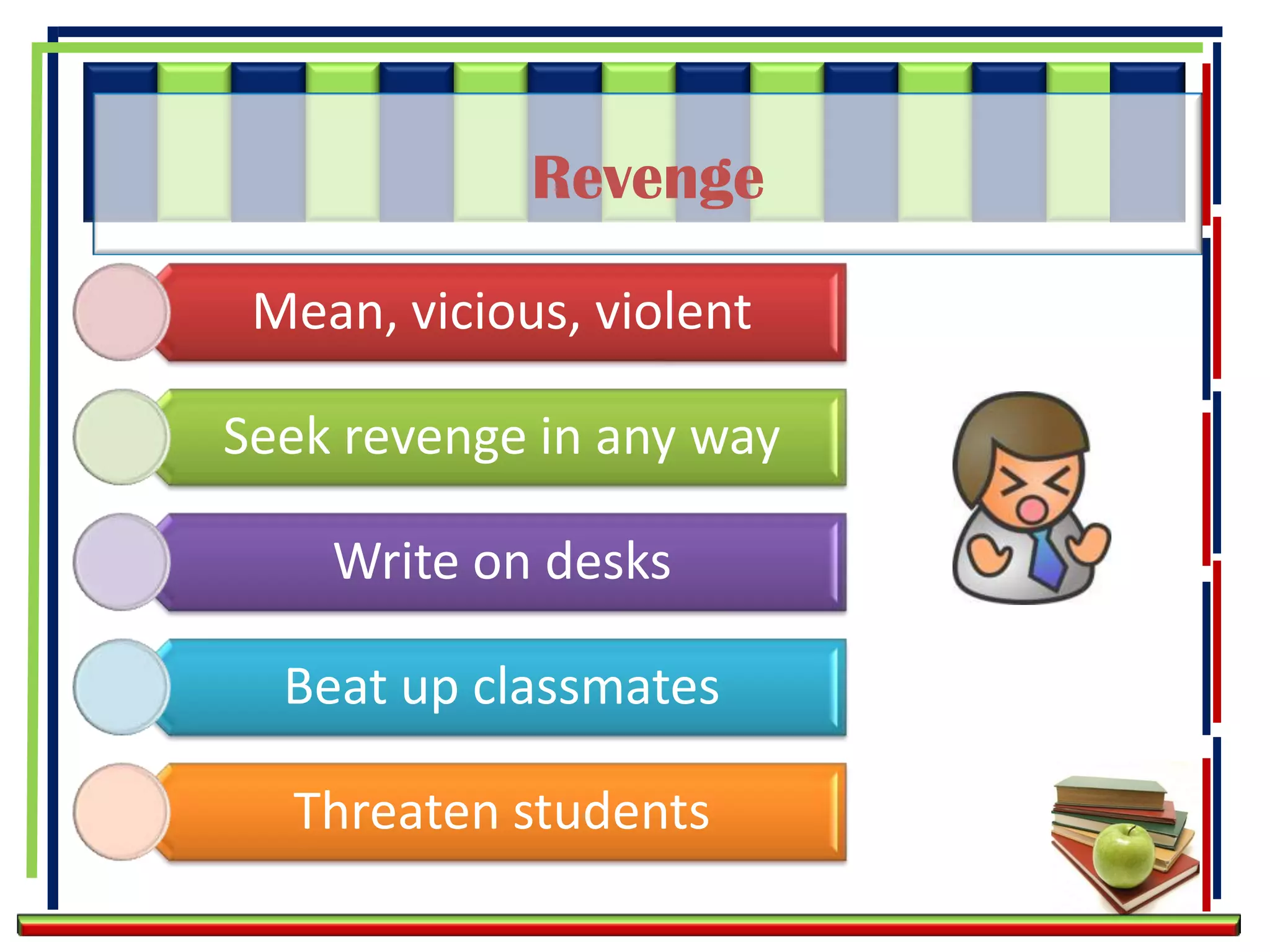
Revenge

 Mean, vicious, violent

Seek revenge in any way

    Write on desks

  Beat up classmates

  Threaten students
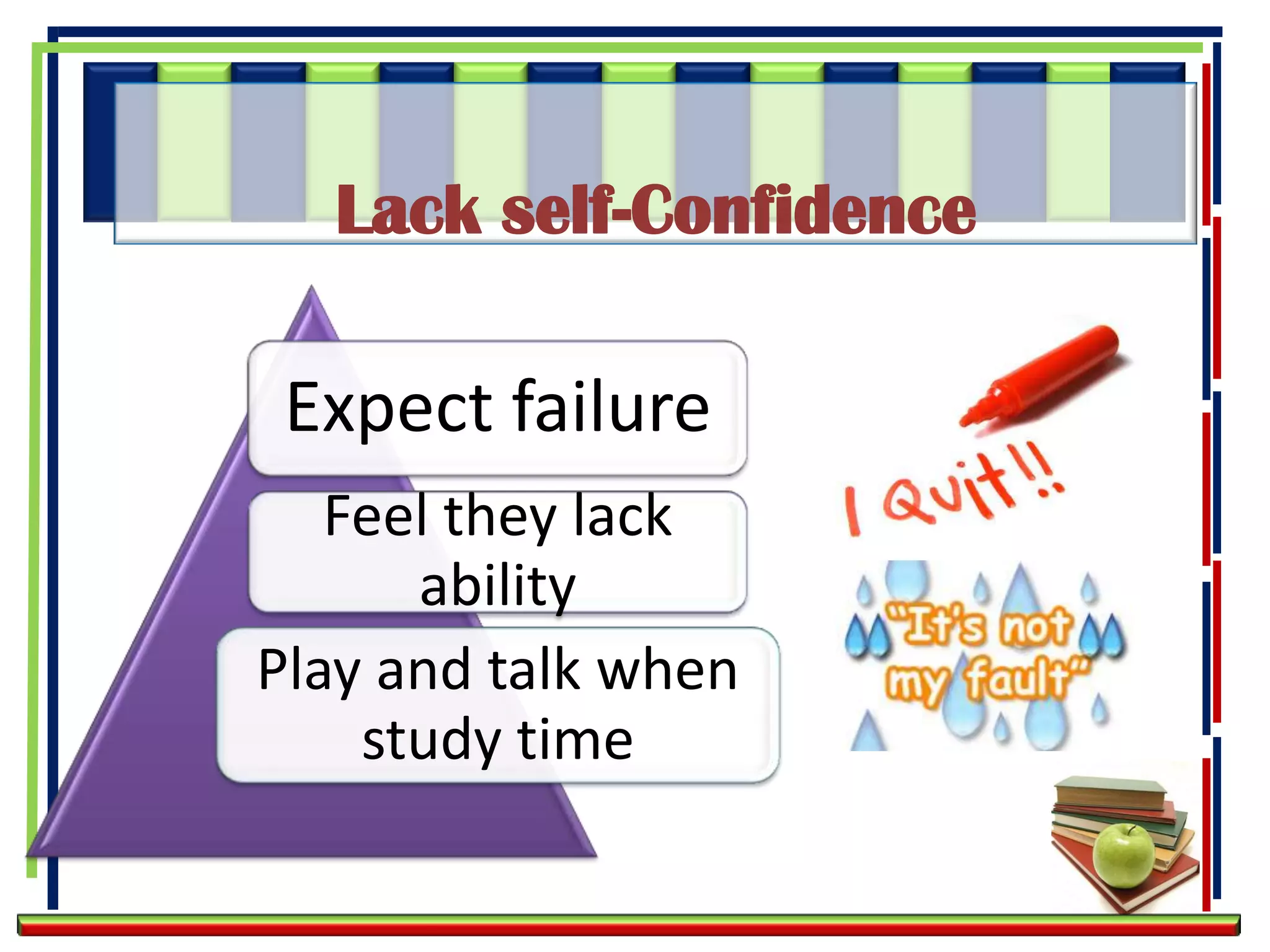
Lack self-Confidence

 Expect failure
   Feel they lack
      ability
Play and talk when
    study time
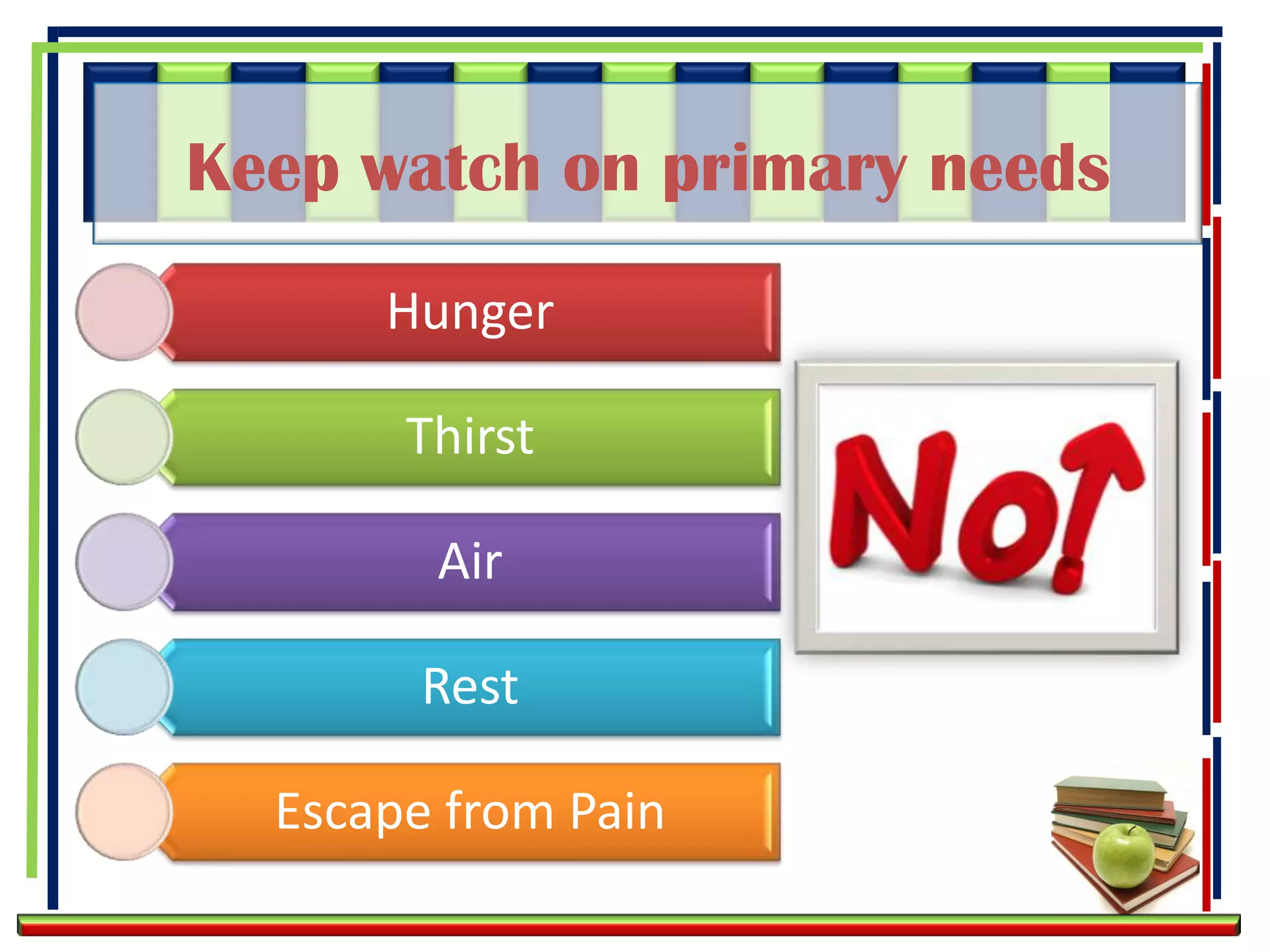
Keep watch on primary needs
      Hunger

       Thirst

        Air

        Rest

  Escape from Pain
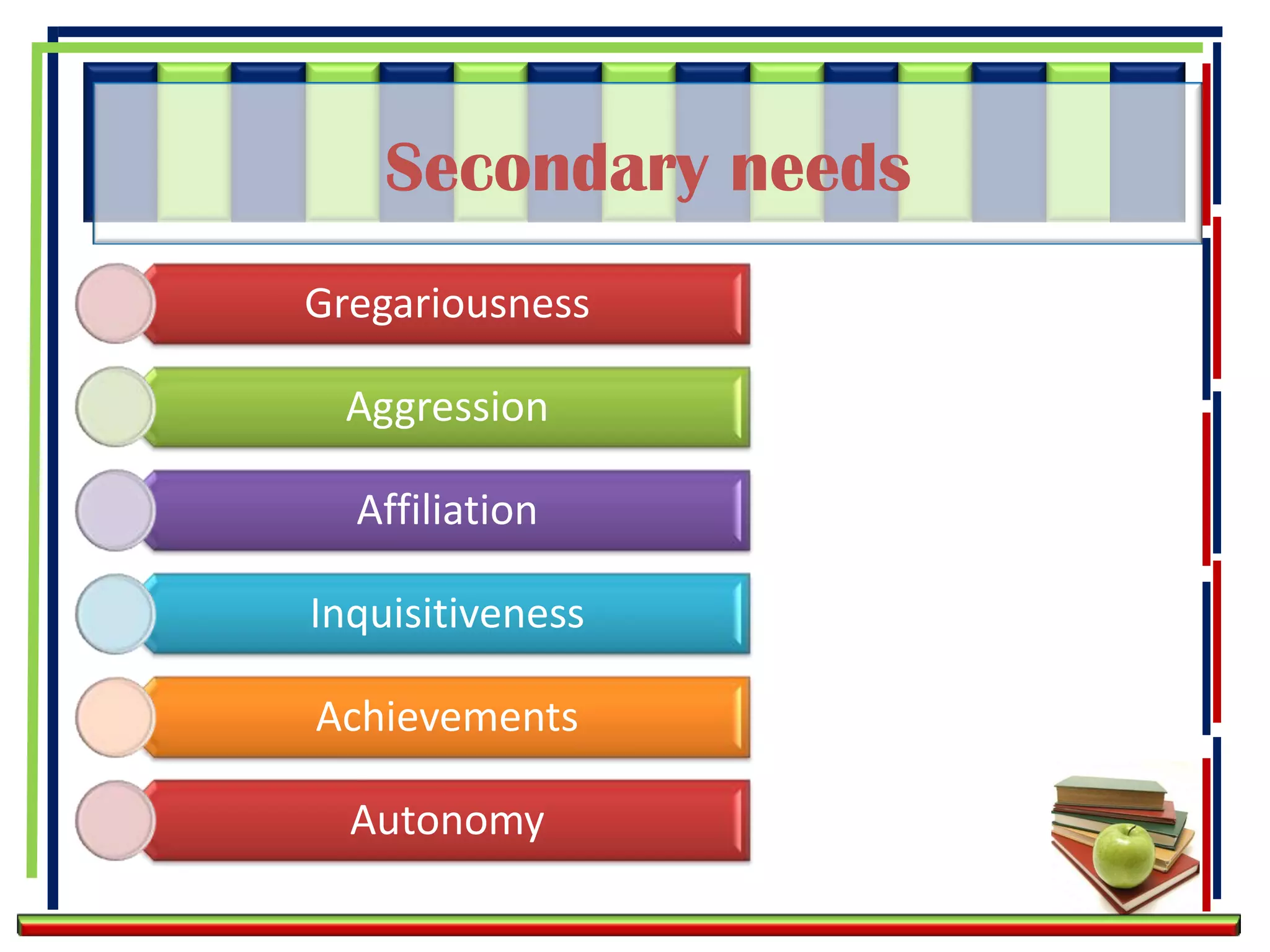
Secondary needs
Gregariousness

  Aggression

  Affiliation

Inquisitiveness

Achievements

  Autonomy
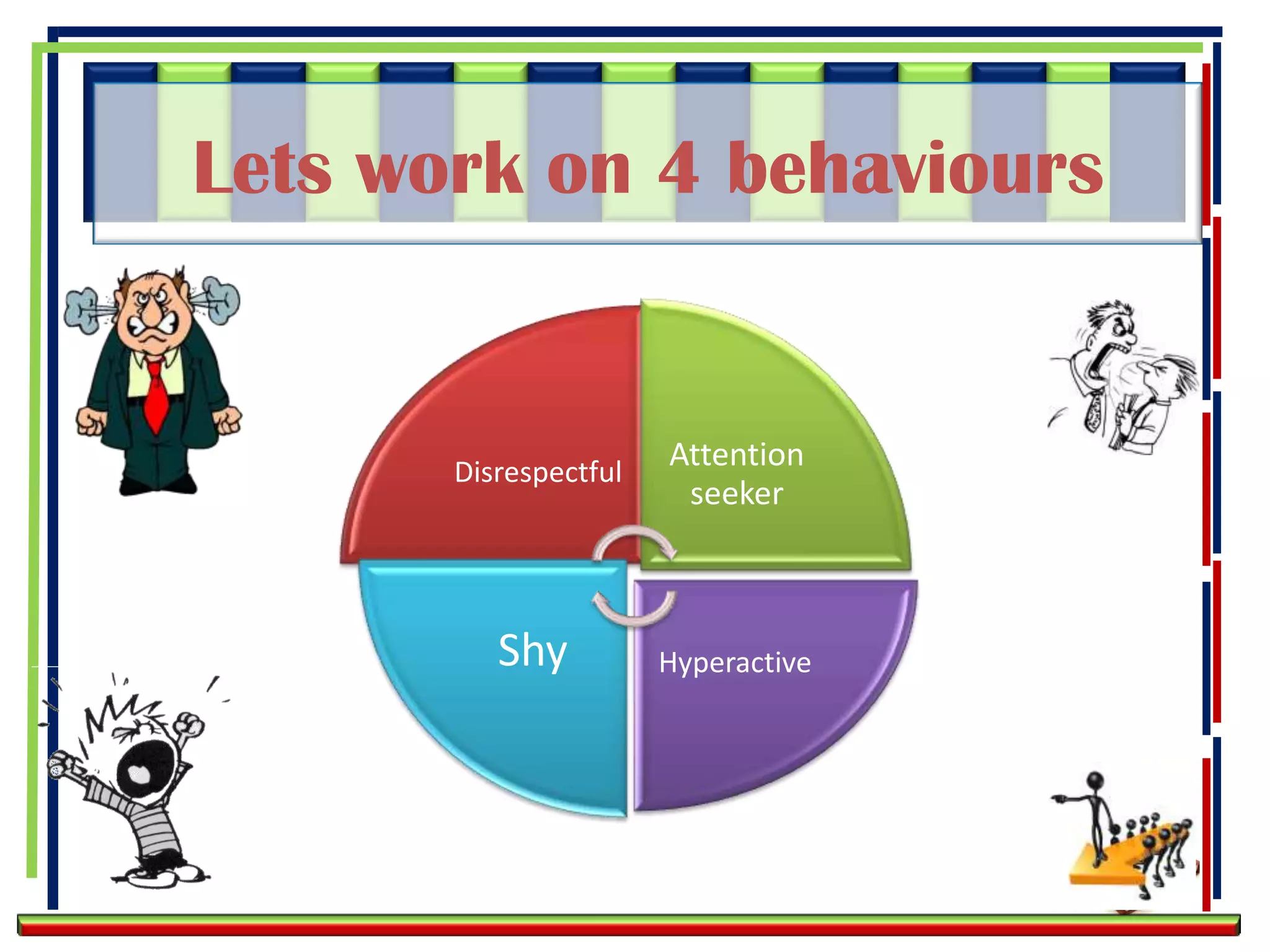
Lets work on 4 behaviours


       Disrespectful
                       Attention
                        seeker


          Shy          Hyperactive
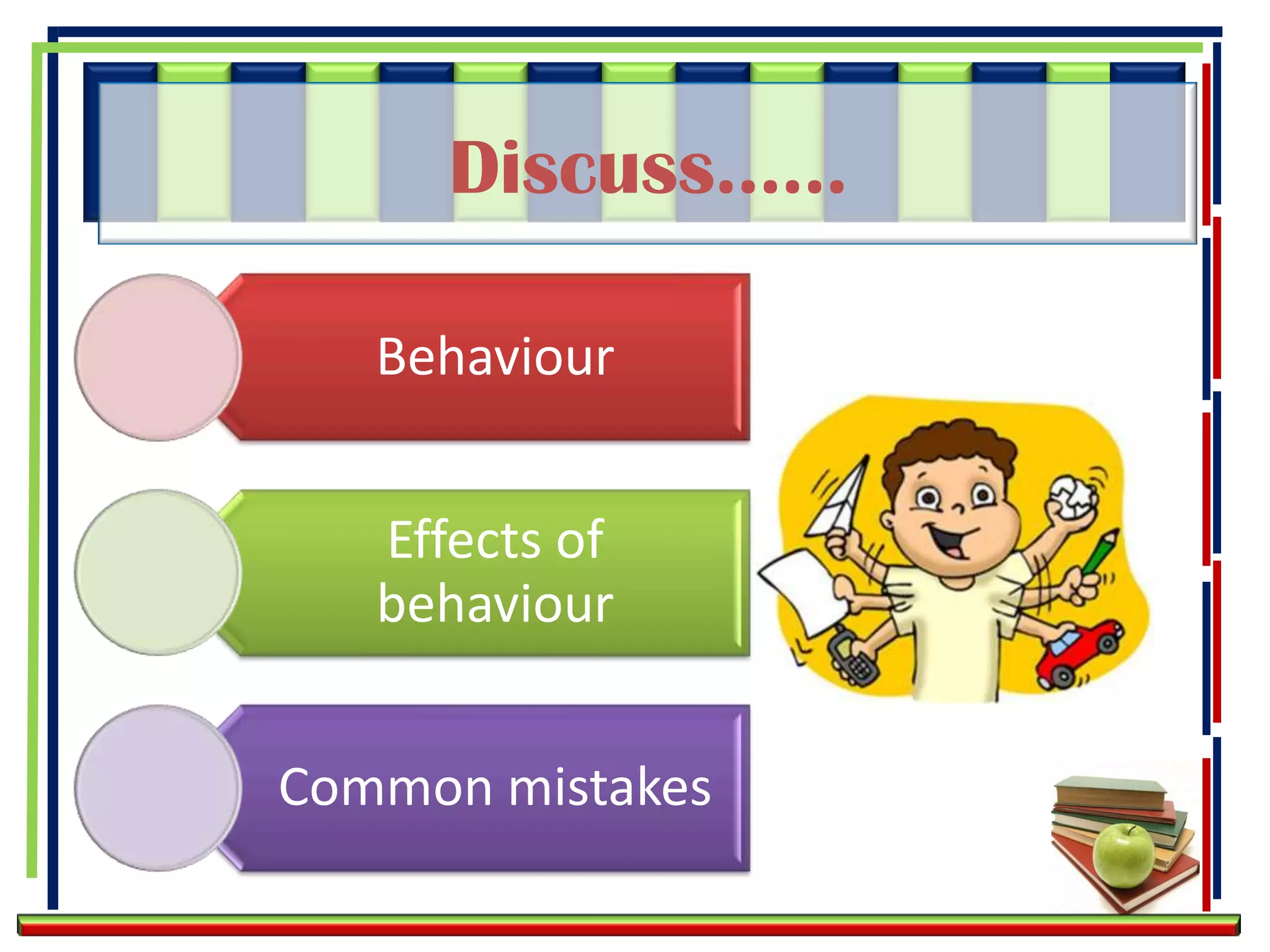
Discuss……

   Behaviour


   Effects of
   behaviour


Common mistakes
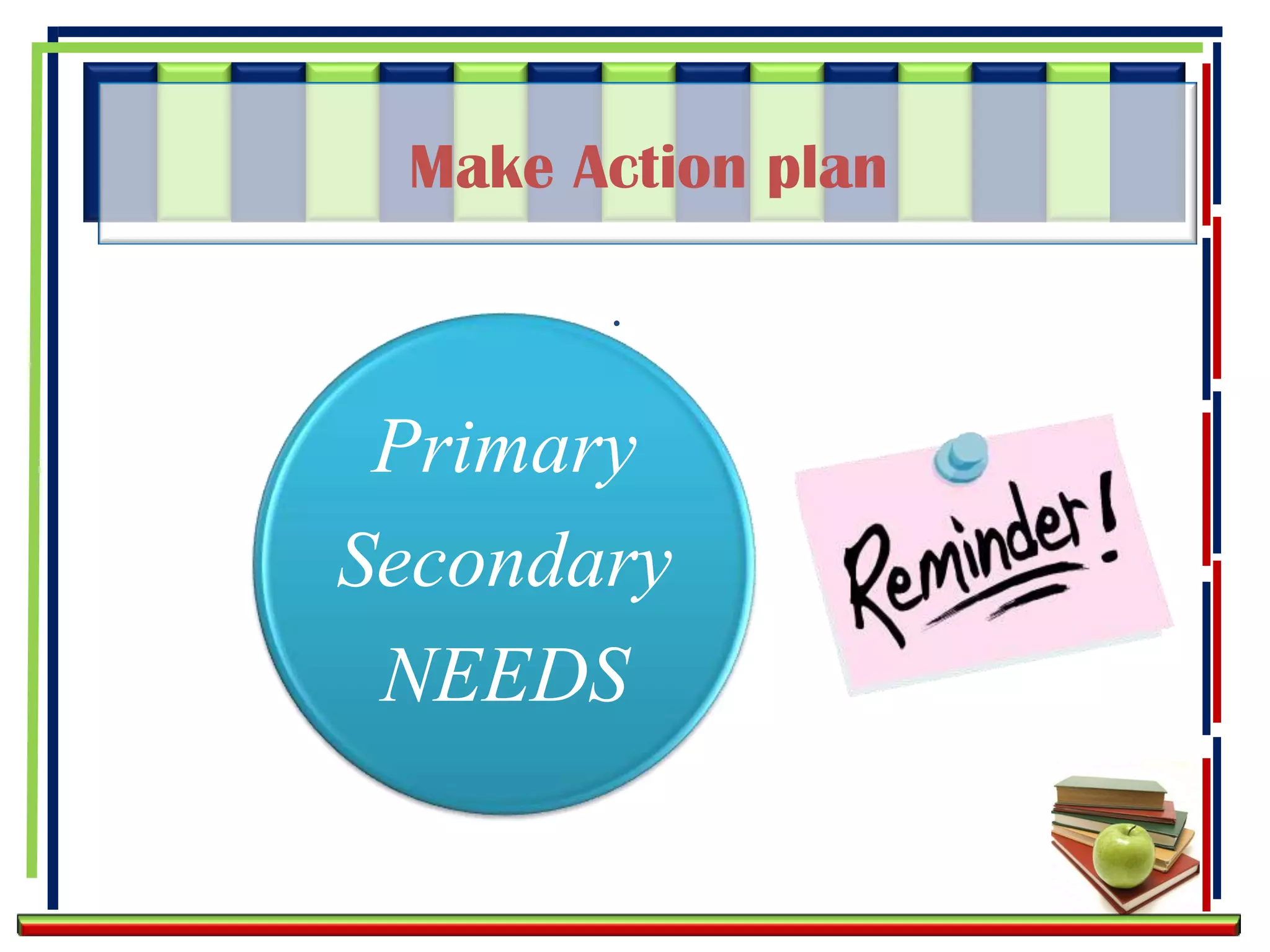
Make Action plan

       .

 Primary
Secondary
 NEEDS
Reflection

• List five actions that you could take to
  demonstrate that you care about your
  difficult student and that you are not
  going away.
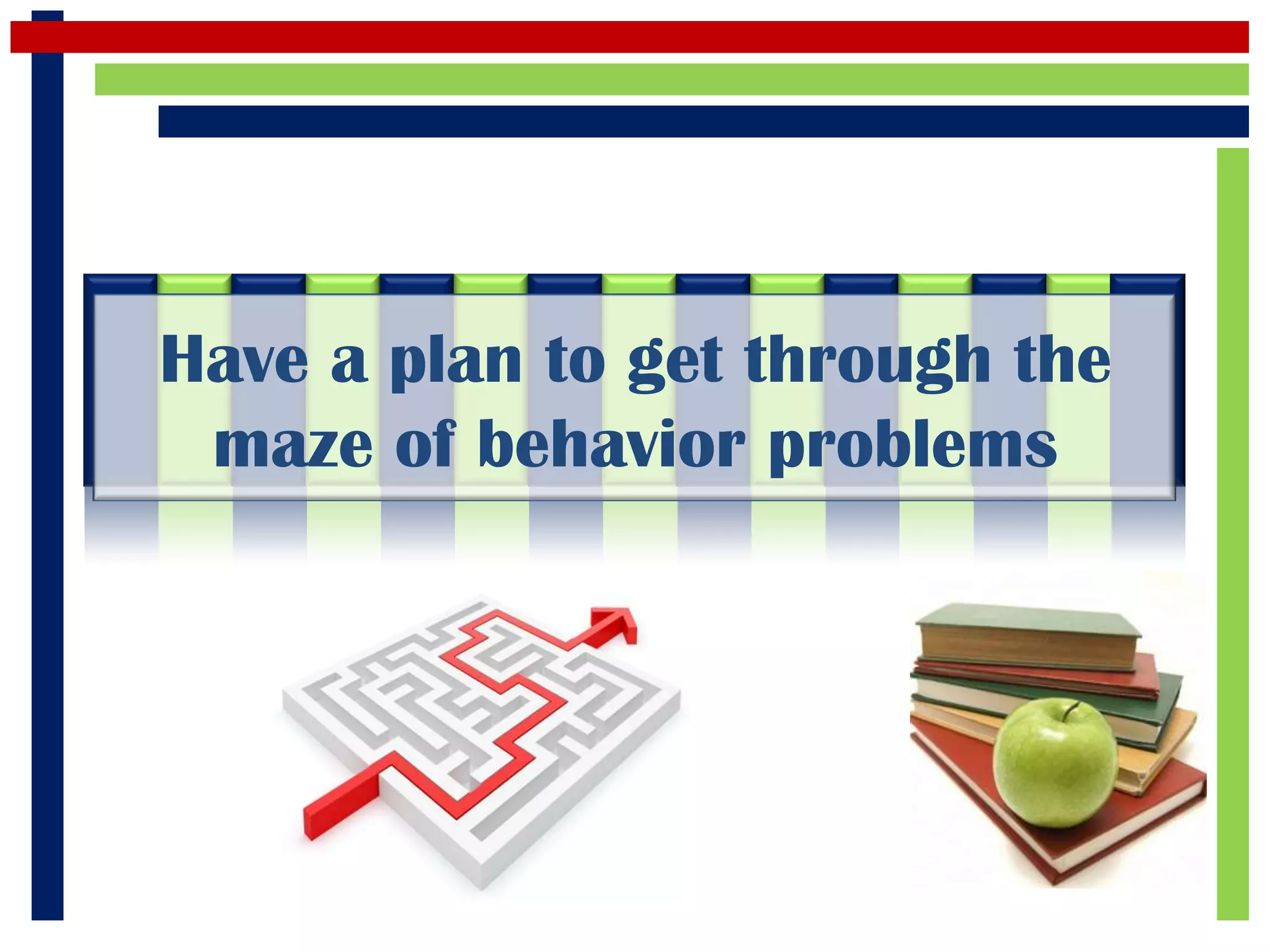
Have a plan to get through the
 maze of behavior problems
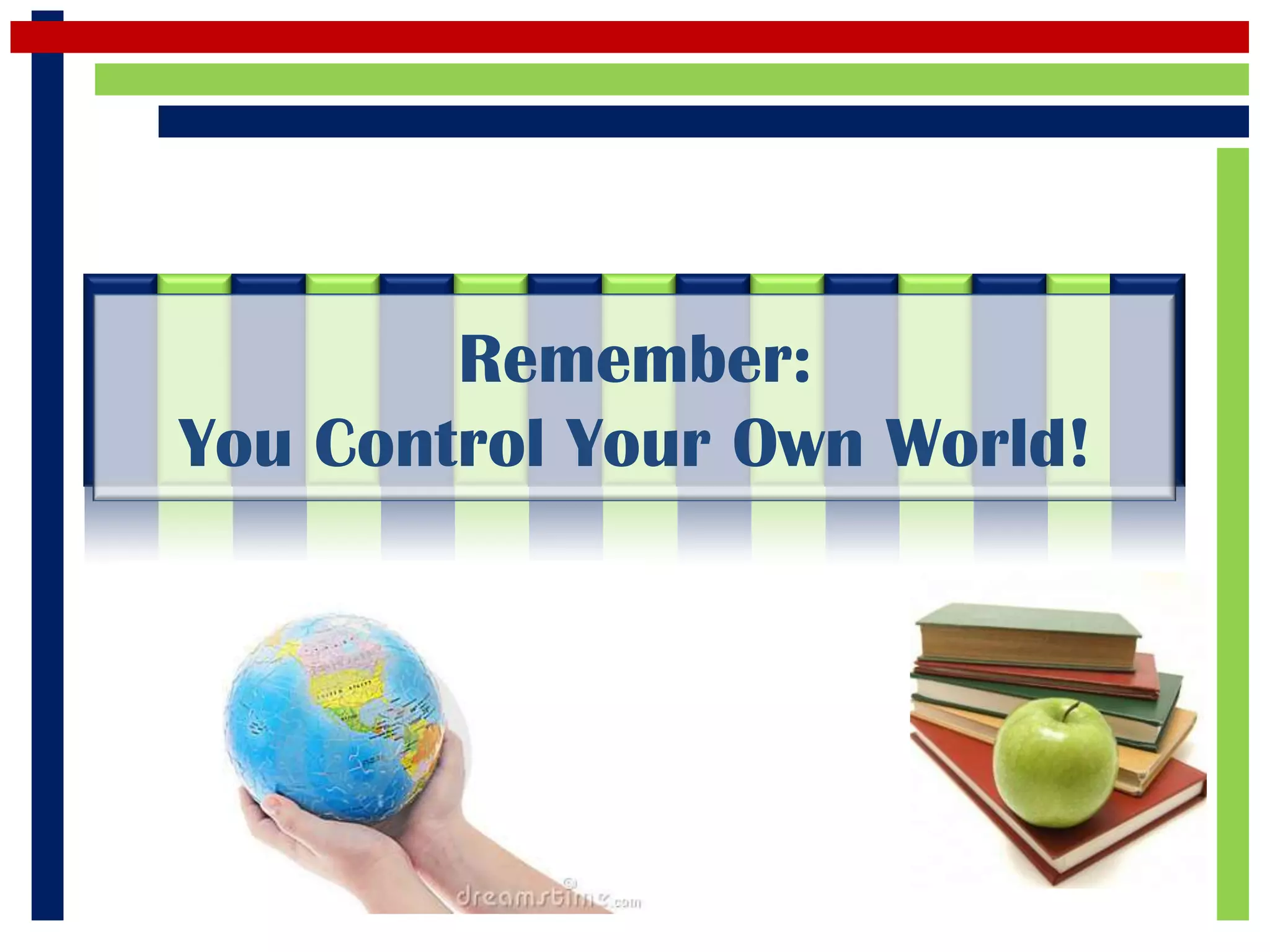
Remember:
You Control Your Own World!
Understanding psychology-to-discipline

Understanding psychology-to-discipline

  • 1.
    Understanding Psychology to discipline Dr. Kanwal kaisser
  • 2.
    Activity… • Recall atime when a student misbehaved in one of your classes. Describe the student’s attitude/actions: How did this behavior affect the teacher, other students, and the learning environment? How did the teacher react to this behavior? Were the teacher’s actions effective in changing the student’s behavior? Explain. Share your recollections with the class.
  • 3.
    Normal kids • Not perfect • Don’t do what we think they should do • Not always happy • Don’t talk about everything • Not perfect students • Don’t always behave within rules
  • 4.
    Want to take care of themselves • Have distinct self-identity • Resilient • Proactive • Assertive • Can have fun • Can accept new challenges • Require discipline • Know about personal boundaries
  • 5.
    Assume that others are responsible for themselves • Self-controlled • Honest with themselves • Not easily manipulated • Optimistic & Humorous • Not persistent in doing what someone else wants them to do • Can lead without controlling • Value-guided
  • 6.
    We Believe Behavior can be changed Behavior can be taught Behavior can be modeled Behavior reflects basic needs Behavior is non-negotiable in areas of safety and security Behavior has consequences
  • 7.
    Behavior that needsto be learned, needs to be taught. . When children are well- trained, it is habit-forming.
  • 8.
    Things to KnowAbout Behaviour All behavior has a purpose. To treat behavior you must know the reason for it. The good student is good for a reason; the student in trouble also misbehaves for a reason. Treating all behavior problems the same won’t work.
  • 9.
    Three Variables inEvery class Situation Rest of class Proble m student Teacher • The only controllable variable is: The teacher • If the teacher is out of control, the situation is out of control.
  • 10.
    What Teachers ShouldDo • Teachers must have a plan and not just react to behavior. • To change behavior you must first identify the specific characteristics.
  • 11.
    Teachers: Reactive vs.Proactive Reactive teachers respond to disruptive behaviors without forethought Proactive teachers have a plan for dealing with disruptive behaviors
  • 12.
    Watch Attitudes andactions of child In school • Avoids generalization • Helps zero in At home
  • 13.
    Effects of thebehaviour Teacher Class mates Parents Learning environment
  • 14.
    Vision is necessary •Effective management can prevent the beginning and spread of inappropriate behavior. • Some inappropriate behavior is a symptom of another problem
  • 16.
    5 Keys toChanging Behavior Know how to change See others do Have it (be a role opportunities model) to practice The Receive Want to change child support must:
  • 17.
    Common mistakes Research showsthat difficult students act out because needs are not being met. Distructive React methods Perpetuates problems
  • 18.
    Action plan: IdentifyCause Lack of attention Lack of power Revenge Lack of self-Confidence
  • 19.
    When Students DemandAttention… Student’s reaction Teacher’s to teacher’s response: response: Stop disrupting when giving attention; but Makes you feel will shortly continue annoyed! demanding “more” attention
  • 20.
    How do theytry to gain attention? Speak without permission Arrive late Make noise Tell bad things
  • 21.
    Power issue Open dissent Refusal to follow rules Defiant, Bullies
  • 22.
    When Students NeedLimits Student’s reactions Teacher’s response: to teacher’s response: Confrontation Make you and refuse to angry! comply! Power Struggles Occur
  • 23.
    Revenge Mean, vicious,violent Seek revenge in any way Write on desks Beat up classmates Threaten students
  • 24.
    Lack self-Confidence Expectfailure Feel they lack ability Play and talk when study time
  • 25.
    Keep watch onprimary needs Hunger Thirst Air Rest Escape from Pain
  • 26.
    Secondary needs Gregariousness Aggression Affiliation Inquisitiveness Achievements Autonomy
  • 27.
    Lets work on4 behaviours Disrespectful Attention seeker Shy Hyperactive
  • 28.
    Discuss…… Behaviour Effects of behaviour Common mistakes
  • 29.
    Make Action plan . Primary Secondary NEEDS
  • 30.
    Reflection • List fiveactions that you could take to demonstrate that you care about your difficult student and that you are not going away.
  • 31.
    Have a planto get through the maze of behavior problems
  • 32.