Promoting academic innovation by valuing
and enabling disruptive design
Andrew Middleton
Head of Innovation & Professional
Development

@andrewmid
Introductions



Hello!
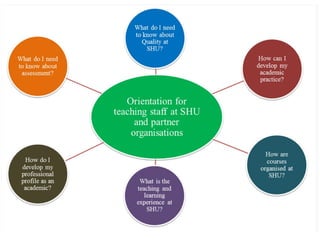
Why are we interested in curriculum design?
Session outline










Introductions
Curriculum Design @ SHU background
Defining priorities for collaborative design teams
Principle-based design and other approaches
Designing a design lens
Scenario-based design
Building scenarios
Devising and sharing other collaborative design methods
Conclusions
Background:
The Design Studio

Our Challenge: how to engage multiple stakeholders
effectively in curriculum design
Students and others not directly involved in teaching
Why:
breadth of experience
knowledge
perspectives
accommodate diverse stakeholder requirements
How:
Two day design team immersive think tank
Principle-based facilitation
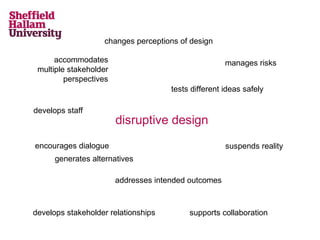
changes perceptions of design
accommodates
multiple stakeholder
perspectives

manages risks
tests different ideas safely

develops staff

disruptive design
encourages dialogue

suspends reality

generates alternatives
addresses intended outcomes

develops stakeholder relationships

supports collaboration
Background:
Why Studio?
Opportunity, space and structure
Open and supportive
Space: time, people, place
Contained activity
Critical friendship
Co-operation and collaboration
Safe risked-based thinking
Communal validation

Defining priorities for collaborative design
teams
Analysing needs and identifying priorities
Radar Discussion tool

•



Alumni goldfish bowl - observed structured group
discussion



Student evaluations (surveys or video evaluations)



NSS analysis



What else?
Principle-based design and other
approaches
Principle-based facilitation
“Rhetorical resources” – Nicol (2012)
 High level educational aspiration
 Problem domain/area of concern
 Practice-orientated principles
 A compelling narrative
 Examples of application
 Research evidence

– to focus useful conversation
– e.g. stakeholder participation
– e.g. graduate attributes
– often set out in ‘literature’
– what do the principles mean
– associated case studies
– associated ‘toolkits’
Key Tools








Screencasts
Priority analysis tool
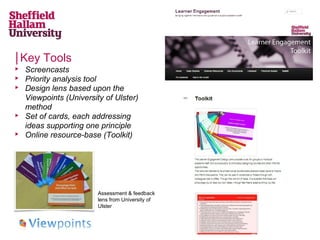
Design lens based upon the
Viewpoints (University of Ulster)
method
Set of cards, each addressing
ideas supporting one principle
Online resource-base (Toolkit)

Assessment & feedback
lens from University of
Ulster
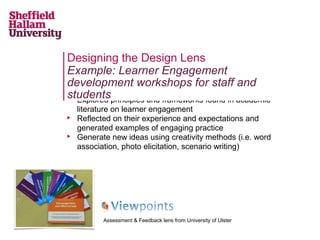
Designing the Design Lens
Example: Learner Engagement
development workshops for staff and
studentsprinciples and frameworks found in academic
Explored







literature on learner engagement
Reflected on their experience and expectations and
generated examples of engaging practice
Generate new ideas using creativity methods (i.e. word
association, photo elicitation, scenario writing)

Assessment & Feedback lens from University of Ulster
Activity: Principles of Digital Literacy
Identify between 5 and 7 key ideas that
together encapsulate what digital literacy
means.
1. Ability to find, select, retrieve and use digital
information
2….
3.
4.
5.
6.
7.
Scenario-Based Design
About scenarios








Descriptions of the past, present or
future
Risk-free tools for imagining the
future and for asking ‘what-if..?’
Colourful narratives or process
statements
'Good enough' representations of
possibilities...
...or highly detailed
Scenarios set the scene for
discussion
Scenarios can concretise ideas for
development

“a concrete description of
activity that the user
engages in when
engages in when
performing a specific task,
description sufficiently
detailed so that design
implications can be inferred
and reasoned about”
and reasoned about”
-- Carroll (1995)
Carroll (1995)
Why use scenarios for curriculum design?
Scenarios,


Use diverse kinds and amounts of detailing



Present alternative consequences of action



Can be abstracted and categorised

Help designers to recognise, capture, modify and reuse
generalisations or patterns




Support reasoning

Make design tasks accessible to diverse expert
stakeholder groups

Scenarios address 6 challenges
1.

Reflect on designs and processes

2.

Co-ordinate collaborative design action and reflection

3.

Manage risk by having something that appears concrete
and remains flexible

4.

Manage the fluidity of design situations

5.

Consider multiple views of an interaction

6.

(Capture outputs of idea generation)

Designers have to continually make commitments without making
commitments!
commitments!
Designers say “What if…”
4 ways to use scenarios to support
curriculum design
Collaborative design teams can,
1.Construct

scenarios to work out and communicate their

thinking
2.Construct

scenarios to capture and communicate their

thinking
3.Review

or compare representations of existing pedagogy

4.Review

or compare representations of proposed pedagogy
Forming successful scenarios - characteristics


Goals, sub-goals or outcomes



Settings





Agents or actors playing primary or supporting roles
(descriptions of who is involved, how and why)
Plot - sequences of actions and events done by or to the
actors or changes to the setting. Changes to events show
how scenarios can be used dynamically to assess
different decisions and outcomes.
Presenting successful scenarios


Scenarios use natural language query and are presented
as short narratives and can use various media, e.g.



Text



Visualisations, diagrams, pictures, etc.



Comic strips and storyboards



Videos



Multimedia



Post-it notes
Activity: Facilitating the design of
pedagogy to promote learner
 Generate

ideas for a New Staff Induction Programme using
the Learner Engagement and Authentic Learning design
lenses (or our Digital Literacy lens!).
 Focus on a small part of the Induction Course which will be
run over 3 x 2 hour workshops and be supported by online
resources.
 Work towards constructing a scenario statement to support
the communication and evaluation of you idea
Activity: Build your scenarios!
To capture and communicate your idea
Agree media
Include:


Goals, sub-goals or outcomes



Settings





Agents or actors playing primary or supporting roles
(descriptions of who is involved, how and why)
Plot - sequences of actions and events done by or to the
actors or changes to the setting. Changes to events show
how scenarios can be used dynamically to assess
different decisions and outcomes.
Activity: other approaches
Devise and share other collaborative design methods


Analyse what is needed and identify priorities



Design together



Capture ideas and develop them further



Evaluate approaches



Breakout and feedback
Conclusions
 Curriculum

design activities and a key opportunity for
promoting academic innovation
 Involving ‘others’ early is useful, difficult – but possible!
 Innovation is risky – but risk can be managed through
collaborative engagement and validation
References














Bryson, C., & Hand, L. (2007). The role of engagement in inspiring teaching and learning.
Innovations in Education and Teaching International, 44(4), pp.349–362.
Carroll, J.M. (2000). Five reasons for scenario-based design. Interacting with Computers 13, pp.43 –
60.
Fowler, C.J.H, van Helvert, J; Gardner, M.G, and Scott, J.R. (2007). The use of scenarios in
designing and delivering learning systems. In: H. Beetham & R. Sharpe, Rethinking Pedagogy in a
Digital Age: Designing and delivering e-learning. London: Routledge
Herrington, J. (2006). Authentic e-learning in higher education: design principles for authentic
learning environments and tasks. Online at: http://researchrepository.murdoch.edu.au/5247
Nicol, D. (2012). Principles as discourse. JISC Webinar, 20 th March 2012
Nicol, D., & Draper, S. (2009). A blueprint for transformational organisational change in
higher education: REAP as a case study. In: Mayes, T., Morrison, D., Mellar, H., Bullen, P. & Oliver, M.,
(eds) ‘Transforming higher education through technology-enhanced learning.’ York: Higher Education
Academy.
O’Donnell, C., Masson, A., & Harrison, J. (2011). Encouraging creativity and reflection in the
curriculum. SEDA Spring Teaching Learning and Assessment Conference 2011, "Academics for the
21st Century", 5th May 2011 - 06 May 2011, Holyrood Hotel, Edinburgh.

Promoting academic innovation by valuing and enabling disruptive design

  • 1.
    Promoting academic innovationby valuing and enabling disruptive design Andrew Middleton Head of Innovation & Professional Development @andrewmid
  • 2.
    Introductions   Hello! Why are weinterested in curriculum design?
  • 3.
    Session outline          Introductions Curriculum Design@ SHU background Defining priorities for collaborative design teams Principle-based design and other approaches Designing a design lens Scenario-based design Building scenarios Devising and sharing other collaborative design methods Conclusions
  • 4.
    Background: The Design Studio OurChallenge: how to engage multiple stakeholders effectively in curriculum design Students and others not directly involved in teaching Why: breadth of experience knowledge perspectives accommodate diverse stakeholder requirements How: Two day design team immersive think tank Principle-based facilitation
  • 5.
    changes perceptions ofdesign accommodates multiple stakeholder perspectives manages risks tests different ideas safely develops staff disruptive design encourages dialogue suspends reality generates alternatives addresses intended outcomes develops stakeholder relationships supports collaboration
  • 6.
    Background: Why Studio? Opportunity, spaceand structure Open and supportive Space: time, people, place Contained activity Critical friendship Co-operation and collaboration Safe risked-based thinking Communal validation 
  • 7.
    Defining priorities forcollaborative design teams Analysing needs and identifying priorities Radar Discussion tool •  Alumni goldfish bowl - observed structured group discussion  Student evaluations (surveys or video evaluations)  NSS analysis  What else?
  • 8.
  • 9.
    Principle-based facilitation “Rhetorical resources”– Nicol (2012)  High level educational aspiration  Problem domain/area of concern  Practice-orientated principles  A compelling narrative  Examples of application  Research evidence – to focus useful conversation – e.g. stakeholder participation – e.g. graduate attributes – often set out in ‘literature’ – what do the principles mean – associated case studies – associated ‘toolkits’
  • 10.
    Key Tools      Screencasts Priority analysistool Design lens based upon the Viewpoints (University of Ulster) method Set of cards, each addressing ideas supporting one principle Online resource-base (Toolkit) Assessment & feedback lens from University of Ulster
  • 11.
    Designing the DesignLens Example: Learner Engagement development workshops for staff and studentsprinciples and frameworks found in academic Explored    literature on learner engagement Reflected on their experience and expectations and generated examples of engaging practice Generate new ideas using creativity methods (i.e. word association, photo elicitation, scenario writing) Assessment & Feedback lens from University of Ulster
  • 12.
    Activity: Principles ofDigital Literacy Identify between 5 and 7 key ideas that together encapsulate what digital literacy means. 1. Ability to find, select, retrieve and use digital information 2…. 3. 4. 5. 6. 7.
  • 13.
  • 14.
    About scenarios        Descriptions ofthe past, present or future Risk-free tools for imagining the future and for asking ‘what-if..?’ Colourful narratives or process statements 'Good enough' representations of possibilities... ...or highly detailed Scenarios set the scene for discussion Scenarios can concretise ideas for development “a concrete description of “a concrete description of activity that the user activity that the user engages in when engages in when performing a specific task, performing a specific task, description sufficiently description sufficiently detailed so that design detailed so that design implications can be inferred implications can be inferred and reasoned about” and reasoned about” -- Carroll (1995) Carroll (1995)
  • 15.
    Why use scenariosfor curriculum design? Scenarios,  Use diverse kinds and amounts of detailing  Present alternative consequences of action  Can be abstracted and categorised Help designers to recognise, capture, modify and reuse generalisations or patterns   Support reasoning Make design tasks accessible to diverse expert stakeholder groups 
  • 16.
    Scenarios address 6challenges 1. Reflect on designs and processes 2. Co-ordinate collaborative design action and reflection 3. Manage risk by having something that appears concrete and remains flexible 4. Manage the fluidity of design situations 5. Consider multiple views of an interaction 6. (Capture outputs of idea generation) Designers have to continually make commitments without making Designers have to continually make commitments without making commitments! commitments! Designers say “What if…” Designers say “What if…”
  • 17.
    4 ways touse scenarios to support curriculum design Collaborative design teams can, 1.Construct scenarios to work out and communicate their thinking 2.Construct scenarios to capture and communicate their thinking 3.Review or compare representations of existing pedagogy 4.Review or compare representations of proposed pedagogy
  • 18.
    Forming successful scenarios- characteristics  Goals, sub-goals or outcomes  Settings   Agents or actors playing primary or supporting roles (descriptions of who is involved, how and why) Plot - sequences of actions and events done by or to the actors or changes to the setting. Changes to events show how scenarios can be used dynamically to assess different decisions and outcomes.
  • 19.
    Presenting successful scenarios  Scenariosuse natural language query and are presented as short narratives and can use various media, e.g.  Text  Visualisations, diagrams, pictures, etc.  Comic strips and storyboards  Videos  Multimedia  Post-it notes
  • 20.
    Activity: Facilitating thedesign of pedagogy to promote learner  Generate ideas for a New Staff Induction Programme using the Learner Engagement and Authentic Learning design lenses (or our Digital Literacy lens!).  Focus on a small part of the Induction Course which will be run over 3 x 2 hour workshops and be supported by online resources.  Work towards constructing a scenario statement to support the communication and evaluation of you idea
  • 22.
    Activity: Build yourscenarios! To capture and communicate your idea Agree media Include:  Goals, sub-goals or outcomes  Settings   Agents or actors playing primary or supporting roles (descriptions of who is involved, how and why) Plot - sequences of actions and events done by or to the actors or changes to the setting. Changes to events show how scenarios can be used dynamically to assess different decisions and outcomes.
  • 23.
    Activity: other approaches Deviseand share other collaborative design methods  Analyse what is needed and identify priorities  Design together  Capture ideas and develop them further  Evaluate approaches  Breakout and feedback
  • 24.
    Conclusions  Curriculum design activitiesand a key opportunity for promoting academic innovation  Involving ‘others’ early is useful, difficult – but possible!  Innovation is risky – but risk can be managed through collaborative engagement and validation
  • 25.
    References         Bryson, C., &Hand, L. (2007). The role of engagement in inspiring teaching and learning. Innovations in Education and Teaching International, 44(4), pp.349–362. Carroll, J.M. (2000). Five reasons for scenario-based design. Interacting with Computers 13, pp.43 – 60. Fowler, C.J.H, van Helvert, J; Gardner, M.G, and Scott, J.R. (2007). The use of scenarios in designing and delivering learning systems. In: H. Beetham & R. Sharpe, Rethinking Pedagogy in a Digital Age: Designing and delivering e-learning. London: Routledge Herrington, J. (2006). Authentic e-learning in higher education: design principles for authentic learning environments and tasks. Online at: http://researchrepository.murdoch.edu.au/5247 Nicol, D. (2012). Principles as discourse. JISC Webinar, 20 th March 2012 Nicol, D., & Draper, S. (2009). A blueprint for transformational organisational change in higher education: REAP as a case study. In: Mayes, T., Morrison, D., Mellar, H., Bullen, P. & Oliver, M., (eds) ‘Transforming higher education through technology-enhanced learning.’ York: Higher Education Academy. O’Donnell, C., Masson, A., & Harrison, J. (2011). Encouraging creativity and reflection in the curriculum. SEDA Spring Teaching Learning and Assessment Conference 2011, "Academics for the 21st Century", 5th May 2011 - 06 May 2011, Holyrood Hotel, Edinburgh.

Editor's Notes

  • #3 Aims of the Session To consider methods to inspire and inform academics and collaborative design groups in producing innovative curricula Session Learning Outcomes By the end of this session, delegates will be able to: ¡ Engage academics, learning support staff, students, employers and other curriculum design collaborators in activities that lead to innovative, principle-based pedagogy ¡ Position creativity, innovation and sound pedagogy in relation to each other in the context of curriculum design Session Outline ¡ Approaches to conducting collaborative curriculum design activities that support, challenge and involve diverse groupings of stakeholders and which lead to high quality, authentic curricula. To do this the session will introduce, explore and build upon the Viewpoints method (O’Donnell et al., 2011) and principle-based transformation (Nicol & Draper, 2009). ¡ How creative thinking strategies can be used to generate “concrete and detailed” scenarios (Carroll 2000, p.46) to inspire innovative and engaging pedagogy and how these can empower academics leading curriculum design activities. The session will explain and demonstrate how the use of scenarios and principle-based approaches can lead to radically innovative pedagogies by engendering multi-stakeholder confidence and risk-free thinking. ¡ How curriculum enhancement and innovation can be appreciated in terms of disruptive innovation in contrast to change that is evolutionary or supplemental or in contrast to simple conceptions of best practice. Session Activities and Approximate Timings ¡ Introduction and setting the context of running the Curriculum Design Studio at Sheffield Hallam University (10 minutes) ¡ Participants consider the key features of principle-based ‘design lens’ tools produced to support foci including Embedding Employability, Digital Literacy, and Learner Engagement (25 minutes) ¡ Reflecting on principle-based design and how it provides a constructive framework for diverse design collaborators (10 minutes) ¡ Constructing scenarios to concretise design activities – considering key features of a well-formed, useful scenario (Carroll, 2000) and the benefits of this to curriculum design (10 minutes) ¡ Small group activity: Facilitating the design of pedagogy to promote learner engagement and authentic learning by using two sets of principle-based design lenses together towards constructing a scenario statement to support communication and critical evaluation of ideas (20 minutes) ¡ Considering how educational developer colleagues can work together around institutional design priorities to construct useful design lens and related resource-bases (10 minutes) ¡ Concluding discussion to evaluate the approaches (5 minutes). References Bryson, C., & Hand, L. (2007). The role of engagement in inspiring teaching and learning. Innovations in Education and Teaching International, 44(4), 349–362. Carroll, J.M. (2000). Five reasons for scenario-based design. Interacting with Computers 13, 43 – 60. Herrington, J. (2006) Authentic e-learning in higher education: design principles for authentic learning environments and tasks. Online at: http://researchrepository.murdoch.edu.au/5247 Nicol, D., and Draper, S. (2009). A blueprint for transformational organisational change in higher education.: REAP as a case study. In: Mayes, T., Morrison, D., Mellar, H., Bullen, P. and Oliver, M., (eds) Transforming higher education through technology-enhanced learning. York: Higher Education Academy. O’Donnell, C., Masson, A., and Harrison, J. (2011).Encouraging creativity and reflection in the curriculum. SEDA Spring Teaching Learning and Assessment Conference 2011, "Academics for the 21st Century", 5th May 2011 - 06 May 2011, Holyrood Hotel, Edinburgh.
  • #4 Aims of the Session To consider methods to inspire and inform academics and collaborative design groups in producing innovative curricula Session Learning Outcomes By the end of this session, delegates will be able to: ¡ Engage academics, learning support staff, students, employers and other curriculum design collaborators in activities that lead to innovative, principle-based pedagogy ¡ Position creativity, innovation and sound pedagogy in relation to each other in the context of curriculum design Session Outline ¡ Approaches to conducting collaborative curriculum design activities that support, challenge and involve diverse groupings of stakeholders and which lead to high quality, authentic curricula. To do this the session will introduce, explore and build upon the Viewpoints method (O’Donnell et al., 2011) and principle-based transformation (Nicol & Draper, 2009). ¡ How creative thinking strategies can be used to generate “concrete and detailed” scenarios (Carroll 2000, p.46) to inspire innovative and engaging pedagogy and how these can empower academics leading curriculum design activities. The session will explain and demonstrate how the use of scenarios and principle-based approaches can lead to radically innovative pedagogies by engendering multi-stakeholder confidence and risk-free thinking. ¡ How curriculum enhancement and innovation can be appreciated in terms of disruptive innovation in contrast to change that is evolutionary or supplemental or in contrast to simple conceptions of best practice. Session Activities and Approximate Timings ¡ Introduction and setting the context of running the Curriculum Design Studio at Sheffield Hallam University (10 minutes) ¡ Participants consider the key features of principle-based ‘design lens’ tools produced to support foci including Embedding Employability, Digital Literacy, and Learner Engagement (25 minutes) ¡ Reflecting on principle-based design and how it provides a constructive framework for diverse design collaborators (10 minutes) ¡ Constructing scenarios to concretise design activities – considering key features of a well-formed, useful scenario (Carroll, 2000) and the benefits of this to curriculum design (10 minutes) ¡ Small group activity: Facilitating the design of pedagogy to promote learner engagement and authentic learning by using two sets of principle-based design lenses together towards constructing a scenario statement to support communication and critical evaluation of ideas (20 minutes) ¡ Considering how educational developer colleagues can work together around institutional design priorities to construct useful design lens and related resource-bases (10 minutes) ¡ Concluding discussion to evaluate the approaches (5 minutes). References Bryson, C., & Hand, L. (2007). The role of engagement in inspiring teaching and learning. Innovations in Education and Teaching International, 44(4), 349–362. Carroll, J.M. (2000). Five reasons for scenario-based design. Interacting with Computers 13, 43 – 60. Herrington, J. (2006) Authentic e-learning in higher education: design principles for authentic learning environments and tasks. Online at: http://researchrepository.murdoch.edu.au/5247 Nicol, D., and Draper, S. (2009). A blueprint for transformational organisational change in higher education.: REAP as a case study. In: Mayes, T., Morrison, D., Mellar, H., Bullen, P. and Oliver, M., (eds) Transforming higher education through technology-enhanced learning. York: Higher Education Academy. O’Donnell, C., Masson, A., and Harrison, J. (2011).Encouraging creativity and reflection in the curriculum. SEDA Spring Teaching Learning and Assessment Conference 2011, "Academics for the 21st Century", 5th May 2011 - 06 May 2011, Holyrood Hotel, Edinburgh.
  • #5 Introduction and setting the context of running the Curriculum Design Studio at Sheffield Hallam University (10 minutes)
  • #8 Aims of the Session To consider methods to inspire and inform academics and collaborative design groups in producing innovative curricula Session Learning Outcomes By the end of this session, delegates will be able to: ¡ Engage academics, learning support staff, students, employers and other curriculum design collaborators in activities that lead to innovative, principle-based pedagogy ¡ Position creativity, innovation and sound pedagogy in relation to each other in the context of curriculum design Session Outline ¡ Approaches to conducting collaborative curriculum design activities that support, challenge and involve diverse groupings of stakeholders and which lead to high quality, authentic curricula. To do this the session will introduce, explore and build upon the Viewpoints method (O’Donnell et al., 2011) and principle-based transformation (Nicol & Draper, 2009). ¡ How creative thinking strategies can be used to generate “concrete and detailed” scenarios (Carroll 2000, p.46) to inspire innovative and engaging pedagogy and how these can empower academics leading curriculum design activities. The session will explain and demonstrate how the use of scenarios and principle-based approaches can lead to radically innovative pedagogies by engendering multi-stakeholder confidence and risk-free thinking. ¡ How curriculum enhancement and innovation can be appreciated in terms of disruptive innovation in contrast to change that is evolutionary or supplemental or in contrast to simple conceptions of best practice. Session Activities and Approximate Timings ¡ Introduction and setting the context of running the Curriculum Design Studio at Sheffield Hallam University (10 minutes) ¡ Participants consider the key features of principle-based ‘design lens’ tools produced to support foci including Embedding Employability, Digital Literacy, and Learner Engagement (25 minutes) ¡ Reflecting on principle-based design and how it provides a constructive framework for diverse design collaborators (10 minutes) ¡ Constructing scenarios to concretise design activities – considering key features of a well-formed, useful scenario (Carroll, 2000) and the benefits of this to curriculum design (10 minutes) ¡ Small group activity: Facilitating the design of pedagogy to promote learner engagement and authentic learning by using two sets of principle-based design lenses together towards constructing a scenario statement to support communication and critical evaluation of ideas (20 minutes) ¡ Considering how educational developer colleagues can work together around institutional design priorities to construct useful design lens and related resource-bases (10 minutes) ¡ Concluding discussion to evaluate the approaches (5 minutes). References Bryson, C., & Hand, L. (2007). The role of engagement in inspiring teaching and learning. Innovations in Education and Teaching International, 44(4), 349–362. Carroll, J.M. (2000). Five reasons for scenario-based design. Interacting with Computers 13, 43 – 60. Herrington, J. (2006) Authentic e-learning in higher education: design principles for authentic learning environments and tasks. Online at: http://researchrepository.murdoch.edu.au/5247 Nicol, D., and Draper, S. (2009). A blueprint for transformational organisational change in higher education.: REAP as a case study. In: Mayes, T., Morrison, D., Mellar, H., Bullen, P. and Oliver, M., (eds) Transforming higher education through technology-enhanced learning. York: Higher Education Academy. O’Donnell, C., Masson, A., and Harrison, J. (2011).Encouraging creativity and reflection in the curriculum. SEDA Spring Teaching Learning and Assessment Conference 2011, "Academics for the 21st Century", 5th May 2011 - 06 May 2011, Holyrood Hotel, Edinburgh.
  • #9 Aims of the Session To consider methods to inspire and inform academics and collaborative design groups in producing innovative curricula Session Learning Outcomes By the end of this session, delegates will be able to: ¡ Engage academics, learning support staff, students, employers and other curriculum design collaborators in activities that lead to innovative, principle-based pedagogy ¡ Position creativity, innovation and sound pedagogy in relation to each other in the context of curriculum design Session Outline ¡ Approaches to conducting collaborative curriculum design activities that support, challenge and involve diverse groupings of stakeholders and which lead to high quality, authentic curricula. To do this the session will introduce, explore and build upon the Viewpoints method (O’Donnell et al., 2011) and principle-based transformation (Nicol & Draper, 2009). ¡ How creative thinking strategies can be used to generate “concrete and detailed” scenarios (Carroll 2000, p.46) to inspire innovative and engaging pedagogy and how these can empower academics leading curriculum design activities. The session will explain and demonstrate how the use of scenarios and principle-based approaches can lead to radically innovative pedagogies by engendering multi-stakeholder confidence and risk-free thinking. ¡ How curriculum enhancement and innovation can be appreciated in terms of disruptive innovation in contrast to change that is evolutionary or supplemental or in contrast to simple conceptions of best practice. Session Activities and Approximate Timings ¡ Introduction and setting the context of running the Curriculum Design Studio at Sheffield Hallam University (10 minutes) ¡ Participants consider the key features of principle-based ‘design lens’ tools produced to support foci including Embedding Employability, Digital Literacy, and Learner Engagement (25 minutes) ¡ Reflecting on principle-based design and how it provides a constructive framework for diverse design collaborators (10 minutes) ¡ Constructing scenarios to concretise design activities – considering key features of a well-formed, useful scenario (Carroll, 2000) and the benefits of this to curriculum design (10 minutes) ¡ Small group activity: Facilitating the design of pedagogy to promote learner engagement and authentic learning by using two sets of principle-based design lenses together towards constructing a scenario statement to support communication and critical evaluation of ideas (20 minutes) ¡ Considering how educational developer colleagues can work together around institutional design priorities to construct useful design lens and related resource-bases (10 minutes) ¡ Concluding discussion to evaluate the approaches (5 minutes). References Bryson, C., & Hand, L. (2007). The role of engagement in inspiring teaching and learning. Innovations in Education and Teaching International, 44(4), 349–362. Carroll, J.M. (2000). Five reasons for scenario-based design. Interacting with Computers 13, 43 – 60. Herrington, J. (2006) Authentic e-learning in higher education: design principles for authentic learning environments and tasks. Online at: http://researchrepository.murdoch.edu.au/5247 Nicol, D., and Draper, S. (2009). A blueprint for transformational organisational change in higher education.: REAP as a case study. In: Mayes, T., Morrison, D., Mellar, H., Bullen, P. and Oliver, M., (eds) Transforming higher education through technology-enhanced learning. York: Higher Education Academy. O’Donnell, C., Masson, A., and Harrison, J. (2011).Encouraging creativity and reflection in the curriculum. SEDA Spring Teaching Learning and Assessment Conference 2011, "Academics for the 21st Century", 5th May 2011 - 06 May 2011, Holyrood Hotel, Edinburgh.
  • #10 Reflecting on principle-based design and how it provides a constructive framework for diverse design collaborators (10 minutes)
  • #11 Participants consider the key features of principle-based ‘design lens’ tools produced to support foci including Embedding Employability, Digital Literacy, and Learner Engagement (25 minutes)
  • #13 Considering how educational developer colleagues can work together around institutional design priorities to construct useful design lens and related resource-bases (10 minutes) Concluding discussion to evaluate the approaches (5 minutes). 4 Principles Of Digital Literacy (http://www.teachthought.com/technology/4-principals-of-digital-literacy/) 1. Comprehension The first principle of digital literacy is simply comprehension–the ability to extract implicit and explicit ideas from a media. 2. Interdependence The second principle of digital literacy is interdependence–how one media form connects with another, whether potentially, metaphorically, ideally, or literally. Little media is created with the purpose of isolation, and publishing is easier than ever before. Due to the sheer abundance of media, it is necessary that media forms not simply co-exist, but supplement one another. 3. Social Factors Sharing is no longer just a method of personal identity or distribution, but rather can create messages of its own. Who shares what to whom through what channels can not only determine the long-term success of the media, but can create organic ecosystems of sourcing, sharing, storing, and ultimately repackaging media. 4. Curation Speaking of storing, overt storage of favored content through platforms such as pinterest, pearltrees, pocket and others is one method of “save to read later.” But more subtly, when a video is collected in a YouTube channel, a poem ends up in a blog post, or an infographic is pinned to pinterest or stored on a learnist board, that is also a kind of literacy as well–the ability to understand the value of information, and keep it in a way that makes it accessible and useful long-term. Elegant curation should resist data overload and other signs of “digital hoarding,” while also providing the potential for social curation–working together to find, collect, and organize great information Photo-visual literacy is the ability to read and deduce information from visuals. Reproduction literacy is the ability to use digital technology to create a new piece of work or combine existing pieces of work together to make it your own. Branching literacy is the ability to successfully navigate in the non-linear medium of digital space. Information literacy is the ability to search, locate, assess and critically evaluate information found on the web socio-emotional literacy refers to the social and emotional aspects of being present online, whether it may be through socializing, and collaborating, or simply consuming content.
  • #14 Aims of the Session To consider methods to inspire and inform academics and collaborative design groups in producing innovative curricula Session Learning Outcomes By the end of this session, delegates will be able to: ¡ Engage academics, learning support staff, students, employers and other curriculum design collaborators in activities that lead to innovative, principle-based pedagogy ¡ Position creativity, innovation and sound pedagogy in relation to each other in the context of curriculum design Session Outline ¡ Approaches to conducting collaborative curriculum design activities that support, challenge and involve diverse groupings of stakeholders and which lead to high quality, authentic curricula. To do this the session will introduce, explore and build upon the Viewpoints method (O’Donnell et al., 2011) and principle-based transformation (Nicol & Draper, 2009). ¡ How creative thinking strategies can be used to generate “concrete and detailed” scenarios (Carroll 2000, p.46) to inspire innovative and engaging pedagogy and how these can empower academics leading curriculum design activities. The session will explain and demonstrate how the use of scenarios and principle-based approaches can lead to radically innovative pedagogies by engendering multi-stakeholder confidence and risk-free thinking. ¡ How curriculum enhancement and innovation can be appreciated in terms of disruptive innovation in contrast to change that is evolutionary or supplemental or in contrast to simple conceptions of best practice. Session Activities and Approximate Timings ¡ Introduction and setting the context of running the Curriculum Design Studio at Sheffield Hallam University (10 minutes) ¡ Participants consider the key features of principle-based ‘design lens’ tools produced to support foci including Embedding Employability, Digital Literacy, and Learner Engagement (25 minutes) ¡ Reflecting on principle-based design and how it provides a constructive framework for diverse design collaborators (10 minutes) ¡ Constructing scenarios to concretise design activities – considering key features of a well-formed, useful scenario (Carroll, 2000) and the benefits of this to curriculum design (10 minutes) ¡ Small group activity: Facilitating the design of pedagogy to promote learner engagement and authentic learning by using two sets of principle-based design lenses together towards constructing a scenario statement to support communication and critical evaluation of ideas (20 minutes) ¡ Considering how educational developer colleagues can work together around institutional design priorities to construct useful design lens and related resource-bases (10 minutes) ¡ Concluding discussion to evaluate the approaches (5 minutes). References Bryson, C., & Hand, L. (2007). The role of engagement in inspiring teaching and learning. Innovations in Education and Teaching International, 44(4), 349–362. Carroll, J.M. (2000). Five reasons for scenario-based design. Interacting with Computers 13, 43 – 60. Herrington, J. (2006) Authentic e-learning in higher education: design principles for authentic learning environments and tasks. Online at: http://researchrepository.murdoch.edu.au/5247 Nicol, D., and Draper, S. (2009). A blueprint for transformational organisational change in higher education.: REAP as a case study. In: Mayes, T., Morrison, D., Mellar, H., Bullen, P. and Oliver, M., (eds) Transforming higher education through technology-enhanced learning. York: Higher Education Academy. O’Donnell, C., Masson, A., and Harrison, J. (2011).Encouraging creativity and reflection in the curriculum. SEDA Spring Teaching Learning and Assessment Conference 2011, "Academics for the 21st Century", 5th May 2011 - 06 May 2011, Holyrood Hotel, Edinburgh.
  • #15 Constructing scenarios to concretise design activities – considering key features of a well-formed, useful scenario (Carroll, 2000) and the benefits of this to curriculum design (10 minutes)
  • #21 20 minutes
  • #23 Aims of the Session To consider methods to inspire and inform academics and collaborative design groups in producing innovative curricula Session Learning Outcomes By the end of this session, delegates will be able to: ¡ Engage academics, learning support staff, students, employers and other curriculum design collaborators in activities that lead to innovative, principle-based pedagogy ¡ Position creativity, innovation and sound pedagogy in relation to each other in the context of curriculum design Session Outline ¡ Approaches to conducting collaborative curriculum design activities that support, challenge and involve diverse groupings of stakeholders and which lead to high quality, authentic curricula. To do this the session will introduce, explore and build upon the Viewpoints method (O’Donnell et al., 2011) and principle-based transformation (Nicol & Draper, 2009). ¡ How creative thinking strategies can be used to generate “concrete and detailed” scenarios (Carroll 2000, p.46) to inspire innovative and engaging pedagogy and how these can empower academics leading curriculum design activities. The session will explain and demonstrate how the use of scenarios and principle-based approaches can lead to radically innovative pedagogies by engendering multi-stakeholder confidence and risk-free thinking. ¡ How curriculum enhancement and innovation can be appreciated in terms of disruptive innovation in contrast to change that is evolutionary or supplemental or in contrast to simple conceptions of best practice. Session Activities and Approximate Timings ¡ Introduction and setting the context of running the Curriculum Design Studio at Sheffield Hallam University (10 minutes) ¡ Participants consider the key features of principle-based ‘design lens’ tools produced to support foci including Embedding Employability, Digital Literacy, and Learner Engagement (25 minutes) ¡ Reflecting on principle-based design and how it provides a constructive framework for diverse design collaborators (10 minutes) ¡ Constructing scenarios to concretise design activities – considering key features of a well-formed, useful scenario (Carroll, 2000) and the benefits of this to curriculum design (10 minutes) ¡ Small group activity: Facilitating the design of pedagogy to promote learner engagement and authentic learning by using two sets of principle-based design lenses together towards constructing a scenario statement to support communication and critical evaluation of ideas (20 minutes) ¡ Considering how educational developer colleagues can work together around institutional design priorities to construct useful design lens and related resource-bases (10 minutes) ¡ Concluding discussion to evaluate the approaches (5 minutes). References Bryson, C., & Hand, L. (2007). The role of engagement in inspiring teaching and learning. Innovations in Education and Teaching International, 44(4), 349–362. Carroll, J.M. (2000). Five reasons for scenario-based design. Interacting with Computers 13, 43 – 60. Herrington, J. (2006) Authentic e-learning in higher education: design principles for authentic learning environments and tasks. Online at: http://researchrepository.murdoch.edu.au/5247 Nicol, D., and Draper, S. (2009). A blueprint for transformational organisational change in higher education.: REAP as a case study. In: Mayes, T., Morrison, D., Mellar, H., Bullen, P. and Oliver, M., (eds) Transforming higher education through technology-enhanced learning. York: Higher Education Academy. O’Donnell, C., Masson, A., and Harrison, J. (2011).Encouraging creativity and reflection in the curriculum. SEDA Spring Teaching Learning and Assessment Conference 2011, "Academics for the 21st Century", 5th May 2011 - 06 May 2011, Holyrood Hotel, Edinburgh.