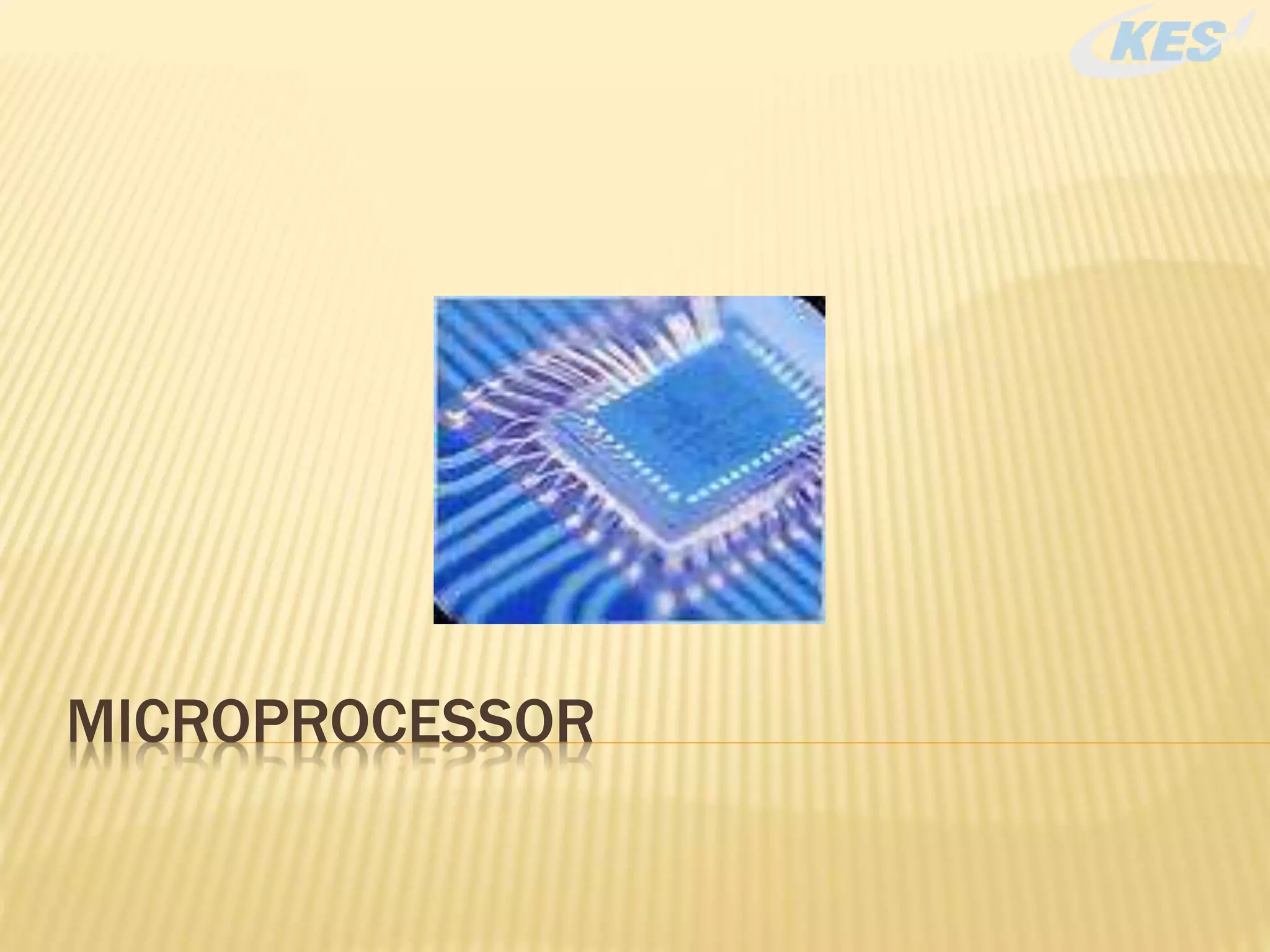
MICROPROCESSOR
INTRODUCTION
 Microprocessor is a multi programmable
logic device.
 It is also known as brain of the computer.
 It accepts the data and instructions from
input devices , process it and gives the
output.
 Input – Process – Output cycle.
 It is a complex chip in the computer.
WORKING OF THE MICROPROCESSOR
 Different parts of the microprocessor work
together to process the data and to give the
output.
 I – P – O cycle.
 Primary functional blocks are:
 ALU
 CU
 MU
FUNCTIONAL BLOCKS
 Arithmetic and Logic Unit.
 Control Unit.
 Decode Unit.
 Instruction Cache.
 Prefetch Unit.
 Bus Unit.
 Data Cache.
 Registers.
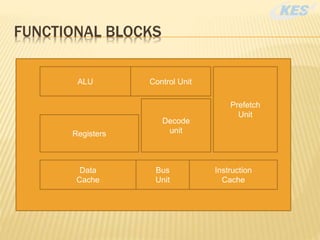
FUNCTIONAL BLOCKS
ALU Control Unit
Instruction
Cache
Registers
Data
Cache
Bus
Unit
Decode
unit
Prefetch
Unit
MICROPROCESSOR SPEED
 The speed of microprocessor depends on various
factors.
1. No of instructions
2. Bandwidth
3. Clock Speed
 Instruction is a command that the microprocessor
executes.
 The bandwidth specifies the number of binary digits
that the microprocessor can process in a single
instruction.
 The clock speed specifies the speed at which the
microprocessor processes an instruction.
TRANSISTORS
 The speed of microprocessor also depends
on the number of the transistors built into the
processor.
 If more number of transistors built on the
microprocessor , the speed also the more.
 The transistors in the microprocessor gives
the more strength to the data signals.
MULTITASKING
 Multitasking is a technology , which enables
the processor to run multiple programs
simultaneously.
 To utilize the microprocessor time more
efficiently multitasking was introduced.
THANK
YOU

Microprocessor

  • 1.
  • 2.
    INTRODUCTION  Microprocessor isa multi programmable logic device.  It is also known as brain of the computer.  It accepts the data and instructions from input devices , process it and gives the output.  Input – Process – Output cycle.  It is a complex chip in the computer.
  • 3.
    WORKING OF THEMICROPROCESSOR  Different parts of the microprocessor work together to process the data and to give the output.  I – P – O cycle.  Primary functional blocks are:  ALU  CU  MU
  • 4.
    FUNCTIONAL BLOCKS  Arithmeticand Logic Unit.  Control Unit.  Decode Unit.  Instruction Cache.  Prefetch Unit.  Bus Unit.  Data Cache.  Registers.
  • 5.
    FUNCTIONAL BLOCKS ALU ControlUnit Instruction Cache Registers Data Cache Bus Unit Decode unit Prefetch Unit
  • 6.
    MICROPROCESSOR SPEED  Thespeed of microprocessor depends on various factors. 1. No of instructions 2. Bandwidth 3. Clock Speed  Instruction is a command that the microprocessor executes.  The bandwidth specifies the number of binary digits that the microprocessor can process in a single instruction.  The clock speed specifies the speed at which the microprocessor processes an instruction.
  • 7.
    TRANSISTORS  The speedof microprocessor also depends on the number of the transistors built into the processor.  If more number of transistors built on the microprocessor , the speed also the more.  The transistors in the microprocessor gives the more strength to the data signals.
  • 8.
    MULTITASKING  Multitasking isa technology , which enables the processor to run multiple programs simultaneously.  To utilize the microprocessor time more efficiently multitasking was introduced.
  • 9.