Computer Fundamentals
Lecture # 5:
Microprocessor
Today’s Objectives:
 To study Microprocessor and its various
Subsystems
Microprocessor:
 The Brain of the computer
 Silicon Chip (IC)
 Latest Pentium-4 has around 125 million transistors
 Performs Billions of Instructions per second
 Combines with other devices such as Memory and
I/O to form a “Microprocessor system”
Microprocessor Models:
 The “Calculator” Model
 Should be able to
 Take Data
 Decode
 Execute
 Give Results
Components Required for the
“Calculator” Model
 Control Unit; for decoding signals and
activate the devices (memories, buses,
registers) in a proper sequence
 Arithmetic Unit; to perform mathematical
calculations
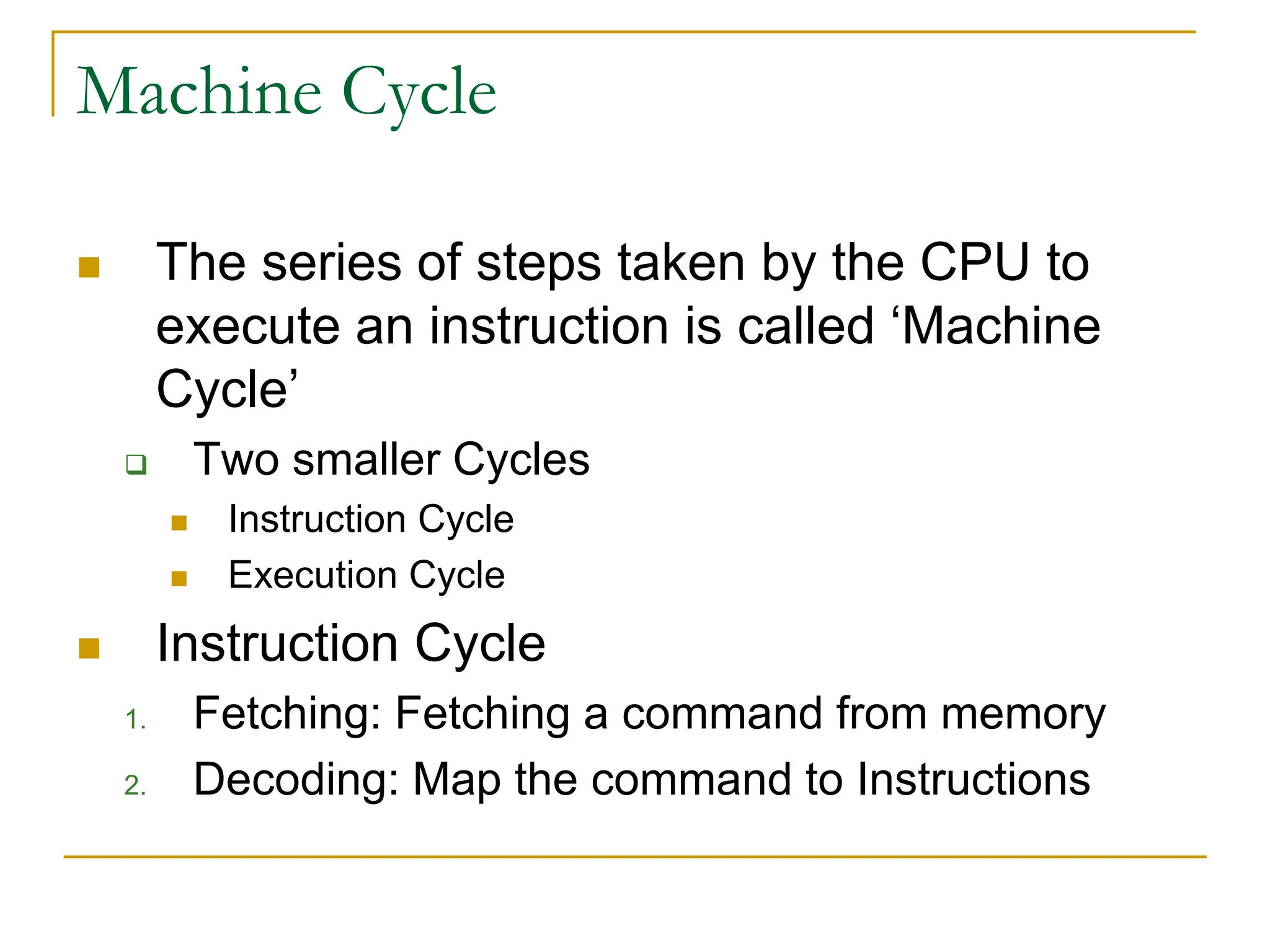
Machine Cycle
 The series of steps taken by the CPU to
execute an instruction is called ‘Machine
Cycle’
 Two smaller Cycles
 Instruction Cycle
 Execution Cycle
 Instruction Cycle
1. Fetching: Fetching a command from memory
2. Decoding: Map the command to Instructions
Machine Cycle
 Execution Cycle
1. Executing: CPU converts the instructions into
microcode and carries them out
2. Storing: (Optional) The CPU stores the result
somewhere in the memory
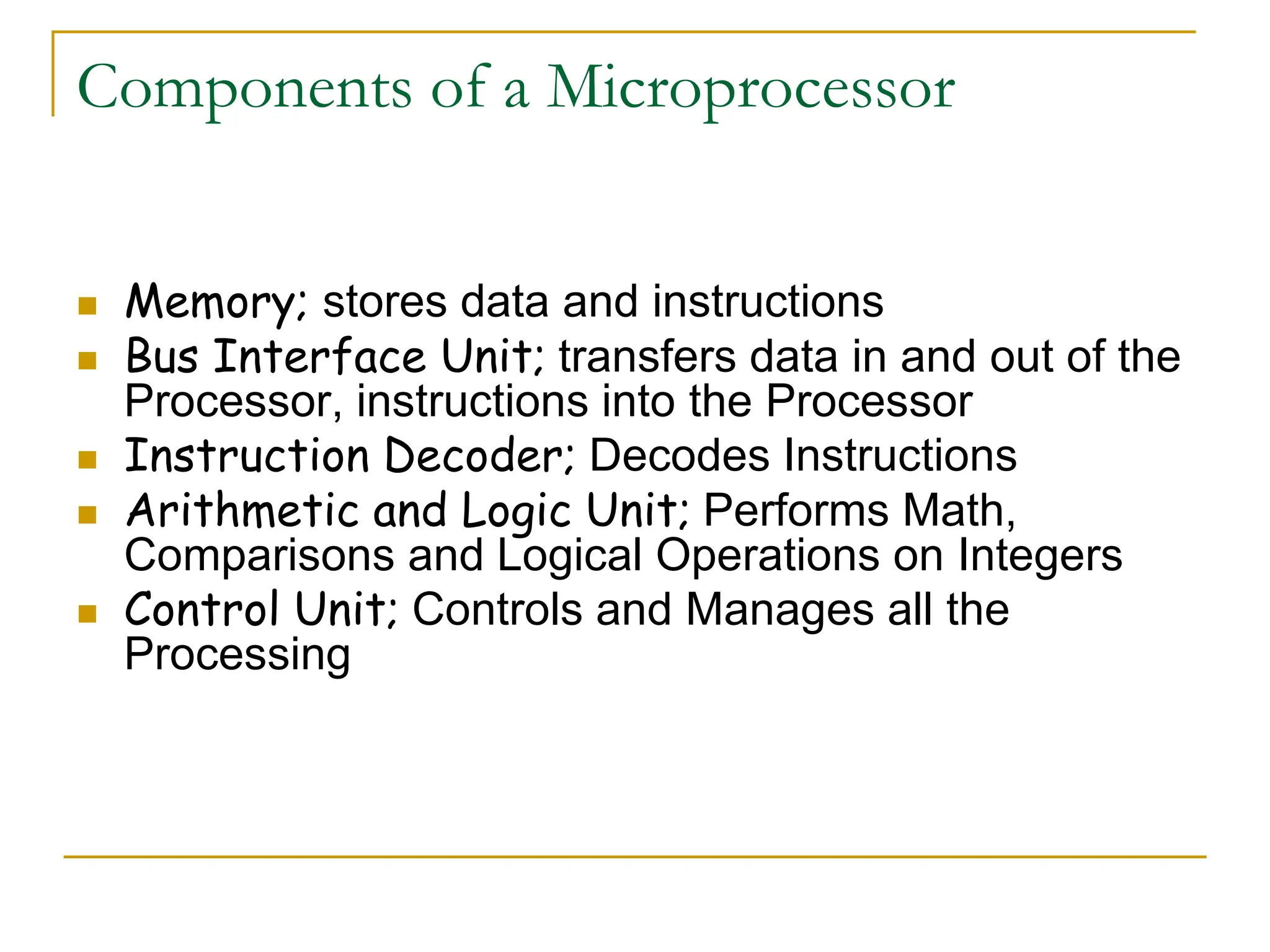
Components of a Microprocessor
 Memory; stores data and instructions
 Bus Interface Unit; transfers data in and out of the
Processor, instructions into the Processor
 Instruction Decoder; Decodes Instructions
 Arithmetic and Logic Unit; Performs Math,
Comparisons and Logical Operations on Integers
 Control Unit; Controls and Manages all the
Processing
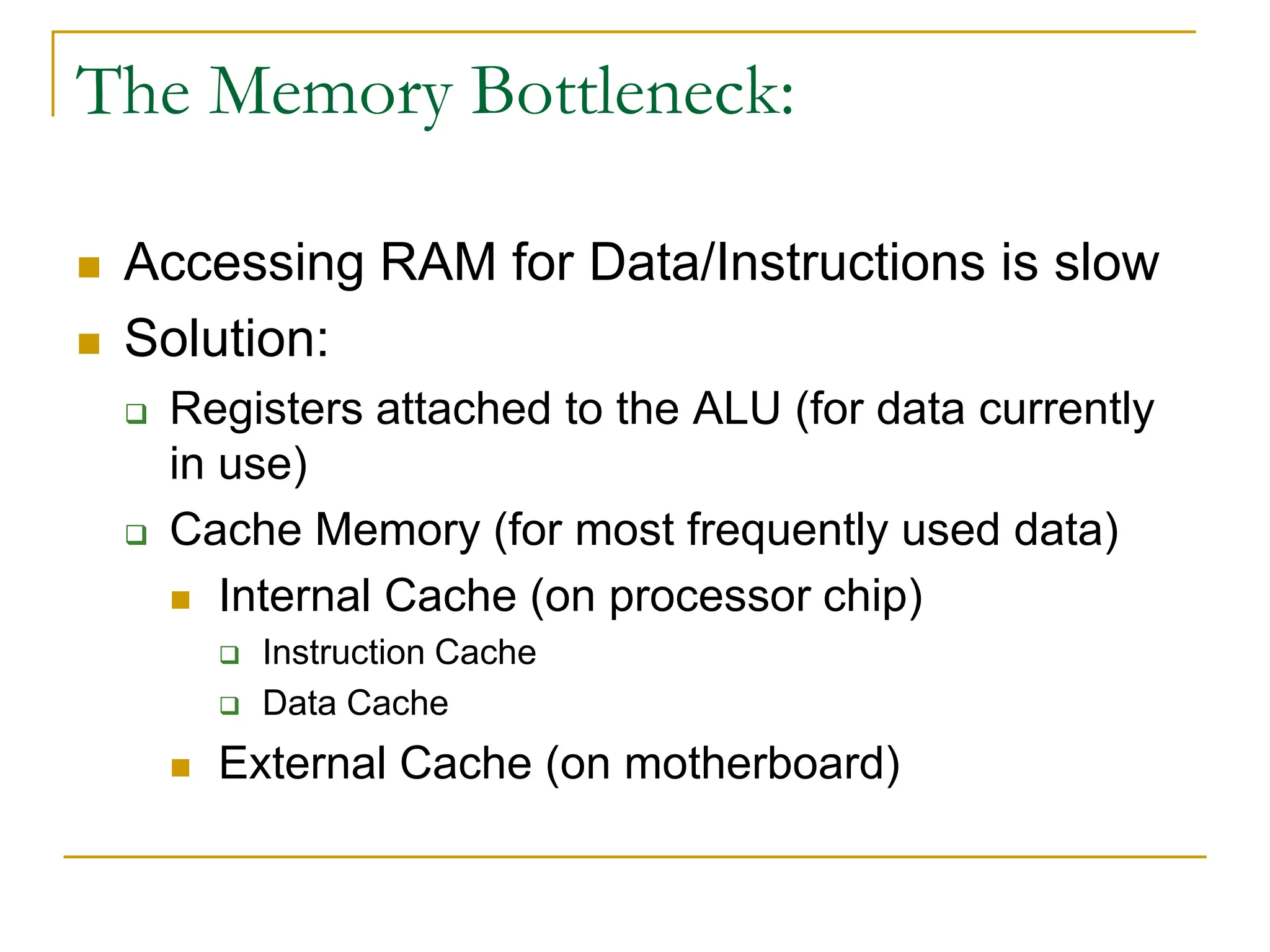
The Memory Bottleneck:
 Accessing RAM for Data/Instructions is slow
 Solution:
 Registers attached to the ALU (for data currently
in use)
 Cache Memory (for most frequently used data)
 Internal Cache (on processor chip)
 Instruction Cache
 Data Cache
 External Cache (on motherboard)
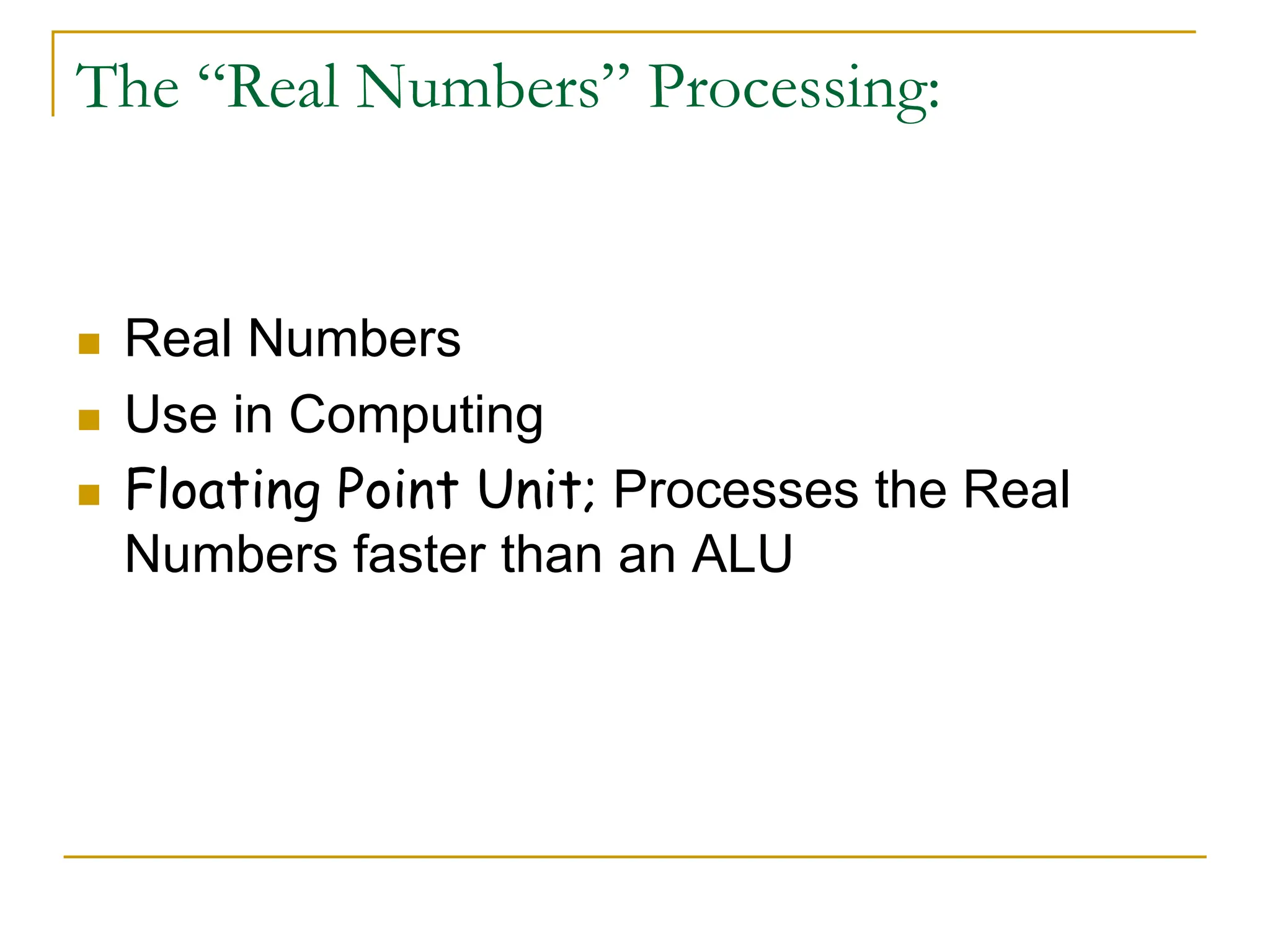
The “Real Numbers” Processing:
 Real Numbers
 Use in Computing
 Floating Point Unit; Processes the Real
Numbers faster than an ALU
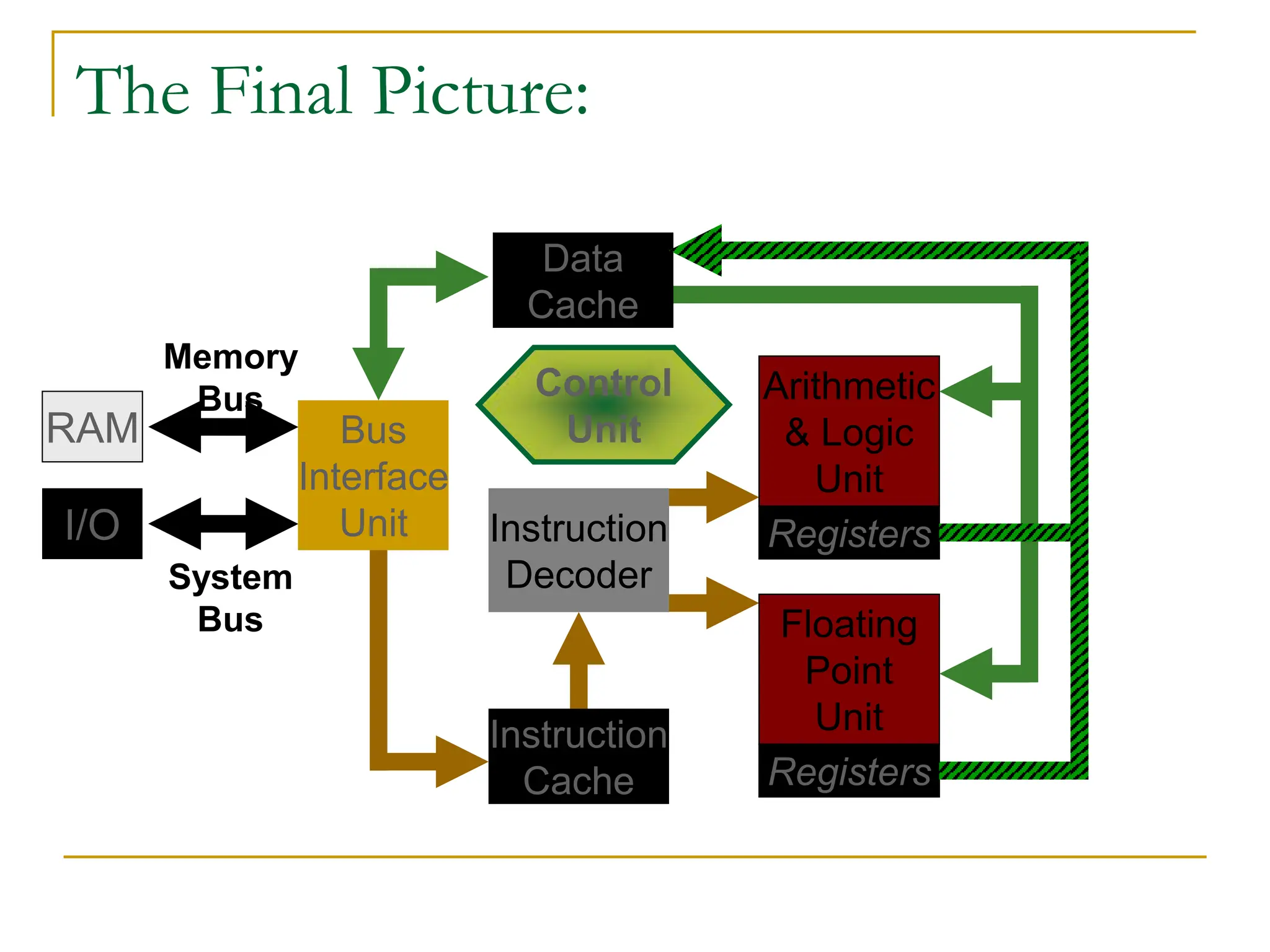
The Final Picture:
Registers
Registers
Instruction
Cache
Arithmetic
& Logic
Unit
Control
Unit
Bus
Interface
Unit
Data
Cache
Instruction
Decoder
I/O
RAM
Memory
Bus
System
Bus Floating
Point
Unit
The Instruction Set:
 A Microprocessor’s Language; Low-Level, Single Step
Instructions
 Also called Program code, Binary code or Machine code
 Difficult to change after implementation
 Architecture dependant
 Design Issues:
 Silicon Real Estate
 Cost
 Expandability
 Legacy Support
 Complexity
 Power Consumption
 Deign Types
 CISC (Complex Instruction Set Computer)
 RISC (Reduced Instruction Set Computer)
Microcontroller
(A Microprocessor system):
 Basic components of a microprocessor
system combined on a single chip
 The CPU core
 RAM and ROM
 I/O ports (Parallel & Serial)
 Timers and Interrupts
 Analogue to Digital Converter (ADC), etc
Microcontrollers
 Used in Autonomous Systems
 ovens, ATMs, vehicles
 Advantage:
 Compact integrated design on single chip
 Reduced interface
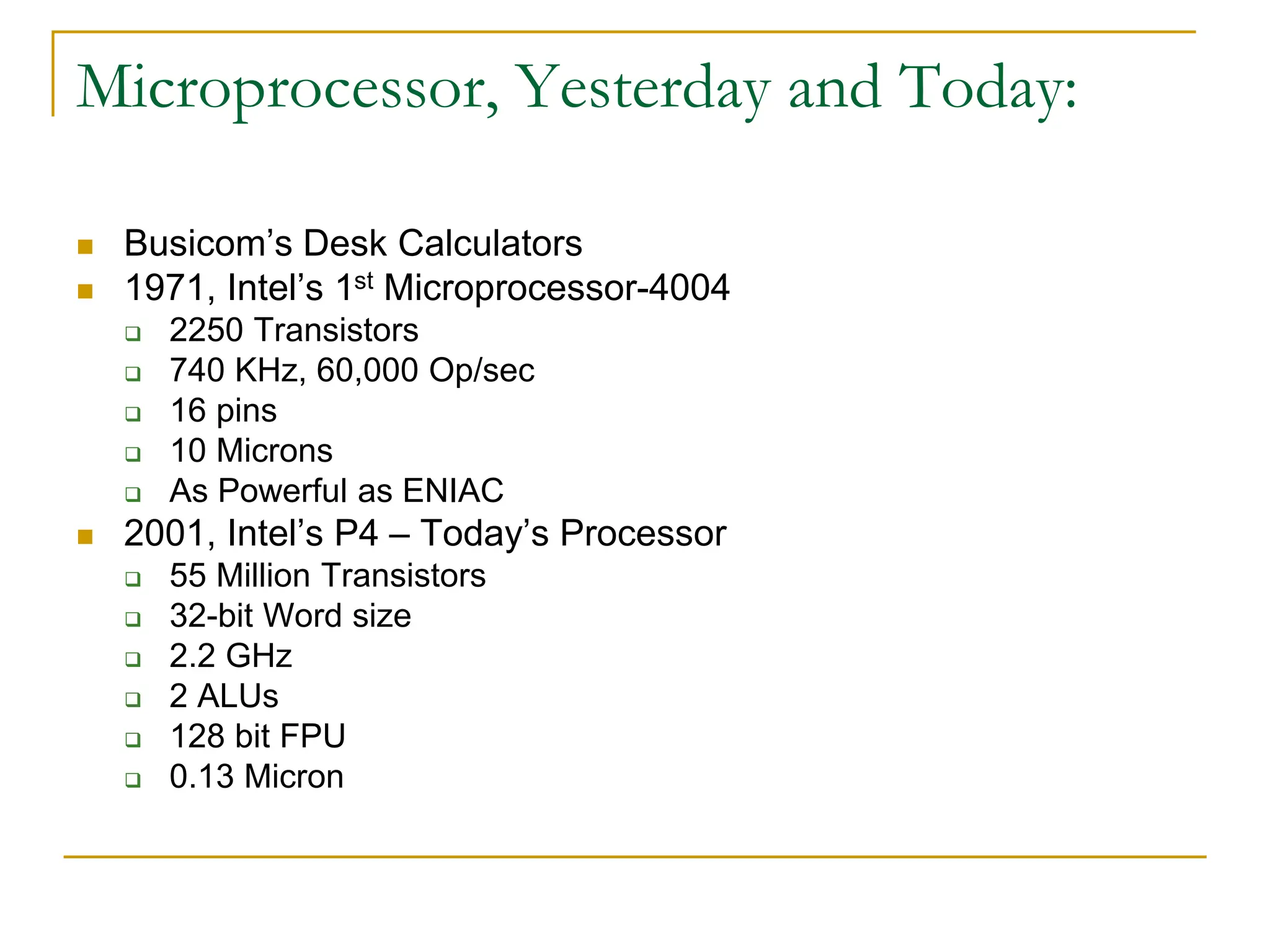
Microprocessor, Yesterday and Today:
 Busicom’s Desk Calculators
 1971, Intel’s 1st Microprocessor-4004
 2250 Transistors
 740 KHz, 60,000 Op/sec
 16 pins
 10 Microns
 As Powerful as ENIAC
 2001, Intel’s P4 – Today’s Processor
 55 Million Transistors
 32-bit Word size
 2.2 GHz
 2 ALUs
 128 bit FPU
 0.13 Micron
Moore’s Law:
 Presented by Gordon
Moore, 1965, Intel
Corp.
 No. of Transistors on
the Processor Chip Will
Double in 18 months
Better Future Processors?
 Capabilities should Include:
 Higher Clock Frequency
 Greater Word Width
 More Functioning Units
 Better Caching Algorithm
 Right Cache Size
 What else?

Lecture5 microprocessor (Microprocessor).ppt

  • 1.
  • 2.
    Today’s Objectives:  Tostudy Microprocessor and its various Subsystems
  • 3.
    Microprocessor:  The Brainof the computer  Silicon Chip (IC)  Latest Pentium-4 has around 125 million transistors  Performs Billions of Instructions per second  Combines with other devices such as Memory and I/O to form a “Microprocessor system”
  • 4.
    Microprocessor Models:  The“Calculator” Model  Should be able to  Take Data  Decode  Execute  Give Results
  • 5.
    Components Required forthe “Calculator” Model  Control Unit; for decoding signals and activate the devices (memories, buses, registers) in a proper sequence  Arithmetic Unit; to perform mathematical calculations
  • 6.
    Machine Cycle  Theseries of steps taken by the CPU to execute an instruction is called ‘Machine Cycle’  Two smaller Cycles  Instruction Cycle  Execution Cycle  Instruction Cycle 1. Fetching: Fetching a command from memory 2. Decoding: Map the command to Instructions
  • 7.
    Machine Cycle  ExecutionCycle 1. Executing: CPU converts the instructions into microcode and carries them out 2. Storing: (Optional) The CPU stores the result somewhere in the memory
  • 8.
    Components of aMicroprocessor  Memory; stores data and instructions  Bus Interface Unit; transfers data in and out of the Processor, instructions into the Processor  Instruction Decoder; Decodes Instructions  Arithmetic and Logic Unit; Performs Math, Comparisons and Logical Operations on Integers  Control Unit; Controls and Manages all the Processing
  • 9.
    The Memory Bottleneck: Accessing RAM for Data/Instructions is slow  Solution:  Registers attached to the ALU (for data currently in use)  Cache Memory (for most frequently used data)  Internal Cache (on processor chip)  Instruction Cache  Data Cache  External Cache (on motherboard)
  • 10.
    The “Real Numbers”Processing:  Real Numbers  Use in Computing  Floating Point Unit; Processes the Real Numbers faster than an ALU
  • 11.
    The Final Picture: Registers Registers Instruction Cache Arithmetic &Logic Unit Control Unit Bus Interface Unit Data Cache Instruction Decoder I/O RAM Memory Bus System Bus Floating Point Unit
  • 12.
    The Instruction Set: A Microprocessor’s Language; Low-Level, Single Step Instructions  Also called Program code, Binary code or Machine code  Difficult to change after implementation  Architecture dependant  Design Issues:  Silicon Real Estate  Cost  Expandability  Legacy Support  Complexity  Power Consumption  Deign Types  CISC (Complex Instruction Set Computer)  RISC (Reduced Instruction Set Computer)
  • 13.
    Microcontroller (A Microprocessor system): Basic components of a microprocessor system combined on a single chip  The CPU core  RAM and ROM  I/O ports (Parallel & Serial)  Timers and Interrupts  Analogue to Digital Converter (ADC), etc
  • 14.
    Microcontrollers  Used inAutonomous Systems  ovens, ATMs, vehicles  Advantage:  Compact integrated design on single chip  Reduced interface
  • 16.
    Microprocessor, Yesterday andToday:  Busicom’s Desk Calculators  1971, Intel’s 1st Microprocessor-4004  2250 Transistors  740 KHz, 60,000 Op/sec  16 pins  10 Microns  As Powerful as ENIAC  2001, Intel’s P4 – Today’s Processor  55 Million Transistors  32-bit Word size  2.2 GHz  2 ALUs  128 bit FPU  0.13 Micron
  • 17.
    Moore’s Law:  Presentedby Gordon Moore, 1965, Intel Corp.  No. of Transistors on the Processor Chip Will Double in 18 months
  • 18.
    Better Future Processors? Capabilities should Include:  Higher Clock Frequency  Greater Word Width  More Functioning Units  Better Caching Algorithm  Right Cache Size  What else?