1
Presented By:
Suman Nasir
Microarray Technology
Contents
• Microarray Technology
• History
• Principle
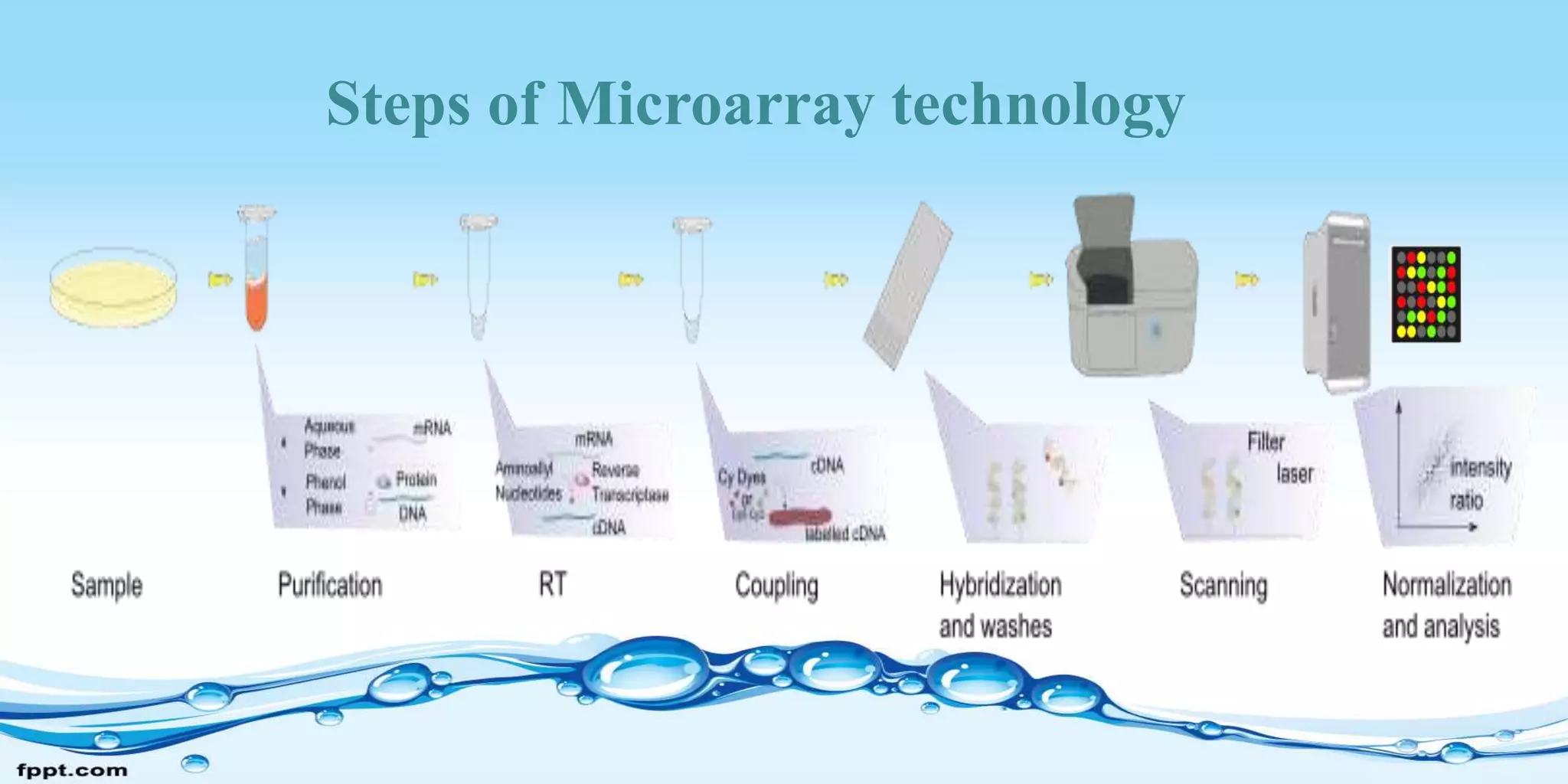
• Steps of Microarray technology
• Types of Microarray technology
• Applications of DNA Microarray Technology
• Disadvantages
• Conclusion
• References
Microarray Technology
 Microarray technology is a developing technology used to study the expression
of many genes at once. It involves placing thousands of gene sequences in known
locations on a glass slide called a gene chip.
 The chip is similar to a computer chip; on the outer part, every chip has many
short, synthetic, single-stranded DNA arrangements that, as a group, form the
normal gene.
 Each DNA spot contains picomoles (10−12 moles) of a specific DNA sequence,
known as probes (or reporters or oligos)
History
• Microarray technology evolved from Southern
blotting
• The concept of DNA microarrays began in the
mid 1980s.
• Mark Schena was proclaimed as the “Father of
Microarray Technology” Mark Schena Mark Schena
Principle:
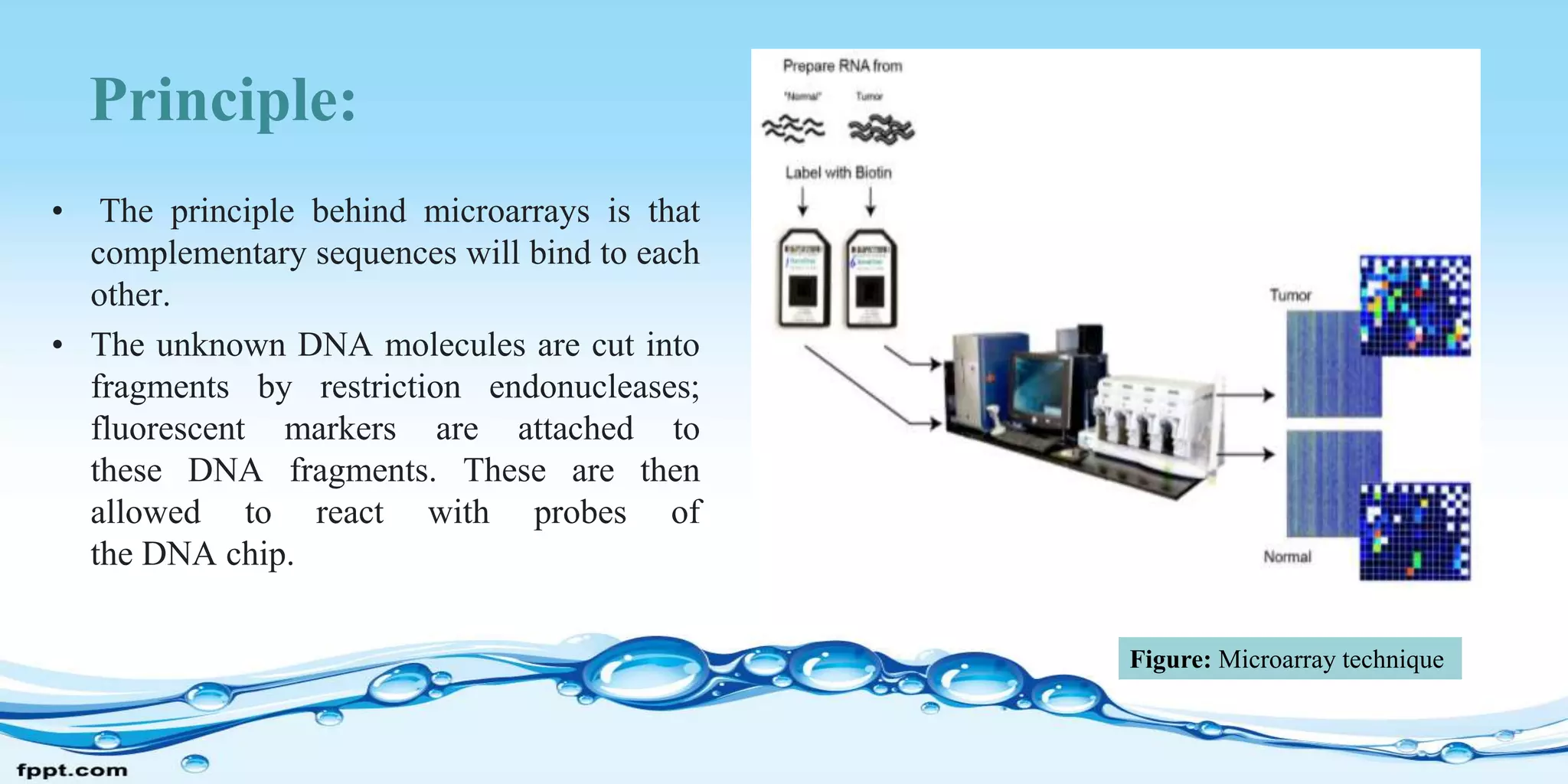
• The principle behind microarrays is that
complementary sequences will bind to each
other.
• The unknown DNA molecules are cut into
fragments by restriction endonucleases;
fluorescent markers are attached to
these DNA fragments. These are then
allowed to react with probes of
the DNA chip.
Figure: Microarray technique
Steps of Microarray technology
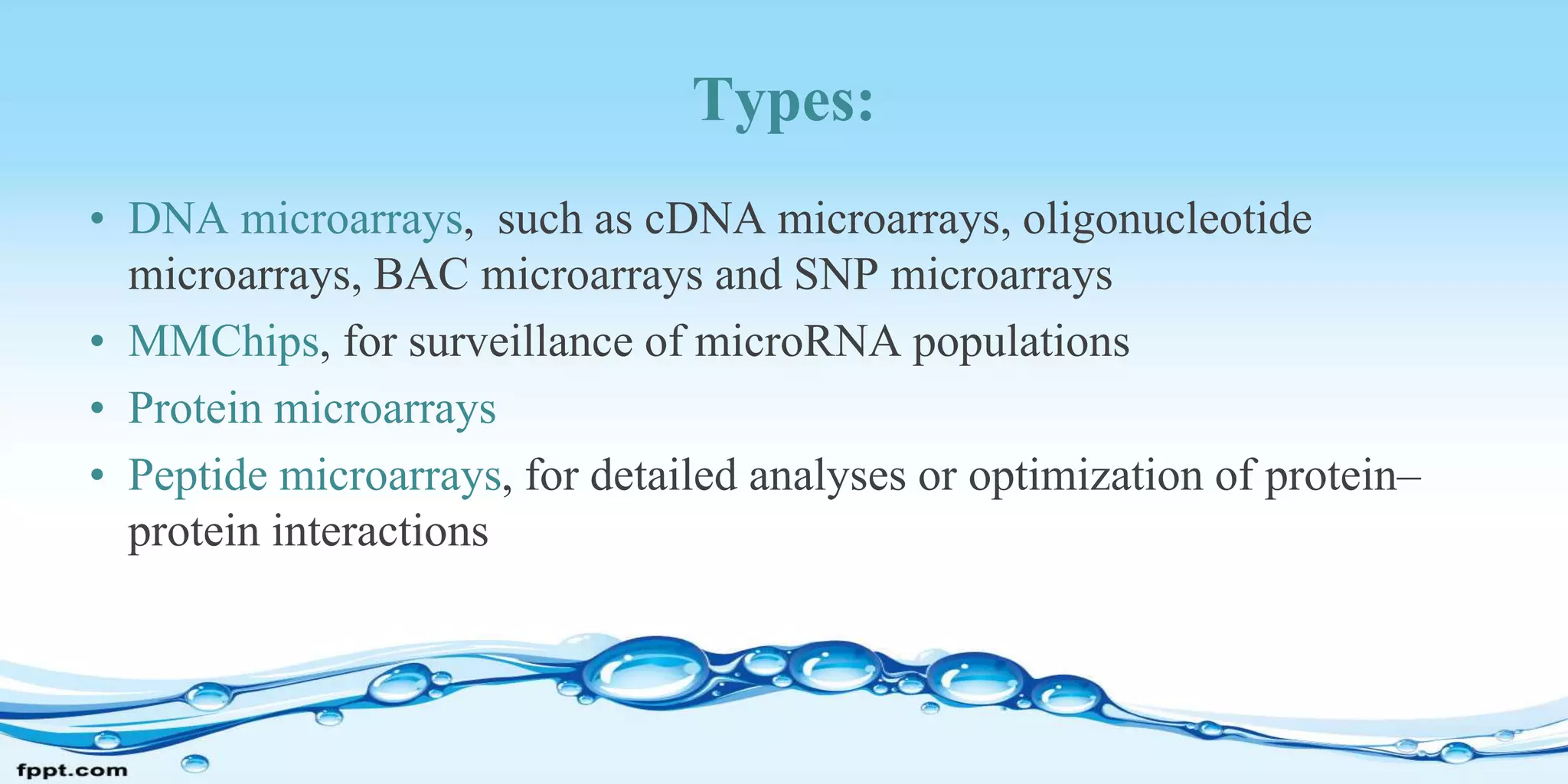
Types:
• DNA microarrays, such as cDNA microarrays, oligonucleotide
microarrays, BAC microarrays and SNP microarrays
• MMChips, for surveillance of microRNA populations
• Protein microarrays
• Peptide microarrays, for detailed analyses or optimization of protein–
protein interactions
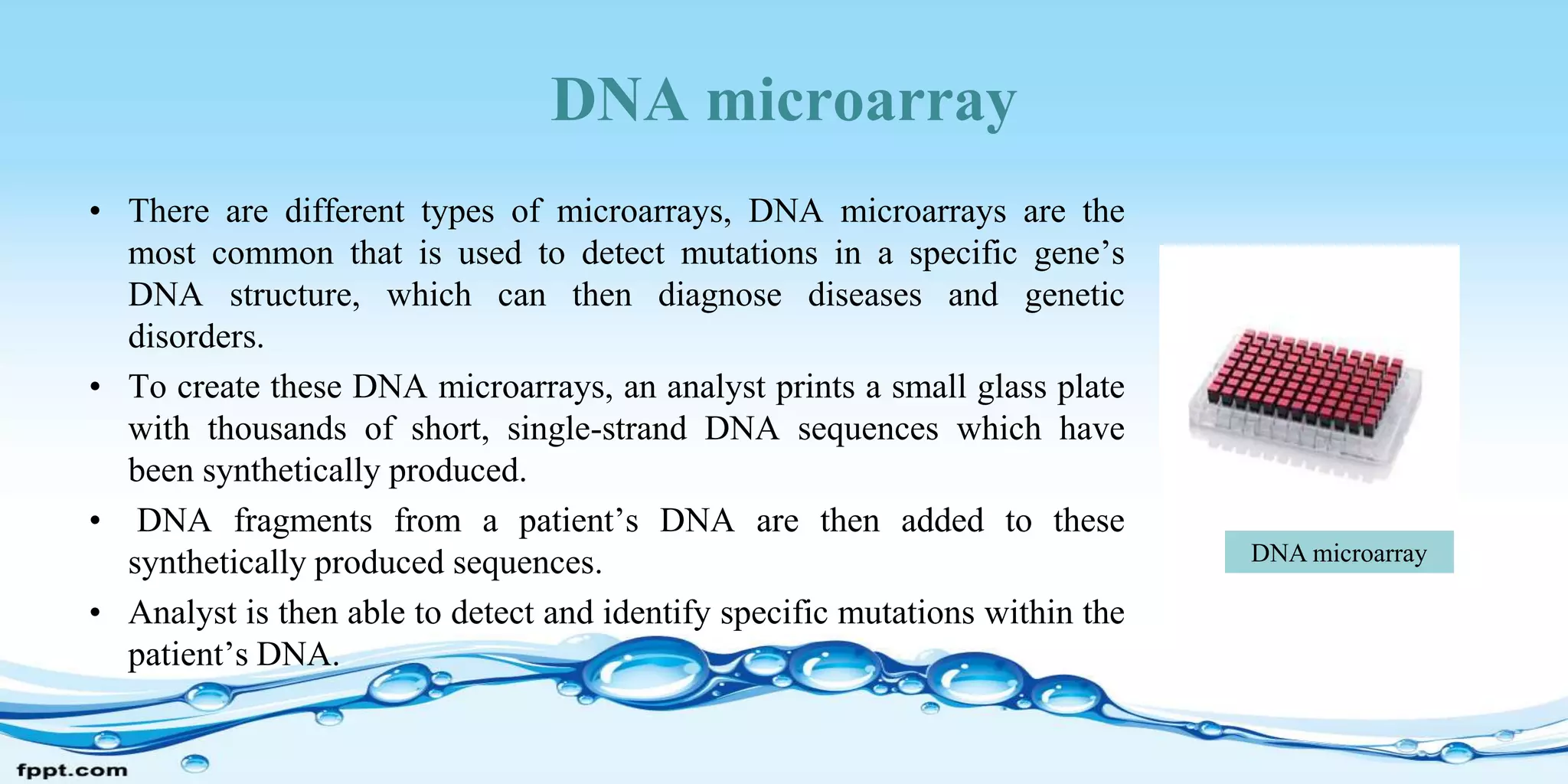
DNA microarray
• There are different types of microarrays, DNA microarrays are the
most common that is used to detect mutations in a specific gene’s
DNA structure, which can then diagnose diseases and genetic
disorders.
• To create these DNA microarrays, an analyst prints a small glass plate
with thousands of short, single-strand DNA sequences which have
been synthetically produced.
• DNA fragments from a patient’s DNA are then added to these
synthetically produced sequences.
• Analyst is then able to detect and identify specific mutations within the
patient’s DNA.
DNA microarray
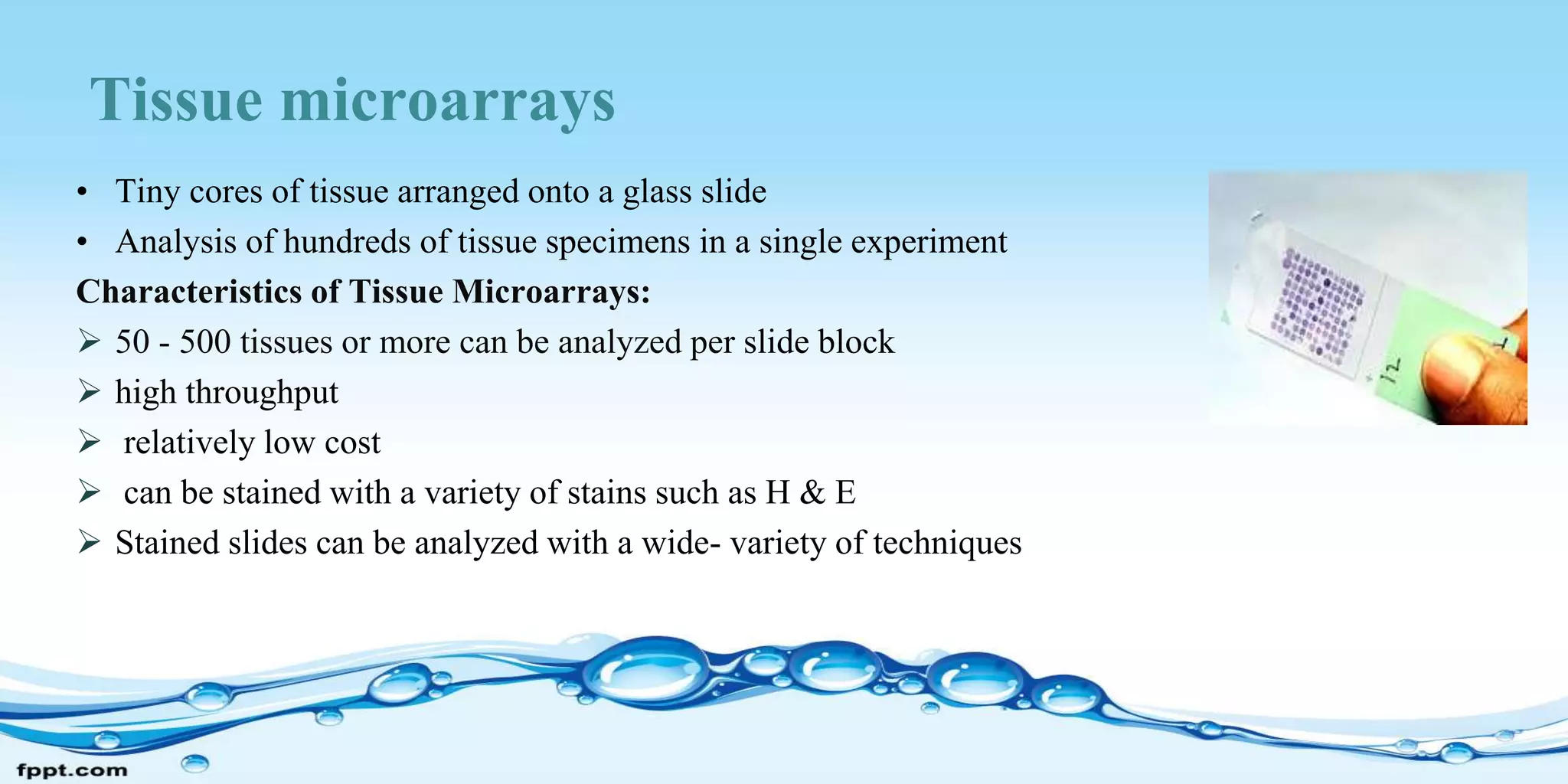
Tissue microarrays
• Tiny cores of tissue arranged onto a glass slide
• Analysis of hundreds of tissue specimens in a single experiment
Characteristics of Tissue Microarrays:
 50 - 500 tissues or more can be analyzed per slide block
 high throughput
 relatively low cost
 can be stained with a variety of stains such as H & E
 Stained slides can be analyzed with a wide- variety of techniques
Example:
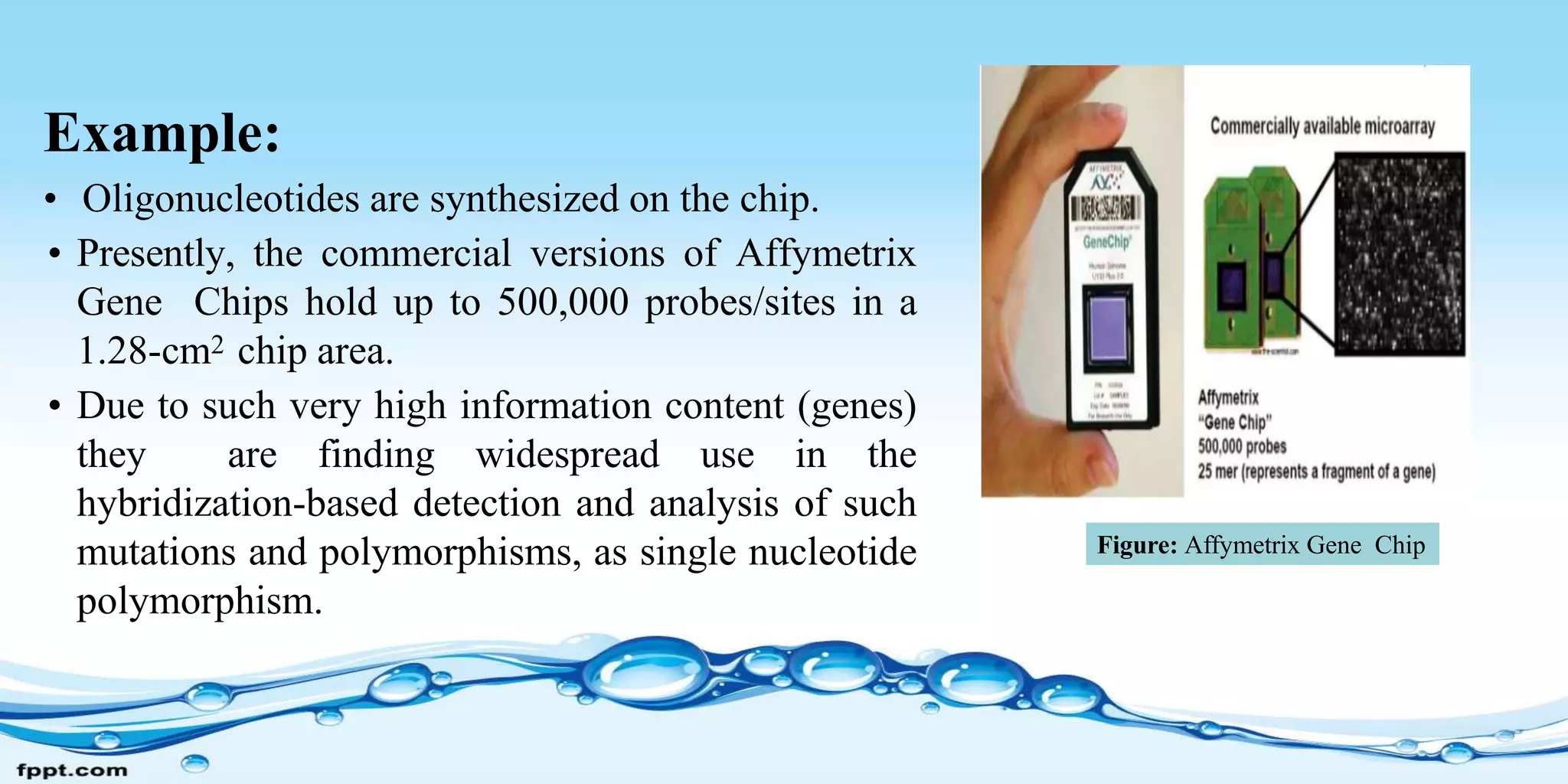
• Oligonucleotides are synthesized on the chip.
• Presently, the commercial versions of Affymetrix
Gene Chips hold up to 500,000 probes/sites in a
1.28-cm2 chip area.
• Due to such very high information content (genes)
they are finding widespread use in the
hybridization-based detection and analysis of such
mutations and polymorphisms, as single nucleotide
polymorphism.
Figure: Affymetrix Gene Chip
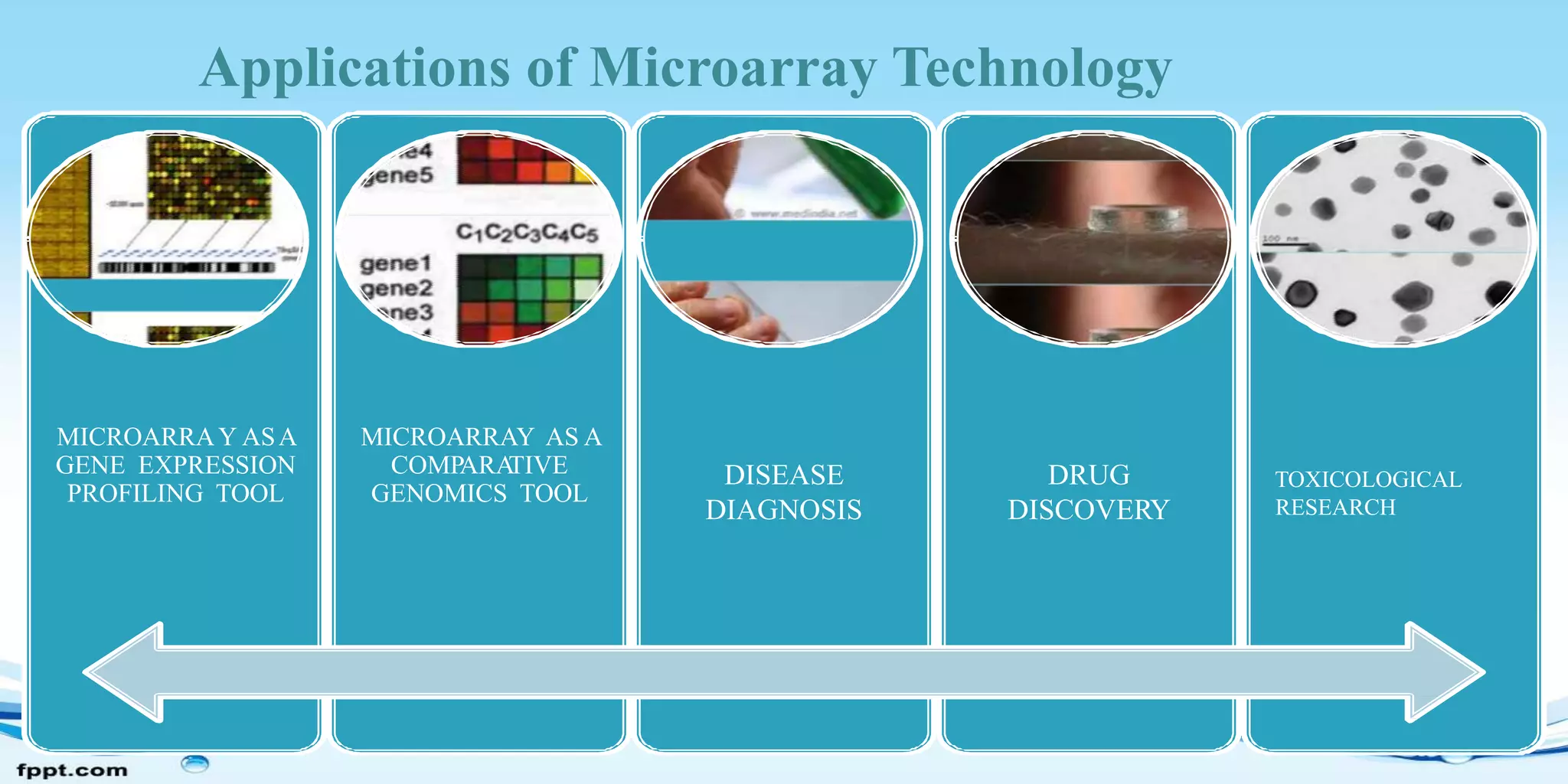
MICROARRAY ASA
GENE EXPRESSION
PROFILING TOOL
MICROARRAY AS A
COMPARA
TIVE
GENOMICS TOOL
DISEASE
DIAGNOSIS
DRUG
DISCOVERY
TOXICOLOGICAL
RESEARCH
Applications of Microarray Technology
Microarray as a Gene Expression Profiling Tool
• The principle aim of using microarray technology as a gene expression profiling tool is to
answer some of the fundamental questions in biology such as "when, where, and to what
magnitude genes of interest are expressed.
• Microarray analysis measure changes in the multigene patterns of expression to better
understand about regulatory mechanisms and broader bioactivity functions of genes.
Microarray as comparative genomic Tool
• Microarray technology have widespread use in comparative gene mutation analysis as to
analyze and genomic alterations such sequence single nucleotide polymorphisms.
• In microbiology microarray gene mutation analysis is directed to characterization of genetic
differences among microbial isolates, particularly closely related species.
Disease Diagnosis
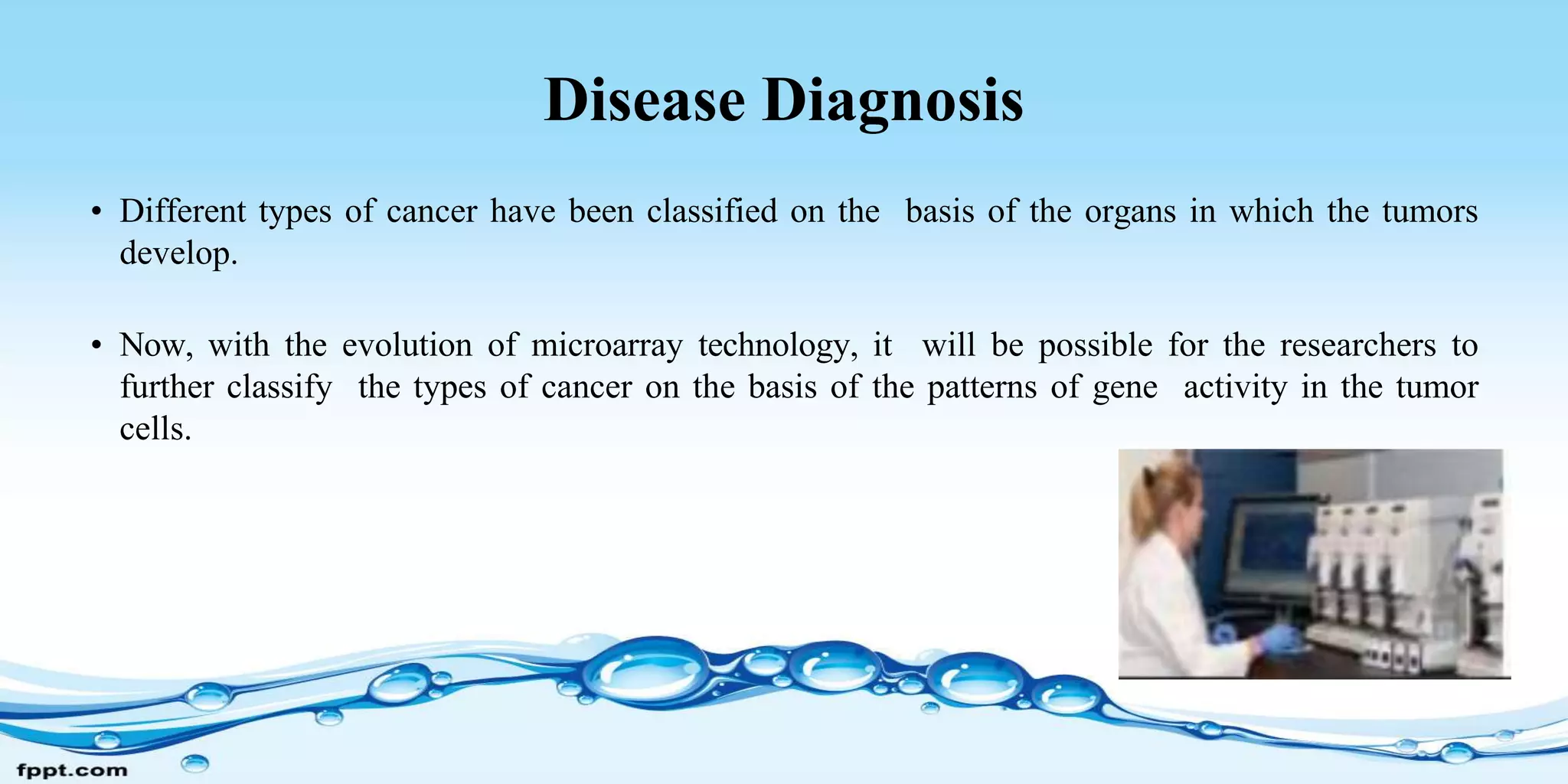
• Different types of cancer have been classified on the basis of the organs in which the tumors
develop.
• Now, with the evolution of microarray technology, it will be possible for the researchers to
further classify the types of cancer on the basis of the patterns of gene activity in the tumor
cells.
Drug Discovery
• Microarray technology has extensive application in Pharmacogenomics.
• Comparative analysis of the genes from a diseased and a normal cell will help the
identification of the biochemical constitution of the proteins synthesized by the diseased
genes.
Toxicological Research
• Microarray technology provides a robust platform for the research of the impact of toxins on the
cells and their passing on to the progeny.
• Toxicogenomics establishes correlation between responses to toxicants and the changes in the
genetic profiles of the cells exposed to such toxicants.
• The microarray permits researchers to examine thousands of different genes in the same
experiment and thus to obtain a good understanding of the relative levels of expression between
different genes in an organism.
Disadvantages
• They are costly to create, demanding many results need a lot of time for analysis, which is
already a complicated process, and the chips are perishable and do not survive for a long time,
which proves to be a huge disadvantage of this technology.
• With the availability of new information and developments, researchers will be able to use
microchips to pose more complicated questions and to carry out more difficult experiments,
which in turn may lead to breakthroughs in the fields of disease diagnosis and drug discovery,
amongst others, while working on decreasing the disadvantages.
Conclusion:
Microarrays are one of the most effective invention ever developed. Microarray allows for the
comparison of thousands of genes at once. Microarray technology uses chips with attached DNA
sequences as probes for gene expression. Any DNA in the sample that is complementary to a
probe sequence will become bound to the chip. Microarray technology is most powerful when it
used on species with a sequenced genome. The microarray chip can hold sequences from every
gene in the entire genome and the expression of every gene can be studied simultaneously. Gene
expression data can provide information on the function of previously uncharacterized genes.
References:
• http://www.bio.davidson.edu/courses/genomics/chip/chip.html
• http://www.cs.washington.edu/homes/jbuhler/research/array
Thank You

Microarray technology.pptx

  • 1.
  • 2.
    Contents • Microarray Technology •History • Principle • Steps of Microarray technology • Types of Microarray technology • Applications of DNA Microarray Technology • Disadvantages • Conclusion • References
  • 3.
    Microarray Technology  Microarraytechnology is a developing technology used to study the expression of many genes at once. It involves placing thousands of gene sequences in known locations on a glass slide called a gene chip.  The chip is similar to a computer chip; on the outer part, every chip has many short, synthetic, single-stranded DNA arrangements that, as a group, form the normal gene.  Each DNA spot contains picomoles (10−12 moles) of a specific DNA sequence, known as probes (or reporters or oligos)
  • 4.
    History • Microarray technologyevolved from Southern blotting • The concept of DNA microarrays began in the mid 1980s. • Mark Schena was proclaimed as the “Father of Microarray Technology” Mark Schena Mark Schena
  • 5.
    Principle: • The principlebehind microarrays is that complementary sequences will bind to each other. • The unknown DNA molecules are cut into fragments by restriction endonucleases; fluorescent markers are attached to these DNA fragments. These are then allowed to react with probes of the DNA chip. Figure: Microarray technique
  • 6.
  • 7.
    Types: • DNA microarrays,such as cDNA microarrays, oligonucleotide microarrays, BAC microarrays and SNP microarrays • MMChips, for surveillance of microRNA populations • Protein microarrays • Peptide microarrays, for detailed analyses or optimization of protein– protein interactions
  • 8.
    DNA microarray • Thereare different types of microarrays, DNA microarrays are the most common that is used to detect mutations in a specific gene’s DNA structure, which can then diagnose diseases and genetic disorders. • To create these DNA microarrays, an analyst prints a small glass plate with thousands of short, single-strand DNA sequences which have been synthetically produced. • DNA fragments from a patient’s DNA are then added to these synthetically produced sequences. • Analyst is then able to detect and identify specific mutations within the patient’s DNA. DNA microarray
  • 9.
    Tissue microarrays • Tinycores of tissue arranged onto a glass slide • Analysis of hundreds of tissue specimens in a single experiment Characteristics of Tissue Microarrays:  50 - 500 tissues or more can be analyzed per slide block  high throughput  relatively low cost  can be stained with a variety of stains such as H & E  Stained slides can be analyzed with a wide- variety of techniques
  • 10.
    Example: • Oligonucleotides aresynthesized on the chip. • Presently, the commercial versions of Affymetrix Gene Chips hold up to 500,000 probes/sites in a 1.28-cm2 chip area. • Due to such very high information content (genes) they are finding widespread use in the hybridization-based detection and analysis of such mutations and polymorphisms, as single nucleotide polymorphism. Figure: Affymetrix Gene Chip
  • 11.
    MICROARRAY ASA GENE EXPRESSION PROFILINGTOOL MICROARRAY AS A COMPARA TIVE GENOMICS TOOL DISEASE DIAGNOSIS DRUG DISCOVERY TOXICOLOGICAL RESEARCH Applications of Microarray Technology
  • 12.
    Microarray as aGene Expression Profiling Tool • The principle aim of using microarray technology as a gene expression profiling tool is to answer some of the fundamental questions in biology such as "when, where, and to what magnitude genes of interest are expressed. • Microarray analysis measure changes in the multigene patterns of expression to better understand about regulatory mechanisms and broader bioactivity functions of genes.
  • 13.
    Microarray as comparativegenomic Tool • Microarray technology have widespread use in comparative gene mutation analysis as to analyze and genomic alterations such sequence single nucleotide polymorphisms. • In microbiology microarray gene mutation analysis is directed to characterization of genetic differences among microbial isolates, particularly closely related species.
  • 14.
    Disease Diagnosis • Differenttypes of cancer have been classified on the basis of the organs in which the tumors develop. • Now, with the evolution of microarray technology, it will be possible for the researchers to further classify the types of cancer on the basis of the patterns of gene activity in the tumor cells.
  • 15.
    Drug Discovery • Microarraytechnology has extensive application in Pharmacogenomics. • Comparative analysis of the genes from a diseased and a normal cell will help the identification of the biochemical constitution of the proteins synthesized by the diseased genes.
  • 16.
    Toxicological Research • Microarraytechnology provides a robust platform for the research of the impact of toxins on the cells and their passing on to the progeny. • Toxicogenomics establishes correlation between responses to toxicants and the changes in the genetic profiles of the cells exposed to such toxicants. • The microarray permits researchers to examine thousands of different genes in the same experiment and thus to obtain a good understanding of the relative levels of expression between different genes in an organism.
  • 17.
    Disadvantages • They arecostly to create, demanding many results need a lot of time for analysis, which is already a complicated process, and the chips are perishable and do not survive for a long time, which proves to be a huge disadvantage of this technology. • With the availability of new information and developments, researchers will be able to use microchips to pose more complicated questions and to carry out more difficult experiments, which in turn may lead to breakthroughs in the fields of disease diagnosis and drug discovery, amongst others, while working on decreasing the disadvantages.
  • 18.
    Conclusion: Microarrays are oneof the most effective invention ever developed. Microarray allows for the comparison of thousands of genes at once. Microarray technology uses chips with attached DNA sequences as probes for gene expression. Any DNA in the sample that is complementary to a probe sequence will become bound to the chip. Microarray technology is most powerful when it used on species with a sequenced genome. The microarray chip can hold sequences from every gene in the entire genome and the expression of every gene can be studied simultaneously. Gene expression data can provide information on the function of previously uncharacterized genes.
  • 19.
  • 20.

Editor's Notes

  • #6 Then the target DNA fragments along with complementary sequences bind to the DNA probes. The remaining DNA fragments are washed away. The target DNA pieces can be identified by their fluorescence emission by passing a laser beam. A computer is used to record the pattern of fluorescence emission and DNA identification. This technique of employing DNA chips is very rapid, besides being sensitive and specific for the identification of several DNA fragments simultaneously.
  • #7 Grey-gene not active Yellow-gene active in both normal and diseased Green-gene active in normal Red-gene active in disesed
  • #8 The array CGH technique (Array Comparative Genome Hybridization) has been developed to detect chromosomal copy number changes on a genome-wide and/or high-resolution scale. A protein microarray (or protein chip) is a high-throughput method used to track the interactions and activities of proteins, and to determine their function, and determining function on a large scale. Its main advantage lies in the fact that large numbers of proteins can be tracked in parallel.