




By: Sana Shakeel
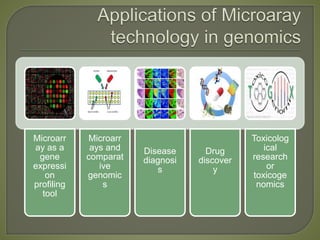
Microarr
ay as a
gene
expressi
on
profiling
tool
Microarr
ays and
comparat
ive
genomic
s
Disease
diagnosi
s
Drug
discover
y
Toxicolog
ical
research
or
toxicoge
nomics
 "when, where, and to what magnitude genes of
interest are expressed.
 Measure changes in the multigene patterns of
expression
 The arrays used in this kind of analysis are called
expression chips
 profiling of immune responses, identification of
enzyme substrates, and quantifying protein-small
molecule, protein-protein and protein-DNA/RNA
interactions
DNA microarrays can:
1) identify diagnostic or prognostic biomarkers;
2) classify diseases
3) monitor the response to therapy; and
4) understand the mechanisms involved in the genesis
of disease processes.
comparative gene mutation analysis to
analyse genomic alterations such as
sequence and single nucleotide
polymorphisms.
In microbiology microarray gene mutation
analysis is directed to characterisation of
genetic differences among microbial
isolates, particularly closely related
species
Viral-microbe interactions
 Different types of cancer have been classified on
the basis of the organs in which the tumors
develop.
 Now, with the evolution of microarray technology, it
will be possible for the researchers to further
classify the types of cancer on the basis of the
patterns of gene activity in the tumor cells
 Identification of gene expression profiles or
“genomic fingerprints” will allow clinicians to
differentiate harmless white lesions from
precancerous lesions or from very early cancer
Microarray technology has extensive
application in Pharmacogenomics.
Comparative analysis of the genes from a
diseased and a normal cell will help the
identification of the biochemical
constitution of the proteins synthesized by
the diseased genes.
 Microarray technology provides a robust platform for the
research of the impact of toxins on the cells and their
passing on to the progeny.
 Toxicogenomics establishes correlation between
responses to toxicants and the changes in the genetic
profiles of the cells exposed to such toxicants.
 The microarray permits researchers to examine
thousands of different genes in the same experiment and
thus to obtain a good understanding of the relative levels
of expression between different genes in an organism.
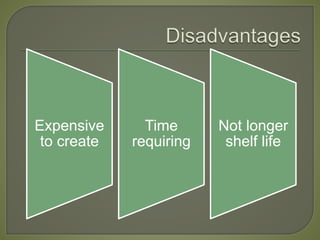
Expensive
to create
Time
requiring
Not longer
shelf life
 Microarray is a recently developed functional
genomics technology that has powerful
applications in a wide array of biological
medical sciences, agriculture, biotechnology
and environmental studies.
 Since many universities research institutions
and industries have established microarray
based core facilities and services,
microarrays have become a readily
accessible, widely used technology for
investigating biological systems.
 Lettieri, T. (2006). Recent applications of DNA
microarray technology to toxicology and ecotoxicology.
Environmental health perspectives, 114(1), 4.
 Tarca, A. L., Romero, R., & Draghici, S. (2006).
Analysis of microarray experiments of gene expression
profiling. American Journal of Obstetrics &
Gynecology, 195(2), 373-388.
 Kumar, A., Sen, A., & Das, P. (2010). Microarray based
gene expression: a novel approach for identification
and development of potential drug and effective
vaccine against visceral Leishmaniasis. International
Journal of Advances in Pharmaceutical Sciences, 1(1).
 Santos, F., Martínez-García, M., Parro, V., &
Antón, J. (2014). Microarray tools to unveil viral-
microbe interactions in nature. Frontiers in Ecology
and Evolution, 2, 31.
 Duarte, J. G., & Blackburn, J. M. (2017). Advances
in the development of human protein microarrays.
Expert review of proteomics, 14(7), 627-641.
 Oostlander, A. E., Meijer, G. A., & Ylstra, B. (2004).
Microarray‐based comparative genomic
hybridization and its applications in human
genetics. Clinical genetics, 66(6), 488-495.
 Gupta, S., Manubhai, K. P., Mukherjee, S., &
Srivastava, S. (2017). Serum Profiling for
Identification of Autoantibody Signatures in
Diseases Using Protein Microarrays.
Serum/Plasma Proteomics: Methods and
Protocols, 303-315.
 Kumar, A., Sen, A., & Das, P. (2010). Microarray
based gene expression: a novel approach for
identification and development of potential drug
and effective vaccine against visceral
Leishmaniasis. International Journal of Advances
in Pharmaceutical Sciences, 1(1).

Applications of microarray

  • 1.
  • 2.
    Microarr ay as a gene expressi on profiling tool Microarr aysand comparat ive genomic s Disease diagnosi s Drug discover y Toxicolog ical research or toxicoge nomics
  • 3.
     "when, where,and to what magnitude genes of interest are expressed.  Measure changes in the multigene patterns of expression  The arrays used in this kind of analysis are called expression chips  profiling of immune responses, identification of enzyme substrates, and quantifying protein-small molecule, protein-protein and protein-DNA/RNA interactions
  • 4.
    DNA microarrays can: 1)identify diagnostic or prognostic biomarkers; 2) classify diseases 3) monitor the response to therapy; and 4) understand the mechanisms involved in the genesis of disease processes.
  • 6.
    comparative gene mutationanalysis to analyse genomic alterations such as sequence and single nucleotide polymorphisms. In microbiology microarray gene mutation analysis is directed to characterisation of genetic differences among microbial isolates, particularly closely related species Viral-microbe interactions
  • 9.
     Different typesof cancer have been classified on the basis of the organs in which the tumors develop.  Now, with the evolution of microarray technology, it will be possible for the researchers to further classify the types of cancer on the basis of the patterns of gene activity in the tumor cells  Identification of gene expression profiles or “genomic fingerprints” will allow clinicians to differentiate harmless white lesions from precancerous lesions or from very early cancer
  • 11.
    Microarray technology hasextensive application in Pharmacogenomics. Comparative analysis of the genes from a diseased and a normal cell will help the identification of the biochemical constitution of the proteins synthesized by the diseased genes.
  • 13.
     Microarray technologyprovides a robust platform for the research of the impact of toxins on the cells and their passing on to the progeny.  Toxicogenomics establishes correlation between responses to toxicants and the changes in the genetic profiles of the cells exposed to such toxicants.  The microarray permits researchers to examine thousands of different genes in the same experiment and thus to obtain a good understanding of the relative levels of expression between different genes in an organism.
  • 15.
  • 16.
     Microarray isa recently developed functional genomics technology that has powerful applications in a wide array of biological medical sciences, agriculture, biotechnology and environmental studies.  Since many universities research institutions and industries have established microarray based core facilities and services, microarrays have become a readily accessible, widely used technology for investigating biological systems.
  • 17.
     Lettieri, T.(2006). Recent applications of DNA microarray technology to toxicology and ecotoxicology. Environmental health perspectives, 114(1), 4.  Tarca, A. L., Romero, R., & Draghici, S. (2006). Analysis of microarray experiments of gene expression profiling. American Journal of Obstetrics & Gynecology, 195(2), 373-388.  Kumar, A., Sen, A., & Das, P. (2010). Microarray based gene expression: a novel approach for identification and development of potential drug and effective vaccine against visceral Leishmaniasis. International Journal of Advances in Pharmaceutical Sciences, 1(1).
  • 18.
     Santos, F.,Martínez-García, M., Parro, V., & Antón, J. (2014). Microarray tools to unveil viral- microbe interactions in nature. Frontiers in Ecology and Evolution, 2, 31.  Duarte, J. G., & Blackburn, J. M. (2017). Advances in the development of human protein microarrays. Expert review of proteomics, 14(7), 627-641.  Oostlander, A. E., Meijer, G. A., & Ylstra, B. (2004). Microarray‐based comparative genomic hybridization and its applications in human genetics. Clinical genetics, 66(6), 488-495.
  • 19.
     Gupta, S.,Manubhai, K. P., Mukherjee, S., & Srivastava, S. (2017). Serum Profiling for Identification of Autoantibody Signatures in Diseases Using Protein Microarrays. Serum/Plasma Proteomics: Methods and Protocols, 303-315.  Kumar, A., Sen, A., & Das, P. (2010). Microarray based gene expression: a novel approach for identification and development of potential drug and effective vaccine against visceral Leishmaniasis. International Journal of Advances in Pharmaceutical Sciences, 1(1).

Editor's Notes

  • #4 Analysis of gene expression data from a microarray experiment can reveal details of the cell cycle, providing valuable data on the points at which gene mutation leads to cancerous growth, as well as opportunities of therapeutic intervention.. Expression chips could also be used to diagnose diseases, such as the identification of new genes involved in environmentally triggered diseases which affect systems such as the immune, nervous, and pulmonary or respiratory systems.
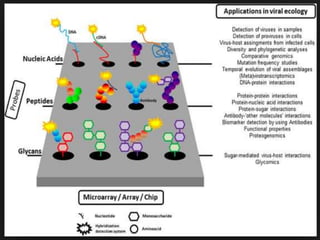
  • #9 Figure 1. A summary of the application of microarray tools to the study of viral ecology. As described in the text, nucleic acids (from oligonucleotide to complete viral genomes), proteins, or glycans can be immobilized on a solid surface to probe different target molecules (nucleic acids, glycans, proteins). The interaction between immobilized probes and targets is normally detected by fluorescence although other detection systems are also available.
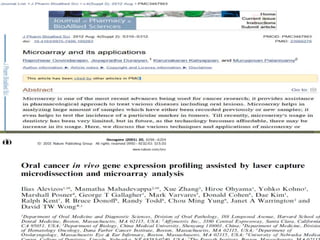
  • #11 For example, we can compare the different patterns of gene expression levels between a group of cancer patients and a group of normal patients and identify the gene associated with that particular cancer. About 600 genes were found to be oral cancer associated. These oral cancer associated genes include oncogenes, tumor suppressors, transcription factors, xenobiotic enzymes, metastatic proteins, differentiation markers, and genes that have not been implicated in oral cancer. The database created provides a verifiable global profile of gene expression during oral carcinogenesis, revealing the potential role of known genes as well as genes that have not been previously implicated in oral cancer.